第 1 章
The Art of Questioning Everything: Your Path to Mental Liberation
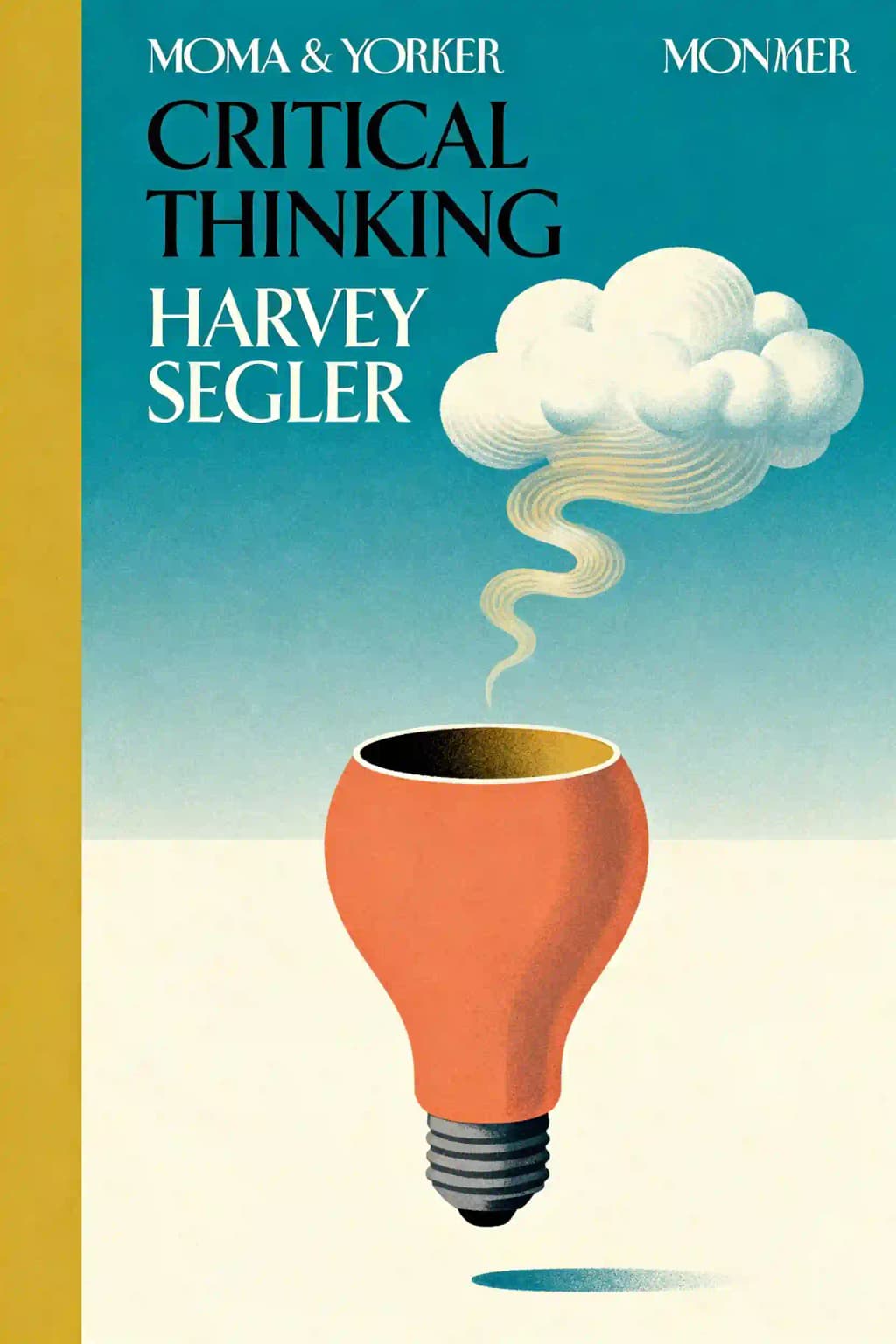
Have you ever found yourself nodding along to an idea, only to realize later you never actually thought it through? You're not alone. Critical thinking-that seemingly intimidating skill-is actually your birthright as a human being, yet so few of us actively practice it. Harvey Segler's "Critical Thinking" has become a quiet phenomenon among Silicon Valley executives and thought leaders precisely because it strips away the academic veneer of critical thinking and presents it as what it truly is: mental liberation. Elon Musk reportedly keeps a copy on his nightstand, calling it "the operating system upgrade for the human mind." The book has sold over 2 million copies worldwide and been translated into 28 languages, yet its power lies not in its popularity but in its ability to fundamentally change how readers process the world around them. What if, instead of accepting the daily barrage of information at face value, you could filter everything through your own powerful mental framework? What might your life look like if you stopped outsourcing your thinking to others?
第 2 章
The Deceptively Simple Art of Critical Thinking
Critical thinking often sounds like something reserved for philosophy professors or chess grandmasters-an intimidating intellectual pursuit beyond the reach of everyday people. This misconception keeps many from embracing what is actually a natural human capacity. At its core, critical thinking is simply "the objective analysis and evaluation of an issue in order to form a judgment." It's the combination of two fundamental actions: truly absorbing information (not just seeing it) and then putting that information to meaningful use.
Most of us merely collect facts like trophies, ready to impress friends with random trivia rather than applying knowledge to improve our lives. We consume information passively, letting it wash over us without engaging with it. Think about how many articles you've skimmed today, how many social media posts you've scrolled past. How many of those pieces of information did you actually question or analyze?
Critical thinking is inseparable from independent thinking-forming your own opinions by evaluating facts and drawing conclusions regardless of popular sentiment. It's about developing the mental muscle to say, "I understand what everyone believes, but here's what I think based on my analysis."
The world is full of critical thinkers, though we don't always recognize them as such. Behind every successful advertising campaign, political movement, or social media empire stands an independent thinker who has mastered the art of telling others what to believe. The difference is that these individuals have harnessed critical thinking for influence, while many of us remain on the receiving end of their conclusions.
What if you could flip that dynamic? What if, instead of being told what to think, you developed the capacity to form your own insights from any situation? This isn't about being contrarian for its own sake-it's about developing the mental framework to process information meaningfully and arrive at conclusions that truly serve you.
第 3 章
Breaking Free from the Information Tsunami
Every day, we're bombarded with opinions from family members, news outlets, advertisements, and social networks-all competing for our attention and allegiance. The average person encounters between 6,000 to 10,000 ads alone each day. Add in news headlines, social media posts, and conversations, and we're drowning in information. Most people simply follow what's shiniest or easiest-whatever everyone else seems to be doing. It's the path of least resistance.
To break this cycle and become an independent thinker, you must develop a mental filtration system that helps you sift through this daily information overload. Three crucial steps can transform how you process information:
First, consider the speaker's motive. When someone makes a point to tell you something, they're likely benefiting from it somehow. That benefit might be financial, emotional, or social, but it's rarely absent. Politicians want your vote. Companies want your money. Even friends sharing advice often want validation of their own choices. Take everything with a grain of salt, recognizing that the truth is often embellished or selectively presented to serve the speaker's interests.
Second, evaluate the information source. People frequently present ideas as absolute truth without verification. Just because something appears in a news feed or comes from someone with credentials doesn't automatically make it reliable. How many times have you shared an article based solely on its headline, without reading the content? Trust your instincts when something feels "off" and look for credible sources that can corroborate claims.
Third, watch for obvious statements that precede persuasion. Speakers often build trust by stating self-evident truths before slipping in their actual persuasive point. "Everyone wants to be healthy and happy... which is why you need my $500 supplement program." When you hear obvious statements that nobody would disagree with, guard yourself and watch carefully for what follows.
With practice, these filtering steps become second nature, helping you make decisions based on your own evaluation rather than external influence. Being a free thinker doesn't mean contrarily disagreeing with everyone-it means reaching your own conclusions based on careful evaluation, even when those conclusions align with popular opinion.
第 4 章
Problem-Solving: The Critical Thinker's Superpower
Critical thinking isn't just about filtering information-it's essential for elevating your life beyond the ordinary. Everyone faces problems, but most people passively hope these challenges will somehow resolve themselves (they never do). Some complain endlessly without taking action, while others immediately outsource solutions to friends, family, or the internet.
Effective problem-solving requires analyzing issues critically: breaking them down into components, seeking potential solutions, and finding advantages within challenges. While advice from others can provide perspective, ultimately these are your problems requiring your solutions tailored to your unique circumstances.
Modern society's reliance on quick internet solutions has created a dangerous "fix it and forget it" approach to problem-solving that undermines critical thinking development. We find solutions online, implement them mechanically, and move on without learning deeper lessons or developing transferable skills. I've caught myself doing this countless times-facing a computer issue, quickly Googling the solution, following steps I don't understand, and moving on without learning anything that would help me solve similar problems in the future.
While internet access is convenient, it can't help with life's most important decisions-whether to pursue a job opportunity, invest in a friend's business, or navigate relationship conflicts. These real-life problems require developed problem-solving skills rooted in critical thinking.
When facing decisions, determine what YOU would do rather than immediately seeking others' opinions. While advice is valuable, basing your actions solely on what others would do ignores your unique circumstances, values, and goals. By weighing pros and cons yourself, assessing risks, and making independent decisions, you develop confidence in your judgment.
This analytical approach to problem-solving helps you take responsibility for outcomes rather than deflecting blame when things go wrong. "I only did what everyone told me to do" becomes an unacceptable excuse. Ultimately, you'll stand confidently on your own feet, making decisions with full awareness of potential consequences-both good and bad.
第 5 章
The Lost Art of Deep Thinking
To better understand critical thinking and develop it personally, we can look to history's great critical thinkers like Isaac Newton, Plato, Socrates, Aristotle, and Buddha. Despite their diverse backgrounds and fields, they share two fundamental traits: they were deep thinkers and independent thinkers. This independence forms the core of critical thinking.
Despite having unprecedented access to information through technology, we've lost something crucial-the need to think deeply. Rather than solving problems ourselves, we Google solutions, implement them, and move on without truly learning. We adopt others' opinions instead of developing our own understanding. How many of us can explain why the solutions we implement actually work?
Consider the difference between memorizing a mathematical formula and understanding the principles behind it. Students who merely memorize can solve specific problems but struggle when facing variations. Those who understand the underlying principles can adapt their knowledge to solve new challenges. The ability to not just know the solution but understand WHY it works is key to critical thinking.
This is similar to how geometry proofs teach us not just that formulas work but why they work. This deeper understanding distinguishes true critical thinkers from those who simply regurgitate information. When you understand principles rather than just facts, you can apply knowledge creatively across different domains of life.
In ancient Greece, thinking itself was celebrated as an art form. Philosophers would gather to debate ideas, not to win arguments but to collectively reach deeper understanding. Today, we've largely lost this appreciation for thought as a worthwhile pursuit in itself. We value quick answers over thoughtful questions, immediate results over deeper understanding.
Reclaiming the lost art of deep thinking doesn't require formal philosophical training. It simply means slowing down occasionally to ask yourself why you believe what you believe, why systems work the way they do, and whether there might be better approaches than the conventional wisdom. It means being comfortable sitting with questions rather than rushing to answers.
第 6 章
The Power of Questioning Everything
Socrates, one of history's greatest thinkers, never wrote a single book. His method was entirely based on questioning. Rather than providing direct answers, he challenged his students through questions that forced them to examine their own reasoning and conclusions. The Socratic method remains one of the most powerful tools for developing critical thinking skills thousands of years later.
When someone presented an idea to Socrates, he wouldn't immediately agree or disagree. Instead, he would ask a series of questions that would lead the person to discover flaws in their own thinking or to arrive at deeper insights. This approach recognized that true learning comes not from being told answers but from discovering them through guided inquiry.
You can apply this same method to your own thinking by challenging your assumptions and beliefs. When consuming information-whether from books, speakers, or documentaries-pause to analyze what you're absorbing. Ask yourself:
Is what I'm reading actually true? What evidence supports it?
Do I agree with this perspective? Why or why not?
How does this apply to my life specifically?
What might the author be trying to convey beyond the literal words?
How do I feel about this information, and why do I feel that way?
These questions transform passive consumption into active engagement. They force you to process information more deeply and connect it to your existing knowledge and beliefs.
This questioning attitude doesn't mean becoming cynical or dismissive of all information. Instead, it means developing a healthy intellectual curiosity that seeks to understand rather than simply know. It means approaching life with wonder rather than certainty.
By developing this questioning mindset, you'll discover that many answers already exist within you. You simply need the right questions to draw them out. This creates a positive cycle of critical thinking: questions lead to insights, which lead to better questions, which lead to deeper insights. Over time, this cycle produces better results in every area of your life.
The beauty of the Socratic method is that it works regardless of your starting point. Whether you're a seasoned thinker or just beginning to develop your critical faculties, asking better questions will inevitably lead to better thinking. And better thinking inevitably leads to better living.
第 7 章
Escaping the Marketing Matrix
Many businesses prey upon those who don't think independently, using elaborate marketing targeted at specific audiences. They promise their products will make you run faster, look prettier, or have a happier life-creating catchy slogans and false promises designed to manipulate consumers who don't question these claims.
Think about the last time you saw an advertisement that made you feel inadequate in some way-perhaps suggesting your skin isn't clear enough, your car isn't luxurious enough, or your vacation photos aren't exotic enough. These ads work by creating a problem you didn't know you had, then offering their product as the solution. When you fall into this trap, you purchase items with high hopes only to find your life remains largely unchanged.
The average American is exposed to thousands of advertisements daily, each designed by teams of psychologists and marketers who understand human psychology better than most of us understand ourselves. Without critical thinking, we become easy targets for this sophisticated manipulation.
To shop critically without falling prey to marketing tactics, ask yourself key questions before making purchases:
What is the marketing strategy behind this item? Are they selling me a product or a feeling?
Who is the company behind it, and what are their values and practices?
Am I happy without this item? Have I been fine all this time without it?
Do I truly need it, or is it an impulse buy triggered by clever marketing?
Can I live without it? What would happen if I didn't buy it?
Will it actually make me happy, or am I chasing a temporary feeling?
Who am I trying to impress with this purchase?
Will I regret this purchase in a week, a month, or a year?
Should I be using this money elsewhere in my life?
By establishing your own system based on these questions, you can make thoughtful purchasing decisions rather than succumbing to marketing ploys. This doesn't mean never buying anything enjoyable-it means ensuring your purchases align with your actual values and needs rather than manufactured desires.
Critical thinking about consumption extends beyond just avoiding manipulation. It also helps you identify products and services that genuinely add value to your life. When you think critically about purchases, you often find that the things bringing the most joy aren't necessarily the most expensive or heavily marketed items.
第 8 章
Breaking Free from the Herd Mentality
Society often functions like a mindless herd headed toward destruction, with people living without questioning why they do what they do. Most individuals simply follow others, seeking answers from those who themselves haven't thought critically. Like cattle approaching an unseen cliff, people continue on dangerous paths because they never question their direction.
Consider how many aspects of your life you've adopted without conscious choice. Perhaps you pursued a certain career because it was expected in your family. Maybe you live in a particular area because that's where you grew up. You might practice certain religious beliefs because they were instilled in you as a child. None of these choices are necessarily wrong, but how many were made through active, independent thinking rather than passive acceptance?
To break free from mindless conformity, you must question fundamental aspects of your life: your religious beliefs, career path, love life, living situation, and daily habits. Though confronting these questions may be uncomfortable, it's essential for creating a fulfilling life.
Ask yourself: Why do I believe what I believe? Would I hold these same beliefs if I had been born in a different family, culture, or time period? Are my career choices aligned with my personal values and strengths, or am I following someone else's blueprint for success? Do I live where I live because it truly serves me, or because of inertia?
This questioning doesn't mean you need to abandon everything familiar. Many times, after thorough examination, you'll confirm that certain aspects of your life are indeed right for you-but now you'll know why, rather than just accepting them blindly. Other times, you'll discover areas where change would better align with your authentic self.
Remember that you're never stuck-regardless of age, relationship status, or career position-you can always change your path or develop a better understanding of your current one. The sooner you make this change, the better, but it's never too late to start thinking independently.
Breaking from the herd doesn't mean isolating yourself or rejecting all social norms. Humans are social creatures who naturally seek connection and belonging. Critical thinking isn't about rejecting community-it's about consciously choosing which communities to belong to and how to engage with them authentically rather than mindlessly conforming to whatever social groups you happen to find yourself in.
第 9 章
Practical Critical Thinking: From Theory to Daily Life
While questioning everything is valuable-even the advice in this book-you may wonder how to practically implement critical thinking in your daily life. The key is to adapt these principles to fit your unique circumstances rather than following them blindly.
First, stop mindlessly gathering information. In our information-saturated world, we constantly absorb content from the internet, books, documentaries, friends, family, and experts. Rather than collecting this information passively, start analyzing truths for yourself. While you can gather advice and refine your opinions from external sources, never base your entire worldview solely on what others tell you.
This doesn't mean rejecting all external information-that would be impossible and unwise. Instead, it means processing information actively rather than passively. When you read an article or hear an opinion, pause to consider: Does this align with my experience? What assumptions is this based on? What evidence supports this view? What might be missing from this perspective?
Embrace healthy skepticism. Don't be afraid to question-in fact, question everything. Ask "why" about everything from social customs to scientific claims. Never blindly accept anything, whether it's your religion, your job, or political beliefs. Decide how something is right for you, or if it's right for you at all.
Skepticism isn't cynicism. It doesn't mean assuming everything is false or that everyone has malicious intent. It simply means suspending immediate judgment and examining claims carefully before accepting them. The goal isn't to reject everything but to ensure that what you accept aligns with reality as best you can determine it.
Remember that what's true for one person may not be true for you. In our diverse world, people hold vastly different beliefs-some completely opposite-yet both can be right within their own contexts and value systems. There's no single correct path to discovering what's true for you; do what makes you genuinely happy and fulfilled. Be comfortable in your own skin rather than seeking everyone's approval.
Most importantly, think. Don't get stuck in mindlessness-analyze, feel, dream. There's no limit to the ways you can think about things, so think, think, think. Set aside time regularly for reflection without distractions. This might be through meditation, journaling, walking in nature, or simply sitting quietly with your thoughts. These moments of intentional thinking are increasingly rare in our distraction-filled world, yet they're essential for developing critical thinking skills.
Nurture your curiosity. Never lose your sense of wonder, regardless of age or accomplishments. Question how things work rather than accepting them as they are. Whether pondering how your smartphone functions or how your job affects society, keep growing and learning. You have one life-get the most from it by understanding the world around you.
Finally, practice open-mindedness. As a critical thinker, you must break free from close-mindedness. What's right for others may not be right for you, but that doesn't make them wrong. Learn to coexist-living alongside others while maintaining your own position. This takes practice and dedication, but you'll master it with commitment.
第 10 章
The Journey Toward Mental Freedom
Critical thinking is your springboard to a fulfilling, rich life-a life where you make choices aligned with your true self rather than external expectations. While mastering independent thought takes time, the rewards are immense. By evaluating your decision-making skills and thinking for yourself, you'll make choices with confidence that truly reflect who you are.
This journey isn't always comfortable. Friends and family may question why you're suddenly challenging ideas or making different choices. Society rewards conformity and often views independent thinkers with suspicion. You may face resistance, both external and internal, as you develop this new way of engaging with the world.
But the alternative-living an unexamined life directed by others' expectations and opinions-is far more costly in the long run. How many people reach the end of their lives wishing they had lived according to their own values rather than others' expectations? How many regret not questioning the path they followed?
True independence comes from taking hold of your life and developing your own functioning manner of thought. Be confident in your decisions, even when no one else is making the same choices. The ability to think for yourself will serve you well throughout your entire life.
Remember that critical thinking isn't just an intellectual exercise-it's a practical skill that improves every aspect of your existence. It leads to better career decisions, healthier relationships, wiser financial choices, and a deeper sense of purpose and meaning. It helps you avoid manipulation, make decisions you won't regret, and create a life that genuinely reflects your values.
The journey toward mental freedom is ongoing-no one ever achieves perfect critical thinking. Even the greatest thinkers continue to refine their skills and challenge their assumptions throughout their lives. What matters is not reaching some imaginary endpoint of perfect rationality, but continuously developing your capacity to think clearly, question effectively, and choose wisely.
Start today. Question something you've always taken for granted. Examine a belief you've never challenged. Consider a perspective different from your own. With each small act of independent thinking, you take another step toward true mental liberation-and toward becoming the author of your own life story.