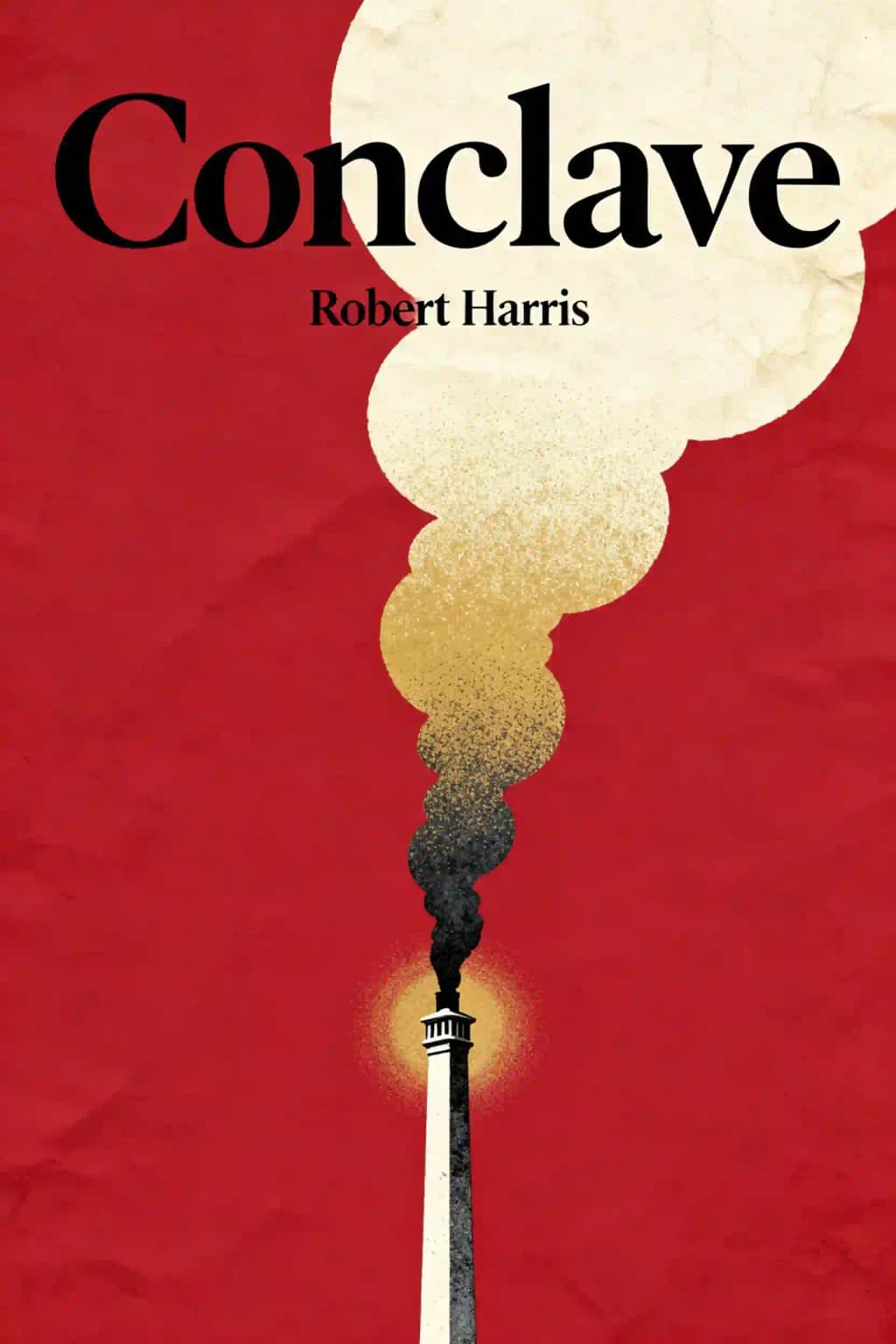
Inside the Vatican's secretive papal election, Harris's eerily prescient thriller predicted reality. Praised as his "best novel," this Silver Bestseller became a Ralph Fiennes film that won the USC Scripter Award. What shocking revelation awaits behind the white smoke?
Robert Dennis Harris CBE is the bestselling author of Conclave and one of Britain's most acclaimed writers of historical and political thrillers. Born in 1957, Harris began his career as a political journalist and BBC correspondent before turning to fiction.
This background provided him with unique insight into the machinations of power that drive Conclave's gripping narrative of papal politics. The novel, set during a secretive Vatican election, showcases Harris's signature ability to blend meticulous historical detail with page-turning suspense—a skill honed across fifteen bestselling novels including Fatherland, Enigma, An Officer and a Spy, and the celebrated Cicero Trilogy.
Harris was inspired to write Conclave while covering the 2013 papal conclave, recognizing parallels between the College of Cardinals and the Roman Senate he'd explored in his ancient Rome novels. He consulted Cardinal Cormac Murphy-O'Connor to ensure accuracy, earning rare praise from the Cardinal himself. His works have been translated into 37 languages, and several have been adapted into major films, with Conclave released theatrically in 2024 starring Ralph Fiennes.
Conclave by Robert Harris is a political thriller set during a papal conclave, where 118 cardinals gather at the Vatican to elect a new Pope after the sudden death of the incumbent. The novel follows Cardinal Jacopo Lomeli, Dean of the College of Cardinals, as he oversees the election process while uncovering secrets, scandals, and conspiracies that threaten to influence the outcome. The story combines religious intrigue with high-stakes political maneuvering.
Conclave is ideal for readers who enjoy political thrillers, religious intrigue, and character-driven mysteries. Fans of Robert Harris's historical fiction will appreciate the meticulous detail and suspenseful pacing. The book appeals to anyone interested in Vatican politics, moral dilemmas, and stories exploring power and ambition. Readers who enjoyed books like "The Name of the Rose" or Dan Brown's thrillers will find Conclave equally compelling with its insider perspective on papal elections.
Conclave is widely regarded as a gripping and satisfying page-turner that delivers both intellectual depth and thriller excitement. Harris provides unprecedented access to one of the world's most secretive and fascinating gatherings, creating a VIP seat to the papal election process. The novel balances moral complexity with fast-paced plotting, featuring compelling characters facing genuine ethical dilemmas. Critics praise its riveting storytelling and the way Harris maintains suspense throughout the multi-ballot voting process.
Robert Harris is a bestselling British novelist and former BBC journalist born in 1957. He is best known for historical fiction and thrillers, including "Fatherland" (1992), "Enigma" (1995), "Pompeii" (2003), and the Cicero Trilogy. His novels have sold over 10 million copies and been translated into 30 languages. Several works have been adapted into films, including "The Ghost Writer" (2010) and "Conclave" (2024). Harris lives in Berkshire, England with his wife Gill Hornby and four children.
Cardinal Jacopo Lomeli is the protagonist and Dean of the College of Cardinals in Conclave, responsible for overseeing the papal election. As Dean, Lomeli discovers secrets about the candidates and must repeatedly examine his conscience about whether he's maintaining neutrality or manipulating the outcome. He emerges as a moral center of the novel, wrestling with ethical dilemmas as he uncovers simony, blackmail, and scandals. His character embodies the tension between duty and personal conviction throughout the conclave process.
The four leading papal candidates in Conclave represent different ideological factions within the Church. Cardinal Aldo Bellini of Italy, the late Pope's Secretary of State, represents the liberal wing. Cardinal Joseph Tremblay of Canada, the Camerlengo, appears ambitious and politically savvy. Cardinal Joshua Adeyemi of Nigeria appeals to traditionalists while representing African interests. Cardinal Goffredo Tedesco of Italy is the reactionary Patriarch of Venice. A surprise candidate, Cardinal Benítez, emerges as a mysterious wild card whose background remains largely unknown.
Conclave exposes multiple damaging secrets that reshape the papal election.
These revelations dramatically shift voting patterns across multiple ballots.
In Conclave, 118 cardinals are sequestered in the Vatican and vote through a series of secret ballots until one candidate receives a two-thirds majority. The cardinals cannot leave or communicate with the outside world during the process, with extensive security measures preventing information leaks. Voting continues across multiple ballots, with candidates' fortunes rising and falling as alliances shift and secrets emerge. The process extends over three days in the novel, with eight total ballots cast before reaching a conclusion.
Cardinal Benítez serves as an enigmatic wild card in Conclave, with little known about his background or beliefs. He was secretly appointed by the late Pope just before his death and arrives unexpectedly at the conclave. As voting progresses, Benítez emerges as a dark horse candidate, eventually gaining significant support. His speech advocating against meeting violence with violence, following terrorist attacks, contrasts sharply with hardliner positions. Benítez challenges Lomeli to vote according to principles rather than compromise, forcing the Dean to confront his own convictions.
Conclave explores power, ambition, and the corrupting influence of both within religious institutions. The novel examines moral compromise versus principled conviction, as characters face difficult choices between pragmatism and integrity. Themes of doubt and certainty emerge through Lomeli's crisis of faith and his homily calling for a Pope capable of doubt. The book also addresses tradition versus reform within the Catholic Church, tolerance versus fundamentalism, and whether the ends justify the means in achieving perceived good outcomes.
During the seventh ballot, a coordinated series of terrorist attacks by Muslim extremists targets Catholic institutions across Europe, with an explosion rocking the Sistine Chapel. Though no cardinals are injured, the attack becomes a decisive moment in the election. Cardinal Tedesco calls for retaliation while Cardinal Benítez argues against meeting violence with violence. This pivotal debate shifts the conclave's direction, as cardinals must decide what kind of leadership the Church needs in response to external threats. The attack accelerates the final voting round.
Simony—the buying or selling of ecclesiastical privileges—becomes the central scandal that destroys Cardinal Tremblay's papal candidacy in Conclave. Lomeli discovers that Tremblay made cash payments to several cardinals as Prefect of the Congregation for the Evangelization of Peoples, essentially buying votes for his election. The late Pope had compiled evidence of this corruption in hidden compartments. When Lomeli distributes the report to all cardinals with names redacted, it kills Tremblay's chances and upends the entire conclave, demonstrating how corruption undermines even sacred processes.
通过作者的声音感受这本书
将知识转化为引人入胜、富含实例的见解
快速捕捉核心观点,高效学习
以有趣互动的方式享受这本书
You are not a shepherd. You are a manager.
I feel nothing when I pray.
the Church was built of crooked timber
certainty is the great enemy of unity
I am what God made me
将《Conclave》的核心观点拆解为易于理解的要点,了解创新团队如何创造、协作和成长。
通过生动的故事体验《Conclave》,将创新经验转化为令人难忘且可应用的精彩时刻。
随时提问,选择你的学习方式,共创真正适合你的洞察。

"Instead of endless scrolling, I just hit play on BeFreed. It saves me so much time."
"I never knew where to start with nonfiction—BeFreed’s book lists turned into podcasts gave me a clear path."
"Perfect balance between learning and entertainment. Finished ‘Thinking, Fast and Slow’ on my commute this week."
"Crazy how much I learned while walking the dog. BeFreed = small habits → big gains."
"Reading used to feel like a chore. Now it’s just part of my lifestyle."
"Feels effortless compared to reading. I’ve finished 6 books this month already."
"BeFreed turned my guilty doomscrolling into something that feels productive and inspiring."
"BeFreed turned my commute into learning time. 20-min podcasts are perfect for finishing books I never had time for."
"BeFreed replaced my podcast queue. Imagine Spotify for books — that’s it. 🙌"
"It is great for me to learn something from the book without reading it."
"The themed book list podcasts help me connect ideas across authors—like a guided audio journey."
"Makes me feel smarter every time before going to work"

免费获取《Conclave》摘要的 PDF 或 EPUB 版本。可打印或随时离线阅读。
Behind the locked doors of the Sistine Chapel, 118 cardinals gather for the most secretive election on earth. The Holy Father has died unexpectedly, and now Cardinal Jacopo Lomeli-a 75-year-old Italian prelate battling prostate cancer and a crisis of faith-must oversee the selection of the next Pope. The timing couldn't be worse. The Church faces mounting scandals, terrorist attacks are erupting across Europe, and Lomeli himself feels spiritually empty. "I feel nothing when I pray," he had confessed to the late Pope, who refused his resignation with a stinging assessment: "You are not a shepherd. You are a manager." Now this reluctant "manager" must navigate the treacherous waters of Vatican politics, where sacred rituals mask profane ambitions. The cardinals arrive already divided into factions-African prelates supporting Nigerian Cardinal Adeyemi, European liberals backing Italian Cardinal Bellini, and Vatican insiders promoting Canadian Cardinal Tremblay or conservative Italian Cardinal Tedesco. Behind the solemn prayers and ancient ceremonies lies a political battlefield as cutthroat as any secular election. What makes this conclave particularly dangerous is how the divisions reflect deeper questions about the Church's future. Should it retreat into tradition or embrace modernity? Should power remain concentrated in European hands or shift to the Global South where Catholicism is growing fastest? And most fundamentally-can an institution built by flawed humans maintain its divine mission?
As Dean of the College of Cardinals, Lomeli wears elaborate scarlet vestments-thirty-three buttons representing Christ's years, a red silk sash symbolizing chastity, and a white rochet with floral lace. These garments connect him to centuries of predecessors, yet when faith wavers, they feel like costume. In the mirror, he sees "some elderly moulting bird," reflecting on sacrificing family and life's simple pleasures. Tradition dominates the conclave. Cardinal Tedesco insists the next Pope must be Italian: "Two thousand years of history cannot be ignored." Progressives counter that the Church must evolve to remain relevant. The late Pope embodied this tension-living in the modest Santa Marta guesthouse rather than the luxurious papal apartment, while creating a secret cardinal and concealing financial records. Ancient protocols govern everything-from cutting the late Pope's Fisherman's Ring to burning ballots whose smoke signals the outcome. These rituals provide continuity amid chaos while raising a question: When does tradition become a prison rather than a guide?
Political maneuvering begins immediately. Cardinal Sabbadin serves as Bellini's campaign manager, organizing supporters across cardinal groups. Tedesco positions an ally to challenge Lomeli's sermon on doubt, while Tremblay cultivates a "modern Pope" image while secretly buying votes from African and South American cardinals - simony that carries excommunication penalties. What makes these machinations compelling is the humanity behind them. These aren't simply corrupt politicians in clerical garb but complex men balancing ambition with genuine belief in their vision for the Church. When Cardinal Adeyemi's candidacy collapses after revelations of an affair, his dignified defeat reveals a man who, despite his flaws, truly believed in his calling. Financial disparities among cardinals mirror these power dynamics. Vatican records show stark contrasts: Tedesco with merely 2,821 in his account, Tremblay with 519,732, and others possessing millions. These differences reflect both personal corruption and systemic inequality between wealthy European dioceses and struggling ones from developing nations. As Lomeli reflects during voting, "the Church was built of crooked timber" - yet must still stand straight enough to support the faithful.
During a pivotal Mass in the Sistine Chapel, Lomeli abandons his prepared homily for candid truth: "If there was only certainty, and no doubt, there would be no mystery, and therefore no need for faith." The Cardinals, expecting platitudes, are struck by his honesty. This moment transforms Lomeli from bureaucrat to spiritual leader. He had been feeling spiritually empty, praying without sensing God's presence, with his cancer diagnosis making him question his mortality and lifetime of service. Yet these doubts-these dark nights of the soul-ultimately qualify him for leadership in ways certainty never could. Cardinal Benitez delivers the novel's most profound challenge: "Perhaps God wants a schism... Perhaps you have spent thirty years worshipping the Church rather than God." This forces Lomeli to examine whether institutional devotion has replaced divine purpose. When Lomeli finally experiences God's presence during the cardinals' defiant procession after terrorist attacks, it comes through surrender to mystery-suggesting true faith might be about embracing doubt rather than resolving it.
Like any great thriller, the conclave revolves around secrets - political and personal, all potentially explosive. The Pope's secretary reveals that before death, the Holy Father dismissed Cardinal Tremblay for "gross misconduct." A Nigerian nun collapses upon seeing Cardinal Adeyemi, later confessing their affair that produced a child. These revelations expose the gap between Church ideals and human fallibility. When Lomeli discovers hidden financial records in the late Pope's apartment, he confronts evidence of the cardinals' corruption, symbolizing the novel's central tension - even sacred institutions harbor uncomfortable truths. These revelations become opportunities for grace rather than mere scandals. Sister Shanumi's confrontation with Adeyemi is painful but purifying. Lomeli distributes evidence against Tremblay not from malice but from conviction that the Church must face its sins honestly. Through these secrets, we see that faith requires confronting uncomfortable truths. As Lomeli tells the cardinals, "certainty is the great enemy of unity" and "the deadly enemy of tolerance."
The 118 cardinals showcase Catholicism's global reach while revealing power imbalances. Europeans (fifty-six) far outnumber representatives from Africa and Asia (thirteen each) despite Catholic growth flourishing in the Global South. Cardinal Adeyemi boldly challenges traditional hierarchies while his African colleagues struggle for basic diocesan resources. Cardinal Benitez emerges as the most compelling voice from the margins. His ministry spans Manila's slums and work with rape victims in African civil wars. During terrorist attacks at the conclave, he counters Tedesco's anti-Islamic rhetoric by sharing stories of Muslims protecting Christian communities in Iraq. His wisdom-born from suffering rather than privilege-ultimately wins him the papacy, suggesting the Church's renewal might come from its peripheries rather than power centers. Benitez's election symbolizes a shift toward a Church embracing its global identity and learning from its margins.
The novel's most startling twist reveals Pope Innocent XIV (Cardinal Benitez) was born with an intersex condition, believing himself male until an injury revealed his biological reality. Rather than seeking gender reassignment, he concluded: "I am what God made me." This revelation transcends plot twist to become a profound theological statement about identity and divine purpose. By placing an intersex person on the papal throne, we're challenged to expand our understanding of divine mystery. God's choice-a Filipino intersex cardinal who ministered to the vulnerable-confounds all expectations. The new Pope's first act symbolizes transformation. Breaking tradition, he refuses the papal throne, instead personally embracing each cardinal, especially former rivals, suggesting renewal through reinterpreting tradition. God works through human difference rather than despite it. The Church remains a paradox: simultaneously human and divine, flawed yet holy, built of "crooked timber" yet strong enough to shelter the faithful through storms of doubt.