第 1 章
The Forgotten History That Shaped Today's Crisis
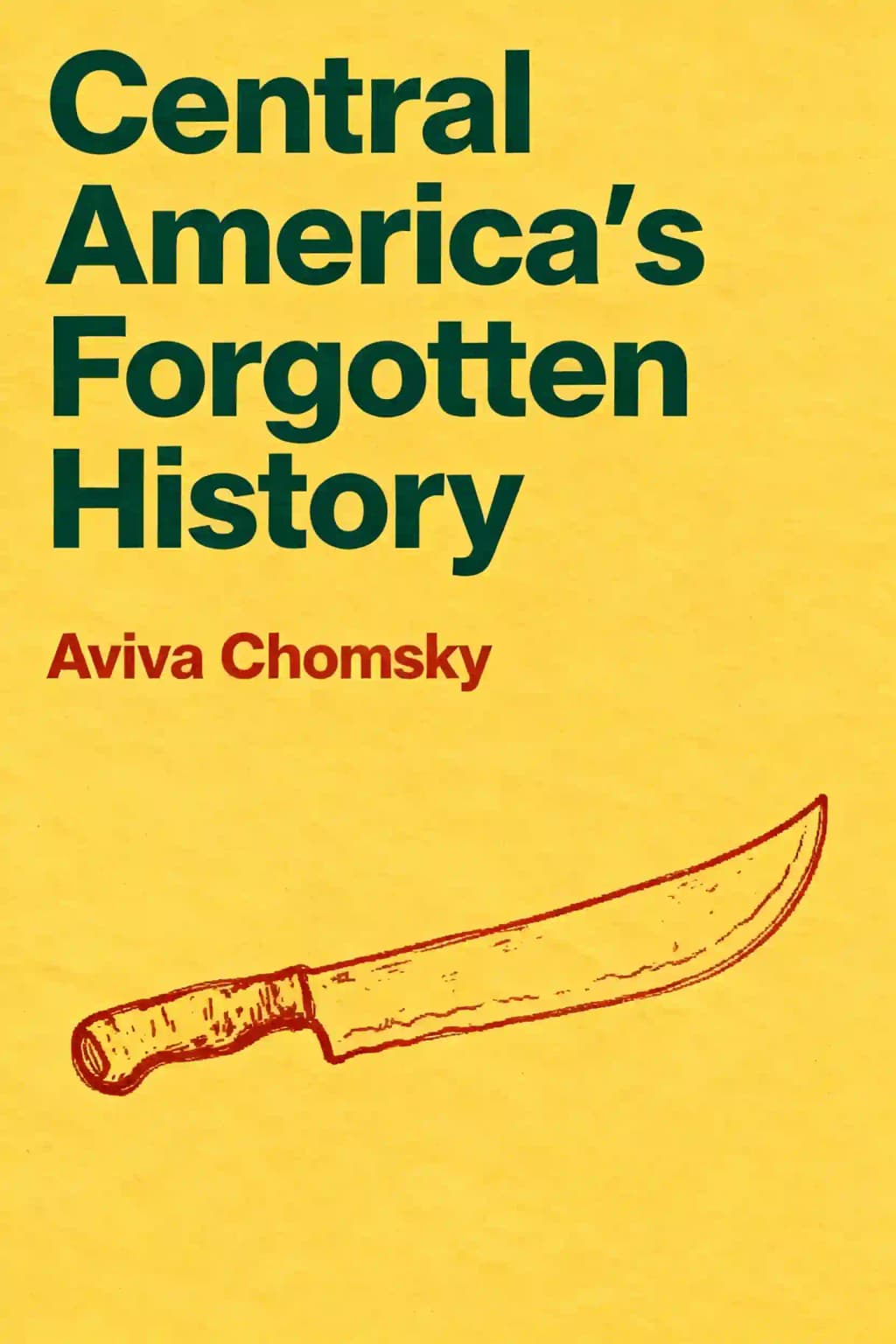
Central America's history is not just a distant tale of foreign lands-it's a story that has profoundly shaped American life, though we rarely acknowledge it. When migrants arrive at our borders seeking asylum, they carry with them centuries of historical baggage that most Americans know nothing about. Aviva Chomsky's "Central America's Forgotten History" strips away layers of historical amnesia to reveal how deeply intertwined the United States and Central America truly are. The region that many Americans dismiss as a collection of "shit-hole countries" was, in fact, deliberately shaped by American foreign policy, corporate interests, and military intervention. This book has become required reading in university courses across disciplines-from Latin American studies to immigration policy-precisely because it connects dots that mainstream media consistently fails to join. As acclaimed journalist Juan Gonzalez notes, "You cannot understand today's immigration crisis without understanding the history Chomsky meticulously documents."
第 2 章
Colonial Legacies and the Birth of Banana Republics
The roots of Central America's current crisis extend back to the different colonial systems established by European powers. While the United States emerged from British settler colonialism that sought to eliminate and replace Indigenous populations, Central America experienced Spanish extractive colonialism that incorporated Indigenous peoples into exploitative labor systems. These distinct colonial experiences created enduring differences that continue to shape both regions.
After independence, Central American elites modeled their nations on the United States, viewing Indigenous peoples as obstacles to progress and modernity. Liberal governments across the region privatized communal lands and established forced labor systems to support coffee production. In Guatemala, laws required landless men to work 100-150 days yearly on plantations. El Salvador's 1881 abolition of Indigenous communities' legal status triggered massive land privatization, while the 1932 matanza (massacre) killed up to 30,000 people after an Indigenous uprising.
The United States, meanwhile, viewed Central America itself as embodying the political and economic "backwardness" they attributed to Indigenous peoples. The 1823 Monroe Doctrine declared the Americas off-limits to European colonization while claiming for the United States the sole right to intervene. As Simon Bolivar observed, the United States seemed "destined by Providence to plague America with miseries in the name of Freedom."
By the early 20th century, American corporations like the United Fruit Company had acquired vast landholdings across Central America, creating virtual states-within-states. In Honduras alone, three American companies controlled most of the million acres of foreign-held banana land. As Chilean poet Pablo Neruda wrote, the Fruit Company "reserved for itself the most succulent, the central coast of my own land, the delicate waist of America" and rechristened its territories as "Banana Republics."
These companies effectively controlled national politics through corruption and military force. When Nicaraguan leader Jose Santos Zelaya challenged U.S. hegemony in 1909, the U.S. orchestrated his overthrow and occupied Nicaragua until 1933. They installed the Guardia Nacional under Anastasio Somoza Garcia, establishing a family dictatorship that would last over four decades. Similar patterns played out across the region, with U.S. interests consistently trumping local democracy and self-determination.
第 3 章
The Cold War and Guatemala's "Ten Years of Spring"
The Cold War transformed U.S. policy toward Central America, with the 1954 overthrow of Guatemala's democratically elected government marking a pivotal turning point. After World War II, the United States emerged as the world's undisputed superpower and established new international institutions to foster market-based economies worldwide. In Latin America particularly, the U.S. trained security forces that executed a reign of terror-hundreds of thousands killed, tortured, or exiled-from which the region has yet to recover.
Guatemala's democratic opening began in 1944 when reformist army officers backed by popular protest overthrew dictator Jorge Ubico, leading to Guatemala's first free election. The winner, Juan Jose Arevalo, abolished forced labor and passed progressive labor codes. His successor, Jacobo Arbenz, implemented land reform that threatened United Fruit Company's vast, underutilized holdings. Beyond redistribution, the reform revolutionized rural power structures by encouraging peasants and workers to organize unions to claim land.
This "earthquake in consciousness" made the campesino league Guatemala's largest organization, replacing the military as mediator between Indigenous communities and the state. But U.S. officials feared Guatemala's democracy could spread to neighboring countries. State Department officials worried that Guatemala's "powerful propaganda weapon" of successful land reform might foment "destructive unrest among rural peoples" across Latin America.
After diplomatic pressure failed, President Eisenhower tasked the CIA with orchestrating Arbenz's overthrow through Operation PBSUCCESS in 1953. Ambassador John Peurifoy led an anti-communist propaganda campaign while recruiting allies in Guatemala's military. In June 1954, a CIA-trained rebel force entered Guatemala, and the military, fearing U.S. intervention, forced Arbenz's resignation.
A brutal wave of repression followed, with thousands imprisoned, killed, tortured or disappeared under the banner of anti-communism. The Catholic Church called on followers to "rise up as one man against the enemy of God and the Nation." In rural areas, soldiers arrested union leaders and local officials labeled as communists, effectively ending labor organizing on plantations.
After the coup, the Eisenhower administration transformed Guatemala into a "showcase" for foreign investment, rewriting laws to benefit U.S. corporations. Tax exemptions, investment guarantees, and currency convertibility lured American businesses. The U.S. even paid potential investors to write Guatemala's new laws-petroleum firms shaped oil codes allowing full foreign ownership and profit repatriation, while Bank of America representatives rewrote banking regulations before becoming the first foreign bank in Guatemala.
第 4 章
Revolutionary Movements and U.S. Counterinsurgency
By the 1970s, revolutionary movements had emerged across Central America, challenging U.S.-backed dictatorships and demanding social justice. In Guatemala, 60% of Mayan peasants migrated seasonally to coastal plantations, and 75% of children suffered from malnutrition. Various organizing efforts mobilized urban poor, migrant workers, highland villages, and new cooperatives, with growing connections to guerrilla groups.
The devastating 1976 earthquake that killed over 20,000 people catalyzed grassroots organizing as communities responded to state corruption and inadequate relief. The earthquake aftermath brought together progressive Catholic organizations, urban labor unions, and Indigenous communities from different regions, creating an experience in local power that nourished revolutionary organizing.
In Nicaragua, the Sandinista National Liberation Front (FSLN) unified different strands of popular organizing, the progressive church, and nationalist, anti-imperialist, and Marxist analysis. Their goal-"free homeland or death"-aimed to liberate Nicaragua from the Somoza dictatorship, the Guardia (National Guard), and U.S. imperialism. Liberation Theology played a crucial role, with the slogan "Between Christianity and revolution, there is no contradiction!" Sandinista thought explicitly fused Christian ethics with Marxism and patriotism.
After a decade of underground organizing, the FSLN burst onto the national scene in the 1970s with dramatic actions. The 1978 assassination of opposition journalist Pedro Joaquin Chamorro galvanized both Sandinista bases and mainstream opposition. By March 1979, the three Sandinista tendencies united. Their final offensive began in June, with fighters tearing up Somoza's concrete adoquines (street tiles) to build barricades. On July 17, Somoza fled, and on July 19, the Sandinistas triumphantly entered Managua.
El Salvador's revolutionary movement followed a different path. As peasant organizing spread beyond FECCAS's stronghold north of the capital to eastern El Salvador, government repression followed. After the La Cayetana massacre in 1974, where security forces killed and disappeared peasant activists in a land dispute, eastern peasants formed the Union of Rural Workers (UTC). The military's repression rarely targeted the small guerrilla forces, instead focusing on civilian populations and activists. Paradoxically, this repression transformed pro-democracy movements into one of Latin America's most potent insurgencies.
The Reagan administration viewed crushing El Salvador's revolution as key to reasserting U.S. Cold War hegemony-a place to "draw the line" and "send a message to Moscow." His military aid facilitated the early 1980s bloodbath while provoking significant public and congressional resistance. Despite the El Mozote reports, where the U.S.-trained Atlacatl Battalion systematically tortured, raped, and killed over 800 villagers, the administration issued congressionally required certification that human rights were "improving" to continue military aid.
第 5 章
The U.S. War Against Nicaragua's Revolution
Reagan entered office with a radical anti-communist agenda, making Central America his Cold War staging ground. His administration, staffed with Vietnam veterans and right-wing ideologues like UN Ambassador Jeane Kirkpatrick, knew little about Central America but viewed it as "the most important place in the world." Kirkpatrick infamously argued that "traditional autocrats" like Somoza were preferable despite human rights abuses because they maintained stability and supported American interests.
Reagan framed his Central American policy as overcoming the "Vietnam Syndrome," calling Vietnam "a noble cause" while his opponents warned that "El Salvador is Spanish for Vietnam." His administration fought fiercely to prevent revolutionary victories in El Salvador and Guatemala while working to overthrow Nicaragua's Sandinista government.
Reagan's war against Nicaragua violated U.S. and international law, so he kept it secret, using the CIA to create and fund the Contra proxy army. By early 1982, the U.S. had established military camps in Honduras and was training commandos there and in Florida to attack Nicaragua. The Contras systematically targeted civilians, with a 1985 investigation documenting a pattern of assassinations, torture, rape, kidnapping and mutilation. They attacked farms, cooperatives, food storage facilities and health centers, particularly disrupting coffee harvests.
As Reagan's true goal of overthrowing Nicaragua's government became clear, Congress intervened with the Boland Amendments restricting funding. After the first amendment contained significant loopholes, a strengthened version in 1984 banned all military aid to the Contras when CIA operatives secretly mined Nicaragua's harbors and a CIA Contra training manual advocating torture and assassination was discovered.
After this restriction, Reagan turned to covert sources, securing a million-dollar donation from Saudi Arabia. Through 1985-86, NSC adviser Oliver North orchestrated illegal arms sales to Iran through Israel, overcharging to divert profits to the Contras. When the scheme was exposed, North destroyed documents and administration officials stonewalled investigations. Though eleven officials were convicted, most received immunity or pardons from incoming president Bush.
The U.S. decision to destroy Nicaragua's revolutionary experiment undermined Sandinista successes while exacerbating their weaknesses. The war forced the Sandinistas to devote more and more of their national budget to defense. Military spending consumed resources desperately needed for health, education, and agricultural production. The human toll was devastating-thirty thousand Nicaraguans killed in the Contra war, on top of fifty thousand killed fighting Somoza, meant one out of thirty-eight Nicaraguans died violently during more than a decade of conflict.
第 6 章
Solidarity Movements and Resistance to U.S. Policy
Solidarity organizations in the United States experienced unprecedented growth during the 1980s, creating a diverse network of resistance to Reagan-era policies in Central America. These groups operated through multiple channels: establishing sister city relationships between U.S. and Central American communities, coordinating material aid shipments, organizing educational delegations, supporting church-based initiatives, and developing sanctuary movements. From 1980 to 1989, an estimated 100,000 Americans traveled to Central America, particularly Nicaragua, seeking to verify conditions firsthand and challenge official U.S. government and mainstream media narratives.
The Catholic Church played a pivotal role through its extensive missionary network, with approximately 2,000 U.S. religious workers serving in Central America by 1979. These missionaries, including Maryknoll sisters, Jesuits, and other orders, often lived in remote rural communities, sharing the daily struggles of impoverished populations. Many embraced Liberation Theology, which interpreted Christian faith through the lens of social justice and political liberation. The 1980 assassination of Archbishop Oscar Romero in San Salvador and the December 1980 murders of four U.S. churchwomen (Maura Clarke, Jean Donovan, Ita Ford, and Dorothy Kazel) catalyzed religious opposition to U.S. policy, spawning organizations like the Chicago Religious Task Force on Central America and Interfaith Office on Accompaniment.
The Sanctuary Movement emerged as one of the most significant interfaith initiatives. Beginning with Southside Presbyterian Church in Tucson and spreading to over 500 congregations nationwide, the movement directly challenged U.S. immigration policy by providing refuge to Central American asylum seekers. Religious leaders like Rev. John Fife and Jim Corbett transformed their churches into modern Underground Railroad stations, risking federal prosecution to protect refugees. The movement gained particular strength in cities like Chicago, Los Angeles, and San Francisco, where local governments eventually declared themselves "sanctuary cities."
Witness for Peace developed an innovative strategy of "protective accompaniment," placing U.S. citizens in Nicaraguan communities targeted by Contra forces. This presence served multiple purposes: deterring attacks (as Contras avoided confrontations with U.S. citizens), documenting human rights violations, and enabling Americans to witness firsthand the impact of U.S.-funded violence. By 1988, over 4,000 Americans had participated in Witness for Peace delegations.
In Los Angeles, where the largest Central American refugee population settled, activists established comprehensive support networks. Organizations like El Rescate and CARECEN provided legal aid, social services, and advocacy, while the Guatemala Information Center documented human rights abuses. Clinica Oscar Romero and Casa Rutilio Grande offered healthcare and social services while maintaining explicit political missions, connecting local service provision to broader revolutionary movements.
The solidarity movement reached its apex in Nicaragua, where international brigades supported the Sandinista revolution through various development projects. TecNica, founded in Berkeley, sent over 1,000 technical volunteers to Nicaragua between 1984 and 1990, providing expertise in engineering, healthcare, and education. Benjamin Linder's death at age 27, while working on a rural hydroelectric project, became a powerful symbol of both international solidarity and the human cost of U.S. policy. His funeral in Managua drew 10,000 mourners, including Daniel Ortega, and his story inspired increased opposition to Contra funding in the United States.
第 7 章
Peace Treaties and the Neoliberal Order
The peace accords of the 1990s fundamentally transformed Central America's economic landscape, marking its integration into an increasingly globalized economy. As countries emerged from civil conflicts, social services and public institutions were systematically dismantled while export-oriented sectors - particularly agriculture, maquiladoras (assembly plants), tourism, and resource extraction - experienced unprecedented growth. This economic restructuring created a complex web of international dependencies that simultaneously facilitated migration channels while generating the socioeconomic conditions that compelled people to leave their homes.
The devastating "lost decade" of the 1980s left Latin American nations struggling under massive external debt burdens. International financial institutions, led by the World Bank and International Monetary Fund, responded by imposing strict structural adjustment programs that prioritized debt servicing over social development and poverty reduction. These programs required dramatic cuts to education, healthcare, and social welfare systems. The peace treaties effectively marked the surrender of radical redistribution projects, as former guerrilla movements laid down their arms and transformed into political parties. The solidarity networks that had supported revolutionary movements were replaced by more hierarchical relationships with international development agencies and NGOs, fundamentally altering the region's social fabric.
Rather than receiving compensation for the extensive damage inflicted during conflicts largely fueled by U.S.-backed forces, Central American nations found themselves subject to aggressive neoliberal reforms. This economic doctrine demanded widespread privatization of state assets, deregulation of markets, severe reductions in public spending, and strict austerity measures. Governments were pressured to prioritize creating "business-friendly" environments over addressing pressing social needs, leading to the dismantling of labor protections and environmental regulations.
Following NAFTA's implementation in 1994, the Clinton administration aggressively pursued hemispheric free trade expansion. When the ambitious Free Trade Area of the Americas initiative stalled due to regional resistance, the Bush administration pivoted to smaller regional agreements, culminating in CAFTA (later DR-CAFTA) in 2004. This agreement, implemented between 2006-2009, accelerated the growth of the maquiladora sector as U.S. manufacturers eagerly relocated labor-intensive production to take advantage of Central America's low wages. By 2005-2006, the industry employed 442,000 workers across the region, with particular concentration in Guatemala and Honduras, where labor costs were lowest and regulations most permissive.
This development model sparked an aggressive "race to the bottom" as countries competed to offer the most attractive conditions for foreign investors, often at the expense of workers' rights and environmental protection. The consequences of this competition became starkly apparent in 2006 when Guatemala's modest minimum wage increase prompted the exodus of 30,000 maquila jobs. In response, governments introduced new labor laws allowing companies to hire part-time workers with reduced benefits and protections - changes that U.S. trade representatives praised as "a significant boon for the industry" while drawing criticism from labor rights advocates and civil society organizations.
第 8 章
Migration as the Inevitable Result
Contrary to expectations, migration to the United States increased significantly after Central America's wars ended, particularly from Guatemala, El Salvador, and Honduras (collectively known as the "Northern Triangle"). While Nicaragua, despite its revolutionary past, sent relatively few migrants northward, Honduran migration experienced a dramatic surge following the 2009 military coup that destabilized the country's political structure and economic systems.
The promised "peace" of the post-war era failed dramatically to address the deep-rooted structural problems that had initially sparked the revolutions. Pre-existing issues of inequality, endemic poverty, landlessness, chronic unemployment, and limited access to basic services were not only left unresolved but were actively exacerbated by both the devastating effects of war and the aggressive implementation of postwar neoliberal policies. Traditional community support systems and social safety nets were systematically dismantled, while new, more insidious problems emerged: unprecedented levels of urban and rural violence, sophisticated drug trafficking networks, and increasingly powerful transnational gangs that filled the power vacuum left by weakened state institutions.
Climate change emerged as a critical factor, delivering devastating blows to subsistence agriculture through prolonged droughts and the spread of coffee rust disease (roya), which destroyed countless small farms. Studies revealed that over half of recent migrants were agricultural workers who cited "no food" or "food insecurity" as their primary motivation for leaving, highlighting the intimate connection between environmental degradation and human displacement. Small-scale farmers, particularly in the dry corridor stretching from Guatemala to Nicaragua, found themselves unable to maintain viable harvests in increasingly hostile climatic conditions.
The twenty-first century witnessed a dramatic transformation in migration patterns, with Central American migration rising sharply as Mexican migration declined significantly. Until 2012, Mexican nationals constituted the vast majority of border apprehensions, but by 2014, Central Americans collectively surpassed Mexicans for the first time. This shift became even more pronounced by 2019, when both Guatemala (264,168) and Honduras (253,795) individually surpassed Mexico (166,458) in border apprehensions, marking an unprecedented historical shift in migration demographics.
Neoliberalism created a complex web of structural conditions driving migration, while simultaneously using migration as a mechanism to sustain its own order. It functioned as a crucial safety valve for unemployed youth and displaced workers, preventing social unrest. Remittances, while providing essential support to families left behind, paradoxically helped perpetuate the system by enabling the poor to accept persistently low wages and reduced social services. These remittances also catalyzed further migration as recipients displayed their newfound wealth, creating what scholars termed "migration chains" in communities. The phenomenon of migration came to embody neoliberalism's emphasis on individualism, effectively replacing the crushed revolutionary dreams of collective action with what analysts called "politically resigned pragmatism." As collective movements increasingly faced the risks of imprisonment or death, migration emerged as the quintessentially individual solution to systemic problems, offering a personal escape route rather than collective social change.
第 9 章
From Historical Amnesia to Reparative Justice
Trump's policies represent just the latest iteration of over a century of U.S. domination and exploitation of Central America. The violence and poverty afflicting the region today directly results from colonial and neocolonial development policies, from United Fruit Company's banana republics to Cold War military interventions to contemporary free trade agreements. These policies created enduring structures of inequality while fostering cultures of violence and collective amnesia that continue to justify exploitation. The devastating civil wars of the 1980s, backed by U.S. military aid, left lasting scars on societies through disappeared activists, displaced communities, and militarized institutions.
Most people understand that Central American migrants flee poverty and violence for American safety and prosperity, but this simplification misses the deeper historical roots driving migration. While liberals rightly criticize Trump's anti-immigrant rhetoric and cruel policies like family separation, humanitarian approaches alone cannot address the systemic causes. Current migration patterns follow historical routes shaped by U.S. economic and military involvement, from 1954 CIA intervention in Guatemala to 1980s counterinsurgency campaigns in El Salvador to contemporary drug war policies.
Central Americans have been vital to American social movements, bringing organizing experience and radical visions shaped by their struggles against dictatorship and repression. Organizations like CARECEN evolved beyond 1980s solidarity work to become powerful voices for immigrant rights, leading massive marches in 2005-2006 and advocating for local community issues like language access and police accountability. Central American immigrants transformed the U.S. labor movement by organizing previously "unorganizable" low-wage workers through innovative strategies like Justice for Janitors. Their successes inspired mainstream unions to invest in organizing immigrant workers in industries from agriculture to food processing.
Reparative justice requires more than cash transfers-it demands fundamentally repairing damage from centuries of domination, resource extraction, and labor exploitation. Today's palm oil plantations destroying indigenous lands, drug wars fueling violence, gang networks spanning borders, exploitative maquiladora factories, forced displacement, and endemic violence all stem directly from this unacknowledged history. Political leaders, mainstream media, and educational systems perpetuate collective amnesia about U.S. responsibility. Only by confronting these forgotten histories-from United Fruit Company's land grabs to School of the Americas training of military dictators to CAFTA's devastating effects on small farmers-can we begin addressing root causes of migration and building more just relationships between the United States and Central America. This requires not just policy changes but transformation of the economic and political systems that produced current inequalities.