第 1 章
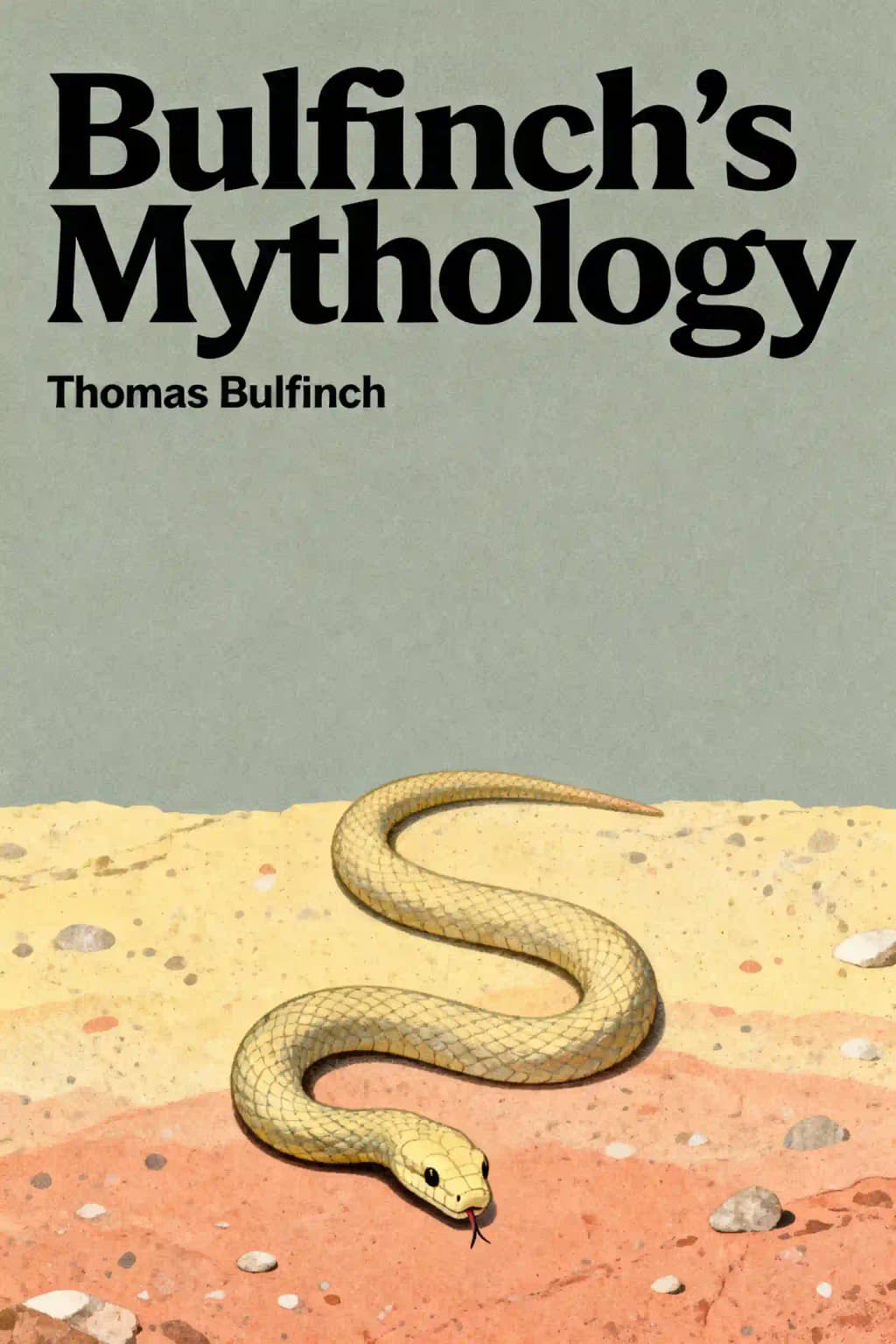
Ancient Tales That Still Enchant: Bulfinch's Mythology
When J.K. Rowling created Harry Potter, she drew from the same well of stories that has nourished Western imagination for centuries. Bulfinch's Mythology, first published in 1855 during the same year as Whitman's "Leaves of Grass," represents one of America's earliest attempts to make classical mythology accessible to everyday readers. This cultural touchstone has influenced countless writers, from Neil Gaiman to Rick Riordan, and remains a beloved reference for anyone seeking to understand the stories that shaped Western civilization. Thomas Bulfinch, a humble bank clerk who worked on his literary pursuits by night, created something remarkable-a work that democratized classical learning at a time when such knowledge was typically reserved for the privileged. His genius lay not in original scholarship but in his ability to transform dense, scholarly material into engaging narratives that anyone could enjoy and understand.
第 2 章
The Bridge Between Ancient Wisdom and Modern Understanding
Bulfinch's Mythology serves as a cultural bridge connecting ancient civilizations to our modern world. The work is divided into three major sections: "The Age of Fable" covering classical Greek and Roman myths, "The Age of Chivalry" focusing on Arthurian legends, and "Legends of Charlemagne" exploring medieval romance tales. Each section meticulously weaves together stories that have shaped Western consciousness for millennia, from the tragic love of Orpheus and Eurydice to the noble quests of King Arthur's knights. This comprehensive approach reveals Bulfinch's understanding that mythology isn't merely ancient history - it's the living foundation upon which Western literature, art, and culture continue to build.
What makes Bulfinch's work exceptional is his clear recognition of mythology's purpose. He understood that these stories weren't just quaint tales but essential cultural literacy. "Mythology is the handmaid of literature," he wrote, "and literature is one of the best allies of virtue." This perspective positions mythology not as academic trivia but as practical knowledge that enriches one's engagement with art, literature, and society itself. From Shakespeare's numerous classical allusions to modern novels drawing on mythological archetypes, Bulfinch recognized how these ancient narratives continue to resonate through time.
Bulfinch's approach was revolutionary for his time. Rather than presenting myths as scholarly subjects for academic study, he retold them as engaging narratives, preserving their entertainment value while maintaining their cultural significance. His retellings brought to life characters like Perseus, whose heroic journey inspired countless later tales, and explained the origins of phrases we still use today, such as "Achilles' heel" or "Pandora's box." He carefully edited out elements that Victorian sensibilities would find offensive, making the stories accessible to families and general readers. While modern readers might find these omissions limiting, they were pragmatic choices that helped classical mythology reach a much wider audience than ever before.
The enduring popularity of Bulfinch's Mythology - continuously in print for over 165 years - testifies to his success in making these ancient stories relevant to modern readers. His work has influenced generations of writers, artists, and creators, from the Pre-Raphaelite painters to contemporary authors. The book's lasting impact extends beyond literature into popular culture, where mythological references appear in everything from advertising to video games. His work reminds us that mythology isn't just about gods and monsters but about understanding the human condition through stories that have captivated generations. These tales continue to resonate because they address universal themes: love, ambition, jealousy, heroism, and the eternal struggle between fate and free will.
Bulfinch's genius lay in recognizing that myths are not static artifacts but living stories that evolve with each retelling, speaking to each new generation in its own language while preserving the timeless wisdom of the ancients. His work continues to serve as an essential primer for anyone seeking to understand the rich tapestry of Western cultural heritage.
第 3 章
Gods and Heroes: The Age of Fable
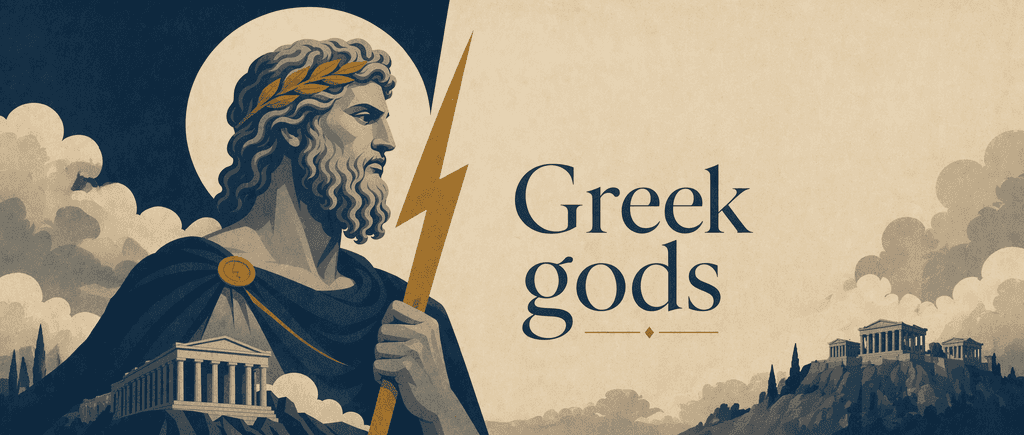
The first section of Bulfinch's work introduces readers to the pantheon of Greek and Roman deities. He begins with creation myths, explaining how the Greeks believed Earth was flat and circular, with their country at the center. Mount Olympus, home of the gods, rose majestically from this landscape, housing deities in separate dwellings with Jupiter's palace serving as their gathering place.
Bulfinch masterfully humanizes these divine beings. Jupiter (Zeus), though father of gods and men, had his own origin story-born to Saturn (Cronos) and Rhea, eventually overthrowing his father and dividing dominion with his brothers Neptune (ocean) and Pluto (underworld). The gods, despite their immortality and power, display distinctly human emotions and flaws. Juno's jealousy, Apollo's pride, and Venus's vanity drive many of the most compelling myths.
The stories of Prometheus and Pandora illustrate humanity's complex relationship with the divine. Prometheus, who created mankind and stole fire for them, suffered eternal punishment chained to Mount Caucasus where a vulture devoured his regenerating liver daily. Yet he refused to submit to Jupiter by revealing a secret threatening the god's throne. As Byron wrote, Prometheus made humanity "stronger with his own mind," a sentiment that resonated with 19th-century readers embracing scientific and industrial progress.
Apollo's pursuit of Daphne reveals the gods' passionate nature. When the nymph fled his advances, she begged her father for help and was transformed into a laurel tree. The heartbroken Apollo embraced the tree, declaring, "Since you cannot be my wife, you shall be my tree," promising to wear her leaves as his crown. This tale explains both the origin of Apollo's laurel crown and captures the bittersweet nature of unrequited love.
Bulfinch doesn't shy away from tragedy, as shown in the tale of Niobe. After boasting that her fourteen children made her superior to the goddess Latona (who had only two), Niobe watched in horror as Apollo and Diana slew all her children. Her grief transformed her into stone, yet "tears continued to flow" from the rock formation-a powerful image of eternal sorrow that inspired Byron to compare fallen Rome to "The Niobe of nations! there she stands, Childless and crownless in her voiceless woe."
第 4 章
Heroes and Monsters: Tales of Valor and Transformation
Bulfinch's treatment of heroic myths demonstrates his gift for balancing entertainment with moral instruction. The tale of Perseus exemplifies this approach, following the hero from his miraculous birth through his greatest trials. When Perseus was tasked with slaying Medusa-whose gaze turned men to stone-he received divine assistance: Minerva's shield, Mercury's winged shoes, and Pluto's helmet of invisibility. Using the shield's reflection to avoid looking directly at Medusa, Perseus beheaded the monster and escaped with her head, which later became a powerful weapon on Minerva's shield.
The story continues with Perseus rescuing Princess Andromeda, chained to a rock as sacrifice to a sea monster. After defeating the creature, Perseus faced one final challenge at their wedding feast when Andromeda's former betrothed Phineus attacked with armed followers. When overwhelmed, Perseus used Medusa's head to turn his attackers to stone, transforming them mid-action-"one with javelin raised, another with sword poised to strike, others frozen with mouths open in interrupted challenges."
Transformation emerges as a central theme throughout Bulfinch's retellings. In the story of Pygmalion, a sculptor who abhorred women created an ivory statue of such perfect beauty that he fell in love with his own creation. Venus, moved by his devotion, brought the statue to life. As Pygmalion kissed and touched the statue, "the ivory softened and warmed under his touch, transforming into a living woman."
Not all transformations end happily. Dryope, while plucking flowers from a lotus plant to give to her child, discovered too late that the plant was actually a transformed nymph. As punishment, Dryope herself was transformed into a tree. Before bark covered her face, she spoke her last words, proclaiming her innocence and asking her family to teach her child to honor his mother in her new form.
These stories of transformation reflect the ancient Greek understanding of an interconnected natural world where boundaries between human, divine, and natural realms remained fluid. They also serve as powerful metaphors for human experiences of change, loss, and rebirth that continue to resonate with modern readers.
第 5 章
Love and Loss: The Heart of Mythology
Some of mythology's most enduring tales center on love-both its transcendent power and its devastating consequences. Bulfinch handles these stories with particular sensitivity, recognizing their emotional resonance across centuries.
The tale of Ceyx and Halcyone illustrates love's endurance beyond death. When King Ceyx drowned during a voyage, his wife Halcyone received a vision of his ghost revealing his fate. In her grief, she leaped toward his body washed ashore and was transformed into a bird, as was he. Now, for seven winter days while Halcyone broods over her floating nest, her father Aeolus calms the winds, creating the "halcyon days" of peaceful seas.
Perhaps no love story is more famous than that of Cupid and Psyche. The mortal princess Psyche, whose beauty rivaled Venus herself, found herself married to an invisible husband who visited only at night. When curiosity led her to illuminate his face-revealing the god Cupid-he fled. To reclaim him, Psyche undertook impossible tasks set by Venus, including descending to the underworld. Though she completed every challenge, curiosity again betrayed her when she opened a box containing "Stygian sleep." Cupid, recovered from his wound and unable to bear separation from his beloved, found Psyche, resealed the sleep, and appealed to Jupiter, who made Psyche immortal. Their daughter was named Pleasure.
Bulfinch notes this tale's allegorical significance-Psyche (meaning both "butterfly" and "soul" in Greek) symbolizes the human soul purified through suffering before achieving true happiness. This interpretation would have resonated with his Victorian audience, who appreciated stories that combined romantic sentiment with moral instruction.
The tragic tale of Hero and Leander shows love's fatal power. Leander swam the Hellespont nightly to visit Hero, guided by a torch she placed in her tower. One stormy night, the rough seas overwhelmed him and he drowned. When his body washed ashore, Hero, in despair, threw herself from her tower into the sea. Lord Byron later proved the swim possible by accomplishing it himself, connecting ancient myth to contemporary experience.
These stories of love transcending obstacles, enduring separation, and surviving even death continue to inspire modern romance narratives from Romeo and Juliet to countless films and novels. Bulfinch recognized that beyond their supernatural elements, these tales speak to universal human experiences of passion, longing, and devotion.
第 6 章
The Underworld: Journeys Beyond Death
Myths about the afterlife reveal ancient attempts to understand death and what might lie beyond. These narratives served multiple purposes: providing comfort to the living, establishing moral frameworks, and creating meaning from the seemingly senseless reality of mortality. Bulfinch's treatment of these stories acknowledges their philosophical depth while maintaining narrative engagement, showing how different cultures approached similar existential questions.
The journey of Orpheus to the underworld represents one of mythology's most poignant tales, embodying themes of love, loss, and human fallibility. After his wife Eurydice died from a snake bite during their wedding celebration, Orpheus - whose music could charm even stones - descended to Hades to retrieve her. His lyre's melodies proved so powerful they moved even the hearts of the Furies to tears, softened adamantine gates, and convinced Pluto and Proserpine to release Eurydice. The condition was simple yet profound: Orpheus must not look back at her until they reached the upper world. Near the exit, consumed by doubt and longing, he forgot himself and glanced back, causing Eurydice to vanish forever with a final farewell - a moment that has inspired countless artistic interpretations across millennia.
Aeneas's descent to the underworld, guided by the golden bough-bearing Sibyl, reveals a more structured conception of the afterlife. Their journey mapped out distinct regions and hierarchies, suggesting an ordered cosmos even in death. Beyond the threshold they encountered terrifying embodiments of human suffering - Griefs, Diseases, Age, Fear, Hunger, and Death itself - before reaching the black river Cocytus where the stern ferryman Charon transported only souls who had received proper burial rites. The importance of funeral customs emerges clearly here, explaining why ancient societies placed such emphasis on burial practices. After passing the sleeping three-headed Cerberus, subdued by honey cakes laced with herbs, they entered different regions for different souls: the Fields of Mourning for those who died of love, the remote plains for fallen warriors, and ultimately the verdant valley of Elysium where Aeneas found his father Anchises contemplating the future glories of Rome.
The Sibyl herself represents a fascinating bridge between pagan mythology and Christianity, illustrating how ancient wisdom traditions evolved and merged. Though granted a wish from Apollo for as many years of life as grains of sand in her hand, she tragically forgot to ask for eternal youth. When Aeneas met her, she was already seven hundred years old with three hundred more to live, her body continuously shrinking with age though her prophetic voice remained powerful. Later Christian writers, particularly during the Middle Ages, connected the Sibyls' prophecies to the coming of Christ, creating a syncretic link between classical and Christian traditions that appeared in medieval art and literature.
These underworld journeys reflect universal human concerns about mortality, justice, and whether consciousness continues after death. The detailed geography of the afterlife - with its rivers like Styx and Lethe, judges including Minos and Rhadamanthus, and distinct regions for different souls - provided comfort through structure, suggesting death was not chaos but a transition to another ordered realm. Modern readers still find resonance in these ancient attempts to map the unmappable territory beyond life, recognizing in them our own struggles with mortality and meaning.
第 7 章
Eastern and Northern Traditions: Beyond Classical Mythology
While Greek and Roman myths form the core of Bulfinch's work, he recognized the importance of including other mythological traditions. His sections on Eastern and Northern mythology demonstrate remarkable cultural awareness for his time, though inevitably colored by 19th-century Western perspectives.
Bulfinch presents Zoroastrianism as a system dominated by the eternal conflict between Ormuzd (good) and Ahriman (evil), noting that Persian worship was "remarkably simple-they used no temples or altars, performing sacrifices on mountaintops and revering fire, light and sun as emblems of Ormuzd's purity." This dualistic framework would later influence Christian concepts of God and Satan.
Hindu mythology receives thoughtful treatment, with Bulfinch explaining the Trimurti or triad of Brahma (creation), Vishnu (preservation), and Siva (destruction) as representations of one supreme God's attributes. He describes Vishnu's avatars, including Krishna and Buddha, and notes the philosophical concept that the human soul is "a portion of the supreme ruler, as a spark is of the fire." Though his descriptions of practices like the Juggernaut processions reflect colonial biases, his attempt to present Hindu concepts systematically shows genuine interest in understanding different religious frameworks.
Norse mythology receives particularly vivid treatment. Bulfinch describes Valhalla, Odin's great hall hosting fallen warriors who feast endlessly on the flesh of the boar Schrimnir, who though "cooked each morning becomes whole again each night." The Valkyrior, warlike virgins who choose slain warriors for Valhalla, create the Northern Lights when "their armor creates a flickering light that flashes across the northern skies." These details capture the atmospheric quality of Norse myths, with their blend of grandeur and impending doom.
The tale of Baldur's death shows the tragic dimension of Norse mythology. Despite Frigga extracting oaths from all things not to harm her son, the mistletoe was overlooked. Loki crafted a dart from it and guided blind Hodur's hand to throw it, killing Baldur instantly. Though everything in the world wept for him, one old hag named Thaukt (suspected to be Loki in disguise) refused, preventing Baldur's return to Asgard.
By including these diverse traditions, Bulfinch acknowledged mythology as a global human phenomenon rather than exclusively Western. This comparative approach anticipated modern mythological studies that recognize common patterns across cultures while respecting their distinctive characteristics.
第 8 章
Arthurian Legends and Medieval Romance
Bulfinch recognized that mythology didn't end with ancient civilizations but evolved into new forms, adapting to reflect changing cultural values and societal structures. His sections on King Arthur and Charlemagne bring readers into the "second age of fable" that witnessed the dawn of modern European states, marking a crucial transition from classical mythology to medieval romance.
Arthur emerges as a complex figure - historically a prince of the Silures tribe from South Wales who fought against Saxon advancement in the 5th-6th centuries CE, yet transformed through centuries of literary evolution into a paragon of chivalric virtue. Bulfinch meticulously recounts Arthur's miraculous acquisition of Excalibur, first drawn from the stone as proof of his divine right to rule, and later received from the mysterious Lady of the Lake. The establishment of the Round Table represents both political innovation and symbolic perfection, as its circular shape eliminated hierarchy among the knights. Arthur's tragic end at the battle of Camlan in 542 CE against his treacherous nephew Mordred became a powerful symbol of the passing of an ideal age. The enduring popular belief that Arthur wasn't dead but "taken to Fairy-land to heal, destined to return and restore British sovereignty" demonstrates how mythology transforms into national identity and hope.
The tales of Arthur's knights explore sophisticated themes of honor, love, and spiritual quest. Lancelot, the greatest of Arthur's warriors, embodies both the heights of chivalric achievement and its ultimate failure through his illicit love for Queen Guenever. Sir Gawain's adventures, particularly in "Sir Gawain and the Green Knight," test the boundaries between courtesy and truth. Tristram's passionate affair with Isolde parallels and reinforces the tragic romance of Lancelot and Guenever. The quest for the Holy Grail introduces Christian mysticism into the Arthurian world, transforming the court's worldly adventures into spiritual allegory. Only the pure-hearted Galahad - Lancelot's son and spiritual opposite - ultimately achieves the Grail, with his soul carried to heaven by angels while "a hand from heaven took the Sangreal and spear, never to be seen again."
Bulfinch extensively covers Welsh tales from the Mabinogion, like the story of Pwyll who exchanges places with Arawn, king of Annwn (the Otherworld), demonstrating the Celtic roots of Arthurian legend. These stories preserve pre-Christian elements - shape-shifting, magical cauldrons, and otherworldly realms - while incorporating medieval Christian values. The tale of Culhwch and Olwen, with its impossible tasks and supernatural aids, shows how Celtic mythology gradually merged with courtly romance.
The legends of Charlemagne and his paladins complete Bulfinch's mythological survey, illustrating how historical figures became mythologized through tales of supernatural adventures. The Emperor of the West, who truly ruled a vast Christian empire, transforms in legend into a figure of both political and spiritual authority. His twelve peers, especially Orlando (Roland) and Rinaldo, face giants, enchanters, and magical creatures while embodying ideals of courage, loyalty, and Christian faith. The Song of Roland, recounting Orlando's heroic last stand at Roncesvalles, exemplifies how historical events evolve into mythological narratives that shape cultural identity and values.
第 9 章
The Enduring Power of Myth in Modern Life
Thomas Bulfinch understood that mythology isn't merely ancient history but a living tradition that continues to shape how we understand ourselves and our world. More than 150 years after its publication, his work remains relevant because the stories it contains speak to fundamental human experiences - love, loss, heroism, transformation, and the search for meaning. These narratives resonate across cultures and generations precisely because they address universal aspects of the human condition.
Today, mythology permeates our literature, films, and popular culture perhaps even more than in Bulfinch's time. From Joyce's "Ulysses" to Tolkien's Middle-earth, from Greek tragedy revivals to Star Wars and Harry Potter, mythological narratives provide frameworks that help us understand ourselves in an increasingly complex world. Contemporary storytellers continue to draw from these ancient wells - Marvel's Thor reimagines Norse mythology, while The Hunger Games echoes the tale of Theseus and the Minotaur. Video games like God of War and Hades introduce new generations to classical mythology through interactive storytelling.
Bulfinch's greatest achievement was recognizing mythology as essential cultural literacy rather than academic trivia. These stories aren't just entertaining - they're the foundation of Western artistic and literary traditions. When we encounter a reference to Narcissus in a poem or see a sculpture of Apollo, Bulfinch wanted us to recognize these figures and understand their significance. His work provides context for everything from Renaissance paintings to modern advertising, where mythological allusions remain surprisingly frequent.
Though not a great writer himself - "at his best, a very good rewriter" - Bulfinch's clear narrative instincts have guided readers for generations as they reimagine their lives through ancient stories that somehow remain perpetually new. His straightforward retellings strip away academic complexity while preserving the essential power of myths like Orpheus and Eurydice, Perseus and Medusa, or Daedalus and Icarus. His work reminds us that mythology isn't about distant gods and heroes but about the human experience itself, captured in stories so powerful they've survived millennia and continue to inspire new generations.
In a world increasingly dominated by technological change and fragmentation, these shared stories provide cultural touchstones that connect us across time and space. Modern readers still see themselves in Prometheus's defiance of authority, Cassandra's unheeded warnings about the future, or Odysseus's long journey home. Bulfinch's Mythology invites us to join this ongoing conversation - to see ourselves in Psyche's quest for love, Orpheus's grief, or Penelope's steadfast faithfulness - and to recognize that despite our modern sophistication, we still navigate the same fundamental human experiences as our ancestors. From corporate logos to space missions named after gods, mythology continues to provide a shared vocabulary for human achievement, struggle, and aspiration.