第 1 章
When Desire Meets Deception: The Ultimate Power Play
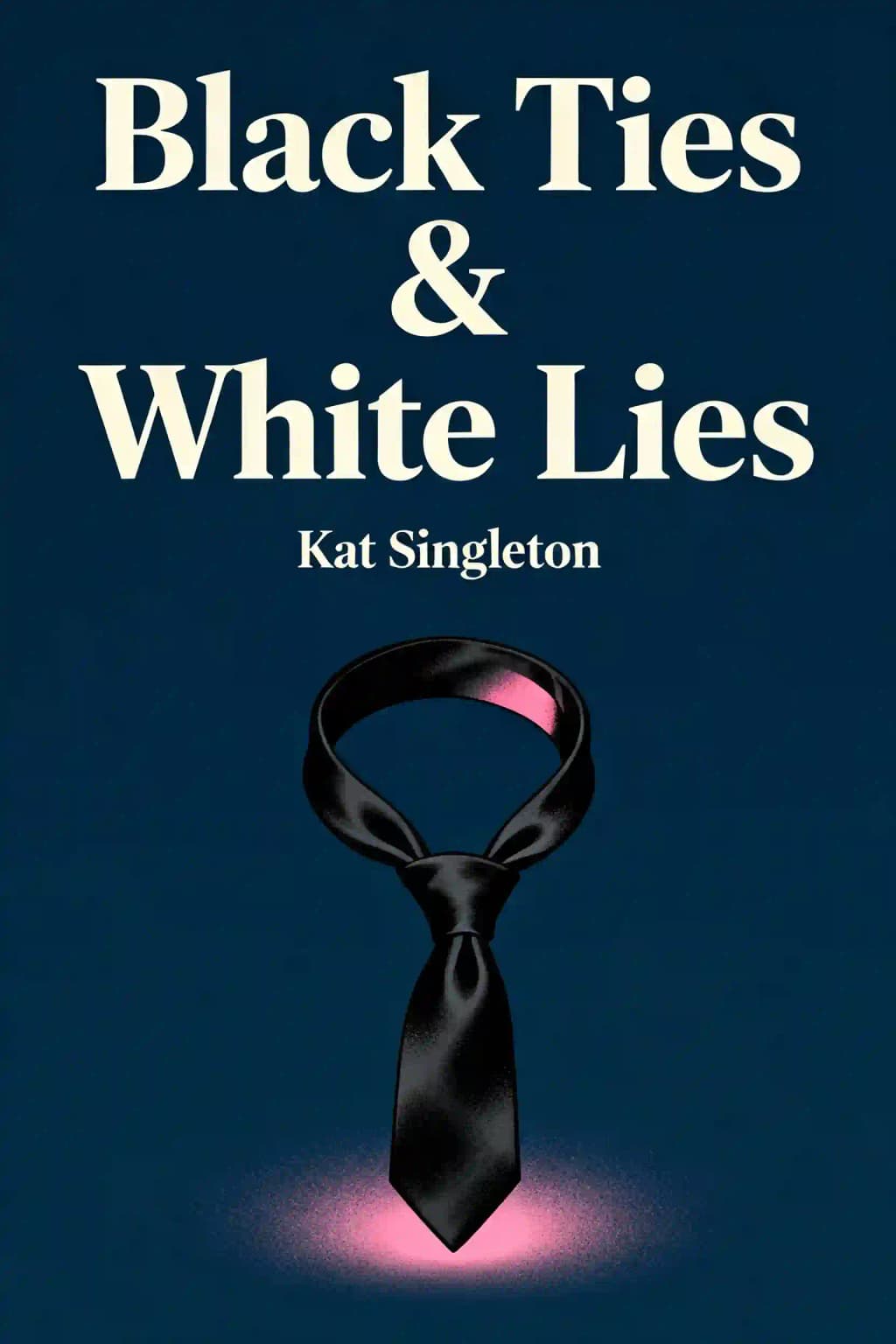
Have you ever wondered what happens when a wealthy, powerful man becomes utterly obsessed with the one woman he can't have? "Black Ties, White Lies" by Kat Singleton has become a sensation among romance readers for its exploration of forbidden desire, corporate power plays, and the thin line between manipulation and genuine connection. This steamy contemporary romance follows Margo, an underappreciated artist working at a security company, and Beck Sinclair, a billionaire businessman who goes to extraordinary lengths to bring her into his world. The book has garnered a devoted following on BookTok, with readers praising its perfect balance of emotional depth and sizzling chemistry. Even celebrities like Mila Kunis and Jennifer Lawrence have been spotted with copies, cementing its status as one of the most talked-about romances of recent years.
第 2 章
A Shocking Reunion and an Indecent Proposal
Margo's ordinary Tuesday workday at Sterling Communications turns extraordinary when her supervisor nervously informs her she's been summoned to meet with the company's mysterious new owner. Walking into the sleek conference room on the thirty-eighth floor, her world tilts on its axis. To her absolute shock, the man waiting behind the mahogany desk is Beck Sinclair - the intimidatingly attractive older brother of her ex-boyfriend Carter. At forty-two, Beck has only grown more magnetic, his dark hair now threaded with silver at the temples, his steel-gray eyes as penetrating as she remembers.
Beck reveals he's purchased her entire company, a $400 million acquisition, just to orchestrate this meeting with her. The revelation leaves Margo clutching the back of a leather chair for support. Their connection runs deeper than the corporate hierarchy would suggest; they share an electric history from a rain-soaked weekend in the Hamptons three years ago - a weekend that ended in heartbreak and unspoken promises, which neither has managed to forget despite their best efforts.
Without preamble, Beck presents his proposition: he wants Margo to become both his personal assistant and his fake fiancee for the next twelve months. His reputation with conservative investors is suffering after compromising photos of him with multiple women appeared in the tabloids, threatening a crucial $2 billion deal. He needs a stable relationship to project reliability and traditional values. The offer comes with extraordinary incentives - a $250,000 salary, a penthouse apartment overlooking Central Park, a company car with a driver, and most temptingly for Margo, an introduction to Camden Hunter, the notoriously selective owner of Hunter Gallery who could transform her artistic dreams into reality.
The arrangement seems straightforward on paper: a business transaction with clear boundaries and expectations. But the undercurrent of attraction crackling between them proves impossible to ignore. Beck's intensity when he looks at her makes her pulse race, the way he calls her "Violet" (a nickname stemming from a private moment involving spilled wine and ruined shoes) carries weighted meaning, and his intimate knowledge of her artistic talents - including the secret paintings she keeps in her apartment - suggests this proposition stems from something far more personal than professional necessity.
"I need you to be not just my assistant, but my fiancee," Beck tells her with characteristic directness, loosening his Italian silk tie as tension fills the space between them. "Twelve months, Violet. That's all I'm asking." The proposal hangs in the air like smoke - a contract that will inevitably change everything, blurring the lines between convenience and desire, between carefully constructed pretense and dangerous reality. His expression reveals nothing, but his fingers drum against the desk in a rare display of uncertainty, waiting for her answer.
第 3 章
The Power of Resistance: A Dangerous Game Begins
From the moment Margo reluctantly agrees to Beck's arrangement, they engage in an exquisite power struggle. She establishes firm boundaries-demanding exclusivity during their fake relationship and insisting nothing physical happen between them. Beck accepts her terms with a knowing smile that suggests he sees these rules as temporary obstacles rather than permanent barriers.
"You can set all the rules you want," he tells her with infuriating confidence, "but eventually, you'll be begging me to break them."
Their dynamic is electric from the start. Beck commands every room he enters, accustomed to immediate compliance with his demands. Margo, however, challenges him at every turn-arriving late to meetings, adding unwanted ingredients to his coffee, and refusing to acknowledge the simmering attraction between them. Her resistance only intensifies his pursuit, creating a delicious tension that builds with each interaction.
The power imbalance between them is stark-he's her boss, her landlord, and her fake fiance all at once. Yet Margo finds ways to maintain her independence, carving out small victories in their daily battles of will. When Beck demands she pack immediately for New York, she deliberately takes her time. When he criticizes her wardrobe, she defends her choices fiercely.
Their verbal sparring matches become a form of foreplay, each exchange charged with unspoken desire. Beck's commanding presence and Margo's spirited defiance create a dynamic where neither is fully in control. This constant push and pull forms the foundation of their relationship-a dance of dominance and submission where the roles continually shift.
"I won't be another conquest," Margo insists, even as she finds herself increasingly drawn to him.
"You could never be just another conquest," Beck responds, his voice dropping to that dangerous register that makes her pulse quicken. "You're the only woman who's ever made me work this hard."
第 4 章
Behind Closed Doors: When Pretense Becomes Passion
The tension between Beck and Margo reaches its breaking point during a business trip to Colorado when their car slides off an icy road, stranding them at a remote inn. Forced to share the only available room-ironically, the honeymoon suite-they can no longer maintain the professional distance they've struggled to preserve.
Their argument in the shower, with Margo shivering from cold and Beck insisting she warm up, escalates into a raw confession of desire. "I'm furious because I want you so badly I can't think straight," Beck finally admits, his control fracturing. "And you're too stubborn to admit you want me too."
When Margo finally surrenders to her desire, dropping her towel and standing naked before him, the scene that follows is explosive. Beck makes good on his promise that she would beg, establishing his dominance while simultaneously worshipping her body. Their first intimate encounter reveals the depth of their connection-it's not just physical release but emotional catharsis.
"I've imagined having you on my desk, on the dining table, against every wall in my house," Beck confesses between kisses. His possessiveness is matched only by Margo's newfound boldness as she embraces her own desires without shame.
The physical relationship that develops between them transcends mere attraction. Beck's attentiveness as a lover-his insistence on her pleasure before his own, his careful observation of her responses-stands in stark contrast to her previous experiences. With Carter, sex had been perfunctory and unsatisfying. With Beck, it becomes transformative.
Their intimate moments reveal vulnerabilities neither shows to the outside world. Beck's need for control extends to the bedroom, but so does his need to provide pleasure and protection. Margo discovers her own power in surrender, finding freedom in trusting Beck completely with her body, even as she guards her heart.
"I want to ruin you for any other man," Beck whispers against her skin, and the frightening truth is that he already has.
第 5 章
The Art of Truth: Revealing Hidden Talents and Desires
Art serves as both metaphor and catalyst throughout Beck and Margo's evolving relationship. Margo's identity as an artist-her true passion beyond her mundane job-becomes central to their connection. Beck recognizes and nurtures this part of her from the beginning, revealing an understanding of her that goes beyond physical attraction.
When Beck gives Margo her own office with the best view in the building, she's baffled. "Why would an assistant need such a large office?" she asks. His response-that she'll be doing much more than bringing coffee-shows his genuine belief in her capabilities. This validation of her professional worth parallels his appreciation of her artistic talent.
The revelation of their shared history comes through art as well. Years earlier, during that fateful weekend in the Hamptons when Margo was dating Carter, she and Beck had shared an intimate moment on the beach. She had drawn his portrait under the moonlight, capturing his muscular form with precise detail while he watched her work with intense focus. That night had created an unspoken connection between them, one that Beck had never forgotten.
"Keep the drawing," he had told her then. "As a reminder of unfinished business."
When Margo later discovers a fully equipped art studio in Beck's penthouse-created specifically for her-she's moved beyond words. Finding her old drawing of him preserved and prominently displayed confirms what she's begun to suspect: Beck's feelings for her predated their current arrangement by years.
This revelation transforms her understanding of their relationship. What she had perceived as manipulation reveals itself as devotion. Beck's extreme measures-buying her company, creating the fake engagement scenario-suddenly appear as the desperate actions of a man who had loved her from afar and seized his chance when it finally came.
Art becomes their shared language, a way to express truths too complex for words. When Beck returns from a business trip to find Margo working in the studio, the painting she creates for him serves as her answer to his pleas for forgiveness and understanding.
第 6 章
Family Complications: The Shadow of the Past
The complicated dynamics of the Sinclair family cast a long shadow over Beck and Margo's relationship, weaving a complex web of past hurts and present tensions. Carter, Beck's younger brother and Margo's ex-boyfriend, represents everything Beck despises - entitlement without responsibility, charm without substance, and a casual cruelty that masks deep insecurity. The brothers' long-standing rivalry, rooted in childhood competition and their father's apparent favoritism toward Carter, intensifies dangerously when Carter discovers Beck's relationship with Margo.
"Remember who had her first," Carter taunts Beck during an unexpected office visit, unaware that Margo is hidden beneath Beck's desk in a compromising position. The crude comment reveals Carter's view of Margo as a possession to be claimed rather than a person to be valued - a perspective that had poisoned their previous relationship and left lasting scars on Margo's self-worth. Beck's white-knuckled grip on his desk betrays the rage simmering beneath his controlled exterior.
The tension explodes during a formal family dinner where Beck plans to announce their engagement. The evening begins with careful civility, but when Carter makes a pointed reference to Margo's working-class background and implies she's sleeping her way up the social ladder, Beck's response is swift and violent - slamming his brother's face against the fine china and crystal, demanding an apology while their mother gasps in horror. "She's my fiancee," he announces to his shocked parents, making public a relationship that had begun as mere pretense. The expensive wine soaks into the imported tablecloth like blood.
This confrontation forces Beck and Margo to acknowledge the shifting nature of their arrangement in ways neither had anticipated. In the privacy of a back alley after fleeing the restaurant, surrounded by the smell of garbage and kitchen exhaust, Margo confesses, "I think despite all the pretending, I've started to wish this was real." The vulnerability in her voice matches the trembling of her hands. Beck's relief is palpable as he admits he's been waiting to hear those words, his carefully constructed walls crumbling in the face of genuine emotion.
The Sinclair parents present another dimension of complexity to the unfolding drama. They welcome Margo warmly, having been disappointed by Carter's treatment of her in the past. Their acceptance - particularly Mrs. Sinclair's protective embrace and Mr. Sinclair's quiet approval - highlights the stark contrast between the brothers: Beck's intensity and focus versus Carter's careless selfishness. The parents' preference for Beck's choice this time carries its own weight of family history and expectation.
When Carter crashes their engagement party, drunk and bitter, the carefully maintained facade of family harmony shatters completely. His forcible kiss of Margo against her will - in front of horrified guests and investors - is both a violation and a declaration of war. Carter's cruel revelation that Beck's pursuit of Margo began as manipulation, a calculated move to secure a business merger, shatters her trust. The truth forces Beck to confront not only the consequences of his initial deception but also the depth of genuine feeling that has grown from artificial seeds. The engagement party's destruction becomes a metaphor for the precarious nature of relationships built on half-truths, no matter how real they've become.
第 7 章
The Breaking Point: When Lies Unravel
The elaborate engagement party Beck arranges at the prestigious St. Regis Hotel marks both the pinnacle of their relationship and the beginning of its potential destruction. As they arrive in a sleek black limousine, their connection seems unbreakable - Beck's hand protectively at the small of Margo's back, her fingers intertwined with his as cameras flash around them. Beck's tender attentions throughout the evening, including an intimate dance that leaves Margo relaxed and glowing, demonstrate how far they've evolved from their initial cold business arrangement into something that feels remarkably real.
The appearance of Ruby Robinson, a sharp-eyed gossip journalist known for exposing Manhattan's elite secrets, introduces the first devastating crack in their carefully constructed facade. Beck's usually composed demeanor crumbles visibly at the sight of her - his jaw tightening, his hand trembling slightly on his champagne glass. When Margo casually asks about their connection, Beck's evasive response and sudden interest in greeting distant relatives plants the first seeds of doubt in her mind.
The situation deteriorates when Carter corners Margo on the terrace, his breath heavy with scotch and his accusations precise and cutting. "Beck is incapable of truly loving anyone," he sneers, revealing details about Beck's past relationships that make Margo's stomach turn. "He sees people as pieces to be moved around his personal chessboard. You're just his latest game piece."
The evening reaches its breaking point after Carter's unwanted advances lead to a violent confrontation with Beck. In the aftermath, surrounded by broken glass and whispered gossip, Margo is forced to confront the rotting foundation of their relationship. "Was any of it real?" she demands, her voice breaking, mascara-stained tears tracking down her cheeks. Beck's desperate confession - that he orchestrated the entire fake engagement just to have an excuse to see her after months of unanswered calls and deleted messages - reveals both the depth of his feelings and the extent of his manipulation.
"I've loved you since the moment I saw you at that bar two years ago," Beck pleads, reaching for her hands which she pulls away. "I created the fake engagement because it was the only way I could think to keep you close to me. Every touch, every kiss - that was real, Margo. Please believe that."
The revelation leaves Margo devastated and questioning every moment they've shared. With trembling fingers, she removes the five-carat diamond engagement ring, placing it on the marble counter between them. Her voice is steady despite her tears when she tells Beck that real love shouldn't be built on lies and manipulation. The parallel between the Sinclair brothers becomes painfully clear to her: "I shouldn't trust either of you - you're both masters of deception wearing different masks."
This breaking point forces both characters to examine what they truly want and what they're willing to sacrifice for love. For Beck, the prospect of losing Margo permanently is unbearable, evidenced by his increasingly desperate attempts to explain. For Margo, the question becomes whether authentic love can emerge from deceptive beginnings, or if some betrayals are too fundamental to overcome.
"I've always loved you," Beck says as security escorts him from her apartment, his voice rough with emotion. "Maybe too much - and that's why I couldn't risk losing you again."
第 8 章
Rediscovering Purpose: Finding Strength in Solitude
Left alone in Beck's penthouse after their painful separation, Margo experiences true independence for perhaps the first time in her adult life. This solitude, initially overwhelming, becomes the catalyst for her personal growth and clarity.
"I realized I'd never really been alone," she reflects. "I'd gone from roommates to Carter to Beck without ever truly standing on my own."
This newfound independence leads her to the Camden Hunter Gallery, a pilgrimage she makes not as "Beck Sinclair's fiancee" but as an artist seeking recognition on her own merits. By chance, she encounters Camden himself-notoriously difficult and reclusive-who takes an interest in her work. When he agrees to display one of her pieces and mentions the possibility of a full exhibition, Margo achieves a professional validation entirely separate from her relationship with Beck.
This victory is particularly meaningful because it represents the fulfillment of a dream on her own terms. The opportunity Beck had promised as part of their arrangement comes to her through her own talent and initiative instead.
Meanwhile, Beck confronts his brother Carter in California, physically attacking him for frightening Margo and "touching what's mine." The confrontation reveals Beck's continued possessiveness but also his genuine concern for Margo's wellbeing. His discovery of Carter's gambling debts provides leverage to keep his brother away from Margo permanently.
When Margo discovers the art studio Beck created for her-complete with the drawing she thought lost years ago-she finally understands the depth and duration of his feelings. The studio represents not just Beck's wealth but his attentiveness to her dreams and needs. This realization helps her see past his initial deception to the authentic love beneath.
"Each 'lie' led us to fall in love," she acknowledges to herself, regretting her harsh judgment of his methods.
第 9 章
Forever Promises: Building a Future on Truth
Beck's early return from his business trip finds Margo working in the studio he created for her. Their reunion becomes a moment of complete honesty, with Beck explaining that he designed the space after their Colorado trip, when he first believed she might eventually return his feelings.
His confession about stealing her drawing years ago reveals the longevity of his devotion: "That memory sustained me during all the time we were apart." When Margo asks what would happen if she couldn't forgive him, his answer demonstrates how completely she has transformed his life: "I'd have to leave New York. I couldn't live in this city without you."
Their reconciliation leads to passionate lovemaking in the studio, surrounded by Margo's art-a perfect symbol of their relationship's evolution from artifice to authenticity. Afterward, they exchange declarations of love without reservation or calculation.
"Do you think you'll still be Mrs. Sinclair someday?" Beck asks, seeking reassurance that their future remains possible.
"Without a doubt," Margo responds with certainty.
Three months later, Beck formally proposes with a ring that perfectly complements his grandmother's engagement ring-a blend of vintage and modern with a crown of diamonds, reflecting Margo's artistic sensibility. Her immediate acceptance and suggestion that they marry the next day reveals her complete commitment.
Beck shows Margo a brownstone he's considering purchasing-the largest on the block with the best view-where he envisions them raising a family someday. This glimpse of their future together represents the transformation of their relationship from temporary arrangement to lifelong commitment.
"There was a time when I doubted I'd have a future with you," Beck reflects as they drive home, Margo excitedly planning their wedding. "Now I can't wait to spend the rest of my life loving you, Margo Moretti."
Their journey-from manipulation to genuine connection, from resistance to surrender, from pretense to truth-completes itself in this promise of a shared future built on mutual understanding and acceptance of both their flaws and strengths.
第 10 章
The Transformative Power of Unconditional Love
At its core, "Black Ties, White Lies" explores how love can transform even the most calculated beginnings into something authentic and profound. Beck and Margo's story demonstrates that relationships rarely follow a straight path-they twist and turn through misunderstandings, revelations, and moments of painful honesty.
Beck's initial approach to winning Margo-buying her company, creating an elaborate fake engagement scenario-reflects his businessman's mentality of identifying a goal and deploying whatever resources necessary to achieve it. His methods are manipulative, even ethically questionable, but they stem from genuine emotion rather than malicious intent.
Margo's journey from resistance to acceptance isn't about surrendering her independence but about recognizing that vulnerability requires greater courage than self-protection. Her artistic sensibility allows her to see beyond Beck's controlling exterior to the wounded man beneath-someone who has never learned to express love without trying to control its outcome.
Their relationship succeeds ultimately not because Beck's wealth creates a fairy-tale existence, but because they both learn to be honest about their needs and fears. Beck must learn that Margo cannot be possessed like a company acquisition; she must be earned through trust and respect. Margo must learn that protecting herself from potential hurt also prevents her from experiencing profound connection.
The physical intimacy they share-initially Beck's tool for breaking down Margo's resistance-becomes a language through which they express truths too complex for words. Their passionate encounters reveal vulnerabilities neither shows to the outside world, creating a private space where both can be fully themselves.
By the story's conclusion, the power dynamic between them has balanced. Beck's wealth and position remain, but Margo has found her own strength through her art and self-discovery. Their commitment to each other becomes a choice made freely by equals rather than a transaction between boss and employee or rescuer and rescued.
In this transformation lies the universal appeal of their story-the hope that our own complicated beginnings, misunderstandings, and moments of deception might evolve into relationships of profound understanding and unconditional acceptance.