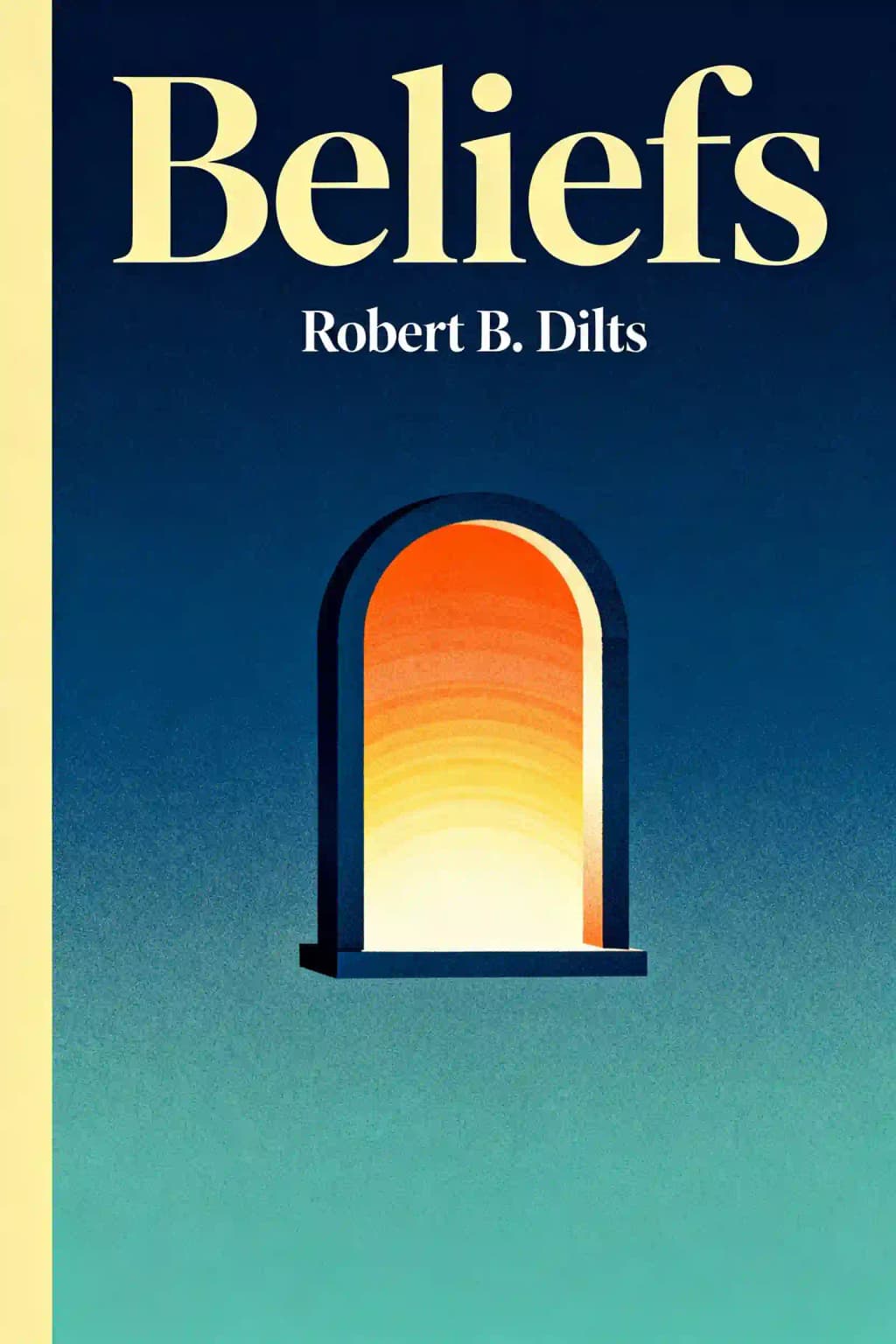
Discover how your beliefs shape your reality in this groundbreaking NLP masterpiece. Robert Dilts reveals powerful techniques that transform limiting thoughts into pathways for wellbeing. What if the key to unlocking your potential isn't changing behaviors, but reprogramming the beliefs behind them?
Robert B. Dilts, a pioneering Neuro-Linguistic Programming (NLP) expert and bestselling author of Beliefs: Pathways to Health and Well-Being, has shaped modern psychology through his groundbreaking work on belief systems and behavioral change. Co-authored with Tim Hallbom and Suzi Smith, this seminal book merges Dilts’ clinical insights with practical frameworks for transforming limiting beliefs into empowering mental models.
A protégé of NLP founders John Grinder and Richard Bandler, Dilts developed core NLP methodologies like Reimprinting and Sleight of Mouth, now standard tools in coaching and therapy. His Encyclopedia of Systemic NLP and Changing Belief Systems with NLP remain foundational texts for practitioners.
As founder of Dilts Strategy Group, he’s advised Fortune 500 companies like Apple, HP, and Fiat on leadership development, while his Success Factor Modeling™ process fuels entrepreneurial growth globally. Co-founder of the International Association for Generative Change, Dilts bridges corporate innovation with personal transformation.
Recognized with NLP’s Lifetime Contribution Award in 2018, his work is integrated into IBM’s management training and Weight Watchers’ behavior programs, reaching millions worldwide.
Changing Belief Systems with NLP by Robert B. Dilts explores neuro-linguistic programming (NLP) techniques to identify and transform limiting beliefs. The book introduces frameworks like Logical Levels (environment, behavior, capabilities, beliefs, identity) and methods such as Reimprinting to address belief formation. It emphasizes aligning beliefs with goals to achieve personal and professional growth, making it a guide for systematic behavioral change.
This book is ideal for NLP practitioners, life coaches, therapists, and individuals seeking self-improvement. It’s particularly valuable for those addressing limiting beliefs, career blockers, or emotional patterns. Dilts’ actionable frameworks also benefit leaders aiming to foster organizational change or improve team dynamics through belief alignment.
Yes, for its practical NLP techniques and structured approach to belief change. Dilts combines theoretical depth with exercises like Failure into Feedback and Meta Program adjustments, offering tools for lasting transformation. The book’s focus on subconscious belief structures makes it a standout resource in personal development literature.
The Logical Levels framework organizes human experience into six hierarchical levels: environment, behavior, capabilities, beliefs, values, and identity. Changing a higher level (e.g., identity) cascades down to lower levels, enabling holistic transformation. For example, shifting the belief “I’m unworthy” (belief level) can improve decision-making (capability) and actions (behavior).
Reimprinting involves revisiting past traumatic experiences to update limiting beliefs formed during those events. By dissociating from the memory and introducing new resources (e.g., confidence), individuals reframe the experience’s meaning. This technique helps resolve long-standing emotional blocks and aligns beliefs with current goals.
This NLP technique reframes failures as learning opportunities. It involves:
The process builds resilience and encourages growth-oriented mindsets.
Meta Programs are unconscious filters that shape how individuals perceive and process information. For example, a “toward motivation” filter focuses on goals, while an “away from” filter avoids risks. Dilts explains how adjusting these programs can alter belief formation, improving decision-making and reducing self-sabotage.
The book provides steps to integrate conflicting beliefs by identifying shared values or outcomes. Using a Meta-Position, individuals objectively evaluate opposing beliefs (e.g., “I want success” vs. “Success is selfish”) and create a unified perspective. This reduces internal conflict and supports congruent decision-making.
Some critics argue the book oversimplifies complex psychological issues or requires prior NLP knowledge for full application. Others note that techniques like Reimprinting may feel abstract without guided practice. However, its structured frameworks remain widely praised for their transformative potential.
While both books by Dilts focus on belief change, Sleight of Mouth emphasizes linguistic patterns to reframe arguments, whereas Changing Belief Systems delves into subconscious belief structures. The latter offers more systemic tools for identity-level transformation, making them complementary reads.
Yes. Techniques like Belief Strategy Mapping help identify the subconscious processes sustaining anxiety (e.g., negative self-talk loops). By adjusting internal representations (e.g., mental imagery submodalities) and evidence criteria, individuals can cultivate self-affirming beliefs and reduce doubt.
Use Logical Levels to align team beliefs with organizational goals. For example, address resistance to change by clarifying shared values (belief level) before modifying workflows (behavior level). Techniques like Conflict Resolution also improve collaboration by harmonizing individual and team objectives.
通过作者的声音感受这本书
将知识转化为引人入胜、富含实例的见解
快速捕捉核心观点,高效学习
以有趣互动的方式享受这本书
Beliefs act as the gatekeepers of possibility.
Beliefs aren't random thoughts.
Our brains don't inherently know the difference between imagined experiences and remembered ones.
Change can occur at various levels-from our environment to our spiritual connections.
将《Beliefs》的核心观点拆解为易于理解的要点,了解创新团队如何创造、协作和成长。
将《Beliefs》提炼为快速记忆要点,突出坦诚、团队合作和创造力的关键原则。

通过生动的故事体验《Beliefs》,将创新经验转化为令人难忘且可应用的精彩时刻。
随心提问,选择声音,共同创造真正与你产生共鸣的见解。

"Instead of endless scrolling, I just hit play on BeFreed. It saves me so much time."
"I never knew where to start with nonfiction—BeFreed’s book lists turned into podcasts gave me a clear path."
"Perfect balance between learning and entertainment. Finished ‘Thinking, Fast and Slow’ on my commute this week."
"Crazy how much I learned while walking the dog. BeFreed = small habits → big gains."
"Reading used to feel like a chore. Now it’s just part of my lifestyle."
"Feels effortless compared to reading. I’ve finished 6 books this month already."
"BeFreed turned my guilty doomscrolling into something that feels productive and inspiring."
"BeFreed turned my commute into learning time. 20-min podcasts are perfect for finishing books I never had time for."
"BeFreed replaced my podcast queue. Imagine Spotify for books — that’s it. 🙌"
"It is great for me to learn something from the book without reading it."
"The themed book list podcasts help me connect ideas across authors—like a guided audio journey."
"Makes me feel smarter every time before going to work"

免费获取《Beliefs》摘要的 PDF 或 EPUB 版本。可打印或随时离线阅读。
Have you ever wondered why some people overcome impossible odds while others remain trapped in self-limiting patterns? The answer lies not in willpower or luck, but in the invisible architecture of our beliefs. When Robert Dilts' mother faced terminal cancer in 1982, doctors offered a grim prognosis. Instead of accepting this verdict, Dilts spent four intensive days working with her belief systems. The results were remarkable - she declined conventional treatments, made dramatic improvements, and seven years later remained cancer-free, swimming regularly and even appearing in television commercials. This wasn't a miracle; it was a demonstration of how our beliefs literally shape our reality. Unlike vague positive thinking approaches, Dilts offers precise, reproducible techniques for rewiring the neural pathways that determine what we consider possible. These techniques have transformed Olympic athletes, Fortune 500 executives, and even influenced Tony Robbins' approach to personal development. The power lies in understanding that beliefs aren't random thoughts - they're organized systems with specific structures that determine how we interpret reality and shape our responses to the world around us.