第 1 章
The Invisible Workforce Behind Your Favorite Meals
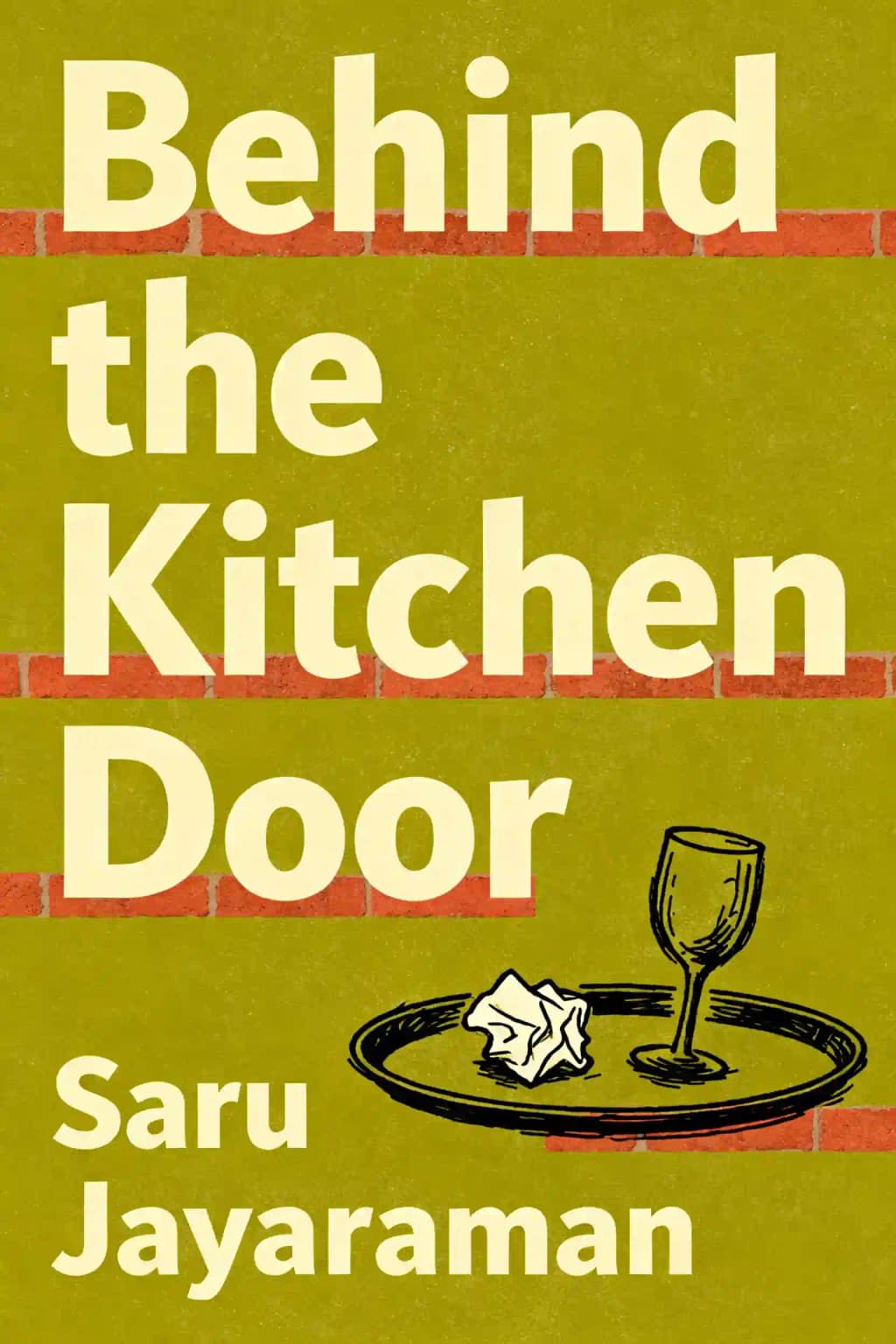
When you sit down at your favorite restaurant, savoring that perfectly seared steak or artfully plated pasta, have you ever wondered about the hands that prepared it? Behind every delicious meal lies an often-overlooked story of struggle, resilience, and inequality. Saru Jayaraman's groundbreaking expose "Behind the Kitchen Door" has transformed how we think about dining out, earning praise from food movement leaders like Eric Schlosser and Alice Waters. The book has become required reading in culinary schools nationwide and sparked a revolution in how we view restaurant ethics. Endorsed by celebrities from Jane Fonda to Tom Colicchio, this eye-opening work reveals the stark reality that while Americans increasingly care about where their food comes from, they remain largely unaware of who prepares and serves it-and under what conditions. As you enjoy your next meal out, consider this: the person who prepared your food likely came to work sick, earns poverty wages, and faces discrimination daily. Ready to see what's really happening behind the kitchen door?
第 2 章
A Movement Born from Tragedy
Saru Jayaraman's journey into restaurant worker advocacy began with an unexpected phone call after the September 11 attacks. She was asked to help build an organization supporting displaced workers from Windows on the World, the restaurant that had occupied the top floors of the World Trade Center. Seventy-three restaurant workers, mostly immigrant kitchen staff preparing for a morning event, lost their lives that day. When the restaurant's owner opened a new establishment but refused to rehire surviving employees, claiming they weren't "experienced enough," the workers were outraged.
These weren't just any restaurant jobs-Windows on the World had provided union wages and benefits in an industry where only 20% of positions pay livable wages. Determined to fight back, Jayaraman partnered with Fekkak Mamdouh, a former Windows headwaiter, to cofound the Restaurant Opportunities Center (ROC) in April 2002. Their mission was clear: advocate for these displaced workers while organizing for industry-wide improvements.
Their first campaign made headlines when they organized a protest at the Windows owner's new restaurant on opening night. The publicity pressure worked, securing a meeting with the owner who ultimately agreed to hire almost all the workers in a new banquet department. This victory brought immediate attention to ROC, and restaurant workers throughout New York City began seeking their help with widespread industry problems.
As the organization grew, they hired former Windows workers and conducted political education about workplace issues, including the racial segregation that permeates the industry-where lighter-skinned workers typically serve in visible front-of-house positions while darker-skinned immigrants work hidden in kitchens.
One early campaign centered on Floriberto, an undocumented Mexican immigrant working at a small French bistro. After being fired for requesting unpaid wages, Floriberto approached ROC for help. The organization launched a campaign against the restaurant, but tragedy struck when Floriberto suddenly died from undiagnosed diabetes. Despite this heartbreak, ROC continued fighting and eventually won $164,000 in unpaid wages plus benefits like paid sick days for the workers. Tragically, Floriberto's $15,000 share remains trapped in legal escrow, unavailable to his family who needed it for his funeral expenses.
This devastating experience opened Jayaraman's eyes to the precarious existence of restaurant workers-people living paycheck to paycheck, separated from family, without healthcare or support systems. It was her "Matrix moment," suddenly seeing the invisible world behind every restaurant meal, a world where millions of workers' dreams are perpetually deferred while they serve others celebrating life's milestones.
第 3 章
The True Cost of "Sustainable" Dining
In 2007, Jayaraman and her ROC co-founder Mamdouh visited organic farms in Italy to learn about the Slow Food movement. What struck them most wasn't the absence of pesticides or the humane treatment of animals-it was how "sustainability" in its truest form wasn't revolutionary but traditional. These Italian family farms practiced what farmers worldwide had done for millennia, before industrial agriculture changed everything.
The American obsession with organic, sustainable food began about 40 years ago with environmental concerns in the 1970s and gained momentum around 2000 amid obesity epidemic concerns. But Italian "slow food" included something often missing from American sustainable food conversations-sustainable labor practices that treat the people handling food with dignity and respect.
This disconnect became painfully clear through Daniel's story. An Ecuadorean immigrant who grew up on a family farm in Cuenca where they naturally grew crops without pesticides, Daniel eventually followed his brothers to America. After a perilous border crossing, he started as a dishwasher in New York, learned English, and worked his way up in restaurants.
Despite his skills and fluent English, Daniel faced constant barriers to advancement at Mario Batali's prestigious Del Posto restaurant, where European staff were favored for waiter positions. The kitchen environment was toxic-a racist chef hurled insults like "fucking Mexicans" at Latino staff and once threw a plate at Daniel's back. Hungarian supervisor "Captain Jack" terrorized workers on the dining floor, grabbing and shaking them while shouting racial slurs even in front of customers.
The hypocrisy was stunning-while management promoted sustainability to diners, they skimmed tips from banquet service and misrepresented menu items as organic when they weren't. After discovering these deceptive practices, Daniel contacted ROC-NY. Together with 30 coworkers, they organized demonstrations and filed a federal lawsuit.
Their persistence paid off: ROC-NY won over $1 million in stolen wages and tips, secured promotions for Latino bussers, and established transparent promotion policies. The restaurant fired the abusive chef and created procedures for reporting grievances. Most impressively, Batali's company embraced change, joining ROC's Restaurant Industry Roundtable to promote "high road" employment practices.
This campaign helped redefine "sustainable food" to include fair labor practices-recognizing that food cannot be truly sustainable when prepared in exploitative conditions. As restaurateur Diep Tran demonstrated through her Good Girl Dinette in Los Angeles, sustainability means creating a business where "as the business grows, the people grow with it." Though starting with modest wages just above California's minimum, Diep built a model that balanced fair wages with affordable Vietnamese cuisine while teaching staff to minimize waste and embrace environmental practices. Her approach proves that restaurants can be both environmentally and socially responsible while remaining profitable.
第 4 章
When Sick Workers Serve Your Food
Would you want someone with the flu handling your dinner? Unfortunately, this happens daily in restaurants across America. Restaurant workers frequently come to work sick because they can't afford to take unpaid days off. One fast-food worker from Detroit described having to work with a severe cold, cough, fever, and runny nose despite the risk of infecting customers. When she asked her manager if she could leave because she was handling food while sick, the manager simply laughed and told her to "try not to cough."
The CDC estimates that 1 in 6 Americans suffers from food poisoning annually, with 3,000 deaths. ROC research reveals a direct connection between poor working conditions and food safety risks. Restaurants that mistreat employees-stealing tips, denying overtime, forcing off-the-clock work-are typically the same establishments that compromise customer health and safety.
Thomas's story exemplifies these dangerous conditions. After going unpaid for months at a struggling restaurant, he ended up living in the establishment's attic above the women's restroom. The situation deteriorated further when his manager asked him to prepare spoiled food, including slimy salmon, because vendors wouldn't deliver fresh ingredients due to unpaid bills. The bar watered down alcohol to make it last longer, and worker morale plummeted as nobody got paid.
These health violations aren't isolated incidents. Over 42% of workers surveyed by ROC reported being forced to do something that might risk customer health due to time pressure. The restaurant industry ranks third highest for nonfatal occupational injuries, with nearly 200,000 reported accidents yearly. Almost half of surveyed workers suffered work-related cuts, and 45.8% experienced burns-injuries that cost the industry approximately $300 million annually.
The problem stems from restaurants' high-pressure environments where servers juggle multiple tables, food runners dash between kitchen and dining room, chefs bark orders, line cooks work at frantic speeds, and dishwashers operate hot machinery while standing on wet floors. With 76% of workers reporting understaffing issues and nearly half filling positions they weren't trained for, accidents are inevitable.
Worst of all, 90% lack paid sick days, forcing two-thirds of restaurant workers to prepare and serve food while ill, given their median wage of just $9.02 per hour. Nikki, now an ROC organizer in Washington D.C., experienced this firsthand at an "organic" restaurant where she discovered appalling health violations-no soap for a month because bills weren't paid, dishes washed with only hot water, and being forced to work with conjunctivitis because she couldn't find anyone to cover her shift.
The CDC reports that nearly 12% of restaurant workers admitted to working while suffering from flu symptoms, vomiting, or diarrhea on multiple shifts in the past year. Workers with paid sick leave were half as likely to work while ill, but the National Restaurant Association actively lobbies against paid sick leave legislation-even striking a deal to exempt tipped workers from Washington D.C.'s sick leave law.
Woong Chang's story reveals the devastating impact of illness without workplace protections. After contracting H1N1 (swine flu) while working at an upscale French restaurant in D.C., he became bedridden for a month-unable to eat solids, struggling to breathe, and drifting in and out of consciousness. Without paid sick days, he accumulated credit card debt to survive, only to discover he'd been replaced when he recovered.
While paid sick days won't eliminate all foodborne illness, evidence suggests they make a significant difference-San Francisco saw outbreaks drop from 18 to 4 after implementing citywide paid sick leave. Consumer advocacy for paid sick days legislation would ensure restaurant workers aren't forced to work while ill, benefiting both public health and worker opportunity.
第 5 章
Living on $2.13 an Hour: America's Hidden Labor Crisis
Most diners are shocked to learn that the federal tipped minimum wage remains frozen at $2.13 per hour-unchanged since 1991. While servers must theoretically make at least the federal minimum wage of $7.25 when tips are included (with employers required to make up any shortfall), the reality is far more complex and exploitative.
Only seven states require the same minimum wage for tipped and non-tipped workers, while twenty-one states allow restaurants to pay less than $3.00 hourly. Tips are typically shared among various staff-servers, runners, bussers, bartenders-through pooled or percentage systems, though 13% of workers report managers illegally stealing from tip pools.
Restaurant workers hold 7 of the 10 lowest-paying occupations in the United States, with a median wage of just $9.02 per hour including tips-leaving a family of four below the federal poverty line. For undocumented workers like Claudia, a young Mexican immigrant working at a national pancake chain in Texas, the situation is even more precarious.
Despite being bright and articulate, Claudia found herself working for $2.13 per hour while attending high school. Her manager instructed her to falsely report earning enough tips to reach minimum wage when she hadn't-a common illegal practice. When customers refused her service due to her limited English or withheld tips, the restaurant avoided paying the legally required difference.
As the only Latina server at her restaurant, Claudia faced systemic discrimination. White servers were preferentially assigned lucrative banquet events, while managers forced her to report more tips than earned to avoid paying minimum wage. Required to clock out before completing side work, she often worked hours off the clock without compensation. Most degradingly, managers forced her to translate their abusive comments to Latino bussers and dishwashers.
Earning only $150-200 weekly between her $2.13 hourly wage and meager tips, Claudia struggled to afford gas, car payments, and school expenses. Perpetually hungry, she survived on employee pancake meals and occasionally flirted with Mexican cooks for food: "I would put on makeup and make jokes that only Mexicans would know. I was really hungry!" After being forced to pay $98 for customers who walked out during an understaffed shift-effectively working an 11-hour overnight shift for negative pay-she finally quit.
Restaurant workers living paycheck to paycheck can't afford such wage theft, with some becoming homeless as a result. Ironically, food service workers use food stamps at nearly double the rate of other U.S. workers, raising questions about taxpayers subsidizing the growing restaurant industry. Over 80% of food service workers don't earn living wages-the average restaurant worker earning $8.90/hour would need to work 107 hours weekly to afford fair market rent for a two-bedroom apartment.
Some employers, however, successfully pay workers more than $3 an hour while building profitable businesses. Jason and Ben, former dishwashers turned owners of Russell Street Deli in Detroit, created a restaurant model that prioritizes worker well-being. They pay servers $5/hour plus tips (nearly double Michigan's $2.77 tipped minimum), provide cooks $12-17/hour, offer health insurance and IRAs, and maintain transparent financial practices. Their business model balances affordability (keeping soup prices fixed so "anyone in Detroit can afford" to eat there) with strategic price increases on premium items and diversification through catering and wholesale.
Seven states-Alaska, California, Minnesota, Montana, Nevada, Oregon, and Washington-have eliminated the separate tipped minimum wage, requiring all workers receive the same minimum wage regardless of tips, yet still maintain thriving restaurant industries. This approach eliminates confusion for employers about calculating wages, prevents exploitation, reduces workers' reliance on public assistance, and ensures servers can earn a living wage without depending entirely on customers' generosity.
第 6 章
The Segregated Dining Room
The restaurant industry reveals stark racial segregation in hiring and promotion practices, with workers of color predominantly confined to lower-paying positions. Restaurant workers report widespread racial discrimination, with many establishments reserving front-of-house positions for white employees. One New York cook describes how management uses language proficiency as a pretext to exclude non-white applicants, while hiring white Europeans with accents. A Los Angeles cocktail server reveals colorism in hiring, where some employers apply a "brown paper bag test"-a practice dating back to slavery days-hiring only light-skinned staff for visible positions.
The author's outreach work with ROC revealed consistent patterns across urban restaurants: white servers and bartenders occupying the highest-paying front-of-house positions, while people of color predominantly work as bussers, runners, and back-of-house staff. Despite "foodie culture" celebrating diverse ethnic cuisines, the restaurant industry maintains racial hierarchies that limit advancement opportunities for workers of color.
Oscar, a former ROC organizer in Miami with dark brown skin and curly hair, experienced this discrimination firsthand. Despite excelling as a restaurant busser-with customers frequently praising his service over the actual servers-Oscar was repeatedly denied promotion to waiter. The restaurant instead hired inexperienced white workers who "had the right look" for server positions, while Oscar and other workers of color remained bussers earning just one-quarter of server wages.
In fall 2011, Oscar and his colleagues began organizing workers at Capital Grille Steakhouse in Miami, joining African American and Latino workers from other locations who had already filed federal litigation alleging wage theft and discrimination. ROC viewed this campaign as a strategic opportunity to impact the industry through Darden, the world's largest full-service restaurant company with nearly 180,000 workers across brands like Olive Garden and Red Lobster.
Frantz, a Haitian dishwasher earning less than $10/hour, exemplified the racial hierarchy at Capital Grille where workers got "darker" from front to back of house. Despite previous busser experience, he was kept as a dishwasher, subjected to racial taunts, and had his hours stolen when managers clocked him out early. After joining ROC's campaign and delivering a demand letter, the wage theft stopped and Frantz's confidence grew.
The restaurant industry segregates workers by position, segment, and location, creating a racial wage gap of over $4 per hour. White workers reported median wages of $14/hour while people of color earned just $9.88/hour, with 96% of sub-minimum wage workers being people of color. Fine-dining establishments typically feature white workers serving and bartending up front, with workers of color relegated to bussing tables or back-of-house positions-a pattern resembling Jim Crow segregation.
In Miami specifically, this racial hierarchy follows a clear wage pattern: white workers ($11.29/hour), Latinos ($10.00/hour), non-Haitian blacks ($9.00/hour), and Haitians ($8.21/hour)-directly impacting workers' ability to pay rent and support their families. The wage gap extends across restaurant types, with fine-dining workers earning a median wage of $15.00/hour, family-style restaurant workers $12.13/hour, and fast-food workers just $8.50/hour.
Segregation extends beyond discriminatory hiring to geographic barriers. Workers of color face significantly longer commutes to access better restaurant jobs, with the average Los Angeles restaurant worker commuting 53 minutes daily. People of color working in fine dining must travel an additional 11 minutes each day compared to white workers-a substantial burden, especially given inadequate public transportation systems.
To document widespread racial discrimination, ROC conducted a three-year study sending 400 paired testers (white applicants and applicants of color with identical qualifications) to interview for waitstaff positions in New York City fine-dining restaurants. The results were stark: white workers were twice as likely to obtain living-wage positions, while workers of color faced three times more questioning about their qualifications. European accents were advantageous while "Third World" accents were detrimental.
This research supported ROC's campaign against a four-star restaurant that systematically promoted less experienced French immigrants over qualified Latino bussers. Despite resistance from some affluent diners who claimed to enjoy "diverse" staff (while failing to notice the segregated positions), ROC ultimately won the campaign, compelling the restaurant to promote several Latino and Bangladeshi workers and implement a transparent promotions policy.
第 7 章
Women in the Kitchen: Harassment, Inequality, and Resistance
Beginning in 2006, the New York Post published a series of scandalous articles exposing sexual harassment in restaurant kitchens with headlines like "Tomatoes in the Kitchen" and "Dirty Dishes." Women chefs reported disturbing incidents: one described a sous chef following her into a locker room to watch her change clothes, while another recounted how her executive chef nicknamed her "whore," forced her to smear egg on her chest, and threatened to ruin her career if she protested.
These exposes coincided with the rise of celebrity chef reality shows celebrating aggressive, sexist behavior from figures like Gordon Ramsay, who boasted about telling a woman "to get her boobs off my hot plate" and normalized verbal abuse in kitchens. This toxic culture emboldened real-world harassment, with women increasingly reporting to ROC about similar abuses.
Alicia, a light-skinned African American woman with a passion for cooking, discovered kitchen politics at their worst during her culinary school internship-physical fights between sous chefs, sabotaged prep work, and gender segregation. Among twenty kitchen staff, only three were women: the pastry chef, Alicia, and two immigrant women making salads. Women were consistently relegated to "easier" pastry and salad positions with lower pay and no path to advancement. Male colleagues called them "little girls" and "cute girls making cookies," excluding them from management meetings because they were "just girls doing desserts."
Despite the challenges, Alicia loved her pastry work and found camaraderie with supportive coworkers. When her supervisor Fred was promoted to oversee three restaurants, Alicia essentially performed executive pastry chef duties without promotion or compensation. Without Fred's protective buffer, the executive chef's inappropriate behavior toward Alicia intensified. When he tried to replace Fred by offering Alicia the executive pastry chef position at $45,000 (compared to Fred's $60,000), she refused out of loyalty. The chef later blocked her from advancing to another restaurant, claiming she wasn't qualified for a position he had previously offered her.
ROC research confirms four key factors driving gender wage inequality in restaurants: First, women comprise 66% of tipped workers (legally paid just $2.13/hour) but only 48% of non-tipped workers. Second, women are concentrated in casual restaurants rather than fine dining, where livable wages are found. Third, women in fine dining typically hold lower-paying positions like pastry or salad prep. Fourth, women earn less than men even in identical positions-waitresses make 85 for every dollar waiters earn, a $70 weekly difference that affects ability to pay for childcare, transportation, or rent.
Beyond wage inequality, women face rampant sexual harassment in restaurant environments dominated by men. Yelena's experience at an Irish pub exemplifies this problem. Despite having degrees in hospitality management, she had to "audition" before four male managers who evaluated her appearance in uniform, with one commenting, "Looks good. I wish all my girls looked as good as you do."
The general manager's harassment was pervasive-grabbing women, making inappropriate comments, kissing servers on the mouth, and demanding kisses before giving paychecks. He segregated positions by gender (all servers and bartenders were women, all managers and back-of-house staff were men). When Yelena refused his advances, he punished her with poor shifts and sections. The toxic environment extended to customers, who made inappropriate comments and physical contact with female staff.
Women's inequality in restaurants perpetuates poverty for over a million female workers, many of whom are single mothers supporting families on $8 per hour-below the federal poverty line. However, some women have broken through, including Shardha Young, who rose from hostess to general manager of a profitable New York restaurant before joining ROC's worker-owned restaurant initiative. Under her leadership, COLORS restaurant finally became profitable, bringing in more revenue than under any previous manager.
While reality TV cooking shows may exaggerate kitchen dynamics, they reflect an uncomfortable truth: modern restaurants with trendy organic menus still operate with outdated labor practices that would outrage feminist pioneers. Through conscious dining choices and voting for policies like increasing the tipped minimum wage, everyone can advocate for women and fight for equitable labor practices in the restaurant industry.
第 8 章
From Tragedy to Transformation: Building a Movement
America's restaurant industry offers incredible diversity-from kimchi tacos to vegan barbecue to global cuisines from every corner of the world. Ten million workers from diverse backgrounds create these unique dining experiences, yet they struggle with the working conditions described throughout this book.
The movement for restaurant worker justice began with Windows on the World survivors who, fundamentally changed by 9/11, devoted themselves to improving intolerable industry conditions. Twelve years later, ROC has grown from a small New York group to a national organization with 10,000+ members across 20 states. They've won 11 campaigns against exploitation, recovering over $6 million in stolen wages, opened worker-owned COLORS restaurants in New York and Detroit, trained 2,500+ workers for living-wage jobs, and influenced policy at all government levels.
Siby, an African immigrant from Ivory Coast with Malian roots, exemplifies this transformation. Once a French teacher who became a chef at Windows on the World, a fateful shift swap saved his life on 9/11 but cost him his best friend Karim, who perished in the attacks. After initially withdrawing to work as a taxi driver while grieving his losses, Siby eventually returned to ROC and became a powerful organizer.
During his first year, Siby conducted over 1,000 surveys on restaurant working conditions, providing crucial data for this book. He led successful campaigns against wage theft, helped fight for an increase in New York's minimum wage, assisted in opening COLORS Restaurant, and played a key role in combating discrimination at New York's only four-star restaurant by building unity across racial lines. In 2008, Siby became co-director of ROC-New York, allowing the founders to launch ROC United nationally.
If a small group of low-wage workers like Siby, Nikki, Claudia, Alicia, Oscar, and Shardha can create substantial change, imagine what consumers could accomplish by demanding more from restaurants. ROC has created the National Diners' Guide to help consumers support restaurants with good labor practices.
Consumers can make a difference by using this guide to identify responsible restaurants, speaking directly with restaurant workers about their working conditions, engaging restaurant managers about training and promotion opportunities, fighting to raise the $2.13 federal minimum wage for tipped workers, supporting paid sick day legislation, refusing to patronize restaurants with discriminatory hiring practices, and joining the Food Chain Workers Alliance campaign.
As Siby notes, consumers must look beyond just the quality of food and service to consider whether everyone in the food chain receives fair treatment. By becoming more observant and advocating for better conditions, diners can enjoy their restaurant experiences with peace of mind, knowing the people who prepare and serve their food are treated with dignity and respect.
第 9 章
The Research Behind the Movement
This book draws on comprehensive restaurant industry studies titled "Behind the Kitchen Door" conducted by the Restaurant Opportunities Center (ROC) across eight locations, encompassing 4,323 worker surveys-the largest national survey of restaurant workers ever conducted-along with 240 employer interviews and 240 worker interviews.
Additional data comes from ROC reports including "Burned" (2009), "The Great Service Divide" (2009), "Waiting on Equality" (2010), "Serving While Sick" (2010), and "Tipped over the Edge" (2012). "The Great Service Divide" featured matched-pairs testing at 138 Manhattan restaurants and demographic canvassing of 45 fine-dining establishments to document racial disparities in hiring. "Waiting on Equality" added focus groups with women workers, while "Serving While Sick" analyzed health issues using the combined national survey data plus additional health-focused surveys.
Since no government data exists on individual restaurant workers, ROC used convenience sampling with stratification to ensure representativeness, using Bureau of Labor Statistics industry data and Census demographic information as guides. While not random sampling, the approach of surveying workers leaving restaurants helped include populations typically underrepresented in Census data, and in-person surveys yielded high response rates.
The final data was weighted to match the distribution of front and back of house staff across full-service and limited-service establishments nationally, with each city's sample weighted by the relative size of its restaurant industry to ensure proper representation across different-sized markets. This methodical approach provides the most comprehensive picture of restaurant worker conditions ever assembled, offering a solid foundation for the movement to transform the industry.