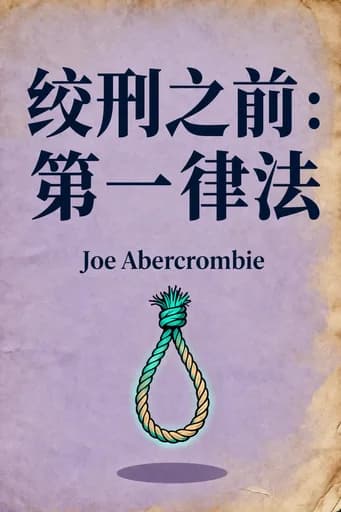
In Abercrombie's dark fantasy masterpiece, characters face impossible choices while battling inner demons. Ranking 5th in the 2008 SF Site Readers Poll, this middle trilogy installment features what fans call "the most impressive character development" in fantasy literature. Will you survive the journey?
Joe Abercrombie is the New York Times bestselling author of Before They Are Hanged, the gripping second installment in his acclaimed First Law trilogy, and a pioneering voice in grimdark fantasy.
Born in Lancaster, England in 1974, Abercrombie studied psychology at Manchester University before working as a freelance film editor—a background that sharpened his cinematic pacing and character-driven storytelling. The First Law series explores themes of war, power, and moral ambiguity through darkly humorous and cynical characters who subvert traditional heroic fantasy tropes.
Beyond the original trilogy, Abercrombie has written standalone novels in the same world including Best Served Cold, The Heroes, and Red Country, along with the Age of Madness trilogy and the young adult Shattered Sea series. A two-time Locus Award winner, his work has been published in over thirty countries and translated into numerous languages, establishing him as one of the most influential fantasy authors of the 21st century.
Before They Are Hanged is the second installment in Joe Abercrombie's First Law Trilogy, following multiple characters through parallel storylines of war, betrayal, and survival. The narrative splits between Logen Ninefingers' perilous quest to the Edge of the World with the wizard Bayaz, Collem West's brutal campaign against northern invaders, and Sand dan Glokta's desperate defense of the besieged city of Dagoska. This grimdark fantasy explores moral ambiguity and the harsh realities of power.
Joe Abercrombie is a British fantasy author born in Lancaster, England in 1974, who became a New York Times bestselling writer known for pioneering modern grimdark fantasy. His writing style features multiple third-person perspectives, dark humor, cynical tone, and visceral depictions of violence and pain. Abercrombie subverts traditional fantasy heroism by creating morally complex characters in brutal, realistic settings where prophecies fail and good doesn't always triumph.
Before They Are Hanged appeals to readers seeking mature, character-driven fantasy that challenges genre conventions. Fans of grimdark fiction, morally ambiguous protagonists, and unflinching depictions of warfare will appreciate Abercrombie's cynical worldview and dark humor. This book suits adults comfortable with graphic violence, complex political intrigue, and narratives where traditional heroism is deconstructed. Readers who enjoyed George R.R. Martin's A Song of Ice and Fire or Glen Cook's The Black Company will find similar gritty realism here.
Before They Are Hanged is widely praised as an exceptional middle book that deepens character development and raises narrative stakes without typical second-book syndrome. The novel balances multiple compelling storylines—desperate sieges, hazardous quests, and brutal battles—while maintaining sharp dialogue and unexpected plot progressions. Abercrombie's ability to make morally flawed characters sympathetic and his willingness to subvert fantasy expectations make this sequel engaging and unpredictable. However, readers should complete The Blade Itself first for proper context.
Before They Are Hanged follows three major plot threads that converge thematically around failure and survival. Logen Ninefingers accompanies the wizard Bayaz, nobleman Jezal dan Luthar, and warrior Ferro on a grueling journey seeking an ancient magical artifact at the Edge of the World. Meanwhile, Collem West leads the Union's forces against Bethod's northern army in increasingly desperate battles, while Sand dan Glokta must defend the southern city of Dagoska from Gurkish siege while rooting out internal traitors.
This recurring mantra from Logen Ninefingers serves as the philosophical core of Before They Are Hanged, representing pragmatic acceptance of brutal reality over idealism. The phrase captures Logen's survival mindset in a world where heroic gestures often lead to death and moral compromises are necessary. Throughout the novel, this quote contrasts sharply with Jezal's naive expectations of glory, highlighting how experience forces characters to abandon romantic notions and embrace harsh truths about violence, loyalty, and survival.
Before They Are Hanged systematically dismantles classic fantasy conventions by denying its characters fairytale resolutions. Abercrombie's quest narrative deliberately echoes Tolkien's structure—companions journeying to find a sacred relic—but concludes with the artifact missing, rendering their suffering potentially meaningless. The novel presents prophecies that fail, heroes who commit atrocities, and moral ambiguity where distinguishing "good" from "evil" becomes impossible. This subversion extends to character arcs, where growth doesn't guarantee redemption and nobility often masks manipulation.
Before They Are Hanged focuses heavily on transforming its protagonists through suffering and failure. Jezal dan Luthar evolves from a vain, contemptuous dandy into someone who recognizes the value of companionship after nearly dying. Logen Ninefingers becomes the emotional anchor binding his disparate group together through quiet courage. Ferro gradually reveals her traumatic past, making her rage more sympathetic. Sand dan Glokta's promotion to Superior tests whether his strict moral code can survive when he faces the same enemies who once tortured him.
Abercrombie employs multiple third-person limited perspectives that shift between characters like Logen, Jezal, Ferro, Glokta, and West, allowing complex parallel narratives and intimate character studies. His prose combines visceral descriptions of physical pain and injury with sharp, darkly humorous internal monologues that undercut heroic pretensions. The writing emphasizes tangible consequences—wounds don't heal conveniently, plans fail catastrophically, and violence is depicted with unflinching brutality. This grounded approach makes Before They Are Hanged feel more realistic despite its fantasy setting.
Bayaz the wizard remains an enigmatic figure in Before They Are Hanged, driving the quest narrative while concealing his true motives. Though presented as a force for good seeking ancient power to defeat evil, the novel hints at deeper manipulation and moral ambiguity. Readers observe Bayaz orchestrating events around Jezal, possibly engineering his path toward political power in ways that blur the line between protector and puppetmaster. His failure to find the promised relic raises questions about whether he genuinely fights for righteousness or pursues personal agendas.
The Dagoska siege forces Sand dan Glokta to confront his past trauma when defending a city against the same Gurkish enemy who once captured and tortured him into a cripple. Promoted to Superior, Glokta must balance his rigid adherence to rules and moral code with the pragmatic brutality required for survival. Internal treachery and personal agendas complicate his mission, testing whether his principles can withstand impossible circumstances. This storyline in Before They Are Hanged explores how past suffering shapes present choices and whether victims can maintain humanity when facing their tormentors.
Before They Are Hanged exemplifies grimdark fantasy through its morally ambiguous characters, graphic violence, and cynical worldview that rejects clear distinctions between good and evil. The novel depicts warfare's unglamorous reality—brutal injuries, logistical nightmares, and the failure of heroic ideals. Characters commit atrocities for survival, prophecies prove meaningless, and suffering rarely leads to redemption. Abercrombie's dark humor and unflinching portrayal of physical and psychological pain create a harsh, realistic atmosphere where traditional fantasy heroism becomes a dangerous delusion rather than achievable virtue.
通过作者的声音感受这本书
将知识转化为引人入胜、富含实例的见解
快速捕捉核心观点,高效学习
以有趣互动的方式享受这本书
'It's better to do it than live with the fear of it.'
sometimes, forgiveness can only come after justice has been served.
Death, in his view, makes no distinctions between the mighty and the humble; it "levels all differences"
"Then I reckon we'll have to teach 'em."
将《Before They Are Hanged : The First Law》的核心观点拆解为易于理解的要点,了解创新团队如何创造、协作和成长。
通过生动的故事体验《Before They Are Hanged : The First Law》,将创新经验转化为令人难忘且可应用的精彩时刻。
随时提问,选择你的学习方式,共创真正适合你的洞察。

"Instead of endless scrolling, I just hit play on BeFreed. It saves me so much time."
"I never knew where to start with nonfiction—BeFreed’s book lists turned into podcasts gave me a clear path."
"Perfect balance between learning and entertainment. Finished ‘Thinking, Fast and Slow’ on my commute this week."
"Crazy how much I learned while walking the dog. BeFreed = small habits → big gains."
"Reading used to feel like a chore. Now it’s just part of my lifestyle."
"Feels effortless compared to reading. I’ve finished 6 books this month already."
"BeFreed turned my guilty doomscrolling into something that feels productive and inspiring."
"BeFreed turned my commute into learning time. 20-min podcasts are perfect for finishing books I never had time for."
"BeFreed replaced my podcast queue. Imagine Spotify for books — that’s it. 🙌"
"It is great for me to learn something from the book without reading it."
"The themed book list podcasts help me connect ideas across authors—like a guided audio journey."
"Makes me feel smarter every time before going to work"

免费获取《Before They Are Hanged : The First Law》摘要的 PDF 或 EPUB 版本。可打印或随时离线阅读。
In a realm where death makes no distinction between kings and commoners, "Before They Are Hanged" unfolds with brutal honesty. The Dogman, a weathered scout with philosophical tendencies, surveys the aftermath of slaughter in Angland's misty valleys. Bodies of decorated captains lie face-down in mud beside common soldiers-all equal in death's eyes. "The Great Leveller," he calls it, death being the ultimate equalizer that strips away titles, wealth, and power. This harsh reality sets the tone for a narrative where survival demands uncomfortable alliances. The Dogman and his companions-the fearsome Black Dow, towering Tul Duru Thunderhead, silent Harding Grim, and their leader Rudd Threetrees-find themselves siding with their former enemies against King Bethod. When Dow questions this choice with his characteristic sneer, Threetrees simply responds, "Then I reckon we'll have to teach 'em." In this world, yesterday's enemy might be today's only hope for vengeance against a greater foe.
The Union's political landscape reveals a system corrupted by ambition and incompetence. Lord Governor Meed, driven by grief over his lost sons, tears up the King's orders and sends his men to certain death. When confronted by Lord Marshal Burr, Meed breaks down, whispering, "I lost my sons," receiving little sympathy from his superior. This pattern repeats throughout-those with power make decisions based on personal glory or emotion rather than sound strategy, while those who must implement these decisions have no voice in the matter. Major West, a competent officer from humble origins, finds himself assigned to Prince Ladisla's command to prevent the Prince from "blundering into trouble." The meeting of Union officers paints a vivid picture of dysfunction: General Kroy's stiff, formal officers; General Poulder's flamboyant group; and Crown Prince Ladisla's useless but elegantly dressed staff. Burr confides to West: "Every man of them seems to think the purpose of this whole business is his personal aggrandisement. There aren't three bigger heads in the whole Union."
Physical and psychological wounds define characters throughout the narrative. Logen Ninefingers carries a catalog of injuries marking his violent history: his first Shanka scar at fifteen, an arrow wound, and the beating from Threetrees that left him incapacitated. Each scar represents survival against overwhelming odds. Sand dan Glokta, once a celebrated swordsman, lives in constant agony after Gurkish torture. His internal monologue-"Every step a negotiation. Every step a gamble"-reveals how pain shapes his existence. Yet this transformation gives him unique insight into human weakness, making him an effective investigator. The wounds extend beyond the physical. Ferro Maljinn carries psychological scars of enslavement, using hatred as armor. She scarred her own face to reduce her value when sold into sexual slavery, revealing her determination to never be controlled again. Her distrust stems directly from these experiences, though her connection with Logen suggests even the deepest wounds might eventually heal.
What would you do if thirteen riders were hunting you through hostile territory? For Ferro and Ninefingers, the calculation is cold and precise. With only two capable fighters in their party, they choose their ground carefully-a hill marked by ancient standing stones-digging pits as traps and positioning themselves for maximum advantage. This practical approach to survival extends to Glokta's defense of Dagoska against overwhelming Gurkish forces. He makes a series of pragmatic decisions: strengthening crumbling walls, pressing everyone into service for repairs, securing provisions, and forming unlikely alliances. When asked how long they can hold out, he offers no false comfort, acknowledging the harsh reality while fighting for every day of survival. Perhaps most striking is when Ferro efficiently slaughters Jezal's horse for meat before their mountain crossing. Her action strips away romantic notions of adventure, replacing them with the stark reality that sentiment has no place when lives are at stake. As Bayaz tells Jezal, "A great leader puts others before himself"-a lesson that survival often requires sacrificing comfort, dignity, and even moral certainty.
Have you ever made careful plans only to watch them crumble before your eyes? Throughout the narrative, characters experience this universal frustration on a grand scale. Lord Marshal Burr develops a careful strategy to defeat Bethod, only to see it collapse when Prince Ladisla, encouraged by the ignorant Lord Smund, decides to cross the river and attack directly. The resulting massacre demonstrates how quickly order can dissolve into deadly confusion-men stumbling in mud, battalions merging into shapeless blobs, the entire column moving in great ripples "like a monstrous earthworm." Despite West's desperate plea on bended knee, the Prince's arrogance leads to catastrophe. Bayaz's quest for the Seed represents perhaps the most significant illustration of this theme. After an arduous journey across dangerous lands, battling Shanka and surviving countless perils, the party reaches Shabulyan only to discover their prize is merely an ordinary stone. Bayaz's fury-"Kanedias! You bastard!"-shows how even the First of the Magi, with all his power and centuries of experience, can be thwarted by circumstances beyond his control.
What happens when the monster you fear most lives inside you? Logen Ninefingers' transformation into the Bloody-Nine exemplifies the novel's exploration of human duality. During their escape from Aulcus, Logen transforms into a merciless alter-ego who slaughters with inhuman skill and savage joy. This persona feels no pain, only pleasure in killing, and nearly attacks allies before Logen regains control. This split personality metaphorically represents the capacity for violence within seemingly decent people. Though generally thoughtful and kind, Logen harbors a monster capable of indiscriminate slaughter. His fear of the Bloody-Nine's return reveals his awareness of this duality and his struggle to control it. Colonel West experiences a similar revelation when Black Dow provokes him into battle rage. West loses himself in violence, biting off a man's nose in fury. Later, he calmly pushes Prince Ladisla off a cliff after discovering him attempting to rape Cathil. These actions force West to confront a capacity for brutality he never knew existed within himself.
"He is not fit for battle that has never seen his own blood flow." This wisdom captures a central theme: suffering transforms those who endure it, sometimes breaking them but occasionally forging them into something stronger. Jezal's journey from vain nobleman to someone capable of empathy begins when his face is shattered in battle. During recovery, he reflects on his past with shame: "He'd never been selfless-he'd bullied juniors, pandered to seniors, taken advantage of girls, and never thanked West for his help." His physical transformation mirrors his moral one, as pain strips away pretensions. Not everyone emerges stronger. Ferro's enslavement has left her incapable of trust, consumed by hatred. Prince Ladisla's brief hardship reveals only cowardice and depravity. The novel suggests that suffering is neutral-it's the response that determines whether it destroys or transforms. Perhaps this is the novel's most profound insight: we cannot control what happens to us, but we can choose who we become because of it. The true battle isn't fought on bloody fields but within the human heart-where we decide whether to surrender to our darkest impulses or strive toward something better.