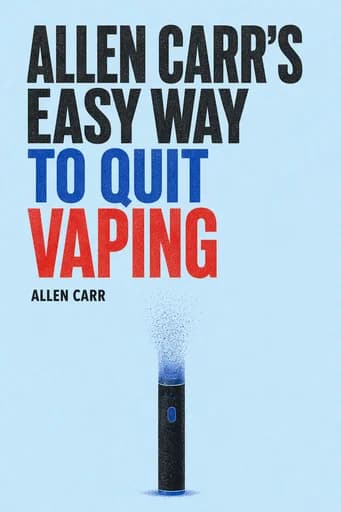
《亚伦·卡尔轻松戒电子烟》概述
借助亚伦·卡尔(Allen Carr)行之有效的方法,摆脱电子烟的束缚。该方法已帮助全球 5000 万人。安东尼·霍普金斯(Anthony Hopkins)称其为“瞬间的自由”,临床研究也证实其效果优于标准戒烟服务。本书将揭示为什么戒烟可以出人意料地毫不费力。
下载《亚伦·卡尔轻松戒电子烟》摘要
免费获取《亚伦·卡尔轻松戒电子烟》摘要的 PDF 或 EPUB 版本。可打印或随时离线阅读。
借助亚伦·卡尔(Allen Carr)行之有效的方法,摆脱电子烟的束缚。该方法已帮助全球 5000 万人。安东尼·霍普金斯(Anthony Hopkins)称其为“瞬间的自由”,临床研究也证实其效果优于标准戒烟服务。本书将揭示为什么戒烟可以出人意料地毫不费力。
免费获取《亚伦·卡尔轻松戒电子烟》摘要的 PDF 或 EPUB 版本。可打印或随时离线阅读。
由哥伦比亚大学校友在旧金山创建
"Instead of endless scrolling, I just hit play on BeFreed. It saves me so much time."


"I never knew where to start with nonfiction—BeFreed’s book lists turned into podcasts gave me a clear path."


"Perfect balance between learning and entertainment. Finished ‘Thinking, Fast and Slow’ on my commute this week."
"Crazy how much I learned while walking the dog. BeFreed = small habits → big gains."
"Reading used to feel like a chore. Now it’s just part of my lifestyle."

"Feels effortless compared to reading. I’ve finished 6 books this month already."
"BeFreed turned my guilty doomscrolling into something that feels productive and inspiring."

"BeFreed turned my commute into learning time. 20-min podcasts are perfect for finishing books I never had time for."
"BeFreed replaced my podcast queue. Imagine Spotify for books — that’s it. 🙌"

"It is great for me to learn something from the book without reading it."
"The themed book list podcasts help me connect ideas across authors—like a guided audio journey."
"Makes me feel smarter every time before going to work"
由哥伦比亚大学校友在旧金山创建
"Instead of endless scrolling, I just hit play on BeFreed. It saves me so much time."
"I never knew where to start with nonfiction—BeFreed’s book lists turned into podcasts gave me a clear path."
"Perfect balance between learning and entertainment. Finished ‘Thinking, Fast and Slow’ on my commute this week."
"Crazy how much I learned while walking the dog. BeFreed = small habits → big gains."
"Reading used to feel like a chore. Now it’s just part of my lifestyle."
"Feels effortless compared to reading. I’ve finished 6 books this month already."
"BeFreed turned my guilty doomscrolling into something that feels productive and inspiring."
"BeFreed turned my commute into learning time. 20-min podcasts are perfect for finishing books I never had time for."
"BeFreed replaced my podcast queue. Imagine Spotify for books — that’s it. 🙌"
"It is great for me to learn something from the book without reading it."
"The themed book list podcasts help me connect ideas across authors—like a guided audio journey."
"Makes me feel smarter every time before going to work"
"Instead of endless scrolling, I just hit play on BeFreed. It saves me so much time."
"I never knew where to start with nonfiction—BeFreed’s book lists turned into podcasts gave me a clear path."
"Perfect balance between learning and entertainment. Finished ‘Thinking, Fast and Slow’ on my commute this week."
"Crazy how much I learned while walking the dog. BeFreed = small habits → big gains."
"Reading used to feel like a chore. Now it’s just part of my lifestyle."
"Feels effortless compared to reading. I’ve finished 6 books this month already."
"BeFreed turned my guilty doomscrolling into something that feels productive and inspiring."
"BeFreed turned my commute into learning time. 20-min podcasts are perfect for finishing books I never had time for."
"BeFreed replaced my podcast queue. Imagine Spotify for books — that’s it. 🙌"
"It is great for me to learn something from the book without reading it."
"The themed book list podcasts help me connect ideas across authors—like a guided audio journey."
"Makes me feel smarter every time before going to work"
"Instead of endless scrolling, I just hit play on BeFreed. It saves me so much time."
"I never knew where to start with nonfiction—BeFreed’s book lists turned into podcasts gave me a clear path."
"Perfect balance between learning and entertainment. Finished ‘Thinking, Fast and Slow’ on my commute this week."
"Crazy how much I learned while walking the dog. BeFreed = small habits → big gains."
"Reading used to feel like a chore. Now it’s just part of my lifestyle."
"Feels effortless compared to reading. I’ve finished 6 books this month already."
"BeFreed turned my guilty doomscrolling into something that feels productive and inspiring."
"BeFreed turned my commute into learning time. 20-min podcasts are perfect for finishing books I never had time for."
"BeFreed replaced my podcast queue. Imagine Spotify for books — that’s it. 🙌"
"It is great for me to learn something from the book without reading it."
"The themed book list podcasts help me connect ideas across authors—like a guided audio journey."
"Makes me feel smarter every time before going to work"


来自《亚伦·卡尔轻松戒电子烟》的相同理念。选择适合你的声音、深度和节奏,随时切换。
Allen Carr's Easy Way to Quit Vaping has become a phenomenon in addiction recovery circles, with celebrities like Ellen DeGeneres, Ashton Kutcher, and Anthony Hopkins crediting the method for their freedom from nicotine. Unlike traditional approaches that rely on willpower and scare tactics, this revolutionary method has helped millions quit not just vaping but various addictions with a success rate so impressive that Allen Carr's centers offer a money-back guarantee. What makes this approach so different? It doesn't focus on the health dangers or require superhuman willpower-instead, it removes the psychological prison that makes quitting seem impossible. As vaping rates continue to climb, particularly among young people, this method offers something truly revolutionary: a way to quit that feels not like deprivation but liberation.
The nicotine trap works like a pitcher plant-a carnivorous plant that lures flies with sweet nectar. The fly feels safe, believing it can leave anytime, until it's too late and falls into digestive juices. With nicotine, there's no sweet nectar-just psychological manipulation. First-timers try vaping for foolish reasons-to fit in, appear grown-up, or seem rebellious. The underwhelming first experience makes some never try again, but convinces others they "could never get hooked," leading them deeper into the trap with false confidence. Even when vapers realize they're hooked, the trap grips tighter, making escape seem more daunting than staying trapped. Like long-term prisoners who reoffend after release because they crave prison's familiarity, vapers fear life without nicotine. Though vaping damages health and wealth while feeling demeaning, the prospect of quitting seems worse. FEAR drives both the desire to continue vaping and the desire to quit. Vapers experience a constant mental tug-of-war: "It's killing me, costing me a fortune, and controlling my life" versus "How will I enjoy life or cope with stress without my crutch?" Health campaigns using fear tactics fail because vapers turn a blind eye or, ironically, vape more when stressed about vaping. The nicotine trap is purely psychological. No one starts vaping for the taste or smell-vape clouds smell awful to non-vapers. The belief that vaping offers pleasure or support both lures people in and keeps them trapped. Beyond the Little Monster (physical addiction) that dies within days of quitting, there's the Big Monster (mental addiction) that keeps people craving nicotine long after quitting. This Big Monster, created by industry brainwashing and social influence, interprets the faint empty feeling as "I want a vape." Unlike the fly in a pitcher plant that can't escape once trapped, nicotine addicts can escape anytime because "you are your own jailer." Nobody forces you to vape-addiction keeps you trapped. Once you realize this, you can cure the addiction and walk free.
轻松跟读,《亚伦·卡尔轻松戒电子烟》中的每个词都会随音频实时高亮。
Everyone, including non-nicotine users, has been brainwashed into believing nicotine offers pleasure or support. This brainwashing begins at birth and comes from many sources. Even casual vapers who claim control reveal their addiction by bragging about how long they can go without vaping-something no one would do with genuine pleasures like exercise. As long as you perceive vaping as pleasurable, quitting will be difficult. Once you see it's merely an illusion created by addiction and brainwashing, quitting becomes easy. The appeal of vaping products comes from clever marketing, stylish designs, and flavors that lure young people. But continued use stems solely from addiction, not taste or enjoyment. Vapers often dismiss their habit as something they "just got into," revealing their shame and helplessness. Despite realizing vaping offers no pleasure or support, they continue using to try ending the empty feeling created by the first dose. But each dose doesn't end the craving-it perpetuates it. Our bodies possess remarkable natural survival tools-fear, pain, fatigue, and sensory warnings-that protect us from harm. When you first vaped, your senses questioned what you were doing, but you ignored these instinctive warnings. Unlike other animals that heed their survival instincts, humans often override them. Ironically, we view these protective instincts as weaknesses rather than the survival mechanisms they truly are. Human intellect, while enabling remarkable achievements, can override our protective instincts with disastrous consequences. Our childhood disillusionment creates an insecure void we try to fill by mimicking confident role models. We adopt behaviors like vaping to appear grown-up and confident. The desire for security is instinctive, but the belief that vaping provides security is intellectual-a myth created by lifelong brainwashing. To see through the myth of nicotine addiction, try viewing it through a non-addict's eyes. Just as most vapers can easily see that heroin would do nothing for them and they neither need nor want it, non-vapers see your vaping the same way. They can see clearly there's no pleasure in it-it makes you more insecure, less relaxed, and distracted. Their perception isn't distorted by addiction.
Believing that vaping provides pleasure or acts as a crutch keeps you trapped in nicotine addiction. The powerful truth is that you haven't enjoyed a single vape you've ever had. What feels like enjoyment is merely relief from withdrawal-like removing shoes that are too small. Nicotine offers nothing positive; it's comparable to being grateful to a thief who steals $100 and gives you $10 back. Despite the industry's efforts to create tempting flavors, enjoying the smell or taste isn't why people vape. Liking the smell of vape is no reason to poison yourself. When a vaper quits using willpower and smells vape, they might crave it-not because they love the smell, but because they associate it with nicotine relief. You vape in spite of the smell, not because of it. No one follows vapers around trying to inhale their clouds. The "special vapes" illusion-first thing in morning, after meals, with drinks, during breaks, after exercise or lovemaking-all share one feature: they follow periods of abstinence. The Little Monster has been waiting, making relief feel greater. The morning vape feels special because your body began recovering overnight, making it more sensitive to poison. Non-vapers naturally feel GREAT after meals or during social occasions, while vapers feel LOUSY until they vape, at which point they merely return to normal. How can something that creates stress ease stress? When you vape, you get temporary relief from nicotine withdrawal, mistaking this for genuine stress reduction. Nicotine addicts suffer an additional layer of stress beyond life's normal stresses-the craving itself. Vaping relieves this extra stress layer but makes no impact on genuine stress; it actually increases it. Like a fly in a pitcher plant, once trapped by nicotine, there's only one way to go: down. Your body builds tolerance to the poison, requiring more nicotine for the same effect. Each vape provides only partial relief, creating a downward spiral where your "normal" state keeps getting lower. All the while, periods of partial relief fool you into thinking you're getting pleasure.
Most people believe vapers who fail to quit lack willpower to make the necessary sacrifice. With Easyway, there is no sacrifice, so willpower isn't needed. In fact, the willpower method typically makes addiction worse rather than helping overcome it. The solution to ending nicotine craving is simply NOT to vape, breaking the addiction cycle and killing the Little Monster. But if it's so easy, why do so many find quitting incredibly hard? Simple: they're using the wrong method. Most vapers find quitting difficult because they use the willpower method, assuming they must endure withdrawal pain and sacrifice their pleasure or crutch. But there is no physical pain with nicotine withdrawal-vapers go through it whenever they're not vaping. And when you see through the illusion that vaping gives pleasure, there's no sense of sacrifice. People who try to quit with willpower endure a tug-of-war of fear. You kill the Little Monster but leave the Big Monster alive. Your rational brain knows you should stop because it's making you feel strange, costing money, controlling your life and making you miserable. Meanwhile, your addicted brain panics at the thought of being deprived. Some manage to quit through sheer will but don't become happy non-vapers-they never break free from addiction and constantly fight temptation. With the willpower method, the struggle never ends, becoming an ordeal with no finish line. As long as you believe you're giving something up, you'll always suffer. The longer you endure deprivation, the more powerful your craving becomes, increasing your desire for the drug you used as a crutch. Failing to quit with willpower leaves you more addicted than before, reinforcing the belief that it's impossible to quit. If you've failed to quit in the past, did you blame lack of willpower? Because the willpower method is so widely promoted, vapers assume their failure reflects a personal flaw rather than a flawed method. Most vapers are actually stubbornly strong-willed. It takes strong will to persist in something that goes against all your instincts, knowing vaping is dragging you down yet continuing anyway. People who quit using willpower can negatively impact your own quitting journey. They either brag about their sacrifices or whine about them, reinforcing the false belief that quitting requires sacrifice. The "braggers" become anti-vaping zealots, putting up "No Smoking or Vaping" signs and delighting in reminding you how vaping damages your health. The "whiners" initially congratulate you but then bring you crashing down by saying they quit years ago but still miss it terribly. With Easyway, there's nothing to wait for. You become a happy non-vaper the moment you unravel the illusions of the nicotine trap and stop vaping with excitement and elation. This happens as soon as you remove the fear and illusions-that's when you kill the Big Monster and free yourself.
The addictive personality theory is just that-a theory. The traits shared by addicts aren't the cause of their addiction but the result. This belief stems from looking at addiction from the wrong perspective. Vapers make illogical excuses to justify their habit: "It helps me relax," "I'm under stress," or "It's my one indulgence." When these excuses fail, many claim, "I have an addictive personality." This belief-that genetic makeup makes them more susceptible to addiction-becomes a convenient excuse that ensures they remain trapped. Though some "experts" support this theory, it's not an established condition. It's based on observations that some people have multiple addictions, but this simply shows that someone susceptible to one addiction will likely be susceptible to others-not because of genetics, but because they don't understand the trap. Fear of success drives addicts to find reasons not to quit. The addictive personality theory provides the perfect excuse-"How can I override my genetic makeup?" Failed attempts using willpower reinforce this illusion, as do "braggers and whiners" who quit but still crave their "little crutch." But there's another explanation: they've been conned. They're still operating under the illusion they're making a sacrifice, with their willpower pulling them in opposite directions. Why do some people fall deeper into addiction than others? While one person has occasional vapes, another puffs constantly. This doesn't necessarily indicate personality differences but circumstances: physical capacity, job restrictions, financial limitations, and various influences we experience growing up. These factors affect how quickly we descend into the trap, but they're all controllable and reversible-nothing to do with genetics or fixed personality traits. Addiction is isolating, making sufferers believe their problem is unique. When addicts connect with others sharing similar experiences, they realize addiction isn't individual weakness but societal brainwashing. Vapers often feel like a different breed, sharing traits with other vapers and feeling comfortable in their company. This appears to support the addictive personality theory, but these shared traits are actually results of addiction, not causes. The statistics actually contradict the genetic theory-nicotine addiction has fluctuated dramatically over time and varies widely by region. In just over 50 years, smoking in the US dropped by two-thirds while soaring in Asia. This isn't genetic shifting but evidence of marketing influence-like the JUUL "epidemic" caused by sophisticated marketing, not a sudden genetic predisposition. It's essential to understand that you didn't become addicted to nicotine because you have an addictive personality. If you think you have an addictive personality, it's simply because you got addicted to nicotine. Addiction plays this trick on you-making you feel dependent and weak. The addictive personality theory wrongly suggests escape is out of your hands, condemning you to slavery.
轻松跟读,《亚伦·卡尔轻松戒电子烟》中的每个词都会随音频实时高亮。
Nicotine propaganda has built up the drug to appear as the solution to almost any problem. The myth that nicotine helps concentration must be removed from your mind before quitting. In reality, vaping destroys concentration, but nicotine addicts are brainwashed into believing otherwise. Vaping destroys concentration, not enhances it. The belief that it helps is part of the trap. When you need to focus on a problem, reaching for a vape seems to relieve anxiety and organize thoughts. But what's really happening is that your belief in needing nicotine to concentrate creates the distraction in the first place. You vape, the anxiety disappears, and you find your answer-creating the illusion that vaping helped, when it actually caused the problem. When faced with problems, we seek comfort in distractions to delay dealing with them-making coffee, eating, checking email. None help solve the problem; they make it worse. It's not physical nicotine craving preventing concentration (which is almost indiscernible), but mental obsession from the Big Monster. You can prove your ability to concentrate without nicotine in situations where vaping isn't an option, like exam rooms. A common misconception about vaping is that it helps control weight. This illusion comes from beliefs that vaping suppresses appetite, increases metabolism, and from the nicotine industry's portrayal of glamorous, svelte stars vaping. Big Nicotine has infiltrated fashion, music, sports and film industries, manipulating media to show vaping as cool, sophisticated and stylish with the added benefit of weight control. Studies by The Truth Initiative reveal that 86 percent of 2018 Oscar nominees featured tobacco or vaping imagery. PG-rated films showed twice as much smoking as in 2017, with movies like Bohemian Rhapsody (152 tobacco incidents) and Green Book (381 incidents) leading the count. Streaming shows popular with young people aged 15-24 prominently depict smoking, with Stranger Things being the worst offender with over 180 tobacco incidents in one season. Beyond traditional media, social media overflows with e-cigarette, vaping and JUULing propaganda. Young, beautiful influencers earn big money promoting nicotine addiction without restrictions or disclosure. Tobacco use is also widespread in video games rated appropriate for teenagers, without warnings. The effectiveness of this targeting is evident with JUUL, which the US Surgeon General declared an "epidemic" among teenagers in 2018. JUUL reached a staggering $38 billion valuation by 2019 despite only existing since 2017-through excellent marketing deliberately targeting youth. First of all, there are plenty of overweight vapers-if vaping were efficient for weight control, this wouldn't be the case. Heavy vapers tend to be the most overweight of all. While vaping does increase metabolic rate, the impact is insignificant for weight control. The myth that vaping suppresses appetite is just that-a myth. The weight gain that sometimes accompanies quitting comes from substituting food when feeling deprived. With Easyway, you remove the desire to vape, so there's no feeling of deprivation and no need to substitute with food.
Vapers are "psychological captives" in Huxley's sense. The tobacco and pharmaceutical industries have carved up the nicotine market between them, creating products that cause millions of deaths yearly. These industries can't be trusted with your health and future. But the most insidious aspect is how nicotine addicts themselves spread the industry's propaganda. No vaper truly enjoys vaping, yet they all promote the myth that it provides pleasure or support. You likely started vaping because another vaper offered you your first hit. Though you probably thought you wouldn't get hooked, the addiction took hold. Vapers who claim they wouldn't recommend vaping to others unwittingly promote it through their actions. Parents who vape while warning their children against it send a powerful contradictory message-children see adults apparently choosing to vape, concluding it must provide some pleasure or benefit. Vapers lie to themselves and others because facing the truth is unbearable. They pretend there's good reason for vaping to avoid admitting they're helpless slaves getting no pleasure from their addiction. They lie about how much they vape, claim they can quit anytime, and promise they will quit someday-all attempts to convince themselves they aren't pathetic addicts who don't understand why they can't stop. Other vapers often try to sabotage quit attempts because someone else's escape challenges their belief that quitting is impossible. Even after you quit, addicts will try luring you back, especially during crises like accidents, bereavements or breakups. They genuinely think they're helping by offering nicotine, seeing you not as a non-vaper but as a vaper temporarily not vaping. The real motivation behind continued vaping is FEAR-fear of not enjoying or coping with life without nicotine, fear of enduring a terrible ordeal to quit, fear of never being free from craving. Vapers don't realize that non-addicts never experience these fears, and that nicotine causes rather than relieves them. These fears, created by myths, override the very real dangers of nicotine addiction. As you prepare for your final vape, you must decide what you truly want: continued nicotine intake with less fear, or complete freedom from nicotine addiction. Tobacco companies have invested heavily in cigarette alternatives, seeking products with the same addictive qualities but fewer health risks. Their experiments with nicotine-free cigarettes failed, teaching them that nicotine addiction is the ONLY reason people continue smoking. Like a psychopathic Willy Wonka, they've created seemingly harmless vaping devices with flavors like doughnut and cotton candy-but included the most addictive drug on the planet.
All vapers have powerful reasons for wanting to quit but fear what they'll miss. When you quit and realize you're missing nothing, you gain the greatest reward: escape from slavery. Vapers believe they're in control and vape because they enjoy it, but deep down they know this isn't true. An unseen force-fear created by addiction-compels them to continue. This irrational fear that life will be unbearable without nicotine keeps them enslaved. Nicotine addicts live in an ingenious prison with no walls or guards, kept captive by their own beliefs and fears instilled by the tyrant called ADDICTION. They're so afraid of how bad things might get that they don't address how bad things already are. Nicotine addicts suffer from the indignity of feeling like slaves and turn to phony excuses to justify their behavior. These weak excuses include "I can afford it," "I haven't noticed health deterioration," and "I haven't got any other vices"-none of which are logical reasons to continue vaping. These are merely negative arguments for not stopping, unlike the positive reasons people give for genuine pleasures like sports or dancing. All nicotine addicts secretly wish to escape their prison but fear admitting it because they've been told escape is painful or impossible. They continue spreading the myth that they vape because they want to. The growing number of vapers attending Allen Carr's seminars proves this point-if vaping was truly enjoyable, why would they seek help to quit? The method has grown into a worldwide phenomenon because of universal demand among addicts for freedom. While health risks alone aren't enough to motivate quitting, they become positive gains after your final dose of nicotine. Non-nicotine addicts don't suffer the lows that addicts do, and you'll rejoice in feeling your health being restored. Vapers often hide from health scares with a philosophical "we're all going to die sometime" approach, yet they still look both ways before crossing the street. Since you never know how much life you have left, why spend it burdened with unnecessary worries and the inconvenience of addiction? Withdrawal from nicotine is actually 1 percent physical and 99 percent mental. The physical sensation is so mild as to be almost imperceptible, regardless of how high your nicotine dose. The panic and fear associated with withdrawal happen in the mind-it's the Big Monster creating the "I want a vape! I can't have one! Aaargh!" feeling. With certainty about your decision to quit, the minuscule physical feeling becomes a positive sign that the Little Monster is dying.
You are now a happy non-nicotine addict! To ensure you never fall back into the nicotine trap, follow these simple tips: Accept that you'll have good days and bad days-that's just life. Because you're stronger physically and mentally, you'll enjoy good times more and handle bad times better. Never blame a bad day on the fact you've quit nicotine. Be aware that a major positive change has happened in your life. It's normal to feel different or disoriented for a few days as your mind and body adjust. Like someone emerging from a dark dungeon into bright sunshine, you might need to adjust to your newfound freedom. Enjoy the sense of quiet and peace. You've quit nicotine, not living. Continue enjoying life fully without altering your lifestyle. Keep taking breaks from work-now they're "non-vape" breaks. Don't miss out on social interactions just because you've quit. Continue socializing with nicotine users without preaching or interfering with their habits. Show compassion for those still trapped. When they see how calm and collected you are, their curiosity may overcome their fear of stopping. Remember that you're not being deprived-they are. Nicotine addicts will envy you because they wish they could be FREE like you. Avoid all substitutes or taking nicotine in any form. Even seemingly harmless alternatives like chewing gum, carrot sticks or candy create a feeling of deprivation and can awaken the Big Monster. You don't need a substitute-you've eliminated a disease, not given up something valuable. Never doubt your decision to quit-you know it's right. If you find yourself thinking "I want a vape," don't panic. Remember the parking space analogy-this is just an echo from your addicted days. Use these moments to remind yourself how fortunate you are to be free, brushing off the Little Monster's death throes with a smile. Be prepared for offers of "just one hit" or "just one puff." Remember that a single dose of nicotine is enough to drag you back into the trap. There's no such thing as just one-it's a gateway to a lifetime chain of filth, disease and misery. Never keep any nicotine device or nicotine with you or in your house. Doing so opens the door to doubt and almost guarantees failure. While you shouldn't worry if your partner vapes, there's a huge psychological difference between them keeping their nicotine and you retaining yours. Don't try to block thoughts of nicotine-it's impossible and will only make you frustrated. Instead of thinking "I mustn't have a vape" or "I can't have one," remember how fortunate you are to be free. The thought of nicotine should bring joy, not misery. Celebrate your freedom with "Yippee! I'm a non-vaper! I'm free!" Your achievement is incredible, and you're not alone-tens of millions have quit with Easyway. Share your success to help dismantle the Big Con and inspire others. If you ever have doubts or questions, contact your nearest Allen Carr's Easyway center. Every therapist quit nicotine with this method and will be delighted to offer advice. Congratulations on your freedom from the nightmare of nicotine addiction. Enjoy your new life and thank you for allowing me to guide you on your journey to freedom.
深受 100 万+ 学习者喜爱
“坚持使用 23 天了,我每天都会打开它。它现在已经成为我的日常习惯。”
jayallen
Quit smoking at home
Quitting smoking is one of the most impactful health decisions you can make, yet most people struggle because they rely on willpower instead of understanding the science of addiction. This learning plan is designed for anyone ready to quit smoking from home using evidence-based psychological and behavioral strategies that address the root causes of nicotine dependence.
Quit drinking
Breaking free from alcohol dependency requires more than willpower—it demands understanding, strategy, and community support. This learning plan guides individuals at any stage of their sobriety journey through evidence-based approaches to recovery, mindset transformation, and sustainable lifestyle change.

Break addiction cycles after 5 lost years
This plan is designed for individuals seeking to reclaim their lives after long-term struggle, moving beyond willpower to science-based recovery. It provides a holistic roadmap for those ready to address the neurological, emotional, and social roots of addiction to build a lasting new identity.

End addiction and learn self-love
This learning plan is essential for individuals seeking to overcome addictive patterns by addressing the underlying neurological and emotional triggers. It is designed for anyone ready to move past shame and build a sustainable life rooted in self-compassion and mental resilience.

Swap cannabis for natural wellness habits
This plan is designed for individuals seeking to reclaim their autonomy from cannabis dependency through evidence-based behavioral changes. It provides a structured path for anyone ready to transition from substance reliance to a lifestyle rooted in natural stress relief and sustainable wellness habits.

Break Free From Porn Addiction
This plan is designed for individuals seeking to regain control over their lives by understanding the neurological and emotional roots of porn addiction. It provides a compassionate, science-based roadmap for anyone struggling with compulsive behaviors who wants to rebuild genuine human connection.
Quit drinking & find peace through meditation
This plan is designed for individuals seeking to overcome alcohol dependency by combining scientific understanding with spiritual mindfulness. It provides a holistic roadmap for those who want to move beyond sobriety toward a life of genuine inner peace and purpose.

Break the self-help dopamine trap
In an era of constant digital stimulation, many find themselves trapped in a loop of superficial self-improvement without real change. This plan is essential for anyone feeling overwhelmed by screen time or 'productivity porn' who wants to reclaim their focus and mental clarity.