The Invisible Dialogue: Mastering Human-Computer Interaction
Explore the evolution of HCI from historical design disasters to the future of generative AI. This episode breaks down the psychological bridge between human cognition and machine logic.

The Invisible Dialogue: Mastering Human-Computer Interactionのベスト引用
Good HCI design is essentially civil engineering for the mind—it’s about building the shortest, sturdiest bridge possible between your mental goal and the machine's logic so you don’t even realize you’re crossing a gap.

このオーディオレッスンはBeFreedコミュニティメンバーが作成しました
hci


よくある質問
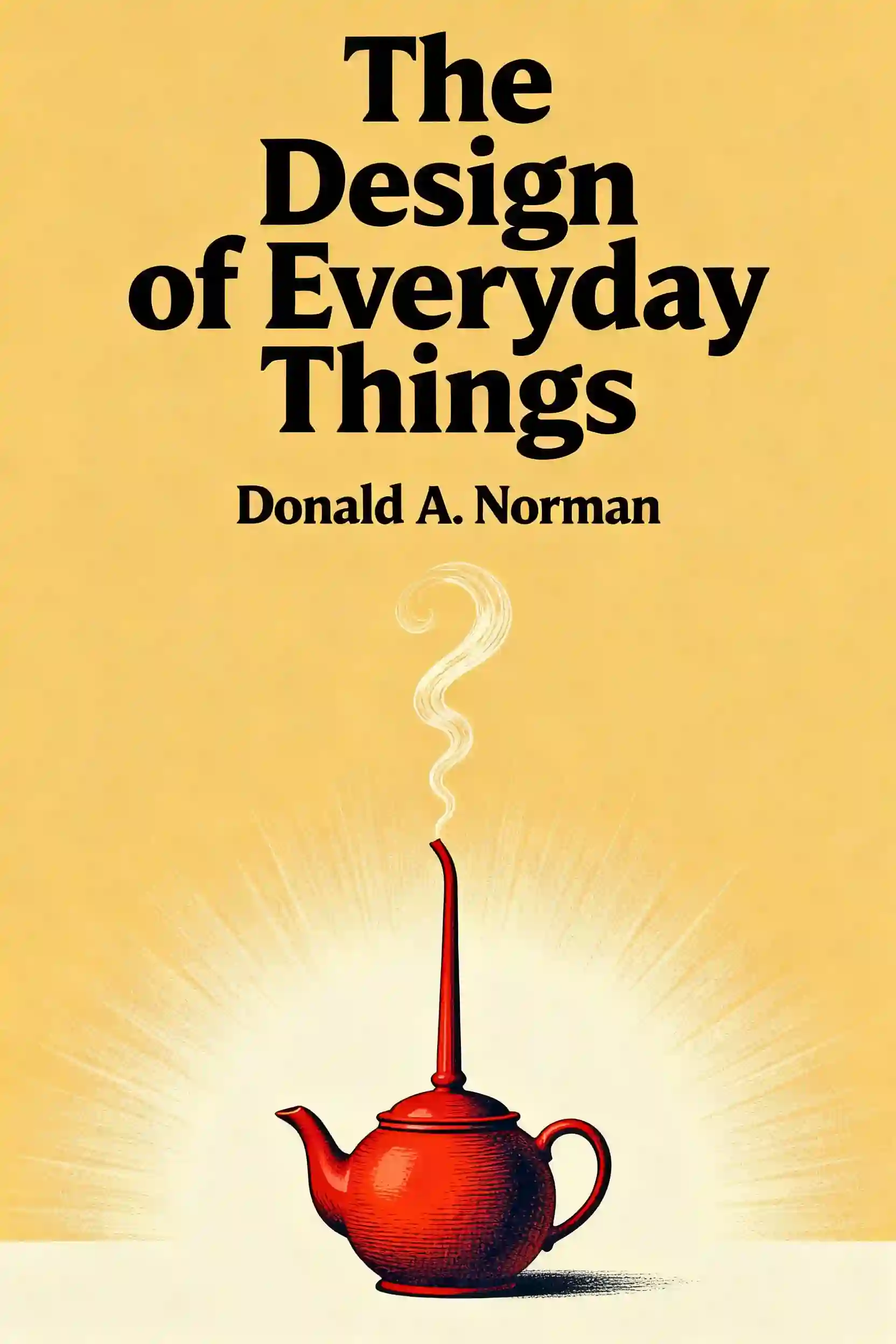
The Gulf of Execution is a concept developed by Donald Norman that describes the distance between a user’s mental goal and the physical actions required by an interface to achieve that goal. For example, if a user wants to save a photo but has to navigate through five hidden menus to find the command, the "gulf" is wide. Good design acts as civil engineering for the mind, building a short and sturdy bridge so the user can execute their intentions without unnecessary cognitive effort.
These two mathematical formulas serve as the "physics" of the digital world. Fitts’s Law states that the time required to move to a target depends on its distance and size, which is why important buttons are often large and placed near screen edges or corners. Hick’s Law, also known as the paradox of choice, posits that the more options a user is given, the longer it takes to make a decision. Designers use this law to simplify interfaces, often hiding complex features until they are specifically needed to prevent user "freeze."
The Aesthetic-Usability Effect refers to the phenomenon where users perceive more attractive interfaces as being easier to use, even if they are not functionally superior. Research shows that beautiful and harmonious designs create positive emotional responses, making users more patient, tolerant of minor bugs, and willing to explore. However, the script notes that beauty cannot fix a fundamentally broken system; the goal is to align aesthetic appeal with functional logic to build user trust.
The interaction model is shifting from "Direct Manipulation," where users manually move cursors or click buttons, to "Delegation" and "Co-piloting." In this new wave, users provide "intent" rather than specific commands, and the machine predicts needs or assists in tasks like finishing sentences or "inpainting" artwork. This evolves the dialogue into a "shared space" or "jam session" where the roles of author and machine blur, requiring new interface designs like "Canvas UIs" that allow for spatial and collaborative work.
While most design aims to be seamless, "meaningful friction" is used to prevent "Automation Bias," where users become so complacent with a system that they stop verifying its actions. By intentionally adding a "speed bump"—such as a confirmation dialog before deleting a file or an explanation of why an AI made a specific recommendation—designers force the user to re-engage their brain. This ensures that the human remains the "pilot" and can audit the machine's logic in high-stakes situations.
もっと発見

Master AI & design writing
As AI transforms how we create, communicate, and design products, professionals need to understand both the technology and how to apply it thoughtfully. This learning plan is ideal for content creators, UX designers, product managers, and marketers who want to harness AI's potential while maintaining the human touch that makes great work resonate.

The Hidden Laws of Human Interaction
In an era of constant communication, understanding the underlying psychology of social cues is essential for leadership and collaboration. This plan is designed for professionals and leaders who want to master non-verbal communication and group dynamics to influence outcomes more effectively.

Examine tech's impact on human behavior
This learning plan is essential for anyone seeking to understand how digital technologies are fundamentally reshaping human behavior, society, and consciousness. It's particularly valuable for professionals working in technology, policymakers, educators, and thoughtful citizens who want to critically engage with the ethical and philosophical dimensions of our increasingly AI-driven world. By examining the intersection of psychology, ethics, and technology, learners will gain the analytical tools needed to make informed decisions about technology's role in their lives and society.

The Invisible Architect: Psychology and You
This plan bridges the gap between historical theory and modern behavioral application, making it essential for anyone seeking self-mastery. It is ideal for leaders, students, and curious minds who want to understand the hidden forces shaping their decisions and social interactions.

Mastering Mind, Tech, & Human Systems
This multidisciplinary plan is essential for leaders and innovators navigating a world where human psychology and advanced technology are inextricably linked. It provides a holistic roadmap for anyone seeking to understand the feedback loops between individual cognition, machine intelligence, and societal behavior.

Explore Diverse Human & Tech Insights
In a rapidly evolving digital landscape, understanding the intersection of human psychology and emerging technology is essential for future-ready leaders. This plan is ideal for professionals and lifelong learners seeking to master cultural intelligence and ethical AI integration.

Master Human Behavior, Tech & Creativity
This plan is essential for leaders and innovators navigating the intersection of psychology and digital transformation. It benefits product designers, tech strategists, and creatives looking to leverage AI while maintaining a human-centric approach.

The Digital Mind: Philosophy in the Machine Age
As AI reshapes our reality, understanding its philosophical and ethical foundations is essential for informed leadership. This plan is ideal for tech professionals, ethicists, and curious minds seeking to master the governance and long-term impact of artificial systems.
"Instead of endless scrolling, I just hit play on BeFreed. It saves me so much time."


"I never knew where to start with nonfiction—BeFreed’s book lists turned into podcasts gave me a clear path."


"Perfect balance between learning and entertainment. Finished ‘Thinking, Fast and Slow’ on my commute this week."
"Crazy how much I learned while walking the dog. BeFreed = small habits → big gains."
"Reading used to feel like a chore. Now it’s just part of my lifestyle."

"Feels effortless compared to reading. I’ve finished 6 books this month already."
"BeFreed turned my guilty doomscrolling into something that feels productive and inspiring."

"BeFreed turned my commute into learning time. 20-min podcasts are perfect for finishing books I never had time for."
"BeFreed replaced my podcast queue. Imagine Spotify for books — that’s it. 🙌"

"It is great for me to learn something from the book without reading it."
"The themed book list podcasts help me connect ideas across authors—like a guided audio journey."
"Makes me feel smarter every time before going to work"
"Instead of endless scrolling, I just hit play on BeFreed. It saves me so much time."
"I never knew where to start with nonfiction—BeFreed’s book lists turned into podcasts gave me a clear path."
"Perfect balance between learning and entertainment. Finished ‘Thinking, Fast and Slow’ on my commute this week."
"Crazy how much I learned while walking the dog. BeFreed = small habits → big gains."
"Reading used to feel like a chore. Now it’s just part of my lifestyle."
"Feels effortless compared to reading. I’ve finished 6 books this month already."
"BeFreed turned my guilty doomscrolling into something that feels productive and inspiring."
"BeFreed turned my commute into learning time. 20-min podcasts are perfect for finishing books I never had time for."
"BeFreed replaced my podcast queue. Imagine Spotify for books — that’s it. 🙌"
"It is great for me to learn something from the book without reading it."
"The themed book list podcasts help me connect ideas across authors—like a guided audio journey."
"Makes me feel smarter every time before going to work"
"Instead of endless scrolling, I just hit play on BeFreed. It saves me so much time."
"I never knew where to start with nonfiction—BeFreed’s book lists turned into podcasts gave me a clear path."
"Perfect balance between learning and entertainment. Finished ‘Thinking, Fast and Slow’ on my commute this week."
"Crazy how much I learned while walking the dog. BeFreed = small habits → big gains."
"Reading used to feel like a chore. Now it’s just part of my lifestyle."
"Feels effortless compared to reading. I’ve finished 6 books this month already."
"BeFreed turned my guilty doomscrolling into something that feels productive and inspiring."
"BeFreed turned my commute into learning time. 20-min podcasts are perfect for finishing books I never had time for."
"BeFreed replaced my podcast queue. Imagine Spotify for books — that’s it. 🙌"
"It is great for me to learn something from the book without reading it."
"The themed book list podcasts help me connect ideas across authors—like a guided audio journey."
"Makes me feel smarter every time before going to work"
"Instead of endless scrolling, I just hit play on BeFreed. It saves me so much time."
"I never knew where to start with nonfiction—BeFreed’s book lists turned into podcasts gave me a clear path."
"Perfect balance between learning and entertainment. Finished ‘Thinking, Fast and Slow’ on my commute this week."
"Crazy how much I learned while walking the dog. BeFreed = small habits → big gains."
"Reading used to feel like a chore. Now it’s just part of my lifestyle."
"Feels effortless compared to reading. I’ve finished 6 books this month already."
"BeFreed turned my guilty doomscrolling into something that feels productive and inspiring."
"BeFreed turned my commute into learning time. 20-min podcasts are perfect for finishing books I never had time for."
"BeFreed replaced my podcast queue. Imagine Spotify for books — that’s it. 🙌"
"It is great for me to learn something from the book without reading it."
"The themed book list podcasts help me connect ideas across authors—like a guided audio journey."
"Makes me feel smarter every time before going to work"