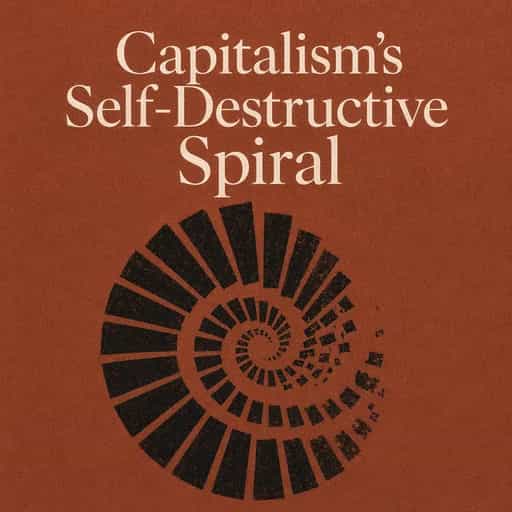
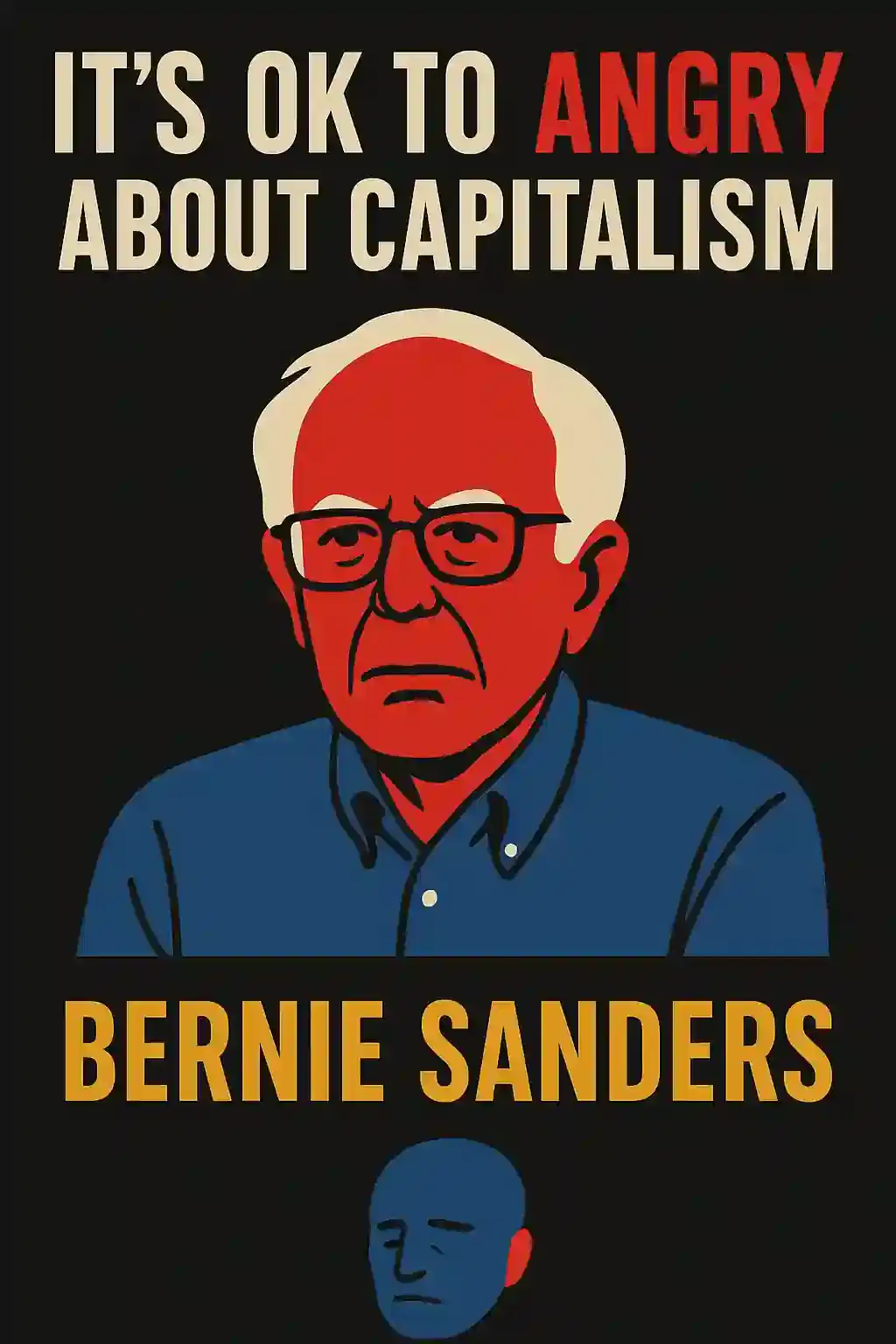
The Growth Trap: Rethinking Our Economic Obsession
Explore how the relentless pursuit of GDP growth drives ecological collapse and social decay, and discover why a post-growth future is the only path to true prosperity.

The Growth Trap: Rethinking Our Economic Obsessionのベスト引用
We’re told growth fixes poverty and climate change, but the data suggests it’s often what’s plundering resources and driving us past our planetary boundaries. We need growth to fix the problems that growth created; it’s like trying to put out a fire with a bucket of gasoline.
Generated by hassan mujtaba
Growth is the cause of all problems including ecological, societal, mental, physical and economical.

よくある質問
GDP is criticized because it acts as a "blindfold" that measures aggregate production without accounting for the quality or purpose of that growth. It treats destructive events, such as car accidents or forest fires, as positives because they generate spending, while ignoring essential social factors like mental health, community wellbeing, and environmental health. Research into the Genuine Progress Indicator (GPI) shows that while GDP has continued to rise, actual human progress in many areas has flatlined or declined since the late 1970s.
Decoupling is the idea that an economy can continue to grow while reducing its environmental impact. While "relative decoupling" occurs when an economy grows faster than its emissions, "absolute decoupling"—where the total environmental footprint actually shrinks while the economy expands—is extremely rare and does not happen fast enough to meet climate goals. Furthermore, the "rebound effect" often cancels out efficiency gains; for example, when cars become more fuel-efficient, people often respond by driving further or buying larger vehicles, keeping total resource consumption high.
The modern economy is designed for "permanent, frantic adolescence," requiring constant expansion to remain stable due to debt interest and growth-dependent social safety nets. To keep this engine humming, labor has been "flexibilized," leading to unpredictable hours, precarious contracts, and high-pressure environments. This results in "capitalogenic diseases," such as widespread anxiety and depression, as people spend their lives in "bullshit jobs" to drive GDP numbers while their fundamental needs for rest, care, and community are neglected.
Under a capitalist framework, a lack of growth results in a recession, which is a chaotic "crash" characterized by unemployment and social distress because the system is designed to be growth-dependent. In contrast, a post-growth economy is a "controlled landing" that is slower by design. It utilizes policy levers like working-time reduction to share available work, universal basic services to guarantee housing and healthcare, and regenerative design to ensure the economy functions stably within planetary boundaries without requiring constant acceleration.
The growth of high-income countries is often built on "unequal exchange," where resources, energy, and millions of hours of underpaid labor are appropriated from the Global South. This creates a "vacuum-up" system that drains poorer nations of the resources they need to meet their own citizens' needs. Post-growth advocates argue that for the Global South to thrive, the Global North must contract its resource use to liberate "ecological space," allowing developing nations to focus on "needs-oriented development" rather than producing exports for wealthy markets.
"Instead of endless scrolling, I just hit play on BeFreed. It saves me so much time."


"I never knew where to start with nonfiction—BeFreed’s book lists turned into podcasts gave me a clear path."


"Perfect balance between learning and entertainment. Finished ‘Thinking, Fast and Slow’ on my commute this week."
"Crazy how much I learned while walking the dog. BeFreed = small habits → big gains."
"Reading used to feel like a chore. Now it’s just part of my lifestyle."

"Feels effortless compared to reading. I’ve finished 6 books this month already."
"BeFreed turned my guilty doomscrolling into something that feels productive and inspiring."

"BeFreed turned my commute into learning time. 20-min podcasts are perfect for finishing books I never had time for."
"BeFreed replaced my podcast queue. Imagine Spotify for books — that’s it. 🙌"

"It is great for me to learn something from the book without reading it."
"The themed book list podcasts help me connect ideas across authors—like a guided audio journey."
"Makes me feel smarter every time before going to work"
"Instead of endless scrolling, I just hit play on BeFreed. It saves me so much time."
"I never knew where to start with nonfiction—BeFreed’s book lists turned into podcasts gave me a clear path."
"Perfect balance between learning and entertainment. Finished ‘Thinking, Fast and Slow’ on my commute this week."
"Crazy how much I learned while walking the dog. BeFreed = small habits → big gains."
"Reading used to feel like a chore. Now it’s just part of my lifestyle."
"Feels effortless compared to reading. I’ve finished 6 books this month already."
"BeFreed turned my guilty doomscrolling into something that feels productive and inspiring."
"BeFreed turned my commute into learning time. 20-min podcasts are perfect for finishing books I never had time for."
"BeFreed replaced my podcast queue. Imagine Spotify for books — that’s it. 🙌"
"It is great for me to learn something from the book without reading it."
"The themed book list podcasts help me connect ideas across authors—like a guided audio journey."
"Makes me feel smarter every time before going to work"
"Instead of endless scrolling, I just hit play on BeFreed. It saves me so much time."
"I never knew where to start with nonfiction—BeFreed’s book lists turned into podcasts gave me a clear path."
"Perfect balance between learning and entertainment. Finished ‘Thinking, Fast and Slow’ on my commute this week."
"Crazy how much I learned while walking the dog. BeFreed = small habits → big gains."
"Reading used to feel like a chore. Now it’s just part of my lifestyle."
"Feels effortless compared to reading. I’ve finished 6 books this month already."
"BeFreed turned my guilty doomscrolling into something that feels productive and inspiring."
"BeFreed turned my commute into learning time. 20-min podcasts are perfect for finishing books I never had time for."
"BeFreed replaced my podcast queue. Imagine Spotify for books — that’s it. 🙌"
"It is great for me to learn something from the book without reading it."
"The themed book list podcasts help me connect ideas across authors—like a guided audio journey."
"Makes me feel smarter every time before going to work"
"Instead of endless scrolling, I just hit play on BeFreed. It saves me so much time."
"I never knew where to start with nonfiction—BeFreed’s book lists turned into podcasts gave me a clear path."
"Perfect balance between learning and entertainment. Finished ‘Thinking, Fast and Slow’ on my commute this week."
"Crazy how much I learned while walking the dog. BeFreed = small habits → big gains."
"Reading used to feel like a chore. Now it’s just part of my lifestyle."
"Feels effortless compared to reading. I’ve finished 6 books this month already."
"BeFreed turned my guilty doomscrolling into something that feels productive and inspiring."
"BeFreed turned my commute into learning time. 20-min podcasts are perfect for finishing books I never had time for."
"BeFreed replaced my podcast queue. Imagine Spotify for books — that’s it. 🙌"
"It is great for me to learn something from the book without reading it."
"The themed book list podcasts help me connect ideas across authors—like a guided audio journey."
"Makes me feel smarter every time before going to work"