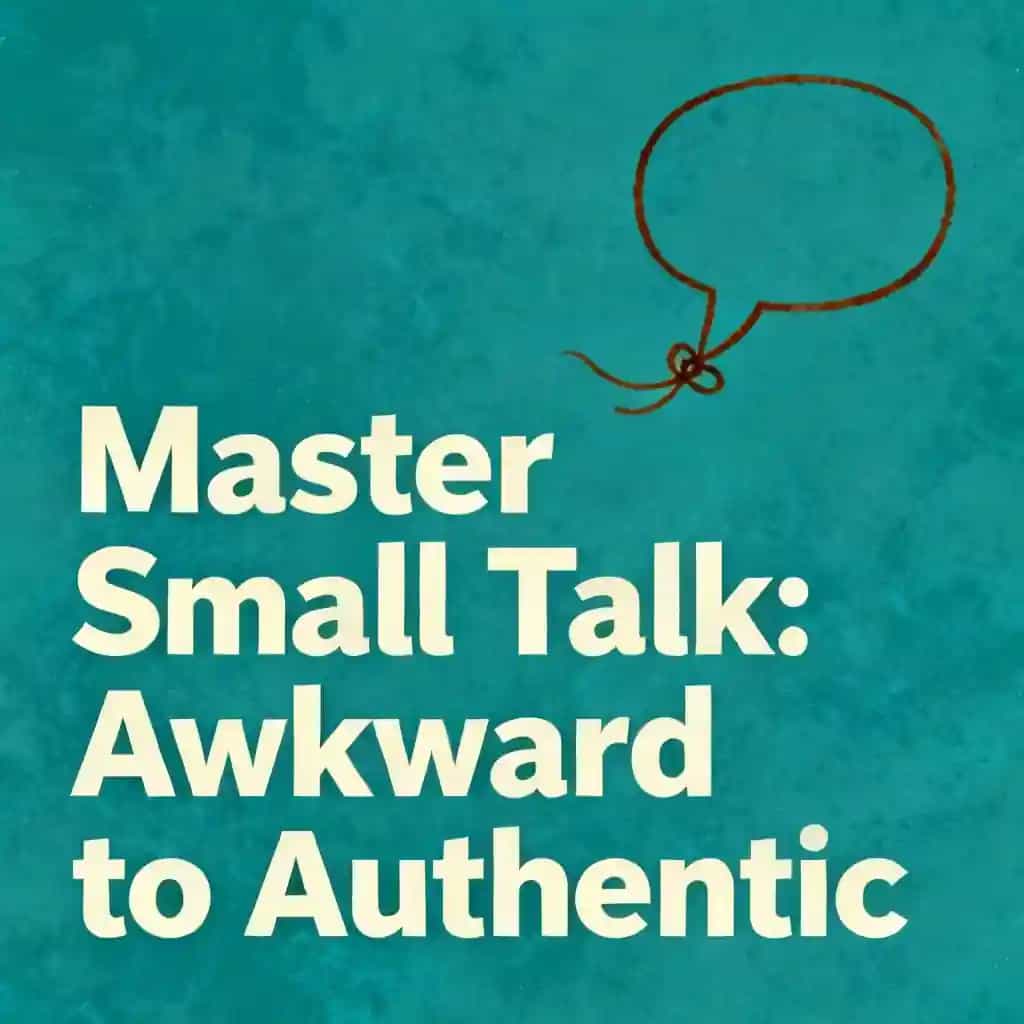
Small talk and flirting without the performance trap
Struggling to move past awkward small talk? Learn how to use calibration and presence to turn basic conversations into natural, playful connections.

Small talk and flirting without the performance trapのベスト引用
Real confidence is staying present when you don't know what to say. It’s a move from internal analysis to external awareness, shifting from 'Am I being weird?' to 'Is she enjoying this?'
Generated by Andres
I need help with small talk, especially with meeting women for the first time and how to turn that naturally into flirting



よくある質問
Calibration is the art of adjusting your energy and intensity based on the real-time feedback you receive from another person. Rather than following a rigid script or "pushing" a conversation forward, a calibrated person acts like a social detective, looking for "green lights" before increasing playfulness. If the other person does not reciprocate a joke or a flirtatious comment, calibration involves stepping back to a grounded, respectful conversation rather than doubling down and becoming pestering.
Interest is best identified through "clusters" of behavior rather than a single gesture. Key signals include proximity seeking, where a person consistently chooses to be near you, and "ventral alignment," which is when they angle their shoulders, torso, and feet directly toward you. You should also look for "warm bursts" of eye contact—holding a gaze for a beat longer than usual, looking away, and then quickly returning to your eyes—as well as "exclusivity markers," such as when they protect your time together from interruptions.
True flirting is a "gentleman’s game" rooted in warmth and respect, whereas "negging" is an antisocial attempt to undermine someone's confidence to gain their approval. Effective teasing focuses on things a person is proud of or lighthearted quirks, such as their competitive streak or a specific habit, rather than their insecurities or physical appearance. A good rule of thumb is to only tease a romantic interest about things you would also comfortably tease a close friend or sibling about.
Physical connection should be a gradual progression based on "tactile testing." It begins with incidental contact, such as shoulders brushing while looking at a phone or hands touching briefly when passing an item. If the other person remains relaxed or reciprocates, you can move to brief, casual contact like a light tap on the arm during a laugh. If at any point the other person stiffens or creates distance, the correct response is to handle the rejection gracefully by stepping back and keeping the vibe light.
There are three specific "magnetic" techniques mentioned: leaving "open loops" by hinting at a story you’ll tell later to create a "to be continued" feeling; providing a "90-second burst" of pure, uninterrupted focus to boost relational closeness; and "identity echoing." Identity echoing involves validating the internal story a person tells about themselves—such as acknowledging they are the type of person who "shows up when it matters"—which helps them feel deeply understood rather than just complimented on a surface level.
コロンビア大学卒業生がサンフランシスコで開発
"Instead of endless scrolling, I just hit play on BeFreed. It saves me so much time."


"I never knew where to start with nonfiction—BeFreed’s book lists turned into podcasts gave me a clear path."


"Perfect balance between learning and entertainment. Finished ‘Thinking, Fast and Slow’ on my commute this week."
"Crazy how much I learned while walking the dog. BeFreed = small habits → big gains."
"Reading used to feel like a chore. Now it’s just part of my lifestyle."

"Feels effortless compared to reading. I’ve finished 6 books this month already."
"BeFreed turned my guilty doomscrolling into something that feels productive and inspiring."

"BeFreed turned my commute into learning time. 20-min podcasts are perfect for finishing books I never had time for."
"BeFreed replaced my podcast queue. Imagine Spotify for books — that’s it. 🙌"

"It is great for me to learn something from the book without reading it."
"The themed book list podcasts help me connect ideas across authors—like a guided audio journey."
"Makes me feel smarter every time before going to work"
 Ask ChatGPT
 Ask Claude
コロンビア大学卒業生がサンフランシスコで開発
"Instead of endless scrolling, I just hit play on BeFreed. It saves me so much time."
"I never knew where to start with nonfiction—BeFreed’s book lists turned into podcasts gave me a clear path."
"Perfect balance between learning and entertainment. Finished ‘Thinking, Fast and Slow’ on my commute this week."
"Crazy how much I learned while walking the dog. BeFreed = small habits → big gains."
"Reading used to feel like a chore. Now it’s just part of my lifestyle."
"Feels effortless compared to reading. I’ve finished 6 books this month already."
"BeFreed turned my guilty doomscrolling into something that feels productive and inspiring."
"BeFreed turned my commute into learning time. 20-min podcasts are perfect for finishing books I never had time for."
"BeFreed replaced my podcast queue. Imagine Spotify for books — that’s it. 🙌"
"It is great for me to learn something from the book without reading it."
"The themed book list podcasts help me connect ideas across authors—like a guided audio journey."
"Makes me feel smarter every time before going to work"
"Instead of endless scrolling, I just hit play on BeFreed. It saves me so much time."
"I never knew where to start with nonfiction—BeFreed’s book lists turned into podcasts gave me a clear path."
"Perfect balance between learning and entertainment. Finished ‘Thinking, Fast and Slow’ on my commute this week."
"Crazy how much I learned while walking the dog. BeFreed = small habits → big gains."
"Reading used to feel like a chore. Now it’s just part of my lifestyle."
"Feels effortless compared to reading. I’ve finished 6 books this month already."
"BeFreed turned my guilty doomscrolling into something that feels productive and inspiring."
"BeFreed turned my commute into learning time. 20-min podcasts are perfect for finishing books I never had time for."
"BeFreed replaced my podcast queue. Imagine Spotify for books — that’s it. 🙌"
"It is great for me to learn something from the book without reading it."
"The themed book list podcasts help me connect ideas across authors—like a guided audio journey."
"Makes me feel smarter every time before going to work"
"Instead of endless scrolling, I just hit play on BeFreed. It saves me so much time."
"I never knew where to start with nonfiction—BeFreed’s book lists turned into podcasts gave me a clear path."
"Perfect balance between learning and entertainment. Finished ‘Thinking, Fast and Slow’ on my commute this week."
"Crazy how much I learned while walking the dog. BeFreed = small habits → big gains."
"Reading used to feel like a chore. Now it’s just part of my lifestyle."
"Feels effortless compared to reading. I’ve finished 6 books this month already."
"BeFreed turned my guilty doomscrolling into something that feels productive and inspiring."
"BeFreed turned my commute into learning time. 20-min podcasts are perfect for finishing books I never had time for."
"BeFreed replaced my podcast queue. Imagine Spotify for books — that’s it. 🙌"
"It is great for me to learn something from the book without reading it."
"The themed book list podcasts help me connect ideas across authors—like a guided audio journey."
"Makes me feel smarter every time before going to work"