Selective Mutism: The Shared Canvas | Understanding Anxiety Disorders
Explore Selective Mutism: The Shared Canvas. Learn how art therapy and the therapeutic relationship help high-achieving children navigate this anxiety disorder.
Selective Mutism: The Shared Canvas | Understanding Anxiety Disordersのベスト引用
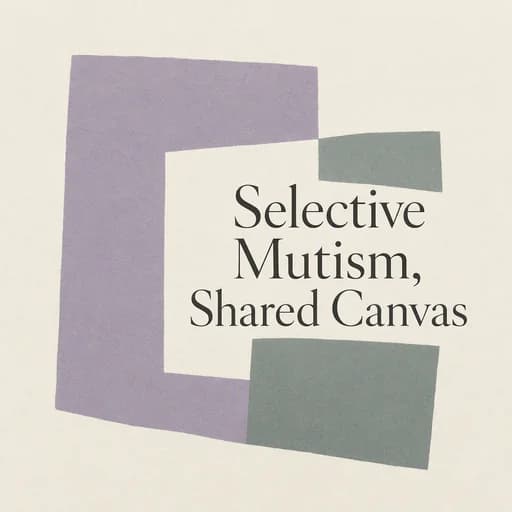
The most common mistake you might make when entering your first session with a child who has selective mutism is believing that silence is a wall you have to break down. In reality, that silence is often a protective shield, and your greatest insight will be realizing that you don't need her voice to build a bridge to her world.
Generated by Julia
Preparing for a first virtual therapy session with an 11-year-old girl with selective mutism who enjoys art and gets high grades. Focus on virtual icebreakers and creative art-based activities that provide an outlet for anxiety without requiring verbal pressure. Include strategies for conducting these activities over a video call while the mother is present. Also provide ways that we can help build rapport.






よくある質問
Selective mutism is a serious childhood anxiety disorder where a child is physically capable of speaking but remains consistently unable to do so in specific social settings, such as school or therapy. While these children often speak freely at home, they may feel an invisible lock on their throat when faced with the expectation of speech elsewhere. It is not an act of defiance or a choice, but rather a paralyzing response to social anxiety that often affects high-achieving and academically gifted students.
Art therapy serves as a primary language and a bridge to the child's world when spoken conversation feels impossible. By using a shared canvas, the therapist can communicate with the child without the pressure of verbal performance. This approach respects the child's silence as a protective shield rather than a wall to be broken down. Using art allows the child to express themselves and engage in the therapeutic process while reducing the intense anxiety associated with the expectation of speech.
The therapeutic relationship is one of the strongest predictors of success in treating anxiety disorders, regardless of the specific method used. In the context of selective mutism, the initial goal is not to force the child to speak, but to prove that the therapist is a safe person who does not require them to perform. Building this trust and safety allows the child to feel comfortable, eventually helping them navigate their social anxiety and the pressure to perform in social settings.
"Instead of endless scrolling, I just hit play on BeFreed. It saves me so much time."


"I never knew where to start with nonfiction—BeFreed’s book lists turned into podcasts gave me a clear path."


"Perfect balance between learning and entertainment. Finished ‘Thinking, Fast and Slow’ on my commute this week."
"Crazy how much I learned while walking the dog. BeFreed = small habits → big gains."
"Reading used to feel like a chore. Now it’s just part of my lifestyle."

"Feels effortless compared to reading. I’ve finished 6 books this month already."
"BeFreed turned my guilty doomscrolling into something that feels productive and inspiring."

"BeFreed turned my commute into learning time. 20-min podcasts are perfect for finishing books I never had time for."
"BeFreed replaced my podcast queue. Imagine Spotify for books — that’s it. 🙌"

"It is great for me to learn something from the book without reading it."
"The themed book list podcasts help me connect ideas across authors—like a guided audio journey."
"Makes me feel smarter every time before going to work"
"Instead of endless scrolling, I just hit play on BeFreed. It saves me so much time."
"I never knew where to start with nonfiction—BeFreed’s book lists turned into podcasts gave me a clear path."
"Perfect balance between learning and entertainment. Finished ‘Thinking, Fast and Slow’ on my commute this week."
"Crazy how much I learned while walking the dog. BeFreed = small habits → big gains."
"Reading used to feel like a chore. Now it’s just part of my lifestyle."
"Feels effortless compared to reading. I’ve finished 6 books this month already."
"BeFreed turned my guilty doomscrolling into something that feels productive and inspiring."
"BeFreed turned my commute into learning time. 20-min podcasts are perfect for finishing books I never had time for."
"BeFreed replaced my podcast queue. Imagine Spotify for books — that’s it. 🙌"
"It is great for me to learn something from the book without reading it."
"The themed book list podcasts help me connect ideas across authors—like a guided audio journey."
"Makes me feel smarter every time before going to work"
"Instead of endless scrolling, I just hit play on BeFreed. It saves me so much time."
"I never knew where to start with nonfiction—BeFreed’s book lists turned into podcasts gave me a clear path."
"Perfect balance between learning and entertainment. Finished ‘Thinking, Fast and Slow’ on my commute this week."
"Crazy how much I learned while walking the dog. BeFreed = small habits → big gains."
"Reading used to feel like a chore. Now it’s just part of my lifestyle."
"Feels effortless compared to reading. I’ve finished 6 books this month already."
"BeFreed turned my guilty doomscrolling into something that feels productive and inspiring."
"BeFreed turned my commute into learning time. 20-min podcasts are perfect for finishing books I never had time for."
"BeFreed replaced my podcast queue. Imagine Spotify for books — that’s it. 🙌"
"It is great for me to learn something from the book without reading it."
"The themed book list podcasts help me connect ideas across authors—like a guided audio journey."
"Makes me feel smarter every time before going to work"
"Instead of endless scrolling, I just hit play on BeFreed. It saves me so much time."
"I never knew where to start with nonfiction—BeFreed’s book lists turned into podcasts gave me a clear path."
"Perfect balance between learning and entertainment. Finished ‘Thinking, Fast and Slow’ on my commute this week."
"Crazy how much I learned while walking the dog. BeFreed = small habits → big gains."
"Reading used to feel like a chore. Now it’s just part of my lifestyle."
"Feels effortless compared to reading. I’ve finished 6 books this month already."
"BeFreed turned my guilty doomscrolling into something that feels productive and inspiring."
"BeFreed turned my commute into learning time. 20-min podcasts are perfect for finishing books I never had time for."
"BeFreed replaced my podcast queue. Imagine Spotify for books — that’s it. 🙌"
"It is great for me to learn something from the book without reading it."
"The themed book list podcasts help me connect ideas across authors—like a guided audio journey."
"Makes me feel smarter every time before going to work"