Man’s Search for Meaning: Finding Purpose in Pain
When life feels dictated by outside forces, how do we stay motivated? Explore Viktor Frankl’s lessons on choosing your attitude and finding a 'why'.
Man’s Search for Meaning: Finding Purpose in Painのベスト引用
Everything can be taken from a man but one thing: the last of the human freedoms—to choose one’s attitude in any given set of circumstances, to choose one’s own way.
Generated with BeFreed
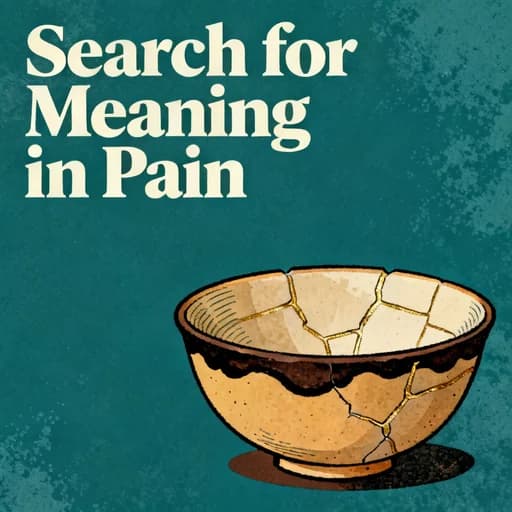
An audio lesson about the book Man's Search for Meaning, covering its key ideas and takeaways.


よくある質問
According to Viktor Frankl’s observations, there are three distinct stages of psychological reaction. The first is the period of initial shock, characterized by a "delusion of reprieve" where a person hopes for a last-minute rescue before facing the reality of their situation. The second phase is a period of deep emotional detachment or apathy, which serves as a protective shell to help the individual focus solely on immediate survival. The final phase occurs after liberation, often involving a sense of depersonalization and disillusionment as the individual struggles to relearn how to feel joy and reconnect with a world that may have changed or moved on.
Logotherapy is a school of psychology founded by Frankl that suggests the primary human drive is not the pursuit of pleasure or power, but the pursuit of purpose. It posits that mental health is found in the "striving and struggling" for a worthy goal rather than a state of tensionless equilibrium. Unlike theories that view humans as mere collections of biological drives, logotherapy emphasizes "responsibleness," suggesting that meaning is created by responding to the specific questions life asks of us and by dedicating ourselves to a cause or person larger than ourselves.
Frankl argued that even when a situation cannot be changed, a person can find meaning by changing their attitude toward that suffering. He called this "tragic optimism," the ability to turn a personal tragedy into a human triumph. By viewing suffering as a sacrifice for someone else or as a challenge to maintain one's dignity, the pain becomes bearable. He believed that the "last of the human freedoms" is the ability to choose one's own way and attitude in any given set of circumstances, regardless of physical restrictions.
Paradoxical intention is a technique developed by Frankl to help people overcome anxiety and fear. It is based on the idea that fearing an event often makes it more likely to happen. To break this cycle, a person is encouraged to "wish" for or try to bring about the very thing they fear, often using humor or self-detachment. For example, someone afraid of sweating in public would be told to try to show others exactly how much they can sweat. This shift helps the individual realize they are a self-determining human being rather than a machine governed by reflexes.
Frankl observed that physical strength was often less important for survival than mental resilience. He noted that prisoners who lost their "why"—their reason for living, such as a loved one to return to or a work to finish—quickly withered away and died. He frequently quoted Nietzsche’s idea that "he who has a why to live can bear almost any how," arguing that a future-oriented goal provides the necessary physical and mental resistance to endure extreme hardship.
"Instead of endless scrolling, I just hit play on BeFreed. It saves me so much time."


"I never knew where to start with nonfiction—BeFreed’s book lists turned into podcasts gave me a clear path."


"Perfect balance between learning and entertainment. Finished ‘Thinking, Fast and Slow’ on my commute this week."
"Crazy how much I learned while walking the dog. BeFreed = small habits → big gains."
"Reading used to feel like a chore. Now it’s just part of my lifestyle."

"Feels effortless compared to reading. I’ve finished 6 books this month already."
"BeFreed turned my guilty doomscrolling into something that feels productive and inspiring."

"BeFreed turned my commute into learning time. 20-min podcasts are perfect for finishing books I never had time for."
"BeFreed replaced my podcast queue. Imagine Spotify for books — that’s it. 🙌"

"It is great for me to learn something from the book without reading it."
"The themed book list podcasts help me connect ideas across authors—like a guided audio journey."
"Makes me feel smarter every time before going to work"
"Instead of endless scrolling, I just hit play on BeFreed. It saves me so much time."
"I never knew where to start with nonfiction—BeFreed’s book lists turned into podcasts gave me a clear path."
"Perfect balance between learning and entertainment. Finished ‘Thinking, Fast and Slow’ on my commute this week."
"Crazy how much I learned while walking the dog. BeFreed = small habits → big gains."
"Reading used to feel like a chore. Now it’s just part of my lifestyle."
"Feels effortless compared to reading. I’ve finished 6 books this month already."
"BeFreed turned my guilty doomscrolling into something that feels productive and inspiring."
"BeFreed turned my commute into learning time. 20-min podcasts are perfect for finishing books I never had time for."
"BeFreed replaced my podcast queue. Imagine Spotify for books — that’s it. 🙌"
"It is great for me to learn something from the book without reading it."
"The themed book list podcasts help me connect ideas across authors—like a guided audio journey."
"Makes me feel smarter every time before going to work"
"Instead of endless scrolling, I just hit play on BeFreed. It saves me so much time."
"I never knew where to start with nonfiction—BeFreed’s book lists turned into podcasts gave me a clear path."
"Perfect balance between learning and entertainment. Finished ‘Thinking, Fast and Slow’ on my commute this week."
"Crazy how much I learned while walking the dog. BeFreed = small habits → big gains."
"Reading used to feel like a chore. Now it’s just part of my lifestyle."
"Feels effortless compared to reading. I’ve finished 6 books this month already."
"BeFreed turned my guilty doomscrolling into something that feels productive and inspiring."
"BeFreed turned my commute into learning time. 20-min podcasts are perfect for finishing books I never had time for."
"BeFreed replaced my podcast queue. Imagine Spotify for books — that’s it. 🙌"
"It is great for me to learn something from the book without reading it."
"The themed book list podcasts help me connect ideas across authors—like a guided audio journey."
"Makes me feel smarter every time before going to work"
"Instead of endless scrolling, I just hit play on BeFreed. It saves me so much time."
"I never knew where to start with nonfiction—BeFreed’s book lists turned into podcasts gave me a clear path."
"Perfect balance between learning and entertainment. Finished ‘Thinking, Fast and Slow’ on my commute this week."
"Crazy how much I learned while walking the dog. BeFreed = small habits → big gains."
"Reading used to feel like a chore. Now it’s just part of my lifestyle."
"Feels effortless compared to reading. I’ve finished 6 books this month already."
"BeFreed turned my guilty doomscrolling into something that feels productive and inspiring."
"BeFreed turned my commute into learning time. 20-min podcasts are perfect for finishing books I never had time for."
"BeFreed replaced my podcast queue. Imagine Spotify for books — that’s it. 🙌"
"It is great for me to learn something from the book without reading it."
"The themed book list podcasts help me connect ideas across authors—like a guided audio journey."
"Makes me feel smarter every time before going to work"