Learn how collecting Google reviews via QR codes enhances your Local SEO, improves your Google Business Profile ranking, and drives increased sales and growth.

Businesses with over 100 reviews earn 52% more revenue on average than those with fewer than 10. It’s not just about looking good; those reviews are a major ranking factor for Google’s local search algorithm.
"Instead of endless scrolling, I just hit play on BeFreed. It saves me so much time."
"I never knew where to start with nonfiction—BeFreed’s book lists turned into podcasts gave me a clear path."
"Perfect balance between learning and entertainment. Finished ‘Thinking, Fast and Slow’ on my commute this week."
"Crazy how much I learned while walking the dog. BeFreed = small habits → big gains."
"Reading used to feel like a chore. Now it’s just part of my lifestyle."
"Feels effortless compared to reading. I’ve finished 6 books this month already."
"BeFreed turned my guilty doomscrolling into something that feels productive and inspiring."
"BeFreed turned my commute into learning time. 20-min podcasts are perfect for finishing books I never had time for."
"BeFreed replaced my podcast queue. Imagine Spotify for books — that’s it. 🙌"
"It is great for me to learn something from the book without reading it."
"The themed book list podcasts help me connect ideas across authors—like a guided audio journey."
"Makes me feel smarter every time before going to work"

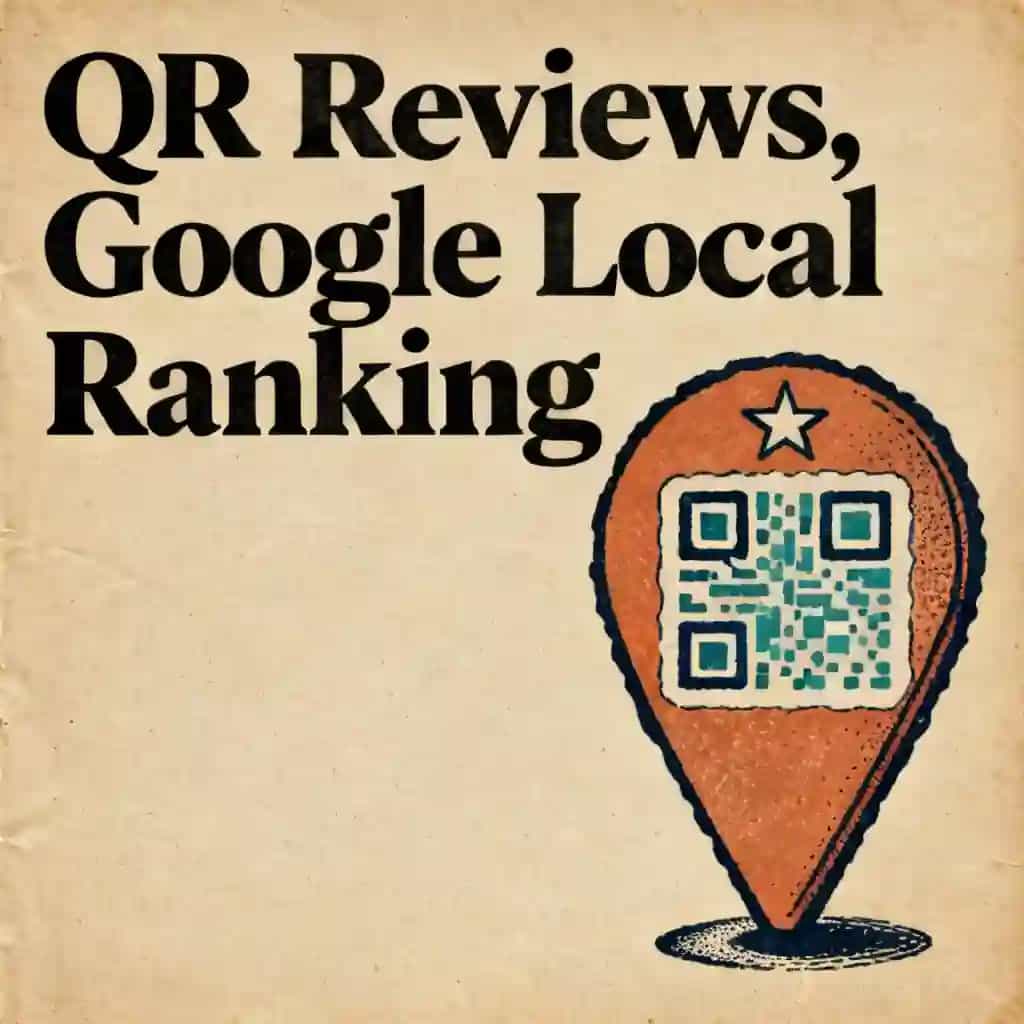
Lena: I was at this local coffee shop yesterday, and right there on the napkin holder was a little QR code that said, "Tell us how we did." It was so easy—I scanned it, and boom, I was leaving a review before my latte was even cool.
Miles: That is the perfect example of closing the "friction gap." Most businesses just hope customers will go home, search for them on Google, and find the review page manually, but most people just won't do that.
Lena: Right, it’s too much work! But I didn't realize how much those clicks actually matter for the business.
Miles: It’s huge. In fact, businesses with over 100 reviews earn 52% more revenue on average than those with fewer than 10. It’s not just about looking good; those reviews are a major ranking factor for Google’s local search algorithm.
Lena: So, more reviews directly equals better visibility and more sales. Let’s explore how any business can set up this exact system today.
Miles: You know, building on that coffee shop experience you had, it really comes down to what we call the "Friction Gap." It is this invisible wall between a customer thinking, "Hey, I had a great time here," and actually putting that thought onto the internet.
Lena: It’s so true. I mean, think about it—if I have to unlock my phone, open a browser, type in the name of the shop, make sure I’m clicking on the right location because sometimes there are three shops with similar names, then find the "Reviews" tab, and then finally hit "Write a review"—I’ve already lost interest. I’m probably already thinking about my next meeting or what I’m having for dinner.
Miles: Exactly. You’ve just described about six different points where a customer can simply "fall off" the path. And that is exactly why the QR code is such a game changer. It’s a friction eliminator. One scan, and you are literally staring at the stars—the rating stars, that is.
Lena: It’s like a digital shortcut that bypasses the mental hurdles. But I’m curious, Miles, because I’ve seen two different types of these codes. Some look like they just go to a website, and others seem a bit more "smart," if that makes sense?
Miles: You’ve hit on a really important technical distinction that actually has massive strategic implications for a business owner—the difference between static and dynamic QR codes.
Lena: Okay, break that down for me. I’m guessing "static" means it stays the same?
Miles: Spot on. A static QR code is like a physical signpost that is cemented into the ground. It points to one specific URL, and that is it. If you print five hundred table tents with a static code and then Google changes the structure of your review link—which they sometimes do—or if you want to change where that code points, you are out of luck. You have to toss those table tents and start over.
Lena: That sounds like a nightmare for a small business on a budget.
Miles: It really is. Now, a dynamic QR code—that’s the smart choice. It points to a redirect link. This means you can go into your dashboard at any time and change the destination without ever touching the physical code.
Lena: Oh, that’s brilliant. So if I’m running a special promotion one week and want the code to go to a survey, and then the next week I want it back on Google Reviews, I can just flip a switch?
Miles: Exactly. And here is the real kicker—tracking. Dynamic codes give you data. You can see how many people scanned the code on Monday versus Saturday. You can see what time of day they’re scanning.
Lena: Wait, that is huge! So if I have a code at the front desk and another one on the receipts, I could theoretically see which one is actually doing the heavy lifting?
Miles: Precisely. Platforms like QRCodeKIT or LinkSaga emphasize this because data-driven decisions are always better than guessing. If you see that the codes on your receipts are getting zero scans but the ones at the checkout counter are blowing up, you know exactly where to put your energy.
Lena: It’s about working smarter, not harder. But I remember you mentioned earlier that it’s not just about the *number* of reviews. Google is actually looking for specific patterns, right?
Miles: Right, and this is where it gets into the "SEO mechanics." Google doesn’t just see a pile of reviews; it sees a heartbeat. It’s looking for "Review Velocity" and "Recency."
Lena: Velocity—so, how fast they’re coming in?
Miles: Yes. Think about it from Google’s perspective. If a business got five hundred reviews in 2021 and then nothing since, what does that tell you?
Lena: That they might not even be open anymore? Or maybe they changed owners and the quality tanked.
Miles: Exactly. Google wants to provide the most relevant, up-to-date information to its users. So, a business that gets three fresh reviews every week is often seen as more "alive" and "prominent" than a competitor with a huge but ancient backlog.
Lena: That makes so much sense. It’s about proving you are still delivering a great experience *today*.
Miles: And that’s why the QR code is so vital. It creates a system for consistent, ongoing feedback. It turns review collection from a "one-time campaign" into a part of your daily operations.
Lena: I love that. It’s not a burst of effort; it’s a steady rhythm. So, for the business owner listening, the first step is really getting that Google Business Profile verified and then generating that specific "Write a Review" link—not just the link to their profile.
Miles: Correct. You want the link that opens the actual form. That is the ultimate friction-killer. When the customer scans, their keyboard should practically pop up ready for them to type.
Lena: So, Miles, we’ve talked about how these QR codes make things easier for the customer, but I want to dig deeper into the "why" for the business owner. You mentioned that reviews are a major part of the "Prominence" pillar in Google’s local search algorithm. How exactly does Google weight these things?
Miles: It’s fascinating. If you look at the data from 2026, reviews account for roughly 20 to 25 percent of your ranking authority in the "Local Pack"—that’s the top three results you see on the map.
Lena: Twenty-five percent? That’s massive. That’s a quarter of the whole puzzle.
Miles: It really is. And it’s actually the second most important factor, right behind the quality of your Google Business Profile itself. But here is the nuance that most people miss—it’s not just a "more is better" situation. Google’s algorithm is looking at a mix of signals.
Lena: Like the "Velocity" and "Recency" we touched on?
Miles: Exactly. But there are others. Think about "Review Content." Google’s natural language processing—their AI—actually reads what people are saying. If a customer writes, "Best gluten-free pizza in town," and someone else searches for "gluten-free pizza," Google connects those dots.
Lena: So the reviews themselves are acting like a source of keywords?
Miles: Precisely. It’s user-generated SEO. You might not even have the words "emergency plumbing" on your homepage, but if ten people leave reviews saying you fixed their "emergency plumbing" at 3:00 AM, Google is going to start showing you for those searches.
Lena: That is such a powerful insight. It’s like your customers are doing your marketing for you. But does Google care about the "Star Rating" specifically? I mean, is a 5.0 always better than a 4.5?
Miles: You might be surprised, but the answer is often "no." In fact, 2026 ranking data shows that a 4.5 or a 4.8 can actually be *more* effective than a perfect 5.0.
Lena: Why is that? I would think 5.0 is the gold standard.
Miles: It’s about trust and authenticity. A perfect 5.0 across hundreds of reviews can sometimes look... well, suspicious. Like it was "gated" or manipulated. Google—and customers—actually appreciate a little bit of natural variance. It shows the reviews are real.
Lena: That’s a relief for business owners who are terrified of a single four-star review. It actually makes the whole profile look more human.
Miles: Exactly. What matters more is the "Distribution." You want a healthy spread, mostly fives and fours. If you dip below a 4.0, that’s when you start seeing a significant ranking penalty. AI models, like Gemini or ChatGPT, often use 4.0 as a "hard cutoff" when they are recommending local businesses.
Lena: So if you’re at a 3.9, you’re basically invisible to the AI?
Miles: Often, yes. The AI wants to provide "high confidence" recommendations. Recommending a business with a sub-4.0 rating is a risk the algorithm doesn't want to take.
Lena: Wow. So the stakes are even higher now with AI search. Now, what about the people *leaving* the reviews? Does Google care who they are?
Miles: They do! There is a concept called "Local Guides." These are users who are frequent contributors to Google Maps. Their reviews actually carry more weight because they have a verified history of visiting places and giving feedback.
Lena: So a review from a "Level 8 Local Guide" is like a VIP endorsement?
Miles: It really is. It carries more "Authority." But for the average business owner, you can’t really control who walks through the door. What you *can* control is the "Velocity."
Lena: Right, keeping that steady stream coming in. You mentioned earlier that there’s a "Magic Number" for reviews. Is that still true?
Miles: The "Race to 10" is a real thing. Data shows that once a business crosses that ten-review threshold, they often see a noticeable jump in visibility. It’s like a "trust validation" checkpoint.
Lena: So if you’re a new business, your first goal is ten reviews as fast as possible.
Miles: Exactly. But after that, don’t obsess over the raw count. A business with 50 recent reviews will often outrank a competitor with 500 old ones. That "Quality Decay" is real.
Lena: "Quality Decay"—that’s a great term. It’s like reviews have an expiration date in the eyes of the algorithm.
Miles: They do. 73 percent of consumers only pay attention to reviews written in the last month. If your last review was from 2024, it’s basically ancient history.
Lena: So, the QR code isn't just a "nice to have"—it’s the engine that keeps your "Recency" and "Velocity" alive. It ensures that when Google looks at your business, it sees something vibrant and active.
Miles: And that activity signals "Prominence," which is the key to winning that top spot in the Map Pack. It’s a virtuous cycle. More reviews lead to better rankings, which lead to more customers, which lead to... you guessed it, more reviews.
Lena: Okay, Miles, we’ve talked about the "why" and the "how it works," but let’s get tactical. If I’m a business owner and I’ve got my QR code ready to go—where do I actually put it? I mean, I don't want to just plaster it everywhere and look desperate.
Miles: Right, it’s all about the "Moment of Delight" or the "Point of Dwell." You want to find those spots where the customer is naturally pausing and—this is key—where they are most likely to be feeling satisfied.
Lena: "The Moment of Delight." I love that. So, not while they’re waiting in a long line, but maybe right after they’ve received their service?
Miles: Exactly. Think about the flow of your customer’s journey. For a restaurant, the classic spot is the table tent. Customers are often sitting there after the meal, waiting for the check—they have their phone right there on the table. It’s a low-friction moment.
Lena: That makes sense. What about retail?
Miles: For retail, the checkout counter is prime real estate. But you have to be careful not to hold up the line. A small sign near the credit card reader or a code printed directly on the receipt is perfect.
Lena: I’ve seen them on receipts a lot lately. Does that actually work? I feel like I usually just crumple those up.
Miles: It works better than you’d think, especially if there is an incentive. But honestly, the "In-Store Display" often has a higher conversion rate because it captures the person while they are still in the environment.
Lena: What about service businesses? Like a salon or a plumber?
Miles: For salons, mirrors are a secret weapon. Customers are sitting there for thirty minutes to an hour, looking at themselves, hopefully feeling great about their new look. A subtle QR code on the corner of the mirror is almost impossible to ignore.
Lena: That’s clever. And for a plumber or an HVAC tech? They don't really have a "counter."
Miles: They have the "In-Person Hand-Off." Imagine a technician finishing a job, showing the customer the fix, and then handing them a "Thank You" card or an invoice that has the QR code right there. They can say, "Hey, if you’re happy with the work, it would mean the world if you could scan this and let Google know."
Lena: That personal touch probably goes a long way. It makes it a favor for a person, not just a task for a business.
Miles: Absolutely. And don't forget the "Unexpected" spots. For hotels, it could be the bathroom mirror or the back of the door. For a gym, maybe it's on the equipment or in the locker room.
Lena: I’ve even seen them on the back of business cards. Is that a good move?
Miles: It’s great for networking! It turns a physical handshake into a digital trust signal. But wherever you put it, the "Design" is just as important as the location.
Lena: Right, because if it looks like a sketchy black-and-white box, I’m probably not going to scan it.
Miles: Exactly. You have to build trust. Use your brand colors. Add your logo to the center of the QR code—most generators allow for this now. It makes the code look "official" and safe.
Lena: And a clear "Call to Action," right? Not just "Scan Me."
Miles: Never just "Scan Me." Use something like, "Tell us how we did!" or "Scan to leave a review." If you can, add a little "Why." Like, "Your feedback helps us grow."
Lena: It’s like a visual handshake. You’re inviting them into a conversation.
Miles: And here is a pro-tip for the "Technical" side: contrast is everything. If you print a dark blue QR code on a black background, it’s not going to scan. Keep it high contrast—dark code, light background.
Lena: And size? I’ve seen some that are so tiny I have to practically touch my phone to the paper.
Miles: Yeah, that’s a fail. The rule of thumb is at least 2 by 2 centimeters for close-range scanning. If it’s on a poster meant to be scanned from across a room, it needs to be much larger.
Lena: So, the goal is to make it look intentional, professional, and—most importantly—effortless to use.
Miles: Exactly. You want to reduce the "Cognitive Load." The customer shouldn't have to think; they should just scan. When you align the right placement with a trustworthy design, your scan rates will naturally climb.
Lena: So, Miles, let’s address the elephant in the room. A lot of business owners are actually *scared* of making it easier to leave reviews because they’re afraid of the negative ones. They think, "If I put a QR code everywhere, I’m just inviting people to complain."
Miles: It’s a very common fear, and it’s understandable. But here’s the reality—people who are angry will *always* find a way to complain. They are already motivated. They will go home, search for you, and write that one-star review regardless of whether you have a QR code.
Lena: That’s a good point. The motivated haters don't need a shortcut.
Miles: Exactly. Who *does* need the shortcut? The happy customers! They’re the ones who had a great time but are "too busy" to do the extra work. By adding a QR code, you aren't necessarily increasing the number of negative reviews; you’re drastically increasing the number of *positive* ones to balance things out.
Lena: So it’s about drowning out the noise with a chorus of happy voices.
Miles: Precisely. And honestly, a few negative reviews aren't the end of the world. In fact, they can be a massive opportunity for "Service Recovery."
Lena: "Service Recovery." Tell me more about that.
Miles: If someone leaves a negative review via a QR code while they are still in your store, and you have a system to monitor that in real-time—you might actually be able to fix the problem before they even leave!
Lena: Oh, that is powerful! Imagine a restaurant manager seeing a notification that a table is unhappy with their meal, and being able to go over and fix it right then.
Miles: That is the "Gold Standard" of customer service. You turn a detractor into a loyal fan because you showed you actually care and you’re listening. Even if you can’t fix it in the moment, a professional, thoughtful response to a negative review shows *future* customers that you are a responsible business owner.
Lena: Right, because I’m reading those responses as a customer. If I see a business owner being defensive or rude, that’s a huge red flag. But if I see them being helpful and apologetic, I’m much more likely to trust them.
Miles: Exactly. Google’s own documentation says that responding to reviews shows you are responsive to your customers. It’s a trust signal for the algorithm, too.
Lena: Now, I’ve heard of something called "Review Gating"—where businesses try to pre-screen people and only send the happy ones to Google. That sounds like a smart move, but is it legal?
Miles: It is a huge "No-No." Both Google and the FTC have very strict rules against review gating. If you are found to be pre-screening customers—like sending a private survey first and only giving the Google link to the 5-star responders—you can get penalized.
Lena: Penalized how?
Miles: We’re talking about "shame badges" on your profile, having your reviews removed, or even having your entire Google Business Profile suspended. And the FTC can even levy fines. It’s just not worth the risk.
Lena: Wow. So the message is: be transparent, ask everyone, and trust your service.
Miles: Precisely. Authenticity is the ultimate SEO strategy. And that brings up another "ethics" point—incentives. Can I offer a free coffee for a review?
Miles: Short answer: No. Google’s policy is very clear—you cannot offer incentives specifically for reviews. You can’t do contests, you can’t do discounts, nothing that looks like a "pay-for-play" system.
Lena: But I see businesses doing this all the time!
Miles: They are playing with fire. Google’s AI is getting incredibly good at detecting these patterns. If they see a sudden spike in reviews all mentioning "thanks for the free coffee," they’re going to flag it.
Lena: So what *can* you do?
Miles: You can incentivize *feedback* in general. You can say, "Scan this to take our customer satisfaction survey and get a 10% discount." And then, at the end of that survey, you can have a link that says, "If you’d like to share your thoughts publicly, here is our Google link."
Lena: Ah, I see the distinction. You’re rewarding the *participation*, not the *result*.
Miles: Exactly. It’s a subtle but important difference. And honestly, the best incentive is just great service. If people feel valued, they want to help you succeed. The QR code just gives them the tool to do it.
Lena: So, Miles, we’ve covered the ground-level stuff—the codes, the placement, the ethics. But what if I’m running a business with multiple locations? Or I’m just a super busy owner who doesn’t have time to manually check for reviews every hour? How do I scale this?
Miles: This is where the "Feedback Operating System" comes into play. In 2026, you don’t have to do this manually. There are platforms like FeedbackRobot or Responsly that essentially automate the entire process for you.
Lena: Automate it how? Does it write the reviews for people?
Miles: Haha, no, definitely not! That would be a huge violation. But it automates the *request* and the *monitoring*. Imagine a system that is integrated with your Point of Sale. As soon as a customer pays, it triggers a text or an email with that specific QR link.
Lena: Oh, so it’s perfectly timed. No more forgetting to ask!
Miles: Exactly. And then, it aggregates all those reviews into one dashboard. You don’t have to log into Google, then Facebook, then Yelp. It’s all right there.
Lena: That sounds like a massive time-saver. But what about the *responses*? That’s the part that feels like it takes the most time.
Miles: This is where AI is really changing the game. We’re seeing "AI Summaries" and "Sentiment Analysis" being built into these dashboards. Instead of reading a thousand individual comments, the AI can tell you, "Hey, people love your new latte, but they’re starting to complain about the wait times on Tuesday mornings."
Lena: That is incredible business intelligence. It’s like having a full-time data analyst for your reputation.
Miles: It really is. And for responses, AI can help draft "Sentiment-Driven" replies. It’s not just a boilerplate "Thanks!" It can actually acknowledge the specific things the customer mentioned, which we know Google loves.
Lena: But do I still have to hit "send"?
Miles: For now, it’s best to have a human in the loop, especially for negative reviews. But for those 5-star "Great service!" reviews, you can absolutely set up "Auto-Responders" that rotate through different natural-sounding phrases.
Lena: That makes it so much more manageable. Now, what about those "Review Spikes" we talked about? If I start using an automated system, won’t that look suspicious to Google?
Miles: That’s a great question. A good automated system actually helps *prevent* those spikes by "drip-feeding" the requests. Instead of a "campaign blast" once a month, it’s a steady one-a-day or three-a-week flow.
Lena: Right, it maintains that "Natural Velocity" that Google looks for.
Miles: Exactly. And it also helps with "Platform Diversity." If the system sees you have fifty reviews on Google but zero on Yelp, it can automatically start sending some of those QR scans to your Yelp page to balance things out.
Lena: Oh, I didn't even think of that! So it’s managing your entire "Trust Ecosystem," not just one site.
Miles: Precisely. And for multi-location brands, this is non-negotiable. You can see at a glance which store is performing the best and which one might need more training or a better "Moment of Delight" strategy.
Lena: It’s like a leaderboard for customer satisfaction.
Miles: It really is. And here is one more cool feature we’re seeing: "Prompt to Survey." If someone leaves a glowing 5-star review publicly, the system can automatically follow up and ask them to complete a more detailed *internal* survey.
Lena: Why would you do that? You already got the review!
Miles: Because those are your "Super-Fans." They are the ones who will give you the best feedback on new products or services. You want to capture as much of their insight as possible.
Lena: It’s about building a community, not just a list of stars.
Miles: Exactly. By using these AI and automation tools, you turn a simple QR code into a high-powered engine for business growth. You’re not just collecting reviews; you’re building a systematic way to listen, improve, and dominate your local market.
Lena: We’ve spent a lot of time talking about Google, and for good reason—it’s the giant in the room. But Miles, you mentioned "Platform Diversity" just now. How much should a business care about places like Yelp, Facebook, or even industry-specific sites?
Miles: It’s a great question. While Google is the primary driver for Map Pack rankings, the "Holistic Ecosystem" matters more than ever because of how AI search works now.
Lena: You mean like Gemini and ChatGPT?
Miles: Exactly. These AI models are "Consensus-Driven." They don't just look at one source. They are scanning the entire web to form an opinion about your business.
Lena: Oh, I see. So if I have 4.9 stars on Google but I’m sitting at 2.5 on Yelp because I ignored it for three years, the AI sees a "Data Conflict."
Miles: You hit the nail on the head. The AI looks for consistency. If there is a massive gap between your ratings on different platforms, the AI’s "Confidence Score" for your business drops. It might decide not to recommend you at all because it can’t tell which version of your reputation is the real one.
Lena: That is a huge wake-up call. So, "ignoring Yelp" is actually hurting my "Google visibility" in the age of AI.
Miles: Indirectly, yes. And it’s not just Yelp. Think about industry-specific sites. If you’re a contractor, sites like Angie's List or HomeAdvisor are massive. If you’re a lawyer, it’s Avvo. These are "Authority Signals" that Google uses to verify your "Prominence."
Lena: So, the strategy should be to have a "Lead Platform"—usually Google—but then a "Supporting Cast" of other sites?
Miles: Exactly. A good rule of thumb is the 70-15-10-5 rule.
Lena: Okay, I’m ready for the numbers. What’s that?
Miles: Put 70% of your effort into Google—that’s your primary driver. Then 15% into a secondary big player like Yelp. 10% into your most important industry-specific site. And 5% into social media like Facebook.
Lena: That feels much more manageable than trying to be everywhere at once. And I’m guessing the QR code can help with this, too?
Miles: Absolutely! This is where "Dynamic QR Codes" really shine. You can actually set them up to rotate. One day the scan goes to Google, the next it goes to Yelp. Or, you can have a "Landing Page" behind the QR code that says, "Where would you like to leave us a review?" and gives them the options.
Lena: Oh, I’ve seen those! It’s like a little menu of review sites. Is that too much friction, though?
Miles: It *can* be. You have to be careful. If you give people too many choices, they might choose nothing. But if you just offer two or three clear buttons, it can actually be very effective.
Lena: What about "Review Syndication"? I’ve seen some businesses showing their Google reviews on their own website. Does that help with SEO?
Miles: It doesn't necessarily help your *Google* ranking directly, but it’s a massive "Conversion Asset." 97% of consumers read reviews before making a purchase. If they land on your site and see a feed of fresh, 5-star reviews, it builds instant trust.
Lena: It’s that "Social Proof" again. It’s one thing for a business to say they’re great; it’s another thing to see fifty people say it.
Miles: Exactly. And here is another trend for 2026: "Video Reviews."
Lena: Video? Like, people recording themselves?
Miles: Yeah! Some QR code platforms now allow customers to record a quick 15-second video testimonial right after scanning.
Lena: That feels so much more authentic than just text. I can see the person’s face, hear their voice—it’s hard to fake that.
Miles: It’s incredibly powerful. And while Google doesn't "index" those videos the same way as text reviews yet, they are absolute gold for your social media and website.
Lena: So, the big takeaway here is that your reputation isn't a single point; it’s a network. The QR code is just the "On-Ramp" to that entire ecosystem.
Miles: Well said. It’s about creating a "Consistent Brand Presence" across the entire web. When the AI sees that everyone, everywhere, is saying great things about you, that’s when you truly become "Prominent."
Lena: Miles, we’ve talked about a lot of technical stuff today, but let's bring it back to the bottom line. For a business owner who is thinking, "Okay, this sounds great, but I’ve got a million other things to spend money and time on"—what is the actual ROI of a Google Review QR code system?
Miles: It’s a fair question. And the data is actually quite staggering. If we look at the research, businesses with a "Strong Review Profile"—meaning high velocity, recency, and a good rating—can see a 40% to 60% increase in Map Pack rankings within just a few months.
Lena: 40% to 60%? That’s not just a minor bump; that’s a transformation.
Miles: It really is. And remember, the Map Pack is where the vast majority of local clicks happen. If you’re not in those top three, you’re essentially fighting for crumbs.
Lena: Right, because I rarely scroll down past the first few results when I’m looking for a "plumber near me."
Miles: Exactly. And it’s not just about the *rankings*. It’s about the "Click-Through Rate" or CTR. A listing with 100 fresh reviews and a 4.8 rating is going to get clicked far more often than a competitor with 10 reviews and a 5.0 rating.
Lena: It’s that "Trust Factor." More clicks signal to Google that your listing is relevant, which then further boosts your rankings.
Miles: It’s a "Virtuous Cycle," like we said. And let’s talk about revenue. Studies have shown that a one-star increase in your average rating can lead to a 5% to 9% increase in revenue.
Lena: Wow. So if you’re at a 3.5 and you can get up to a 4.5, you’re looking at nearly a 10% jump in your top line?
Miles: At least. And that doesn't even account for the "Customer Lifetime Value." People who find you through positive reviews are often "Pre-Sold." They already trust you, which means the sales process is shorter and they are less likely to haggle on price.
Lena: That’s a great point. They’re "High-Intent" customers. Now, what about the cost? Generating a QR code is basically free, right?
Miles: The basic generation is free, yes. But the real "cost" is the *system*. Whether you’re paying for a platform like FeedbackRobot to automate things or you’re spending time training your staff—that’s the investment.
Lena: But when you compare that to, say, paid advertising...
Miles: Oh, there is no comparison. Paid ads are a "faucet"—you turn them off, and the leads stop. Reviews are an "Asset." They live on your profile forever, building value over time. The ROI of a review system is almost always higher than traditional PPC for local businesses.
Lena: So, it’s not just about "SEO"—it’s about "Reputation as Infrastructure."
Miles: I love that phrasing. It’s building a foundation of trust that makes all your other marketing more effective. If you’re running ads but you have a 3.2-star rating, you’re just wasting money.
Lena: Right, you’re paying for people to go look at your bad reputation.
Miles: Exactly. Now, for the listeners who want to start today—what’s the first move?
Miles: I’d say, do a "Reputation Audit." Search for your business. Look at your rating, your velocity—when was your last review?—and your competitor’s profiles.
Lena: And if I’m behind?
Miles: Then it’s time to "Weaponize" your reviews. Get that QR code out there. Start with the "Moment of Delight." Pick one spot in your business where you know customers are happy, and put the code there.
Lena: Just start with one. That’s manageable.
Miles: Exactly. Test it. See what happens. And then, once you see those stars starting to roll in, you can scale it up. The goal is to move from "passive" to "proactive." Don't wait for reviews to happen; make them a part of your success story.
Lena: Alright, Miles, we’ve reached the "homework" portion of our session. Let’s distill everything we’ve talked about into a clear, actionable 3-step plan for the listener who is ready to go.
Miles: I’m ready. Let’s make this as frictionless as the QR code itself.
Lena: Step One: The Setup.
Miles: Right. First, you need your "Direct Review Link." Log into your Google Business Profile, find the "Ask for Reviews" button, and copy that unique URL. Then—and this is my big recommendation—use a "Dynamic QR Code Generator." Don't go static. You want the tracking and the ability to change the link later.
Lena: Got it. Dynamic code, branded with colors and a logo, and a clear "Call to Action" like "Tell us how we did!"
Miles: Exactly. And make sure to download it in a high-resolution format, like an SVG, especially if you’re going to print it on signs or menus.
Lena: Okay, Step Two: The Deployment.
Miles: This is about "Strategic Placement." Don’t just stick it in a corner. Find your "Moment of Delight." If you’re a restaurant, it’s the table tent. If you’re a salon, it’s the mirror. If you’re a service tech, it’s a "Thank You" card at the end of the job.
Lena: And don’t forget the "Human Prompt."
Miles: Right! Train your team to say, "Hey, if you enjoyed your visit, scanning this really helps us out." That simple sentence can triple your scan rate.
Lena: And finally, Step Three: The Management.
Miles: You have to "Close the Loop." Set a weekly reminder to check your reviews and respond to *every single one*. Yes, even the 5-star ones with no text. A simple, personalized "Thanks, Lena! Glad you liked the latte!" goes a long way.
Lena: And for the negative ones?
Miles: Stay professional. Apologize, take it offline, and show future customers that you are a business that takes feedback seriously. If you can, use a monitoring tool to alert you in real-time so you can catch issues before they escalate.
Lena: That’s a solid playbook. It’s not about doing everything at once; it’s about building a system that runs itself.
Miles: Exactly. And remember the "Magic Number 10." If you’re a new business, that’s your first milestone. Once you hit ten, focus on "Velocity"—getting that steady 3 to 5 reviews every month.
Lena: It’s like a heartbeat for your business. As long as it’s steady, Google knows you’re alive and thriving.
Miles: And that heartbeat is what will eventually carry you to the top of the Map Pack. It’s the most sustainable, high-ROI move you can make for your local SEO.
Lena: I feel like I’ve learned so much today. It’s amazing how a little black-and-white square can have such a massive impact on a business’s future.
Miles: It really is the bridge between the physical world and the digital trust ecosystem.
Lena: Well, Miles, I think we’ve covered it all. To everyone listening, I hope you’re feeling inspired to go out there and start closing that "friction gap" for your own customers.
Miles: Absolutely. Your reputation is your most valuable asset—start building it today, one scan at a time.
Lena: As we bring this to a close, Miles, I’m left thinking about how much "Local SEO" has changed. It used to be all about keywords and technical back-end stuff, but now it feels like it’s really about... well, people.
Miles: You’ve hit on something profound there. Google’s algorithm is essentially trying to mimic human trust. It uses reviews as a proxy for the word-of-mouth recommendations we’ve relied on for centuries.
Lena: Right! It’s like the "Digital Version" of asking your neighbor for a good mechanic. Google is just asking *everybody's* neighbor all at once.
Miles: Exactly. And the QR code is just the tool that makes that conversation easier to have. It’s about being "Proactively Authentic."
Lena: "Proactively Authentic." I like that. It means you’re not just hoping for a good reputation; you’re actively building the infrastructure to support it.
Miles: And that’s really the key takeaway for today. Whether you’re a tiny coffee shop or a multi-location service brand, your reviews are a living, breathing part of your business. They aren't just a "score"—they are a reflection of your relationship with your community.
Lena: It’s been such a fascinating deep dive. I know I’m going to be looking at those little QR codes differently next time I’m out and about.
Miles: Me too! I’ll be checking for logos and "Moment of Delight" placement for sure.
Lena: So, to our listeners, thank you for joining us on this journey. We hope you take a moment today to think about your own "Friction Gap." Is it easy for your customers to sing your praises? If not, maybe it’s time for a scan.
Miles: Think about one place in your customer journey where a little bit of convenience could lead to a lot of trust.
Lena: That’s a perfect final thought. Thank you all for listening, and for your commitment to building better, more connected businesses. We really appreciate your time and your curiosity.
Miles: It’s been a pleasure. Good luck with your "Race to 10" and beyond!
Lena: Take care, everyone. Reflect on what you’ve learned, and we’ll see you... well, we won’t see you, but we wish you all the best on your path to local dominance!
Miles: Cheers to that. Thank you for listening!