Gnostic Luciferianism and Jung’s Secret Path
Struggling to find meaning in the material world? Explore how Carl Jung used Gnostic myths and the Red Book to transform inner shadows into light.

Gnostic Luciferianism and Jung’s Secret Pathのベスト引用
Until you make the unconscious conscious, it will direct your life and you will call it fate. Gnosis is self-awareness: the more you understand the forces shaping you, the less power they have to push you around.
Generated by Luci
Gnostic Luciferianism and Carl Jung

よくある質問
In Jungian psychology, the Demiurge is a metaphor for the human ego. Drawing from Gnostic myth, where the Demiurge is a "middle manager" creator god who mistakenly believes he is the supreme ruler of the universe, Jung saw the ego as a similar force that tries to control our reality. The ego creates a rigid, material world and often remains oblivious to the vast "ocean" of the unconscious beneath it. Living solely through the ego is described as living in a "material prison" where one is disconnected from their true source or "Pleroma."
Jung interpreted the Gnostic "Archons"—ancient celestial gatekeepers or rulers—as psychological complexes and autonomous sub-personalities. These are the parts of our psyche, such as irrational fears or sudden bursts of rage, that seem to take over our behavior against our conscious will. When we ignore these "inner tyrants," they grow stronger and act as "shadow" enforcers that keep us trapped in predictable, reactive patterns. Liberation from these Archons comes through acknowledging their power and integrating the shadow rather than repressing it.
Jung viewed the "Luciferian" or "Promethean" spark as the active principle of consciousness and rebellion. Rather than a figure of pure evil, this element represents the "light-bringer" who encourages humanity to wake up from a mindless, collective existence. Jung believed that the "fall" of man was actually the beginning of the hero’s journey, as it introduced the friction and "counter-will" necessary for an individual to develop a unique, conscious identity.
Abraxas represents a terrifying and beautiful power that exists above the traditional concepts of "God" and the "Devil." Unlike religions that split the world into perfect good and perfect evil, Jung used Abraxas to illustrate that the Divine contains the full spectrum of existence, including darkness, chaos, and destruction. Jung taught that we should neither worship nor flee from this force; instead, by recognizing the reality of Abraxas, we can stop living in denial of the world's dark forces and find a "middle path" toward true wholeness.
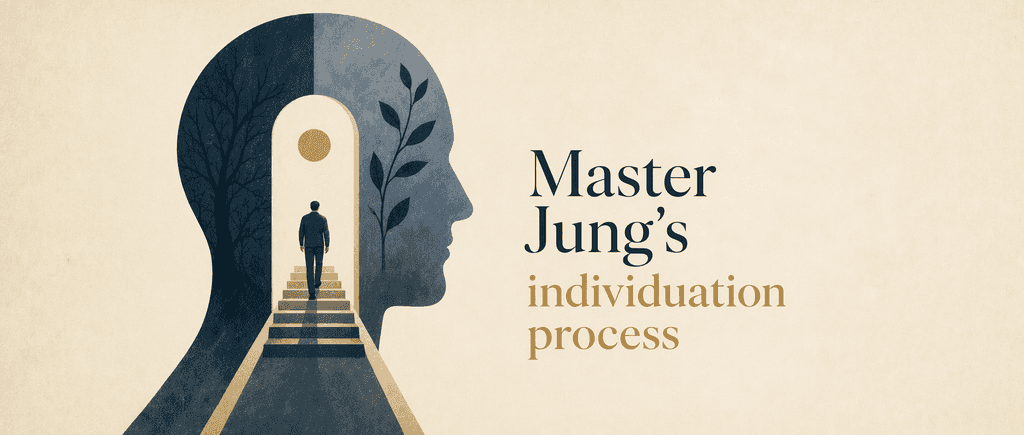
Practical Gnosis is the direct, experiential knowledge of one's own divinity and inner workings. Jung suggested using "Active Imagination" to dialogue with inner complexes and paying close attention to dreams as "letters" from the deeper self. The goal is "Individuation," a process of "undoing the seals" of social conditioning and trauma to reclaim power from the Archons. By integrating both the "Christ side" and the "Devil side" of the psyche, a person moves toward becoming a complete, "in-divisible" unity rather than a fragmented ego.
"Instead of endless scrolling, I just hit play on BeFreed. It saves me so much time."


"I never knew where to start with nonfiction—BeFreed’s book lists turned into podcasts gave me a clear path."


"Perfect balance between learning and entertainment. Finished ‘Thinking, Fast and Slow’ on my commute this week."
"Crazy how much I learned while walking the dog. BeFreed = small habits → big gains."
"Reading used to feel like a chore. Now it’s just part of my lifestyle."

"Feels effortless compared to reading. I’ve finished 6 books this month already."
"BeFreed turned my guilty doomscrolling into something that feels productive and inspiring."

"BeFreed turned my commute into learning time. 20-min podcasts are perfect for finishing books I never had time for."
"BeFreed replaced my podcast queue. Imagine Spotify for books — that’s it. 🙌"

"It is great for me to learn something from the book without reading it."
"The themed book list podcasts help me connect ideas across authors—like a guided audio journey."
"Makes me feel smarter every time before going to work"
"Instead of endless scrolling, I just hit play on BeFreed. It saves me so much time."
"I never knew where to start with nonfiction—BeFreed’s book lists turned into podcasts gave me a clear path."
"Perfect balance between learning and entertainment. Finished ‘Thinking, Fast and Slow’ on my commute this week."
"Crazy how much I learned while walking the dog. BeFreed = small habits → big gains."
"Reading used to feel like a chore. Now it’s just part of my lifestyle."
"Feels effortless compared to reading. I’ve finished 6 books this month already."
"BeFreed turned my guilty doomscrolling into something that feels productive and inspiring."
"BeFreed turned my commute into learning time. 20-min podcasts are perfect for finishing books I never had time for."
"BeFreed replaced my podcast queue. Imagine Spotify for books — that’s it. 🙌"
"It is great for me to learn something from the book without reading it."
"The themed book list podcasts help me connect ideas across authors—like a guided audio journey."
"Makes me feel smarter every time before going to work"
"Instead of endless scrolling, I just hit play on BeFreed. It saves me so much time."
"I never knew where to start with nonfiction—BeFreed’s book lists turned into podcasts gave me a clear path."
"Perfect balance between learning and entertainment. Finished ‘Thinking, Fast and Slow’ on my commute this week."
"Crazy how much I learned while walking the dog. BeFreed = small habits → big gains."
"Reading used to feel like a chore. Now it’s just part of my lifestyle."
"Feels effortless compared to reading. I’ve finished 6 books this month already."
"BeFreed turned my guilty doomscrolling into something that feels productive and inspiring."
"BeFreed turned my commute into learning time. 20-min podcasts are perfect for finishing books I never had time for."
"BeFreed replaced my podcast queue. Imagine Spotify for books — that’s it. 🙌"
"It is great for me to learn something from the book without reading it."
"The themed book list podcasts help me connect ideas across authors—like a guided audio journey."
"Makes me feel smarter every time before going to work"
"Instead of endless scrolling, I just hit play on BeFreed. It saves me so much time."
"I never knew where to start with nonfiction—BeFreed’s book lists turned into podcasts gave me a clear path."
"Perfect balance between learning and entertainment. Finished ‘Thinking, Fast and Slow’ on my commute this week."
"Crazy how much I learned while walking the dog. BeFreed = small habits → big gains."
"Reading used to feel like a chore. Now it’s just part of my lifestyle."
"Feels effortless compared to reading. I’ve finished 6 books this month already."
"BeFreed turned my guilty doomscrolling into something that feels productive and inspiring."
"BeFreed turned my commute into learning time. 20-min podcasts are perfect for finishing books I never had time for."
"BeFreed replaced my podcast queue. Imagine Spotify for books — that’s it. 🙌"
"It is great for me to learn something from the book without reading it."
"The themed book list podcasts help me connect ideas across authors—like a guided audio journey."
"Makes me feel smarter every time before going to work"