Ernest Hemingway in Paris: How the Left Bank Shaped Him
Before the fame, Hemingway was a broke journalist in a cold flat. Discover how his circle of mentors helped him master the art of the one true sentence.

Ernest Hemingway in Paris: How the Left Bank Shaped Himのベスト引用
All you have to do is write one true sentence. Write the truest sentence that you know.

このオーディオレッスンはBeFreedコミュニティメンバーが作成しました
Hemmingway early years In Paris


よくある質問
Gertrude Stein was a pivotal mentor who pushed Hemingway to move away from his early influences and find his own voice. She famously told him to "begin over again and concentrate," criticizing his early drafts for having too much description. Stein taught him the importance of rhythm and the use of repeating key words as a thematic device. Her guidance helped him develop his "one true sentence" philosophy, encouraging him to strip his prose down to its emotional core and create a new cultural language for his generation.
Ezra Pound served as a master editor for Hemingway, famously hammering home the rule to "go in fear of abstractions." He taught Hemingway to remove flowery adjectives and flabby adverbs, ensuring that symbols emerged naturally from the details of the story rather than being forced upon it. Their relationship was unique in its balance of intellectual and physical exchange; while Pound taught Hemingway how to refine his prose and achieve literary precision, Hemingway taught Pound how to box.
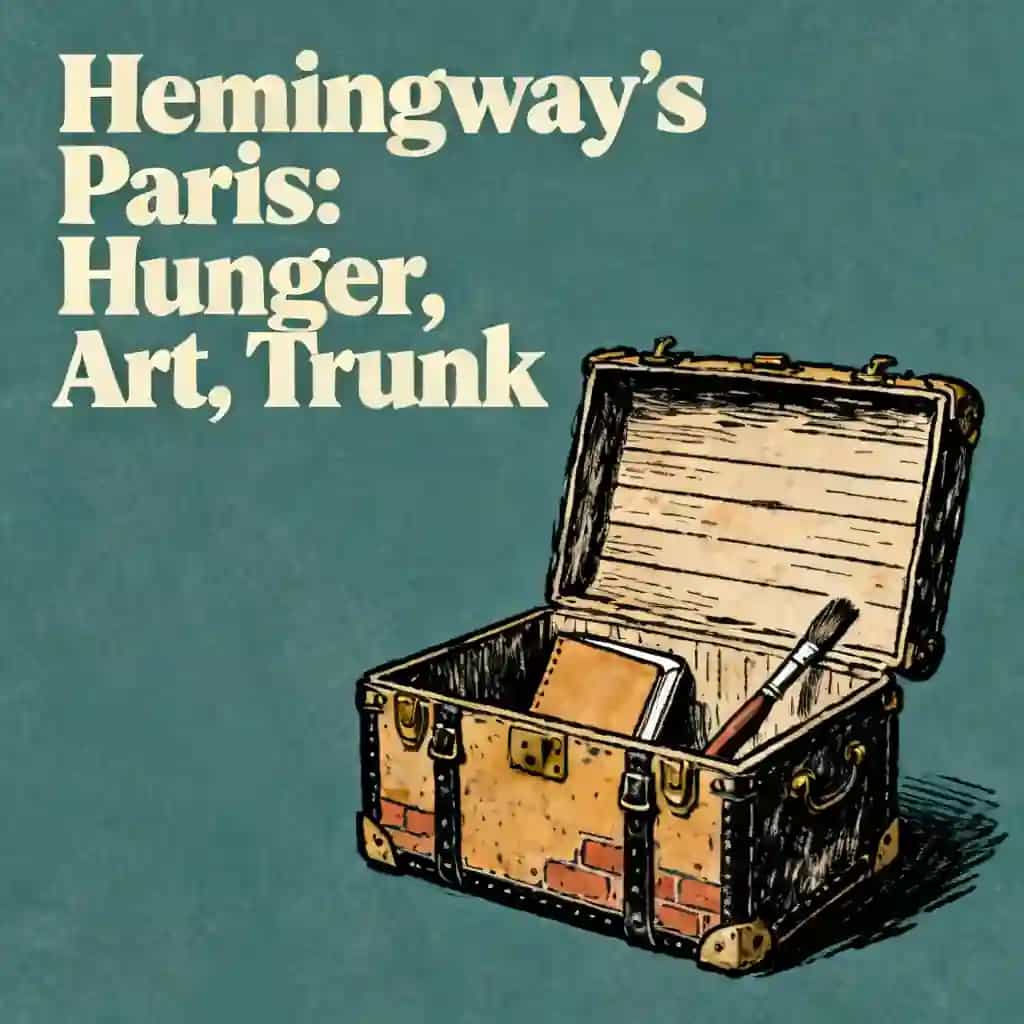
Hemingway held a romanticized but disciplined view of his early poverty in Paris, believing that hunger sharpened his perceptions and made the world feel more vivid. He often skipped meals to buy books from Sylvia Beach’s library or to save money for his family, but he used this physical state to fuel his "unflinching observational eye." He felt that the struggle of living in unheated rooms and working in cramped attics forced a level of focus and "creative hunger" that was essential for a disciplined craftsman.
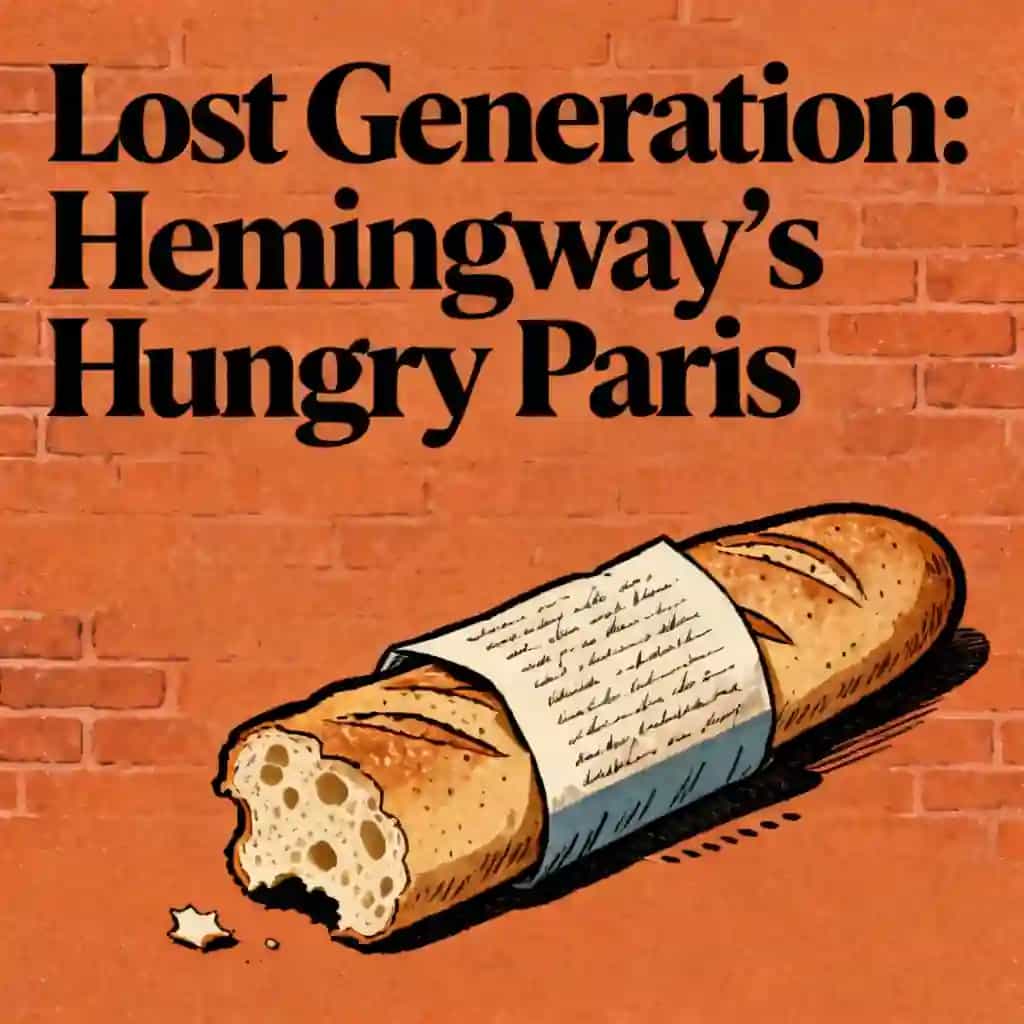
The term "Lost Generation" was popularized by Gertrude Stein, who overheard it from a garage owner and applied it to Hemingway and his peers. It describes the young people who served in World War I and returned feeling completely untethered and disillusioned by the society that had preceded the conflict. In Paris, this group sought to rebuild their lives and civilization through art, using their shared sense of placelessness to create Modernist literature that reflected the emotional trauma and "orphan-like" reality of the post-war era.
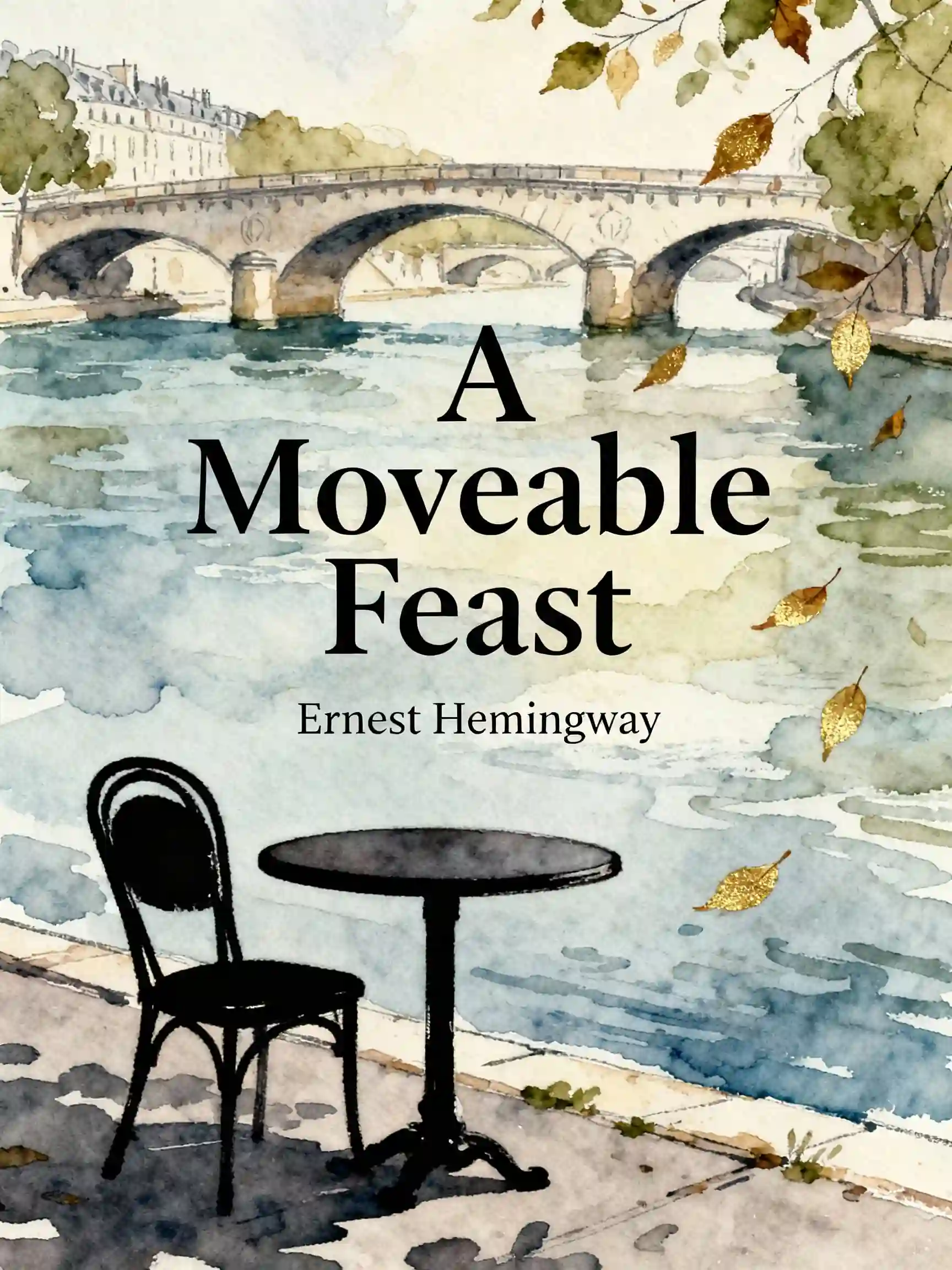
The 1964 edition, edited by his widow Mary Hemingway, is a streamlined and emotionally resonant version that functions as a polished literary monument. In contrast, the 2009 "Restored Edition" by his grandson Sean Hemingway incorporates original notebook sketches and typescript drafts. This version includes more "uncertain" moments, reinstates Hemingway’s use of the second-person address, and offers a rawer look at a man struggling with regret and the desire to settle scores with former friends and mentors.
もっと発見

The Lyrical Tragedy of Jay Gatsby
This plan is essential for literature students and aspiring writers who want to master the intersection of style and theme. It offers a deep dive into the technical artistry of Fitzgerald's masterpiece, making it ideal for anyone seeking to elevate their literary analysis skills.

Poet
This learning plan provides a comprehensive bridge between the technical craft of verse and the practicalities of a modern literary career. It is ideal for aspiring writers who want to transition from casual journaling to professional poetic practice by studying both classical foundations and contemporary trends.

Proust : décoder Sodome et Gomorrhe
Ce parcours est essentiel pour quiconque souhaite percer les mystères de l'un des volumes les plus denses de la Recherche. Il s'adresse aux passionnés de littérature et aux étudiants désireux de comprendre comment Proust transmute sa biographie en une exploration universelle de la jalousie.

Gatsby's Tragic Pursuit of Meaning
This plan is essential for literature students and fans of the Great American Novel seeking to understand the psychological depths of Jay Gatsby. It provides a structured path to deconstructing how social barriers and symbolic obsessions lead to inevitable tragedy.

Writing and poetry
This comprehensive writing program is designed for aspiring authors, poets, and serious writers who want to elevate their craft from amateur to professional level. Whether you're struggling to start your first novel, looking to refine your poetic technique, or seeking to understand what separates good writing from exceptional literature, this structured learning path provides the foundational knowledge and advanced techniques used by accomplished writers across all genres.

Glitter and Grit in Gatsby's World
This plan is essential for history buffs and literature students seeking to understand the complex reality behind the Roaring Twenties. It provides a deep dive into the cultural revolution and systemic corruption that defined the era of The Great Gatsby.

Monet: From Realism to Atmosphere
This plan is essential for art enthusiasts and students looking to understand the bridge between traditional realism and modern abstraction. It offers a structured deep dive into how light and atmosphere redefined the boundaries of 19th-century art.

Become fluent in speaking French.
This plan is designed for learners who want to move beyond rote memorization to achieve true conversational confidence. It is ideal for travelers, professionals, or expats who need to master both the linguistic mechanics and the cultural nuances of the French language.
"Instead of endless scrolling, I just hit play on BeFreed. It saves me so much time."


"I never knew where to start with nonfiction—BeFreed’s book lists turned into podcasts gave me a clear path."


"Perfect balance between learning and entertainment. Finished ‘Thinking, Fast and Slow’ on my commute this week."
"Crazy how much I learned while walking the dog. BeFreed = small habits → big gains."
"Reading used to feel like a chore. Now it’s just part of my lifestyle."

"Feels effortless compared to reading. I’ve finished 6 books this month already."
"BeFreed turned my guilty doomscrolling into something that feels productive and inspiring."

"BeFreed turned my commute into learning time. 20-min podcasts are perfect for finishing books I never had time for."
"BeFreed replaced my podcast queue. Imagine Spotify for books — that’s it. 🙌"

"It is great for me to learn something from the book without reading it."
"The themed book list podcasts help me connect ideas across authors—like a guided audio journey."
"Makes me feel smarter every time before going to work"
"Instead of endless scrolling, I just hit play on BeFreed. It saves me so much time."
"I never knew where to start with nonfiction—BeFreed’s book lists turned into podcasts gave me a clear path."
"Perfect balance between learning and entertainment. Finished ‘Thinking, Fast and Slow’ on my commute this week."
"Crazy how much I learned while walking the dog. BeFreed = small habits → big gains."
"Reading used to feel like a chore. Now it’s just part of my lifestyle."
"Feels effortless compared to reading. I’ve finished 6 books this month already."
"BeFreed turned my guilty doomscrolling into something that feels productive and inspiring."
"BeFreed turned my commute into learning time. 20-min podcasts are perfect for finishing books I never had time for."
"BeFreed replaced my podcast queue. Imagine Spotify for books — that’s it. 🙌"
"It is great for me to learn something from the book without reading it."
"The themed book list podcasts help me connect ideas across authors—like a guided audio journey."
"Makes me feel smarter every time before going to work"
"Instead of endless scrolling, I just hit play on BeFreed. It saves me so much time."
"I never knew where to start with nonfiction—BeFreed’s book lists turned into podcasts gave me a clear path."
"Perfect balance between learning and entertainment. Finished ‘Thinking, Fast and Slow’ on my commute this week."
"Crazy how much I learned while walking the dog. BeFreed = small habits → big gains."
"Reading used to feel like a chore. Now it’s just part of my lifestyle."
"Feels effortless compared to reading. I’ve finished 6 books this month already."
"BeFreed turned my guilty doomscrolling into something that feels productive and inspiring."
"BeFreed turned my commute into learning time. 20-min podcasts are perfect for finishing books I never had time for."
"BeFreed replaced my podcast queue. Imagine Spotify for books — that’s it. 🙌"
"It is great for me to learn something from the book without reading it."
"The themed book list podcasts help me connect ideas across authors—like a guided audio journey."
"Makes me feel smarter every time before going to work"
"Instead of endless scrolling, I just hit play on BeFreed. It saves me so much time."
"I never knew where to start with nonfiction—BeFreed’s book lists turned into podcasts gave me a clear path."
"Perfect balance between learning and entertainment. Finished ‘Thinking, Fast and Slow’ on my commute this week."
"Crazy how much I learned while walking the dog. BeFreed = small habits → big gains."
"Reading used to feel like a chore. Now it’s just part of my lifestyle."
"Feels effortless compared to reading. I’ve finished 6 books this month already."
"BeFreed turned my guilty doomscrolling into something that feels productive and inspiring."
"BeFreed turned my commute into learning time. 20-min podcasts are perfect for finishing books I never had time for."
"BeFreed replaced my podcast queue. Imagine Spotify for books — that’s it. 🙌"
"It is great for me to learn something from the book without reading it."
"The themed book list podcasts help me connect ideas across authors—like a guided audio journey."
"Makes me feel smarter every time before going to work"