BeFreed
    Categories>Politics>Celeste Ng: Stories as Survival and Our Missing Hearts

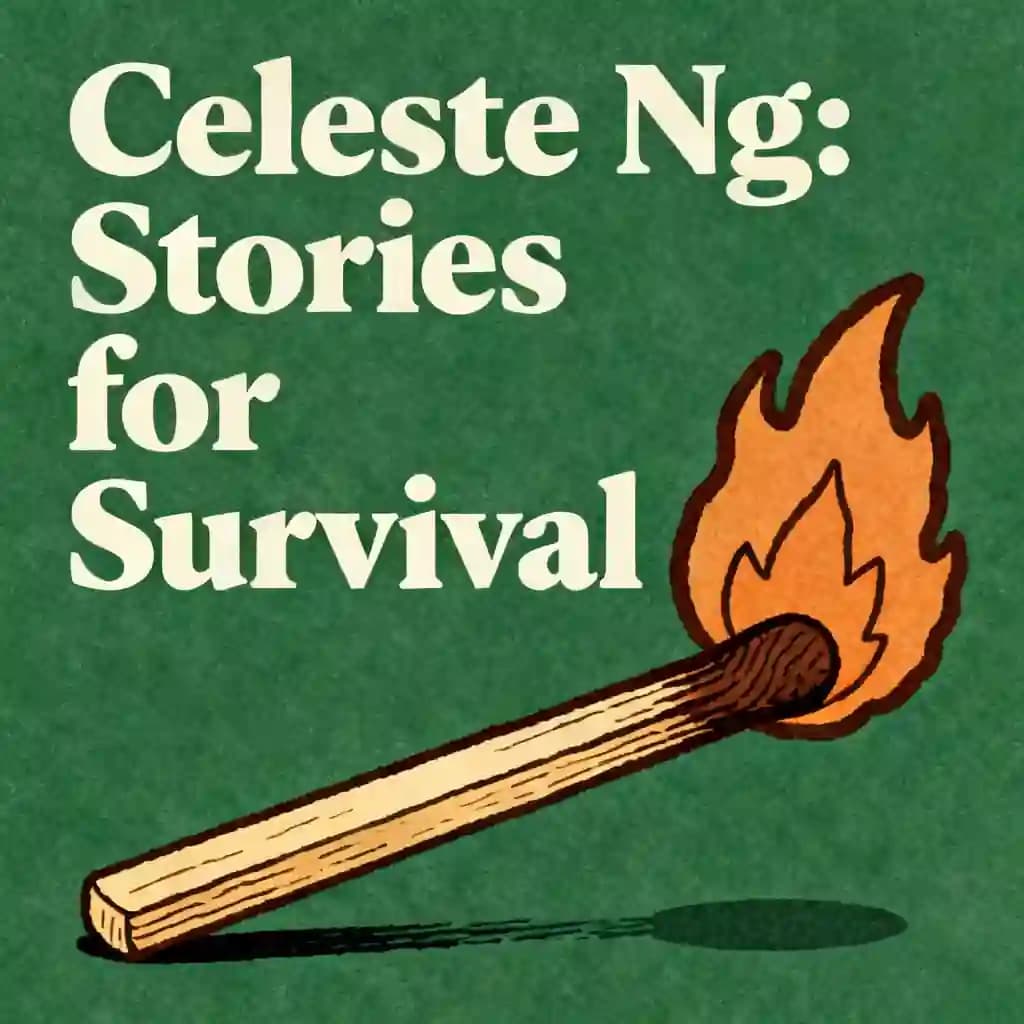
    Celeste Ng: Stories as Survival and Our Missing Hearts

    23分
    |
    |
    2026年5月13日
    • Politics
    • History & Society

    Explore Celeste Ng's Our Missing Hearts. Discover how the PACT Act and storytelling as survival reflect real-world political rhetoric and dystopian anxieties.

    Celeste Ng: Stories as Survival and Our Missing Hearts
    0:00 / 0:00
    聴き方を選ぶ

    1つのエピソード。いろいろな聴き方。

    Celeste Ng: Stories as Survival and Our Missing Heartsの同じアイデアを、あなたに合う声・深さ・ペースで。いつでも切り替えられます。

    文字起こしとチャプター

    チャプター 1

    The Whisper in the Stacks—Why Stories Matter Now

    Lena: Hey there! I am so glad you could join us today. We’re diving into a world that feels incredibly close to home, even though it’s technically fiction. Have you ever felt like the world was shifting under your feet—like the rules were changing and you weren't quite sure how to keep your footing? That’s exactly the tension at the heart of Celeste Ng’s novel, Our Missing Hearts. It’s this haunting, beautiful story about a twelve-year-old boy named Bird and his mother, Margaret, who is a poet forced into hiding .

    Miles: It’s heavy stuff, Lena, but so necessary. What really grabbed me about this book is how it takes the anxieties we’ve all felt over the last few years—the fear, the division, the feeling of being watched—and just turns the volume up to eleven . It’s set in a near-future America where a law called PACT, or the Preserving American Culture and Traditions Act, has basically institutionalized discrimination under the guise of national security .

    Lena: And that’s the hook, right? It’s not just a "what if" scenario. Ng actually started writing this back in 2016, and as she was working on it, real-world events like the pandemic and shifts in political rhetoric started mirroring her fiction in ways that are honestly kind of chilling . Today, we’re going to look at why this story is such a vital reflection of our current moment. We’ll explore the power of storytelling as a form of survival and how one person—even a child or a librarian—can start to chip away at a massive, oppressive system .

    Miles: I love that we're focusing on the "why" here. It’s about more than just a plot summary. It’s about how we maintain empathy when the world tells us to turn away, and how we protect the people we love when the stakes are literally life and death . Ng really leans into the idea that stories aren't just entertainment—they're how we make sense of who we are and how we resist being erased .

    Lena: Exactly. It’s about the "missing hearts" of the title—the children taken from their families and the holes left in the fabric of society . So, if you’ve ever wondered what it takes to stand up for what’s right when everyone else is closing their doors, this conversation is for you. Let's get into the mechanics of this world and see how Bird begins his journey.
    チャプター 2

    The Architecture of Fear—Living Under PACT

    Miles: To really understand Bird’s journey, we have to look at the world he’s navigating. It’s a place defined by "The Crisis"—this massive economic collapse that left people desperate and looking for someone to blame . And like we’ve seen so many times in history, that blame got channeled toward a specific group. In this case, it’s China, and by extension, anyone of Asian descent in America .

    Lena: It’s that classic "us versus them" mentality taken to a terrifying extreme. The government passes PACT to "protect" American values, but in reality, it’s a tool for surveillance and control . If you’re deemed "un-American"—which is a conveniently vague term—the authorities can literally take your children away and re-place them with "patriotic" families . Imagine growing up in a world where your own parents are afraid to speak their minds because they don't want to lose you.

    Miles: That’s the reality for Bird and his father, Ethan. Ethan was a linguistics professor, a man who built his life around the nuances of language, but now he spends his days filing books in a basement library at Harvard . He’s essentially trying to make himself and his son invisible. He even checks Bird's homework to make sure it sounds patriotic enough because he knows the school is watching . It’s this suffocating atmosphere of complicity and silence.

    Lena: And the tragedy is that it works. People start to police themselves. Ng mentions how during the pandemic, she saw this rise in anti-Asian violence—real-life incidents where people were attacked in broad daylight while bystanders just watched or even closed their doors . In the book, she translates that into a society where discrimination is the law of the land. It’s not just about the government; it’s about the neighbors who turn a blind eye to stay safe .

    Miles: It makes you think about the cost of that safety. Bird is twelve, right at that age where the world starts getting bigger and you realize your parents are just people with their own secrets . He’s been told his mother, Margaret, abandoned them because she was "un-American," but he has these fragments of memories—the stories she told him, the way she looked at him—that don't fit the official narrative .

    Lena: Those stories are his only lifeline. Even when the world tries to erase his mother’s work—literally removing her poetry books from libraries—Bird holds onto the folklore she shared with him . It’s a world where books are dangerous commodities, and the act of remembering becomes a form of rebellion. This sets the stage for Bird to step out of the shadows, and it all starts with a cryptic letter that changes everything.

    このエピソードで学びを深める

    このエピソードのアイデアを、BeFreedのガイド付き学習体験でさらに深めましょう。

    チャプター 3

    The Boy Who Drew Cats—Decoding the Past

    Miles: So, Bird receives this letter. It’s just a drawing—a bunch of cats and a tiny cupboard in the corner . To anyone else, it’s nothing, but to Bird, it’s a direct link to his mother. He recognizes it as a Japanese folktale she used to read to him, The Boy Who Drew Cats . It’s such a brilliant way to show how stories can carry hidden meanings that only the right person can decode.

    Lena: I love that detail. In a world where every word is scrutinized, you have to find a different way to communicate. Margaret can’t just call him or send a text; she has to use the language of their shared history . This sends Bird on this quest through the libraries of Cambridge. And it’s not easy—books by "un-American" authors are being removed . He even tries to use the school computer to look things up, and his teacher, Mrs. Pollard, immediately warns him not to make trouble .

    Miles: The library becomes this incredibly charged space. It’s supposed to be a place of knowledge, but under PACT, it’s more like a graveyard for "dangerous" ideas. Bird’s father is working there, but he’s part of the system now, keeping his head down . But then Bird meets Carina, the librarian in Cambridge, and he realizes there’s an entire underground network of librarians who are quietly resisting .

    Lena: It’s so inspiring, right? Librarians as the secret heroes of the resistance. They’re using their positions to help reunite families who have been torn apart by PACT . Carina helps Bird realize that the drawing isn't just a memory—it’s a map. It leads him back to his childhood home, to a hidden cubby in his old bedroom where he finds an address in New York City .

    Miles: This is where the story really shifts from a domestic drama into a journey of discovery. Bird has to leave the relative safety of his father’s silence and venture into the world on his own. He’s twelve years old, taking a bus to New York, trying to find a mother he barely remembers . And he’s doing it as a "PAO"—a Person of Asian Origin—which means he’s already a target for suspicion .

    Lena: The bravery that takes is incredible. He’s basically stepping into one of the fairy tales his mother told him, where he’s the hero on a mission to find the lost queen . But the "monsters" in this story are real-life racists and government agents. When he gets to New York, he sees Chinatown, and for a moment, he feels like he belongs—until he witnesses a white man assault an Asian woman while everyone else just watches . It’s a brutal reminder that there’s no truly safe place in this version of America.

    Miles: That scene is actually based on a real event Ng saw on the news, which makes it even heavier . But Bird keeps going. He reaches the address, which turns out to be a wealthy townhouse on Park Avenue belonging to a woman he calls "the Duchess"—a college friend of his mother’s named Domi . And that’s where he finally finds her. Margaret is living in this abandoned brownstone, working on a project that is going to change everything .

    チャプター 4

    The Power of the Word—Margaret’s Accidental Activism

    Lena: When Bird finally reunites with Margaret, we get the backstory of how she became this figure of "un-American" sedition. And what’s fascinating is that she didn't set out to be a revolutionary. She was just a poet writing about motherhood . She wrote a book called Our Missing Hearts—a collection of poems about the fierce, complicated love a mother has for her child .

    Miles: It’s a perfect example of how art can be reinterpreted by the world in ways the artist never intended. During a protest against the forced removal of children, a student named Marie Johnson was killed by police while holding a sign that said "ALL OUR MISSING HEARTS" . Suddenly, Margaret’s words were everywhere. They became a slogan for the resistance, and because she was Chinese American, the government used that to paint her as a threat to the nation .

    Lena: It’s that intersection of xenophobia and the fear of the written word. The authorities needed a scapegoat for the unrest, and a "subversive" Asian poet was the perfect target . Margaret realized that if she stayed, the government would use her to get to Bird. They would take him away to "save" him from her influence. So, she made the agonizing choice to leave—to become a ghost so her son could have a chance at a normal life .

    Miles: Think about the sacrifice there. She’s spent three years in hiding, but she hasn't been idle. She’s been part of that underground librarian network, traveling the country and interviewing families who had their children taken . She’s been recording their stories, person by person, notebook by notebook . She’s moved from writing abstract poetry to documenting the raw, painful truth of what PACT is doing to people.

    Lena: And this is where her project comes in. When Bird finds her, she’s working with these tiny speakers, wires, and bottle caps . Bird doesn't understand it at first—he just sees his mother obsessively tinkering with these little objects. But he starts to help her. He insists on being part of it, telling her that doing nothing in the face of injustice is its own kind of hypocrisy . It’s a powerful moment of a child teaching his parent about courage.

    Miles: It’s also where we see the influence of Domi, "the Duchess." She inherited her father’s tech company, and she’s the one providing the resources and the technical know-how for Margaret’s plan . It shows that resistance isn't just about one person; it’s about a community of people using whatever skills they have—whether it’s storytelling, technology, or just providing a safe house.

    Lena: Margaret is turning those notebooks of stories into something that can't be ignored. She’s not just writing them down anymore; she’s preparing to broadcast them. She wants to force the world to hear the voices of the "missing hearts" that everyone has tried so hard to forget . It’s a shift from art as a personal expression to art as a direct, undeniable act of protest.

    このエピソードで学びを深める

    このエピソードのアイデアを、BeFreedのガイド付き学習体験でさらに深めましょう。

    チャプター 5

    The Resonance of Truth—A City Stops to Listen

    Miles: The climax of the novel is just incredible. Margaret and Bird go around New York City, and they’re planting these little bottle caps everywhere—in cracks in the sidewalk, under benches, in the crevices of buildings . Each one has a tiny speaker inside. It’s such a clever, grassroots way to bypass the state-controlled media.

    Lena: It’s like a "yarn-bombing" but with sound. Ng actually based some of the art installations in the book, like the red yarn and knit dolls on the Harvard campus, on real-life nonviolent protests against family separations at the border . But Margaret’s project is even more immersive. When she finally turns on the system, her voice starts coming out of the very fabric of the city .

    Miles: Imagine walking down a busy street in Manhattan, and suddenly you hear a mother’s voice describing the day her daughter was taken. And then you hear another story, and another. Margaret isn't using names; she’s just sharing the human experience of loss . For hours, she reads from her notebooks, and it has this profound effect. Millions of people just... stop. They’re standing on the streets, listening, and many of them are crying .

    Lena: It breaks the spell of silence. PACT relies on people being able to look away, to tell themselves that the "un-American" families are different from them. But Margaret’s stories humanize the victims. They make it impossible to pretend that this isn't happening to real people with real feelings . It’s the ultimate proof of what Ng says—that stories are how we maintain empathy for other human beings .

    Miles: But of course, there’s a cost. Margaret knows the police are tracking the signal. She has a chance to leave, but she stays. She keeps reading because she knows this might be the only time the world actually listens . She stays long enough to finish the stories, and even though Bird and Sadie have been taken to safety in Connecticut, she speaks directly into the microphone at the end, telling Bird she loves him, even though she knows he can’t hear her .

    Lena: It’s heartbreaking, but also triumphant. She’s captured, but the seeds have been sown. You can’t un-hear those stories. The "missing hearts" aren't just a statistic anymore; they have voices . And Bird is left with this legacy. He’s seen his mother not just as a figure from a folktale, but as a woman who was willing to lose everything to tell the truth.

    Miles: And that’s the choice Bird faces at the end. He can go back to living in fear, or he can continue his mother’s work. He even hopes to rebuild her book of poetry . It’s about the next generation taking up the mantle. Even if one person is caught, the stories live on through the people who remember them.

    チャプター 6

    Beyond the Page—Real Histories of Separation

    Lena: One of the things that makes Our Missing Hearts so heavy is knowing that Celeste Ng didn't just invent the idea of family separation for a dystopian plot. In her research, she looked at the very real, very dark history of this happening in the United States . We're talking about the separation of enslaved families from the very beginning of the country's history .

    Miles: Exactly. And it didn't stop there. She pointed to the government-run boarding schools for Indigenous children that started back in the 1700s, where children were taken from their tribes to be "assimilated" into white culture . It’s a recurring theme in history—using children as a way to exert political and cultural control over groups that the people in power see as a threat or as "other" .

    Lena: And then, while she was actually in the middle of writing the book, the news started reporting on the separation of migrant families at the U.S.-Mexico border . Ng described it as "watching reality curve to meet this awful thing" she was already imagining . It’s a reminder that these policies aren't just relics of the past; they’re tools that can be picked up and used at any time if society allows it.

    Miles: It’s that phrase she uses: "turning up the volume on our own world" . By setting it in a near-future America, she’s forcing us to look at these historical patterns and ask ourselves why they keep repeating. PACT might be fictional, but the mechanics of how it works—the demonization of a specific group, the use of "patriotism" to justify cruelty, the way neighbors turn on each other—those are all pulled straight from the real world .

    Lena: She also touches on the current rise in book bans. In 2022, there were over twelve hundred attempts to ban books in the U.S., the highest number since the American Library Association started keeping track over twenty years ago . Many of those bans use the same language we see in the novel—claiming they're protecting children from "dangerous" or "un-American" ideologies .

    Miles: It’s all about controlling the narrative. If you can control what stories people are allowed to read, you can control how they see themselves and how they see others. That’s why the librarians in the book are so central to the resistance. They know that a library isn't just a building full of books—it's a repository of different perspectives that the government wants to flatten into a single, "patriotic" voice .

    Lena: It really highlights the importance of learning history that isn't just a "box in the corner" of a textbook . Ng mentioned how she barely learned about Japanese American incarceration in school, and it was only because her mother bought her books by Asian American authors that she understood that part of her own heritage . Without those stories, we lose the context we need to make better decisions in the present.

    このエピソードで学びを深める

    このエピソードのアイデアを、BeFreedのガイド付き学習体験でさらに深めましょう。

    チャプター 7

    The Cultural Tightrope—Identity and Resilience

    Miles: Let's talk about the specific experience of Bird as a mixed-race child in this world. He’s constantly navigating this gap between how he sees himself and how the rest of the world sees him . Under PACT, his Asian features make him a target, regardless of how "American" he feels or how hard his father tries to protect him .

    Lena: It’s that idea of the "perpetual foreigner." Even if you’re born here, even if you’re a citizen, you’re still seen as an outsider because of how you look . Ng draws on her own life for this—she grew up in places like Pittsburgh and Cleveland where there weren't many other Asian Americans, and she was always aware that people looked at her differently . She even shared a story about being yelled at with racial slurs while walking with her son in Cambridge .

    Miles: That personal connection is what makes the book feel so intimate. It’s not just a political statement; it’s a mother thinking about how to raise her child in a world that might be hostile to them . She explores the nuance within the "Chinese" identity too. Like, why did she choose to have the characters speak Cantonese instead of Mandarin?

    Lena: That was such a deliberate choice! Her own family is from Hong Kong, and she wanted to highlight that "Chinese" isn't a monolith. Cantonese has its own history and is currently being squeezed out by Mandarin in Hong Kong for political reasons . By including Cantonese, she’s resisting the erasure of that specific culture, both in the book and in the real world.

    Miles: It’s about the power of multiple identities. Her parents always told her she was "more than one thing"—Chinese and American—and that those identities could coexist . In the world of Our Missing Hearts, PACT tries to force everyone into a single, narrow definition of what it means to be American. The very act of Bird embracing his mother’s heritage and her stories is an act of reclaiming his full self.

    Lena: And it’s not just about Bird. Ng also shows the trauma passed down through generations. Margaret’s own parents were targeted and died as a result of anti-Asian violence during the Crisis . That pain is part of what fuels her poetry and her eventual activism. It shows how systemic racism isn't just a series of isolated incidents; it’s a weight that families carry for decades.

    Miles: Yet, there’s this incredible resilience. Bird finds a sense of belonging in Chinatown, even if it’s fleeting . He finds a sister figure in Sadie, another "re-placed" child who refuses to be broken by the system . These connections are what allow them to survive. It’s a reminder that even when a government tries to strip away your identity, you can find pieces of it in the people who share your history and your struggle.

    チャプター 8

    A Playbook for the Empathetic—Taking Action Today

    Lena: So, we’ve talked a lot about the heavy themes, but I want to shift to what we can actually take away from Bird and Margaret’s story. If you’re listening to this and feeling that same sense of helplessness that Celeste Ng felt during the pandemic, what can one person actually do?

    Miles: The first thing is to realize that "doing nothing" is a choice. Remember what Bird told Margaret—that ignoring injustice because it doesn't directly affect you is a form of hypocrisy . The world of PACT only works because most people decide to look the other way. So, the first step is simply to look. To acknowledge that these things are happening and to refuse to be a bystander .

    Lena: And that leads to the power of the "light touch" of encouragement. Ng talks about the teachers and mentors who nudged her to take risks and saw value in her work when she was just starting out . We can all be that person for someone else. Whether it’s supporting a local artist, defending a librarian, or just making space for someone else’s story, those small actions add up.

    Miles: Building community is huge, too. Ng’s parents were immigrants who relied on a close-knit group of friends they called "aunts and uncles" because they didn't have family here . In the book, the resistance isn't a massive army; it’s a network of librarians and friends like Domi who help each other in secret . We need to find our own "underground network"—the people who share our values and will stand by us when things get tough.

    Lena: We also have to be "omnivorous" in our reading and our curiosity, like Ng suggests . Don't just stick to the stories you already know. Seek out the voices that are being silenced or marginalized. If we only hear one version of history, we’re more likely to repeat the mistakes of the past . Reading widely isn't just a hobby; it’s a way to expand our empathy and keep our perspective from narrowing.

    Miles: And don't underestimate the power of your own voice. You don't have to be a world-famous poet like Margaret to make a difference. She started by just writing about her own experience as a mother . Your story, your perspective, your refusal to stay silent—those are tools of resistance. Whether it’s having a difficult conversation with a neighbor or supporting policies that protect civil liberties, you have more agency than you think.

    Lena: Ultimately, it’s about holding open that space where we can imagine things being different . Art and storytelling give us a vision of a better world to fight for, not just a nightmare to fight against. By keeping these stories alive, we’re making sure that the "missing hearts" are never truly forgotten.

    このエピソードで学びを深める

    このエピソードのアイデアを、BeFreedのガイド付き学習体験でさらに深めましょう。

    チャプター 9

    The Echo in the Silence—Final Reflections

    Miles: As we bring this to a close, I keep thinking about that final image of Bird and Sadie at the cabin in Connecticut, waiting to see what happens next . The book doesn't end with a neat, happy resolution where PACT is instantly overthrown. It’s more realistic than that. Margaret is captured, and the future is uncertain .

    Lena: But there’s hope, right? Domi offers to help Bird rewrite one of Margaret’s lost poems because she’s memorized it . It’s a beautiful metaphor for how truth persists. Even if the paper is burned or the author is silenced, the words live on in the people who carry them. The ripple effect of Margaret’s broadcast is already happening .

    Miles: It leaves us with a really important question: What are the stories that you are carrying? What are the truths that you refuse to let be erased? Celeste Ng wrote this book because she had questions about how to maintain hope in a world that feels like it’s falling apart . I think she found the answer in the act of storytelling itself.

    Lena: I love that. It’s a reminder that we all have a role to play in shaping the narrative of our future. We can choose to be the person who closes the door, or we can be the person who holds it open. We can be the child who follows the breadcrumbs of truth, or the librarian who hides the forbidden books.

    Miles: So, as you go about your day, maybe take a moment to think about the "missing hearts" in our own world. Whose voices are we not hearing? And what can we do to make sure their stories get told? Sometimes, the most revolutionary thing you can do is just to listen.

    Lena: Thank you so much for exploring this with us. It’s been a deep, sometimes difficult conversation, but a really necessary one. We hope it’s given you some food for thought and maybe even a little bit of that hope that Bird and Margaret fought so hard for. Take care of yourselves and each other.

    Miles: And keep those stories alive. They’re more powerful than we often realize. Thanks for spending this time with us.

    ★★★★★

    Celeste Ng: Stories as Survival and Our Missing Heartsを最後まで学びました

    “23日間、毎日使い続けています。今では日課の一部です。”

    jayallen

    Celeste Ng: Stories as Survival and Our Missing Heartsのベスト引用

    “

    Stories aren't just entertainment—they're how we make sense of who we are and how we resist being erased. They are how we maintain empathy when the world tells us to turn away.

    ”
    D

    Generated by David Ta

    質問を入力

    Our missing hearts by Celeste ng

    ホストの声
    Lenaplay
    Milesplay
    知識ソース
    Our Missing Hearts Summary and Study Guide | SuperSummary
    link
    https://www.supersummary.com/our-missing-hearts/summary/
    Our Missing Hearts by Celeste Ng Plot Summary - LitCharts
    link
    https://www.litcharts.com/lit/our-missing-hearts/summary
    Our Missing Hearts Study Guide | Literature Guide | LitCharts
    link
    https://www.litcharts.com/lit/our-missing-hearts
    Transcript: Race in America: Giving Voice with Celeste Ng
    link
    https://www.washingtonpost.com/washington-post-live/2022/10/11/transcript-race-america-giving-voice-with-celeste-ng/
    Celeste Ng Discusses Her Latest Novel, "Our Missing Hearts," And Her Approach To Navigating A Near-Future World That's Not Completely Unlike Our Own
    link
    http://ow.ly/sRZV50L1j42
    Celeste Ng on Our Missing Hearts: 'People should know that racism happens all the time'
    link
    https://inews.co.uk/culture/books/celeste-ng-interview-our-missing-hearts-1926168

    よくある質問

    The central theme of the novel is storytelling as survival within a dystopian version of America. The story follows a twelve-year-old boy named Bird and his mother, Margaret Miu, a poet forced into hiding. It explores how individuals maintain their humanity and keep their footing when the world shifts and institutionalized discrimination becomes the law of the land through the Preserving American Culture and Traditions Act.

    The PACT Act, or the Preserving American Culture and Traditions Act, is a fictional law in Celeste Ng's near-future America. This act institutionalizes discrimination under the guise of national security, turning the volume up on real-world anxieties like fear and division. It creates a chilling environment where citizens feel watched and the rules of society have fundamentally changed, forcing characters like Margaret into hiding to survive.

    Celeste Ng began writing the novel in 2016, and over time, real-world events like the pandemic and shifts in political rhetoric began to mirror her fiction. The story serves as a vital reflection of our current moment by taking existing fears and institutionalized tensions and amplifying them. By exploring the power of stories, Ng illustrates how fiction can help us navigate a world where the rules are constantly shifting under our feet.

    コロンビア大学卒業生が開発 | サンフランシスコ発

    BeFreedは好奇心旺盛な仲間が集うグローバルコミュニティ

    4.7

    平均評価

    7,840件以上のアプリ評価

    BeFreedコミュニティ

    正直、まだアプリを使いこなせていませんが、この数日使っただけで本当に感動しました… BeFreed は、今まで使ったどの学習アプリともレベルが違います。夢中になれるうえに集中力も実際に上がるので、スマホをだらだら見てしまう人にぴったりです!

    @ladyInfinity

    ちょうど 23 日前に BeFreed を購入して、それから毎日欠かさず使っています。仕事の流れと学習習慣に完全に溶け込みました。

    @jayallen

    正直なところ、このアプリは期待をすべて超えてきました。どんなテーマでも音声を生成してもらえて、その結果には驚かされます。私の専門は心理療法で、多分野にまたがる領域ですが、それでも回答はとても正確です。

    @Raguipa

    何よりありがたいのは、スマホをだらだら見る時間が減ったことです。探す時間が減って、吸収する時間が増えました。オーディオブック、ポッドキャスト、学習プランの組み合わせが素晴らしいです。

    @colonyofcreatorsNGO

    私は 24 年間、PhotoReading 加速学習のインストラクターをしています… 本と読書と学びが私の専門ですが、BeFreed は情報を消化しやすい形で届ける革新的なアプローチを見事に実現しています。

    @BeFreed user

    ただの本の要約アプリではありません。「ファン」スタイルを使ってみたら、従来のやり方よりずっと良い要約で、アイデアもつかみやすいです。これだけでも十分元が取れます。

    @austinakon

    このアプリが大好きです。数日使っただけで、聞くのが止まらなくなりました。始め方として最高です。

    @jcrules328

    本当に気に入っています。約 1 か月試していますが、まさに掘り出し物だと感じます。BeFreed で自分だけのテーマを作れるのが便利で、声も素晴らしく、ナレーションの選択肢は無限です。

    @DanielCZ

    正直、まだアプリを使いこなせていませんが、この数日使っただけで本当に感動しました… BeFreed は、今まで使ったどの学習アプリともレベルが違います。夢中になれるうえに集中力も実際に上がるので、スマホをだらだら見てしまう人にぴったりです!

    @ladyInfinity

    ちょうど 23 日前に BeFreed を購入して、それから毎日欠かさず使っています。仕事の流れと学習習慣に完全に溶け込みました。

    @jayallen

    正直なところ、このアプリは期待をすべて超えてきました。どんなテーマでも音声を生成してもらえて、その結果には驚かされます。私の専門は心理療法で、多分野にまたがる領域ですが、それでも回答はとても正確です。

    @Raguipa

    何よりありがたいのは、スマホをだらだら見る時間が減ったことです。探す時間が減って、吸収する時間が増えました。オーディオブック、ポッドキャスト、学習プランの組み合わせが素晴らしいです。

    @colonyofcreatorsNGO

    私は 24 年間、PhotoReading 加速学習のインストラクターをしています… 本と読書と学びが私の専門ですが、BeFreed は情報を消化しやすい形で届ける革新的なアプローチを見事に実現しています。

    @BeFreed user

    ただの本の要約アプリではありません。「ファン」スタイルを使ってみたら、従来のやり方よりずっと良い要約で、アイデアもつかみやすいです。これだけでも十分元が取れます。

    @austinakon

    このアプリが大好きです。数日使っただけで、聞くのが止まらなくなりました。始め方として最高です。

    @jcrules328

    本当に気に入っています。約 1 か月試していますが、まさに掘り出し物だと感じます。BeFreed で自分だけのテーマを作れるのが便利で、声も素晴らしく、ナレーションの選択肢は無限です。

    @DanielCZ

    役立つ情報やアイデアを 8〜15 分のポッドキャスト風音声にぎゅっとまとめて聞けるのが最高です。ポッドキャストは余計な話が多くて苦手でしたが、これは無駄を全部そぎ落としてくれます。

    @BeFreed user

    博士課程の仕上げの段階で、なじみのない資料を大量に読む必要があります… BeFreed ならプロンプトを入力するだけで、アプリが資料を探して音声ポッドキャストを作ってくれます。BeFreed のほうが NotebookLM よりも流れがスムーズだと感じます。

    @Brad

    朝食を作りながら、散歩しながら、通勤しながら聞くものを YouTube でよく探していましたが、BeFreed は広告も余計な話もなしで、もっと的を絞った聞き方をさせてくれます!

    @BeFreed user

    このプラットフォームの一番の魅力は、その万能さです。扱えないテーマは文字どおりひとつもありません。何を投げても応えてくれます… 制限がまったくないのに約束をきちんと果たしてくれる学習ツールには、なかなか出会えません。

    @jayallen

    BeFreed は素晴らしいです。使いやすいデザインのおかげで、操作に迷う時間が減り、学ぶ時間が増えました。オーディオブック、ポッドキャスト、学習プランの組み合わせは天才的で、毎日の習慣がすっかり変わりました。

    @BeFreed user

    最初はイタリア語でポッドキャストを作る方法を理解するのに少し時間がかかりましたが、わかった瞬間、最高でした!どんなテーマでも説明してもらえて、しかもとても賢く、うまく話してくれます!

    @matteo77

    BeFreed は毎日使うオーディオブックアプリになりました… 一番気に入っているのは、自分のテキストを入れると、外出先でも聞ける音声にしてくれるところです。

    @kotanzu1

    役立つ情報やアイデアを 8〜15 分のポッドキャスト風音声にぎゅっとまとめて聞けるのが最高です。ポッドキャストは余計な話が多くて苦手でしたが、これは無駄を全部そぎ落としてくれます。

    @BeFreed user

    博士課程の仕上げの段階で、なじみのない資料を大量に読む必要があります… BeFreed ならプロンプトを入力するだけで、アプリが資料を探して音声ポッドキャストを作ってくれます。BeFreed のほうが NotebookLM よりも流れがスムーズだと感じます。

    @Brad

    朝食を作りながら、散歩しながら、通勤しながら聞くものを YouTube でよく探していましたが、BeFreed は広告も余計な話もなしで、もっと的を絞った聞き方をさせてくれます!

    @BeFreed user

    このプラットフォームの一番の魅力は、その万能さです。扱えないテーマは文字どおりひとつもありません。何を投げても応えてくれます… 制限がまったくないのに約束をきちんと果たしてくれる学習ツールには、なかなか出会えません。

    @jayallen

    BeFreed は素晴らしいです。使いやすいデザインのおかげで、操作に迷う時間が減り、学ぶ時間が増えました。オーディオブック、ポッドキャスト、学習プランの組み合わせは天才的で、毎日の習慣がすっかり変わりました。

    @BeFreed user

    最初はイタリア語でポッドキャストを作る方法を理解するのに少し時間がかかりましたが、わかった瞬間、最高でした!どんなテーマでも説明してもらえて、しかもとても賢く、うまく話してくれます!

    @matteo77

    BeFreed は毎日使うオーディオブックアプリになりました… 一番気に入っているのは、自分のテキストを入れると、外出先でも聞ける音声にしてくれるところです。

    @kotanzu1

    BeFreedがウェブ上でどのように話題になっているかをもっと見る
    129.7K19.5K
    55.2K19.2K
    154.2K10827355
    48.1K2.5K
    81.2K6.6K
    82.3K1.8K
    今すぐ学習の旅を始めよう
    BeFreedアプリ
    BeFreed

    なんでも、あなた向けに学ぶ

    DiscordLinkedIn
    注目の書籍要約
    Crucial ConversationsThe Perfect MarriageInto the WildNever Split the DifferenceAttachedGood to GreatSay Nothing
    人気のカテゴリ
    Self HelpCommunication SkillRelationshipMindfulnessPhilosophyInspirationProductivity
    著名人の読書リスト
    Elon MuskCharlie KirkBill GatesSteve JobsAndrew HubermanJoe RoganJordan Peterson
    受賞作品コレクション
    Pulitzer PrizeNational Book AwardGoodreads Choice AwardsNobel Prize in LiteratureNew York TimesCaldecott MedalNebula Award
    注目のトピック
    ManagementAmerican HistoryWarTradingStoicismAnxietySex
    年別ベストブック
    2025 Best Non Fiction Books2024 Best Non Fiction Books2023 Best Non Fiction Books
    注目の著者
    Chimamanda Ngozi AdichieGeorge OrwellO. J. SimpsonBarbara O'NeillWinston ChurchillCharlie Kirk
    BeFreed vs 他のアプリ
    BeFreed vs. Other Book Summary AppsBeFreed vs. ElevenReaderBeFreed vs. ReadwiseBeFreed vs. Anki
    学習ツール
    Knowledge VisualizerAI Podcast Generator
    情報
    会社概要arrow
    料金arrow
    よくある質問arrow
    ブログarrow
    採用情報arrow
    パートナーシップarrow
    アンバサダープログラムarrow
    ディレクトリarrow
    BeFreed
    Try now
    © 2026 BeFreed
    利用規約プライバシーポリシー
    BeFreed

    なんでも、あなた向けに学ぶ

    DiscordLinkedIn
    注目の書籍要約
    Crucial ConversationsThe Perfect MarriageInto the WildNever Split the DifferenceAttachedGood to GreatSay Nothing
    人気のカテゴリ
    Self HelpCommunication SkillRelationshipMindfulnessPhilosophyInspirationProductivity
    著名人の読書リスト
    Elon MuskCharlie KirkBill GatesSteve JobsAndrew HubermanJoe RoganJordan Peterson
    受賞作品コレクション
    Pulitzer PrizeNational Book AwardGoodreads Choice AwardsNobel Prize in LiteratureNew York TimesCaldecott MedalNebula Award
    注目のトピック
    ManagementAmerican HistoryWarTradingStoicismAnxietySex
    年別ベストブック
    2025 Best Non Fiction Books2024 Best Non Fiction Books2023 Best Non Fiction Books
    学習ツール
    Knowledge VisualizerAI Podcast Generator
    注目の著者
    Chimamanda Ngozi AdichieGeorge OrwellO. J. SimpsonBarbara O'NeillWinston ChurchillCharlie Kirk
    BeFreed vs 他のアプリ
    BeFreed vs. Other Book Summary AppsBeFreed vs. ElevenReaderBeFreed vs. ReadwiseBeFreed vs. Anki
    情報
    会社概要arrow
    料金arrow
    よくある質問arrow
    ブログarrow
    採用情報arrow
    パートナーシップarrow
    アンバサダープログラムarrow
    ディレクトリarrow
    BeFreed
    Try now
    © 2026 BeFreed
    利用規約プライバシーポリシー

    関連コンテンツ

    The Stories We Protect の書籍表紙
    The Laws of Human NatureSapiens16 Big Ideas That Will Change How You See The World - Owen FitzpatrickTop 10 Books That Explain Human Behavior Better Than Most Psychology Classes - New Trader U
    8 sources
    The Stories We Protect
    When facts fail to change minds, it’s because our moral intuitions decide first. Learn to see the hidden stories driving behavior to bridge the gap.
    16 min
    The Stories That Become Us の書籍表紙
    The Storytelling AnimalThe Story ParadoxMaps of MeaningLet Me Tell You a Story
    26 sources
    The Stories That Become Us
    Explore how the narratives we tell ourselves don't just reflect reality—they actively create it, shaping our identities, power structures, and collective perception of the world.
    31 min
    The Stories We Keep の書籍表紙
    The most popular books of the last one hundred years - Pan MacmillanHere are the Biggest Fiction Bestsellers of the Last 100 Years100 Years of Popular Books on Goodreads - Goodreads News & InterviewsList of best-selling books - Wikipedia
    8 sources
    The Stories We Keep
    Why do some bestsellers vanish while others become classics? Explore the tension between popularity and endurance in the books of the last century.
    20 min
    A Tale For The Time Being の書籍表紙
    A Tale For The Time Being
    Ruth Ozeki
    26 min
    Tell me my story, mama の書籍表紙
    Tell me my story, mama
    Dimple D Dhabalia
    8 min
    Eyes Are the Best Part の書籍表紙
    Eyes Are the Best Part
    Monika Kim
    25 min
    When Your Story Isn't Yours の書籍表紙
    POWER: Surviving and Thriving After Narcissistic Abuse: A Collection of Essays on Malignant Narcissism and Recovery from Emotional AbuseGaslighting: Recognize Manipulative and Emotionally Abusive People--and Break FreeThe Narcissist You KnowShogun Method
    18 sources
    When Your Story Isn't Yours
    Exploring how our identities form through personal narratives, how these stories can be manipulated in coercive relationships, and the profound disorientation that follows when our constructed self-concept collapses.
    30 min
    The Hollow Echoes of Connection の書籍表紙
    source 1source 2source 3source 4
    6 sources
    The Hollow Echoes of Connection
    A profound exploration of modern loneliness through six literary masterworks, examining how we navigate isolation in an age of artificial connection and the sacred art of remaining open despite life's inevitable emptiness.
    13 min

    Recommended Learning Plans

    Crafting Sincere Narratives: Stakes & Warmth
    学習プラン

    Crafting Sincere Narratives: Stakes & Warmth

    In an era of superficial content, the ability to write with genuine emotional depth and high stakes is a vital skill for any storyteller. This plan is ideal for writers and creative professionals looking to move beyond tropes and create narratives that truly resonate with their audience's humanity.

    5 h 21 m•4 セクション
    The Storyteller in Your Sleep
    学習プラン

    The Storyteller in Your Sleep

    This plan is essential for anyone curious about the intersection of neuroscience and psychology in our nightly rest. It benefits writers, psychologists, and individuals seeking to understand the hidden mechanics of their subconscious mind and emotional health.

    1 h 30 m•3 セクション
    Storytelling
    学習プラン

    Storytelling

    In an information-dense world, the ability to craft a narrative that resonates is a critical professional advantage. This plan is designed for writers, business leaders, and creatives who want to move beyond basic plots to master the architecture of emotional connection.

    5 h 3 m•4 セクション
    The Silent Narrative: Reading Minds and Rooms
    学習プラン

    The Silent Narrative: Reading Minds and Rooms

    In high-stakes professional environments, what remains unsaid is often more important than the verbal exchange. This plan is essential for leaders, negotiators, and communicators who need to master non-verbal intelligence and emotional decoding to influence outcomes.

    2 h•5 セクション
    Thawing the Frozen Heart
    学習プラン

    Thawing the Frozen Heart

    This plan is designed for individuals feeling stuck in the aftermath of loss or trauma. It provides a structured roadmap for those ready to move beyond survival mode toward a life of genuine emotional clarity and community connection.

    2 h•4 セクション
    The Evolution of Gothic and Epic Storytelling
    学習プラン

    The Evolution of Gothic and Epic Storytelling

    This path is essential for literature enthusiasts and writers who want to understand how narrative traditions shifted from heroic epics to psychological horror. It offers a deep dive into the human psyche, making it perfect for those interested in cultural history and the mechanics of atmospheric storytelling.

    2 h•4 セクション
    The Heart and Craft of Connection
    学習プラン

    The Heart and Craft of Connection

    This learning plan bridges the gap between private emotional intelligence and public leadership. It is ideal for individuals looking to deepen their personal relationships while simultaneously building the professional confidence to influence and inspire large audiences.

    1 h 12 m•3 セクション
    The Narrative Craft: Engineering Truth and Fiction
    学習プラン

    The Narrative Craft: Engineering Truth and Fiction

    This curriculum is designed for writers who want to move beyond inspiration and master the technical mechanics of storytelling. It is ideal for aspiring authors and journalists looking to blend psychological discipline with structural precision and sensory depth.

    2 h•4 セクション