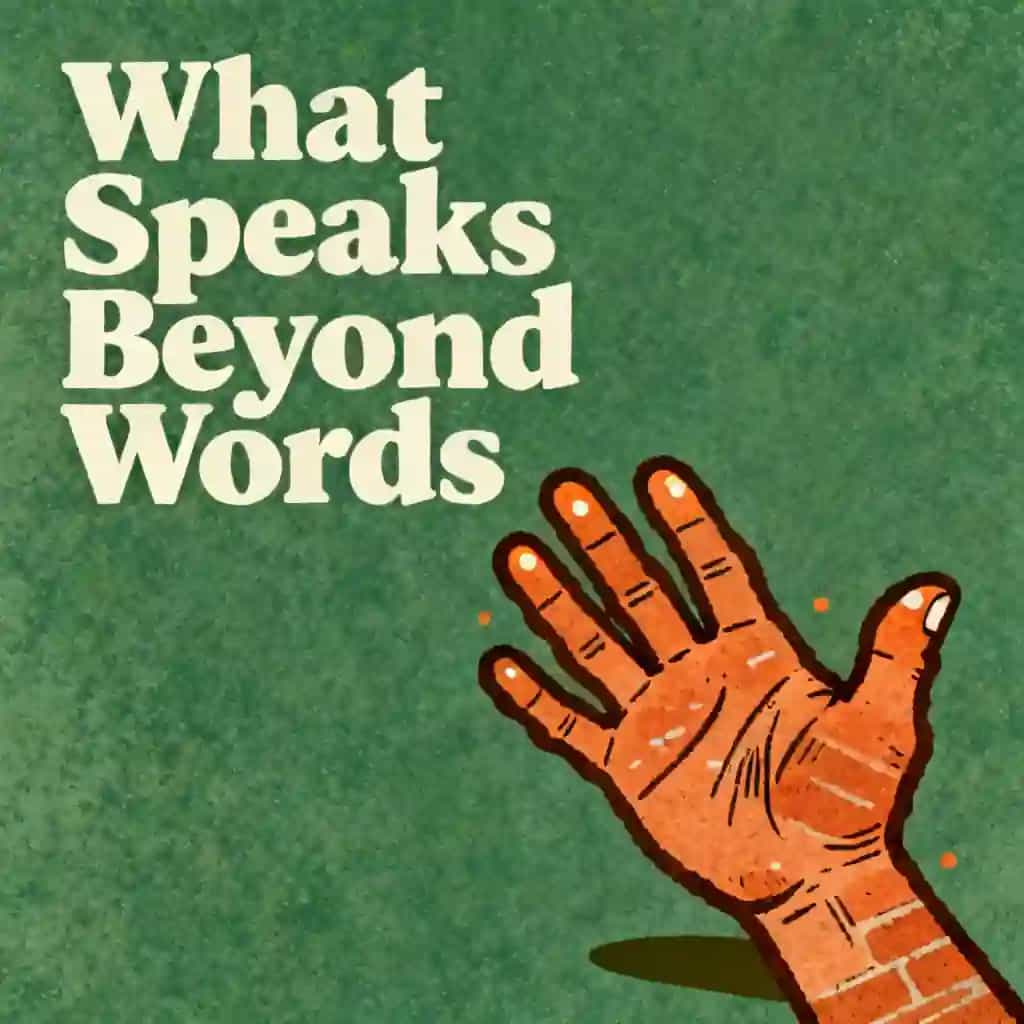
American Sign Language is not just English with hands
Think sign language is universal? Discover why ASL is a unique visual language where facial expressions and 3D grammar define the conversation.

American Sign Language is not just English with handsのベスト引用
ASL isn't just 'English with hands'—it’s a rich, visual language with its own unique grammar where your face actually acts as the 'volume control' and punctuation.

このオーディオレッスンはBeFreedコミュニティメンバーが作成しました
Sign language

よくある質問
No, they are completely different languages that are not mutually intelligible. Despite both the United States and the United Kingdom being English-speaking countries, ASL and BSL only share about 30% of their signs. One of the most visible differences is their manual alphabets; ASL uses a one-handed fingerspelling system, while BSL uses two hands.
ASL traces its roots back to France rather than Britain. In 1817, Thomas Hopkins Gallaudet and a Deaf French educator named Laurent Clerc established the first school for the deaf in the United States, bringing French Sign Language (LSF) across the Atlantic. Over time, LSF blended with local American signing systems to evolve into the modern ASL used today.
In sign language, the face functions as "volume control," tone, and punctuation. These are known as non-manual signals and are strictly grammatical. For example, raising your eyebrows can turn a statement into a "yes or no" question, while furrowing them signals a "who, what, or where" question. Without these facial cues, a sentence lacks proper structure and meaning.
ASL uses a "spatial syntax" where ideas are placed in the physical air around the signer to show relationships between objects. Unlike the Subject-Verb-Object order of English ("I need a car"), ASL often uses a Topic-Comment structure ("CAR, I NEED"). This allows the signer to set the scene visually before providing specific details or actions.
International Sign is not a formal universal language with a fixed dictionary, but rather a highly adaptable "pidgin" that arises when signers from different countries meet. It relies on iconic signs that look like what they represent, pantomime, and shared visual logic. While a standardized system called "Gestuno" was attempted in the 1970s, it failed because natural communication proved more effective than a forced code.
もっと発見

Develop strong body language
Body language accounts for over 50% of communication, yet most people remain unaware of the signals they send and receive daily. This learning plan helps professionals, leaders, and anyone seeking to improve their social intelligence decode nonverbal cues and strategically use body language to enhance their presence and influence.

Понимать и говорить по-американски
This plan is essential for learners who want to move beyond textbook English and sound authentic in a North American context. It is ideal for professionals, travelers, or expats who need to bridge the gap between basic fluency and natural, culturally-aware communication.
Master US Internet Slang
In an era where digital culture evolves daily, understanding modern American lingo is essential for effective communication. This guide is perfect for non-native speakers, expats, or professionals looking to blend into both social circles and US corporate environments.

Read Body Language to Understand People
In an era where much is left unsaid, mastering nonverbal cues provides a significant competitive advantage in both personal and professional settings. This plan is ideal for leaders, negotiators, and anyone looking to enhance their emotional intelligence and detect hidden social dynamics.

Learn desire signs & sexual communication
Navigating the complexities of modern intimacy requires both emotional intelligence and practical communication skills. This plan is ideal for individuals or couples looking to bridge the gap between unspoken attraction and honest, passionate connection.

Master the American Cultural Vibe
This plan is essential for professionals and expats looking to move beyond literal translation and grasp the nuances of American life. It is designed for those who want to sound more natural in both high-stakes boardrooms and casual social settings.

Lenguaje no verbal
Dominar la comunicación no verbal es esencial para cualquier profesional que busque influir y conectar mejor con los demás. Este plan es ideal para líderes, negociadores y cualquier persona interesada en la psicología aplicada y la detección de señales ocultas.

Speak English naturally as non-native
This plan is essential for non-native speakers who possess technical knowledge but struggle with the nuances of natural flow. It is ideal for professionals and students looking to bridge the gap between textbook English and authentic, confident communication.
"Instead of endless scrolling, I just hit play on BeFreed. It saves me so much time."


"I never knew where to start with nonfiction—BeFreed’s book lists turned into podcasts gave me a clear path."


"Perfect balance between learning and entertainment. Finished ‘Thinking, Fast and Slow’ on my commute this week."
"Crazy how much I learned while walking the dog. BeFreed = small habits → big gains."
"Reading used to feel like a chore. Now it’s just part of my lifestyle."

"Feels effortless compared to reading. I’ve finished 6 books this month already."
"BeFreed turned my guilty doomscrolling into something that feels productive and inspiring."

"BeFreed turned my commute into learning time. 20-min podcasts are perfect for finishing books I never had time for."
"BeFreed replaced my podcast queue. Imagine Spotify for books — that’s it. 🙌"

"It is great for me to learn something from the book without reading it."
"The themed book list podcasts help me connect ideas across authors—like a guided audio journey."
"Makes me feel smarter every time before going to work"
"Instead of endless scrolling, I just hit play on BeFreed. It saves me so much time."
"I never knew where to start with nonfiction—BeFreed’s book lists turned into podcasts gave me a clear path."
"Perfect balance between learning and entertainment. Finished ‘Thinking, Fast and Slow’ on my commute this week."
"Crazy how much I learned while walking the dog. BeFreed = small habits → big gains."
"Reading used to feel like a chore. Now it’s just part of my lifestyle."
"Feels effortless compared to reading. I’ve finished 6 books this month already."
"BeFreed turned my guilty doomscrolling into something that feels productive and inspiring."
"BeFreed turned my commute into learning time. 20-min podcasts are perfect for finishing books I never had time for."
"BeFreed replaced my podcast queue. Imagine Spotify for books — that’s it. 🙌"
"It is great for me to learn something from the book without reading it."
"The themed book list podcasts help me connect ideas across authors—like a guided audio journey."
"Makes me feel smarter every time before going to work"
"Instead of endless scrolling, I just hit play on BeFreed. It saves me so much time."
"I never knew where to start with nonfiction—BeFreed’s book lists turned into podcasts gave me a clear path."
"Perfect balance between learning and entertainment. Finished ‘Thinking, Fast and Slow’ on my commute this week."
"Crazy how much I learned while walking the dog. BeFreed = small habits → big gains."
"Reading used to feel like a chore. Now it’s just part of my lifestyle."
"Feels effortless compared to reading. I’ve finished 6 books this month already."
"BeFreed turned my guilty doomscrolling into something that feels productive and inspiring."
"BeFreed turned my commute into learning time. 20-min podcasts are perfect for finishing books I never had time for."
"BeFreed replaced my podcast queue. Imagine Spotify for books — that’s it. 🙌"
"It is great for me to learn something from the book without reading it."
"The themed book list podcasts help me connect ideas across authors—like a guided audio journey."
"Makes me feel smarter every time before going to work"
"Instead of endless scrolling, I just hit play on BeFreed. It saves me so much time."
"I never knew where to start with nonfiction—BeFreed’s book lists turned into podcasts gave me a clear path."
"Perfect balance between learning and entertainment. Finished ‘Thinking, Fast and Slow’ on my commute this week."
"Crazy how much I learned while walking the dog. BeFreed = small habits → big gains."
"Reading used to feel like a chore. Now it’s just part of my lifestyle."
"Feels effortless compared to reading. I’ve finished 6 books this month already."
"BeFreed turned my guilty doomscrolling into something that feels productive and inspiring."
"BeFreed turned my commute into learning time. 20-min podcasts are perfect for finishing books I never had time for."
"BeFreed replaced my podcast queue. Imagine Spotify for books — that’s it. 🙌"
"It is great for me to learn something from the book without reading it."
"The themed book list podcasts help me connect ideas across authors—like a guided audio journey."
"Makes me feel smarter every time before going to work"