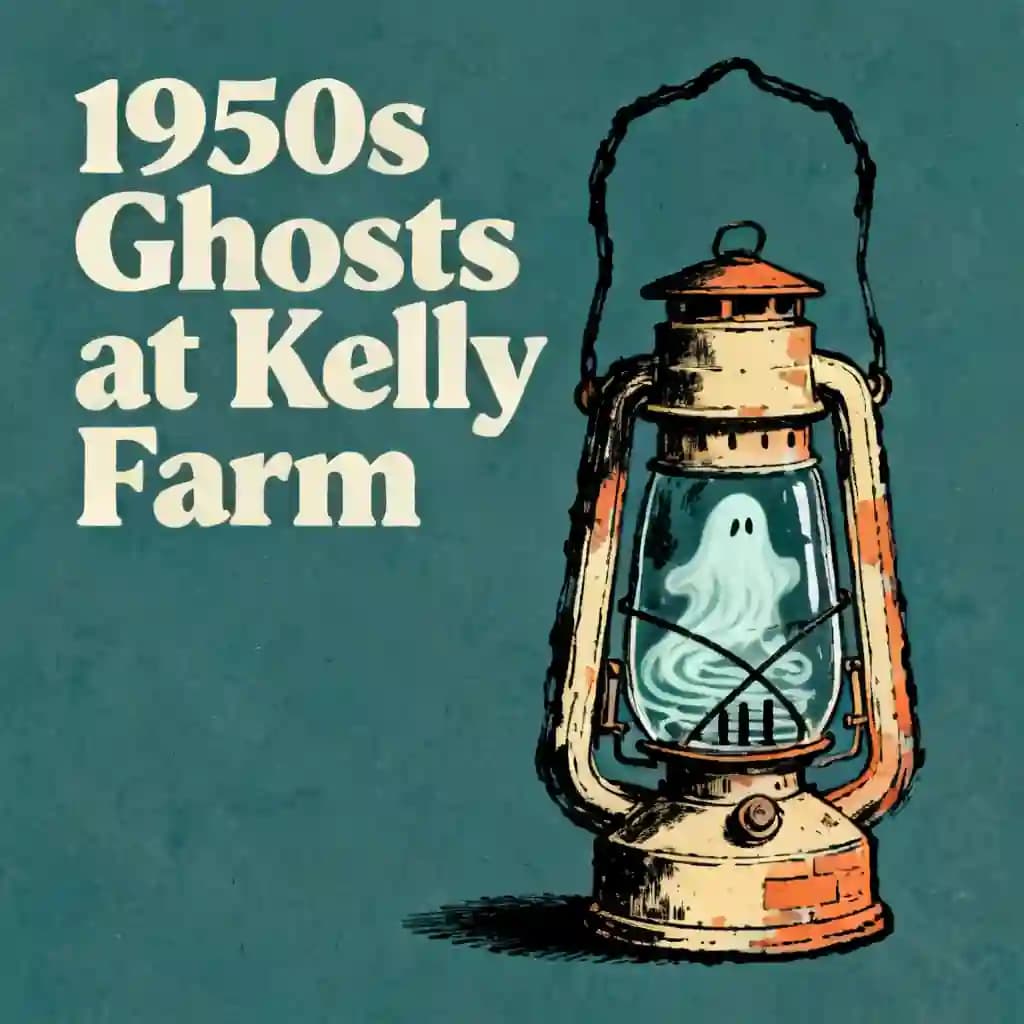
1950s Ghosts and the Battle at Kelly Farm
The 1950s weren't just about hula hoops. Explore the terrifying night a Kentucky family fought off creatures and why paranormal fear gripped the decade.
1950s Ghosts and the Battle at Kelly Farmのベスト引用
The 1950s was a decade of unearthing new technologies, but we were also unearthing deep, uncomfortable truths about our place in the universe. Sometimes, those truths had glowing eyes and were tapping on our windows.
Generated by Евгений Троцковец
Длинный подкаст на английском языке о призраках в 1950ых годах . Два ведущих.

よくある質問
While the creatures in the Kelly, Kentucky, farmhouse siege were actually described as having silver skin and glowing eyes, the media coverage of the event accidentally popularized the term "little green men." The incident involved the Sutton family engaging in a four-hour "running gunfight" against small, clawed entities that made a metallic clanging sound when struck by bullets. This event became a cornerstone of 1950s paranormal lore, representing a "domestic invasion" that shattered the era's sense of suburban security.
During the 1950s and 60s, researchers studying famous cases like the Sauchie poltergeist began to move away from traditional ghost explanations, instead focusing on psychological triggers. They proposed that the physical chaos—such as moving furniture or exploding light bulbs—was actually "repressed energy" manifesting from a person in the household, often a teenager under extreme stress. In an era where families felt immense pressure to maintain a perfect outward appearance, this theory suggested that internal anxieties were being unconsciously projected as physical, paranormal disruptions.
The Men in Black (MIB) emerged in the 1950s as mysterious, formal figures wearing dark suits and driving Cadillacs who would visit witnesses of UFO sightings. These entities were often described as having "uncanny" traits, such as wax-like skin, monotonous voices, and a robotic way of speaking that made them seem like they were unsuccessfully trying to mimic human behavior. They functioned as a "Shadow of Authority," intimidating witnesses into silence and tapping into the Cold War-era paranoia regarding government secrecy and surveillance.
The "Practical Playbook" for a 1950s encounter often involved a "hands-on" or "heavy hardware" approach, particularly in rural areas where families like the Suttons used shotguns and rifles to defend their homes. In suburban settings, the response was more focused on restoring order by calling authority figures like the police, doctors, or clergy. Additionally, some families used "modern" technology of the time, such as tape recorders to capture Electronic Voice Phenomena (EVP), or turned to social "Seance and Slacks" gatherings to investigate the unknown through Ouija boards.
コロンビア大学卒業生が開発 サンフランシスコ発
BeFreedは好奇心旺盛な仲間が集うグローバルコミュニティ


"Instead of endless scrolling, I just hit play on BeFreed. It saves me so much time."


"I never knew where to start with nonfiction—BeFreed’s book lists turned into podcasts gave me a clear path."


"Perfect balance between learning and entertainment. Finished ‘Thinking, Fast and Slow’ on my commute this week."
"Crazy how much I learned while walking the dog. BeFreed = small habits → big gains."
"Reading used to feel like a chore. Now it’s just part of my lifestyle."

"Feels effortless compared to reading. I’ve finished 6 books this month already."
"BeFreed turned my guilty doomscrolling into something that feels productive and inspiring."

"BeFreed turned my commute into learning time. 20-min podcasts are perfect for finishing books I never had time for."
"BeFreed replaced my podcast queue. Imagine Spotify for books — that’s it. 🙌"

"It is great for me to learn something from the book without reading it."
"The themed book list podcasts help me connect ideas across authors—like a guided audio journey."
"Makes me feel smarter every time before going to work"
コロンビア大学卒業生が開発 サンフランシスコ発
BeFreedは好奇心旺盛な仲間が集うグローバルコミュニティ
"Instead of endless scrolling, I just hit play on BeFreed. It saves me so much time."
"I never knew where to start with nonfiction—BeFreed’s book lists turned into podcasts gave me a clear path."
"Perfect balance between learning and entertainment. Finished ‘Thinking, Fast and Slow’ on my commute this week."
"Crazy how much I learned while walking the dog. BeFreed = small habits → big gains."
"Reading used to feel like a chore. Now it’s just part of my lifestyle."
"Feels effortless compared to reading. I’ve finished 6 books this month already."
"BeFreed turned my guilty doomscrolling into something that feels productive and inspiring."
"BeFreed turned my commute into learning time. 20-min podcasts are perfect for finishing books I never had time for."
"BeFreed replaced my podcast queue. Imagine Spotify for books — that’s it. 🙌"
"It is great for me to learn something from the book without reading it."
"The themed book list podcasts help me connect ideas across authors—like a guided audio journey."
"Makes me feel smarter every time before going to work"
"Instead of endless scrolling, I just hit play on BeFreed. It saves me so much time."
"I never knew where to start with nonfiction—BeFreed’s book lists turned into podcasts gave me a clear path."
"Perfect balance between learning and entertainment. Finished ‘Thinking, Fast and Slow’ on my commute this week."
"Crazy how much I learned while walking the dog. BeFreed = small habits → big gains."
"Reading used to feel like a chore. Now it’s just part of my lifestyle."
"Feels effortless compared to reading. I’ve finished 6 books this month already."
"BeFreed turned my guilty doomscrolling into something that feels productive and inspiring."
"BeFreed turned my commute into learning time. 20-min podcasts are perfect for finishing books I never had time for."
"BeFreed replaced my podcast queue. Imagine Spotify for books — that’s it. 🙌"
"It is great for me to learn something from the book without reading it."
"The themed book list podcasts help me connect ideas across authors—like a guided audio journey."
"Makes me feel smarter every time before going to work"
"Instead of endless scrolling, I just hit play on BeFreed. It saves me so much time."
"I never knew where to start with nonfiction—BeFreed’s book lists turned into podcasts gave me a clear path."
"Perfect balance between learning and entertainment. Finished ‘Thinking, Fast and Slow’ on my commute this week."
"Crazy how much I learned while walking the dog. BeFreed = small habits → big gains."
"Reading used to feel like a chore. Now it’s just part of my lifestyle."
"Feels effortless compared to reading. I’ve finished 6 books this month already."
"BeFreed turned my guilty doomscrolling into something that feels productive and inspiring."
"BeFreed turned my commute into learning time. 20-min podcasts are perfect for finishing books I never had time for."
"BeFreed replaced my podcast queue. Imagine Spotify for books — that’s it. 🙌"
"It is great for me to learn something from the book without reading it."
"The themed book list podcasts help me connect ideas across authors—like a guided audio journey."
"Makes me feel smarter every time before going to work"