第1章
Obsession Disguised as Love: Inside the Mind of a Stalker
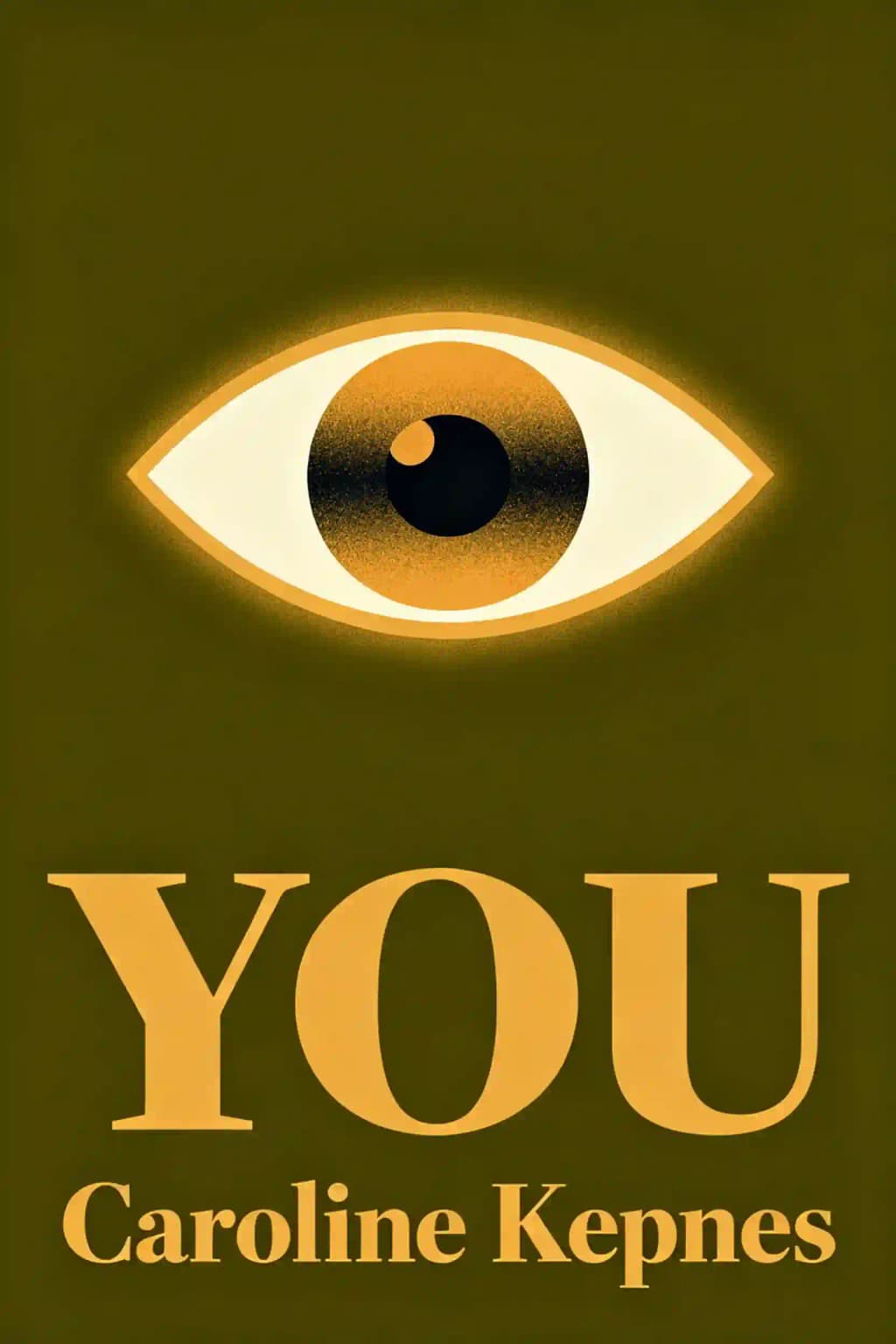
In 2014, Caroline Kepnes introduced readers to Joe Goldberg, creating one of literature's most disturbing yet captivating narrators. "You" quickly became a cultural phenomenon, praised by Stephen King as "hypnotic and scary," before evolving into a Netflix sensation that attracted over 54 million viewers in its first season. The novel's unique second-person narrative pulls readers uncomfortably close to Joe's twisted psyche, forcing us to experience his obsessions firsthand. What makes "You" particularly unsettling is how Kepnes crafts a protagonist whose charm and literary knowledge make us momentarily forget we're inside the mind of a predator. This psychological thriller doesn't just explore obsession - it makes us complicit in it, challenging our notions of romance versus stalking in the digital age.
第2章
The Perfect Woman Walks Into a Bookstore
The story begins with an ordinary encounter that spirals into deadly obsession. Joe Goldberg, a bookstore manager in New York City, becomes instantly fixated on Guinevere Beck when she walks into his shop. "You walk into the bookstore with careful grace, keeping the door from slamming," he observes, immediately noting her "beige V-neck and loose pink jeans." His attention to minute details - from the way her hair catches the afternoon light to how she runs her fingers along book spines - reveals an unsettling intensity from the very first moment. Their brief interaction over books reveals her name through her credit card transaction, and Joe interprets her friendly customer service exchange as profound connection, a moment he believes is charged with destiny.
What makes this opening so chilling is how Joe transforms mundane details into evidence of destiny. A simple book purchase becomes, in his mind, a meaningful exchange laden with romantic potential. He notices how she gravitates toward the fiction section, interpreting her literary choices as deep insights into her psyche. When she selects a Paula Fox novel, he sees it as confirmation of her sophisticated taste - proof they're intellectually matched. Beck's casual friendliness - the kind most people extend to service workers - is reinterpreted as deliberate flirtation. "You didn't walk in here just for books," he decides, "you said my name, smiled, took me in." Her every gesture becomes loaded with significance: the way she tucks her hair behind her ear, how she checks her phone while waiting at the counter, even her choice to pay with credit instead of cash feels meaningful to Joe's warped perception.
The narrative technique is masterful here - by addressing Beck directly as "you," Kepnes forces readers into uncomfortable intimacy with Joe's perspective. We experience his objectification of Beck firsthand, seeing how he reduces her to a fantasy projection before she's even left the store. This second-person narrative device creates a disturbing sense of complicity, as readers are forced to inhabit Joe's obsessive mindset. His internal monologue reveals how quickly he constructs an entire personality for Beck based on superficial observations: her clothing suggests wealth, her book choice indicates intelligence, her smile means she's interested. Through Joe's eyes, we watch him weave an elaborate fantasy about who Beck is, demonstrating how stalkers can build entire relationships in their minds from the briefest encounters. This technique blurs the line between reader and stalker, making us unwilling participants in Joe's obsession from the very first page, while simultaneously highlighting how predators can twist normal social interactions into perceived intimate connections.
第3章
Digital Stalking: The Modern Predator's Toolkit
Once Joe learns Beck's name, he immediately transforms into a digital detective, using her online presence to construct an elaborate fantasy of who she is. "The internet gave me everything about you," he boasts, cataloging her Twitter handle (@TheUnRealBeck), her essays disguised as blogs, and her personal history. Within hours, Joe knows Beck is a writer from Nantucket with a complicated family history - her sister Anya never left the island, her brother Clyde runs the family taxi business, and her alcoholic father is supposedly dead.
What's particularly disturbing is how Joe's digital stalking mirrors common behavior in today's world. Many of us have "researched" potential dates online, but Joe takes this to pathological extremes. He doesn't just look at her public profiles; he obsessively monitors her every digital move, constructing elaborate narratives about her life based on fragments of information. Her Bank Street apartment, which she won through a "Brownstone Biased Lottery" essay contest for Brown graduates, becomes his surveillance target. Joe positions himself across the street, watching through her perpetually open windows as she eats, sleeps, and even masturbates.
Kepnes brilliantly captures how social media creates a false sense of intimacy. Joe believes he truly knows Beck because he's seen her tweets about her "shoebox" apartment and her academic struggles. He interprets her online persona as her authentic self, filling in the gaps with his own projections. This exploration of digital stalking feels especially relevant in an era where our online presence can be accessed by anyone, and where the boundaries between public and private have become increasingly blurred.
The novel serves as a cautionary tale about digital privacy. Beck's habit of leaving her curtains open and oversharing online makes her vulnerable to Joe's surveillance. When he watches her having sex with another man (whom he later learns is "Benji"), Joe's jealousy intensifies. He doesn't see his behavior as invasive; instead, he positions himself as her protector, deciding that Benji "uses you" and that "this isn't what you deserve." This self-appointed guardian role is the first step toward his violent interventions in Beck's life.
第4章
The Cage: Joe's Dark Secret
At the heart of the bookstore lies Joe's most disturbing secret - a climate-controlled basement vault with mahogany beams and unbreakable acrylic walls, originally designed to protect rare books. This "cage," as Joe calls it, becomes both literal prison and metaphor for his twisted worldview. "This magnificent cage is more chapel than prison," he reflects, revealing how he sanctifies his own disturbing behavior.
The cage's origin story provides crucial insight into Joe's psychology. Built when he was fifteen, under the guidance of Mr. Mooney (the previous bookstore owner), it represents Joe's formative trauma. Mr. Mooney, a father figure to the neglected Joe, taught him that "everything valuable must be hidden" - a philosophy Joe applies to both rare books and the people he desires. When Joe carelessly left the cage unlocked as a teenager, resulting in the theft of a signed first edition of Franny and Zooey, Mr. Mooney locked him inside for days with minimal sustenance. This punishment, occurring around September 11, 2001, went completely unnoticed by Joe's actual father, cementing his belief that he could "slowly disappear" from his neglectful home.
The cage becomes Joe's solution for anyone who stands between him and Beck. When he discovers that Beck is involved with Benji, a privileged heir to an organic soda company, Joe lures him to the bookstore by posing as a food critic. After drugging Benji with Xanax-laced water, Joe imprisons him in the basement cage - the first step in a pattern of violence justified as necessary for his relationship with Beck.
What makes this element of the story particularly disturbing is how Joe blends literary appreciation with violence. He forces Benji to take tests on books he claims to have read, exposing him as a fraud who "reads about books without reading them in the traditional straightforward manner." This intellectual gatekeeping becomes Joe's justification for murder - he kills Benji by exploiting his peanut allergy, then rationalizes that Benji died "educated," with "new confidence and pride," rather than "old and full of regret."
The cage represents Joe's fundamental approach to relationships - capturing and controlling what he desires rather than engaging in genuine connection. It's a physical manifestation of how he sees love - not as mutual freedom but as possession and dominance disguised as protection.
第5章
Eliminating the Competition: Benji and Peach
Joe's path to Beck requires removing anyone he perceives as an obstacle, and his first targets are Benji and Peach Salinger. His elimination of these characters reveals how he transforms jealousy into righteous violence, convincing himself that he's improving Beck's life by removing "toxic" influences.
Benji represents everything Joe despises - privilege without appreciation, superficiality masquerading as depth. Joe discovers that despite Benji's claims about his organic soda company, Home Soda, he can't even identify his own product in a taste test. Joe sees Benji as a fraud who cheated through Yale and never faced consequences, using Beck as just another conquest. After killing Benji, Joe creates an elaborate cover story using his victim's phone and social media, tweeting about a drug bender at Yale to explain his absence and eventually fabricating his death in a sailing accident.
Peach Salinger presents a different threat - she's Beck's wealthy, possessive friend who clearly harbors romantic feelings for Beck. As a distant relative of J.D. Salinger, Peach represents the literary elite that Joe both envies and resents. When Joe attends a party at Peach's penthouse, he's immediately made to feel inferior. Peach condescendingly calls him "Joseph" and makes passive-aggressive comments about his lack of college education and his neighborhood. Joe feels Beck becoming "someone else" around Peach - applying makeup, snapping at cab drivers, clutching her Prada bag - reinforcing his fear that Peach has undue influence over Beck.
The discovery that Peach secretly photographs Beck and uses these images for sexual gratification gives Joe the moral justification he seeks. He attacks Peach while she's running in Central Park, but she survives. Later, when Beck visits Peach at her family's beach house in Little Compton, Joe follows. Despite his own injuries from a car accident, he confronts Peach on the beach, kills her with a rock, and stages her death as a suicide by drowning her in the ocean. He even crafts a suicide note from her phone, quoting Virginia Woolf about being "locked in" - an ironic reference given his own habit of locking people in cages.
What's most disturbing about these murders is how Joe positions himself as Beck's savior rather than her stalker. He believes he's freeing her from toxic relationships, never recognizing that his own behavior is far more controlling and dangerous than anything Benji or Peach did. His violence is always framed as love - he's not killing out of jealousy, he tells himself, but out of concern for Beck's wellbeing.
第6章
The Illusion of Relationship
When Joe and Beck finally begin dating, their relationship reveals the fundamental disconnect between Joe's fantasy and reality. Their early days together seem perfect to Joe - they establish the "Rule of the Robes" (when in Beck's apartment, they must be naked or wearing plush Ritz-Carlton robes stolen from Peach's place), create private jokes, and make love constantly. Joe believes they've achieved a rare connection, what Beck calls an "everythingship."
Yet even in these intimate moments, Joe's perception is skewed. He interprets Beck's every action through the lens of his obsession, seeing profound meaning in small gestures like her using his toothbrush. When Beck texts "I love you" in response to his simple "Hi," Joe sees it as confirmation that their relationship is exceptional.
The relationship begins to deteriorate when Beck becomes distant - responding to messages slowly, making excuses about being in class or on the phone with friends, and avoiding physical intimacy. Joe's insecurity spirals, though he continues monitoring her communications to ensure she isn't seeing someone else. The relationship becomes increasingly strained, with Beck avoiding movies and leaving books Joe gives her untouched.
What Joe doesn't recognize is that Beck's withdrawal might be a natural response to his intensity. His idea of love is all-consuming, leaving no room for independence or privacy. When Beck discovers Joe's "Box of Beck" - a collection of stolen items including her panties and old phone - she's horrified, calling him a "sicko." Joe's inability to understand why his collection is disturbing reveals the fundamental problem: he doesn't see Beck as an autonomous person but as an object to be possessed and studied.
The relationship reaches its breaking point when Joe discovers Beck has been having an affair with her therapist, Dr. Nicky. Reading through 437 emails between them, including intimate photos, Joe is devastated. Rather than accepting the end of the relationship, he imprisons Beck in the cage, determined to make her confess and repent. This final act of control strips away any pretense that their relationship was ever based on mutual respect or genuine connection.
第7章
The Therapy Deception: Dr. Nicky's Role
Dr. Nicky represents another dimension of betrayal in Joe's mind, serving as both a mirror and a catalyst for Joe's deepening obsession with Beck. When Joe discovers Beck is attending therapy sessions twice weekly, he methodically creates an elaborate false identity as "Dan Fox" to infiltrate Dr. Nicky's practice. This calculated move demonstrates Joe's willingness to violate any boundary in pursuit of controlling Beck's narrative. Initially, Joe views therapy as a positive force, believing it's helping Beck process her deep-seated issues with intimacy and unresolved "daddy issues" stemming from her father's absence.
However, Joe's perspective dramatically shifts after he manages to obtain stolen audio recordings of Beck's sessions. These recordings reveal Dr. Nicky's own disturbing fixation with Beck, transforming him from a potential ally into what Joe perceives as a dangerous rival. The therapist's early clinical observations describe Beck as "hypersexualized with boundary issues, narcissistic, and possibly predatory" - assessments that Joe initially agrees with. But as the sessions progress, Dr. Nicky's professional detachment crumbles, culminating in his confession of masturbating while thinking about Beck and developing romantic feelings for her, despite his married status.
Joe's subsequent investigation into Dr. Nicky's personal life reveals layers of complexity: a man seemingly trapped in a loveless marriage, yet deeply devoted to his two teenage daughters. Through meticulous stalking, Joe learns intimate details about Nicky's family dynamics, including his declaration that he would "sooner kill himself than leave his children." Joe tracks Dr. Nicky's weekly routine, particularly focusing on his Thursday visits to a dangerous neighborhood in Queens where he provides counseling services to recovering addicts - identifying this as an ideal opportunity for murder.
The therapy subplot weaves multiple thematic threads throughout the narrative. It demonstrates Joe's sophisticated ability to appropriate psychological terminology and concepts to rationalize his behavior. He frequently references therapeutic concepts like "the mouse in your house" (a metaphor for obsessive thoughts) to justify his stalking and surveillance. The parallel between Joe and Dr. Nicky becomes increasingly disturbing as both men abuse their positions of trust - Dr. Nicky through professional misconduct and Joe through escalating acts of violence.
The key distinction between these two predatory figures lies in their methods and escalation. While Dr. Nicky's transgressions remain within the realm of professional ethics violations - serious but non-violent - Joe's obsession manifests in physical imprisonment and ultimately murder. This contrast serves to highlight the spectrum of predatory behavior while underscoring Joe's extreme position on that spectrum. The therapy sessions also provide insight into Beck's vulnerability and the way multiple men in positions of trust exploit her need for validation and connection.
第8章
The Final Confrontation and Beck's Death
The novel reaches its climax when Beck discovers Joe's true nature and attempts to escape. After finding Joe's collection of her stolen possessions, Beck realizes the extent of his obsession. Joe manages to overpower her, knocking her unconscious and imprisoning her in the cage.
In captivity, Beck initially resists Joe's attempts to justify his behavior. He forces her to answer questions about her affair with Dr. Nicky using "yes" and "no" flashcards, confronting her with emails where she described Joe as having "little going for him." Beck tries explaining herself, admitting she "loves to be wanted" and "loves new things," but struggles to provide the unconditional validation Joe seeks.
A surprising moment of connection occurs when Joe brings two copies of The Da Vinci Code - a book neither has read - into the cage. They bond over the novel, discussing plot points and watching clips from the film adaptation. This literary connection gives Joe hope that their relationship can be salvaged, especially when Beck begins criticizing her affair with Dr. Nicky as "disgusting" and "cheap."
Their reconciliation culminates in a sexual encounter where Beck appears to seduce Joe through the cage's drawer opening. Joe unlocks the cage, and they have passionate sex with the door remaining open. Joe interprets Beck's failure to escape as proof of her renewed commitment.
This false hope is shattered when Joe returns from cleaning up to find Beck attempting to escape. She pleads for freedom, promising to disappear to Los Angeles and never reveal what happened to Benji or Peach. When Joe refuses, she fights back, and in the struggle, he strangles her to death, shoving torn pages from The Da Vinci Code into her mouth.
Beck's death represents the inevitable conclusion of Joe's possessive love. Unable to accept her autonomy or her rejection, he destroys what he cannot control. The murder scene is particularly disturbing because it desecrates their moment of literary connection - the pages that brought them together become the instrument of her silencing.
第9章
Aftermath and the Cycle Continues
After killing Beck, Joe drives her body upstate for burial. In a macabre coincidence, he buries her near the site of a wedding celebration, digging her grave while the distant sounds of "Wonderful Tonight" and "Isn't She Lovely" play at the reception. This juxtaposition of love and death underscores the perversion of romance that Joe's obsession represents.
In the months following Beck's death, Joe creates a bound collection of her stories titled "The Book of Beck" while watching her posthumous fame grow through news coverage of "the twisted psychologist who murdered you" - as Dr. Nicky is framed for her death. Joe convinces himself he's changed, that he won't grow lonely like Mr. Mooney. He maintains connections with Ethan and Blythe and has occasional hookups, but remains fundamentally unchanged.
The novel's chilling conclusion comes when Amy Adam, a woman Joe briefly met before, appears at the bookstore responding to a HELP WANTED sign. Her interest in books and her confession about being fired from her previous bookstore job for "stealing" - taking books home to read and mark up - immediately captivates Joe. The cycle begins anew as Joe imagines their future together, already planning for "wedding invitations addressed to Joe Goldberg & Amy Adam." Beck may be gone, but Joe's pattern of obsession continues uninterrupted.
This cyclical ending reveals the true horror of Joe's character - his inability to recognize his own pathology. Despite the destruction he's caused, he remains convinced that his next obsession will be different, that his next love will be pure. The reader is left with the disturbing knowledge that Amy Adam is walking into the same trap that destroyed Beck, Benji, and Peach.
第10章
The Dark Mirror: What Joe Reveals About Modern Romance
"You" serves as a haunting reflection of contemporary dating culture and romantic ideals, exposing uncomfortable parallels between societally accepted behaviors and dangerous obsession. While Joe's actions are undeniably extreme, his underlying thought patterns echo commonly celebrated romantic tropes - the concept of soulmates, love at first sight, and the persistent pursuit of someone playing "hard to get." These familiar narratives take on a sinister cast when pushed to their logical extremes.
Joe's digital stalking represents an amplified version of behavior that has become normalized in the social media age. The modern dating landscape often involves extensive online "research" - scanning Instagram posts, scrolling through Facebook histories, and piecing together someone's life through their digital footprint. What starts as due diligence can easily slide into invasion of privacy, with people feeling entitled to information about potential partners before any meaningful connection is established. Joe's methodical tracking of Beck's online presence differs from common practice more in degree than in kind.
His justifications for controlling behavior are particularly revealing of toxic elements in mainstream romantic narratives. When Joe convinces himself that he knows what's best for Beck - monitoring her friendships, manipulating her career choices, "protecting" her from perceived negative influences - he echoes the possessive dynamics often romanticized in popular media. From Edward Cullen watching Bella sleep to countless rom-com protagonists who "won't take no for an answer," the line between devotion and control is frequently blurred in our cultural storytelling.
The sophistication of Joe's character makes him especially dangerous and compelling. His extensive literary knowledge - seamlessly referencing e.e. cummings, discussing Paula Fox's "Desperate Characters," analyzing Salinger's narrative techniques - creates an intellectual framework that masks his predatory nature. He processes his obsession through the lens of great literature, casting himself as the romantic hero in a grand narrative. This cultural literacy makes him seem refined rather than threatening, allowing readers to potentially sympathize with his perspective despite his horrific actions.
Through Joe's first-person narrative, Kepnes masterfully demonstrates how predatory behavior can be disguised as romance. His poetic musings and literary allusions create a veneer of legitimacy over his stalking and violence. The reader experiences firsthand how eloquently abusers can justify their actions, how easily stalking can be reframed as dedication, and how control can be masked as protection. Joe's ability to transform his victims into characters in his personal narrative - rather than recognizing their autonomy - reflects a broader cultural tendency to objectify romantic interests.
"You" transcends the typical thriller format to become a critical examination of modern romance. It exposes how romantic narratives can normalize problematic behavior, from digital surveillance to emotional manipulation. In an era where social media has redefined privacy and boundaries, the novel forces readers to confront their own participation in cultures of surveillance and control, challenging the thin line between romantic interest and dangerous obsession.