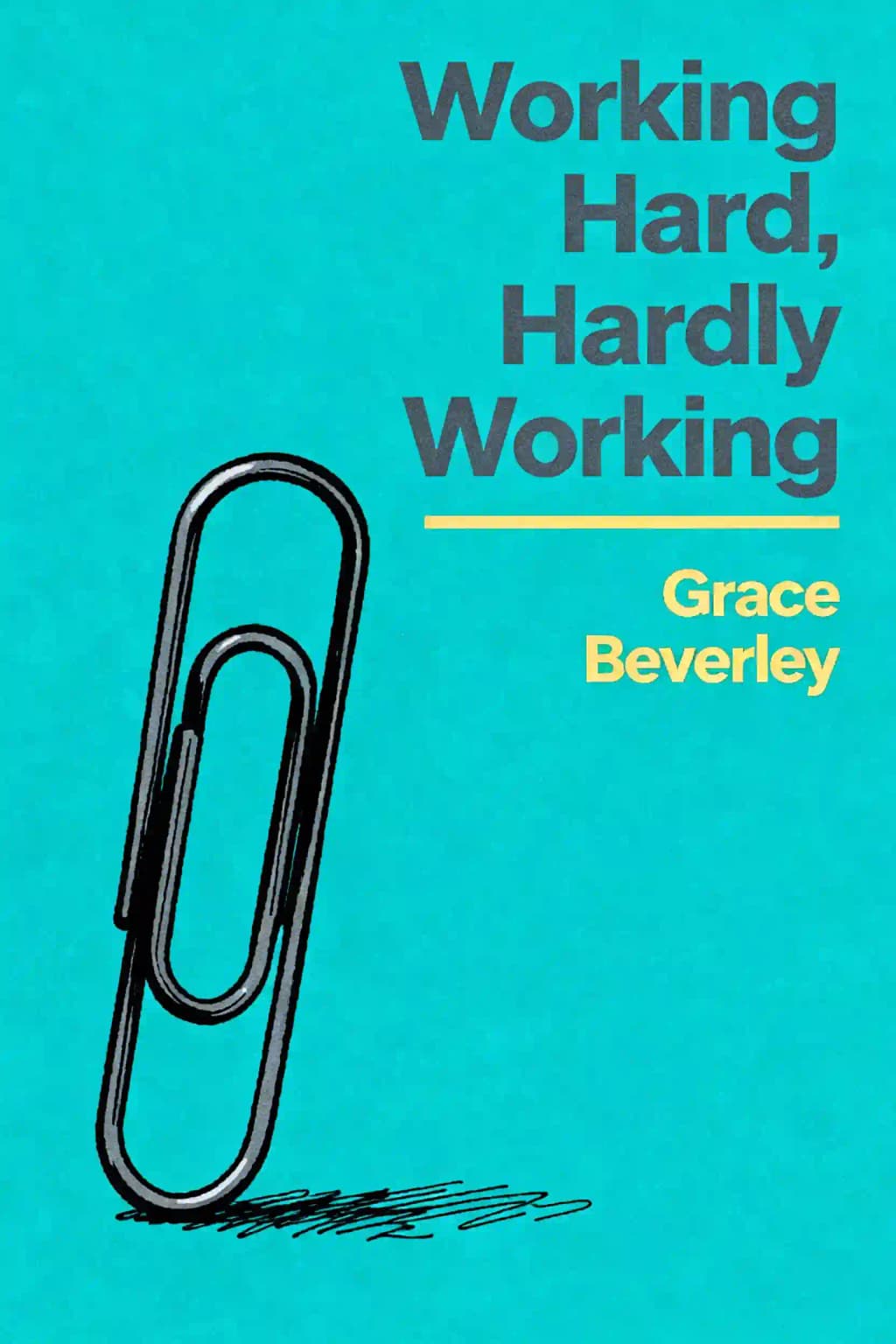
Working Hard, Hardly Working : How to Achieve More, Stress Less and Feel Fulfilled
the #1 SUNDAY TIMES BESTSELLER
『Working Hard, Hardly Working : How to Achieve More, Stress Less and Feel Fulfilled』の概要
Grace Beverley's #1 Sunday Times bestseller challenges hustle culture's grip on Gen Z. Praised by Emma Gannon for "unpacking impossible messages about modern work," this refreshing guide redefines productivity, offering practical balance in our social media-driven world. Success redefined, sanity restored.
『Working Hard, Hardly Working : How to Achieve More, Stress Less and Feel Fulfilled』の主要テーマ
- performative workaholism
- work-life integration
- task batching
- purpose trap
- flow state
『Working Hard, Hardly Working : How to Achieve More, Stress Less and Feel Fulfilled』の名言
Constant work equals worth.
Purpose must be central to any worthwhile career is just that: a myth.
Working smart is still hard work.
Enjoying your work isn't self-indulgent—it's essential.
Sustainability matters more than short-term productivity.
『Working Hard, Hardly Working : How to Achieve More, Stress Less and Feel Fulfilled』の登場人物
- Grace BeverleyAuthor and founder of TALA and Shreddy
Working Hard, Hardly Working : How to Achieve More, Stress Less and Feel Fulfilledの要約をダウンロード
Working Hard, Hardly Working : How to Achieve More, Stress Less and Feel Fulfilledの要約をPDFまたはEPUBで無料でダウンロード。印刷やオフラインでいつでもお読みいただけます。
この本に関するよくある質問
Working Hard, Hardly Working redefines productivity for the modern era, blending practical time-management strategies with a focus on mental health and sustainable success. Grace Beverley, a millennial CEO, challenges hustle culture by advocating for "smart work" over overwork, emphasizing self-care, personalized goal-setting, and redefining success beyond societal metrics. The book merges entrepreneurial insights with actionable frameworks like the Eisenhower Matrix and task batching.
This book is ideal for millennials, Gen Z professionals, and entrepreneurs grappling with burnout or work-life imbalance. It’s particularly relevant for those seeking strategies to achieve goals without sacrificing mental health, or anyone interested in rethinking productivity beyond traditional 9-to-5 structures. Beverley’s relatable tone resonates with readers navigating gig economies, side hustles, or remote work challenges.
Yes—it became an instant Sunday Times bestseller for its fresh take on productivity tailored to digital-age challenges. Beverley’s dual perspective as a CEO and former influencer offers unique, actionable advice lacking in many self-help books. Critics praise its blend of personal anecdotes and research-backed methods, making it a standout in the crowded productivity genre.
- Productivity ≠ overwork: Efficiency matters more than hours logged.
- Self-care as strategy: Rest and boundaries enhance output.
- Redefining success: Reject societal benchmarks for personal fulfillment.
- Time-blocking: Structured schedules prevent burnout.
Beverley argues that balancing ambition with well-being creates sustainable achievement, using examples from her companies TALA and Shreddy.
Beverley rejects toxic hustle culture, defining productivity as "working intentionally within your capacity." Key elements include:
- Prioritizing high-impact tasks via frameworks like the Eisenhower Matrix.
- Integrating self-care (e.g., exercise, sleep) into daily routines.
- Leveraging "deep work" sessions for focused creativity.
This approach emphasizes quality over quantity, tailored to individual rhythms.
Beverley’s signature method combines:
- Task batching: Grouping similar tasks to reduce context-switching.
- Time-blocking: Allocating specific slots for work, rest, and creativity.
- Weekly audits: Reflecting on what worked and adjusting accordingly.
She emphasizes flexibility, advising readers to adapt these tools rather than rigidly follow them.
Beverley links burnout to societal glorification of overwork and “always-on” digital cultures. Solutions include:
- Setting non-negotiable downtime (e.g., tech-free evenings).
- Redefining productivity to include restorative activities.
- Using the "Two-Day Rule" to avoid consecutive high-stress days.
Case studies from her entrepreneurial journey illustrate balancing scaling businesses with mental health.
Some reviewers note the core ideas (e.g., time-blocking, self-care) aren’t novel, but fans argue Beverley’s Gen Z/millennial lens makes them feel newly applicable. A minority critique the focus on individual solutions over systemic workplace reforms. Despite this, its 4.5/5 Amazon rating highlights broad appeal.
Yes—it provides frameworks to:
- Audit skills and passions using Beverley’s "Three-Circle Method" (skills, enjoyment, demand).
- Break goals into quarterly "sprints" with measurable milestones.
- Navigate uncertainty by embracing "productive pauses" for reflection.
The book is recommended for career pivoters seeking structure without rigidity.
While both address habit formation, Beverley’s book focuses more on balancing productivity with well-being, whereas Clear emphasizes incremental habit stacking. Atomic Habits offers universal principles, while Working Hard tailors strategies to modern challenges like gig work and digital overload.
“Self-care isn’t a luxury—it’s the backbone of real productivity.” This encapsulates Beverley’s argument that burnout prevention enables sustained achievement. The quote is frequently cited in reviews and social media discussions of the book.
As remote work and AI-driven efficiency rise, Beverley’s emphasis on mental health and flexible productivity aligns with 2025 workplace trends. The book’s critique of "hustle porn" resonates in an era where 67% of millennials report job-related burnout, per recent Deloitte studies.