第1章
The Curious Mind Behind the Unexpected
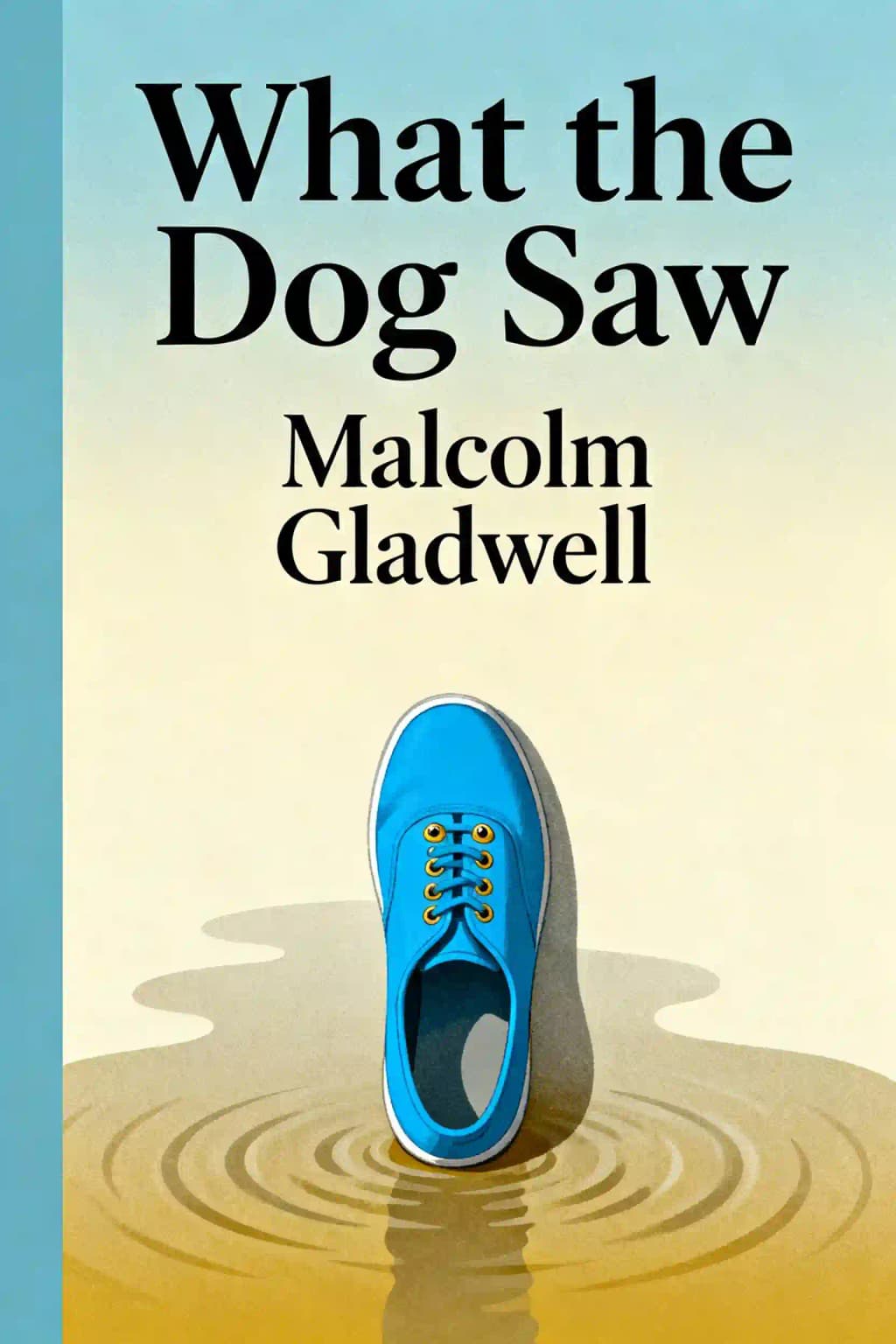
Malcolm Gladwell possesses an uncanny ability to make us reconsider the ordinary. What began as a childhood fascination with his mathematician father's mysterious work evolved into a lifelong exploration of "the other minds problem" - understanding what goes on inside other people's heads. This curiosity drives Gladwell's collection of essays in "What the Dog Saw," where he takes readers on intellectual adventures through the minds of dog whisperers, hair colorists, and criminal profilers. Originally published in The New Yorker, where Gladwell has been a staff writer since 1996, these essays weren't born from a master plan but from a default career path he stumbled into after collecting eighteen rejection letters from advertising agencies. This accidental writer has since become one of the most influential voices in modern nonfiction, with three consecutive #1 New York Times bestsellers. What makes Gladwell's work so compelling isn't just his insights but his conviction that everyone and everything has a fascinating story - even topics as seemingly mundane as ketchup or hair dye can reveal profound truths about human nature when examined through his uniquely perceptive lens.
第2章
The Revolution in Your Hair: How Dye Changed America
The story of hair coloring in America isn't just about vanity - it's about identity, authenticity, and social revolution. For Shirley Polykoff, it began with humiliation when her future mother-in-law asked if she dyed her hair. This moment would inspire advertising history. Polykoff, who had been lightening her brown hair since age fifteen, transformed herself from a Ukrainian immigrant's daughter in Flatbush to Park Avenue sophistication. In 1956, as a junior copywriter, she created the revolutionary campaign "Does she or doesn't she? Only her hairdresser knows for sure" for Clairol's new home hair-coloring product.
Polykoff's genius was making hair color respectable by featuring "girl next door" models instead of glamour types - women who looked like slightly prettier versions of average housewives. Her print campaigns strategically included children whose hair matched their mothers', undermining sexual implications and suggesting the color was natural. The campaign was a sensation, with women writing grateful letters about transformed lives. Under Polykoff's influence, the percentage of American women coloring their hair skyrocketed from 7% to over 40%.
By 1973, the cultural landscape had shifted dramatically. Ilon Specht, a rebellious 23-year-old copywriter with thick black hair and cherry-red lipstick, was frustrated by her male colleagues' objectification of women. During a tense creative meeting for L'Oreal, she impulsively crafted the iconic "Because I'm worth it" line in just five minutes. This slogan, delivered by the model herself rather than a male voice-over, shifted focus from pleasing others to self-validation. This revolutionary approach helped L'Oreal's Preference surpass Clairol's Nice 'n Easy by the 1980s.
The significance of these campaigns extends beyond clever copywriting - they captured how advertising evolved to give psychological meaning to everyday consumer transactions. This revolution was led by social scientists like Herta Herzog, an elegant Viennese-trained psychologist who transformed advertising research from merely counting buyers to understanding psychological motivations through Freudian techniques and focus groups.
Herzog's approach implied that household products could become psychological furniture - a radical idea in a world that credits philosophical over physical, art over commerce. Consider Vidal Sassoon, who revolutionized women's hair with individualized cuts that liberated them from rigid styles. In the Herzogian worldview, Sassoon matters precisely because his revolution was accessible and replicable - immediate transformation available to all. Commercial products offer something songs, poems, and political movements cannot: affordable means of personal reinvention.
Today's hair color campaigns have evolved from their origins. Julia Louis-Dreyfus's Nice 'n Easy commercials invert Polykoff's covert approach with public, humorous transformations. L'Oreal has shifted from earnest declarations to luxurious invitations - changing "Because I'm worth it" to "You're worth it." Though the campaigns have converged somewhat, the brand personalities established by Polykoff and Specht endure, representing two distinct approaches to female identity that continue to resonate in American culture.
第3章
Faith, Science, and Contraception: John Rock's Fateful Error
John Rock, a devout Catholic and pioneering reproductive scientist who helped invent the birth control pill, spent his career convinced that his faith and work were compatible. Despite criticism from church officials - one called him a "moral rapist" - Rock remained steadfast, often repeating his childhood priest's advice: "Always stick to your conscience." After the Pill's FDA approval in 1960, Rock became its public face, appearing in major media outlets and writing "The Time Has Come," advocating for Catholic acceptance of birth control.
Rock's fundamental error - revealed only after his death - was believing the Pill was a "natural" method of birth control because it used progestin, a hormone naturally produced by women's bodies to prevent ovulation during pregnancy. This misunderstanding shaped how he and society viewed contraception for generations.
In 1986, anthropologist Beverly Strassmann's research with Mali's Dogon tribe revealed a startling fact: Dogon women menstruate roughly 100 times in their lives compared to modern Western women's 350-400 cycles. This dramatic difference stems from Dogon women's later puberty (age 16), frequent pregnancies, and extended breastfeeding. Strassmann's research suggests that "incessant ovulation" is evolutionarily abnormal and potentially harmful.
Doctors Coutinho and Segal argue this modern pattern increases women's risk of various health problems, particularly certain cancers. Every ovulation causes cell division in ovarian walls, while menstruation stimulates cell division in the uterine lining - both creating opportunities for cancerous mutations. The Pill, by preventing ovulation, actually provides protection against ovarian and endometrial cancers. Ironically, Rock's insistence on maintaining a 28-day cycle with the Pill missed its greatest benefit: disrupting the unnatural frequency of modern menstruation.
Medical statistician Malcolm Pike discovered that breast cancer risk correlates with lifetime exposure to hormones, affected by factors like age at puberty onset, childbearing, and menopause timing. His proposed solution was GnRHAs, drugs that disrupt pituitary signals for sex hormone production. Unlike the conventional Pill that mimics pregnancy, Pike's approach would induce temporary menopause, potentially reducing breast cancer risk dramatically.
Despite early promising signs that the Catholic Church might approve the Pill, Pope Paul VI ultimately rejected all "artificial" contraception in his 1968 "Humanae Vitae" encyclical. Rock had missed an opportunity - had he framed the Pill as a cancer treatment rather than contraception, the Church might have approved it for therapeutic purposes. Instead, Rock witnessed the Pill's fall from grace amid unfounded health scares in the late 1960s. Professionally marginalized, he retreated to a New Hampshire farmhouse with little money. In his final interview in 1983, the once-devout Catholic who attended daily Mass now rejected belief in an afterlife, unable to reconcile his faith with his science.
第4章
The Language Dogs Understand: Inside Cesar Millan's World
When Cesar Millan visits the Forman residence to address a conflict with their dog Sugar, he begins with a simple "So how can I help?" Lynda Forman describes Sugar as "ninety percent bad, ten percent love," revealing arms covered in bites and scratches. When Sugar is brought in, Cesar immediately demonstrates his technique - using his hand as a "mouth" to correct behavior, physically but calmly asserting dominance. Within minutes, Sugar transforms from aggressive to submissive. Cesar explains that Lynda practices exercise and affection but neglects discipline, which is essential to truly loving a dog.
Cesar runs the Dog Psychology Center from a converted auto shop in South-Central Los Angeles, where he rehabilitates problem dogs by integrating them into his pack. With no formal training, he learned his methods growing up on his grandfather's Mexican farm. His daily routine includes four-hour pack walks followed by feeding - establishing the work-then-reward pattern. The center houses 47 dogs with various behavioral problems that coexist peacefully under his guidance. During playtime, Cesar demonstrates remarkable control - after letting the dogs chase tennis balls in frenzied excitement, he brings instant calm with a single authoritative whistle.
What makes Cesar's approach so effective is his extraordinary body language. Unlike chimpanzees, who share 98.6% of our genes but can't interpret human pointing, dogs are obsessively attuned to human cues. They read body language with extraordinary precision - noticing leaning posture, head position, eye dilation, facial tension, and arm movements. When Cesar approached JonBee, an aggressive Korean jindo, the dog was reading his fluid, organized movements and responding to physical communication that most humans don't consciously control.
With the sound off, Cesar's movement mastery becomes apparent. He approaches with hands close to his sides, walking slowly and vertically to communicate calm presence. His body remains perfectly symmetrical with a low center of gravity. When JonBee becomes agitated, Cesar's corrections are rhythmic and predictable - neither panicked nor aggressive, but quick and light. Unlike the dog's owner Scott, whose movements are tense and complex, Cesar doesn't fight the dog but provides structure for JonBee's tantrum.
Cesar's journey began when he crossed the border from Mexico at twenty-one, hiding in water-filled holes before running across mudflats and a freeway. After sleeping in a dog-grooming salon where he worked with difficult cases, he eventually started his business from a Chevy Astrovan while detailing limousines. His marriage to seventeen-year-old Illusion revealed his limitations with humans. They separated until he entered therapy, where his breakthrough came when his therapist explained that just as dogs need exercise, discipline, and affection, so did his wife need love.
This was Cesar's most important epiphany: to succeed in America, where dogs were treated like children, he needed to become not just a dog whisperer but a people whisperer. In a revealing session with Lori and her aggressive Chihuahua Bandit, Cesar confronted her tendency to nurture the dog over correcting its behavior. When Bandit attacked her son Tyler, Lori instinctively comforted the dog rather than disciplining it. "I would never choose a dog over my son," Cesar declared, highlighting his evolved understanding that dog rehabilitation requires changing human behavior first.
第5章
When Information Hides in Plain Sight: The Enron Mystery
In October 2006, Jeffrey Skilling received one of the harshest sentences ever given to a white-collar criminal - 24 years in prison - for his role in the Enron collapse. The courtroom scene was dramatic: former employees testified about lost retirement savings and shattered lives while Skilling maintained his innocence despite the conviction.
National security expert Gregory Treverton distinguishes between puzzles and mysteries. Puzzles require more information to solve, while mysteries involve too much information requiring judgment and assessment of uncertainty. The Enron scandal, despite prosecutors framing it as a simple case of withheld information, was actually a mystery.
In July 2000, Wall Street Journal reporter Jonathan Weil began investigating Enron's mark-to-market accounting practices, which allowed the company to record estimated future profits immediately. After analysis, Weil discovered that $747 million of Enron's reported earnings were "unrealized" - essentially imaginary money from future projections. Without these paper profits, the seventh-largest corporation in America was actually losing money.
When Weil's story ran in September 2000, short-seller James Chanos read it and immediately examined Enron's financial statements. He quickly identified troubling signs: plunging profit margins, minimal cash flow, and returns lower than capital costs. Chanos began shorting Enron stock and alerted Fortune reporter Bethany McLean, who published her own skeptical article. By December, Enron had filed for bankruptcy.
Unlike Watergate, which required Deep Throat's secret meetings to reveal hidden information, the Enron scandal was peculiar because all the damning information was publicly available in the company's own financial statements. Enron's extensive use of special-purpose entities (SPEs) allowed the company to raise capital without increasing reported debt by transferring assets to partnerships. Enron, however, twisted this practice by using questionable assets, having its own executives manage the partnerships, and guaranteeing the deals with its own stock - essentially selling parts of itself to itself.
While prosecutors argued Enron misled investors by not fully disclosing these arrangements, the company actually did disclose its SPEs in public filings - that's precisely how Wall Street Journal reporter John Emshwiller discovered them. The real issue wasn't concealment but comprehension. With some 3,000 SPEs, even Enron's board members struggled to understand their full implications.
This reveals the limits of the "disclosure paradigm" - the idea that more information automatically benefits investors. Financial complexity creates an impossible choice: simplify disclosures but miss critical risks, or include everything and create documents so unwieldy no one can understand them.
Yale law professor Jonathan Macey argued that financial communities need to transition from puzzle-solving to mystery-solving. Victor Fleischer pointed out that Enron paid no income tax in four of its last five years - a critical clue. While Enron's accounting games made it appear profitable, the IRS doesn't accept mark-to-market accounting and considers SPEs "non-events" until actual profits or losses occur. Enron wasn't paying taxes because, to the IRS, it wasn't making money.
Remarkably, in spring 1998, six Cornell business students analyzed Enron for a term project. Using sophisticated financial analysis tools, they concluded Enron was pursuing an unusually risky strategy, likely manipulating earnings, and was overvalued. Their recommendation, posted publicly on Cornell's website: "Sell."
第6章
The Million-Dollar Homeless Man: Rethinking Social Problems
Murray Barr was a bear of a man - an ex-Marine, six feet tall and heavyset who fell down almost daily from drinking. Despite missing most of his teeth, he had a wonderful smile that endeared him to many, including the police officers who regularly picked him up. Unlike many angry, violent street alcoholics, Murray's humor and character made him beloved even when abusive.
Police officers Patrick O'Bryan and Steve Johns knew Murray their entire careers, pleading with him to quit drinking. He briefly thrived in a structured treatment program, working religiously and saving $6,000 - but once released from supervision, he spent it all within a week. When too intoxicated for jail, Murray would go to emergency rooms where social worker Marla Johns saw him regularly.
O'Bryan and Johns eventually calculated that Murray and two other chronic inebriates had accumulated hundreds of thousands in medical bills in just months. Murray alone likely cost the system one million dollars over his decade on the streets - "one million dollars not to do something about Murray," as O'Bryan put it.
The problem of homelessness follows a power-law distribution rather than a normal bell curve. Researcher Dennis Culhane discovered that 80% of homeless people exit shelters within days and never return. Another 10% are episodic users who return periodically. But the final 10% - the chronically homeless - consume the vast majority of resources. In New York, just 2,500 chronically homeless individuals cost the system at least $62 million annually in shelter costs alone.
The medical costs are even more staggering. One study tracked 119 chronically homeless people who accumulated nearly 19,000 emergency room visits in five years. These patients develop complex pneumonias from aspirating vomit, suffer head injuries from falls, experience alcohol withdrawal, and battle liver disease - creating enormously expensive medical crises.
Denver's program houses chronically homeless people in apartments throughout the city with intensive case management. Each morning, caseworkers meticulously review everyone's status, tracking doctor's appointments, court dates, and medication schedules. The economics are compelling: services cost about $15,000 per year compared to the $45,000+ each person would cost on the streets.
The power-law distribution of social problems creates moral dilemmas that challenge our intuitions about fairness. Hard-working families struggle without assistance while chronically homeless individuals get second chances. Unlike traditional welfare with universal criteria and time limits, power-law solutions target only the most problematic cases with unlimited support.
This same challenge appears in environmental policy. In Denver, 5% of vehicles produce 55% of automobile pollution. Rather than testing all million Denver motorists annually (90% unnecessarily), targeting just the worst polluters could cut emissions dramatically. But such targeted solutions violate our preference for collective action - conservatives dislike special treatment for the undeserving, while liberals resist efficiency-over-fairness approaches.
Marla Johns received a devastating call one morning - Murray had died from intestinal bleeding. At the police department, officers observed a moment of silence. Murray thrived with structure - when monitored by the system, he maintained employment, saved money, and stayed sober. "Some people can be very successful members of society if someone monitors them," Marla observed. "Murray needed someone to be in charge of him."
第7章
The Limits of Visual Evidence: Why Seeing Isn't Always Believing
During the first Gulf War, F-15E Strike Eagle fighter jets were deployed to locate and destroy Iraq's mobile Scud missile launchers. The jets patrolled nightly, equipped with $4.6 million LANTIM targeting pods capable of high-resolution infrared photography. Initially, pilots reported numerous successful strikes, with Air Force officials claiming around a hundred Scud launcher kills based on seemingly definitive camera evidence.
Despite advanced technology, the mission faced critical limitations: pilots operated at night with impaired depth perception; they viewed the desert through a tiny six-by-six-inch screen ("like driving down an interstate looking through a soda straw"); and they struggled to identify Scud launchers from intelligence photos that looked very different from 20,000 feet up on a black-and-white screen. Many "confirmed kills" were actually decoys or oil tanker trucks that resembled missiles from altitude.
This problem extends to medical imaging. David Dershaw, head of breast imaging at Memorial Sloan-Kettering Cancer Center, explains the fundamental challenge of reading mammograms: distinguishing between benign and cancerous patterns in a sea of ambiguity. Unlike other medical imaging where anatomy remains consistent across patients, breast tissue varies dramatically between individuals. In a study by Joann Elmore, ten board-certified radiologists reviewing identical mammograms showed alarming inconsistency - cancer detection rates ranged from 37% to 85%.
This ambiguity creates a fundamental dilemma: radiologists who are highly suspicious catch more cancers but subject many healthy women to unnecessary biopsies and anxiety. Yet mammography's purpose as screening requires excluding the healthy. A radiologist must examine ten thousand mammograms over a decade to save just three lives, making a certain tolerance for ambiguity necessary.
More troublingly, mammography tends to miss the most aggressive cancers. In Peggy Porter's study of 429 breast cancers, 279 were detected by mammography, mostly slow-growing tumors. However, 150 cancers were missed - some hidden in dense tissue, but most simply nonexistent at the time of screening, emerging aggressively between mammograms. These "interval" cancers were twice as likely to be Stage Three and had a 56% higher rate of lymph node spread.
The DCIS dilemma further exposes the flaws in our understanding of cancer detection. Ductal carcinoma in situ (DCIS) - tiny, non-invasive tumors in milk ducts - was virtually unknown before widespread mammography. Now, 50,000 cases are detected annually in the U.S., and virtually all are removed. Yet Danish pathologists discovered DCIS in nearly 40% of women who died from other causes - far more than the 4% who die from breast cancer. This suggests many such growths never progress to dangerous cancer.
The fundamental problem is that mammograms can't distinguish dangerous DCIS from harmless variants. Better pictures haven't solved this interpretive challenge - they've exacerbated it by revealing more anomalies we don't understand. Recent genetic analyses reveal that even tiny one-centimeter tumors already contain the genetic signatures that determine whether they will metastasize. This research suggests future screening might use genetic tests rather than images to identify dangerous cancers.
第8章
Creative Borrowing: The Blurry Lines of Intellectual Property
In spring 2004, psychiatrist Dorothy Lewis learned about a Broadway play called "Frozen" featuring a character who, like her, studied serial killers. After multiple friends urged her to see it, Lewis requested the script and was shocked to discover the character was essentially her - working at the same university, conducting identical research, and even sharing personal details from Lewis's life. Lewis created a fifteen-page chart documenting the similarities, including twelve instances of nearly verbatim passages - 675 words - taken from a 1997 New Yorker profile about her.
While intellectual property rights have strengthened over the past thirty years and plagiarism has evolved from bad manners to something closer to crime, the author found himself conflicted about playwright Bryony Lavery's borrowing. Despite writing to Lavery that using his material "without my approval is theft," he admits he didn't genuinely feel robbed. After reading the play, he found it "breathtaking" and felt his words had "become part of some grander cause."
Copyright isn't straightforward theft prevention - it's nuanced protection with deliberate limitations. What matters legally isn't that you copied, but what and how much you copied. Stanford law professor Lawrence Lessig argues in "Free Culture" that calling copyright "property" is misleading. Unlike stealing a physical object, copying ideas doesn't deprive the original owner. As Thomas Jefferson noted, "He who receives an idea from me, receives instruction himself without lessening mine."
Lavery borrowed specific technical descriptions rather than original thoughts or structure. She took sentences like clinical descriptions of frontal lobes and brain function - material the author likely reworked from textbooks himself. Lavery wasn't creating a derivative work; she was using words as building blocks for something entirely new - a play exploring what happens when a mother meets her daughter's killer. This is how creativity should work: old words serving new ideas.
Our plagiarism ethics have become disconnected from creativity, enforcing originality at the sentence level while allowing complete concept cloning. Dorothy Lewis was upset not just about copying but about how Lavery changed her story, creating a fictional affair for the character that Lewis feared people would attribute to her real life. But the character isn't Lewis - she's fictional, inspired by but distinct from her source.
When Lavery sat at the author's kitchen table with flowers she'd brought, she was devastated: "It's been absolutely bloody... I didn't think I was doing the wrong thing." She couldn't understand how 675 ordinary words could bring such consequences. The episode raises profound questions about the nature of creativity, ownership, and the blurry boundaries between inspiration and appropriation in a culture that increasingly treats words as property.
第9章
Connecting Dots: The Challenge of Intelligence Analysis
Despite multiple warning signs before the 1973 Yom Kippur War - Syrian and Egyptian military buildups, Soviet advisers' families evacuating, reconnaissance showing offensive positions, and a trusted intelligence source warning of imminent attack - Israeli officials were caught by surprise. Looking backward, the clues seem obvious, suggesting intelligence failure. But looking forward from years before, a different picture emerges: Egypt and Syria frequently appeared ready for war without attacking. Between January and October 1973, Egypt mobilized nineteen times without attacking. Israel couldn't afford to mobilize its citizen army for every threat, and other signs weren't uniquely alarming.
This illustrates a fundamental intelligence challenge: what forms a clear pattern in hindsight was merely a Rorschach blot beforehand. Intelligence failures often look obvious in retrospect but aren't so clear before events unfold. Take the 1998 Nairobi embassy bombing: yes, the CIA had identified an Al Qaeda cell and received warnings from multiple sources, but these warnings existed amid overwhelming noise - the FBI had 68,000 outstanding counterterrorism leads.
Intelligence is inherently ambiguous - detailed information rarely reveals intentions, while information about intentions typically lacks detail. Even when Washington was "frantic with worry" in summer 2001 about an imminent "Hiroshima-type event," this wasn't enough to prevent the attacks - not because of intelligence community limitations, but because of the limitations of intelligence itself.
Stanford psychologist David Rosenhan's famous experiment illustrates this fundamental problem: the difficulty of detecting signal from noise. When Rosenhan sent eight sane people to psychiatric hospitals claiming they heard voices, none were detected as frauds despite behaving normally after admission. Later, when he merely told another hospital he'd send pseudo-patients (without actually sending any), staff incorrectly identified 41 genuine patients as impostors. This demonstrates how correcting one intelligence failure often creates another.
Our intelligence apparatus has swung between competing organizational philosophies. After Pearl Harbor, we created the CIA to centralize intelligence. After the Bay of Pigs fiasco, experts blamed excessive centralization and groupthink. Now post-9/11, we've recentralized with the Terrorist Threat Integration Center. Yet the old decentralized system had merits: FBI field agents produced two of the most prescient pre-9/11 analyses precisely because they approached threats differently than CIA analysts.
Intelligence systems inevitably face trade-offs between sensitivity and accuracy. After the Yom Kippur War, Major General Zeira explained his failure to predict Egypt's attack by noting that military leaders demand clear, unambiguous intelligence assessments - even though such certainty often proves fatal. Every intelligence system adjustment creates new vulnerabilities: making warning systems more sensitive reduces surprise risks while increasing false alarms - which eventually desensitizes us to all warnings, just as Pearl Harbor commanders had grown skeptical after investigating seven false submarine reports before the attack.
第10章
The Art of Failure: Why We Choke Under Pressure
Jana Novotna's 1993 Wimbledon final collapse against Steffi Graf provides a perfect case study in choking under pressure. Leading 4-1 in the deciding set, just five points from victory, Novotna suddenly transformed before the packed Center Court crowd. She began double-faulting, missing routine volleys, and making inexplicable tactical decisions. Her movements slowed, her confidence visibly evaporated, and she lost five straight games to surrender the championship.
Choking and panicking represent two entirely different forms of failure under pressure. Choking occurs when our explicit learning system overrides our implicit learning system. We initially learn skills like tennis strokes through explicit, deliberate practice, but with experience, these movements transfer to our implicit system - becoming fluid, unconscious actions. Under stress, however, we sometimes revert to the explicit system, literally playing like beginners again because we're using the same learning system beginners use.
Panic, by contrast, represents thinking too little rather than too much. When a scuba diver's regulator fails underwater, she might instinctively reach for her partner's air supply despite knowing better. Stress wipes out short-term memory, leaving only basic survival instincts. While choking represents overthinking and loss of instinct, panic represents underthinking and reversion to raw instinct.
Understanding whether someone choked or panicked matters tremendously when analyzing failures with serious consequences, like John F. Kennedy Jr.'s fatal plane crash. Flying at night through haze over water, Kennedy became disoriented when he could no longer see the shoreline. His plane began a series of erratic maneuvers before spiraling into the ocean. Kennedy panicked - a conventional failure stemming from inexperience with instrument flying. With more training, he might have avoided disaster.
Claude Steele's research on "stereotype threat" illuminates how choking works. When black students take tests framed as measures of intelligence, they perform worse than whites, but when the same test is presented as a research tool, the gap disappears. Similarly, qualified women underperform on math tests only when told the test measures quantitative ability. Unlike panic's wild guessing, choking manifests as careful overthinking. Threatened students become cautious and deliberate, abandoning the intuitive processing that aids performance.
Greg Norman's infamous collapse at the 1996 Masters exemplifies the brutal mechanics of choking. Leading Nick Faldo by a seemingly insurmountable margin through three rounds, Norman unraveled after landing a shot short on the ninth hole of the final day. He proceeded to bogey three straight holes, hit balls into water hazards, and transform from the confident "Shark" into a mechanical, out-of-sync shadow of himself. When it ended, Faldo embraced Norman with the only appropriate words for such a moment: "I feel horrible about what happened. I'm so sorry." Both men cried, acknowledging that what had transpired was something less than victory for one and something less than defeat for the other.