第1章
The Devastating Price of Privilege
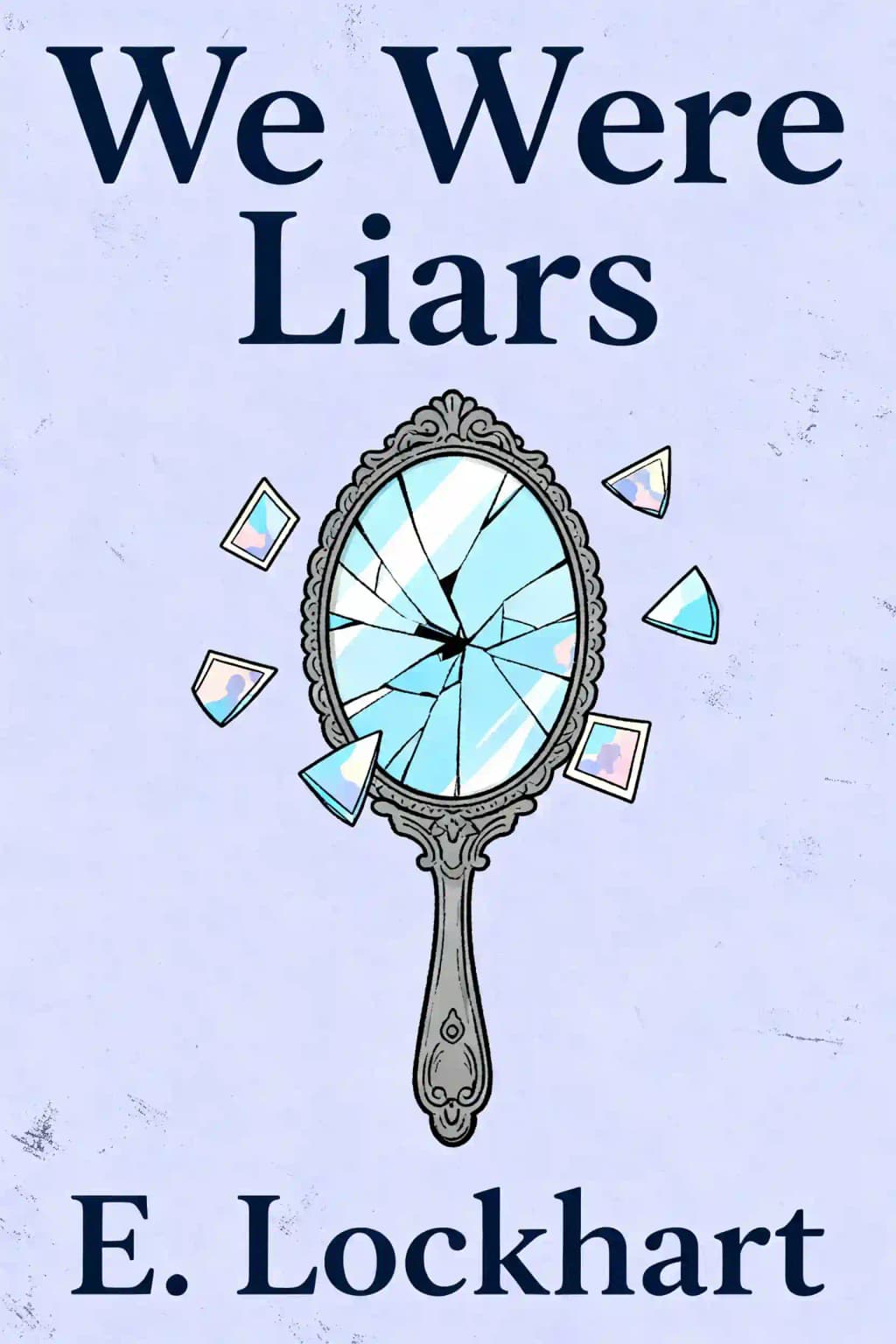
"We Were Liars" has captivated millions with its shocking twist ending that leaves readers gasping. Since its 2014 publication, E. Lockhart's psychological thriller has become a TikTok sensation, with the hashtag #WeWereLiars amassing over 85 million views as readers document their emotional reactions to its devastating conclusion. Taylor Swift reportedly named it among her favorite books, helping propel it to bestseller status nearly a decade after publication. The novel's exploration of wealth, privilege, and family dysfunction resonates deeply with readers across generations. Its deceptively simple prose masks complex themes of memory, guilt, and the destructive power of entitlement. Through the unreliable narration of Cadence Sinclair, Lockhart crafts a modern Gothic tale that forces us to question how well we truly know ourselves and those we love.
第2章
The Sinclairs: A Dynasty Built on Appearances
The Sinclair family embodies American aristocracy-old money Democrats with perfect smiles, athletic builds, and a carefully maintained facade of perfection. "No one is a criminal. No one is an addict. No one is a failure," our narrator Cadence tells us, establishing the family mythology from the outset. Behind closed doors, however, lurk divorces, financial troubles, addiction, and desperate attempts to maintain status.
The family patriarch, Harris Sinclair, presides over his private island off the coast of Massachusetts where his three daughters-Penny, Carrie, and Bess-summer with their children in separate houses: Windemere, Red Gate, and Cuddledown. Despite his disappointment at having no sons to carry on the Sinclair name, Harris built an empire for his "sunburnt and blessed" daughters who were raised to be "tall, merry and rich" like princesses.
At the center of this dynasty is Cadence Sinclair Eastman, our seventeen-year-old narrator and Harris's eldest grandchild. Once blonde, athletic and beautiful, Cadence now appears sickly with dyed black hair, suffering from debilitating migraines following a mysterious "accident" during her fifteenth summer on Beechwood Island. Her father abandoned the family when she was fifteen, unable to maintain the Sinclair facade of perfection any longer. As she tells us, "He couldn't smile, couldn't lie" as part of that beautiful family.
The heart of the story revolves around "the Liars"-Cadence, her cousins Johnny and Mirren, and Gat Patil, the nephew of Aunt Carrie's partner Ed. Though not a blood relative, Gat has spent summers with the Sinclairs since age eight, forming an inseparable bond with the other three. Their friendship represents the only authentic relationship in a family built on pretense and manipulation.
第3章
Summer Fifteen: Love and Disillusionment
During summer fifteen, Cadence falls deeply in love with Gat, their relationship unfolding with the dreamy intensity unique to adolescent romance. Their days flow together in a series of intimate moments: walking the perimeter path lined with wild pink beach roses, reading poetry and novels side by side on sun-warmed rocks, sharing whispered conversations in swaying hammocks as salt air drifts around them. They exchange books - Gat introduces her to Salinger and Baldwin, while she shares her beloved Bronte and Plath. "We understood each other. All the way," Cadence reflects, capturing the profound connection of first love, where every shared glance feels weighted with meaning.
Yet their romance exists within the complicated dynamics of privilege and prejudice that permeate Beechwood Island. Gat, with his "deep brown skin and black wavy hair," carries a constant awareness of his outsider status within the predominantly white, wealthy Sinclair family. Though welcomed as a summer guest through his uncle's relationship with Aunt Carrie, the subtle markers of exclusion accumulate: the way conversations shift when he enters rooms, the careful politeness that never quite warms to true acceptance. Harris Sinclair's refusal to call him by name, addressing him only as "young man," becomes a recurring wound - seemingly casual but deliberately reinforcing his position as an outsider to the Sinclair legacy.
The summer's emotional landscape is further complicated by the recent death of Tipper Sinclair, Harris's wife and the family matriarch. Her absence haunts Clairmont house like a ghost - her belongings frozen in time as if awaiting her return. Her monogrammed soap still sits in crystal dishes, her carefully tended gardens continue blooming, her wooden spoons hang in their precise places, and her meticulously pressed cloth napkins remain folded in drawers. The family maintains an unspoken agreement to avoid mentioning her name, just as they've erased all reference to Cadence's father following the divorce. Only Gat, unbound by Sinclair traditions of selective memory, dares to naturally reference the departed, causing Cadence to metaphorically "bleed from her veins" while the family maintains their practiced composure.
As the summer progresses, the perfect Sinclair facade begins to show deepening cracks. The three Sinclair daughters - Penny, Carrie, and Bess - reveal themselves as middle-aged women trapped in patterns of dependency, completely reliant on their father's financial support and approval. They engage in increasingly desperate competitions for Harris's favor, each hoping to secure a larger portion of his estate. Their struggles manifest in bitter arguments over their mother's jewelry and artwork, manipulative attempts to position their children as the most deserving grandchildren, and escalating alcohol consumption that barely masks their mounting anxieties. Wine appears at lunch, cocktails start earlier each afternoon, and empty bottles accumulate as the sisters attempt to maintain their composure while their carefully constructed world begins to unravel.
第4章
The Accident: Memory and Mystery
Late July of summer fifteen transforms Cadence's life irreversibly when she's discovered in a state of severe distress on Beechwood Island's tiny beach. Local workers find her curled into a fetal position, half-submerged in the frigid Atlantic waters, her body wracked with violent shivers. Her long hair is tangled with seaweed, her skin pale and bluish. The memory of the incident exists only in disconnected fragments: the sensation of plummeting through dark waters to the rocky seafloor, glimpsing the granite foundation of Beechwood Island looming above, experiencing a peculiar numbness in her limbs while her fingers register the shocking cold, and watching ribbons of seaweed drift past as she descended into the depths.
The immediate aftermath involves a rushed hospital stay where medical professionals struggle to piece together what happened. They treat her for severe hypothermia, addressing concerning respiratory issues that suggest near-drowning. The suspected head injury proves particularly troubling, as despite multiple brain scans and neurological tests, doctors can't pinpoint specific damage, leaving them with inconclusive results and troubling questions.
Six weeks post-accident, Cadence begins experiencing migraines of devastating intensity. Her descriptions are haunting and visceral: "A truck rolling over the bones of my neck and head. The vertebrae break, the brains pop and ooze. A thousand flashlights shine in my eyes. The world tilts." These episodes leave her incapacitated for days, resistant to conventional treatments. After consulting numerous specialists and trying various medication combinations, doctors finally settle on a diagnosis of post-traumatic headaches (PTHA) resulting from traumatic brain injury, though the exact cause remains shrouded in mystery.
The physical trauma, however, pales in comparison to the emotional devastation that follows. Gat's complete silence in the aftermath cuts deeper than any physical wound. Cadence compulsively drafts emails to Johnny, seeking information about Gat's whereabouts and feelings, only to delete them in moments of self-doubt and embarrassment. The conclusion she draws - "Gat bailed when I got hurt" - becomes a mantra of pain and abandonment that haunts her recovery.
The accident creates a profound two-year separation from Beechwood Island and its summer community. During summer sixteen, her father orchestrates a European tour, effectively preventing her return to the island. Though she maintains a facade of normalcy through cheerful emails to her cousins, their consistent lack of response speaks volumes. Meanwhile, her academic performance plummets as she struggles with concentration and memory issues. Once-close friendships wither under the strain of her mysterious condition, leaving her increasingly isolated and questioning everything she thought she knew about her relationships and identity.
第5章
Return to Beechwood: Searching for Truth
When Cadence finally returns to Beechwood for summer seventeen, she's shocked to discover Clairmont house completely gone-replaced by a sleek modern glass and iron structure with a Japanese garden. The beloved hundred-year-old maple tree with its tire swing has vanished. This physical transformation mirrors the emotional changes in her family.
The Liars-Johnny, Mirren, and Gat-greet her enthusiastically, but something feels off. They've taken over Cuddledown while Bess and her younger children have moved to New Clairmont with Granddad. The Liars declare they won't attend family meals, preferring to isolate themselves at Cuddledown.
Cadence's feelings for Gat remain complicated. She's still angry about his disappearance after her accident, yet melts when he touches her face and holds her hand "like he did two summers ago beneath the stars." Their relationship remains tentative, filled with unspoken questions and lingering hurt.
Determined to recover her lost memories, Cadence creates a wall of graph paper in her room at Windemere, documenting fragments: s'mores, swimming, Mirren's chipped nail polish, her mother asking about black pearls, Johnny running to the boathouse, Granddad by a bonfire, and all four Liars laughing together. She adds questions: Why was she swimming alone? Where were her clothes? Was she actually injured some other way? What happened with Gat?
As Cadence spends time with the Liars, she notices strange behaviors. Mirren rarely leaves Cuddledown, claiming a persistent cold. Johnny watches British comedies and invents pointless games. Gat works through classic novels, marking them with sticky notes. Cuddledown falls into disarray with dirty dishes, unmade beds, and broken glass attracting flies on the porch.
第6章
The Beautiful Sinclair Family's Ugly Truth
Through recovered memories and increasingly painful conversations, Cadence gradually uncovers the toxic dynamics festering beneath her family's polished exterior. During summer fifteen, the Sinclair daughters' carefully maintained facade crumbled as they fought viciously over their mother's possessions - from valuable antique furniture to seemingly trivial items like serving spoons and photograph albums. The battles extended beyond objects to their father's massive estate, with each sister convinced she deserved the largest share.
At a pivotal family dinner that summer, Harris Sinclair demonstrated his masterful manipulation of his daughters. When they challenged his authority, he calmly announced his intention to leave a substantial portion of his fortune - estimated at over $20 million - to Harvard University rather than his children. The threat sent shockwaves through the family, revealing how completely he controlled their lives through financial leverage.
Cadence's growing awareness of her family's dysfunction crystallizes as she realizes that despite their prestigious educations and seemingly endless opportunities, her mother and aunts remain trapped in a state of perpetual dependence. Living off dwindling trust funds, none of the sisters has developed the skills or confidence to support themselves independently. In their forties, they still behave like "little girls, trying to get in good with Daddy," competing for his approval while contributing nothing meaningful to society. Their beautiful homes and expensive lifestyles mask an essential hollowness.
The family's deeply ingrained racism becomes increasingly apparent through their treatment of Gat and his uncle Ed. While the Sinclairs maintain a veneer of liberal acceptance, their actions reveal their true prejudices. Gat shares the painful story of his uncle's failed proposal to Carrie - a relationship destroyed when Harris made it clear her inheritance would vanish if she married a man of Indian descent. "Harris doesn't like Ed's color. He's a racist bastard, and so was Tipper," Gat tells Cadence with quiet bitterness, though he acknowledges their superficial generosity in continuing to invite him to their summer haven.
The facade finally shatters during a charged family lunch at Clairmont. After several glasses of wine, Cadence's mother Penny launches into a bitter tirade about unfair treatment compared to her sisters, threatening to permanently remove Cadence from the family fold. Harris responds with thunderous fury, invoking sacred Sinclair family values - work ethic, tradition, and appearances above all. He condemns his daughters for their divorces, their "wasteful" spending, and their "disrespect for tradition," refusing to guarantee their future "financial security." The explosive argument ends in chaos: Bess dissolving into tears, Carrie storming off with her son Will, and Penny violently hurling her crystal wineglass against the pristine white walls of Clairmont, leaving a blood-red stain that seems to mock the family's pretense of perfection.
第7章
The Shocking Truth Revealed
As summer seventeen progresses, Cadence's memories gradually return. She recalls being in the Martha's Vineyard hospital after her accident, noticing her hands and feet were bandaged-not from swimming, but from burns.
The devastating truth finally emerges: two summers ago, Gatwick Patil, Mirren Sheffield, and Jonathan Dennis died in a house fire at Clairmont. The fire was allegedly caused by overturned boat fuel, though Harris Sinclair declined any formal investigation. Cadence was present but only noticed the fire after it was underway, sustaining burns while attempting rescue. She developed selective amnesia about the events, believing she'd injured herself swimming.
The Liars Cadence has been interacting with all summer aren't real-they're ghosts or figments of her imagination, helping her process her guilt and grief. The reality is even more horrifying: Cadence and the Liars planned to burn Clairmont as an act of rebellion against the family's dysfunction. They were drunk on wine and convinced themselves they were doing something heroic-"taking down the patriarchy" and forcing the family to change.
Their plan went terribly wrong. Cadence soaked the kitchen first instead of last, making a critical error in their escape plan. After lighting the study, she heard screaming from upstairs where Johnny was working. The back door was stuck, forcing her to run through flames to the mudroom exit. Outside, she couldn't find the others. She checked the boathouse and Cuddledown, but no one was there. When she returned to the burning Clairmont, she couldn't save Gat, Johnny, or Mirren-the basement stairs were a wall of flames, and the upper stairwell collapsed.
In addition to her beloved friends, the family's golden retrievers, Fatima and Prince Philip, died in the fire. Granddad had shut them in an upstairs bedroom before leaving the island, and the Liars never thought about them during their plan. This realization compounds Cadence's guilt and horror at what she's done.
第8章
Living with the Aftermath
The full weight of Cadence's actions crushes her as she catalogs her fatal mistakes: soaking the kitchen first, over-wetting the books, not setting a specific time to light the fires, not staying together. She killed her darlings-Mirren, Johnny, and Gat-when all she wanted was a life free of constriction and prejudice.
She mourns each of her lost Liars individually: Johnny who wanted to run marathons and eat fancy cakes; Mirren who dreamed of seeing the Congo and having a yellow-rose wedding; and Gat, her brave, thoughtful Gat with his hungry mind who will never finish the hundred best novels or become the great man he might have been.
At Cuddledown, Johnny appears one last time and tells Cadence they can't stay much longer-it's getting harder for all of them, especially Mirren. When asked where they'll go, Johnny explains it's like "a rest" or "nothing," admitting he's tired and just wants to be done. After tearful goodbyes-Mirren advising "Be a little kinder than you have to" and Johnny hugging her quickly-Gat kisses Cadence one last time. The three Liars run into the sea, swim past the cove into the open ocean, dive beneath the bright water, and disappear, leaving Cadence alone on Beechwood Island.
In the aftermath, Cadence must learn to live with her guilt while the family rebuilds around her. Ed returns to the island, suggesting some healing in the family's racial attitudes. Using a Sharpie, Cadence writes Mirren's parting words on her hands-left: "Be a little", right: "Kinder"-a simple but profound philosophy to guide her forward.
第9章
The Cost of Privilege and the Weight of Truth
"We Were Liars" ultimately reveals itself as a devastating examination of privilege, self-deception, and the destructive power of family dysfunction. The Sinclair family's obsession with appearances and material wealth creates a toxic environment where authentic connection becomes impossible. Their refusal to acknowledge pain or imperfection-"We do not discuss our problems in restaurants. We do not believe in displays of distress"-leads to catastrophic consequences. This mantra, repeated throughout the novel, serves as both shield and prison for the family members, trapping them in cycles of denial and emotional suppression.
The novel's unreliable narration brilliantly mirrors Cadence's fractured psyche and selective amnesia. As readers, we experience her confusion and gradual awakening to the truth alongside her. Small details that initially seem insignificant-the way other characters avoid certain topics, the gaps in conversation, the strange reactions to innocent questions-become increasingly meaningful as the story progresses. The fairy tales interspersed throughout the narrative provide metaphorical commentary on the family's dynamics-kings with three beautiful daughters, mice rejected by royal families, and the consequences of greed and prejudice. These stories serve as dark parallels to the Sinclair family's own saga, each one illuminating different aspects of their dysfunction and the price of their privilege.
In the end, Cadence identifies herself with brutal clarity: "Cadence Sinclair Eastman from Burlington, Vermont, nearly eighteen, owning few possessions and acknowledging herself as the perpetrator of a foolish, deluded crime that became a tragedy." The stark simplicity of this confession stands in sharp contrast to the elaborate facades maintained by her family. She fell in love with Gat, whose death, along with Johnny and Mirren's, becomes the central wound around which the entire narrative revolves. Despite her debilitating migraines and overwhelming guilt, she endures, carrying the weight of her actions and their consequences.
Through Cadence's journey, Lockhart delivers a powerful message about the importance of honesty, the danger of entitlement, and the possibility of redemption through acknowledging our mistakes. The novel explores how wealth can become a prison, how family loyalty can twist into something toxic, and how the pressure to maintain appearances can lead to devastating choices. The story demonstrates how privilege operates not just as an advantage but as a burden that can warp perception and judgment. The novel suggests that true healing begins only when we strip away pretense and face the uncomfortable truths about ourselves and those we love. For the Sinclair family, this lesson comes at an unimaginable cost-three young lives full of promise and potential, sacrificed on the altar of privilege and appearance. Their tragedy serves as a stark warning about the price of denial and the vital importance of confronting reality, no matter how painful it might be.
第10章
The Power of Memory and the Possibility of Redemption
Memory serves as both villain and savior in "We Were Liars." Cadence's selective amnesia initially protects her from the unbearable truth of her actions, but ultimately prevents her from processing her grief and guilt. Only by recovering these painful memories can she begin to heal.
The novel's structure-with its fragmented timeline, fairy tale interludes, and unreliable narration-mirrors the way trauma disrupts our sense of continuity and self. Cadence's journey toward wholeness requires integrating these painful fragments into a coherent narrative she can live with.
In giving away her possessions, Cadence unconsciously attempts to atone for her role in the tragedy. This symbolic shedding of material wealth represents her rejection of the Sinclair values that contributed to the disaster. While her mother believes "whoever dies with the most stuff wins," Cadence recognizes the emptiness of this philosophy.
The novel ends not with complete resolution but with the possibility of moving forward. Cadence will never escape the consequences of her actions, but she can choose to live by Mirren's final advice: "Be a little kinder than you have to." This simple philosophy stands in stark contrast to the Sinclair family mottos like "Never take a seat in the back of the room" and "Never complain, never explain"-competitive, appearance-focused values that prioritize success over compassion.
Through Cadence's devastating experience, Lockhart delivers a powerful warning about the dangers of privilege without purpose and wealth without wisdom. The true tragedy of the Sinclair family isn't just the deaths of three young people but the wasted potential of lives devoted to maintaining appearances rather than making meaningful contributions to the world. In this way, "We Were Liars" transcends its thriller elements to become a profound meditation on what truly matters in a life well lived.
第11章
The Lingering Questions of Identity and Truth
"We Were Liars" leaves readers with lingering questions about identity and truth. Who are we when our memories fail us? How do we reconcile our self-image with our actions? Can we ever truly know ourselves or those we love?
Cadence's journey suggests that identity isn't fixed but constantly evolving through our choices and relationships. Despite her traumatic brain injury and selective amnesia, she ultimately finds her way back to herself by confronting the truth of her actions. Her final self-identification-"I endure"-speaks to the resilience of the human spirit even in the face of unimaginable guilt and loss.
The novel's title takes on multiple meanings as the story unfolds. The Liars-Cadence, Johnny, Mirren, and Gat-lie to themselves about the righteousness of their destructive plan. The Sinclair family lies about their perfect facade. Cadence lies to herself about what really happened that summer. Even the narrative itself lies to readers, withholding crucial information until the devastating conclusion.
Yet within these layers of deception, authentic moments of connection shine through-Gat and Cadence's conversations about faith beneath the stars, the Liars' picnics on the Cuddledown roof, Mirren's final advice about kindness. These moments suggest that while truth may be painful, it's essential for genuine human connection.
In the end, "We Were Liars" asks us to consider what we would burn down to preserve what we love, and whether such destruction can ever lead to renewal. For Cadence and the Liars, the answer is a devastating no-their attempt to save their summer idyll through destruction only ensured its permanent loss. The novel leaves us with the sobering reminder that some actions cannot be undone, some losses cannot be recovered, and some truths, once faced, must simply be endured.