第1章
The Silent Rulebook That Makes or Breaks Engineering Careers
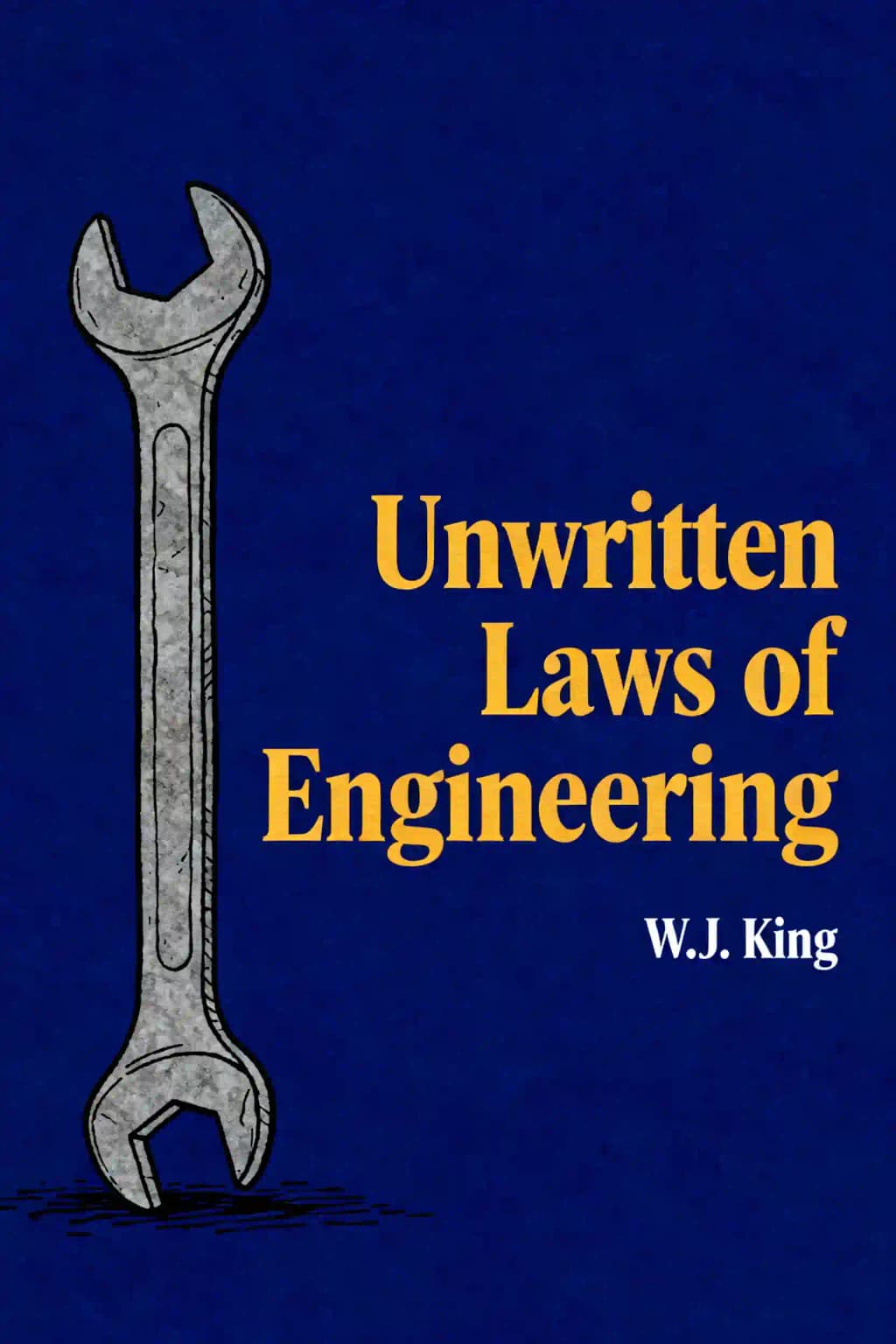
When W.J. King published "The Unwritten Laws of Engineering" in 1944, he created what would become an enduring classic that has shaped generations of engineers. Originally appearing as three articles in Mechanical Engineering magazine, this concise volume has been described by Microsoft's Bill Gates as "a book I'd recommend to every engineer." What makes this work so remarkable is its focus not on technical formulas or design principles, but on the human side of engineering-the professional conduct, workplace dynamics, and leadership qualities that determine whether a technically competent engineer will truly succeed.
The book's enduring relevance speaks to a fundamental truth: while technical skills may get you hired, it's your professional behavior that determines how far you'll go. In engineering schools across America, students learn calculus and thermodynamics, but rarely do they receive formal instruction in how to navigate office politics, manage relationships with supervisors, or lead teams effectively. King's work fills this critical gap, offering wisdom that remains as applicable in today's digital workplaces as it was in the manufacturing environments of the 1940s.
第2章
Mastering the Fundamentals: How New Engineers Can Start Strong
The transition from academic achievement to professional success often catches new engineers by surprise. Many discover that their technical prowess-the very thing that defined their identity through years of education-is merely the price of admission in the professional world. What separates the rising stars from those who stagnate often has little to do with technical ability.
One of the most counterintuitive lessons for newcomers is the importance of excelling at seemingly trivial assignments. Many young engineers consider minor tasks beneath their dignity and education, expecting to prove themselves through major enterprises. However, your approach to humble tasks will be carefully observed and may determine your career trajectory. Rather than worrying about strategic positioning, focus on excelling at your current responsibilities. Success largely depends on personality, ability, and vigorous execution of any job. Doing excellent work on minor details offers better advancement prospects than mediocre performance in leadership roles.
Equally important is developing what King calls "the ability to get things done"-a quality combining initiative (energy to start and aggressiveness to maintain momentum), resourcefulness (finding ways to achieve results), and persistence (persevering despite difficulties). Many brilliant engineers lack this final quality, earning reputations as "good starters but poor finishers" who enthusiastically begin projects only to abandon them for new ideas.
New engineers must also learn to be proactive rather than passive. Projects progress in direct proportion to follow-up and expediting. When facing obstacles, immediately seek workarounds to maintain momentum. However, balance is crucial; overzealous individuals can become obnoxious with excessive pestering. Develop the habit of confirming instructions and commitments in writing, as most people take written requests more seriously.
Another essential habit is the "let's go see!" attitude. When people approach you with problems regarding equipment, an effective response is inviting them to investigate together. Remaining at your desk speculating about causes or retreating to documentation is rarely adequate. Solving problems requires insight developed through first-hand observation of subtle and complex issues that cannot be merely imagined.
Communication skills prove surprisingly crucial for technical professionals. Strive for conciseness and clarity in oral and written reports. Many engineers surround answers with so many preliminaries that their main point gets lost. The key is stating the essence succinctly first, then adding relevant background. Use the "inverted pyramid" approach: start with the most important fact-often the conclusion itself-then progressively broaden with supporting details.
第3章
Navigating the Supervisor Relationship: The Make-or-Break Dynamic
Perhaps no relationship has a greater impact on an engineer's early career than the one with their direct supervisor. This dynamic requires careful navigation of sometimes contradictory principles.
First, recognize that every manager must know what happens in their domain. One of your primary obligations is keeping your supervisor informed of all significant developments. While overdoing it is possible, managers typically struggle to extract enough information to stay adequately informed. It's safer to risk your supervisor saying "Don't bother me with so many details" than "Why doesn't anyone tell me these things?" Remember, your manager must account for, defend, and explain your activities to others.
When technical difficulties inevitably arise, present them promptly along with potential solutions. No manager likes surprises, but solid recommendations will significantly improve difficult situations. Though you work for society, the company, your team, and yourself, you primarily work through your direct supervisor. When conflicts arise-such as demands from project leaders or executives-discuss them with your supervisor, as resolving such conflicts is part of their job.
For new engineers, senior colleagues-especially their direct supervisor-significantly shape their professional character. Like apprentices learning from master craftsmen before universities existed, you should use experienced colleagues as mentors. A good mentor who has faced similar challenges can guide you through difficulties more easily than you could navigate alone.
Whatever your supervisor wants done takes top priority. Even if you believe you have more important tasks, it's unwise to prioritize other projects above specific assignments from your supervisor without permission. Your boss typically has good reasons for wanting something done immediately, and these visible assignments often impact your performance rating more than less conspicuous projects that might seem more urgent.
When given a specific task, you have only two acceptable responses: do exactly what was requested, or return to discuss it further. It's unacceptable to either ignore the task or do something different instead. If new information suggests the original plan isn't worthwhile, discuss your concerns and intentions so your manager can reconsider.
However, this doesn't mean blind deference. Some young engineers show excessive deference, constantly seeking minute directions, surrendering all initiative, or persisting with plans even after they've proven infeasible. Generally, programs from management are proposals rather than edicts-guidelines formulated without the benefit of information discovered during execution. Keep others informed of your progress at reasonable intervals, and seek approval for well-considered deviations you've developed.
第4章
Building Effective Workplace Relationships Beyond Your Department
Engineering work rarely happens in isolation. Your ability to collaborate across organizational boundaries often determines your effectiveness and reputation. Success in modern organizations requires building a network of productive relationships spanning multiple departments, from operations and finance to marketing and customer service.
Never invade the domain of any other department without the knowledge and consent of the manager in charge. This common offense causes endless trouble, particularly regarding: employing someone else's subordinate without permission (such as asking an IT specialist to help with your project directly); committing someone from another department to a project without notifying their manager (like promising marketing support without consultation); making promises to customers that involve other departments (for example, guaranteeing delivery schedules without checking with logistics); or performing functions assigned to others (such as bypassing quality control processes). These violations cause resentment, foster confusion, and typically mean you're neglecting your own responsibilities.
In all transactions, be careful to "deal in" everyone who has a right to be involved. In large organizations, it's easy to overlook stakeholders when taking significant steps, often requiring backtracking or causing damage. For instance, implementing a technical change without consulting maintenance teams or modifying a process without involving safety personnel can have serious consequences. Even when no apparent harm results, people dislike being excluded from matters affecting them, potentially harming morale. During crises, you may need to proceed without perfect coordination, but doing so regularly creates problems and erodes trust between departments.
As a beginning engineer, you cannot possibly know everything about your field and employer's business. Therefore, regularly seek help from others, particularly those with more experience and knowledge in relevant areas. This might include consulting senior engineers about technical decisions, seeking input from finance about project budgets, or getting guidance from legal about compliance issues. When facing confrontation, start by asking "What do you recommend?" This approach shows respect for others' expertise and opens dialogue. But be warned: if you ask for opinions with no intention of considering them, your colleagues will quickly recognize such patronizing behavior and lose respect for you.
When dissatisfied with another department's service, make your complaint to the individual most directly responsible for the function involved. For example, if you're having issues with procurement delays, speak first with the procurement specialist handling your orders, not their manager. Complaining over someone's head to their supervisor creates strong resentment and damages working relationships. First give the responsible individual a fair chance to address your concerns. Similarly, copying a person's supervisor on a complaint document can be nearly as offensive, as it implies a lack of trust in their ability to handle the situation.
In dealing with customers and outsiders, remember that you represent the company, ostensibly with full responsibility and authority. Even as a recent college graduate, outsiders will view you as a legal, financial, and technical agent of your company in all transactions. Be careful about the commitments you make - whether they're delivery dates, technical specifications, or resource allocations. Always ensure you have proper authorization and understanding of your company's capabilities before making promises to external parties.
第5章
The Art of Engineering Management: Beyond Technical Expertise
Engineering management requires a distinct set of skills beyond technical competence. The transition from individual contributor to manager represents one of the most challenging career shifts many engineers face.
The fundamental principle of management is knowing what happens in your domain. While you shouldn't micromanage minor details, the more information managers have, the more effectively they can manage their business. At the same time, don't try to do everything yourself. Delegate responsibility even if you could handle everything personally. It's unfair to subordinates and creates a dangerous dependency on you. Good executives organize their business to run smoothly even during their absence.
With limited time, concentrate on what you're directly responsible and accountable for. Delegate everything else possible. Never undertake minor projects that someone else could handle. Draw upon all available resources and expertise, limiting yourself to functions where you bring special talent or advantage. The belief that anyone can do anything with enough effort leads to inefficiency or failure.
Cultivate the habit of "boiling matters down" to their simplest terms. The ability to reduce complicated situations to their essential elements is a form of wisdom. Make it a practice to integrate, condense, summarize and simplify rather than expand, ramify, complicate and disintegrate. This mental discipline of getting to the heart of matters is invaluable for executives.
Decision-making becomes easier with practice and by following key principles: gather essential facts; develop guiding principles in advance; accept that you don't need to be right every time (just 51% of the time); recognize that difficult decisions often mean the alternatives are balanced, making prompt action more important than perfection; and accept you can't keep everyone happy. When factors are indecisive, ask if the action expedites progress, is ethical, aligns with policy or previous decisions, and evaluate the risk-reward balance.
When time permits, prepare the ground for major announcements by discussing matters in advance with key personnel and interested parties. This diplomatic approach, though elementary in political procedure, is often ignored in engineering practice. Failing to consult those directly affected by a major change or new policy can cause embarrassment and bad feelings that could have been avoided.
第6章
Managing Engineering Projects: From Concept to Completion
Project management requires specific skills and techniques to effectively plan work and execute that plan. The standard formula for engineering projects includes defining clear, measurable objectives, creating detailed work breakdowns, planning resources and timelines, executing the plan methodically, monitoring progress through established metrics, and driving to completion on schedule. Success depends on maintaining rigorous documentation and establishing clear communication channels among team members.
Design engineers managing development projects must overcome the natural tendency to focus on their own expertise while neglecting other aspects. This "technical tunnel vision" can lead to project failures despite excellent engineering work. Successful project management requires foresight to plan the "whole" project early, considering all stages from initial design through market delivery. Even seemingly remote elements like inventory planning, regulatory approval, user instructions, and promotional materials are as crucial to product development success as engineering design and assembly fixtures. For example, a brilliantly designed product may fail if user manuals are unclear or if regulatory compliance wasn't considered early enough in the process.
In a competitive world, excessive pursuit of security leads to greater danger. Engineering managers must undertake bold development programs, setting high marks and working aggressively to meet them. This might mean pursuing cutting-edge technologies, challenging conventional timelines, or reimagining traditional approaches. Competent organizations will rise to challenges under pressure, often producing their best work when pushed beyond comfort zones. Creating your own emergencies proactively is better than having competition force them upon you later. To minimize risk in aggressive programs, provide fallback alternatives wherever possible, allowing pursuit of bigger stakes while limiting potential losses. This might include developing parallel solutions, maintaining backup suppliers, or creating contingency plans for critical path items.
Knowing when to stop development is critical-generally when you've met design specifications and budget with just enough time to complete the program on schedule. Design engineers often chase one improvement after another, pursuing elusive perfection while missing commitments. This "feature creep" can derail project timelines and budgets. Remember that improvements will always continue, but it's better to launch on time with a product that meets specifications rather than delay for perfection. Consider implementing a formal change control process to evaluate the impact of proposed improvements against project constraints.
Regular reporting is essential for organizational control, compelling engineers to keep facts properly assembled and appraised. Reports should include not just technical progress but also budget status, resource utilization, risk assessments, and timeline updates. Reports serve both writers and readers equally, forcing critical thinking about project status while keeping stakeholders informed. Additionally, a project isn't truly finished until properly documented and filed where information can be readily accessed by all interested parties. This includes technical documentation, test results, design decisions, and lessons learned. While most organizations have clear policies on drawings and specifications, good development organizations also document engineering knowledge to prevent wasted effort and duplication. This knowledge management approach creates a valuable corporate asset that improves future project efficiency.
第7章
The Leadership Obligation: What Managers Owe Their Teams
Leadership isn't just about directing work-it's about developing people. The relationship between managers and their teams involves mutual obligations that extend beyond mere productivity.
Performance reviews demand absolute accuracy from managers. Misrepresentation is unfair to subordinates and unhelpful to everyone involved. Managers must address performance issues promptly when they arise, discussing deficiencies tactfully but directly. Waiting until termination becomes necessary raises legitimate questions about why problems weren't identified sooner or why the employee wasn't given a chance to improve.
Clear communication of expectations is the most essential element of supervisor-subordinate relationships. Managers who rely on implicit instructions, generalized goals, or corporate policies rather than direct discussions will often be disappointed. Successful management requires explicitly setting goals and expectations with subordinates, followed by consistent monitoring and support.
Supporting employees is both an obligation and privilege of management. Individual and company interests generally align, with company interests ultimately taking precedence when conflicts arise. Management's function is to reconcile these interests for mutual advantage. Companies benefit from preserving employee morale and loyalty, which are founded on confidence and develop when employees feel they receive fair treatment plus extra consideration when needed.
Though it's tempting to exercise direct authority to handle matters promptly, overriding your subordinates can be deeply demoralizing. Once you assign jobs to people, let them do those jobs, even at personal inconvenience. Reserve such interventions for genuine emergencies. Remember that exercising authority without sufficient knowledge of details can cause irreparable damage.
Responsibility without information ranks just below responsibility without authority in the catalog of raw deals. Don't expect engineers to perform creditably without adequate knowledge of a project's history, status, and future plans. Hold occasional meetings to share major policies and company developments. Provide ample background knowledge through travel opportunities and inclusion in meetings with visitors-these investments develop your engineers beyond their immediate contributions.
Never criticize a subordinate in front of others, especially their own subordinates. Public criticism damages both prestige and morale. Be careful not to criticize someone when the fault is actually yours-when you failed to properly advise, warn, or train them.
Your job isn't just to criticize and intimidate people into working. A first-rate manager leads as well as critiques. Help, advise, encourage, and stimulate your subordinates. Build up their prestige in others' eyes. That said, don't be perpetually lenient-an occasional sharp censure when deserved keeps employees alert, but constant criticism sours them on the job.
第8章
Character and Integrity: The Engineer's Most Valuable Assets
Emotional competencies-communication, interpersonal skills, self-control-play a far larger role in superior job performance than cognitive abilities and technical expertise, despite engineering education's emphasis on technical training. Intelligence and technical knowledge alone aren't major determinants of success. Engineers who would have been technically incapable typically get filtered out before employment.
One of the most valuable personal traits is the ability to get along with all kinds of people. This comprehensive quality is the prime requisite of personality in any industrial organization. While achievable through various approaches, it's primarily based on good-natured friendliness and observance of the "Golden Rule." Specific elements include: appreciating others' good qualities rather than shortcomings; controlling impatience and annoyance; avoiding grudges after honest disagreements; considering others' feelings and interests; not being selfishly preoccupied; helping others whenever possible; being consistently fair; maintaining a healthy sense of humor; being genuinely cordial; and giving people the benefit of the doubt.
However, don't try too hard to get along with everyone merely by being agreeable or submissive. Someone will eventually take advantage of you. Don't avoid necessary conflict by retreating when you know you're right. If you're easily pushed around, you will be. You earn respect by demonstrating readiness to engage in good (non-personal) fights when objectives warrant it.
In the long run, nothing is more important than self-respect. Beyond ethics and morals, integrity brings the invaluable business asset of confidence from others. When your word is your bond, transactions are simplified. Most striking is how transparent character becomes in an engineering office-people are quickly recognized for exactly what they are. As Emerson put it: "What you are thunders so that I cannot hear what you say to the contrary."
As an engineer, you can't hide behind your employer's shield or claim powerlessness when things go wrong. Despite the temptation toward inaction from fear of liability, you must act responsibly. Minimize liability by approaching engineering systematically, applying requisite expertise, following applicable codes and standards, using established procedures for design reviews, and keeping thorough records of all engineering activities.
While ethical behavior often comes naturally to engineers, many engineering dilemmas involve conflicting ethical principles. Have the courage to do what's technically and ethically right without undue fear of criticism. If your reasons are sound, you shouldn't worry about defending them. Yet be pragmatic-martyrdom rarely makes heroes, and in business, such martyrs often find themselves unemployed.
第9章
Professional Growth in a Changing World: Taking Charge of Your Career
Few engineers have a single employer for life, so don't become valuable only to your current company. Obsolescence hurts both employers and employees-it's costly to replace obsolete skills. Be an adherent of lifelong learning through formal training, reading professional publications, attending conferences, and staying current with technology. Don't wait for your employer to offer opportunities; take initiative, even if it requires personal time and expense.
People behave differently not because they want to, but because that's how they're wired. Recognizing these differences helps you accept varied personalities as normal, not wrong. When considering advancement, remember that increased responsibility isn't always appropriate-promoting a brilliant engineer to management may make them unhappy and less effective. Technical excellence doesn't guarantee managerial skill, and many find they no longer have time for the technical work they loved.
Your appearance profoundly influences how others view you. Follow three rules: observe how those in positions you aspire to dress and follow their lead; dress appropriately for each occasion (slightly overdressing is better than underdressing); and conservative styles are never wrong in engineering circles. Regardless of style, clothing should be clean and well-fitting, personal hygiene impeccable, and grooming well-maintained.
There's no place for harassment or discrimination in the workplace. Even subtle forms like "harmless" jokes can offend and cause trouble. When addressing such matters, handle them discreetly-whether as target or observer, you might approach the offender informally, but formal discipline should involve management or HR.
Be cautious about what you write and who receives it. Once issued, written communications escape your control-assume they might reach anyone and exist forever. Get higher approval before distributing sensitive content widely. Written expressions of anger, malice, disrespect or ridicule will be remembered long after you wish they'd been forgotten.
The principles presented in King's work are just one element in the formula for a successful engineering career. Regardless of your natural interest in these "rules of the game," taking time to contemplate and develop your own guiding principles will benefit your professional journey. Engineers seeking further professional effectiveness should study not only technical subjects but also professional and administrative topics. Remember that like scientific principles, these professional guidelines must be actively applied and developed in practice to become effective assets in your career.