第1章
Lead, Don't Follow: The Power of Tribal Connection
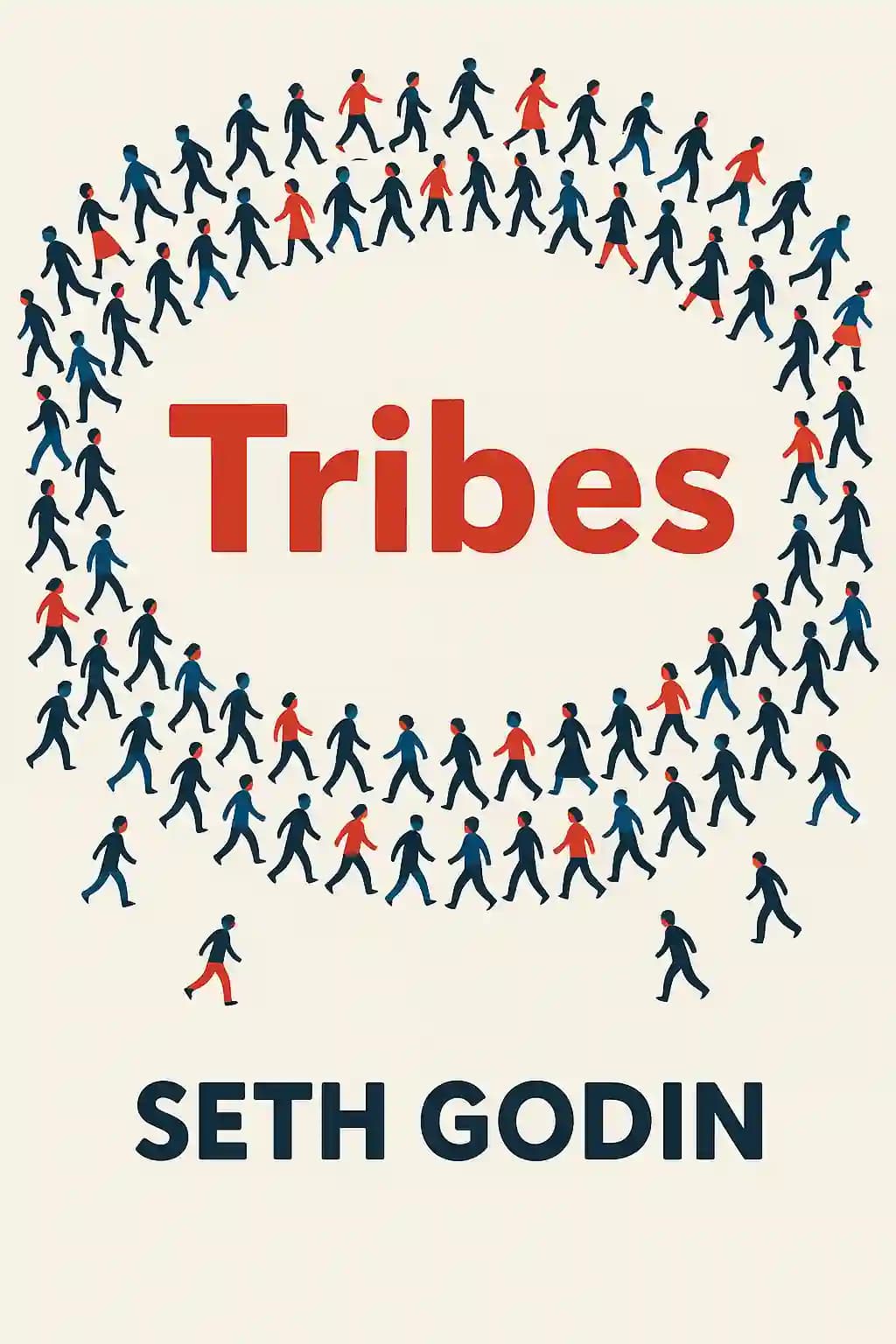
In a world drowning in marketing noise, Seth Godin discovered something revolutionary: people don't just want products - they want belonging. "Tribes" isn't just a business book; it's a manifesto for anyone ready to lead. Published during the 2008 financial crisis, this slim volume (only 151 pages) became Godin's fastest-selling book ever, proving its own thesis about how ideas spread.
Godin, whose blog attracts over a million readers monthly, challenges you to find your tribe - those passionate people waiting for someone to connect them. He dismantles the myth that leadership requires formal authority, showing how internet-enabled connections have created unlimited opportunities for those brave enough to step up.
What makes this book transformative is how it reframes leadership as an act of generosity rather than authority. You'll discover how to identify your tribe, craft a movement-worthy message, and overcome the fear that keeps most potential leaders silent. In Godin's world, the question isn't "can you lead?" but "what's stopping you from starting right now?"
第2章
The New Landscape of Leadership and Connection
The internet has fundamentally transformed how tribes form and function. Joel Spolsky, founder of Stack Overflow, exemplifies this new reality. With just a small software company and powerful ideas about managing programmers, he's created a global community that's reshaping how software is developed. His tribe isn't defined by geography or formal structure but by shared passion and ideas.
Similarly, the Grateful Dead provided a blueprint for tribal leadership decades before social media. They ignored traditional music industry metrics like album sales, instead focusing on creating profound experiences for their community. By allowing fans to record shows and fostering a culture of shared experiences, they built one of the most devoted tribes in music history.
The digital revolution has transformed how tribes communicate and organize. Tools like Twitter, blogs, and social platforms have made it easier than ever to connect people with shared interests and passions. These technologies enable instantaneous communication, allowing ideas to spread at unprecedented speed and scale.
Consider Gary Vaynerchuk's journey. Before becoming a social media superstar, he transformed his family's liquor store into Wine Library TV through simple YouTube videos. By sharing his authentic passion for wine in an accessible way, he created a thriving community of wine enthusiasts. Gary didn't rely on traditional marketing or credentials - he simply connected people through shared interest and genuine enthusiasm.
What's crucial to understand is that while technology enables these connections, the tools themselves aren't what create successful tribes. The fundamental human desire for connection and meaning drives tribal formation. Technology merely amplifies what's already within us - the need to belong and contribute to something larger than ourselves.
第3章
Leadership Beyond Authority
Leadership and management represent fundamentally different approaches to influencing organizations and people. Management focuses on administering existing systems, maintaining order, and ensuring predictable outcomes through established processes and controls. Leadership, by contrast, is about initiating change, challenging the status quo, and creating new possibilities that may not yet be visible to others. This distinction is crucial because organizations need both elements to thrive - management for stability and leadership for growth and adaptation.
One of the most liberating insights about tribal leadership is that it doesn't require formal authority or hierarchical power. Leadership emerges from passion, ideas, and the courage to act, not from titles or positions in a hierarchy. This democratization of leadership opens possibilities for anyone willing to step forward and take initiative. It suggests that leadership is more about behavior and mindset than about formal roles or organizational charts. Effective tribal leaders often emerge organically from within groups, recognized for their ability to articulate shared aspirations and mobilize collective action.
Thomas Barnett's story powerfully illustrates this principle. As a relatively low-level analyst at the Pentagon, he developed a revolutionary framework for understanding global security challenges in the post-Cold War era. Despite his modest position, his ideas gained traction because they offered fresh insights into complex problems. Through persistent advocacy and clear communication, his thinking eventually influenced military strategy at the highest levels. His leadership came not from rank but from the power of his vision and his ability to articulate it compellingly. Barnett's experience demonstrates how expertise, conviction, and the ability to connect with others can override traditional hierarchical limitations.
To create meaningful change, leaders must spearhead initiatives that resonate with their tribe's beliefs and values while also stretching the boundaries of what seems possible. While managers maintain order through systems and procedures, leaders exercise passion to inspire transformation and evolution. They understand that true influence comes not from commanding others but from empowering the collective drive for progress. This requires several key capabilities:
• The ability to read and understand the cultural dynamics of their environment
• Skill in building coalitions and fostering collaboration across boundaries
• Courage to challenge conventional wisdom when necessary
• Emotional intelligence to connect with and motivate others
• Persistence in the face of resistance and setbacks
Successful tribal leaders also recognize that their influence grows through service to the group's larger purpose, rather than through assertion of personal authority. They focus on creating environments where others can contribute their best work and feel ownership in the outcome. This approach builds sustainable momentum for change that extends far beyond what any single leader could achieve through formal authority alone.
第4章
The Power of True Believers and Deep Connections
Kevin Kelly's groundbreaking concept of "1,000 True Fans" fundamentally challenges traditional thinking about audience building and influence. Rather than chasing millions of casual followers, Kelly argues that success can be achieved by nurturing just 1,000 deeply committed supporters who would "buy anything you produce." These true fans represent more than just consumers - they become partners in your mission, actively championing your cause and investing both emotionally and financially in your success. For example, independent musicians often find greater sustainability through dedicated Patreon supporters than through streaming numbers, while authors can build thriving careers through committed reader communities rather than bestseller lists.
While physical accomplishments are tangible and often celebrated, tribes leave behind something more profound and enduring: connections between people. Organizations like the Acumen Fund demonstrate the multiplying effect of tribal networks, investing in social entrepreneurs who then create their own networks of change-makers. These connections grow exponentially stronger over time, creating self-reinforcing cycles of communication and impact. The result is what sociologists call "social capital" - the invisible but powerful web of relationships that can mobilize resources, share knowledge, and catalyze collective action far beyond what any individual could achieve alone.
Movements require three essential elements to thrive: a compelling story that resonates emotionally, strong connections between leaders and tribe members, and opportunities for unrestricted action. The story must tap into deep human desires and values, offering both a vision of what's possible and a clear enemy to overcome. Consider how Martin Luther King Jr.'s "I Have a Dream" speech provided both an inspiring vision and a clear moral imperative. The connections must be authentic and multi-directional, allowing for peer-to-peer relationships as well as leader-follower interactions. Finally, the movement must empower members to take meaningful action without excessive control or bureaucracy, trusting in their ability to advance the cause in their own unique ways.
It's crucial to distinguish between crowds and tribes, as they operate on fundamentally different principles. Crowds are temporary assemblages of individuals without lasting bonds or shared purpose - think of shopping mall visitors or concert attendees. They may share a momentary experience but lack the deeper connections and sustained commitment that characterize true tribes. Organizations often make the mistake of treating these groups similarly, but smart leaders recognize that tribes require different nurturing. While crowds might respond to short-term incentives or flashy marketing, tribes thrive on shared values, consistent communication, and meaningful participation opportunities. Companies like Harley-Davidson and Apple have masterfully created tribes around their brands, fostering communities where members find identity and belonging beyond mere product ownership.
The most successful movements understand that tribal connections must be actively cultivated and maintained. This involves regular communication, shared rituals or practices, and opportunities for members to contribute meaningfully to the group's mission. Leaders must balance providing direction while allowing organic growth and evolution within the tribe. They must also recognize that different members will engage at different levels - from casual participants to core evangelists - and create appropriate pathways for each level of involvement.
第5章
Breaking Free from the Factory Mindset
The factory model, which dominated organizational thinking for over a century, emerged as the cornerstone of industrial-age success by offering a compelling trinity: stability, steady jobs, and predictable profits. This model didn't just shape physical manufacturing-it became deeply embedded in how we think about work, education, and organizational structure. Companies like Ford and General Motors exemplified this approach, creating environments where workers could count on lifetime employment and clear career trajectories. This model attracted people seeking security and clear expectations, but it inherently lacks the dynamism and meaning that motivated tribes create.
The once-solid notion of factory jobs as secure and desirable has dramatically eroded. Mass layoffs at traditional industry giants, accelerating automation in sectors from manufacturing to customer service, and the rise of agile competitors have fundamentally transformed the economic landscape. Companies like Nokia and Kodak, once seemingly invincible, discovered that stability could become a liability. In times of rapid change and increasing individual leverage, the previous allure of stability loses its shine. Dream jobs now emphasize autonomy, creativity, and the capacity to make a personal impact-qualities exemplified by companies like Spotify, where autonomous teams drive innovation, or Tesla, where employees are encouraged to challenge conventional wisdom.
Fear stands as the towering barrier against innovation, manifesting in various forms: fear of failure, fear of criticism, and fear of disrupting established patterns. This persists despite overwhelming evidence that tribes reward creativity and that initiative leads to happiness and professional fulfillment. While uncovering a brilliant idea is relatively common-from new product concepts to process improvements-executing it courageously while facing potential criticism makes the crucial difference. History shows us that the world isn't changed by safe ideas; it's transformed by fearless heretics who boldly pursue their vision despite uncertainty. Consider how Brian Chesky and Joe Gebbia challenged the entire hotel industry with Airbnb, or how Sara Blakely revolutionized shapewear with Spanx, both facing initial skepticism and resistance.
Traditional management often aims to maintain the status quo, focusing on producing average products for average people. This approach thrived in stable environments by ensuring reliability and controlling costs-think of mid-market department stores or conventional fast-food chains. However, today's rapidly evolving market demands more than mediocrity, with tribes seeking products worth discussing and engaging with. Companies like Apple and Tesla demonstrate how breaking free from averageness can create extraordinary value and passionate customer bases. Average is no longer merely insufficient-it has become actively dangerous, signifying mediocrity in a world that rewards excellence. Many hardworking individuals exhaust themselves by defending the status quo instead of embracing the remarkable, failing to recognize that safety often lies in standing out rather than fitting in. The most successful organizations today, from Netflix to Patagonia, succeed not by playing it safe but by deliberately choosing to be exceptional in their chosen domains.
This transformation requires not just new business models but a fundamental shift in mindset-from seeking security through conformity to finding strength in distinctiveness and innovation. Organizations must recognize that the factory model's emphasis on predictability and standardization, while once revolutionary, now often serves as a barrier to the very qualities needed for success in today's dynamic environment.
第6章
The Heretic's Path to Innovation
Heretics possess the passion and power that most lack, all driven by a commitment to challenging norms and creating new possibilities. They galvanize their tribes through both private conviction and public engagement. Belief is their core strength, exemplified by visionaries like Steve Jobs, who eschewed mediocrity for monumental visions that transformed entire industries.
Curiosity stands as the hallmark of a true leader, pushing individuals to explore beyond established boundaries and conventional wisdom. Fundamentalism is not about religion but about rigidity - the unwillingness to question assumptions or consider new possibilities. Despite societal pressures to suppress questioning in favor of compliance, nurturing curiosity helps distinguish remarkable leaders from the mediocre masses.
In leading a tribe, motivating committed followers matters more than seeking approval from the majority. Successful leadership involves aligning with a tribe's worldview, rather than forcing change upon the disinterested. Leaders like Al Gore find their tribes not by converting skeptics, but by resonating with those already inclined to follow.
Heretics relish disrupting the status quo, finding excitement and reward in challenging norms. The fear of change is often unwarranted, as today's iconoclasts are celebrated, not persecuted. The daring spirit fosters innovation, proving that rebelling against the mundane yields both fun and potential profit. In a world that increasingly values originality, being a heretic can be both fulfilling and advantageous.
第7章
Faith, Vision, and Transformative Leadership
Settling for mediocrity is the path of least resistance, but it's not the path of leadership. Managers are often forced to settle due to competing demands, budget constraints, and organizational politics, while true leaders - the heretics and revolutionaries - refuse to compromise on their core values. The essence of leadership is knowing when to hold firm despite pressure to conform or compromise, even when facing significant opposition. This might mean standing alone initially, like Steve Jobs did when introducing the iPhone, or Elon Musk with electric vehicles, both facing intense skepticism from established industry players.
Challenging the status quo requires overcoming not just external resistance but also internal doubts and fears. This is where faith becomes crucial - not in a religious sense, but as an unwavering belief in possibility and potential. Faith propels leaders forward when data and conventional wisdom suggest retreat. While religion often reinforces existing structures and traditions, transformative leadership faith is about seeing beyond current limitations. Leaders succeed by believing in change and possibility, like Nelson Mandela's unwavering faith in a democratic South Africa, rather than by rigidly following established protocols or accepting conventional wisdom.
Leadership demands an underdog mindset, embracing courage to challenge the norm despite apparent disadvantages. This requires developing resilience and maintaining conviction even when faced with overwhelming odds. Extraordinary effort becomes crucial, driven by irresistible causes that compel action. Consider how Martin Luther King Jr. persisted despite enormous opposition, or how Mary Barra transformed General Motors' approach to electric vehicles despite initial resistance. True change-makers consistently go beyond the ordinary, taking brave, committed actions that others might consider unreasonable or unnecessary. They understand that breakthrough achievements often require breaking free from conventional thinking.
While thermometers merely point out problems by measuring current conditions, thermostats initiate and maintain change by setting direction and actively working to achieve desired outcomes. This distinction is crucial in organizational leadership. Companies like Amazon and Netflix thrive because they cultivate leaders who act as thermostats, continuously adjusting strategies and operations in response to market changes and future opportunities. These leaders create dynamic environments where innovation flourishes, ensuring their organizations not only adapt to change but actively shape industry trends. They understand that successful leadership isn't about maintaining the status quo but about catalyzing positive transformation through bold vision and persistent action.
The most effective leaders also recognize that transformation requires building coalitions and inspiring others. They excel at communicating their vision in ways that resonate with different stakeholders, creating momentum for change rather than merely mandating it. This involves developing emotional intelligence, strategic thinking, and the ability to translate big-picture goals into actionable steps that teams can embrace and execute.
第8章
Building and Sustaining Movements
Micromovements, bolstered by modern digital connectivity, have revolutionized how change occurs in organizations and society. These focused communities can now drive significant transformation without the traditional requirements of massive budgets or formal hierarchical authority. The key lies in their ability to mobilize passionate individuals around specific causes or innovations. Leaders must provide a clear, compelling manifesto that not only articulates their vision but also emotionally resonates with potential followers. This manifesto should address both the 'what' and the 'why' of the movement, creating a narrative that people can connect with personally and professionally.
The success of these movements depends heavily on three critical elements: authenticity in leadership and message, a strong sense of collective purpose that transcends individual gains, and clear differentiation from existing systems or approaches. For example, movements like Wikipedia succeeded not just because of their innovative approach to knowledge sharing, but because they offered a genuinely different model that challenged traditional encyclopedic publishing while maintaining authentic community involvement.
Risk management in movement building requires a paradigm shift in thinking. Counter-intuitively, playing it safe often increases risk in today's rapidly evolving landscape. Organizations that attempted to maintain traditional business models in the face of digital transformation, like Kodak with digital photography or Blockbuster with streaming services, demonstrate how avoiding risk can lead to obsolescence. The world's constant evolution means that the greatest risk lies not in taking calculated chances, but in maintaining rigid adherence to outdated approaches. Leaders must recognize that risk is not binary but exists on a spectrum where informed experimentation often provides better long-term security than conservative inaction.
Taking initiative serves as a powerful antidote to organizational paralysis caused by fear. Even seemingly modest actions can cascade into significant organizational changes through what sociologists call the "ripple effect." Barbara Barry's case provides an instructive example: by starting a simple newsletter, she created a communication channel that eventually transformed her workplace culture, improved cross-departmental collaboration, and inspired others to launch their own initiatives. This demonstrates how individual agency, when exercised thoughtfully, can catalyze broader organizational change.
The role of leadership in movement building extends beyond initial vision-setting to ongoing stewardship of engagement and communication. Effective leaders take full responsibility for ensuring their ideas and products are not just presented but truly understood and embraced by their audience. This means adapting communication styles, seeking feedback, and continuously refining the approach based on audience response. Instead of blaming others for misunderstandings or lack of engagement, true leaders ask themselves: "How can I present this more effectively?" or "What barriers to understanding have I failed to address?"
Furthermore, successful movement leaders prioritize sustainable progress over short-term profit or quick wins. They understand that building lasting change requires patient capital - both financial and social. This might mean slower initial growth in exchange for stronger foundation-building, or investing in community development before monetization. Companies like Patagonia have demonstrated how this approach can create both successful businesses and meaningful movements for change.
第9章
The Essence of Transformative Leadership
Leadership, akin to magic, is about experience rather than the mechanics of execution. The art of leadership is constructed around authentic connections and commitments, beyond just learning the tactics. It's something felt and lived rather than merely understood intellectually.
Messages need to resonate with the tribe's unique communication methods to spread effectively. Like the Rwandan tribes who spread ideas through song, leaders must enable tribes to communicate in ways that feel natural and authentic to them. The medium must match the message and the community.
Caring forms the core of a tribe. Without genuine concern for goals and members, a tribe fails to exist in any meaningful way. Authentic leadership stems from deep-seated care and commitment rather than technique or strategy. No amount of tactical skill can compensate for a lack of genuine caring about the tribe's purpose and people.
True leadership involves listening deeply and valuing input, yet not simply conforming to it. Decisions may go against popular opinion, but authentic listening builds trust and respect. The willingness to hear diverse perspectives doesn't diminish a leader's responsibility to ultimately chart the course.
Change is a gradual process nurtured by persistence rather than instant overnight success. Organizations demanding initial perfection hinder commitment and innovation. Effective leadership recognizes that transformation takes time and requires sustained effort and belief in the possibility of change.