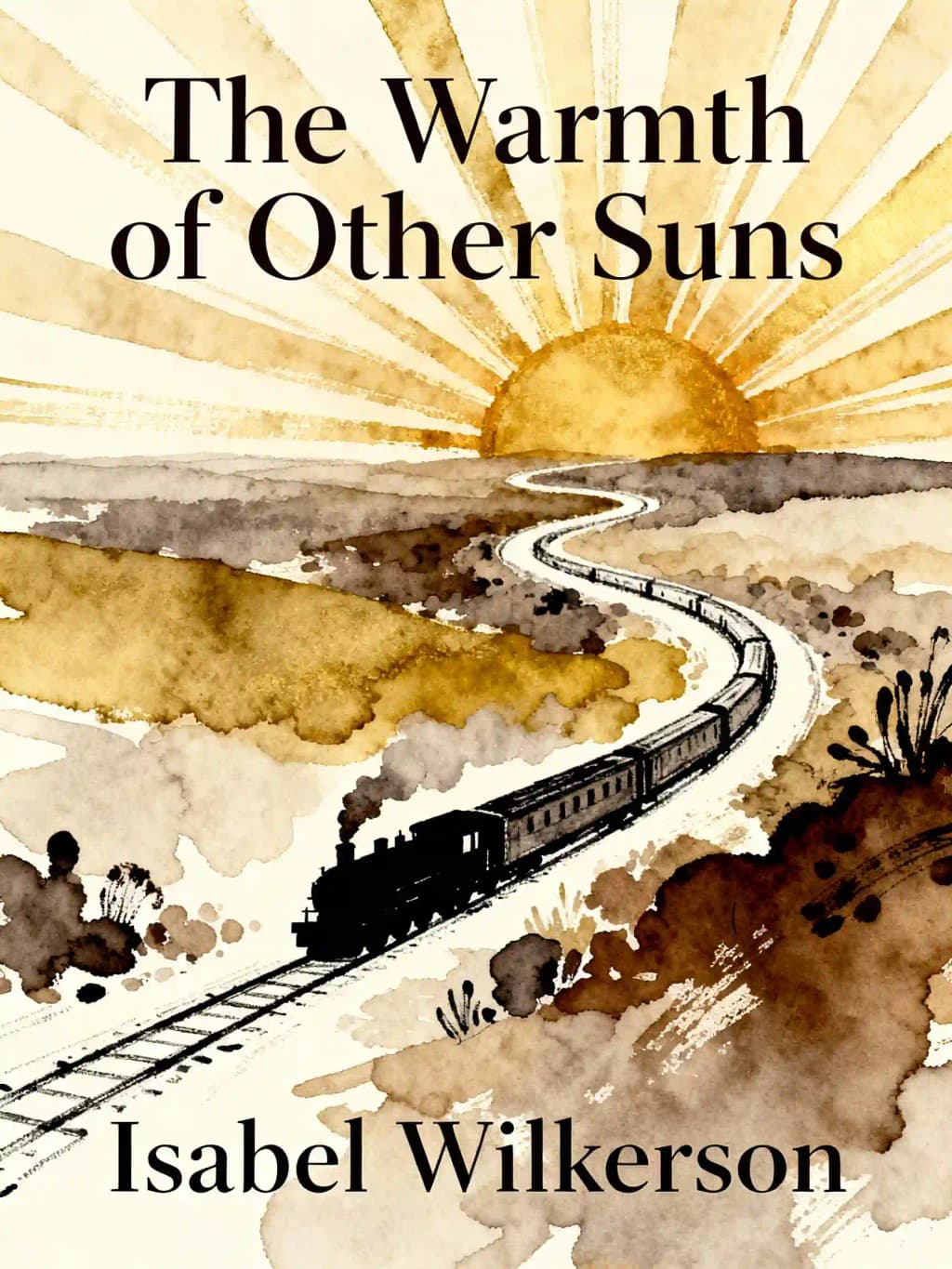
In "The Warmth of Other Suns," Isabel Wilkerson chronicles America's Great Migration through 1,200 interviews and 15 years of research. This National Book Critics Circle Award winner, praised by Ta-Nehisi Coates as "absolutely revolutionary," even landed on President Obama's summer reading list.
Isabel Wilkerson, Pulitzer Prize-winning journalist and bestselling author of The Warmth of Other Suns: The Epic Story of America’s Great Migration, is renowned for her groundbreaking work on race, history, and social systems. A daughter of the Great Migration herself, Wilkerson’s deeply researched narrative nonfiction explores themes of identity, systemic inequality, and resilience.
Her debut book—a New York Times bestseller and National Book Critics Circle Award winner—draws from 15 years of archival work and over 1,200 interviews to chronicle the mass exodus of African Americans from the Jim Crow South.
Wilkerson made history as the first Black woman to win a Pulitzer Prize in journalism for her reporting at The New York Times. She has taught at Emory, Princeton, and Boston University, and her second bestselling book, Caste: The Origins of Our Discontents, further solidified her authority on structural inequity. The Warmth of Other Suns was named one of Time’s “10 Best Nonfiction Books of the 2010s” and featured on President Barack Obama’s summer reading list, cementing its status as a modern classic.
The Warmth of Other Suns chronicles the Great Migration (1915–1970), when six million Black Americans fled the Jim Crow South for Northern and Western cities. Through three protagonists—Ida Mae Gladney, George Starling, and Robert Foster—Isabel Wilkerson explores themes of systemic racism, resilience, and the pursuit of the American dream, blending historical analysis with intimate personal narratives.
This book is essential for readers interested in American history, racial inequality, or migration studies. It appeals to those seeking a humanized account of systemic oppression and the courage behind mass displacement. Educators, book clubs, and fans of narrative nonfiction will value its depth and emotional resonance.
Yes. Wilkerson’s Pulitzer Prize-winning work is praised for its meticulous research, vivid storytelling, and ability to reframe a misunderstood chapter of history. While lengthy, its blend of personal journeys and broader societal impacts makes it a definitive resource on the Great Migration.
Key themes include:
Wilkerson argues the Migration reshaped American culture, politics, and economics. It drained the South of cheap labor, forced Northern integration, and birthed Black urban communities. However, migrants faced new forms of discrimination, urban decay, and unresolved trauma.
Some note repetitive details and a broad scope that occasionally slows pacing. However, these elements reinforce the migrants’ shared struggles, and the book’s exhaustive research is widely applauded.
Wilkerson frames the Migration as a quest for dignity—migrants sought economic opportunity but also escape from violence and dehumanization. Their journeys mirror immigrant narratives, yet their status as citizens denied rights adds unique complexity.
Unlike demographic studies, Wilkerson prioritizes individual voices, offering emotional depth alongside historical context. It complements works like The Immigrant Advantage but stands out for its focus on internal displacement.
It contextualizes modern racial disparities, housing segregation, and debates over reparations. The book’s lessons on resilience and systemic inequality resonate amid ongoing struggles for equity.
The book won the National Book Critics Circle Award, the Anisfield-Wolf Book Award, and was a New York Times Best Book of the Year. It cemented Wilkerson’s reputation as a leading voice in narrative nonfiction.
著者の声を通じて本を感じる
知識を魅力的で例が豊富な洞察に変換
キーアイデアを瞬時にキャプチャして素早く学習
楽しく魅力的な方法で本を楽しむ
"To better my conditions."
Violence was ever-present.
Freedom remained "arbitrary and unpredictable."
Education merely "spoiled a good field hand."
The journey north was defining.
『The Warmth of Other Suns』の核心的なアイデアを分かりやすいポイントに分解し、革新的なチームがどのように創造、協力、成長するかを理解します。
『The Warmth of Other Suns』を素早い記憶のヒントに凝縮し、率直さ、チームワーク、創造的な回復力の主要原則を強調します。

鮮やかなストーリーテリングを通じて『The Warmth of Other Suns』を体験し、イノベーションのレッスンを記憶に残り、応用できる瞬間に変えます。
何でも質問し、声を選び、本当にあなたに響く洞察を一緒に作り出しましょう。

"Instead of endless scrolling, I just hit play on BeFreed. It saves me so much time."
"I never knew where to start with nonfiction—BeFreed’s book lists turned into podcasts gave me a clear path."
"Perfect balance between learning and entertainment. Finished ‘Thinking, Fast and Slow’ on my commute this week."
"Crazy how much I learned while walking the dog. BeFreed = small habits → big gains."
"Reading used to feel like a chore. Now it’s just part of my lifestyle."
"Feels effortless compared to reading. I’ve finished 6 books this month already."
"BeFreed turned my guilty doomscrolling into something that feels productive and inspiring."
"BeFreed turned my commute into learning time. 20-min podcasts are perfect for finishing books I never had time for."
"BeFreed replaced my podcast queue. Imagine Spotify for books — that’s it. 🙌"
"It is great for me to learn something from the book without reading it."
"The themed book list podcasts help me connect ideas across authors—like a guided audio journey."
"Makes me feel smarter every time before going to work"

The Warmth of Other Sunsの要約をPDFまたはEPUBで無料でダウンロード。印刷やオフラインでいつでもお読みいただけます。
In the sweltering heat of the Jim Crow South, millions of Black Americans made a decision that would forever alter the nation's landscape. Between 1915 and 1970, six million Black southerners fled oppression in what became one of the largest mass migrations in American history-dwarfing both the California Gold Rush and the Dust Bowl exodus combined. This "silent pilgrimage" transformed every city it touched and ultimately forced the South to abandon its feudal caste system. Through the intimate journeys of three unforgettable individuals, we discover what might be the biggest underreported story of the twentieth century-a revolution where America's servant class took their first big step toward freedom without asking permission.