第1章
Seeds: The Tiny Powerhouses That Changed Our World
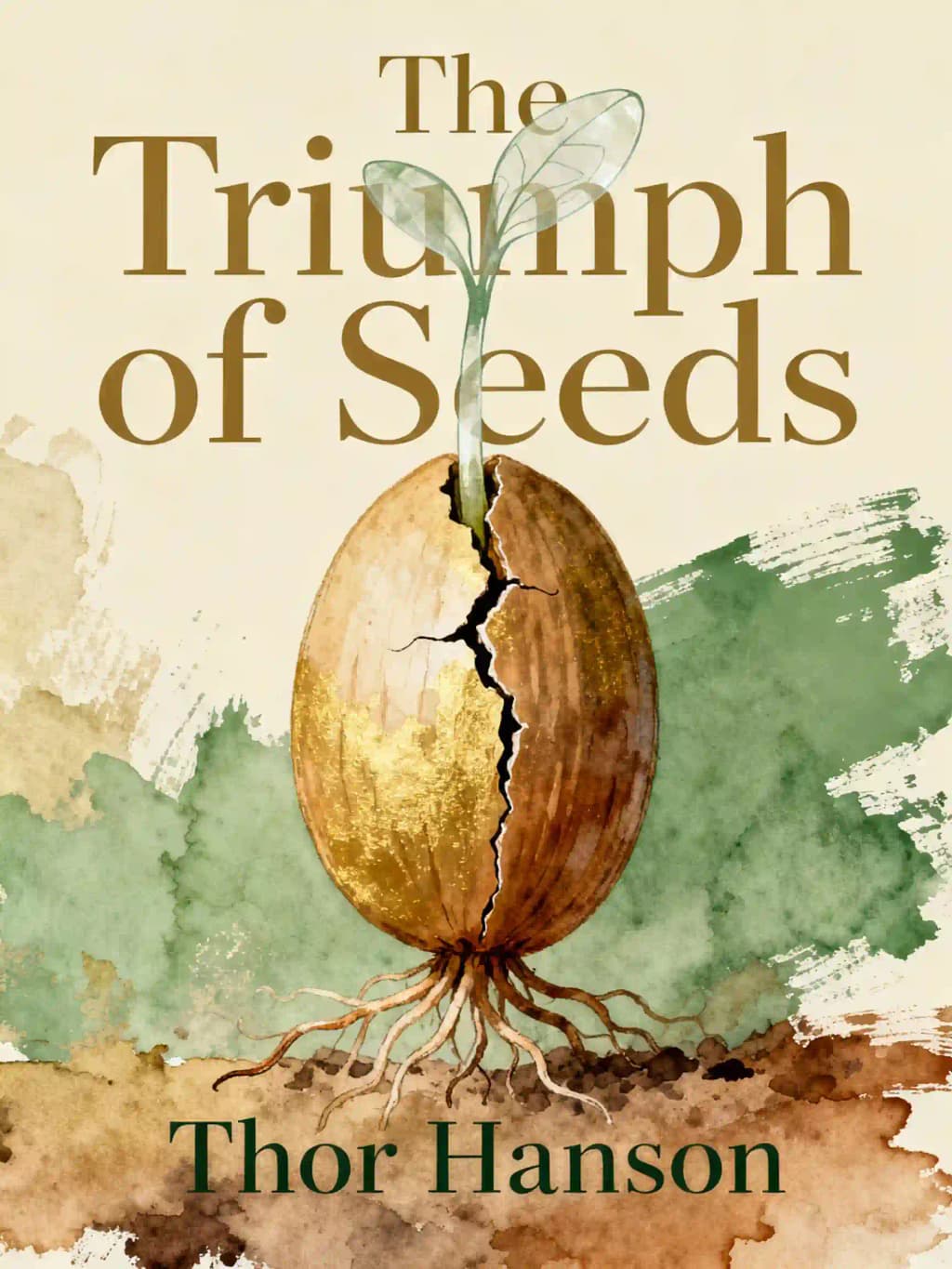
When you bite into an apple, what do you do with the seeds? Perhaps you discard them without a second thought. Yet these tiny capsules represent one of evolution's most remarkable achievements-a sophisticated package containing everything needed to create the next generation of life. Thor Hanson's "The Triumph of Seeds" reveals how these unassuming objects have shaped our planet's ecosystems, human civilization, and even our daily routines in ways most of us never consider. The book has garnered praise from biologists and literary critics alike, with E.O. Wilson calling it "a gem," and the Wall Street Journal praising its "delightful narrative." Hanson's work reminds us that the most profound revolutions often come in the smallest packages-and in this case, those packages have been quietly transforming our world for over 360 million years.
第2章
Nature's Perfect Package: How Seeds Conquered Earth
Seeds represent an evolutionary marvel that changed the face of our planet. Before seeds evolved, spore-bearing plants like ferns, mosses, and horsetails dominated terrestrial landscapes for over 100 million years. These ancient plants required standing water to reproduce-a significant limitation that confined them largely to moist, shaded environments. The triumph of seeds came from their revolutionary design: a baby plant, protected inside a box, with its lunch packed-a simple yet ingenious solution that would transform Earth's ecosystems.
This seemingly simple innovation solved multiple challenges simultaneously. Seeds provide nourishment for the developing embryo through specialized tissue called endosperm, allowing plants to reproduce in dry conditions far from water sources. They unite genetic material from two parents through sophisticated pollination mechanisms, creating greater diversity and adaptability to environmental challenges. Perhaps most remarkably, seeds can remain dormant for extraordinary periods-from seasons to centuries-waiting for ideal conditions before springing to life. Some seeds recovered from Arctic permafrost have germinated after 32,000 years, while lotus seeds from ancient lakebeds have sprouted after 1,300 years.
The success of this evolutionary strategy is evident everywhere we look. From tropical rainforests to arctic tundra, seed plants dominate landscapes and define ecosystems. We name forests for their trees, not their animals; grasslands for their grasses, not their zebras. Seeds have achieved what marketing executives dream of-true ubiquity. This dominance manifests in incredible diversity, from the massive double coconut of the Seychelles weighing up to 40 pounds to the dust-like seeds of orchids weighing just 0.0000015 grams.
In the Palouse region of Idaho, I witnessed this dominance firsthand. Standing in one of the rare remaining "eyebrow" prairies-small patches of native grassland too steep to plow-I counted nearly twenty different plants in just one square foot: Idaho fescue, bluebunch wheatgrass, arrowleaf balsamroot, and dozens more species, each producing thousands of seeds annually. Beyond these endangered fragments stretched vast wheat fields, testament to humanity's profound relationship with grass seeds. The pattern repeats worldwide, from China's central plains to Argentina's pampas to the Nile Valley, where ancient civilizations first arose around seed agriculture.
Our dependence on seeds is so complete that we hardly recognize it. They provide our food, fuels, clothes, medicines, and countless other necessities. Without seeds, there would be no bread, rice, beans, corn, or nuts-they are truly the staff of life. Cotton seeds clothe us, coffee seeds stimulate us, and poppy seeds heal us. The oils we extract from seeds like sunflower, canola, and palm power our industries and feed our populations. Yet their dominance is relatively recent in evolutionary time, appearing only about 360 million years ago, making their success all the more remarkable. Through their elegant design combining protection, mobility, and stored energy, seeds have become nature's most successful strategy for plant reproduction and survival.
第3章
From Sustenance to Civilization: Seeds as the Foundation of Human Society
The relationship between humans and seeds fundamentally altered the course of history, marking one of humanity's most transformative discoveries. Archaeological evidence reveals early humans utilized grass seeds long before organized agriculture developed. Sophisticated tools for processing wild barley, including grinding stones and mortars, date back 20,000 years in the Galilee region. Even more remarkably, burnt grass seeds have been discovered alongside 790,000-year-old controlled fire sites in Israel-long before Homo sapiens evolved, suggesting our earliest ancestors recognized their nutritional value.
Richard Wrangham, Harvard biological anthropologist, believes seeds have been part of human diets "forever," noting even chimpanzees actively seek and consume them. His controversial "cooking ape" theory proposes that cooking was the critical innovation separating advanced humans from ape-like ancestors. By shifting to cooked foods, including seeds, our forebears experienced dramatic physiological changes - they no longer needed massive molars and expansive digestive systems, while gaining surplus energy that supported the development of larger brains. This transformation laid the groundwork for human cognitive advancement.
The agricultural revolution marked a dramatic shift as diverse wild diets narrowed to focus on a few staple grains. At Tell Abu Hureyra in Syria, archaeological evidence shows early inhabitants consumed an incredibly diverse diet of over 250 different plant foods, including 34 different grass species. However, later farming communities subsisted primarily on a handful of domesticated crops: lentils, chickpeas, and select varieties of wheat, rye and barley. This specialization increased food security but reduced dietary diversity.
Once established as dietary staples, grains became deeply enmeshed in economies, traditions, and political systems worldwide. In ancient Rome, leaders maintained social order through "bread and circuses" - combining free entertainment with subsidized wheat distribution. The grain supply was so central to Roman society that a goddess, Annona, personified the grain dole, appearing on coins holding wheat sheaves. When Rome lost access to its vital North African grain supplies, prices skyrocketed, leading to devastating food riots that contributed to the empire's eventual collapse.
Throughout history, grain shortages have consistently sparked social upheaval and revolution. From the Wu Hu Uprising in ancient China, where grain shortages led to widespread rebellion, to the bread riots preceding both the French and Russian Revolutions, access to wheat has repeatedly shaped political destiny. The Arab Spring provides a contemporary example of this pattern-beginning in Tunisia, the world's largest per capita wheat consumer, following global crop failures and dramatic price increases in 2010-2011.
The legacy of those first grain farmers continues to profoundly influence modern nation-states. When harvests fail, governments face existential threats-a phenomenon never associated with hunting shortages. This profound influence becomes strikingly evident in modern grain-producing regions during harvest time, where massive infrastructure networks-including silos, railways, and ports-exist solely to move seeds from field to table. The global grain trade, worth hundreds of billions annually, demonstrates how our ancient relationship with seeds continues to shape international relations and economic systems.
第4章
The Chemistry of Seeds: Why Plants Pack Different Lunches
With grasses so successful in nature and useful to people, it's obvious that packing seeds with starchy lunch is a good evolutionary idea. But why don't all plants do it? Why do beans and nuts store energy in proteins and oils? Why does a palm kernel contain over 50 percent saturated fat? These questions reveal the fascinating complexity of seed evolution and energy storage strategies across plant species.
An Almond Joy candy bar offers a perfect seed-based experience to explore this diversity. Its shredded coconut center (from a pan-tropical palm), topped with almond (from an Asian tree in the rose family), and surrounded by chocolate (from a New World rainforest tree) demonstrates the variety of seed energy storage strategies. The dominant seed product is actually corn syrup, a sweetener derived from maize grass seeds. Each component represents a different evolutionary path: coconut's high fat content helps it float and disperse across oceans, almonds' protein-rich profile supports rapid seedling growth, and cacao's complex mix of fats and compounds ensures seed preservation in humid rainforest conditions.
Despite years of research, botanist Derek Bewley admits there's no simple pattern to seed energy storage. The evolution "doesn't seem to be logical"-starches, oils, fats, and proteins appear scattered randomly across the plant kingdom. The only general rule: "Oil and fat-storing seeds have the most energy per weight." This energy density explains why many tree species, which need robust seedlings to compete in forest environments, tend toward oil-rich seeds.
This diversity of energy storage strategies has allowed seeds to dominate terrestrial ecosystems and provide humans with countless resources beyond just food. From linoleum floors made with linseed oil to oil paints used by the great masters, seed-derived products have shaped human civilization. The variety extends to unusual forms like tagua nut palms, which thicken cell walls within the endosperm to create seeds so hard they can be carved like ivory, earning them the nickname "vegetable ivory" in the craft trade.
Evolution ensures that any successful seed strategy persists. When the goal is nourishing baby plants, many solutions work. Even minor candy ingredients like soy lecithin and castor bean PGPR serve as emulsifiers in chocolate while performing vital roles in their original seeds. These compounds, evolved to aid seed germination and development, now find themselves repurposed in countless industrial applications.
Guar gum exemplifies how seed adaptations can have unexpected human applications. From the scruffy cluster bean of India's Rajasthan Desert, this endosperm-based carbohydrate evolved to grab and hold water in arid conditions. Once valued mainly as livestock fodder, guar's remarkable thickening properties made it valuable for food products, appearing in everything from ice cream to gluten-free baked goods. Then came the fracking boom-the hydraulic fracturing industry now uses guar gum to thicken drilling fluids, causing prices to rise 1,500 percent and transforming the lives of Rajasthani farmers. This dramatic price surge demonstrates how ancient seed adaptations can suddenly find new value in modern industrial processes.
第5章
The Revolutionary Sex Life of Plants: How Seeds Changed Reproduction
Before seeds evolved, plant reproduction was severely limited. Spore plants required standing water for sperm to swim to eggs-a significant constraint in terrestrial environments. Seeds revolutionized plant sex by uniting genes from two parents and packaging them into ready-to-sprout offspring. This constant genetic mixing created enormous evolutionary potential-no coincidence that Mendel solved the mystery of inheritance through pea seeds rather than "Mendel's Spores."
To understand the leap from spore to seed, I examined Wallace's spike moss growing on a rocky bluff near my home. Under a microscope, I saw its remarkable adaptation-spores of two different sizes. The large female spores and tiny male spores represent a critical evolutionary step: separating the sexes and investing energy in female spores. This adaptation evolved at least four times in spore plants, and one of those occasions led to seeds.
Over time, early seed plants kept their female spores attached, letting eggs develop on their leaves while male spores evolved into windborne pollen-creating all the basic elements of a seed that could reproduce without standing water.
Gymnosperms dominated world flora from the dry Carboniferous through the dinosaur era and remain common today. These "naked seeds" mature on leaves or cone scales, as in pine nuts. Though conifers like pines and firs still cover more land than any other plants, they passed plant diversity dominance to a younger group of seed innovators.
The final major step in seed evolution came when some gymnosperms learned to cover their seeds, creating angiosperms or "seeds in a vessel." This protective chamber, called the carpel, didn't evolve until the early Cretaceous, after naked seeds had existed for 160 million years. Once established, angiosperms spread so rapidly that Darwin considered their rise an "abominable mystery." They now comprise the majority of plant life.
While the leap from spores to gymnosperms was evolutionarily paramount, wrapping seeds refined the system and created new opportunities. These coverings evolved into the diverse structures we call fruit, which both protect seeds and attract animals for dispersal. Even more importantly, hiding eggs inside vessels made wind pollination less reliable, causing angiosperms to recruit animals, especially insects, as pollinators. This led to the evolution of colorful petals, nectar, and fragrance-transforming pollination from random to precise and spurring rapid diversification of both flowering plants and their animal partners.
第6章
Time Travelers: The Remarkable Dormancy of Seeds
Seeds possess a superpower almost unique in the biological world: the ability to suspend life processes and remain viable for extraordinary periods. This dormancy allows plants to disperse not just through space but through time, waiting for ideal conditions before germinating.
When archaeologists excavated Masada Fortress in Israel during the 1960s, they discovered preserved date seeds in the ruins of a warehouse burned during the Roman siege of AD 73. Forty years after these artifacts were cataloged in museums, agricultural expert Elaine Solowey and medicinal plant researcher Sarah Sallon decided to plant one of these 2,000-year-old seeds. To their amazement, it sprouted. The resulting palm, named Methuselah, now stands ten feet tall in its own secure garden.
Methuselah holds the record for the oldest naturally germinating seed, though other ancient seeds have also sprouted-including 200-year-old pincushion proteas, 600-year-old canna lily seeds, and 1,300-year-old Indian lotus seeds. Scientists have even transplanted live tissue from a 30,000-year-old frozen mustard seed.
Seed dormancy strategies range from simple desiccation to complex mechanisms requiring specific temperature cycles, light conditions, fire exposure, or rainfall patterns to trigger germination. When dormant seeds accumulate in soil, they create "seed banks"-suspended competitions where hundreds of species and generations wait side by side. These banks preserve genetic diversity and historical records of past ecosystems, sometimes revealing themselves dramatically when disturbed-as when golden mustard and wildflowers suddenly bloomed across London in 1667 after the Great Fire exposed long-buried seeds.
Modern seed banking has evolved from nature's random preservation to sophisticated human conservation. While natural seed banks offer glimpses into historical landscapes, modern facilities create deliberate repositories for future use. The National Center for Genetic Resources Preservation in Fort Collins, Colorado exemplifies this approach. Built to withstand disasters including floods and tornadoes, its reinforced structure houses over 2 billion specimens in climate-controlled vaults.
Research director Christina Walters explains that seeds survive through desiccation-removing water halts metabolic activity, essentially pausing life. Unlike most cells that would die when dried, seed cells "remember" their structure and function when rehydrated. This remarkable preservation ability is shared by few animals, including brine shrimp (marketed as "Sea-Monkeys").
Seeds challenge our fundamental understanding of life itself. As Christina Walters noted, dormant seeds with no discernible metabolism raise profound questions: "Does metabolism define life? If seeds are alive but aren't metabolizing, then maybe we need to rethink our definition of what it means to be alive."
第7章
Nature's Arsenal: The Defensive Chemistry of Seeds
Plants equip their seeds with astonishing defenses-from impenetrable husks to chemical compounds that give us spices, poisons, and pharmaceuticals. These adaptations illuminate evolutionary forces and show how humans have co-opted seed defenses for everything from Tabasco sauce to coffee and chocolate.
Noelle Machnicki's research on "How the Chili Got Its Spice" revealed that pungency evolved as defense against seed-killing fungi. In Bolivia's Chaco region, chilies in wet areas produce capsaicin to combat fungal threats, while those in dry areas remain mild since capsaicin production reduces water retention and seed production. This evolutionary trade-off explains why spiciness varies with rainfall.
Unlike animals that can flee predators, plants must develop chemical defenses-which is why we season meat with plants, not vice versa. Capsaicin tricks mammalian pain receptors into sensing burns, creating that distinctive mouth-on-fire sensation without causing actual damage. For humans, this becomes enjoyable-like a culinary roller-coaster ride that feels good once it stops.
Humans developed a taste for pungency out of necessity-capsaicin deters microbes and fungi, making it an effective food preservative in tropical regions before refrigeration. While humans enjoy this burning sensation, other mammals feel only pain, creating an evolutionary advantage for chilies: mammals that would destroy seeds avoid them, while birds, whose pain receptors don't respond to capsaicin, happily consume and disperse them intact.
The historical craving for spices paralleled today's petroleum dependence-limited supply meeting limitless demand. Spices shaped civilizations: peppercorns preserved Egyptian pharaohs, Rome paid 3,000 pounds of pepper as ransom to Visigoths, and Charlemagne decreed spice gardens throughout his empire. The economics were staggering-the Dutch East India Company maintained 300% profit margins on spice trade for decades, with shareholders enjoying 27% annual returns for forty-six years.
Some seed defenses are more directly lethal. Castor beans contain ricin, one of the world's most potent natural poisons. A single bean can kill an adult human, and the toxin has been used in notorious assassinations, including the 1978 umbrella murder of Bulgarian dissident Georgi Markov in London. Yet the same plant provides castor oil, used in everything from industrial lubricants to traditional medicines.
The evolutionary purpose of deadly seed poisons presents a puzzle. While bitter or pungent compounds immediately drive away predators, poisons like ricin may take days to kill, doing nothing to stop the immediate attack. Derek Bewley suggests several possibilities: poisons might affect different species differently, might kill insects instantly while taking longer with mammals, or might simply be "fortuitous accidents" where storage proteins happen to have toxic properties.
第8章
Going the Distance: How Seeds Conquered the Globe
Seeds' remarkable mobility has given them global reach and spurred tremendous diversity. Whether carried by waves, wind, or packaged in fruit, seeds have evolved countless dispersal methods that have inspired human innovations from cotton textiles to Velcro to stealth bombers.
Cotton reigns as the world's most popular fabric, anchoring a $425 billion industry that makes it the most valuable nonfood crop in history. Yet cotton's elaborate fluff evolved not for human textiles but to help seeds ride the wind. Unlike dandelions with their delicate parachutes, cotton employs a different aerodynamic design-each seed grows over 20,000 single-celled fibers that create maximum surface area with minimal weight.
Cotton performed an evolutionary "miracle squared" by crossing the Atlantic Ocean twice, as American cotton species contain genes from two distinct African ancestors. This botanical connection foreshadowed the human relationship that would transform history-the "trade triangle" connecting American plantations, British mills, and African slave ports.
As the "revolutionary fiber" and "fuel of the industrial revolution," cotton became the first global mass-produced commodity. By 1846, it represented 60% of American exports and employed one-fifth of British workers. Cotton's economic importance justified British expansion in India, undermining local economies while establishing the north-south pattern of raw material extraction and finished product export that would define global economics for centuries.
Seeds and warfare share surprising connections. The first aerial bombardment in 1911 used a plane modeled after the Javan cucumber seed. Austrian aviator Igo Etrich designed his "Taube" aircraft based on this seed's remarkable single-wing structure, which provides passive stability and a shallow descent angle. While mainstream aviation moved away from the flying wing concept after World War I, the idea persisted, culminating in the Northrop Grumman B-2 Spirit (Stealth Bomber).
Animal dispersal creates equally fascinating dynamics. In Costa Rica, I discovered a trove of almendro seeds beneath a palm frond-too far from any mature tree for rodent transport. My colleague exclaimed "Murcielago!" (bat), breaking his usual reserve. The great fruit-eating bat of Central America carries almendro seeds to feeding roosts, stripping the thin pulp and dropping the intact seeds below.
Unlike rodents that destroy most seeds they collect, these bats seek only the fruit flesh, inadvertently becoming perfect dispersal agents. Their feeding behavior is shaped by predation risk-owls, falcons and pythons lurk at fruiting trees, forcing bats to carry seeds to safer perches.
Fruits evolved specifically to tempt animals into seed dispersal, developing colors, shapes, and flavors that attract particular dispersers. Plants carefully balance the high energy costs of producing fruit with the benefits of dispersal, making fruit both delicious and fleeting. Different fruits target different dispersers-some attract ants with protein-rich packets, others like the tsamma melon (watermelon ancestor) satisfy thirst in desert environments.
第9章
Seeds and Our Future: Conservation, Innovation, and Connection
The future of seeds raises profound questions about conservation, genetic modification, and our relationship with nature. Modern plant geneticists now go far beyond simple chromosome doubling, with tools to add, delete, alter, and transfer genes between species. While these possibilities seem endless, they bring troubling questions about patent disputes over seed saving, environmental impacts, health concerns, and moral implications of cross-species gene manipulation.
The Seed Savers Exchange in Decorah, Iowa offers a complementary approach to institutional seed banking. Founded by Diane Ott Whealy in 1975, this "people's seed bank" connects 13,000 members who actively grow, trade, and preserve heirloom varieties. Unlike static preservation, this living collection allows plants to continue adapting to changing conditions while maintaining their cultural connections through recipes and stories.
Evolution behaves like a gardener, preserving only successful experiments. Just as spore plants yielded dominance to seeds, seeds might eventually give way to something new. This may already be happening with orchids-Earth's most diverse plant family with over 26,000 species. Their dust-like seeds lack seed coats, defensive chemicals and nutrition, requiring specific fungi to germinate. They offer humans almost nothing useful beyond vanilla and beautiful flowers.
Paleobotanist Bill DiMichele doesn't expect seeds' reign to end soon, dismissing orchids as "freeloaders" dependent on fungi and other plants. Yet with nearly one-tenth of global flora being orchids, their simplified seed strategy clearly works. Their success reminds us that evolution favors what benefits future generations, not necessarily complexity.
Seeds embody passing things down, giving us tangible connections from past to future that remind us of human relationships and natural rhythms. When my son Noah and I collected bellflower and pink mallow seeds from my mother's garden and planted them with Noah's saved popcorn kernels, we participated in this ancient tradition.
After perfect rain followed by sunshine, the mallows germinated quickly-brave green specks brightening a backdrop of dirt. This simple act of planting connects us to countless generations before us who have participated in the same ritual, placing seeds in soil with hope for the future. In a world of rapid technological change and environmental uncertainty, seeds remind us of our fundamental connections to nature and to each other-connections that have sustained humanity since our earliest days.