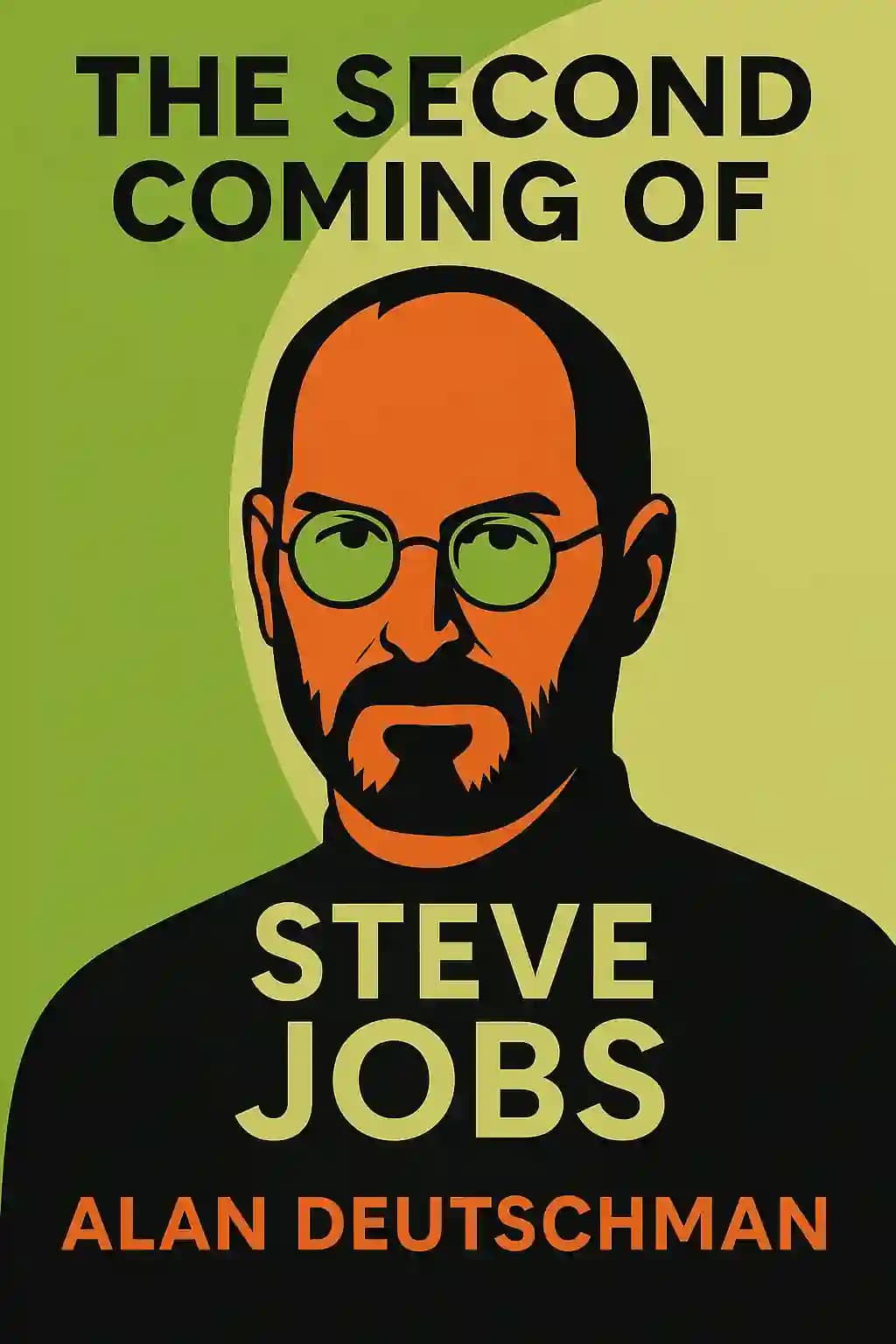
The uncensored biography that revealed Steve Jobs' dark genius - from exile to Apple's resurrection. Deutschman's controversial insider account strips away the myth, exposing the bullying brilliance that reshaped Silicon Valley. What price did innovation demand from those in Jobs' orbit?
Alan Deutschman, a veteran journalist and Silicon Valley correspondent, is the acclaimed author of The Second Coming of Steve Jobs, a revealing biography exploring Jobs’ leadership style and tech-industry impact.
With a 35-year career spanning Fortune, Fast Company, and Vanity Fair, Deutschman’s work dissects innovation narratives and disruptive leadership—themes central to this 2000 bestseller. His expertise extends to organizational change in Change or Die and ethical leadership in Walk the Walk, both widely cited in business education.
A regular commentator on NBC’s Today Show and Bloomberg TV, Deutschman combines investigative rigor with insider access, having taught business journalism at the University of Nevada, Reno. His books, translated into eight languages, blend sharp analysis with storytelling praised by The New York Times and Wall Street Journal.
The Second Coming of Steve Jobs chronicles Steve Jobs’ career from his 1985 ousting at Apple through his transformative leadership at NeXT and Pixar, culminating in his 1997 return to Apple. Deutschman explores Jobs’ relentless drive, visionary marketing, and volatile leadership style, offering insights into his resilience, innovation, and impact on technology. The book balances admiration for his achievements with candid critiques of his personal and professional relationships.
Entrepreneurs, tech enthusiasts, and leadership scholars will find value in this biography. It appeals to readers seeking insights into Jobs’ comeback story, leadership philosophy, or the Silicon Valley culture of the 1980s–1990s. Those interested in innovation, branding, and the human complexities behind iconic figures will gain a nuanced perspective.
Yes—Deutschman’s investigative depth and narrative flair make it a compelling read. While Jobs declined interviews, the book draws from 100+ sources to analyze his duality: a perfectionist who revolutionized design yet struggled with interpersonal dynamics. It’s ideal for readers wanting a balanced portrayal of Jobs’ triumphs and flaws.
These quotes underscore his dichotomy as a visionary leader and emotionally guarded figure.
The book critiques Jobs’ erratic behavior, including harsh management tactics and neglect of personal relationships. Deutschman portrays him as a charismatic yet polarizing figure whose perfectionism drove innovation but alienated colleagues. Examples include his initial refusal to acknowledge paternity and clashes with Apple’s board.
Unlike Walter Isaacson’s authorized biography, Deutschman’s work focuses on Jobs’ post-Apple challenges, offering a grittier, journalist-led perspective. It emphasizes his professional reinvention over technical details, making it a supplementary read for those seeking critiques of his leadership style rather than a full life history.
Jobs’ emphasis on design simplicity and consumer-centric innovation remains foundational in tech. The book’s lessons on resilience and adaptability resonate in industries navigating AI and market disruptions. It also serves as a cautionary tale about balancing ambition with ethical leadership.
Critics argue the book overemphasizes Jobs’ flaws, citing Deutschman’s limited direct access. Some claim it downplays his technical contributions, focusing too heavily on interpersonal conflicts. However, supporters praise its unvarnished portrayal of a complex icon.
As a Silicon Valley journalist, Deutschman leveraged 12+ years of tech reporting to contextualize Jobs’ impact. His experience at Fortune and Vanity Fair informed the book’s blend of corporate analysis and human storytelling, offering both boardroom and personal insights.
著者の声を通じて本を感じる
知識を魅力的で例が豊富な洞察に変換
キーアイデアを瞬時にキャプチャして素早く学習
楽しく魅力的な方法で本を楽しむ
Steve, you're just wrong!
Steve, you're full of shit
『The Second Coming of Steve Jobs』の核心的なアイデアを分かりやすいポイントに分解し、革新的なチームがどのように創造、協力、成長するかを理解します。
『The Second Coming of Steve Jobs』を素早い記憶のヒントに凝縮し、率直さ、チームワーク、創造的な回復力の主要原則を強調します。

鮮やかなストーリーテリングを通じて『The Second Coming of Steve Jobs』を体験し、イノベーションのレッスンを記憶に残り、応用できる瞬間に変えます。
何でも質問し、声を選び、本当にあなたに響く洞察を一緒に作り出しましょう。

"Instead of endless scrolling, I just hit play on BeFreed. It saves me so much time."
"I never knew where to start with nonfiction—BeFreed’s book lists turned into podcasts gave me a clear path."
"Perfect balance between learning and entertainment. Finished ‘Thinking, Fast and Slow’ on my commute this week."
"Crazy how much I learned while walking the dog. BeFreed = small habits → big gains."
"Reading used to feel like a chore. Now it’s just part of my lifestyle."
"Feels effortless compared to reading. I’ve finished 6 books this month already."
"BeFreed turned my guilty doomscrolling into something that feels productive and inspiring."
"BeFreed turned my commute into learning time. 20-min podcasts are perfect for finishing books I never had time for."
"BeFreed replaced my podcast queue. Imagine Spotify for books — that’s it. 🙌"
"It is great for me to learn something from the book without reading it."
"The themed book list podcasts help me connect ideas across authors—like a guided audio journey."
"Makes me feel smarter every time before going to work"

The Second Coming of Steve Jobsの要約をPDFまたはEPUBで無料でダウンロード。印刷やオフラインでいつでもお読みいただけます。
In December 1992, Steve Jobs sat in his office contemplating the unthinkable: quitting. Seven years after leaving Apple in disgrace, he'd burned through millions trying to prove himself with NeXT, and it was failing spectacularly. His fortune was evaporating. Pixar was hemorrhaging cash. The man who'd once revolutionized personal computing now faced a humiliating question-what if he'd been a one-hit wonder? By February 1993, NeXT shut its factory and laid off most employees. When a reporter asked about failure, Jobs couldn't even answer. He just walked away. Yet within three years, something remarkable happened. Toy Story transformed his Pixar stake into billions overnight. A year later, he returned to Apple as interim CEO, propelling its value from $2 billion to $20 billion. This wasn't just a comeback-it was resurrection. Jobs' journey reveals something profound about failure, reinvention, and the strange alchemy that transforms defeat into triumph. How does someone fall so far and climb back even higher?