第1章
The Race Against Time: Unlocking the Science of Living Longer
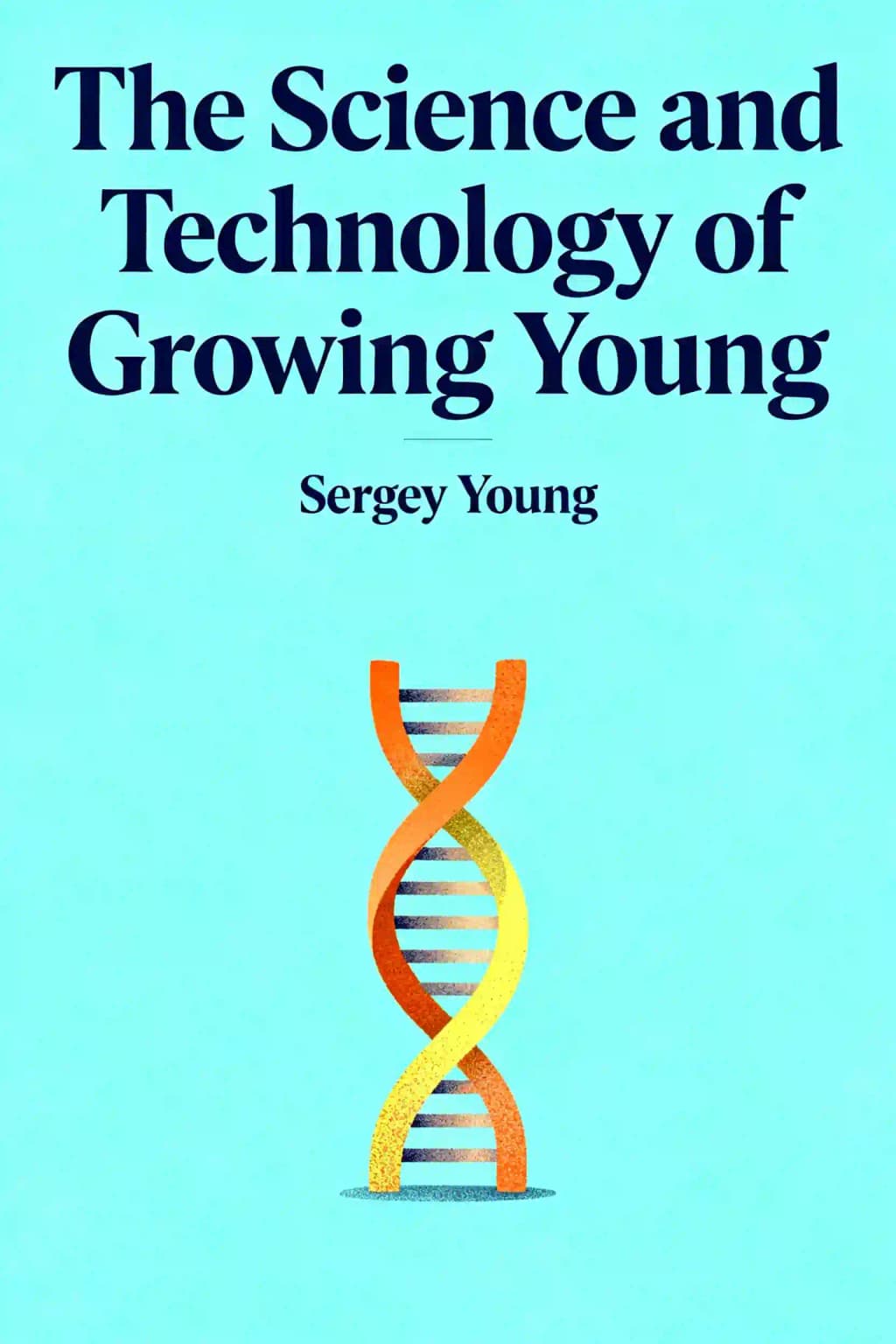
What if you could live to see your great-great-grandchildren grow up? What if your body could maintain the biology of a 25-year-old well into your second century of life? This isn't science fiction-it's the near future according to investor Sergey Young, whose Longevity Vision Fund has committed $100 million to technologies that could dramatically extend human lifespan. After a personal health scare involving high cholesterol, Young dedicated himself to a moonshot goal: helping one billion people live healthy lives to 100 years and beyond. His book has garnered praise from luminaries like Ray Kurzweil, Peter Diamandis, and Tony Robbins, who calls it "a manual for extending your healthy lifespan." With healthcare giants and tech billionaires now pouring billions into longevity research, we're witnessing the birth of what may be humanity's most consequential revolution.
第2章
The Coming Longevity Revolution: From 100 to 200 Years
Imagine waking up on your 200th birthday with the body of a 25-year-old. Your bedroom has optimized your sleep through temperature regulation, air quality control, and circadian rhythm-matched lighting. Microscopic nanobots have repaired your cells overnight, while gene-editing tools have corrected any DNA damage. Your smart mirror displays comprehensive biomarkers showing your biological age is decades younger than your chronological age, alongside personalized health recommendations. This seemingly fantastical scenario isn't just possible-it's "almost inevitable" according to leading longevity researchers and biogerontologists.
We're rapidly approaching what scientists call "longevity escape velocity"-the point where technology extends life expectancy faster than we age. Each breakthrough builds upon previous advances exponentially. Consider how quickly technology can advance: COVID-19 vaccines were developed in months rather than the decades vaccines historically required, thanks to revolutionary mRNA technology. Similar acceleration is happening across multiple longevity-related fields, from CRISPR gene editing to artificial intelligence in drug discovery. Ray Kurzweil, whose technological predictions have proven remarkably accurate (including the rise of mobile internet and cloud computing), believes we'll reach this velocity within 10-12 years. Young takes a more conservative view, suggesting 40-80 years, but agrees the foundations are being built today through advances in biotechnology, nanotechnology, and artificial intelligence.
The longevity field encompasses three distinct but interconnected dimensions: preventing premature death (what today's healthcare already attempts through disease treatment and prevention), extending maximum lifespan beyond the current 115-125 year limit observed in even the longest-lived humans, and most revolutionary, actually reversing biological aging at the cellular level. This third dimension is no longer confined to science fiction-scientists have already reversed aging in mice using "Yamanaka factors," four genes that return mature cells to their original pluripotent state. These mice showed remarkable rejuvenation: regenerated tissues, improved cardiovascular systems, enhanced cognitive function, and even regained color in gray fur. Similar experiments with human cells in laboratories show promising results.
Young divides longevity advances into two horizons. The Near Horizon (next 5-20 years) includes AI-powered diagnostics that can detect diseases years before symptoms appear, precise genetic engineering to eliminate hereditary diseases, lab-grown organ regeneration, and pharmaceutical interventions targeting aging mechanisms like senescent cells and mitochondrial dysfunction. These advances could make living to 150 not just possible but healthy and vibrant. The Far Horizon encompasses more radical possibilities: living to 200 while maintaining youthful biology, brain-machine interfaces that enhance cognitive capabilities, memory installation and transfer, consciousness uploads to digital platforms, and various forms of biological or technological immortality through continuous repair and renewal of body systems.
The question isn't whether we'll dramatically extend human lifespan, but when-and whether current generations will live long enough to benefit from these breakthroughs. This creates what longevity researchers call the "bridge to a bridge" strategy: staying healthy enough with today's technology to reach the next wave of life-extending innovations.
第3章
Debunking Longevity Myths: Why Extended Life Is Within Reach
Despite scientific progress, many people resist the idea of radical life extension. At a Vatican conference on reversing aging-yes, even the Catholic Church is exploring this frontier-Young identified three persistent myths that block acceptance of longevity science.
The first myth-"living more means living less"-assumes extended life means prolonged decrepitude. Young emphatically rejects this: "The work of longevity is not the work of prolonging old age indefinitely. It is the work of repelling what we know as 'old age' for as long as possible." The goal isn't extending suffering but maintaining youth and vitality.
The second myth-"longevity is dangerous and selfish"-centers on fears of catastrophic overpopulation and resource depletion. This "flawed logic" ignores technological advances in agricultural efficiency and declining global fertility rates. Countries like Spain and Japan are projected to see their populations halve in coming decades, suggesting the Longevity Revolution might actually stabilize global population rather than explode it.
The third myth-"life extension isn't really possible"-stems from lack of imagination or fear of change. Humans have already lived to 115-120 years with primitive healthcare compared to today's technology. We've achieved seemingly impossible feats before-from moon landings to nuclear reactors-and longevity is simply another scientific problem to solve.
Four technological breakthroughs are demolishing these myths. Genetic engineering, accelerated by the Human Genome Project's completion in 2003, now allows us to sequence a genome in an afternoon for around $200, enabling disease prediction, personalized treatments, and identification of "longevity genes." Technologies like CRISPR-Cas9 allow genetic modification to potentially remove disease-causing genes and enhance longevity genes.
Regenerative medicine offers solutions to the body's diminishing ability to repair itself with age through stem cell therapies, organ bioprinting, and mechanical alternatives like prosthetic limbs controlled by thought. Connected health devices will transform medicine from reactive to proactive through continuous monitoring of everything from heart rate to free-floating cancer DNA. Finally, the massive health data generated by these technologies will fuel powerful artificial intelligence systems that will revolutionize healthcare delivery, drug discovery, and precision medicine.
Together, these advances make radical life extension not just possible, but inevitable.
第4章
Understanding Aging: The Science Behind Our Biological Clock
Despite centuries of scientific inquiry, there's still no consensus on what aging fundamentally is. Various theories have emerged-the free radical theory suggests unpaired oxygen atoms damage cells like rust on iron, while the telomere theory focuses on protective DNA caps that shorten with each cell division until signaling cell death. While these theories contribute to our understanding, none fully explains the aging process.
Rather than seeking a single unified theory, modern longevity pioneers offer broader definitions. Dr. Alex Comfort, who first suggested humans could live to 120, defined aging as "a decrease in viability and an increase in vulnerability." Dr. Aubrey de Grey views it as "an accumulation of molecular damage" from normal metabolism. Dr. David Sinclair describes aging as "the loss of epigenetic information"-comparing it to a scratched DVD that distorts genetic expression.
Most researchers now focus on developing interventions whether or not they fully understand aging's root causes. They've identified ten "hallmarks of aging" that provide a framework for measuring progress: genomic instability, telomere attrition, epigenetic alterations, loss of proteostasis, deregulated nutrient sensing, mitochondrial dysfunction, cellular senescence, stem cell exhaustion, altered intercellular communication, and protein crosslinking.
Biological age matters more than chronological age. Dr. Steve Horvath developed "epigenetic clocks" by identifying 323 points on human DNA where methylation patterns could measure a person's true biological age. This breakthrough allowed researchers to objectively measure aging interventions without waiting decades. Even identical twins, sharing the same DNA, die on average more than ten years apart due to lifestyle differences that affect their biological aging process.
Psychological age significantly impacts biological aging too. Studies show people who feel younger than their chronological age demonstrate better liver and kidney health, denser brain gray matter, less obesity and inflammation, stronger cognitive and physical function, and even better sex lives. Conversely, those who feel older than their years suffer a 25% increased mortality risk and accelerated telomere shortening.
This complex understanding of aging-biological, psychological, and social-is driving the development of interventions that target multiple aspects of the aging process simultaneously.
第5章
DIY Diagnostics: How Technology Is Revolutionizing Disease Detection
Our current diagnostic paradigm suffers from three critical failures: it happens too late, it's often inaccurate, and it remains inaccessible to many. Early diagnosis dramatically improves survival rates-cancer survival can be 3-20 times higher when caught early. Yet millions live with undiagnosed conditions, and misdiagnosis affects millions annually, with women 30-50% more likely to receive incorrect diagnoses.
Traditional diagnostic procedures like biopsies are invasive, expensive, and sometimes risky. Revolutionary alternatives are emerging: liquid biopsies examine bodily fluids to detect cancer and disease markers non-invasively. Companies like Freenome analyze blood samples for multi-omic indicators that can identify cancer type and location. Genetic diagnostics through companies like 23andMe offer insights into disease predispositions through simple saliva tests.
DIY diagnostics have evolved far beyond basic home thermometers. Today's wearables like Apple Watch and Oura rings monitor vital signs continuously, with FDA-approved functions detecting conditions like atrial fibrillation. More specialized devices include the Cerebrotech Visor that detects strokes with 93% accuracy and Owlstone's breath biopsy mask that identifies eight different cancers through volatile organic compounds.
The future includes even more revolutionary devices: ingestible "pillcams" from Medtronic and Check-Cap's C-Scan device use photography and X-ray imaging to detect colorectal cancer for just $500, compared to traditional $4,000 colonoscopies. Myant's "smart underwear" tracks vital signs and body composition, patented toothbrushes analyze saliva for conditions from fertility to HIV, and "smart toilets" analyze your microbiome from waste.
The true revolutionary potential lies in connectivity and artificial intelligence-creating an Internet of Body where your personal devices connect to each other, to monitoring apps, and to global data repositories. This network will fuel machine-learning algorithms designed not just to detect and diagnose disease but to prescribe and administer treatments in real time. Just as Google helps us navigate the internet, sophisticated AI will process your genome sequence, epigenetic assessment, microbiome fingerprint, family history, lifestyle choices, and baseline data against information from hundreds of millions of individuals worldwide.
For patients like Doug Lindsay, instead of suffering bedridden for eleven years with a rare condition, such technology could have immediately diagnosed his condition, connected him with specialized surgeons, and recommended personalized treatment-transforming healthcare from reactive to proactive, universal to deeply personal.
第6章
Precision Medicine: When Healthcare Gets Personal
When Teresa McKeown's stage 3 breast cancer returned and metastasized despite chemotherapy and a double mastectomy, she prepared to die. In a last-ditch effort, she joined UC San Diego's Moores Cancer Center experimental program where AI analyzed her cancer's DNA and recommended Opdivo-a drug typically used for skin, kidney, and lung cancers, not breast cancer. Four months later, her cancer was in full remission.
This approach, part of the I-PREDICT clinical study, has shown patients receiving treatments matched to their genomic alterations fare twice as well as those who don't. As Vinod Khosla notes, we're transitioning "from the practice of medicine to the science of medicine," where patients receive the same probabilistically best recommendation regardless of which physician they see.
Precision medicine centers like Human Longevity Incorporated (HLI) in San Diego offer comprehensive health assessments that feel more like five-star hotel experiences than hospital visits. During annual visits, patients undergo extensive testing-providing multiple blood samples, receiving full-body MRI scans, cardiac ultrasounds, neurological tests, and movement analysis. The resulting detailed report tracks changes since the last visit and recommends personalized nutrition, lifestyle, and pharmaceutical adjustments.
This "personalome"-the comprehensive collection of your genome, epigenome, microbiome, proteome, transcriptome, and metabolome-creates an incredibly sophisticated picture of individual health. Following 23andMe's $2.5 billion market success, diagnostic services focusing on these "omes" are exploding, promising to predict disease, enable bespoke treatments, and empower individuals with unprecedented biological self-knowledge.
The vision of using personalome data faces one massive challenge: humans simply cannot process the staggering volume of health data-estimated at over 2,000 exabytes in 2020. This is where artificial intelligence becomes essential. AI applications are already transforming healthcare through continuous monitoring systems, advanced diagnostic tools, and natural language processing systems that can analyze medical literature and patient records to determine optimal care paths.
The true potential of precision medicine is perfectly illustrated by Milasen, a drug developed specifically for one patient: Mila Makovec. Diagnosed with a rare form of Batten disease that caused blindness and up to thirty seizures daily, Mila's prognosis was grim until Dr. Timothy Yu created a drug tailored to her unique genome. Within months of treatment, Mila could walk and eat independently with dramatically fewer seizures.
The medical profession faces dramatic transformation as AI begins to match or exceed human diagnostic capabilities. As Stanford radiologist Curtis Langlotz notes, "AI won't replace radiologists, but radiologists who use AI will replace radiologists who don't." Rather than replacing doctors, these technologies will free physicians from administrative tasks and restore the doctor-patient relationship. For the three billion people worldwide lacking adequate healthcare access but possessing mobile devices, AI-powered telemedicine will democratize quality care.
第7章
Engineering Our Genetic Code: The CRISPR Revolution
Victoria Gray suffered from debilitating sickle-cell anemia until becoming the first patient treated with CRISPR-Cas9 gene editing technology, which dramatically improved her condition and eliminated her pain attacks. This revolutionary technology represents the Near Horizon of Longevity's potential to influence our genetic code.
The journey toward gene engineering began with the Human Genome Project, funded in 1990 with a $3 billion budget. Scientists from twenty research institutions across six countries collaborated to sequence the entire human genome. Today a human genome can be sequenced in hours for about $200, enabling advances in disease diagnostics, personalized medicine, and drug development.
CRISPR-Cas9 emerged from studying bacterial immune systems that defend against viruses. Drs. Jennifer Doudna and Emmanuelle Charpentier discovered that the Cas9 protein could be programmed to cut any DNA sequence desired, winning them the 2020 Nobel Prize in Chemistry. For human health, CRISPR has already been used in labs to correct genes responsible for muscular dystrophy, heart disease, and HIV. When perfected, gene editing could potentially correct 89% of known hereditary diseases.
Unlike CRISPR which corrects defective genes, gene therapy inserts healthy copies of genes to produce needed proteins. Though early gene therapy had limited success and faced serious setbacks like the 1999 death of Jesse Gelsinger, it has returned stronger with improved safety, delivery mechanisms, and FDA-approved treatments like Strimvelis for SCID ($650,000) and Luxturna for inherited retinal disease ($850,000).
CAR T-cell therapy represents a revolutionary approach to fighting cancer. This technique genetically engineers T cells to sprout chimeric antigen receptors (CARs) that function like "heat-seeking missiles" targeting cancer cells. Emily Whitehead, the first pediatric patient treated in 2012 when she was seven and in hospice care with leukemia, not only survived but remains cancer-free as the modified cells continue patrolling her body. With survival rates reaching 80% for certain cancers, CAR T-cell therapy could potentially treat millions of cancer cases annually.
Scientists are also identifying genes that influence longevity across species. Cynthia Kenyon discovered that mutations in the daf-2 gene doubled the lifespan of C. elegans worms, with humans possessing similar genes. Dr. Nir Barzilai's Longevity Genes Project studying centenarians has found that genetics plays a more significant role in exceptional longevity than previously thought-their offspring show 30% less hypertension and 65% fewer strokes than peers.
Though genetic engineering is still young, its rapid advancement suggests that living to 150 or 200 years could eventually become routine. Massive industry investment-pharmaceutical companies have spent tens of billions acquiring gene therapy companies-and the FDA's expectation to approve 10-20 gene therapies annually by 2025 indicate accelerating progress. Economics will drive adoption as production costs fall dramatically, making one-time genetic fixes cheaper than lifetime treatments.
第8章
Regenerating the Human Body: From Stem Cells to Bionic Parts
As our bodies inevitably break down over time, regenerative medicine offers solutions to restore, augment, and replace damaged tissues and organs. Near Horizon technologies will enable us to grow replacement body parts in labs and use robotics where biology fails.
Stem cells are the master cells from which all our tissues and organs develop, capable of becoming virtually any cell type in the body. They serve as emergency building materials throughout life, repairing damage by controlling inflammation, fighting infections, and regenerating tissues. As we age, stem cells diminish in number and functionality. Chris Barr's remarkable recovery from quadriplegia after receiving stem cell treatment exemplifies the therapy's potential-within weeks of receiving injections of stem cells from his own fat into his lumbar spine, he progressed from paralysis to walking.
Despite promising results, the stem cell industry remains largely unregulated with over 1,000 clinics in the US alone offering treatments for everything from arthritis to Alzheimer's. Only about ten FDA-approved providers exist, with many clinics operating in legal gray areas. Dr. Terry Grossman predicts that legitimate stem cell treatments for spinal cord injuries, heart damage, macular degeneration, and neurological diseases will become available within 5-10 years.
The organ transplant crisis is staggering-someone joins the US waiting list every nine minutes, with 113,000 Americans desperately needing organs. Despite two million global requests annually, only 140,000 transplants occur. Companies are developing innovative solutions: Transmedics creates transport carts that simulate the body's environment with warm, oxygenated blood perfusion. X-Therma and Arigos Biomedical are pioneering organ cryopreservation using damage-reducing nanomaterials.
More revolutionary approaches include regenerating organs within patients' bodies-like LyGenesis growing mini-livers in lymph nodes that can assume 75% of liver function for late-stage disease patients. Xenotransplantation is making a comeback through companies like eGenesis and United Therapeutics, which are genetically modifying pig organs to be compatible with humans. Finally, 3D bioprinting is advancing rapidly, with recent breakthroughs including functional corneas, ovaries that produced live offspring in mice, and even a complete (though not yet functional) heart with chambers and blood vessels at Tel Aviv University.
Human augmentation will become truly extraordinary, with artificial organs designed to outlast and outperform their natural counterparts. These augmentations will include "smart" hearts and lungs with sensors providing biofeedback, kidneys and livers that track nutrition and offer health tips, and enhanced vision and hearing capabilities that surpass natural abilities. Advanced prosthetics like Johnny Matheny's DARPA-funded arm respond to thought commands, while researchers are developing bionic kidneys and artificial hearts that can sustain life for extended periods.
Cellular reprogramming research is advancing rapidly, with scientists like Juan Carlos Izpisua Belmonte using Yamanaka factors to reverse aging signs in mice. David Sinclair envisions a future where "longevity genes" delivered at age 25 could be activated at 45 with antibiotics, restoring damaged organs, reversing diseases, and returning the body to a younger biological age before stopping the process.
第9章
The Ethics of Extreme Longevity: Navigating a World Without Death
As we approach the ability to dramatically extend human lifespan, profound ethical questions arise. While Swift's "Gulliver's Travels" portrayed immortality as a curse of perpetual aging and decline, today's longevity science aims for what Nir Barzilai calls "dying young at an old age"-maintaining health until the very end.
Many argue against radical life extension, citing Earth's existing environmental crises-climate change, pollution, species extinction, and resource scarcity. With population projected to grow by two billion by 2050, critics question whether extending lifespans would lead to catastrophic overpopulation.
Aubrey de Grey calls this the "pro-aging trance"-an irrational resistance to discussing aging's defeat. Such pessimism stems from negativity bias and confirmation bias. History shows doomsayers have consistently underestimated human innovation. Malthus's 18th-century predictions of mass starvation failed to anticipate agricultural revolutions. Recent decades have seen 60% more agricultural output using just 5% more land.
Environmental indicators show similar promise-renewable energy now comprises one-fifth of global consumption, air pollution in the US has decreased 54% since 1990, and even China and India are improving air quality. Contrary to overpopulation fears, population growth is already slowing dramatically. The Lancet projects global population will peak at 9.7 billion in 2064 before declining to 8.8 billion by 2100.
Five critical areas threaten to disrupt our cherished human values: power consolidation among the few, worsening wealth inequality, transformation of social institutions, questions of free will, and potential evolutionary conflicts between traditional and enhanced humans.
What happens when dictators live for centuries? If dictators gain access to extreme longevity technologies, could they become virtually indestructible? Young believes dictators will ultimately disappear. The historical trajectory points toward greater freedom-colonial powers that once ruled 84% of global land area have retreated, slavery has been abolished, women have gained voting rights worldwide.
Today's wealth inequality is staggering-the richest 1% own more than the entire rest of humanity combined. Extreme longevity could dramatically worsen this divide. Yet historical trends offer hope. Despite legitimate concerns, most people are substantially better off than previous generations. The average global income is 4.4 times higher than in 1950. China has lifted 850 million people from poverty since 1981. The Longevity Revolution will likely follow the pattern of other technologies-initially expensive but rapidly becoming affordable and widespread.
Our current social norms are based on lifespans rarely exceeding 100 years. When people routinely live to 200, fundamental social institutions will transform. The family unit may change dramatically-will people marry five or more times when living three times longer? Education will transform completely-perhaps through smart drugs, direct knowledge implantation via brain-computer interfaces, or constant real-time information downloads. Work patterns will change too-either we'll never retire, or machines might handle all responsibilities while we collect universal basic income and pursue centuries of leisure.
When immortality becomes possible, will we still have the right to choose death? Will society criminalize those who refuse longevity treatments? Perhaps "death by old age" will become like abortion-"My mortality, my choice."
Young's answer to whether we should defeat aging is unequivocal-yes, we should. While acknowledging the environmental and moral hazards ahead, he offers a counterintuitive perspective: human selfishness and short-term thinking stem largely from our fear of death. If immortality replaced mortality as our shared condition, we might become far more responsible. When you know you'll be here in a hundred years, you invest differently in the future.
The goal isn't to eliminate death from hubris, but to eliminate disease and suffering while extending healthy, productive lives. As Young concludes: "It is not immoral to eliminate death. The truly immoral thing would be to do nothing."