第1章
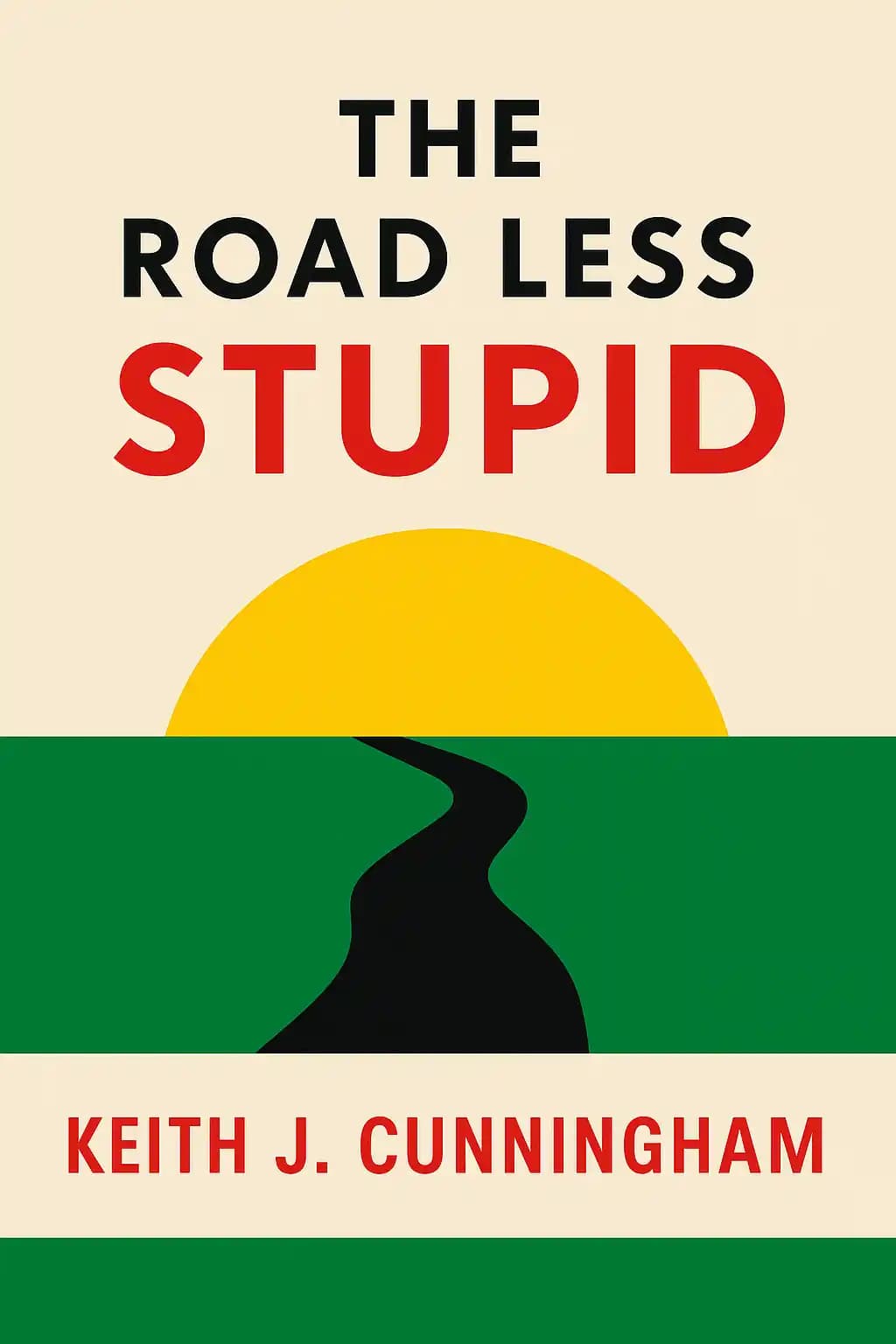
The Road Less Stupid: Breaking Free from the Dumb Tax
Have you ever wondered why some of the smartest people make the dumbest financial decisions? Warren Buffett, arguably the world's greatest investor, doesn't attribute his success to brilliant moves but rather to avoiding catastrophic mistakes. "The key to getting rich isn't doing more smart things," Keith Cunningham argues, "but doing fewer dumb things." This counterintuitive wisdom forms the foundation of Cunningham's philosophy, which has made his book a favorite among entrepreneurs like Tim Ferriss and business leaders seeking sustainable success. Unlike conventional business books that promise quick fixes, Cunningham's approach centers on developing critical thinking skills to avoid what he calls the "dumb tax" - the costly mistakes we make through emotional rather than intellectual decision-making. With his Harvard education and decades of entrepreneurial experience (including losing and rebuilding a fortune), Cunningham offers a refreshing perspective: slow down, think deeply, and make fewer mistakes.
How much money would you have if you could undo your three worst financial decisions? This question, which Cunningham has asked thousands of entrepreneurs, reveals a universal truth: we all pay the "dumb tax" - the price of making emotionally-driven decisions that seem brilliant in the moment but prove disastrous in hindsight.
Business is fundamentally an intellectual sport, yet most business problems begin as emotionally justified "good ideas." When our emotions rise, our intellect falls, and we make decisions we later regret. Cunningham himself admits to paying tens of millions in dumb tax throughout his career.
Warren Buffett called optimism "the enemy of the rational investor" for good reason. Our natural tendency toward optimism blinds us to potential downsides and leads us to make impulsive decisions without considering consequences. Napoleon Hill didn't title his classic "Use Your Gut and Grow Rich" - he called it "Think and Grow Rich" because success requires deliberate thinking.
The road less stupid isn't about having all the right answers but about asking better questions before taking action. It's about creating space between stimulus and response - between a business opportunity and your decision to pursue it. This space, which Cunningham calls "Thinking Time," is where wealth is preserved and created.
第2章
Thinking Time: The Discipline That Changes Everything
Twenty-five years ago, after paying a gigantic dumb tax that nearly bankrupted him, Cunningham developed a practice that transformed his business approach: dedicated "Thinking Time" - focused 30-45 minute sessions of uninterrupted concentration on high-value questions.
This isn't casual pondering or daydreaming. Cunningham's Thinking Time is highly ritualized. He uses a specific chair, pen, and journal reserved only for these sessions. He closes his door, eliminates distractions, and often shades his eyes to maintain focus. After each idea, he creates a new "dot" to prompt further thinking.
The magic happens in what he calls the "third third" of each session - after the obvious ideas and their variations come the most robust insights. His best breakthroughs emerge only after pushing through initial mental barriers.
What makes Thinking Time so powerful is that it creates space for deeper analysis. Most business owners are constantly reacting - putting out fires, responding to emails, and dealing with urgent matters. This reactive mode prevents the deep thinking required to identify and solve root problems.
Cunningham schedules 2-3 Thinking Time sessions weekly, focusing on questions where he feels uncertain, stuck, or potentially unrealistic. He distinguishes between options (ideas) and choices (executable plans), understanding that transforming the former into the latter requires rigorous analysis.
After each session, he takes 15-20 minutes to capture his best ideas, connecting dots rather than just collecting them. This structured process helps him minimize risks, identify opportunities, and maximize results - delivering extraordinary returns for minimal investment of time.
The solution isn't more action but more thoughtful consideration. Imagine if surgeons operated with the same impulsive decision-making many entrepreneurs employ. Would you want a doctor who "trusts their gut" or one who carefully analyzes your condition before making an incision? Yet in business, we often glorify quick, instinctive decisions over methodical thinking.
The discipline of Thinking Time centers around five core practices that must be mastered to avoid stupid decisions, which we'll explore next.
第3章
The Five Core Disciplines: Your Defense Against Costly Mistakes
The first core discipline is finding the unasked question. When we're stuck, we often believe we lack the right answer, but the real issue is that we're asking inferior questions. As Peter Drucker warned, "The truly dangerous thing is asking the wrong question." A problem is simply an unanswered question, while a predicament is an unchangeable environmental state. We often trick ourselves by framing problems as statements ("We don't have enough customers") rather than questions ("How might we attract more ideal customers?"). Better questions follow the "How might I... so that I can..." format, which helps identify what needs breaking versus fixing. Great questions provide insight on the actual problem, simplify it to make it solvable, and expand available possibilities.
The second discipline is separating problems from symptoms. We frequently mistake symptoms (the gap between where we are and where we want to be) for actual problems. The real problem is the specific obstacle impeding progress. Misdiagnosing the root problem leads to tactical rather than strategic thinking and building solutions for problems that don't exist. To identify root problems, ask: What are possible reasons for this symptom? What isn't happening that would narrow the gap? What is happening that, if stopped, would narrow the gap? Sustainable progress requires knowing exactly where you are, where the goal is, and what specific obstacle prevents forward movement. As Cunningham warns, "Few things are worse than running the wrong direction enthusiastically."
The third discipline is checking assumptions. All good ideas that turned bad share one thing: unexamined assumptions. The key is identifying where opinions have replaced facts. Cunningham constantly asks "What Don't I See?" because what he doesn't see costs him money. His dumb tax payments could have been avoided by questioning obvious assumptions before acting. Consider Kodak ignoring digital photography they invented, or the Swiss dismissing battery-powered watches they created. Warren Buffett exemplifies this discipline by refusing even small bets with bad odds: "Stupid in small things, stupid in big things." Thinking Time allows differentiation between facts and emotions/fantasies, preventing costly mistakes.
The fourth discipline is considering second-order consequences. To avoid dumb tax, Cunningham uses the Power of 3 questions: What's the upside? What's the downside? Can I live with the downside? Most people are experts at the first question but rarely assess the second alone due to irrational optimism. Only professionals consider the third question, which is why they pay less dumb tax. Consider the British colonial example in India - they offered bounties for dead cobras, leading entrepreneurs to breed snakes for rewards. When the program ended, farmers released thousands of snakes, doubling the cobra population. As Tom Kite taught Cunningham during golf: "A double bogey is a bad shot followed by a stupid shot." Mistakes are inevitable; double bogeys are usually avoidable.
The fifth discipline is creating the machine. Thinking Time helps clarify the core problem, but a destination isn't a road map. You need a machine to move from Point A to Point B. Building this machine requires actual changes in activity, priorities, and resource allocation. Most solutions fail because management is unclear about these necessary shifts. And remember: a great machine operated by B and C players who execute inconsistently is doomed to mediocrity. Consistent execution demands dashboards, processes, standards, metrics, and accountability. Watch for the "Paprika Effect" - like a teaspoon of paprika ruining a perfect apple pie, one tiny mistake can derail an entire business process.
第4章
The Four Hats: Mastering Multiple Business Mindsets
Most businesses start with someone passionate about an idea (the Artist/Creator) or with special skills (the Operator/Technician). While passion and technical competence create initial traction, sustainable business success requires mastering business skills.
In business, four primary roles must be performed, each requiring different mindsets and skills:
1) Artist (Creator): Highly creative and passionate about their ideas. They assume better products lead to more sales, but can become control freaks.
2) Operator (Technician): Adds value through effort and execution but often gets trapped in reactive mode, putting out fires without addressing root causes.
3) Owner (Business): Adds value through leverage (team) and measurement (dashboards/financial analysis), balancing growth and control through proper delegation.
4) Board (Investor): Focuses on questioning, thinking sequentially, anticipating crises, identifying risks, and providing perspective - the defensive mindset that prevents expensive mistakes.
Most entrepreneurs excel at one or two of these roles naturally but must develop competence in all four. The ability to switch between these mindsets - wearing different "hats" depending on what your business needs - is crucial for sustainable success.
The best business decision you'll make is working with a peer group that questions assumptions, raises the bar, and holds you accountable. Growth and control work inversely - the more growth you desire, the less control you can maintain.
第5章
Culture and Leadership: You Get What You Tolerate
Culture isn't about perks like nap rooms or free smoothies - those drive entitlement, not excellence. True culture defines how people treat each other, communicate, handle conflict, and maintain accountability. Most workplace cultures aren't consciously created but merely tolerated due to lack of courage to address problems like gossip, missed deadlines, and mediocrity. The key to great culture is creating and enforcing clear "rules of the game" that define boundaries so everyone knows how to act.
Cunningham prioritizes culture so much that his companies include culture statements in job postings and discuss principles in first interviews. Their culture demands accountability ("See It, Own It, Solve It, Do It"), solution-oriented thinking, respect, urgency, personal ownership, and rejection of average performance. Most terminations happen due to poor attitudes and cultural misalignment, not lack of skills. Remember: employees are #1, not customers. Employees create all value, and culture engages them.
When initiating cultural change, beware three saboteurs: First, culture-building requires ongoing commitment, not a one-time initiative. Second, there's always someone who thinks they're exempt from cultural standards - usually a top performer who will ultimately need to go. Third, unenforced rules are merely suggestions - coaching without consequences is pointless. Every leadership failure stems from lack of courage to have difficult conversations. If you truly care about people's growth, you'll speak the unsaid. As Peter Drucker noted: "Culture eats strategy for breakfast."
While leadership literature focuses on personality traits and communication styles, successful CEOs have seven primary non-delegable responsibilities: clarify Point A (current reality) and Point B (future vision); identify the gap between these points and the obstacle preventing progress; design the plan and machine to overcome the identified obstacle; allocate resources effectively; recruit and retain A players; build the organization chart; and create the culture. The caliber of your team creates leverage - "business success depends on who you hire and who you don't fire." A lousy culture reflects a lousy CEO. The key is clarity on obstacles and consistent disciplined execution on critical drivers.
第6章
Specificity and Planning: The Power of Clarity in Business
The primary reason most goals and budgets fail is they're hollow, generalized statements of hope rather than rigorous standards with measurable drivers. Generalizations kill clarity, and clarity equals power - the ability to act. Vague phrases like "I'll know it when I see it," "my intention is to," or "we hope to achieve" are meaningless. This approach is like shooting at a wall then painting a bull's-eye around the hole. Expert snipers paint the target first, then fire.
A real plan includes specific, measurable steps broken down by week, with milestones, timelines, resources, and personal calendar commitments. It names leads in your funnel, conversion percentages, and transaction values. Without specificity and accountability, you're living in fantasy. Though plans often miss targets, having specific measurements enables real-time course correction. Like following a recipe when cooking, specificity in planning helps anticipate needed resources before starting.
Plans must be executable, addressing how outcomes will be achieved, what activities are required, who will perform them, what performance standards exist, and who owns the outcome. Remember: glossy and fluffy are safe but produce mediocrity. Specifics and accountability require courage but produce greatness.
The author warns against blindly following specialist advice, as consultants typically recommend solutions within their expertise regardless of your actual needs. Using an anecdote about a Forbes 400 member with a personal chef, he illustrates that you're limited by the expertise of your advisors. Trying to grow before optimizing what you already have is senseless. His bumper sticker wisdom: "Optimize before you maximize." While creating websites and marketing campaigns is more exciting than refining sales scripts and focusing on referrals, quality leads targeting the right market with compelling messages matter more than quantity.
第7章
Learning from Crisis: Extracting Wisdom from Failure
In the late 1980s, when the Southwestern U.S. real estate market collapsed, Cunningham lost everything. After making millions during the boom years, he watched property values plummet to 20% of their debt value. Beyond financial devastation, his identity was shattered.
From this catastrophe came crucial strategic insights: Lack of rules, skepticism and discipline caused every mistake. Emotions mixed with greed and easy capital produce disasters. Financial engineering can't transform bad deals into good ones. Success breeds complacency and ego, not invincibility.
On deals: Never pursue marginal opportunities just to keep staff busy. Bad economies don't create problems - they reveal them. Projects always take longer and cost more than projected. When markets turn bad, there are no buyers at any price.
Regarding financing: Debt creates only the illusion of wealth. Excessive leverage and hope cause financial crises. Never finance long-term assets with short-term debt. Too much available money makes you stupid.
For personnel: Find and compensate the best people well. One superstar is more valuable than ten mediocre performers. Address performance issues immediately - the cost of tolerating incapable employees exceeds the discomfort of termination.
On overhead: Stay lean even during prosperous times. Scrutinize every expense continuously. When markets shift, you can't cut costs fast enough. Cash truly is king.
The best time to learn lessons is before making mistakes, but admitting errors and extracting wisdom is the next best option. As Buckminster Fuller said, "A mistake is not a sin unless it is not admitted."
第8章
The Customer-Centric Approach: Find Out What They Want
On Cunningham's first date with his now-wife Sandi, he asked what she wanted in a relationship. Her reply-"I want to be loved and adored"-led to a 90-minute conversation where he documented exactly what would make her feel loved and adored. One requirement was a daily note, which he's written ever since.
This story illustrates a powerful business principle with three components: FOWTW (Find Out What They Want) - anticipate problems and identify customer pain points; GAGI (Go And Get It) - design solutions for identified needs; and GITT (Give It To Them) - deliver solutions with excellent execution and experience.
The fundamental mistake businesses make is starting with what they want to sell rather than what customers want to buy. As Peter Drucker noted, "When marketing is done right, selling becomes unnecessary."
This principle applies to employee relationships too. With Patty, an underperforming cashier who failed to maintain lobby cleanliness, Cunningham took a coaching approach. Rather than issuing formal warnings, he asked her to help him understand why the problem persisted and explained that when his effort to help exceeded her effort to improve, their working relationship would become unsustainable.
Patty developed her own solution - a laminated checklist and alarm reminders to monitor lobby cleanliness. This approach saved a valuable employee while reinforcing that jobs and work are connected.
The universal truth is that all employees want success - the key is aligning on what success means. The most powerful phrases in leadership are "Help me understand..." and "What do you recommend?"
第9章
The Growth Formula: Prioritizing What Matters
The Growth Funnel has eight primary ways to impact revenue, beginning with keeping more customers:
1. Keep More Customers: The primary key to growth is falling in love with customers, not products. Most businesses fail to grow because they don't retain existing customers.
2. Increase Referrals and Repeats: No business can survive without referrals and repeat business. A powerful question: "How would you run your business if 100% of your future growth was by referral and repeat business only?"
3. Define and Enhance Certainty of Success: Rather than focusing on "value propositions," reframe the concept as a "success proposition." The fundamental question: "What has to happen so the customer will say 'I'd have to be crazy to do business with someone else'?"
4. Enhance/Train the Sales Process: Amateurs "wing it" in sales; professionals use formulas, scripts, and processes they continuously practice and refine.
5. Increase Conversion Percentage: Improving closing percentages with existing leads directly impacts sales. A 5% increase in close ratio equals a 20% increase in leads if you're currently closing 25%.
6. Increase Transaction Size: Packaging multiple products or services together at a price less than a la carte creates perceived value and increases transaction size.
7. Increase Frequency: Successful businesses use rewards or frequent buyer programs to encourage customers to shop exclusively with them.
8. Increase Leads/Drive Traffic: This strategy appears last because it's typically the highest-hanging fruit and most difficult to attain. The author insists the first seven strategies should be optimized before allocating resources to drive leads.
The author warns that most businesses rush to generate more leads (the most expensive option) before optimizing what they already have. This approach is like having a leaky bucket and pouring in more water instead of fixing the holes. Before spending money on marketing and advertising, ensure you're maximizing the value of existing customers and leads. The most sustainable growth comes from delighting current customers who become evangelists for your business.
第10章
Measuring Success: Metrics, Dashboards, and Financial Intelligence
Financial intelligence is critical for business success, yet many entrepreneurs lack basic understanding of their numbers. Cunningham emphasizes that financial statements tell stories about business health and provide early warning signs of problems. He recommends developing "dashboard consciousness" - identifying 5-7 key metrics that drive business success and monitoring them religiously.
These dashboards should include both leading indicators (predictive metrics like sales calls, proposals submitted) and lagging indicators (result metrics like revenue, profit). By focusing on leading indicators, you can adjust course before problems appear in financial results. Dashboards create accountability and alignment, ensuring everyone knows what success looks like and how their work contributes.
Cunningham advises entrepreneurs to develop financial literacy by understanding three key statements: income statements (profit/loss), balance sheets (assets/liabilities), and cash flow statements. He emphasizes that profit doesn't equal cash - many profitable businesses fail due to cash flow problems. Understanding the difference between fixed and variable costs helps make better pricing and growth decisions.
The most important financial concept is return on invested capital (ROIC). Every business decision should be evaluated based on the return it generates compared to capital required. This disciplined approach prevents emotional decisions and ensures resources flow to highest-return activities. Remember: revenue is vanity, profit is sanity, and cash is reality.
第11章
The Final Insight: Success vs. Fulfillment
We mistakenly believe acquiring more possessions will make us happier, but as mathematician Daniel Bernoulli observed, "The utility resulting from any small increase in wealth will be inversely proportional to the quality of goods previously possessed." This principle, known as diminishing marginal utility, manifests everywhere: the second candy bar is never as satisfying as the first, the tenth pair of shoes brings less joy than the first, and an extra billion means nothing to Bill Gates. Even lottery winners return to their baseline happiness levels within months of their windfall.
We consistently confuse pleasure and happiness, using them interchangeably when they're fundamentally distinct experiences. Pleasure comes from sensory stimulation - a new car's leather smell, the rush of a purchase, the taste of fine wine - but can lead to destructive addictions and hedonic adaptation. True happiness, in contrast, stems from gratitude, meaningful relationships, and personal growth. We compound our dissatisfaction by constantly comparing ourselves to those with more rather than recognizing our privileged position globally - forgetting that we live better than 99% of humans who have ever existed.
Success in conventional terms means getting what you want - the promotion, the house, the status symbols. However, fulfillment comes from giving what you've got: your talents, wisdom, and energy in service to others. This distinction becomes crystal clear in life's twilight years. At life's end, the only questions that truly matter are: Is the world better because I lived in it? Who loved me and who did I love deeply? Was my life congruent with my deepest beliefs and values? No one on their deathbed wishes they'd spent more time at the office or bought more expensive cars.
The road less stupid isn't merely about making better business decisions-it's about creating a life of meaning through thoughtful, intentional choices. By implementing the discipline of regular Thinking Time - those crucial periods of deep reflection and strategic contemplation - and mastering the five core disciplines of decision-making, you'll not only avoid costly mistakes but build something truly worthwhile. This journey toward wisdom begins not with impulsive action but with measured thought - that vital space between stimulus and response where true wisdom resides. It's in this space that we can align our actions with our values, our resources with our purpose, and our legacy with our deepest aspirations.
The ultimate measure of a life well-lived isn't in the accumulation of things but in the impact we have on others and the wisdom we gain and share along the way. True wealth lies not in what we possess but in what we give away - our knowledge, our love, and our contribution to making the world slightly better than we found it.