David Frayne's radical manifesto challenges our work-obsessed culture, revealing how employment colonizes lives. Sparking fierce debates in labor rights and feminist circles, it offers a tantalizing question: What if working less could actually make us happier, healthier, and more fulfilled?
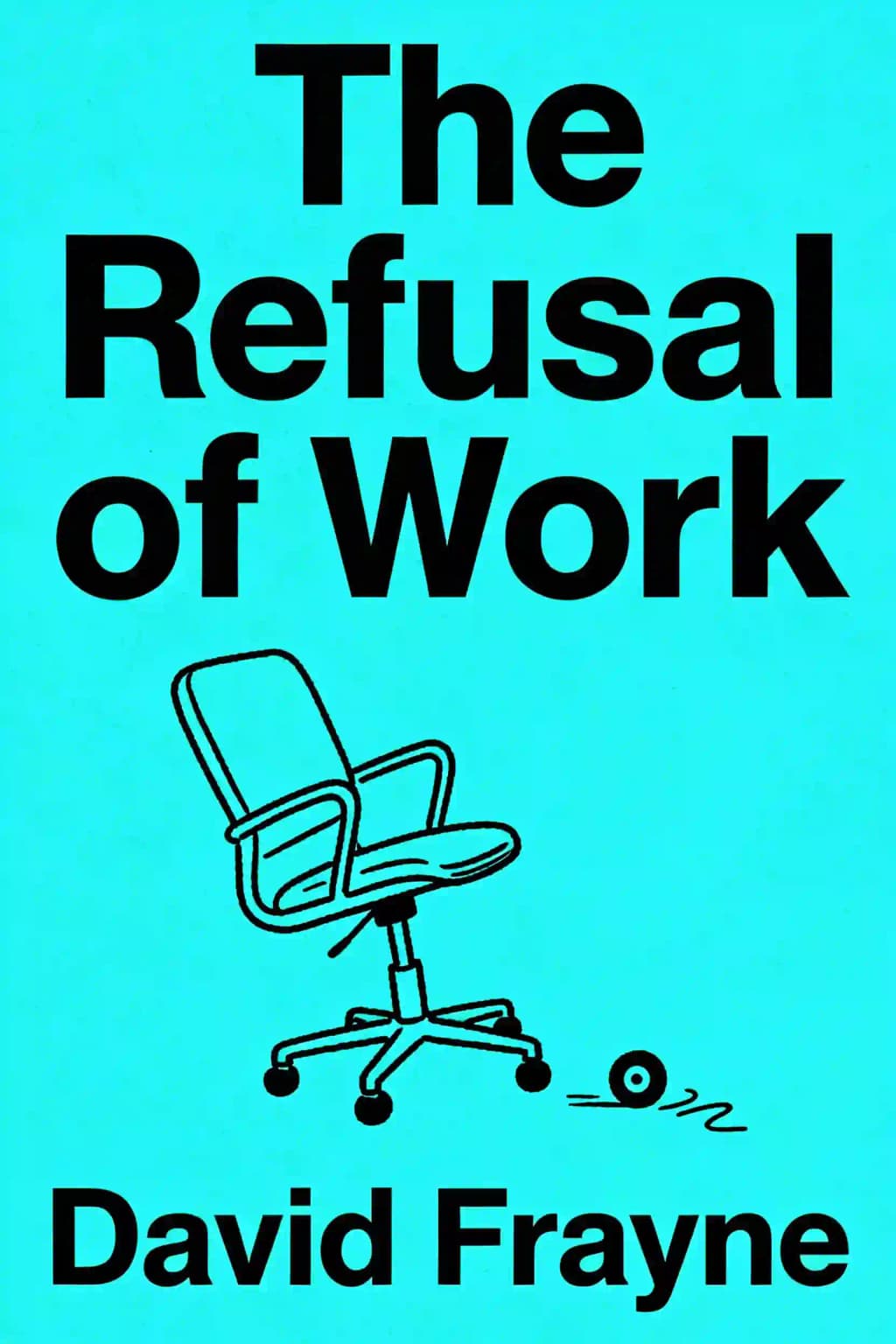
David Frayne, author of The Refusal of Work: The Theory and Practice of Resistance to Work, is a sociologist and a leading voice in critiques of work-centered societies. A lecturer at Cardiff University and former Berggruen Fellow at New York University, Frayne’s research explores automation, welfare systems, and alternatives to traditional employment.
His seminal book—a blend of critical theory and candid interviews with work resisters—challenges the 40-hour workweek’s dominance, arguing for reduced working hours and reimagined notions of productivity.
Frayne’s expertise extends to policy advocacy, including collaborations with think-tank Autonomy and leadership in the UK’s landmark Four-Day Week pilot study. His follow-up work, The Work Cure, examines mental health’s intersection with labor markets. Translated into multiple languages and cited in global debates about universal basic income, The Refusal of Work has become a cornerstone text in post-work discourse, influencing academic and activist circles alike.
The Refusal of Work critiques modern work-centered societies, arguing that employment often undermines well-being, autonomy, and meaningful living. David Frayne examines historical and philosophical resistance to work, explores alternatives like reduced working hours, and questions capitalism’s prioritization of productivity over leisure. The book blends theory with real-world examples of individuals resisting exploitative labor practices.
This book is ideal for readers interested in critiques of capitalism, labor ethics, or post-work theory. It resonates with activists, sociologists, and anyone questioning the societal pressure to prioritize career success over personal fulfillment. Frayne’s accessible style also appeals to general audiences exploring work-life balance.
Key arguments include:
A “post-work” society reorganizes life around non-economic activities, reducing dependence on paid employment. Frayne envisions policies like UBI, shorter workweeks, and democratic control over automation to free individuals from compulsory labor. This shift prioritizes community, creativity, and ecological sustainability over GDP growth.
Frayne highlights:
Yes. Frayne explores models like:
He counters claims that reducing work would cause laziness or economic collapse by citing historical examples where leisure fostered art, innovation, and community. Frayne argues that redefining “work” to include caregiving, volunteering, and creative pursuits could sustain society.
Notable lines include:
Both critique meaningless labor, but Frayne focuses on systemic alternatives (e.g., UBI), while Graeber emphasizes job redesign. Frayne’s work is more philosophical, whereas Graeber’s is anthropological. They converge on rejecting work as a moral obligation.
Yes. With AI and automation reshaping jobs, Frayne’s ideas inform debates about job displacement, universal benefits, and redefining labor. The 2022 UK four-day week pilot he contributed to shows growing traction for post-work policies.
Some economists argue reduced work hours could lower competitiveness. Critics also note UBI’s funding challenges and potential inflation risks. Frayne acknowledges these concerns but stresses experimentation and phased implementation.
Frayne positions UBI as a tool to weaken work’s coercive grip, allowing people to pursue education, art, or caregiving. He cites pilot programs showing UBI’s positive impacts on mental health and community engagement.
著者の声を通じて本を感じる
知識を魅力的で例が豊富な洞察に変換
キーアイデアを瞬時にキャプチャして素早く学習
楽しく魅力的な方法で本を楽しむ
We should question the moral superiority of work.
Work isn't just how we earn money-it's become our primary identity marker.
The goal isn't idleness but widening space for autonomous activities.
Work was explicitly framed as God's punishment.
Aristotle specifically argued that excessive involvement in work corrupted both body and mind.
『Refusal of Work』の核心的なアイデアを分かりやすいポイントに分解し、革新的なチームがどのように創造、協力、成長するかを理解します。
『Refusal of Work』を素早い記憶のヒントに凝縮し、率直さ、チームワーク、創造的な回復力の主要原則を強調します。

鮮やかなストーリーテリングを通じて『Refusal of Work』を体験し、イノベーションのレッスンを記憶に残り、応用できる瞬間に変えます。
何でも質問し、声を選び、本当にあなたに響く洞察を一緒に作り出しましょう。

"Instead of endless scrolling, I just hit play on BeFreed. It saves me so much time."
"I never knew where to start with nonfiction—BeFreed’s book lists turned into podcasts gave me a clear path."
"Perfect balance between learning and entertainment. Finished ‘Thinking, Fast and Slow’ on my commute this week."
"Crazy how much I learned while walking the dog. BeFreed = small habits → big gains."
"Reading used to feel like a chore. Now it’s just part of my lifestyle."
"Feels effortless compared to reading. I’ve finished 6 books this month already."
"BeFreed turned my guilty doomscrolling into something that feels productive and inspiring."
"BeFreed turned my commute into learning time. 20-min podcasts are perfect for finishing books I never had time for."
"BeFreed replaced my podcast queue. Imagine Spotify for books — that’s it. 🙌"
"It is great for me to learn something from the book without reading it."
"The themed book list podcasts help me connect ideas across authors—like a guided audio journey."
"Makes me feel smarter every time before going to work"

Refusal of Workの要約をPDFまたはEPUBで無料でダウンロード。印刷やオフラインでいつでもお読みいただけます。
Imagine waking up one day and realizing you've spent your entire life preparing for, engaging in, or recovering from work. This is the startling revelation at the heart of David Frayne's "The Refusal of Work." While our society has achieved unprecedented productivity levels, we paradoxically work longer hours than medieval peasants. The first question we ask strangers remains "What do you do?"-as if employment defines our very humanity. Politicians across the spectrum obsess over job creation while stigmatizing those who don't work as "scroungers." But what if this work-centered worldview is neither natural nor inevitable? What if our collective worship of employment has become a trap that constrains human potential rather than fulfilling it? The book challenges us to question why, despite technological advances that could free us from drudgery, we remain chained to our desks, factories, and service counters. It explores how work has colonized not just our time but our very identities, and examines the stories of ordinary people who've dared to imagine and create lives less dominated by employment.