第1章
When Egyptian Magic Meets Modern Life
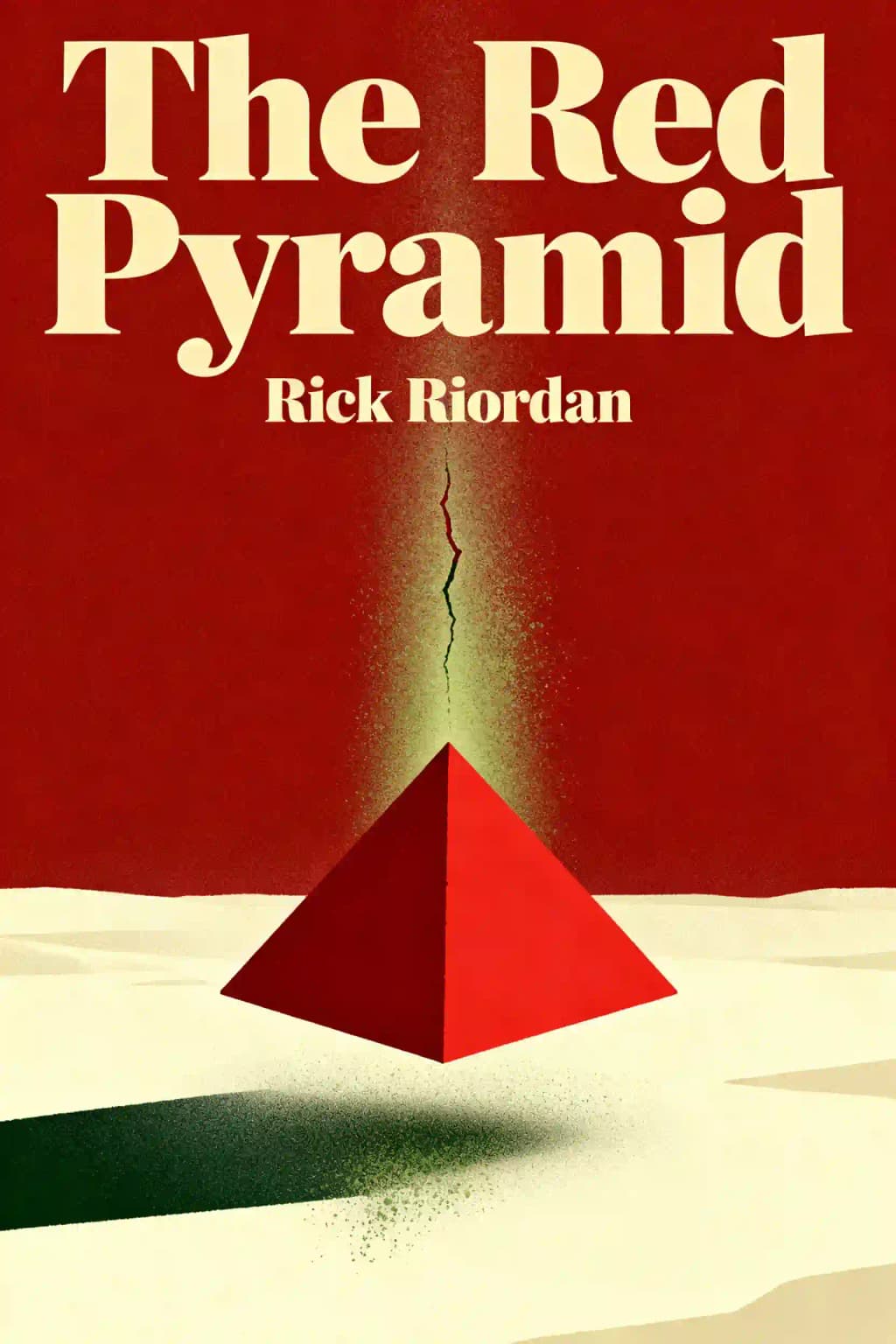
The Red Pyramid burst onto the literary scene in 2010 as the first installment in Rick Riordan's Kane Chronicles, quickly becoming a New York Times bestseller and selling over 4 million copies worldwide. Following his phenomenal success with Percy Jackson, Riordan turned his storytelling magic to Egyptian mythology, creating a world where ancient gods and modern teenagers collide with explosive results. The book resonated particularly with middle-grade readers seeking diverse protagonists, as it features biracial siblings navigating complex family dynamics alongside supernatural challenges. What makes this adventure especially compelling is how it weaves authentic Egyptian mythology into contemporary settings, transforming landmarks like the Washington Monument and Brooklyn Bridge into magical hotspots. With its blend of humor, action, and educational content, The Red Pyramid has become required reading in many school curriculums and remains a favorite among young readers more than a decade after its publication.
第2章
A Family Divided by Magic and Mystery
The Kane siblings couldn't be more different. Carter Kane, fourteen, has spent his life traversing the globe with his Egyptologist father, Julius, moving from one archaeological site to another. Home-schooled and impeccably dressed in button-down shirts and khakis, Carter carries his entire life in a single suitcase, having mastered the art of traveling light. His careful appearance and reserved demeanor reflect years of his father's emphasis on presenting themselves as professional and dignified, particularly as African-Americans in academia. His twelve-year-old sister Sadie, meanwhile, has been raised in London by her maternal grandparents following their mother's mysterious death six years earlier. With her caramel-colored hair streaked with rebellious red highlights, well-worn combat boots, and distinctly British accent, she's Carter's opposite in nearly every way - from her bold personality to her casual disregard for others' expectations.
The siblings see each other only twice a year during strictly regulated visits, their relationship strained by distance and circumstance. Their limited time together is marked by awkward silences and stilted conversations, neither quite knowing how to bridge the gap created by their separate lives. Their father's peculiar rules permeate even these brief reunions - like never letting Carter look inside his workbag, avoiding certain museums, and refusing to discuss their mother's death or her research. These restrictions hint at deeper secrets beneath the surface of their already unusual family arrangement.
During their Christmas Eve reunion in London, these long-buried secrets begin unraveling when Julius takes them to the British Museum after hours. The empty halls echo with their footsteps as their father leads them past countless artifacts, his behavior growing increasingly nervous and erratic. In the Egyptian wing, surrounded by ancient statues and ceremonial items, Julius reveals abilities his children never knew he possessed.
In a catastrophic moment that changes everything, Julius uses a curved ivory wand - resembling both a boomerang and an ancient Egyptian throwing stick - to cast shimmering hieroglyphic spells on the Rosetta Stone. The ancient artifact explodes in a blast of golden light, releasing five Egyptian gods who have been trapped for centuries. A terrifying figure emerges from the destruction - Set, the god of chaos - his skin glowing like volcanic rock, his cruel laugh echoing through the demolished gallery. Set imprisons Julius in a golden sarcophagus that sinks into the floor, leaving only scorch marks on the marble.
This dramatic opening establishes the novel's central conflict: two estranged siblings must quickly overcome their differences and embrace their magical heritage to rescue their father and stop Set from destroying North America. Their journey reveals that the divisions in their family - geographical, cultural, and emotional - were carefully orchestrated to protect them from the dangerous magical legacy flowing through their blood. As Carter and Sadie begin piecing together the truth about their parents and their own latent powers, they discover that their mixed heritage (African-American and British, mortal and magical) gives them unique abilities in both the modern and magical worlds. What once divided them - their different upbringings, appearances, and personalities - becomes their greatest strength as they face challenges that require both Carter's methodical knowledge and Sadie's instinctive power.
第3章
The House of Life: Ancient Magic in Modern Times
Following the museum disaster, the Kane siblings are whisked away to Brooklyn by their uncle Amos, whom they barely remember. He brings them to an impossible mansion perched atop an abandoned warehouse by the East River-the Twenty-first Nome, headquarters for the House of Life in North America. This five-story wonder seems to flicker in and out of visibility unless directly focused upon, its Great Room dominated by a thirty-foot statue of Thoth, the ibis-headed god of knowledge.
Amos reveals the truth about their heritage: the Kane family has been part of the House of Life-an ancient order of Egyptian magicians-for generations. Their mother's family, the Fausts, also carried magical bloodlines. By combining these ancient lineages, Carter and Sadie have become "the most powerful Kane children to be born in many centuries." This explains why they were separated after their mother's death-together, their power was too dangerous and unpredictable.
The siblings learn that Egyptian magic operates through channeling the power of the gods using hieroglyphic spells and magical tools. Magicians can store objects in the Duat-a magical dimension that exists alongside our own-and summon them when needed. They can transform into animals, create protective circles, and animate shabti (magical figurines) to serve them. Most importantly, they discover that Egyptian relics contain concentrated magical energy that serves as focal points for spells.
However, the House of Life has a complicated relationship with the Egyptian gods. Once partners, they became enemies after a schism thousands of years ago. Now, the House forbids "hosting" gods-allowing a deity to inhabit a human body-considering it dangerous blasphemy. This prohibition directly conflicts with what happened to Julius Kane, who deliberately attempted to host Osiris, and what may be happening to Carter and Sadie themselves as they develop strange new abilities.
Through this worldbuilding, Riordan creates a rich magical system with clear rules and limitations. Magic requires training and exacts a physical toll-casting powerful spells leaves the magician drained and hungry. The system's complexity allows for creative problem-solving throughout the story while establishing the high stakes of the siblings' untrained attempts to wield such dangerous power.
第4章
Gods Among Us: Divine Beings in the Modern World
The Egyptian pantheon comes vividly to life in The Red Pyramid, with gods portrayed not as distant deities but as complex, flawed beings with distinct personalities and agendas. Bast, the cat goddess, has been living as Sadie's pet Muffin for years, fulfilling a promise to protect the Kane children. When she reveals her true form-a woman in a leopard-skin jumpsuit who can transform into a giant cat warrior-she brings both fierce protection and feline quirks, like using furniture as scratching posts and being distracted by laser pointers.
Thoth, the god of knowledge, appears as an eccentric professor at the University of Memphis who plays basketball with baboons and obsessively edits his own ancient texts. Anubis, god of funerals, manifests as a handsome teenager in black clothes who develops a crush on Sadie. Even Set, the villain, is portrayed with nuance-a destructive force of chaos who nevertheless played an important role in Egyptian cosmology by protecting Ra from the true embodiment of chaos, Apophis.
Riordan explores the concept of gods needing human hosts to fully manifest in the mortal world. This symbiotic relationship offers power to the human but risks overwhelming their personality. The greatest pharaohs of Egypt were god-hosts, particularly of Horus, explaining their divine right to rule. This tradition connects directly to Carter and Sadie, who begin experiencing strange symptoms suggesting they're hosting Horus and Isis respectively.
The novel presents a fascinating examination of what it means to share consciousness with a divine being. Carter struggles against Horus's battle impulses and arrogance, while Sadie finds it increasingly difficult to separate her thoughts from Isis's manipulative whispers. Their journey toward balance-neither rejecting the gods nor being consumed by them-forms a central theme of the story. When they finally achieve perfect harmony with their divine counterparts during the climactic battle with Set, it's a moment of triumph that demonstrates personal growth rather than surrender.
This portrayal of gods as both powerful and dependent creates a unique dynamic where divinity isn't absolute. The gods need humans as much as humans need them, establishing a foundation for the series' larger exploration of balance between mortal and immortal forces.
第5章
A Journey Through Magical America
The Red Pyramid transforms familiar American landmarks into sites of magical significance, creating a vibrant landscape where ancient Egyptian power flows through modern architecture. The Washington Monument isn't just a tourist attraction but an obelisk channeling the energy of Ra, its gleaming white surface acting as a beacon for magical energy that stretches into the heavens. The Metropolitan Museum of Art houses genuine magical artifacts among its Egyptian collection - ancient amulets still humming with power, ceremonial daggers that could slice through dimensional barriers, and sarcophagi inscribed with spells that still whisper in the quiet halls. Phoenix, Arizona becomes the perfect headquarters for Set's destructive desert magic, its scorching heat and vast stretches of sand creating an environment where chaos magic thrives.
As Carter and Sadie travel across America, they discover that Egyptian magic has shaped the continent in ways most people never notice. The Twenty-first Nome in Brooklyn stands as a magical fortress, invisible to ordinary mortals, its walls shimmering with protective hieroglyphs and magical wards that bend light and confuse mortal minds. The Rio Grande isn't merely a geographical border but a powerful magical boundary where river goddess Nephthys might be summoned - its waters carrying ancient memories and serving as a natural conduit for water magic. Even ordinary city streets reveal their magical significance: ley lines of power running beneath major avenues, crossroads marked with ancient symbols visible only to those with magical sight, and modern skyscrapers unknowingly built atop sites of ancient power.
This magical geography serves multiple storytelling purposes. It grounds the fantastic elements in recognizable settings, making the supernatural feel more plausible - when readers see how magic transforms familiar places, they can imagine similar enchantments in their own neighborhoods. It creates natural waypoints for the quest narrative as the siblings travel from New York to Memphis to Phoenix, each location presenting unique magical challenges and opportunities. Most importantly, it suggests that magic isn't confined to ancient history or distant lands but exists right under our noses - we just need to learn how to see it.
The novel's most spectacular setting is Set's red pyramid inside Camelback Mountain - a massive structure being built as "the final and eternal tomb of Osiris." This impossible construction, hidden from mortal eyes by powerful magic, represents the ultimate corruption of Egyptian sacred architecture. Where traditional pyramids were meant to help pharaohs ascend to the afterlife, Set's creation aims to permanently trap a god in the mortal realm, disrupting the cosmic balance. The pyramid's blood-red walls pulse with malevolent energy, its internal geometry defies physical laws, and its very existence threatens to tear apart the barrier between the mortal world and the Duat.
By reimagining America through an Egyptian magical lens, Riordan creates a world that feels simultaneously familiar and wondrous. Modern cities become layered with ancient power - subway tunnels double as paths to the underworld, public parks hide enchanted groves, and busy intersections mask magical portals. The suggestion that ancient power flows through modern cities invites readers to look at their surroundings with fresh eyes, wondering what magic might be hidden in plain sight, and imagining the possibilities that exist in the spaces between the mundane and the miraculous.
第6章
Identity and Heritage: Finding Strength in Roots
At its heart, The Red Pyramid is a story about two siblings discovering their identity through connecting with their heritage. Carter and Sadie begin the novel estranged not just from each other but from half of their cultural background. Carter, who has traveled extensively with their African American father, identifies strongly with his Black heritage but has never had a permanent home. Sadie, raised by her white British grandparents, has grown up disconnected from her African American roots.
Their journey forces them to confront both sides of their biracial identity while discovering a third heritage they never knew they had-their magical Egyptian bloodline. The revelation that they are descended from pharaohs on both sides-their father from Narmer, the first pharaoh, and their mother from Ramesses the Great-adds another layer to their complex identity.
Carter's relationship with his racial identity is particularly nuanced. He recalls his father's words about always dressing formally: "Carter, you're getting older. You're an African American man. People will judge you more harshly, and so you must always look impeccable." This lesson about navigating racism through presentation reflects real-world code-switching that many people of color experience. By the end of the novel, Carter begins wearing more casual teenage clothes, suggesting a growing comfort with expressing himself authentically.
Sadie's journey involves reconnecting with the family she's been separated from and embracing her multicultural identity. Initially dismissive of "all this mad Egyptian stuff," she gradually comes to see Brooklyn House as her true home, choosing to stay there rather than return to London. Her decision represents an integration of all aspects of her heritage rather than being defined solely by where she was raised.
The siblings' magical abilities are directly tied to their bloodline, making their heritage literally empowering. Yet the novel avoids suggesting that their power comes solely from ancestry. Instead, it emphasizes how they choose to use their inherited gifts, honoring their parents' legacy by continuing their work to restore balance between gods and humans.
第7章
Siblings in Conflict and Cooperation
The relationship between Carter and Sadie forms the emotional core of The Red Pyramid, offering a nuanced exploration of sibling dynamics against the backdrop of ancient Egyptian magic. Their journey from estranged siblings who barely know each other to partners who trust each other with their lives drives the narrative forward as powerfully as the external quest to stop Set. Their story reflects universal themes of family reconciliation, mutual understanding, and the strength found in embracing differences.
Their initial interactions are marked by bickering and mutual incomprehension, stemming from their vastly different upbringings. Carter, raised traveling the world with their father, has developed a reserved, scholarly personality and deep knowledge of Egyptian history. Sadie, raised in London by their grandparents, exhibits a rebellious streak and quick-witted irreverence. They compete for narrative control, frequently interrupting each other's sections of the story to correct details or add commentary. These interruptions, rendered as [Carter's note: That's not exactly how it happened] or [Sadie's note: My brother is being modest], create a sense of sibling rivalry extending even to how their story is told. The dual narration serves both as a storytelling device and a metaphor for their competing worldviews.
Their differences initially appear as weaknesses but gradually reveal themselves as complementary strengths through various challenges. Carter's methodical approach and knowledge of Egyptian history provides crucial context for their magical discoveries, helping them understand the ancient spells and artifacts they encounter. Meanwhile, Sadie's willingness to break rules and follow instincts helps them overcome obstacles that caution alone couldn't solve, particularly in their encounters with hostile gods and magical barriers. When Sadie becomes trapped in bird form after transformation magic goes awry, it's Carter's personal stories about their father that help her regain her human shape - demonstrating how their shared family connection transcends their surface-level differences and academic approaches.
The siblings' growth is tested through increasingly dangerous situations, from their escape from the British Museum to their confrontations with various Egyptian deities. Each challenge forces them to rely on each other's strengths and compensate for each other's weaknesses. Their ability to host different gods - Carter with Horus and Sadie with Isis - further emphasizes their complementary natures, as these divine partnerships reflect their individual characteristics while requiring them to work in tandem.
The climactic battle against Set showcases their perfect partnership and how far they've come. While Carter engages Set directly in physical combat, drawing on Horus's warrior nature, Sadie performs the complex spell needed to bind him, utilizing Isis's magical expertise. Neither could succeed alone, but together they achieve what seemed impossible. Their victory comes not from erasing their differences but from learning to value each other's unique approaches and abilities - a lesson that proves essential for their future as leaders.
By the end of the novel, they've formed a genuine bond based on mutual respect and shared purpose. Their decision to stay together at Brooklyn House and recruit other magicians with pharaonic blood shows how far they've come from the reluctant reunion at the story's beginning. Their growth as siblings parallels their growth as magicians, suggesting that the strongest magic comes from connection rather than isolation. This transformation from reluctant siblings to trusted partners becomes the foundation for their continued adventures and leadership of the Twenty-first Nome.
第8章
Legacy and Sacrifice: The Price of Power
Throughout The Red Pyramid, the Kane siblings gradually uncover the truth about their parents' actions and the sacrifices they made. What initially appears as abandonment-their father's frequent absences, their mother's death-is revealed as profound sacrifice for a greater purpose.
Ruby Kane, their mother, died at Cleopatra's Needle six years earlier while attempting a dangerous magical ritual with Julius. As a diviner with the gift of seeing the future, she had foreseen chaos rising and communed with Isis against House teachings. She sacrificed herself to give her children time to grow into their power and restore Ma'at (universal order). When Sadie finally sees her mother in the Hall of Judgment, Ruby explains that her death was a necessary part of a larger plan: "We had to leave you, but we never stopped loving you."
Julius Kane's apparent abandonment of Sadie and frequent absences from Carter similarly served a greater purpose. His research into Egyptian magic and quest to summon Osiris weren't academic pursuits but preparations for his own sacrifice. By hosting Osiris and allowing himself to be captured by Set, he ensured the god of the underworld would have a throne to return to, maintaining cosmic balance. When reunited with his children in the afterlife, he explains that helping Osiris was "a thousand times more important than anything I could have done in the mortal world."
These revelations force Carter and Sadie to reconsider their resentment toward their parents and contemplate their own willingness to sacrifice for the greater good. When faced with the choice to keep the immense power of hosting gods or release Isis and Horus back to the Duat, they choose the harder path of developing their own magic slowly rather than relying on divine shortcuts. This decision honors their parents' legacy of responsible stewardship of power.
The novel's exploration of legacy extends beyond the immediate Kane family to their ancestral connections to pharaohs and the House of Life. The siblings discover a papyrus titled "Blood of the Pharaohs" containing a list of names in protective cartouches, with "KANE" as the final entry. This document suggests their family has maintained a secret tradition of preserving connections to the gods that the House of Life officially rejected centuries ago.
By the story's end, Carter and Sadie embrace their responsibility to continue this legacy by recruiting other descendants of pharaohs and teaching them the path of the gods. Their mission represents both honoring their parents' sacrifice and adapting their inheritance for a new generation, ensuring that ancient wisdom isn't lost but evolves to meet contemporary challenges.
第9章
Chaos and Order: The Eternal Struggle
The Red Pyramid presents the conflict between chaos (isfet) and order (Ma'at) as the fundamental struggle underlying all creation. This isn't a simplistic battle between good and evil but a complex balancing act essential to existence itself. As Zia explains, "Too much order is stagnation... Too much chaos is destruction. Balance is best."
Set, the novel's primary antagonist, embodies chaos but isn't portrayed as purely evil. As the god of desert storms and violence, he played an important role in Egyptian cosmology by protecting Ra from Apophis, the true embodiment of chaos. His current destructive rampage stems from being unbalanced and unchecked, not from inherent malevolence. This nuanced portrayal avoids demonizing chaos entirely, suggesting instead that it becomes dangerous only when it overwhelms order.
The House of Life's rigid prohibition against working with gods represents excessive order that has become stagnant and counterproductive. By forbidding god-hosting-once the source of ancient Egypt's greatest magic-they've weakened themselves against rising chaos. Iskandar, the Chief Lector, recognizes this mistake before his death, telling Sadie that reconciliation between gods and magicians might be necessary to face coming threats.
The climactic confrontation reveals an even greater danger than Set-Apophis, the serpent of chaos, attempting to use Set's power to break into the mortal world. This revelation transforms the narrative from a straightforward quest to defeat a villain into a more complex realization that Set might be needed as an ally against true chaos. Sadie's decision to bind Set rather than banish him demonstrates her understanding that balance requires containing chaos rather than eliminating it entirely.
By the novel's end, Carter and Sadie have restored a measure of balance by helping Osiris and Horus reclaim their rightful places while keeping Set in check. However, the appearance of Apophis suggests that maintaining this balance will require ongoing vigilance and adaptation. Their mission to rebuild connections between gods and humans represents a middle path between the extremes of godless magic (the House of Life's approach) and being overwhelmed by divine power (hosting gods without proper training).
This sophisticated treatment of chaos and order elevates the novel beyond typical good-versus-evil narratives, inviting readers to consider how opposing forces might be necessary complements rather than absolute enemies. It suggests that wisdom lies not in eliminating conflict but in managing it productively-a lesson with applications far beyond magical battles.