第1章
Money Talks: The Psychology Behind Our Financial Decisions
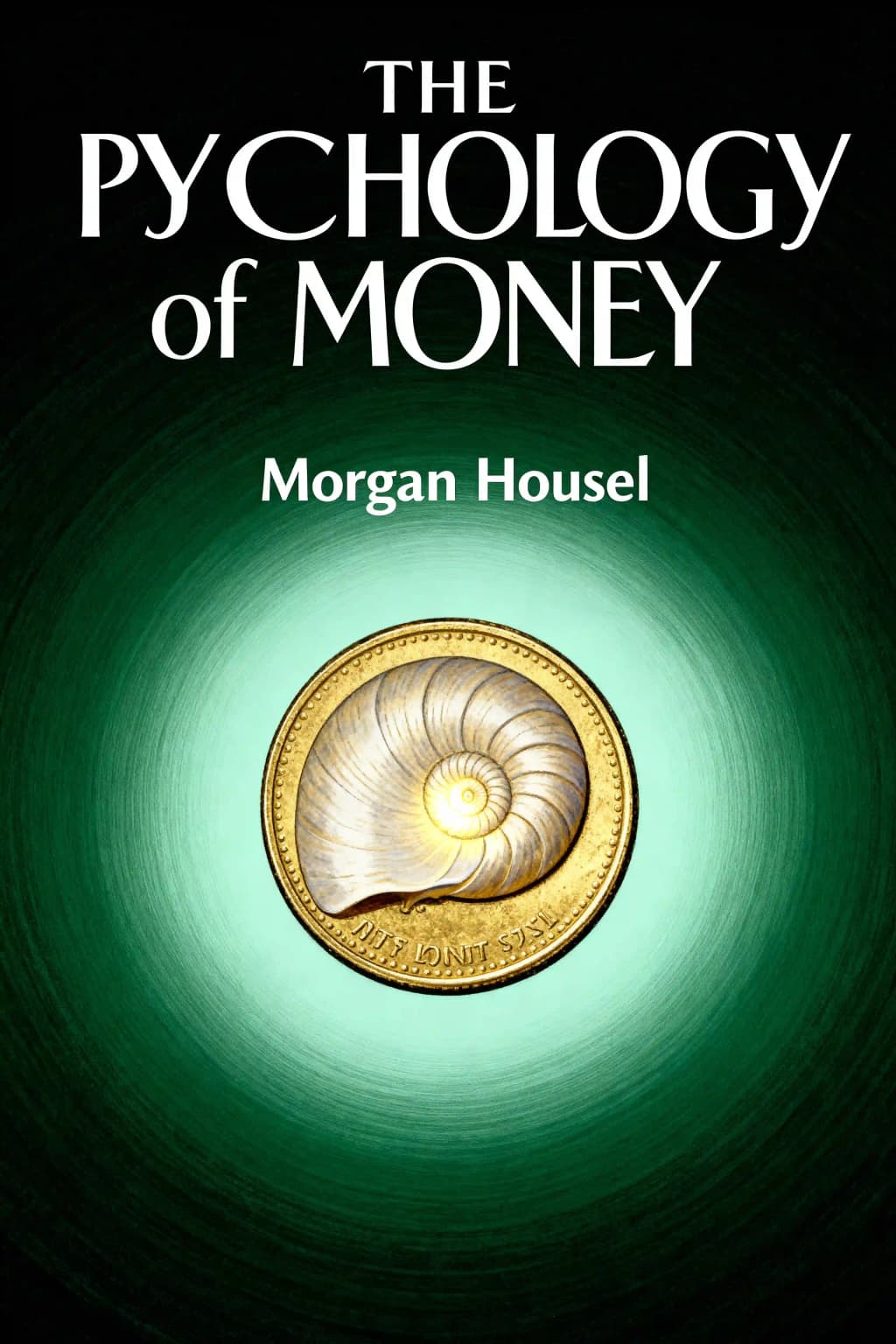
In a world where financial advice is abundant yet financial success remains elusive for many, Morgan Housel's "The Psychology of Money" stands as a refreshing departure from traditional money management literature. Since its 2020 publication, this Wall Street Journal bestseller has sold over two million copies worldwide and been translated into 49 languages. Celebrities from Bill Gates to Arianna Huffington have praised its accessible wisdom, with Gates noting it "helped me think more clearly about how to manage my finances." What makes this book particularly fascinating is that Housel himself lacks formal financial credentials-yet his insights have resonated more deeply than those of many decorated economists. The secret? Understanding that doing well with money isn't about what you know, but how you behave.
第2章
The Janitor Who Died With Millions
When Ronald Read died at age 92, the former janitor and gas station attendant shocked his community by leaving behind $8 million. With no inheritance or high-paying career, Read had quietly built his fortune through consistent, patient investing over decades. Meanwhile, Richard Fuscone, a Harvard-educated Merrill Lynch executive, declared bankruptcy during the same period despite his elite credentials and financial expertise.
This stark contrast reveals the book's central premise: financial success depends more on behavior than intelligence. Unlike fields where education directly correlates with performance, finance allows someone with no formal training to outperform experts with the best credentials.
The financial industry teaches money as a math-based field governed by formulas and data, but this approach misses something crucial. Money decisions happen in the messy real world where emotions, biases, and personal history influence every choice we make. Our unique experiences-the generation we belong to, the economic conditions we grew up in, our family's approach to money-shape our financial perspectives in ways formulas can't capture.
This explains why equally intelligent people can fundamentally disagree about investing strategies or economic policies. Research shows our investment decisions are heavily anchored to experiences from early adulthood. Those who grew up during high inflation invest less in bonds; those who witnessed strong stock markets invest more in stocks. Germans and Japanese who saw their markets decimated during World War II developed fundamentally different risk tolerances than Americans whose markets doubled during the same period.
Even seemingly irrational financial behaviors make sense when viewed through the lens of personal experience. Consider lottery tickets-purchased predominantly by lower-income Americans who spend an average of $412 annually despite many saying they couldn't come up with $400 in an emergency. This appears contradictory until you understand they're buying something beyond the ticket: they're purchasing hope, a dream that feels otherwise unattainable.
第3章
When Luck Meets Risk: The Hidden Forces Behind Success
We love simple narratives about success and failure. Work hard, get rewarded. Make poor choices, suffer consequences. But this tidy cause-and-effect storytelling ignores the powerful roles luck and risk play in our financial lives.
When judging others' failures, we prefer straightforward explanations of cause and effect. For our own setbacks, however, we create complex narratives about bad luck and external circumstances. This double standard creates a dangerous situation when trying to learn from others' financial journeys.
The cover of Forbes doesn't celebrate poor investors who made good decisions but experienced bad luck. Instead, it often features wealthy investors who made mediocre decisions but got lucky. Both flipped the same coin-it just landed differently.
Consider figures like Cornelius Vanderbilt and John D. Rockefeller, whose willingness to flout laws is often portrayed as business genius. But the line between "inspiringly bold" and "foolishly reckless" is razor-thin and only visible with hindsight. Even legendary investor Benjamin Graham's success came largely from breaking his own diversification rules with a single GEICO stock investment. As he later wrote: "One lucky break, or one supremely shrewd decision-can we tell them apart?"
To navigate this confusion, we should be careful who we praise or look down upon, recognizing that not all success comes from effort nor all poverty from laziness. More importantly, we should focus less on specific individuals and more on broad patterns. Extreme examples are often the least applicable to our own lives because they're more likely influenced by extreme luck or risk. Finding common patterns across many cases provides more useful lessons than studying outliers.
When things go extremely well, remember it's not as good as you think. When you fail, arrange your financial life so that one setback won't wipe you out. Nothing is as good or as bad as it seems.
第4章
The Dangerous Allure of "More"
Having "enough" is a powerful concept that many of the most successful people struggle to grasp. Consider the story John Bogle once shared about author Joseph Heller attending a party hosted by a hedge fund billionaire. When someone pointed out how much more money the billionaire had made than Heller, the author replied: "Yes, but I have something he will never have... enough."
This wisdom contrasts sharply with the story of Rajat Gupta, who rose from orphaned poverty in Kolkata to become McKinsey's CEO and amass $100 million in wealth. Despite this extraordinary success, Gupta wanted to join the "billionaire circle" badly enough that he committed insider trading, tipping off a hedge fund manager about Warren Buffett's confidential Goldman Sachs investment. This destroyed his career and sent him to prison.
After his release, Gupta told The New York Times he'd learned not to get attached to his reputation-a troubling takeaway that misses the point entirely. Reputation, freedom, family, friends, happiness-these things are invaluable. The real lesson is knowing when you have enough, when it's time to stop taking risks that might harm what truly matters.
The highest form of wealth isn't measured in dollars but in flexibility and autonomy-the ability to wake up every morning and say, "I can do whatever I want today." Psychologist Angus Campbell discovered that having a strong sense of control over one's life is a more reliable predictor of wellbeing than income, house size, or job prestige. Money's greatest value is its ability to give you control over your time.
Even small amounts of wealth provide meaningful freedom: taking sick days without financial stress, waiting for the right job after being laid off, or not fearing your boss because you have emergency savings. Using money to buy time and options offers lifestyle benefits few luxury goods can match.
第5章
The Miracle of Compounding
The billion-year history of ice ages teaches us a profound lesson about money: you don't need tremendous force to create tremendous results. When something compounds-when a small change fuels future growth-extraordinary outcomes can emerge from modest beginnings. This natural phenomenon demonstrates how seemingly minor changes, accumulated over time, can reshape entire landscapes and financial fortunes alike.
Ice ages began not with brutal winters but with cool summers where snow failed to melt completely. This leftover snow made it easier for more snow to accumulate the following winter, reflecting more sunlight, causing more cooling in a self-reinforcing cycle. From a thin layer of persistent snow, the entire Earth eventually became covered in miles-thick ice. This process, known as the Milankovitch cycle, shows how small variations in Earth's orbit led to massive climate changes through the power of compounding effects.
Warren Buffett's fortune exemplifies this principle in the financial world. While he's undoubtedly a phenomenal investor, his true secret is time-he's been investing consistently since childhood, making his first investment at age 11. Of his $84.5 billion net worth, $84.2 billion came after his 50th birthday, and $81.5 billion after he qualified for Social Security. Had he started investing at 30 with just $25,000 but still achieved his remarkable 22% annual returns before retiring at 60, he'd be worth just $11.9 million today-99.9% less than his actual wealth. This stark contrast illustrates how time, not just return rates, drives wealth accumulation.
Jim Simons, the renowned mathematician turned investor, has actually outperformed Buffett with astounding 66% annual returns through his quantitative trading strategies at Renaissance Technologies. Yet he is 75% less wealthy simply because he started investing seriously at age 50, giving him less time to compound. The exponential nature of compounding is so counterintuitive that we often fail to appreciate its power. Good investing isn't about earning the highest possible returns, but about earning pretty good returns that you can stick with for the longest possible time.
This principle extends far beyond investing to numerous aspects of life. In careers, consistent small improvements in skills and knowledge compound into expertise. A professional who improves just 1% per week will be dramatically more capable after a decade. In relationships, small daily acts of kindness and attention compound into strong, lasting bonds. In learning, reading just 20 pages a day amounts to over 7,300 pages per year-equivalent to dozens of books that compound into deep knowledge over time.
The magic of compounding teaches us that patience and consistency often matter more than intensity. Whether in finance, personal development, or relationships, the most powerful results come from modest, sustained efforts that build upon themselves over time. This understanding should guide our approach to long-term success in any endeavor.
第6章
Getting Rich vs. Staying Rich: Different Games Entirely
There are countless ways to get wealthy, but only one way to stay wealthy: some combination of frugality and paranoia. The contrast between Jesse Livermore and Abraham Germansky illustrates this perfectly.
Livermore, the greatest stock trader of his day, made the equivalent of $3 billion in a single day during the 1929 crash by shorting the market. Meanwhile, real estate developer Germansky lost everything and was last seen tearing up ticker tape on Wall Street before disappearing.
Yet four years later, their stories crossed paths again. Livermore, overflowing with confidence after his massive win, made increasingly large bets, fell into debt, and eventually lost everything. Like Germansky before him, he ultimately took his own life.
The key insight: getting money and keeping money require opposite skills. Getting money demands risk-taking, optimism, and putting yourself out there. Keeping money requires humility, frugality, and the paranoid fear that what you've made can disappear just as quickly as it came. As Sequoia Capital's billionaire head Michael Moritz explained when asked about his firm's four decades of success: "We've always been afraid of going out of business."
Survival-not growth, brains or insight-makes the biggest difference in long-term financial success. This matters for two reasons: few gains are worth risking ruin, and compounding only works if you can give assets years to grow. Like planting oak trees, a year shows little progress, but fifty years creates something extraordinary.
Warren Buffett's success comes not just from what he did, but what he didn't do: he didn't use excessive debt, didn't panic-sell during recessions, didn't ruin his reputation, didn't cling to one strategy, didn't rely on others' money, and didn't burn out. He survived, giving compounding time to work its wonders.
第7章
The Hidden Nature of True Wealth
During my time as a valet in mid-2000s Los Angeles, I witnessed firsthand the often deceptive relationship between displays of wealth and actual financial security. I parked countless luxury vehicles - Ferraris, Lamborghinis, Maseratis - but came to realize these gleaming machines weren't always indicators of true wealth. People like "Roger" exemplified this disconnect - he drove a $100,000 Porsche but lived in constant financial anxiety. Within months, I watched as his prized car was repossessed, revealing a fundamental truth: wealth is what you don't see.
We instinctively judge wealth by its visible manifestations - sprawling homes, exotic cars, designer clothes, lavish vacations - but genuine wealth often exists in the inverse of these displays. It's the expensive watch not purchased, the luxury car not leased, the larger house not bought. True wealth consists of financial assets that haven't yet been converted into visible status symbols. It's the accumulated savings, investments, and compound interest quietly growing in accounts, providing security and options rather than fleeting impressions.
The distinction between being rich and wealthy is crucial: being rich reflects current income that can be spent, while wealth represents income not spent that provides long-term flexibility and freedom. A doctor making $300,000 a year but spending it all on lifestyle may be rich, but isn't necessarily wealthy. Meanwhile, a teacher who consistently saves and invests over decades may build significant wealth despite a more modest income. The hidden nature of wealth makes it particularly difficult to learn from and imitate, which helps explain why building lasting wealth remains challenging for many people.
This invisibility creates an interesting paradox in social dynamics: people often purchase expensive items to signal they should be liked and admired, but observers frequently don't admire the owner at all. Instead, they engage in mental self-projection, thinking, "If I had that car/house/watch, people would think I'm cool." The admiration completely bypasses the current owner and focuses on the observer's imagined future self.
When someone pulls up in a Ferrari, the typical reaction isn't to think "that person is impressive" - instead, we imagine ourselves behind the wheel. This psychological pattern applies equally to mansions, fine jewelry, and luxury fashion. While people desperately seek respect and admiration through these purchases, the reality is that such conspicuous consumption often brings less social capital than anticipated. The temporary attention these items attract rarely translates into genuine respect or meaningful relationships.
If earning respect and admiration are your primary goals, cultivating personal qualities like humility, kindness, and empathy will ultimately bring you more genuine appreciation than any material purchase. These characteristics, combined with financial prudence and delayed gratification, form the true foundation of both wealth and social standing. The wealthiest people I've met rarely felt the need to broadcast their success - their security spoke through their actions rather than their possessions.
第8章
Reasonable Beats Rational in the Real World
You're not a spreadsheet. You're a complex, emotional human being who makes decisions based on both logic and feeling. Don't aim to be coldly rational when making financial decisions-aim to be pretty reasonable. Reasonable is more realistic and gives you a better chance of sticking with your plan for the long run, especially during market turbulence.
Academic finance obsesses over mathematically optimal strategies, but real people want strategies that let them sleep at night and maintain their sanity during market downturns. Even Nobel Prize winner Harry Markowitz, the father of modern portfolio theory, split his retirement portfolio 50/50 between stocks and bonds to "minimize future regret" rather than following his own complex optimization models. As Jason Zweig noted, "people are neither rational nor irrational. We are human." This human element means we need investing approaches that work with our psychology, not against it.
Something can be technically true but contextually nonsense when applied to real-world situations. Yale researchers demonstrated that young savers could theoretically benefit from 2:1 leveraged investing, but no normal person could watch their retirement account drop 60% in a market crash and calmly continue the strategy. Similarly, while dollar-cost averaging might be mathematically suboptimal compared to lump-sum investing, its psychological benefits make it more reasonable for most investors. The rational choice isn't always reasonable when human emotions and behavior are factored in.
Developing an emotional connection to your investments, despite seeming irrational, can actually provide the commitment needed to stick with strategies during lean years-which is statistically one of the strongest predictors of long-term success. Home bias (preferring to invest in familiar domestic companies), occasional stock picking of companies you believe in, and making educated market forecasts might not be perfectly rational, but they're reasonable if they help you stay invested when markets get rough. Warren Buffett himself advocates buying businesses you understand and can believe in long-term.
This principle extends well beyond investing into many areas of life and decision-making. We treat fevers as enemies because they cause discomfort, despite scientific evidence supporting fever's beneficial role in fighting infection. Parents give children fever reducers not because it's optimal for healing, but because it's a reasonable response to seeing their child in distress. That's not purely rational, but it's reasonable. Similarly, the best financial plan isn't necessarily the one that maximizes potential returns on paper, but the one you can actually stick with through multiple market cycles, life changes, and emotional challenges. A "good enough" strategy that you'll maintain consistently will likely outperform an "optimal" strategy that you abandon when things get tough.
Remember that investing success is more about behavior management than mathematical optimization. Your ability to stay the course matters more than squeezing out every possible percentage point of return through complex strategies.
第9章
Embracing Uncertainty in a World of Surprises
History is full of surprising events, yet investors and economists often use it as an unassailable guide to the future. This is the "historians as prophets" fallacy-overrelying on past data in a field where innovation and change are constant.
The most important economic events are outliers that move the needle dramatically. These tail events compound in surprising ways-like how 9/11 led to interest rate cuts, which fueled the housing bubble, triggering the financial crisis, pushing millions toward college education, resulting in massive student loan debt.
As Daniel Kahneman wisely noted, "The correct lesson to learn from surprises is that the world is surprising." Not that we should use past surprises as a guide to future boundaries, but as an admission that we have no idea what might happen next. The most impactful economic events of the future will be unprecedented things history gives us little guide about.
This uncertainty explains why the best investors build room for error into their strategies. The most successful card counters in Las Vegas never bet everything even when odds seem favorable. As Kevin Lewis noted, even with a 2% edge, the casino still wins 49% of the time. You need enough money to withstand variance.
Benjamin Graham called this "margin of safety," explaining that "the purpose of the margin of safety is to render the forecast unnecessary." This powerful concept is the only effective way to navigate a world governed by odds, not certainties.
Room for error isn't conservative-it's strategic. It lets you endure a range of outcomes, staying in the game long enough to benefit from low-probability events. Bill Gates kept a year's worth of payroll in the bank even when Microsoft was young. Warren Buffett pledged to "always run Berkshire with more than ample cash."
Nassim Taleb says, "You can be risk loving and yet completely averse to ruin." This captures the essence of intelligent risk management-taking calculated risks while avoiding anything that could wipe you out completely.
第10章
The Art of Enough: Finding Your Financial Freedom
The highest form of wealth is the ability to wake up every morning and say, "I can do whatever I want today." While people pursue money to become happier, the universal fuel of joy is control over one's life.
Despite America being historically wealthy, evidence suggests Americans aren't happier than in the 1950s. We've used greater wealth to buy bigger homes and better stuff while simultaneously sacrificing control over our time. Modern knowledge work, unlike the physical labor of previous generations, never truly ends-our minds are constantly working even when we're officially "off the clock."
As Derek Thompson noted, "The computer age has liberated the tools of productivity from the office," making work potentially endless. When interviewing a thousand elderly Americans about life's most important lessons, not a single person said happiness came from working hard to make money. Instead, they valued quality friendships, being part of something bigger, and spending unstructured time with their children.
Building wealth has little to do with your income or investment returns, and everything to do with your savings rate. Just as the world overcame the oil crisis through efficiency rather than finding more oil, financial wealth comes more from frugality than from chasing higher returns.
The value of wealth is relative to what you need-being efficient with money creates a gap between what you have and what you want. Past a certain level of income, what you need is just what sits below your ego. When you define savings as the gap between your ego and your income, you understand why many people with decent incomes save so little.
Savings without a specific spending goal gives you options, flexibility, and control over your time-an incalculable return that becomes more valuable in our hyper-connected world where intelligence alone is no longer a reliable advantage.
We are poor forecasters of our future selves. The "End of History Illusion" describes how we're aware of how much we've changed in the past but underestimate how much we'll change in the future. This creates a fundamental challenge for long-term financial planning. Rather than one 80-year lifespan, our money effectively has four distinct 20-year blocks with potentially different priorities.
The path to financial freedom isn't about extreme strategies but about finding your own definition of "enough" and building a sustainable relationship with money that allows you to sleep at night while still moving toward your goals. As Morgan Housel concludes, true mastery of the psychology of money comes not from maximizing returns but from maximizing happiness and independence.






![[the-psychology-of-money-by-morgan-housel:c0001] The Psychology of Money p1-1](/_next/image?url=https%3A%2F%2Fd1y2du6z1jfm9e.cloudfront.net%2Fassets%2Fpodcast%2Fpurple.png&w=1024&q=50)
![[the-psychology-of-money-by-morgan-housel:c0002] The Psychology of Money p1-1](/_next/image?url=https%3A%2F%2Fd1y2du6z1jfm9e.cloudfront.net%2Fassets%2Fpodcast%2Fyellow.png&w=1024&q=50)