第1章
Embracing Our Neurological Differences: A Revolution in Understanding the Mind
When you think about the human brain, what image comes to mind? A computer processing information? A machine with parts that can malfunction? For centuries, we've used mechanical metaphors to understand our minds, but what if this fundamental comparison is flawed? What if our brains are more like ecosystems-diverse, adaptive, and thriving through variation rather than standardization?
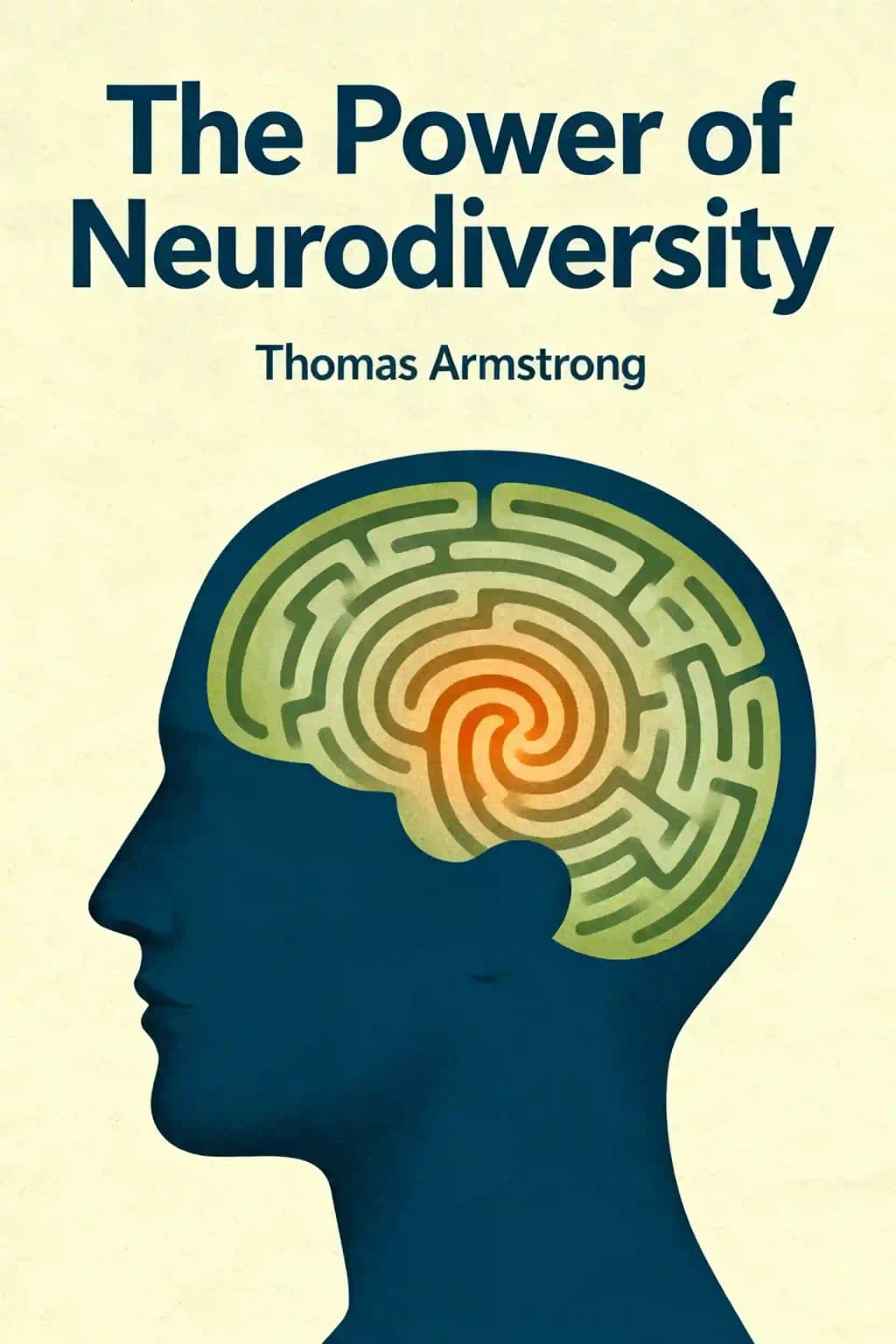
Thomas Armstrong's groundbreaking work "The Power of Neurodiversity" challenges us to reconsider how we view conditions like ADHD, autism, dyslexia, and mood disorders. Far from mere deficits or disorders, these neurological differences may represent essential variations in human cognition that have contributed to our species' success. The book has become required reading in psychology programs nationwide and has influenced figures from Temple Grandin to Steve Silberman, who built upon its foundation in his bestselling "NeuroTribes." As our culture increasingly pathologizes human differences-with psychiatric diagnoses tripling since 1952-Armstrong's perspective offers a revolutionary counterpoint: what if these "disorders" are actually different but equally valuable ways of experiencing and engaging with the world?
第2章
The Rise of Our Disability-Obsessed Culture
Over the past sixty years, we've witnessed an explosion in psychiatric diagnoses-from approximately 100 categories in the 1952 DSM to triple that number by 2000. Conditions like learning disabilities, ADHD, and Asperger's syndrome, unheard of sixty years ago, are now commonly diagnosed. The National Institute of Mental Health reports that over 25% of adults suffer from diagnosable mental disorders annually, while research suggests half of all Americans may experience mental illness during their lives.
This expansion stems partly from increased brain research, funded primarily to study disease rather than to understand positive variations. Advocacy groups, while providing essential services, often emphasize deficits to secure funding. The pharmaceutical industry benefits enormously from new diagnoses, creating financial incentives to medicalize human differences. We've become a culture that pathologizes variations rather than celebrating them.
Neurodiversity offers a more balanced perspective by focusing on differences rather than disorders. Consider how we approach other forms of diversity: we don't say someone has "race disorder" or "cultural disorder"-we recognize these as natural variations. Similarly, dyslexics often visualize clearly in three dimensions, ADHD individuals have diffused attentional styles that notice things others miss, and autistic people may possess extraordinary abilities to detect patterns and details.
The concept of neurodiversity emerged only about twenty years ago, originating with autism spectrum individuals who wanted to be seen as different rather than disabled. The term first appeared in print in 1998 when journalist Harvey Blume wrote in the Atlantic that "neurodiversity may be every bit as crucial for the human race as biodiversity is for life in general." Since then, the concept has grown through support groups, websites, and publications, expanding to include conditions like dyslexia, mood disorders, and intellectual disabilities.
第3章
Eight Principles That Change Everything
Understanding neurodiversity requires shifting our fundamental perspective on how the brain works. First, we must recognize that the human brain functions more like an ecosystem than a machine. For four hundred years, we've used mechanical metaphors-from Descartes' hydraulic analogies to modern computer comparisons-but the brain isn't hardware or software but "wetware," a biological organism of stunning complexity.
Nobel Prize-winning biologist Gerald Edelman describes the brain not as a computer but as "a unique rainforest, teeming with growth, decay, competition, diversity, and selection." Like ecosystems, brains demonstrate remarkable adaptability. Consider eight-year-old Christina Santhouse, who had her entire right hemisphere removed due to encephalitis, yet graduated with honors and attended college as her left hemisphere compensated for the loss.
Second, human beings exist along continuums of competence rather than in discrete categories. Consider sociability: at one end are severely autistic individuals in near-total isolation, then those with Asperger's syndrome, then eccentric but undiagnosed individuals, then introverts, and finally highly social people. Similarly, Yale psychologists Sally and Bennett Shaywitz have shown that reading difficulties occur "as part of a continuum that includes normal reading ability."
Third, what we define as competence depends entirely on cultural values. In the 1800s, physician Samuel Cartwright "diagnosed" runaway slaves with "drapetomania"-a supposed mental disorder. Until the 1970s, homosexuality was classified as a mental illness. Each condition we currently label as abnormal violates specific cultural values: ADHD violates the Protestant work ethic with its emphasis on rational time use; dyslexia violates our expectation that everyone should read; autism, depression, anxiety, intellectual disabilities, and schizophrenia violate our cultural values of sociability, happiness, tranquility, intelligence, and rationality respectively.
Fourth, whether you're considered disabled or gifted depends largely on when and where you were born. In today's educational system, children in special education typically excel at what schools value least (art, music, nature, physical skills) while struggling with what schools prioritize (academics, test-taking, rule-following).
Fifth, success requires adapting one's brain to environmental demands. Medications like Ritalin and Prozac help neurodiverse individuals function within neurotypical environments. But equally important-principle six-is modifying your environment to fit your unique brain through "niche construction." This might mean career choices that leverage neurological differences, like autistic individuals thriving in Silicon Valley's computer industry where systematizing skills are valued over social abilities.
Seventh, effective niche construction encompasses multiple strategies: career choices, assistive technologies, and supportive human resources. The ideal niche includes people who see strengths rather than deficits and help neurodiverse individuals reach their potential.
Finally, positive niche construction directly modifies the brain, enhancing its ability to adapt. Research shows that enriched environments physically change brain structure through neuroplasticity. Children with genetic vulnerabilities particularly benefit from tailored environments: emotionally sensitive children need safe, predictable settings; those with learning differences need stimulating environments supporting phonological skills.
第4章
The Joy of the Hyperactive Brain
Children with ADHD are often viewed through a deficit lens, but their "joyfully hyperactive brains" may represent an evolutionary advantage. Research suggests these children are better understood as "late bloomers" rather than having defective brains. They often retain childlike qualities like curiosity, playfulness, wonder, creativity, flexibility, and humor-qualities anthropologist Ashley Montagu associates with neoteny, the evolutionary retention of juvenile characteristics into adulthood.
The ADHD brain shows distinct neurochemical differences, particularly in dopamine function. Contrary to popular belief, individuals with ADHD are actually understimulated-what excites the average person isn't enough for them, explaining their need for constant movement and stimulation. This dopamine regulation has genetic roots, with the "novelty-seeking gene" (DRD4 7-repeat allele) emerging 10,000-40,000 years ago as "an unusual, spontaneous mutation, which became an advantage for humans." This genetic variation likely helped early humans explore new territories, discover food sources, and create social organizations.
The three primary ADHD symptoms-hyperactivity, distractibility, and impulsivity-offered significant evolutionary advantages. Increased motor activity improved foraging and shelter-seeking. Rapidly shifting attention enhanced vigilance against threats. Quick instinctual responses provided survival advantages in dangerous situations.
Even in modern society, ADHD traits confer distinct advantages. What's labeled "impulsive" in ADHD becomes the valued "spontaneity" of artists like Jackson Pollock. "Distractibility" transforms into the "divergent thinking" essential for innovation. "Hyperactivity" mirrors the creative "vitality" of inventors like Edison.
The term "ADHD" misleadingly suggests attention deficits, when these individuals actually excel at "incidental attention"-noticing what others miss. As thirteen-year-old Matthew Kutz explains: "When you see a peach you see a piece of fruit. I see the color, the texture, and the field where it grew." Similarly, their ability to focus intensely on interests-often pathologized as "hyperfocus"-represents a trait traditionally associated with exceptional minds throughout history.
Creating favorable environments for ADHD children means focusing on stimulation rather than restriction. Researcher Sydney Zentall discovered that hyperactive children become calmer and more focused in highly stimulating classrooms with music, color, movement, and interaction-essentially providing "educational Ritalin." Research also shows natural environments particularly benefit ADHD children, with "green time" significantly reducing symptoms.
第5章
The Positive Side of Being Autistic
Amanda Baggs, an autistic woman in her twenties, created a powerful YouTube video titled "In My Language" that challenges conventional views of autism. In the first half, she interacts with her environment through humming, tapping surfaces, and manipulating objects-communicating in her own language. Though considered "low-functioning" by some professionals, she communicates eloquently through a computer and voice synthesizer, arguing that her way of interacting with the world is valid communication: "failure to learn your language is seen as a deficit but failure to learn my language is seen as so natural."
Dr. Simon Baron-Cohen of Cambridge University proposes that autism represents an extreme form of the "male brain." His theory distinguishes between "empathizers" (predominantly women) who excel at relationships and understanding emotions, and "systematizers" (predominantly men) who prefer predictable, controllable systems like computers, mathematics, or mechanical objects. While these tendencies exist along a continuum with many exceptions, Baron-Cohen suggests that autism represents the extreme systematizing end of the spectrum.
This explains autistic individuals' intense special interests in systems-from a severely autistic child's fascination with fan blades to an autistic savant's mathematical calculations. In one study, 90% of children with Asperger's syndrome demonstrated special interests in specific systems ranging from deep-fat fryers to train specifications.
Autistic individuals possess remarkable abilities to perceive details that others miss. They excel at visual search puzzles, score higher on block design tests requiring pattern matching, and perform better on embedded figures tasks that involve finding shapes within complex designs. Many have perfect pitch and can isolate individual notes from complex chords.
These perceptual talents, combined with prodigious memory, enable extraordinary achievements like Leslie Lemke playing Tchaikovsky's Piano Concerto No. 1 after hearing it once, Steven Wilshire drawing Rome's skyline in detail after a brief helicopter ride, or Daniel Tammet calculating pi to 22,514 digits and learning Icelandic in a week.
Ironically, psychologists often frame this gift for detail as a deficit called "weak central coherence" rather than a strength. A more positive framing would be "enhanced perceptual functioning." This detail orientation likely had evolutionary advantages-someone who could spot predator eyes in bushes or distinguish edible from poisonous plants would be valuable to their tribe.
第6章
A Different Kind of Learner
There are multiple ways of knowing beyond traditional literacy. Though reading carries high social value in our culture, it's a relatively recent human development (only 5,000 years old) compared to speaking and navigating (tens of thousands of years), making it remarkable that anyone has mastered it at all.
Research reveals that dyslexia affects 5-20% of schoolchildren and involves difficulty processing word sounds. Brain scans show dyslexics have underactivated regions in the left hemisphere's "word-analysis" and "word-form" areas during reading tasks, while overactivating Broca's area (speech center) and right hemisphere regions. Anatomically, dyslexic brains show greater symmetry between hemispheres, with the right hemisphere being more prominent than in typical readers-suggesting different but potentially advantageous brain organization.
While dyslexics struggle with reading, they often excel in right-hemisphere functions like visual-spatial skills, athletics, art, and mechanical abilities. As neurologist Norman Geschwind noted, these individuals might thrive in societies valuing different talents. Studies show dyslexics are overrepresented in art schools, with researchers finding a "trade-off" between vivid three-dimensional perception and difficulty with written language.
Thomas West argues that dyslexics' visual-spatial abilities are perfectly suited for our emerging technological world of software design and imaging technologies. While the Gutenberg era favored sequential, highly literate thinkers, today's "global village" privileges simultaneous visual-spatial processing. Dyslexic scientists like Bill Dreyer, who thinks in "3-D Technicolor pictures," leverage these strengths to make groundbreaking discoveries.
Dyslexics excel remarkably in entrepreneurship, with research showing 35% of U.S. business owners identifying as dyslexic compared to just 1% of corporate managers. Successful dyslexic entrepreneurs like Charles Schwab credit their ability to "conceptualize" and "visualize how things would look at the end of the tunnel." Richard Branson notes his dyslexia made him more intuitive, while Craig McCaw and John Chambers describe their ability to see obvious solutions and conceptually jump "from A to Z" in business strategy.
Recent neuroscience brings encouraging news for dyslexics learning to read. Studies show that intensive phonological training programs like Fast ForWord can actually rewire dyslexic brains to activate reading areas similar to those of typical readers. Similar results have been found with adults using multisensory phonologically-based remediation programs, suggesting "it may never be too late" to improve reading skills.
第7章
The Gift of Mood
While mood disorders can be devastating in their extreme forms, milder forms might signal creative potential or transformation. Carl Jung's profound depression following his break with Freud became a creative foundation for his life's work on the collective unconscious. The chapter suggests that while severe mood disorders deserve treatment, milder forms might contain hidden strengths.
Mood exists on a spectrum from major psychotic depression to extreme mania, with milder forms like dysthymia and hypomania in between. Biologically, mood disorders stem from dysregulation between the limbic system (emotional brain) and the frontal lobes (thinking brain), involving neurotransmitters like serotonin, dopamine, and norepinephrine.
While major depression affects 13% of Americans and bipolar disorder 2-3% during their lifetimes, cultural perspectives on these conditions vary dramatically. Among the Coast Salish Native Americans, 75% identify as depressed, but they've integrated this experience into their cultural identity, viewing depressed individuals as the "most 'real Indians'" who transform sadness into compassion and become valued teachers.
Psychoanalyst Emmy Gut distinguishes between "productive" and "nonproductive" depression-a crucial distinction absent from psychiatric diagnosis. Productive depression leads to insight, growth, and reorientation, where "some useful learning or maturation has occurred" and we "function more effectively" afterward. Beethoven exemplifies productive depression: when facing hearing loss and romantic rejection in 1802, he contemplated suicide but instead channeled his suffering into one of his most creative periods, composing his groundbreaking Symphony No. 3 (Eroica).
Thomas Moore in "Care of the Soul" dedicates an entire chapter to "The Gift of Depression," arguing that melancholy gives the soul opportunity to express a valid but hidden aspect of its nature. Medieval traditions viewed depression as being "in Saturn"-the old man planet representing time, experience, and wisdom. This perspective sees melancholy as "a valid way of being rather than as a problem that needs to be eradicated."
Depression may challenge our culture's obsession with happiness-a fixation that professor Eric Wilson warns could lead to "the extinction of the creative impulse" and "wastelands of mechanistic behavior." Evolutionary psychologists suggest depression evolved as an adaptive response to goal frustration, serving to create space for problem-solving (through rumination) and as a way to elicit tribal support. This evolutionary foundation may explain the well-documented connection between mood disorders and creativity, noted since Aristotle and confirmed in modern research showing significantly higher rates of affective disorders among writers, poets, and artists compared to other professions.
第8章
The Advantages of Anxiety
Anxiety disorders affect over forty million Americans and cost the healthcare system around forty-five billion dollars annually. While debilitating, anxiety represents an evolved survival mechanism that can become dysregulated. As T.S. Eliot noted, "Anxiety is the handmaiden of creativity," suggesting positive dimensions to this condition.
Anxiety disorders originate in the amygdala, an almond-shaped structure deep within the temporal lobes that constantly monitors for environmental dangers. This structure receives direct sensory input and can trigger the fight-or-flight response via the hypothalamus-pituitary-adrenal axis before conscious awareness. While this rapid-response system evolved for survival, in anxiety disorders it malfunctions-either the amygdala's fear threshold is too low or higher brain centers incorrectly signal danger.
Anxiety exists on a continuum where certain forms prove positive and useful. Many people voluntarily seek anxiety through amusement rides, suspenseful movies, and video games. A measured amount of anxiety improves performance in academic and business settings. Alan Mulally, Ford's CEO, deliberately creates anxiety through business plan reviews: "You've built in anxiousness, excitement, motivation... anxiety is a good thing. It means you're thinking about your goals."
Anxiety also fuels creativity. Philosopher Charles Frankel called it "the essential condition of intellectual and artistic creation." Artists channel anxieties into their work, and the creative tension makes anxiety virtuous. Writer Ralph Keys notes, "When anxious, I'm also sharp: alert, observant, sometimes even witty."
The six major anxiety disorders-generalized anxiety, panic disorder, PTSD, social anxiety, OCD, and specific phobias-each appear in our gene pool because they served evolutionary functions. This explains their prevalence, affecting nearly 20% of the population. Research shows anxious people have fewer fatal accidents in young adulthood-a study of 5,362 people born in 1946 found those rated anxious by teachers at age thirteen were significantly less likely to die accidentally before twenty-five.
OCD involves obsessive thoughts that trigger anxiety, leading to compulsive behaviors that temporarily relieve it. The condition stems from miscommunication between brain regions-the orbitofrontal cortex, cingulate gyrus, caudate nucleus, and thalamus-creating a "brain lock" where warning signals don't turn off. Interestingly, OCD rituals share striking similarities with cultural and religious ceremonies worldwide. Anthropologists note that elaborate rituals in many cultures-like the Gujars' ritual bathing or the Mapuche's precisely repeated funeral prayers-mirror OCD behaviors.
While anxiety disorders can interfere with careers, certain professions may align with or channel these tendencies productively. Some individuals with OCD traits gravitate toward fields requiring precision and cleanliness, such as medicine. Conversely, creative professionals like Woody Allen and Lars von Trier use their work to distract from or channel their anxieties-Allen once noted that filmmaking keeps him from "constantly fighting all kinds of depression and terror and anxiety."
第9章
The Rainbow of Intelligences
Dr. Robert D. Sheeler of Mayo Clinic questions how much "gentleness, insight and wisdom" might be lost if we screened out genetic "defects" and narrowed the human genome. He expresses concern about measuring human nature with superficial tools like IQ tests, suggesting a more nuanced view of intelligence and human potential that embraces neurodiversity.
The chapter begins with Gloria Lenhoff, a woman with Williams syndrome who, despite having an IQ of 55 and being unable to perform basic tasks like making change, can sing opera in twenty-five languages with perfect pitch. Williams syndrome affects one in 7,500 births, caused by missing genes on chromosome 7. People with this condition have a distinctive cognitive profile: poor visual-spatial skills but excellent conversational abilities and remarkable musical gifts.
Howard Gardner's theory of multiple intelligences proposes eight distinct intelligences: linguistic, logical-mathematical, spatial, bodily-kinesthetic, musical, interpersonal, intrapersonal, and naturalist. Each intelligence has core cognitive components, can be symbolized, has unique end states, is valued across cultures, can be found in the animal kingdom, and has prehistoric origins. Most importantly, Gardner argues that each intelligence is located in specific brain areas, providing a neurological map for neurodiversity. This explains how selective brain impairments affect specific intelligences, as with Maurice Ravel who could still compose music after a stroke damaged his language abilities.
Down syndrome, affecting one in eight hundred births, results from an extra chromosome 21. While people with Down syndrome often have impairments in linguistic and logical-mathematical intelligences, they frequently excel in personal intelligences. John Langdon Down noted their "considerable power of imitation" and humor as far back as 1866. Research shows these children smile more frequently than typically developing peers and respond more enthusiastically to humor. Despite grim prognoses often given to parents at birth, many individuals with Down syndrome develop remarkable capabilities. Jason Kingsley, whose doctor advised his parents to claim he died at birth, went on to act in television, co-author a book, learn multiple languages, play musical instruments, and create art.
Non-Western "we" cultures often show greater appreciation for people with intellectual disabilities than Western "me" cultures that emphasize individual comparison. Among the Nyole people of Uganda, "intellectual cleverness" isn't prerequisite for acceptance-a person's total character and situation determine their social value. The Shona of Zimbabwe have a proverb: "People with disabilities are clever, they have strategies, they dance whilst leaning against the wall."
第10章
Thinking in a Different Key
Philip K. Dick, the science fiction novelist whose works inspired films like Blade Runner and Minority Report, imagined in his novel Clans of the Alphane Moon a society where psychiatric patients organized themselves into clans based on their diagnoses. Dick himself experienced hallucinations and mystical visions that may have indicated schizophrenia, seeing himself as living the personality of a first-century Gnostic and experiencing what he called "an invasion of my mind by a transcendentally rational mind."
Schizophrenia affects approximately 1% of the population equally across genders, though it typically emerges earlier in men. Contrary to popular belief, it doesn't mean split personality but rather a fracturing of self and disturbance in the relationship between subjective and objective worlds. Symptoms include unusual perceptions, hallucinations, delusions, thought disorders, and problems with attention and memory.
Schizophrenia presents an evolutionary paradox: despite reducing reproductive success, its genes persist at a stable 1% global prevalence. This suggests partial expressions of these genes may offer cultural advantages, similar to how partial expressions of sickle-cell anemia genes provide malaria immunity. Schizotypal personality disorder represents one such partial expression-individuals with social isolation and unconventional beliefs who maintain executive functioning and often demonstrate enhanced creativity.
Some researchers propose that schizophrenia emerged during human evolution about 100,000 years ago. David Horrobin hypothesizes that mutations affecting brain fat content enabled faster neural connections, sparking human creativity, language, and civilization, while simultaneously creating vulnerability to mental disorders. This theory gains support from genetic studies showing that many schizophrenia-linked gene variants have been positively selected throughout evolution, suggesting they offered advantages despite their risks when combined.
Even full-blown schizophrenia reveals creative potential. Carl Jung discovered that seemingly nonsensical "word salad" from patients often contained profound symbolic meaning, with some patients accessing archetypal content matching ancient texts they couldn't have known. Studies show schizophrenic subjects often generate more unique responses in creative tasks than controls.
In non-Western cultures, individuals with schizophrenic-like symptoms are often celebrated rather than pathologized. Shamans in indigenous cultures undergo psychological crises similar to psychosis, but these experiences are supported and seen as beneficial to both individual and community. In old Russia, "holy fools" (yurodivy) who exhibited bizarre behaviors were considered saints. India's tradition of "God-intoxicated" individuals allows those who appear psychotic to hold special spiritual status. This cultural acceptance may explain why WHO studies show diagnosed schizophrenics in developing countries have better outcomes than those in Western societies-they find "niches" where their differences are tolerated or even celebrated.
第11章
Creating a World That Embraces Neurodiversity
The future of neurodiversity lies in recognizing the unique abilities of those traditionally labeled as disabled. Danish software executive Thorkil Sonne exemplifies this approach with his company Specialisterne, where 75% of employees have autism spectrum disorders. These workers excel at software testing, achieving a 0.5% fault rate compared to the industry standard of 5%. As Sonne emphasizes, "This is not cheap labour and it's not occupational therapy. We simply do a better job."
Our society has begun to embrace sustainability by recycling physical objects, yet we still discard human potential. The employment statistics are stark: only 6% of people with autism work full-time, just 31% of those with intellectual disabilities are employed, and a staggering 90% of adults with serious mental illness remain unemployed despite their desire and capacity to work. The key to unlocking this potential lies in "niche construction"-creating workplace environments that minimize disabilities while maximizing abilities.
Ableism-discrimination favoring the "able" over those with disabilities-permeates our society. Just as we recognize sexism or racism, ableism devalues difference by asserting it's better to walk than roll, speak than sign, read print than Braille. The medical model compounds this discrimination by framing neurodiversity as "illness" requiring "treatment" rather than natural human variation. People are defined by their impairments rather than their wholeness, with power concentrated in the hands of medical authorities who provide diagnoses and cures.
The concept of "normal" is surprisingly recent, only entering common usage around 1840. It derives from the Latin norma-a carpenter's square-suggesting a pattern or rule. Yet averages are mathematical artifacts with no tangible existence. The average of 12, 6, 8, 9, and 15 is 10, though 10 doesn't appear in the original numbers. Similarly, there's no "normal" brain or human genome. The dichotomy between "neurodiverse" and "neurotypical" is false-there are no neurotypical people. Each person represents a unique combination of genes and brain cells, existing along countless spectra of sociability, literacy, intelligence, mood, and attention.
Biological exaggerations-mutations-may sound frightening but can be beneficial to species survival. Molecular biologist Miroslav Radman suggests that if diversity is essential to survival, then mutagenesis may have been positively selected throughout evolution. Mutations produce new gene variations that can improve an organism's survival chances in specific environments. Our cultural myopia often prevents us from seeing that what we consider "disabilities" may be advantageous in different contexts.
Science is already moving toward prenatal screening that could eliminate neurodiversity-91-93% of Down syndrome pregnancies are terminated when detected early. Soon we may detect genes for ADHD, dyslexia, and other conditions in utero, or even engineer them out completely, echoing the eugenics movement. Howard Gardner warns that genetic interventions targeting reading disorders might have unanticipated effects on valued spatial or pattern recognition skills. A neurodiverse world is a rich world-we should preserve these "aberrant" genes to keep our civilization vital, diverse, and interesting.