第1章
The Mind's Operating System: Navigating an Age of Information Overload
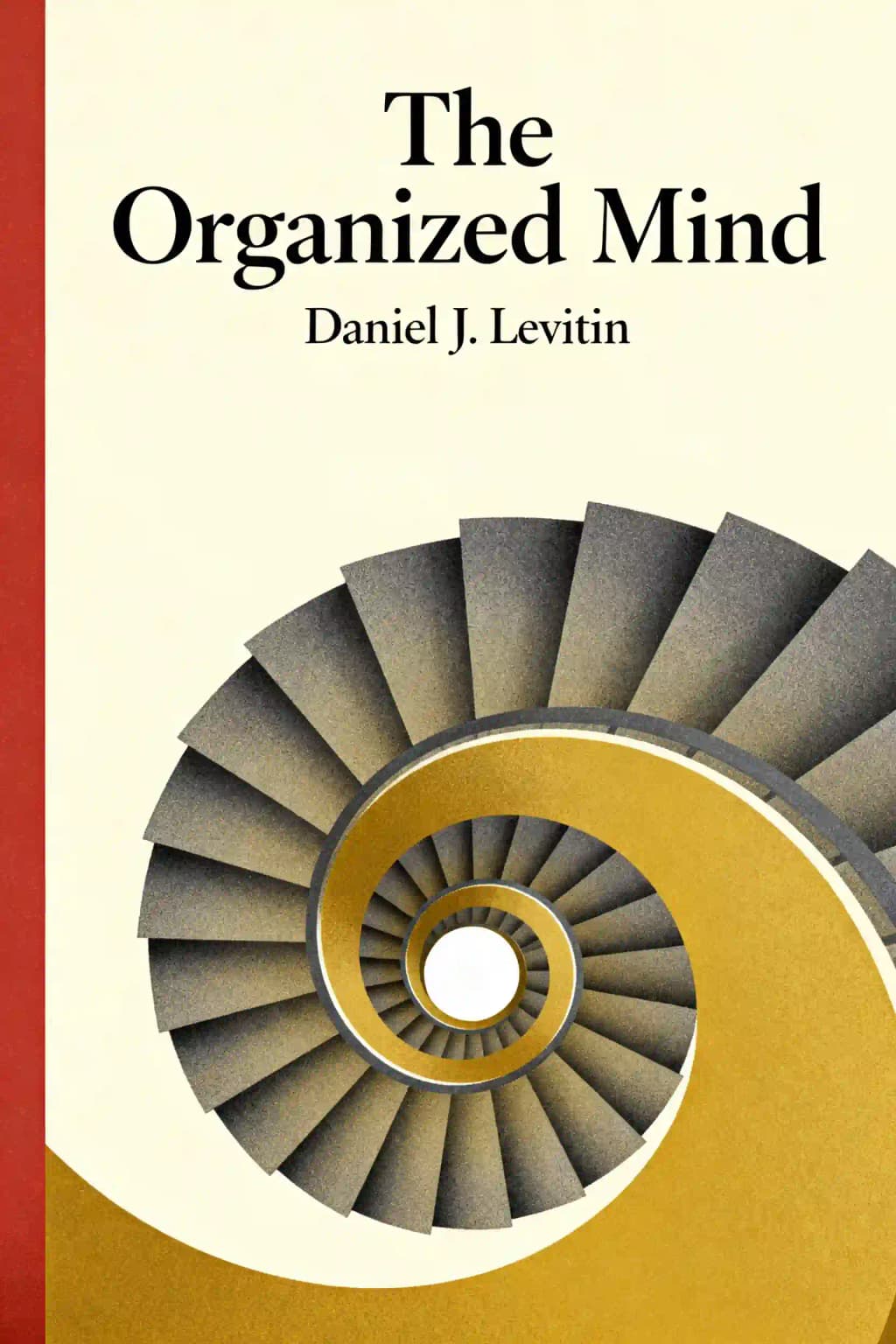
Have you ever felt that strange sensation when you walk into a room and immediately forget why you came there? Or perhaps you've experienced the frustration of misplacing your keys for the fifth time in a week? You're not alone. In "The Organized Mind," neuroscientist Daniel Levitin reveals these moments aren't signs of mental decline but rather evidence of our brains struggling to adapt to an unprecedented information age. This New York Times bestseller, which has captivated everyone from Bill Gates to Arianna Huffington, offers a fascinating window into how our prehistoric brains attempt to navigate a world that bombards us with more information in a single day than our ancestors encountered in their entire lifetimes. Drawing on cutting-edge research in cognitive science, Levitin doesn't just identify the problem-he provides a neurologically-grounded roadmap for regaining control of our mental lives. What makes this book particularly relevant today is how it bridges the gap between neuroscience and practical life skills, explaining not just why we feel overwhelmed but offering scientifically-backed strategies for reclaiming our attention in a world designed to fragment it.
第2章
The Evolutionary Mismatch: Our Stone Age Brains in a Digital World
Our brains evolved with severe limitations on conscious attention-we can process only 120 bits of information per second, barely enough to understand two people speaking simultaneously. This explains why we're overwhelmed in modern life, where we encounter more people in half an hour of walking in Manhattan than our hunter-gatherer ancestors met in their entire lifetimes.
Information overload isn't new. Even philosophers like Kant and Wordsworth complained of mental exhaustion from sensory overload centuries ago. Throughout history, each new information technology has sparked fierce resistance. Plato's King Thamus feared writing would "weaken men's characters and create forgetfulness in their souls." When the printing press arrived in the 1400s, Erasmus railed against "swarms of new books," while Leibniz warned of "that horrible mass of books" leading to barbarism. These same concerns resurfaced with television, computers, smartphones, and social media.
Meanwhile, information continues exploding exponentially-scientific knowledge discovered in the last twenty years exceeds all discoveries before that point. This overwhelming information flood taxes our evolutionarily outdated attentional system, which evolved to focus on one thing at a time, not multitask across numerous simultaneous inputs.
Our attention is a limited-capacity resource-focusing on one thing means ignoring something else. Attention is created by neuronal networks in the prefrontal cortex that activate when triggered by dopamine, released through either automatic vigilance (evolutionary survival responses) or deliberate filtering (willfully focusing on relevant information). Despite this sophisticated filtering system, information overload overwhelms us because we're doing more work than ever, facing constant technological changes requiring new learning, and processing global information at unprecedented rates.
We're prone to making irrational decisions based on vivid personal stories rather than statistical evidence. When faced with purchasing decisions, we often abandon well-researched data in favor of compelling anecdotes. These mental shortcuts can lead us astray unless we learn to recognize and overcome them.
The human drive to categorize information developed as a neural adaptation to streamline information processing, but we now own thousands more possessions than our brains were designed to track. Our innate categorization systems reveal remarkable cross-cultural patterns, with languages developing terms for colors, plants, and animals in predictable sequences based on environmental relevance. This passion for categorization appears evolutionarily advantageous, providing a dopamine reward when we learn and classify new information.
第3章
The Brain's Attentional Networks: Understanding Your Mental Operating System
Our brains operate through distinct but interconnected networks rather than isolated regions. These networks function like a collection of semi-distinct processing units, generating internal dialogues where planning centers in the prefrontal cortex ask questions answered by other brain regions containing relevant information.
The discovery of the brain's default mode network-the mind-wandering state-represents one of neuroscience's most significant findings of the past twenty years. This network operates in opposition to the central executive mode, creating a yin-yang relationship where one activates as the other deactivates. The default mode engages during daydreaming, creating fluid connections between disparate ideas, while the central executive handles focused tasks.
Our attentional system comprises four components: the mind-wandering mode, the central executive mode, the attentional filter, and a neural switchboard (located in the insula) that toggles between modes. This switching capacity evolved to balance focused attention with environmental awareness, but excessive switching causes mental fatigue. The anterior cingulate cortex, connected to both planning and motor regions, helps maintain task focus.
Memory is fundamentally fiction-a rewriting rather than a replaying of experience. When we remember, our brains attempt to reactivate the neurons involved in the original experience, but this reactivation is imperfect. The instructions for which neurons to engage become degraded over time, creating only dim, often inaccurate copies of our experiences.
Our memory struggles not from limited storage capacity but from retrieval problems. Similar experiences compete with each other, causing distortion. Memories become altered during reconsolidation-when sharing a memory with someone who corrects details, that new information gets grafted onto the original memory. Most troublingly, we often feel certain about memories that are completely wrong.
Two principles govern what we remember best: distinctiveness and emotion. Unique experiences stand out because they have no competing memories-we remember the first time we saw a rare bird or rode a horse, but not what we ate for breakfast two weeks ago when our breakfast is always the same. Emotional events get tagged with neurochemicals that mark them as important, making them easier to access but not necessarily more accurate.
Categories can have hard boundaries (like triangles requiring three sides) or fuzzy ones that defy precise definition. Creating categories is an act of cognitive economy and creativity, enabling organizational systems ranging from rigid military classifications to playful, whimsical groupings that reflect unique ways of seeing the world.
第4章
Externalizing Memory: Creating Systems That Think For You
In our age of information overload, we need external systems to supplement our brain's natural organization. Categories off-load cognitive work into the environment-instead of remembering where ten baking items are individually stored, we just need to remember we have a "baking tools" category in the third drawer.
Surprisingly, many high-performing professionals use low-tech solutions like pen and paper rather than digital tools. Sheryl Sandberg admits carrying a notebook at Facebook is "like carrying around a stone tablet and chisel," yet persists because it works better for her.
The index card system-one idea per 3x5 card-is particularly powerful. When thoughts intrude while you're focusing on something else, writing them down "clears the mind" by releasing them from your brain's rehearsal loop. This neural circuit evolved before writing existed and works too well, keeping items cycling until addressed. Writing thoughts down gives your brain permission to let go, conserving mental energy and allowing full presence in the moment.
The card system's power comes from random access-you can easily sort, resort, and reorganize ideas as your thinking evolves. David Allen recommends sorting tasks into four categories: do it (if it takes less than two minutes), delegate it, defer it, or drop it. Robert Pirsig used index cards to organize his philosophical writing, including an "unassimilated" category for capturing spontaneous ideas without disrupting his current task.
The organization problem we face today would be unrecognizable to our ancestors. A thousand years ago, European homes typically consisted of a single room where families gathered around a fire. Today's average household contains over 2,260 visible objects in just a few rooms, with many more hidden in drawers and closets. Three out of four Americans report garages too full for cars.
Our homes lack the market forces that keep retail spaces organized. We need systems that provide maximum information with minimal cognitive effort. The neurological foundation of this problem is well understood-we evolved a specialized brain structure called the hippocampus for remembering spatial locations, which works brilliantly for stationary things but poorly for items that move from place to place. This is why you remember where your toothbrush is but not your glasses, why you lose your car keys but not your car.
The solution is to create cognitive prosthetics-simple affordances that ease the mental burden of tracking objects. For keys, a decorative bowl or hook by the door works perfectly if you're compulsive about using it. This follows the rule of the designated place-the fundamental principle for not losing things.
第5章
Digital Organization: Taming Technology's Cognitive Demands
Human learning is influenced by context and location. Students who studied for exams in the same room where they took them performed better than those who studied elsewhere. This spatial memory connection explains why having designated places for belongings works-the hippocampus associates objects with specific locations, doing the remembering for us.
This becomes problematic in digital environments where we use the same computer screen for diverse activities from balancing checkbooks to watching cat videos. Our brains weren't designed to process so much information in one place. To leverage our hippocampus's natural functioning, consider creating separate workspaces for different activities-either through multiple devices or through different user profiles with distinct desktop patterns that provide visual context cues.
Our smartphones have become Swiss Army knife-like appliances that do more than the most advanced computers of thirty years ago. We use them constantly, cramming activities into every spare moment-texting while walking, checking email in lines, surreptitiously checking social media during meals. But this multitasking is an illusion. Neuroscientist Earl Miller explains we're actually just switching rapidly between tasks, with significant cognitive costs each time.
Multitasking increases stress hormones, overstimulates the brain, and creates a dopamine-addiction feedback loop. The prefrontal cortex-the very region we need for focus-has a novelty bias easily distracted by new stimuli. Instead of earning rewards from sustained effort, we get empty rewards from countless small tasks. Studies show just having unread emails waiting reduces effective IQ by 10 points-more cognitive impairment than marijuana causes.
When we multitask, information goes to the wrong brain regions. Learning while distracted sends information to the striatum (for procedures) rather than the hippocampus (for organized facts). Task-switching burns oxygenated glucose rapidly, depleting brain nutrients and leading to exhaustion, anxiety, and impaired decision-making. Staying focused actually uses less energy than multitasking.
Email and texting have transformed communication expectations. Unlike physical mail that arrived once daily with no immediate response expectation, digital messages arrive continuously and demand instant action. The uncertainty of each message's importance creates decision overload and stress. Texting compounds these problems with its hyperimmediacy and social pressure for quick responses, triggering dopamine rewards that can become genuinely addictive.
To combat these challenges, establish systems like checking email only 2-3 times daily rather than every five minutes, using filters to prioritize messages, or creating separate accounts for urgent communications.
第6章
The Social Brain: How We Connect in a Digital Age
Our primate heritage drives most of us to seek group belonging. Social isolation causes dangerous neurochemical changes leading to hallucinations, depression, and even psychosis-and is a greater risk factor for cardiac death than smoking. Ironically, we often misjudge our social preferences. In one experiment, commuters who claimed to prefer solitude actually reported significantly more pleasant experiences when assigned to talk with seatmates, regardless of personality type.
Group membership fulfilled essential evolutionary functions: protection from predators, resource sharing, childcare, and injury support. Social networks activate our anterior prefrontal cortex (positioning us in relation to others) and emotional centers in the limbic system, providing deep biological comfort in belonging.
This explains the meteoric rise of social networking sites. While MySpace briefly dominated (2006-2008), Facebook grew to over 1.2 billion monthly users-one-seventh of humanity. These platforms satisfy our vestigial longing to know what happened to people from our past, offering breadth of connection without demanding much time. However, online interaction works best as a supplement to in-person contact, not a replacement. Electronic connectedness appears to limit our biological capacity for direct human connection-another attention see-saw where one replaces the other.
Beyond basic social connection, many seek deeper relationships providing companionship, understanding, assistance, praise, and loyalty. Intimacy allows sharing private thoughts, creating "shared meaning" (inside jokes, telepathic understanding), freedom to be authentic, and discussing important matters without fear of rejection.
Men and women approach intimacy differently: women focus more on commitment and communication continuity, while men prioritize physical closeness. Throughout history-the first 99% of human existence-intimacy held far less importance than it does today. Marriage primarily served reproduction and social alliances between tribes.
Modern relationships carry unprecedented expectations. We want partners to provide emotional support, companionship, intimacy, financial stability while functioning as confidante, nurse, secretary, parent, protector, guide, cheerleader, and sexual partner-helping us achieve our full potential. When these connections succeed, the benefits are profound: better health, faster illness recovery, and longer life. A satisfying intimate relationship is among the strongest predictors of happiness ever measured.
第7章
Time Management: Working With Your Brain, Not Against It
Our brains process the world in discrete chunks rather than continuous streams. As MIT neuroscientist Earl Miller explains, the brain "picks and chooses" what deserves attention rather than absorbing everything seamlessly.
Multitasking consumes significantly more neural energy than focused attention or even daydreaming. People who organize their time to allow for sustained focus accomplish more while experiencing less mental fatigue and neurochemical depletion. The natural alternation between focused attention and daydreaming actually helps restore and recalibrate the brain, while multitasking disrupts this beneficial rhythm.
Multitasking particularly undermines creativity and problem-solving. UC Irvine professor Gloria Mark notes that "ten and a half minutes on one project is not enough time to think in-depth about anything." Creative solutions typically emerge from alternating between dedicated focus and mind-wandering.
Complicating matters further, our brains have a powerful "novelty bias" that makes us highly susceptible to distraction. Humans work just as hard for novel experiences as for basic needs like food or mates. This creates an addiction loop where the brain's reward centers crave new stimuli at the expense of the prefrontal cortex's desire to complete tasks.
Individual differences in cognitive style often reflect a trade-off between focus and creativity. The COMT gene, which regulates dopamine levels in the prefrontal cortex, influences task-switching ability. People with the Val158Met variant have lower dopamine levels but greater cognitive flexibility and creativity, while those with the Val/Val variant show higher dopamine levels but less flexibility-explaining why people with attention deficit tendencies often display greater creativity.
Effective task completion requires balancing doing and monitoring-a metabolically demanding process where we must constantly shift between working and evaluating our progress. We step back mentally to inspect what we've done, determine if adjustments are needed, and then continue forward. This comparison between what's "out-there-in-the-world" with what's in our head consumes tremendous neural resources.
In this process, we function simultaneously as both boss and worker, requiring different brain regions and attentional sets. The central executive notices a need (like a dirty floor), forms an executive attentional set ("mop the floor"), and then constructs a worker attentional set for the actual mopping. Sometimes we even need a third, detail-oriented worker set for addressing specific challenges within the task.
To organize our mental resources efficiently, we should group similar chores together and maintain a single attentional set through to completion. Don't pay bills and make major financial decisions simultaneously, or mix cleaning with home repairs. Providing dedicated time slots for sustained attention allows us to accomplish more with less mental fatigue.
第8章
Sleep: The Ultimate Cognitive Enhancer
Sleep plays a vital role in memory consolidation and cognitive processing. During sleep, our brains perform three distinct types of information processing: unitization (combining discrete elements into unified concepts), assimilation (integrating new information into existing knowledge networks), and abstraction (discovering hidden rules and patterns). These processes unfold over several sequential nights, not just one, which is why disrupted sleep even days after an experience can impair memory formation.
Research shows that after a night's sleep, musicians perform new melodies better, students solve previously difficult problems more easily, and people are more than twice as likely to solve problems requiring insight. Our brains essentially practice and organize new information while we sleep, extracting principles and creating templates that improve performance upon waking.
Sleep consolidates memory through distinct stages, with REM sleep facilitating the deepest processing through unitization, assimilation, and abstraction. During REM, decreased noradrenaline and increased acetylcholine allow our brains to draw connections between disparate ideas, explaining why dreams often morph illogically. A normal sleep cycle lasts 90-100 minutes, with about 20 minutes of REM sleep. Most memory consolidation occurs during the first two hours of slow-wave NREM sleep and the last 90 minutes of REM sleep in early morning.
This explains why alcohol, drugs, and sleep deprivation severely impair memory formation-they compromise these crucial periods. Even after two recovery nights, sleep deprivation's effects persist because rebound sleep produces abnormal brain waves that disrupt memory processing.
Contrary to modern sleep habits, humans historically practiced bimodal sleep with two 4-5 hour periods and an afternoon nap. Sleep deprivation affects one-third of working Americans and costs businesses over $150 billion annually. Consistency matters most-even one irregular night disrupts productivity for days.
Sleeping pills are counterproductive, offering only eleven minutes more sleep on average with poor quality that disrupts memory consolidation. Cognitive behavioral therapy is more effective for insomnia. Light exposure is crucial for regulating sleep cycles-morning light helps wake us up while evening screen time disrupts sleep.
For good sleep: maintain consistent bedtime and wake time, sleep in cool dark rooms, and consider short naps (under 40 minutes) which enhance memory, creativity and productivity while recalibrating emotional equilibrium. Sleep isn't all-or-nothing-when tired, parts of our brain may sleep while others remain awake, particularly affecting memory systems first.
第9章
Making Hard Decisions: Probability, Risk, and Medical Choices
The most difficult decisions are those that reach the highest levels of authority because they involve choosing between negative outcomes with imperfect information. As President Obama observed, "Nothing comes to my desk that is perfectly solvable," noting that obvious solutions are handled by others lower in the chain of command.
Medical decision-making often involves choosing between two negative outcomes-doing nothing and risking declining health, or undergoing procedures that may cause pain and expense. Most of us are ill-equipped to calculate and evaluate probabilities rationally, especially when receiving medical news during periods of emotional vulnerability and cognitive overload.
To make better decisions, we must understand the difference between two types of probability: objective (mathematically calculable or countable) and subjective (opinion-based). Objective probabilities describe repeatable events like drawing cards or tossing coins, where outcomes can be precisely calculated.
The gambler's fallacy leads many to believe that probability is self-correcting-that after ten heads in a row, tails is somehow "due." But coins have no memory. Each flip remains a 50/50 proposition regardless of previous outcomes. This misconception enriches casino owners while bankrupting gamblers.
When facing a positive test result for a rare disease, we need to understand exactly what this means probabilistically. Even after testing positive for a disease that affects only 1 in 10,000 people with a test that's 99% accurate, your chances are still only 1 in 101 that you actually have the disease-meaning there's a 99% chance you don't have it despite the positive test.
This has serious implications when considering treatment. If 101 people take medication after testing positive, only 1 will actually benefit (because only 1 actually has the disease), while many will experience side effects. This concept is called "number needed to treat"-the number of people who must receive treatment before one person is cured.
Fourfold tables help organize this information visually. Consider Tversky's two-poison problem: if your face turns blue, and blue disease is consistent with blue faces 75% of the time but green disease is five times more common, which antidote should you take? Most people incorrectly choose the blue pill, but a fourfold table reveals you should take the green pill regardless of face color because the base rate of green disease is so much higher.
For life-or-death decisions, we can use "expected value" calculations-multiplying probability by outcome value-to make rational choices about treatments, recovery times, and risks. This approach helps evaluate tradeoffs systematically rather than emotionally, particularly important when stress impairs decision-making abilities.
Human Development: Teaching the Next Generation
In today's information-saturated world, we must teach children to evaluate information critically, recognize legitimate expertise, and develop organizational skills from an early age. With information now instantly accessible, the role of teachers must fundamentally shift from transmitting facts to developing critical thinking skills.
Children struggle with procrastination more than adults due to their underdeveloped prefrontal cortices, which don't fully mature until after age twenty. Teaching children to "do it now" and avoid procrastination can be made into a game, like film producer Jake Eberts' motto for his children: "Eat the frog. Do that unpleasant thing first thing in the morning and you feel free for the rest of the day."
In the unregulated digital world, users must authenticate, validate, and evaluate information themselves-work previously done by librarians, editors, and publishers. The internet lacks central authority controlling website names, making it easy to create fictitious identities or claim false credentials. Traditional news sources like The New York Times strive for neutrality through independent verification, while many web sources lack these standards.
Statistical thinking requires understanding causality versus correlation. The Denver power lines case illustrates this perfectly-while childhood leukemia rates were higher near power lines, the true cause wasn't electromagnetic fields but socioeconomic status. Lower-income families lived near unsightly power lines, resulting in poorer diets, healthcare access, and lifestyle factors that increased cancer risk.
Embracing deliberate approximation is a critical thinking superpower. Engineers and scientists regularly use "back of the napkin" calculations to reach answers close enough for decision-making in a fraction of the time needed for precision. Google recognized this skill's value, famously asking job applicants impossible questions like "How much does the Empire State Building weigh?" They weren't seeking correct answers but evaluating thought processes.
Information, in mathematical terms, is anything that reduces uncertainty-a pattern within randomness. It exists in newspapers, conversations, tree rings, DNA, and countless other sources. But merely possessing information isn't enough. As the American Library Association noted in 1989, students must actively identify, evaluate, and use information. Knowledge requires both certainty and truth.
The Internet, while democratizing information access, paradoxically narrows our perspectives. Search engines track our history to personalize results, gradually filtering content to match our existing worldview rather than challenging it. After decades of searches, we risk encountering only information that reinforces our beliefs-a concerning trend in a world requiring global cooperation and understanding.