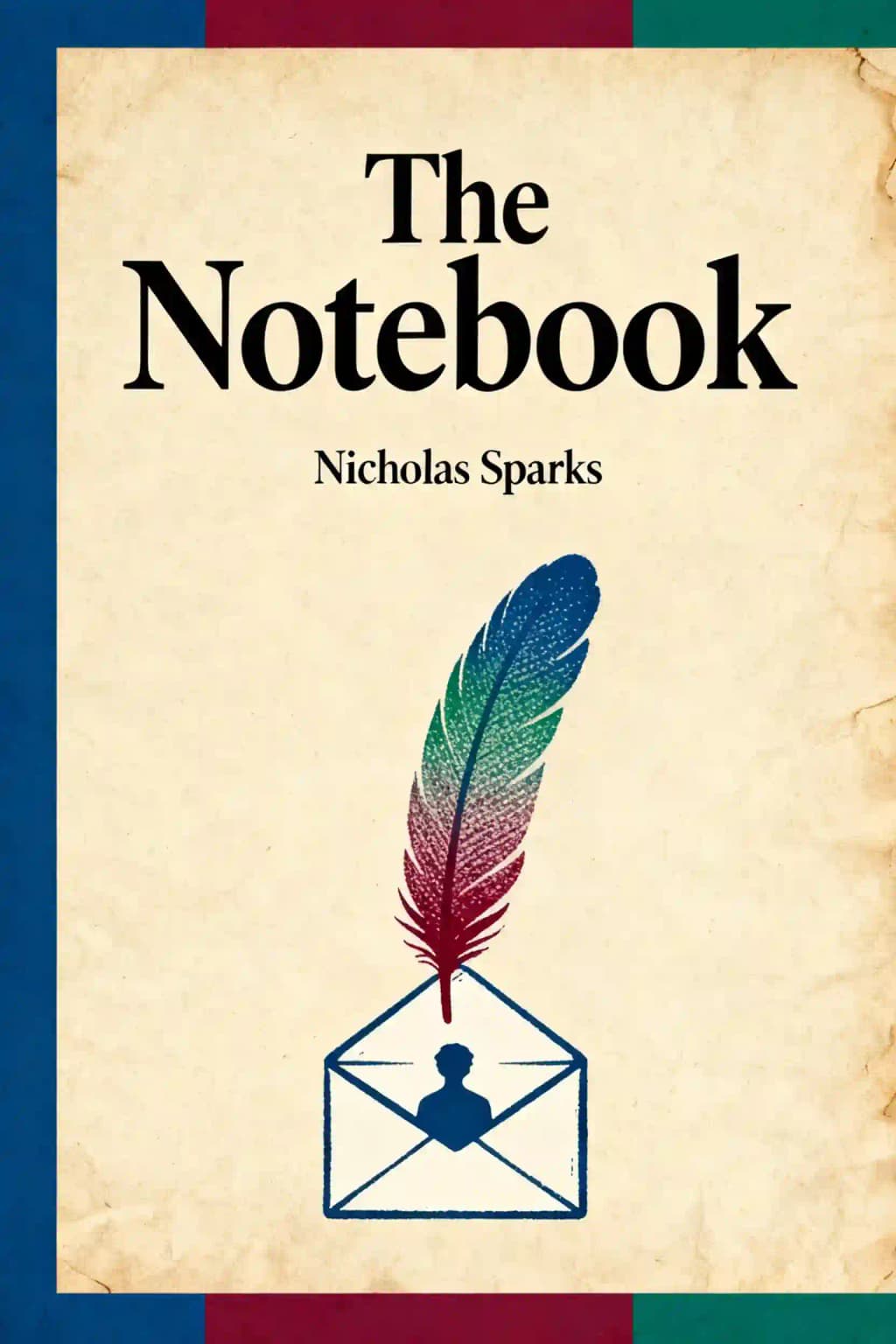
A timeless tale of enduring love that spent over a year as a hardcover bestseller. "The Notebook" inspired Ryan Gosling's iconic rain-soaked kiss and made millions ask: Can true devotion transcend even dementia's cruel grip?
Nicholas Charles Sparks, bestselling author of The Notebook, is celebrated for crafting emotionally resonant romance novels that blend heartfelt drama with themes of enduring love and destiny.
Born in Omaha, Nebraska in 1965, Sparks drew inspiration from his life in New Bern, North Carolina—the setting for many of his works—to explore societal barriers, aging, and memory in this iconic 1996 novel.
A University of Notre Dame graduate, he transitioned from pharmaceutical sales to full-time writing after The Notebook became a cultural phenomenon. His expansive bibliography includes A Walk to Remember and Message in a Bottle, both adapted into major films, solidifying his reputation as a master of contemporary romantic fiction.
Sparks’ works have sold over 115 million copies globally, with The Notebook alone translated into 40+ languages and adapted into a critically acclaimed 2004 film starring Ryan Gosling and Rachel McAdams.
The Notebook follows the decades-spanning love story of Noah Calhoun and Allie Nelson, who reunite after 14 years apart despite societal pressures and Allie’s engagement to another man. Through dual timelines—a summer romance in 1940s North Carolina and their elderly years in a nursing home—the novel explores enduring love, memory, and sacrifice.
Fans of emotional romance novels, readers who appreciate stories about lifelong love, and those interested in themes like class divides and aging will connect with this book. Its tearjerker narrative and accessible writing make it ideal for readers seeking heartfelt, character-driven stories.
Yes—The Notebook remains a bestselling romance classic praised for its poignant exploration of love’s resilience. Critics describe it as “a classic tale of love” (Christian Science Monitor) and “a one-night read” for those seeking an emotional journey (USA Today). Its enduring popularity and film adaptation further cement its cultural relevance.
After rekindling their romance, Allie leaves her fiancé to marry Noah. They build a life together, raising four children (one dies young) and traveling the world while Allie pursues painting. In their later years, Allie develops Alzheimer’s, and Noah reads their love story daily to help her remember.
The novel uses a framing device: elderly Noah recounts their love story to Allie, whose Alzheimer’s erases her memory. This structure highlights how love persists beyond time and cognitive decline, emphasizing nostalgia and the power of shared history.
Allie’s wealthy family disapproves of Noah, a working-class lumberyard worker, leading to their initial separation. Class tensions resurface when Allie’s mother hides Noah’s letters, illustrating how societal expectations threaten genuine connection.
A key quote reflects the central theme: “They didn’t agree on much… but they’d always agreed on this: their love was a miracle.” This encapsulates their unwavering bond despite external obstacles.
Some critics argue the novel leans into melodrama and clichéd romance tropes. Others note its predictable plot, though fans praise its emotional sincerity and timeless appeal.
The 2004 film expands the couple’s backstory and intensifies emotional moments, while the book delves deeper into Noah’s perspective and their post-reunion life. Both emphasize the core theme of love transcending time.
Noah sacrifices his pride to win Allie back, while Allie risks her affluent lifestyle for true love. The story frames sacrifice as essential to enduring relationships, exemplified by Noah’s devotion during Allie’s illness.
Its exploration of undying love, relatable conflicts (class, memory loss), and emotionally resonant prose have solidified its status. Sparks’ debut also helped redefine modern romance literature, blending heartfelt drama with universal themes.
The novel popularized emotional, character-driven romance with bittersweet endings, inspiring authors to blend raw vulnerability with sweeping narratives. Its success cemented Nicholas Sparks as a leading voice in contemporary romantic fiction.
著者の声を通じて本を感じる
知識を魅力的で例が豊富な洞察に変換
キーアイデアを瞬時にキャプチャして素早く学習
楽しく魅力的な方法で本を楽しむ
What kind of love survives when memory fails?
His waiting isn't passive resignation but active hope.
『The Notebook』の核心的なアイデアを分かりやすいポイントに分解し、革新的なチームがどのように創造、協力、成長するかを理解します。
『The Notebook』を素早い記憶のヒントに凝縮し、率直さ、チームワーク、創造的な回復力の主要原則を強調します。

鮮やかなストーリーテリングを通じて『The Notebook』を体験し、イノベーションのレッスンを記憶に残り、応用できる瞬間に変えます。
何でも質問し、声を選び、本当にあなたに響く洞察を一緒に作り出しましょう。

"Instead of endless scrolling, I just hit play on BeFreed. It saves me so much time."
"I never knew where to start with nonfiction—BeFreed’s book lists turned into podcasts gave me a clear path."
"Perfect balance between learning and entertainment. Finished ‘Thinking, Fast and Slow’ on my commute this week."
"Crazy how much I learned while walking the dog. BeFreed = small habits → big gains."
"Reading used to feel like a chore. Now it’s just part of my lifestyle."
"Feels effortless compared to reading. I’ve finished 6 books this month already."
"BeFreed turned my guilty doomscrolling into something that feels productive and inspiring."
"BeFreed turned my commute into learning time. 20-min podcasts are perfect for finishing books I never had time for."
"BeFreed replaced my podcast queue. Imagine Spotify for books — that’s it. 🙌"
"It is great for me to learn something from the book without reading it."
"The themed book list podcasts help me connect ideas across authors—like a guided audio journey."
"Makes me feel smarter every time before going to work"

The Notebookの要約をPDFまたはEPUBで無料でダウンロード。印刷やオフラインでいつでもお読みいただけます。
An elderly man walks the sterile corridors of a nursing home, clutching a worn notebook like a talisman. His weathered hands shake slightly-not from age alone, but from the weight of what he carries. Every morning, he straightens his collar, clears his throat, and enters a room where the woman he's loved for half a century stares at him like a stranger. Yet he sits beside her bed and begins to read their story aloud, his voice steady with hope that defies every medical textbook. This isn't denial. It's devotion in its purest form-love that persists when memory fails, when recognition vanishes, when nothing remains except the choice to show up again tomorrow. What kind of love survives the erasure of shared history? What remains when one person forgets everything you've built together?