第1章
When Sisters Become Nightingales: A Tale of Courage in Occupied France
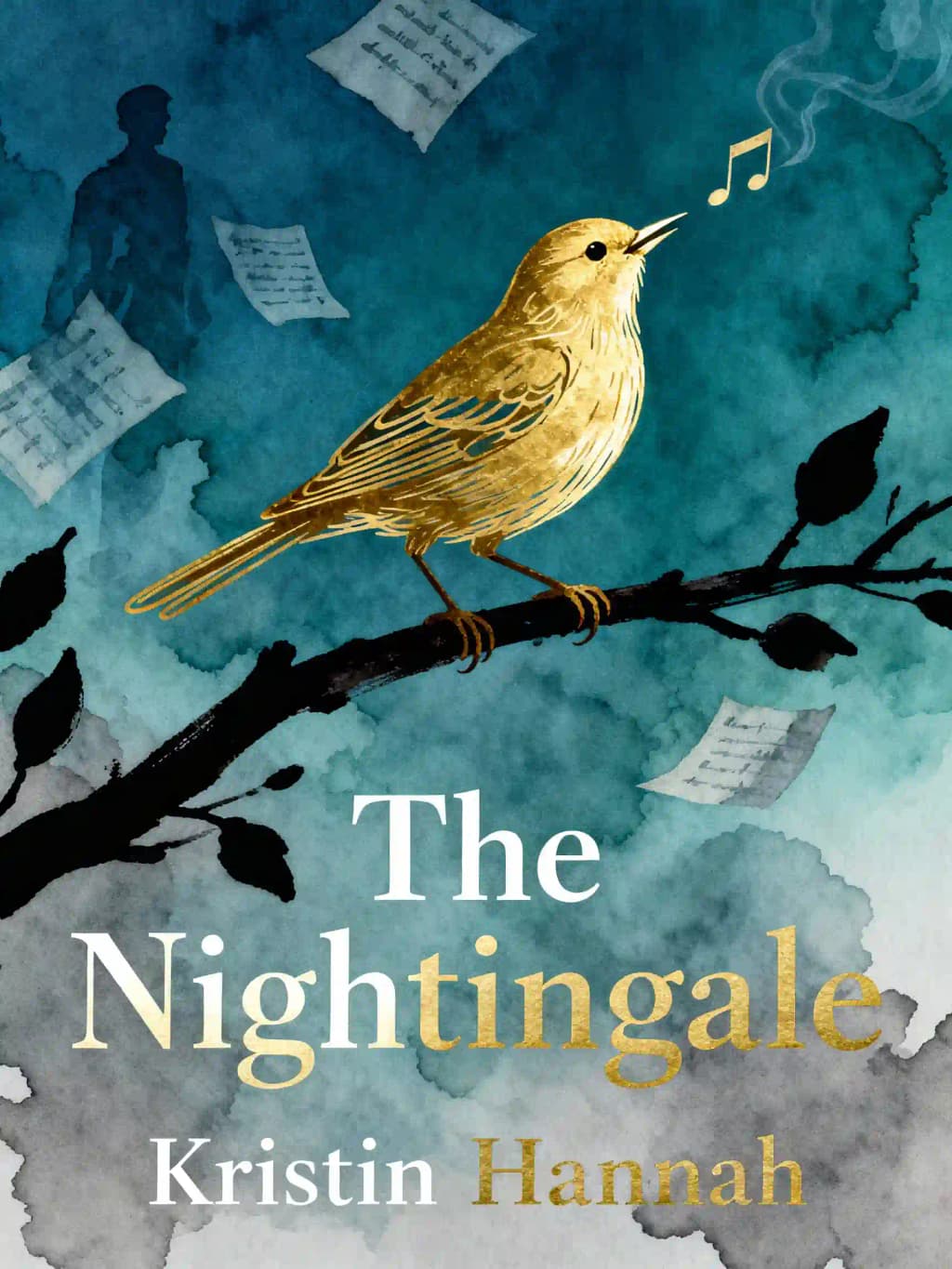
In the twilight of life, an elderly woman retrieves a yellowed French identity card bearing the name "Juliette Gervaise" from an old steamer trunk in her attic. This seemingly simple moment unlocks a profound history of heroism and heartbreak. Kristin Hannah's "The Nightingale" became an instant phenomenon upon its 2015 release, selling over 4.5 million copies and being translated into 45 languages. The novel resonated deeply with readers worldwide, including celebrities like Reese Witherspoon, who selected it for her book club and is producing the upcoming film adaptation. What makes this story so compelling is how it illuminates the often-overlooked female experience of war-not through battlefield glory, but through the quiet, desperate courage of ordinary women making extraordinary choices. As Hannah herself noted, "Men tell stories. Women get on with it. For us it was a shadow war. There were no parades for us when it was over."
第2章
Sisters Divided: The Shadow of Abandonment
Vianne and Isabelle Rossignol couldn't be more different despite sharing the same blood. Their relationship, fractured in childhood when their mother died of influenza and their father Julien returned emotionally devastated from the Great War, represents two distinct responses to profound trauma. Vianne, the elder sister by eight years, sought safety and stability, finding it in her husband Antoine and their peaceful life at Le Jardin, their ancestral home in Carriveau. She transformed the old stone house into a sanctuary, filling it with the warmth and security she desperately craved, tending her garden and teaching at the local school. Isabelle, abandoned repeatedly-first by her grieving father who sent her away like "soiled laundry" at age four, then by a series of finishing schools from which she was expelled for infractions ranging from climbing out windows to organizing student protests-developed a defiant spirit and reckless courage that masked her deep wounds.
Their divergent paths crystallize when war arrives in France in 1940. Vianne, practical and cautious, believes in keeping her head down to survive until Antoine returns from the front. "We cannot control what the Germans do. We can only control how we respond," she insists, focusing on protecting her daughter Sophie and maintaining whatever normalcy she can, even as German officers requisition her home and ration cards grow scarce. Meanwhile, Isabelle burns with righteous anger, unable to accept France's surrender to Nazi Germany. "I don't understand how anyone can stand by while the Nazis invade our country," she declares, her rebellious nature finding purpose in resistance. Her impulsiveness, once a liability, becomes an asset as she begins secretly distributing anti-Nazi propaganda and helping downed Allied airmen.
This fundamental difference in worldview-Vianne's desire to protect what remains versus Isabelle's need to fight what's wrong-forms the emotional backbone of their journey through occupied France. Yet beneath their differences lies a shared wound: the abandonment by their father that shaped both women in opposing ways. Vianne accepted the loss and moved on, building walls around her heart and finding solace in routine and responsibility. Isabelle never stopped trying to win back her father's love, each act of rebellion a cry for attention that went unanswered. This childhood trauma echoes throughout their adult choices, creating a poignant exploration of how we carry our past into our present, especially during times of crisis. Their father's apartment in Paris stands as a physical reminder of their abandonment - a place where Isabelle repeatedly returns hoping for reconciliation, while Vianne refuses to visit, having long ago accepted that some broken things cannot be fixed.
Their contrasting responses to abandonment ultimately shape not just their relationship with each other, but their entire approach to survival during the war - Vianne's cautious compliance versus Isabelle's daring resistance, both born from the same wound but manifesting in radically different ways.
第3章
Occupation and Moral Compromise: The Price of Survival
The German occupation of France transforms everyday life into a series of impossible choices. Food disappears from markets, replaced by endless queues for meager rations - a few potatoes, occasional bread, and whatever scraps remain after German soldiers claim the best provisions. The beautiful Loire Valley, once a pastoral paradise of vineyards and rolling hills, becomes a prison of checkpoints, curfews, and constant surveillance. Wehrmacht patrols march through cobblestone streets while propaganda posters cover ancient stone walls. Most devastatingly, neighbors turn against neighbors as collaboration becomes a strategy for survival, with even longtime friends exchanging suspicious glances and whispered accusations.
For Vianne, occupation means having a German officer, Captain Beck, billeted in her home-sleeping in her husband's bed, eating at her table, watching her every move. Her initial revulsion gradually softens as Beck shows unexpected kindness, bringing food for her daughter Sophie and delivering a letter from Antoine. He shares pictures of his own children back in Germany and helps repair their leaking roof before winter. This moral ambiguity forms the heart of Vianne's struggle: "How do you maintain your principles when you're fighting just to put food on the table? When the enemy wears a human face?"
The occupation forces everyone into compromises, each seemingly small decision building toward larger moral failures. When Beck asks Vianne for a list of Jewish and communist teachers at her school, she complies, believing it's merely administrative paperwork - one of countless forms and registries demanded by the new authorities. Her horror upon discovering the list led to their dismissal-including her best friend Rachel-becomes her first awakening to the true cost of compliance. "I gave him your name," she confesses to Rachel, expecting hatred but finding forgiveness instead. "Everyone in town knows I'm a Jew, Vianne. I've always been proud of it. The shame belongs to those who would make it a crime."
This pattern of compromise and consequence repeats throughout the narrative, raising profound questions about moral responsibility during wartime. When does survival become collaboration? What lines, once crossed, can never be uncrossed? As food grows scarcer and Nazi policies more brutal, Vianne finds herself making increasingly difficult choices-each one eroding her former self while simultaneously revealing a strength she never knew she possessed. She begins stealing food from German storage facilities, falsifying identity papers for Jewish children, and maintaining two sets of books at her school - one for the authorities and one recording the truth. Each act of resistance carries devastating potential consequences, yet the alternative - passive acceptance - becomes increasingly impossible to bear.
The moral calculus grows more complex as winter deepens and deportations begin. Vianne must weigh the safety of her own child against the lives of others, knowing that any mistake could mean death for them all. Through her journey, the novel explores how ordinary people navigate extraordinary evil, and how the accumulation of small compromises can lead to either complicity or resistance.
第4章
The Nightingale Takes Flight: Resistance as Identity
While Vianne navigates the treacherous waters of accommodation, Isabelle discovers her purpose in active resistance. Her journey from impulsive rebel to disciplined freedom fighter begins with small acts of defiance-drawing V-for-victory signs on Nazi propaganda posters and distributing anti-German leaflets throughout Carriveau. These seemingly minor rebellions satisfy her need to fight back but soon lead to more dangerous missions.
When Isabelle encounters a downed RAF pilot hiding in the bushes near Paris, she makes an impulsive decision that changes everything. "I'll help you," she tells Lieutenant MacLeish, hiding him in her father's apartment despite the certain death sentence such an act carries. This moment marks Isabelle's transformation from defiant girl to resistance operative, eventually becoming "the Nightingale"-a legendary figure who guides downed Allied airmen across the Pyrenees Mountains to safety in Spain.
The physical journey across the mountains mirrors Isabelle's internal journey toward purpose. "I've spent my whole life being empty," she realizes, "and now I'm full." The dangerous work gives her not just meaning but identity. Under the code name Juliette Gervaise, she leads eighty-seven men to freedom over eight perilous months, each successful crossing affirming her worth in ways her family never could.
Hannah masterfully portrays how resistance becomes not just what Isabelle does but who she is. When she meets Gaetan, a fellow resistance fighter, their connection transcends romance to become a partnership of shared purpose. "In another world, would you want to be with me?" she asks him in a rare moment of vulnerability. Their love story unfolds against a backdrop of danger, highlighting how war both destroys and intensifies human connection-creating bonds forged in fire that can never be broken.
第5章
The Jewish Plight: Bearing Witness to Atrocity
Through the character of Rachel Sevier, Vianne's Jewish best friend since childhood, Hannah unflinchingly depicts the escalating persecution of French Jews. What begins with seemingly administrative restrictions-special identification cards marked with "JUIF" in red letters, limited shopping hours between 3 and 4 PM, and bans from public spaces-gradually intensifies. Soon, Jews are forced to wear yellow stars sewn on clothing, their businesses are "Aryanized" through forced sales to non-Jews, and their bank accounts are frozen. These systematic humiliations serve as precursors to the ultimate horror: deportation to "work camps" in the East, a euphemism masking their true genocidal purpose.
The July 1942 Vel d'Hiv roundup forms one of the novel's most harrowing sequences. Isabelle witnesses thousands of Jewish families herded into the Paris velodrome without food, water, or sanitation-many of them children separated from their parents. The stench of human waste fills the air as people are held for days in sweltering summer heat. Through Isabelle's eyes, we see pregnant women giving birth on concrete floors, elderly people collapsing from dehydration, and children crying for parents they'll never see again-a horrific prelude to their deportation to death camps. Meanwhile in Carriveau, Vianne helps Rachel and her children attempt a desperate nighttime escape to the Free Zone, only to have Sarah, Rachel's seven-year-old daughter and Sophie's best friend, shot by border guards. The child dies in Vianne's arms, whispering "Maman" with her last breath-a devastating loss that transforms Vianne's understanding of the war's true nature.
"We should go to the Free Zone," Vianne had suggested earlier, to which Rachel replied with bitter clarity: "Jews can't get travel papers. We can't buy train tickets. We can't drive cars. We can't even ride bicycles anymore." This exchange illuminates the methodical trap closing around French Jews-unable to leave legally yet punished for staying. When Rachel is eventually deported, leaving her son Ari behind, she begs Vianne: "Take him. Save him. Don't let them get my boy." This moment marks Vianne's own entry into resistance-not through dramatic acts of sabotage but through the quiet, desperate courage of hiding a Jewish child in plain sight, teaching him to answer to a Christian name, and helping him forget his prayers lest he accidentally reveal himself.
Hannah doesn't shy away from depicting French complicity in these atrocities. French police conduct the roundups with efficiency, checking names off lists prepared by French bureaucrats. French citizens eagerly report their Jewish neighbors, sometimes to settle old grudges or claim abandoned property. French officials meticulously process the paperwork that sends thousands to their deaths. The author shows how the Vichy government often exceeded Nazi demands in its persecution of Jews, implementing anti-Semitic laws before being required to do so. This uncomfortable historical truth challenges simplistic narratives about occupation and resistance, showing how easily ordinary people become instruments of evil when fear overrides conscience and moral courage becomes a rare commodity.
第6章
Motherhood as Resistance: The Hidden Children
Vianne's transformation from cautious survivor to active resister centers on her commitment to protecting children-first Ari, whom she renames Daniel and raises as her nephew, then others. When Mother Superior at the local convent suggests they could hide more Jewish children, Vianne initially balks at the danger. But witnessing the deportation of Madame Fournier and her son Gilles-despite his French birth-convinces her that no Jewish child is safe.
Working with the uvre de Secours aux Enfants (Children's Relief Organization), Vianne begins creating false identity papers for Jewish children, finding them hiding places in local homes, and teaching them to forget their Jewish identities-a heartbreaking necessity for their survival. "You must make him forget who he is," Mother Superior advises about Ari. "It is the only way to keep him safe."
This work represents a different kind of resistance-not glamorous or dramatic but equally dangerous and perhaps more profound. When Vianne must tell young Ari that his mother is "with the angels in Heaven" and force him to repeat his new Christian name until he believes it, we witness the terrible emotional cost of saving lives. "Daniel Antoine Mauriac," she makes him practice, knowing each repetition erases a piece of his true self.
The novel powerfully portrays how motherhood becomes both vulnerability and strength during wartime. Vianne endures sexual assault by the cruel Nazi officer Von Richter to protect her children, including those she's hidden. When Sophie discovers this abuse, Vianne explains with quiet dignity: "Sometimes being a mother means doing terrible things to keep your children safe." This maternal courage-the willingness to sacrifice everything, including one's body and dignity, for a child's survival-stands as its own form of heroism, rarely celebrated in war narratives but central to Hannah's vision.
第7章
The Body as Battlefield: Women's Experience of War
Hannah unflinchingly depicts how women's bodies become battlegrounds during occupation. Food scarcity transforms physical existence into a daily struggle-chilblained feet, constant hunger, and the slow deterioration of health that accompanies malnutrition. "I've forgotten what it feels like to be warm," Vianne reflects during the brutal winter of 1940, when they burn furniture for heat and wear every piece of clothing they own to bed.
More devastatingly, sexual violence emerges as a weapon of war. When Captain Beck is replaced by the sadistic Von Richter, Vianne faces systematic rape as the price of keeping her children safe. Hannah portrays these assaults not as dramatic scenes but through Vianne's dissociation-her mind floating away to memories of Antoine while her body endures violation. The resulting pregnancy becomes her most difficult challenge, forcing her to decide whether to tell Antoine the truth when he miraculously returns from a prison camp.
For Isabelle, the body's vulnerability becomes most apparent after her arrest. Stripped, beaten, and locked in a refrigerator by Gestapo officer Schmidt, she faces death through hypothermia. Later at Ravensbruck concentration camp, her body wastes away to eighty pounds, covered in lice and open sores. The systematic dehumanization of prisoners-shaving their heads, assigning numbers, harnessing them like animals to pull heavy equipment-represents the Nazi attempt to reduce humans to disposable flesh.
Yet Hannah also shows how the body can be a site of resistance and connection. When Isabelle and Gaetan finally acknowledge their love, their physical intimacy becomes an affirmation of life amid death. Similarly, when Antoine returns and accepts Vianne's pregnancy as his own-"It's a miracle"-their embrace represents healing through touch after years of separation and trauma.
第8章
The Cost of Survival: Living with What Remains
As the war ends, the novel shifts to exploring its lasting impact on survivors. Antoine returns physically and emotionally scarred, having "left pieces of himself behind" in the prison camp. Isabelle, liberated from concentration camp but dying from typhus and tuberculosis, makes her way back to Carriveau for a final reconciliation with Vianne. Their father's sacrifice-falsely confessing to being the Nightingale to save Isabelle from execution-provides closure to their childhood wounds but cannot heal their physical ones.
Perhaps most heartbreaking is Vianne's decision to send Ari/Daniel to relatives in America after learning his parents died in the camps. Though she loves him as her own son, she chooses to give him a chance at a new life away from the memories of war. As she watches him driven away, screaming for "Maman" through the car window, she whispers, "Have a good life, Ari de Champlain," acknowledging his true identity one last time.
The novel's frame narrative, set in 1995, reveals that Vianne has survived into old age, carrying her secrets for decades. When she finally attends a reunion honoring the Nightingale escape route, she encounters families of men Isabelle saved and meets Gaetan, who named his daughter after his lost love. Most movingly, she reunites with Ari, now Ariel de Champlain, who reveals that Vianne saved nineteen Jewish children during the war. "I'm a Rossignol," she tells her son proudly. "A Nightingale in my own way."
This final revelation completes the sisters' parallel journeys-Isabelle's dramatic heroism as the Nightingale who led men to freedom, and Vianne's quieter but equally vital work saving children. Different paths, same destination: courage in the face of evil.
第9章
The Power of Memory: Preserving What Was Lost
Throughout the novel, memory functions as both burden and blessing. The elderly narrator (revealed to be Vianne) initially resists remembering, having built a new life in America after the war. Yet as she faces terminal illness, she recognizes the importance of sharing her history with her son Julien: "He knows a version of me, but not all of me."
Memory preserves what war destroys. When Vianne ties fabric scraps to the apple tree for each loved one taken-Antoine, Sarah, Rachel-she creates a living memorial. Similarly, the hidden trunk containing mementos and the Juliette Gervaise identity card represents the physical artifacts of memory, too painful to display but too precious to discard.
The novel suggests that selective forgetting can be necessary for survival. When Antoine returns, he and Vianne choose not to discuss certain aspects of their war experiences. "It's not forgetting we need," he tells her. "It's remembering." This paradoxical wisdom acknowledges that healing requires both remembering what matters and letting go of what doesn't.
In the final pages, Vianne reflects: "I know now what matters, and it is not what I have lost. It is my memories. Wounds heal. Love lasts. We remain." This powerful assertion places memory at the center of human resilience-not as a prison of trauma but as a testament to survival. By telling their stories, even decades later, survivors ensure that those who were lost are not forgotten and that future generations understand both the horror of war and the extraordinary courage of ordinary people who faced it.
The Nightingale ultimately celebrates the power of storytelling itself-how narratives preserve truth when official histories fail, how women's experiences of war deserve equal recognition with men's, and how remembering becomes its own form of resistance against forces that would erase the past. In giving voice to the sisters Rossignol, Hannah ensures that countless real women whose quiet heroism went unrecognized during World War II are finally, belatedly honored.
第10章
Sisters Reconciled: Finding Each Other Through Fire
At its heart, beneath the war story and beyond the historical drama, The Nightingale is about two sisters finding their way back to each other. Their mother's prediction-"You'll be best friends one day"-seems impossible given their stark differences: Vianne's cautious pragmatism versus Isabelle's fiery idealism, one sister choosing safety while the other embraces danger. Yet war's crucible transforms them both until they recognize themselves in each other, their separate paths ultimately leading to the same destination of courage and sacrifice.
Vianne discovers her sister's courage within herself when circumstances demand it. From hiding Jewish children to protecting her own daughter Sophie, she gradually embodies the same fierce protective instinct that drives Isabelle. Her initial fear transforms into calculated risk-taking, each decision bringing her closer to understanding her younger sister's perspective. Meanwhile, Isabelle finds Vianne's capacity for love and sacrifice mirrored in her own choices, particularly in her work with the resistance. Her reckless bravery evolves into measured determination, reminiscent of her sister's steady resolve.
Their reconciliation comes too late for a shared future but arrives precisely when they need it most. As Isabelle lies dying in her childhood bedroom at Le Jardin, the sisters finally bridge the chasm between them. The bedroom, once a symbol of their divided childhood, becomes sacred ground for their reunion. They share not just memories but a profound understanding of how their different forms of resistance - Vianne's quiet defiance and Isabelle's bold rebellion - stemmed from the same well of strength.
"Don't forget me," Isabelle thinks as death approaches, her final thoughts encompassing not just her own legacy but the shared history with her sister. But Vianne never does. Fifty years later, she travels to Paris to honor her sister's memory, finally ready to tell their story. The journey becomes both pilgrimage and testimony, carrying the weight of decades of unspoken grief and pride. "Because of them," she reflects, "I know now what matters." The "them" encompasses all she's lost-Isabelle, her father, Rachel, the nineteen children she saved-but also represents what she's found: the understanding that love transcends even the darkest moments of human history.
In this final reconciliation between sisters-one present only in memory, one carrying that memory forward-Hannah offers her most profound insight: that the bonds of family, tested by fire but not consumed, remain our most enduring legacy in a world where everything else can be taken away. Their story demonstrates how adversity can forge stronger connections than peace ever could, and how understanding often comes through shared sacrifice rather than shared joy. The sisters' journey from estrangement to reconciliation becomes a testament to the power of love to transcend not just death, but the very barriers we build between ourselves and others.