第1章
Justice on Wheels: The Moral Compass of a Mobile Attorney
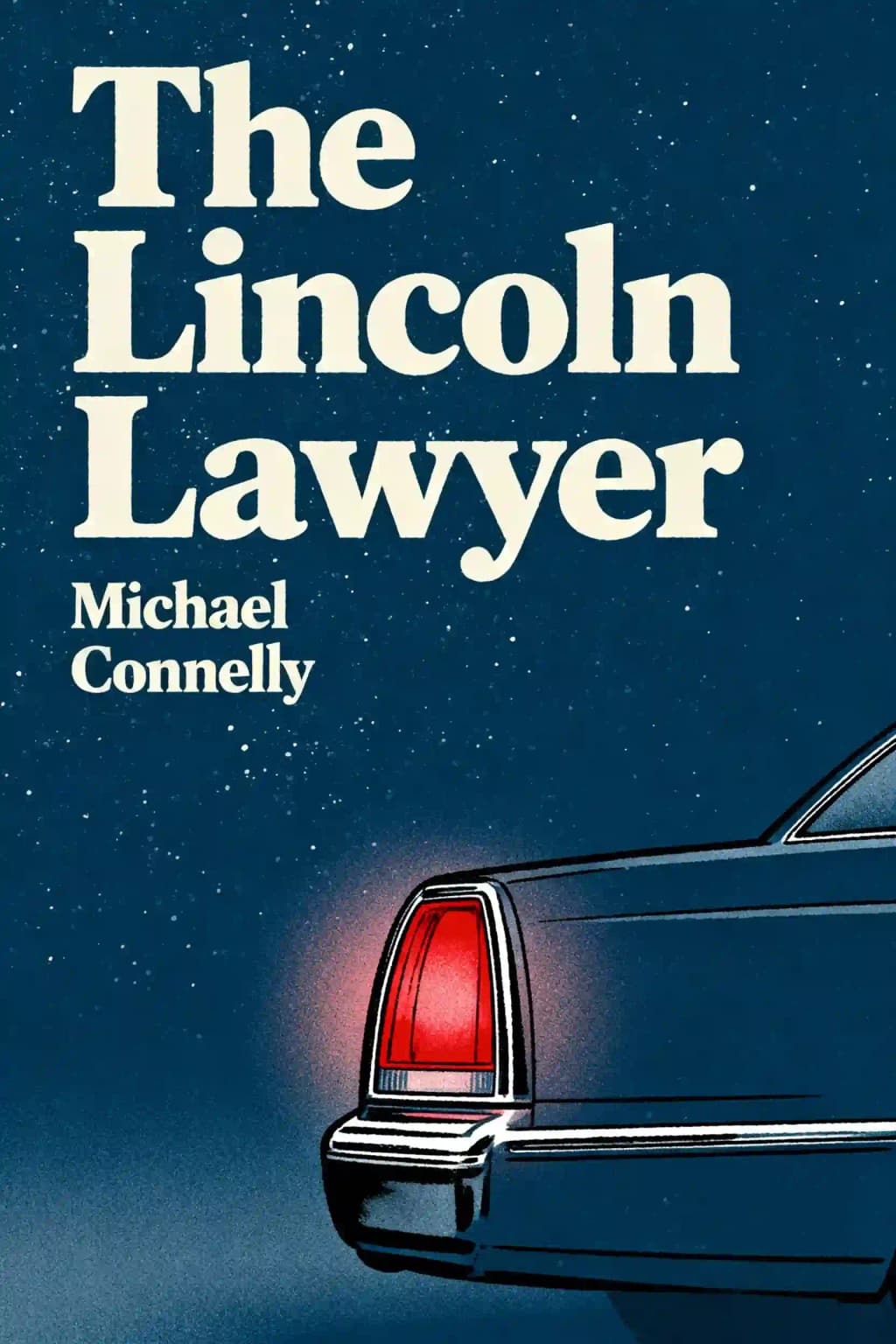
The Lincoln Town Car glides through the streets of Los Angeles County, a mobile law office with a cynical driver who understands the machinery of justice better than most. Mickey Haller isn't your typical attorney - he works from the backseat of his car, maintains a network of bail bondsmen who feed him clients, and approaches the law with the pragmatism of someone who knows exactly how the system operates. When Fernando Valenzuela calls about Louis Ross Roulet, a wealthy Beverly Hills resident arrested for aggravated assault and attempted rape, Haller recognizes what every defense attorney dreams of - a "franchise player" who can afford top-dollar rates. What he doesn't realize is that this case will force him to confront the darkest aspects of his profession and question everything he believes about justice, guilt, and his own moral compass. Michael Connelly's legal thriller, which inspired the hit film starring Matthew McConaughey, has been praised by publications from The Times to the Wall Street Journal for its masterful plotting and vivid characterization, establishing itself as a modern classic that redefined the legal thriller genre.
第2章
The Business of Defense: Walking the Ethical Tightrope
Mickey Haller operates in a world where justice and commerce intersect in uncomfortable ways. His practice runs on a carefully maintained network of relationships - bail bondsmen, courthouse personnel, and even former clients - all of whom he rewards at Christmas to keep his referral pipeline flowing. When potential clients can't pay his full fees, he maintains two separate rate schedules: Schedule A for what he wants to charge, and Schedule B for what he'll accept when necessary. The rare "franchise client" like Louis Roulet represents financial salvation - someone who can afford premium rates and wants to go to trial, potentially generating hundreds of billable hours.
"There is no client as scary as an innocent man," Mickey's father once told him, a philosophy that has guided Haller's career. Unlike prosecutors who seek truth and justice, defense attorneys like Haller see themselves as "mechanics" who find the cracks in cases built on mistakes and lies. "I'm a greasy angel," Haller admits, someone who keeps the machine running by manipulating the system rather than seeking absolute truth.
This cynical worldview extends to his relationships with clients. When Harold Casey, a Road Saints motorcycle gang member facing serious drug charges, fails to pay his fees, Haller threatens to withdraw from the case. "Mr. Green is the witness we need," he tells Casey, referring to money. Later, after receiving payment from gang representative Teddy Vogel, Haller admits to his driver Earl that he fabricated a story about needing funds for an expert witness from New York. The ethical lines blur further when Haller buys a videotape from a freelance cameraman for $1,000 to prevent media coverage that might harm his new client's family business.
Yet despite this mercenary approach, Haller maintains certain principles. He meticulously records financial transactions, noting that "most lawyers get disbarred for financial violations." He also genuinely believes in the constitutional right to defense, even if his methods sometimes skirt ethical boundaries. This tension between professional ethics and personal survival creates the moral tightrope Haller walks throughout his practice.
第3章
The Roulet Case: Deception and Reasonable Doubt
The Roulet case presents itself as a seemingly clear-cut instance of assault - a wealthy Century City real estate agent, Louis Ross Roulet, stands accused of brutally attacking Regina Campo in her apartment. The initial evidence appears overwhelming: Roulet was apprehended at the scene with Campo's blood on his clothing and hands, while police recovered a custom knife bearing his initials "LRR" nearby. The victim's injuries are severe, including facial contusions and a broken nose. Yet Roulet maintains his absolute innocence with unwavering conviction, asserting he's the target of an elaborate setup designed to extract money from his family's considerable fortune.
Haller's veteran investigator, Raul Levin, meticulously pieces together evidence that lends credence to Roulet's version of events. High-quality surveillance footage from Orchid's, an upscale Santa Monica bar, clearly shows Campo initiating contact with Roulet - approaching him deliberately and writing her address on a cocktail napkin, which directly contradicts her statement to police that she'd never met him before the assault. Levin's deeper investigation into Campo's activities reveals a pattern of frequent male visitors arriving at precise intervals throughout evening hours, strongly suggesting she operates as an escort. This discovery points to a potentially calculated scheme - Campo identifying Roulet as a lucrative target based on his Rolex watch, designer suit, and Mercedes convertible, with plans to leverage a criminal case into a multimillion-dollar civil lawsuit against his family's real estate empire.
The prosecution's case, led by Ted Minton, begins showing significant cracks under Haller's methodical examination. Beyond the contradictory video evidence, medical testimony from the emergency room physician proves particularly problematic - the doctor confirms that Campo's injuries resulted from left-handed strikes, while Roulet is demonstrably right-handed. Through careful questioning, Haller systematically exposes how Campo misled investigators about both her prior knowledge of Roulet and her profession, devastating her credibility.
However, Haller's instincts signal something more sinister beneath the surface. During a tense private meeting, Roulet partially amends his story, acknowledging he understood he was entering a transactional arrangement with Campo while steadfastly denying any violence. The case takes an ominous turn when Haller discovers the measurements of Roulet's monogrammed knife perfectly match wound patterns from an unsolved murder two years prior - the brutal killing of Martha Renteria, a case that still haunts Haller from his earlier career.
In the courtroom, Haller orchestrates a masterful defense centered on reasonable doubt. He systematically dismantles Campo's account by highlighting physical impossibilities - given that Roulet stands only 5'7" while Campo is 5'9", her description of being overwhelmed from behind becomes implausible. When Minton extends a plea offer of time served and probation, Haller confidently refuses, recognizing the prosecution's case is crumbling. The defense reaches its emotional peak with testimony from Roulet's mother, Mary Windsor, who reveals her own traumatic experience of being raped while showing a property years ago - explaining why she insisted her son carry protection during his real estate work. Minton's aggressive attempt to discredit Windsor backfires dramatically, leaving jurors visibly sympathetic to the defense and the prosecution's case in tatters.
第4章
The Innocent Man: Jesus Menendez and the Crisis of Conscience
While building Roulet's defense, Haller makes a chilling discovery that shatters his professional detachment. During a late-night review of case files, examining photos of Regina Campo's injuries alongside those of Martha Renteria, a murder victim from two years earlier, Haller notices striking similarities in the wound patterns that send a cold shiver down his spine. Both women had similar physical appearances - petite brunettes in their early thirties - both were attacked with a knife held to their throats from behind, and both cases involved left-handed assaults. The precision and positioning of the knife wounds are nearly identical, suggesting the same perpetrator.
The revelation hits Haller with devastating force - Jesus Menendez, the man he convinced to plead guilty to Renteria's murder, is likely innocent. The real killer is Louis Roulet, the very client Haller is now defending. "I had forced an innocent man to plead guilty to a murder committed by the man who was now my client," Haller realizes, a thought that sickens him to his core. The weight of this realization is compounded by his memory of Menendez's desperate protestations of innocence during their consultations.
During a tense visit to San Quentin prison, Haller shows Menendez a photo lineup carefully arranged to include Roulet's picture among similar-looking individuals. Without hesitation, Menendez identifies Roulet as someone who had threatened him before Renteria's murder, describing a confrontation outside a bar where Roulet had warned him to "watch his back." The connection becomes undeniable - Roulet methodically targets women with similar physical profiles, uses identical attack methods, and carries a custom-made knife matching the murder weapon's precise dimensions. Furthermore, both attacks occurred in the same geographic area of Los Angeles, following similar patterns of stalking and surveillance.
This discovery plunges Haller into an ethical nightmare that challenges the very foundation of his legal practice. Attorney-client privilege - a cornerstone of the justice system - prevents him from revealing what he knows about Roulet, yet an innocent man sits in prison, serving time for a crime he didn't commit. "I was caught between the proverbial rock and hard place," he laments. "Between my ethics as a lawyer and my desire to see justice done." The situation forces Haller to confront the darker aspects of criminal defense work, where the pursuit of justice sometimes conflicts with professional obligations.
The crisis reaches a breaking point when Haller's trusted investigator Raul Levin is murdered - shot once in the chest in his home office, with signs pointing to a professional hit. Haller immediately suspects Roulet, believing Levin got too close to uncovering the truth while investigating connections between the Campo and Renteria cases. When Roulet later appears uninvited in Haller's home, making veiled threats about Haller's young daughter Hayley, the attorney's moral dilemma becomes even more acute. The personal stakes escalate as Haller realizes he must somehow navigate the competing obligations to his client, to justice for Menendez, and to his own safety and that of his family - all while staying within the bounds of legal ethics and professional conduct.
第5章
The Courtroom Chess Match: Strategy and Manipulation
The courtroom becomes a sophisticated battlefield where Mickey Haller executes a meticulously planned strategy to achieve seemingly contradictory goals - winning Roulet's case while ultimately exposing him as Renteria's killer. Like a chess grandmaster anticipating multiple moves ahead, Haller carefully positions each piece of evidence and witness testimony to serve his complex endgame.
His masterful manipulation begins with jury selection, where he subtly identifies and cultivates jurors who respond to themes of police tunnel vision and rushed judgment. He deliberately avoids selecting jurors with law enforcement connections, instead favoring those who show skepticism toward authority - a strategy that will serve both his immediate defense and long-term objectives.
The prosecution's jailhouse informant, Dwayne Jeffrey Corliss, presents Haller with his first major tactical opportunity. Through his ex-wife Maggie's insider information about the prosecution's strategy, Haller prepares an elaborate counterattack. When Corliss takes the stand and testifies that Roulet confessed to killing a "snake dancer," Haller orchestrates a devastating three-part expose. First, he presents surveillance video proving Corliss and Roulet were never in the same holding cell. Then, he produces court records showing Corliss's history of false testimony in other cases. Finally, he reveals DNA evidence from a previous case where Corliss's testimony led to a wrongful conviction - a revelation that sends shockwaves through the courtroom.
Haller's "double slingshot" strategy demonstrates particular brilliance in its layered execution. The first phase involves systematically dismantling the prosecution's case against Roulet, forcing them to dismiss charges "with prejudice" - a legal maneuver that prevents any future prosecution for the Campo assault. This apparent victory masks Haller's deeper strategy of setting up Roulet for the Renteria murder case.
His witness preparation shows equal sophistication. Haller carefully coaches Roulet's mother, timing her revelation about her past rape trauma to maximum effect. This testimony serves multiple purposes: it provides a sympathetic explanation for Roulet carrying a knife, establishes a family history of violence against women, and subtly plants seeds of doubt about Roulet's character that Haller can later exploit.
During cross-examination, Haller demonstrates his mastery of courtroom psychology. He methodically exposes inconsistencies in prosecution witnesses' testimony without appearing overly aggressive. He establishes that Campo initially concealed knowing Roulet, highlights the absence of defensive wounds on Roulet's hands, and reveals the police's single-minded focus on Roulet from the investigation's outset. Each point serves both his immediate defense strategy and his longer-term plan to expose Roulet's true nature.
Throughout the trial, Haller maintains an intricate balance worthy of a tightrope walker - defending Roulet effectively while simultaneously gathering evidence for future use against him. He carefully documents every conversation, preserves all evidence, and maintains detailed records that will later prove crucial. This dangerous game requires perfect timing and flawless execution, with Haller constantly aware that the slightest miscalculation could not only derail his plan but potentially cost him his life.
第6章
The Price of Justice: Personal and Professional Costs
Mickey Haller's pursuit of justice exacts a heavy toll on his personal and professional life. His work defending clients he knows are guilty has already cost him his marriage to prosecutor Maggie McPherson, whom he still loves. Their daughter Hayley represents his most meaningful connection, yet his professional choices continually strain this relationship. When Hayley asks why he defends "bad guys" instead of putting them in jail like her mother, Haller struggles to explain the importance of constitutional rights to defense, though his explanation feels hollow even to him.
The Roulet case escalates these costs dramatically. After Raul Levin's murder, Haller becomes a suspect himself when detectives discover his inherited Colt Woodsman pistol is missing - likely the murder weapon Roulet used and then kept to control Haller. "As long as Roulet possessed the murder weapon, he controlled me," Haller realizes, trapped by his own legal ethics from revealing what he knows.
The psychological burden becomes unbearable when Roulet confesses his guilt just before trial begins. "I killed her," he whispers to Haller about Martha Renteria, revealing he knows Haller's plan to defend him and then turn him in to free Jesus Menendez. Roulet threatens Haller with attorney-client privilege, making himself "my client forever" and rendering anything he tells Haller "fruit of the poisonous tree" if Haller tries to use it against him.
This knowledge haunts Haller throughout the trial. Sitting beside a client he knows is a murderer, he maintains a cold distance, fearing his anger might lead him to physically avenge his friend. "I can't do this anymore," he confesses to Maggie one night, contemplating abandoning his legal career entirely.
The final cost comes in blood when Mary Windsor, Roulet's mother, shoots Haller in his home. As he lies bleeding on the floor, Windsor aims to finish him, shouting "You tried to take my son from me!" In that moment, Haller realizes she killed Raul Levin - his dying gesture wasn't the devil's sign but the letter M or W. Before Windsor can fire again, Haller shoots her with a gun from his pocket, becoming "a killer now" - a transformation that will haunt him long after his physical wounds heal.
第7章
The Machinery of Justice: System Flaws and Manipulations
Throughout the novel, Connelly exposes the machinery of justice as deeply flawed and susceptible to manipulation. The system operates not as an abstract pursuit of truth but as a human institution with all the weaknesses that implies. Judges make inappropriate jokes during sentencing, prosecutors withhold evidence, defense attorneys manipulate juries, and police officers develop tunnel vision during investigations.
In the Los Angeles County courts where Haller practices, justice often depends more on financial resources than actual innocence. When representing Darius McGinley, a young repeat offender facing prison for crack cocaine dealing, Haller reflects on how the system processes defendants like products on an assembly line. Despite being only 23, McGinley views incarceration as an inevitable rite of passage, influenced by Tupac Shakur's philosophy. Judge Daniel Flynn conducts the sentencing with inappropriate jokes and racial insensitivity, displaying the casual dehumanization that permeates the system.
The machinery of justice also creates perverse incentives. Prosecutors advance their careers through conviction rates rather than pursuing truth. Defense attorneys like Haller make more money when clients go to trial rather than accepting pleas. Jailhouse informants like Dwayne Jeffrey Corliss fabricate confessions to receive favorable treatment. Even judges can be compromised, as Haller discovers when he learns a $100,000 bribe was paid to fix Roulet's trial.
Perhaps most disturbing is how the system's complexity creates opportunities for manipulation by those who understand its inner workings. Haller exploits these opportunities throughout his career, finding legal technicalities to benefit his clients regardless of actual guilt. When representing Gloria Dayton, a prostitute caught with drugs, he leverages information about a Colombian fugitive to negotiate her release into a treatment program rather than jail. For Harold Casey, the Road Saints gang member, he identifies a Fourth Amendment violation that could overturn his conviction on appeal.
The novel suggests that true justice often occurs despite the system rather than because of it. When Detectives Kurlen, Lankford, Booker and Sobel arrive to arrest Roulet for Martha Renteria's murder after his acquittal in the Campo case, they're acting on evidence Haller helped uncover - evidence the system would have otherwise missed. This parallel justice, operating alongside the formal machinery, represents the novel's ambiguous view of how justice is ultimately achieved.
第8章
Redemption Through Truth: Haller's Moral Evolution
Mickey Haller's journey through the Roulet case transforms him from a cynical manipulator of the system to someone willing to risk everything for justice. This evolution doesn't happen overnight but unfolds gradually as Haller confronts the consequences of his professional choices and rediscovers his moral compass.
Early in the novel, Haller describes himself as someone who doesn't seek truth but rather exploits weaknesses in the prosecution's case. "The law was not about truth. It was about negotiation, amelioration, manipulation," he explains. His father's philosophy that he would "defend the devil himself" as long as the fee was covered has shaped Haller's approach to his practice.
The turning point comes when Haller realizes he convinced an innocent man, Jesus Menendez, to plead guilty to a murder committed by his current client. This revelation forces Haller to confront the real-world consequences of his professional cynicism. The guilt weighs so heavily that he can't eat his steak dinner with Levin after discussing it: "Neither of us had much of an appetite after that. I think we were both thinking about Jesus Menendez."
As the case progresses, Haller develops a strategy to right this wrong while honoring his professional obligations. Rather than directly betraying attorney-client privilege, he creates circumstances where the truth about Roulet can emerge legally. This requires tremendous personal risk - continuing to represent a client he knows is dangerous, exposing himself to investigation for Levin's murder, and ultimately facing Roulet's mother with a gun.
Haller's redemption comes not from abandoning his role as defense attorney but from finding a way to pursue justice within the constraints of his professional ethics. After being shot by Mary Windsor, he takes satisfaction in knowing Louis Roulet faces "an impenetrable case" for the Renteria murder, with prosecutors building evidence that will keep him imprisoned for life.
Though cleared of wrongdoing in Windsor's death, Haller struggles with becoming "a killer now." Yet he finds hope in rebuilding his relationship with Maggie McPherson, who brings their daughter to visit weekly. "We both know our daughter will be what saves us," he reflects. Despite his ethical compromises and the psychological toll, Haller plans to return to work: "I will pull the Lincoln out of the garage, get back on the road and go looking for the underdog... I will be healed and ready to stand once again in the world without truth."
第9章
The Lincoln Lawyer Legacy: Truth in a World Without Truth
The Lincoln Lawyer ultimately presents a complex meditation on truth and justice in a system designed more for negotiation than absolute certainty. Mickey Haller operates in what he calls "the world without truth" - a legal landscape where reality is less important than what can be proven or disproven in court. Yet through his journey, he discovers that truth matters profoundly, even when the system doesn't prioritize it.
The novel's power comes from its unflinching examination of moral compromises. Haller begins as someone who views clients instrumentally - as sources of income rather than individuals deserving justice. His transformation doesn't make him a crusader for truth but something more nuanced - a defense attorney who understands that sometimes justice requires working both within and against the system simultaneously.
This duality appears in the novel's resolution. Haller achieves justice for Jesus Menendez not by dramatically exposing Roulet in court but through careful manipulation of legal processes. He ensures Roulet's acquittal in the Campo case (fulfilling his obligation as defense counsel) while simultaneously creating circumstances where evidence of Roulet's guilt in the Renteria murder can be properly developed by law enforcement (serving justice for Menendez).
The "Lincoln Lawyer" moniker takes on deeper significance through this journey. Like Abraham Lincoln, who navigated profound moral questions within existing legal frameworks, Haller finds a way to honor both his professional obligations and his personal moral compass. His mobile office symbolizes this adaptability - moving between worlds, never fully at home in any single perspective.
In the end, Haller returns to his practice with eyes open to both its limitations and possibilities. "I will be healed and ready to stand once again in the world without truth," he concludes, suggesting not surrender to cynicism but a hard-won wisdom about how justice actually functions. By accepting the imperfections of the system while working to correct its worst injustices, Haller embodies a pragmatic idealism that acknowledges reality while refusing to abandon the pursuit of justice.
The novel leaves readers with a challenging question: In a system where truth is negotiable, what personal moral compass should guide our actions? Haller's answer isn't perfect, but it's profoundly human - we must navigate the machinery of justice with both professional skill and personal integrity, recognizing that sometimes the path to justice requires traveling through morally ambiguous territory.