第1章
The Perfect Murder: When Justice Becomes the Predator
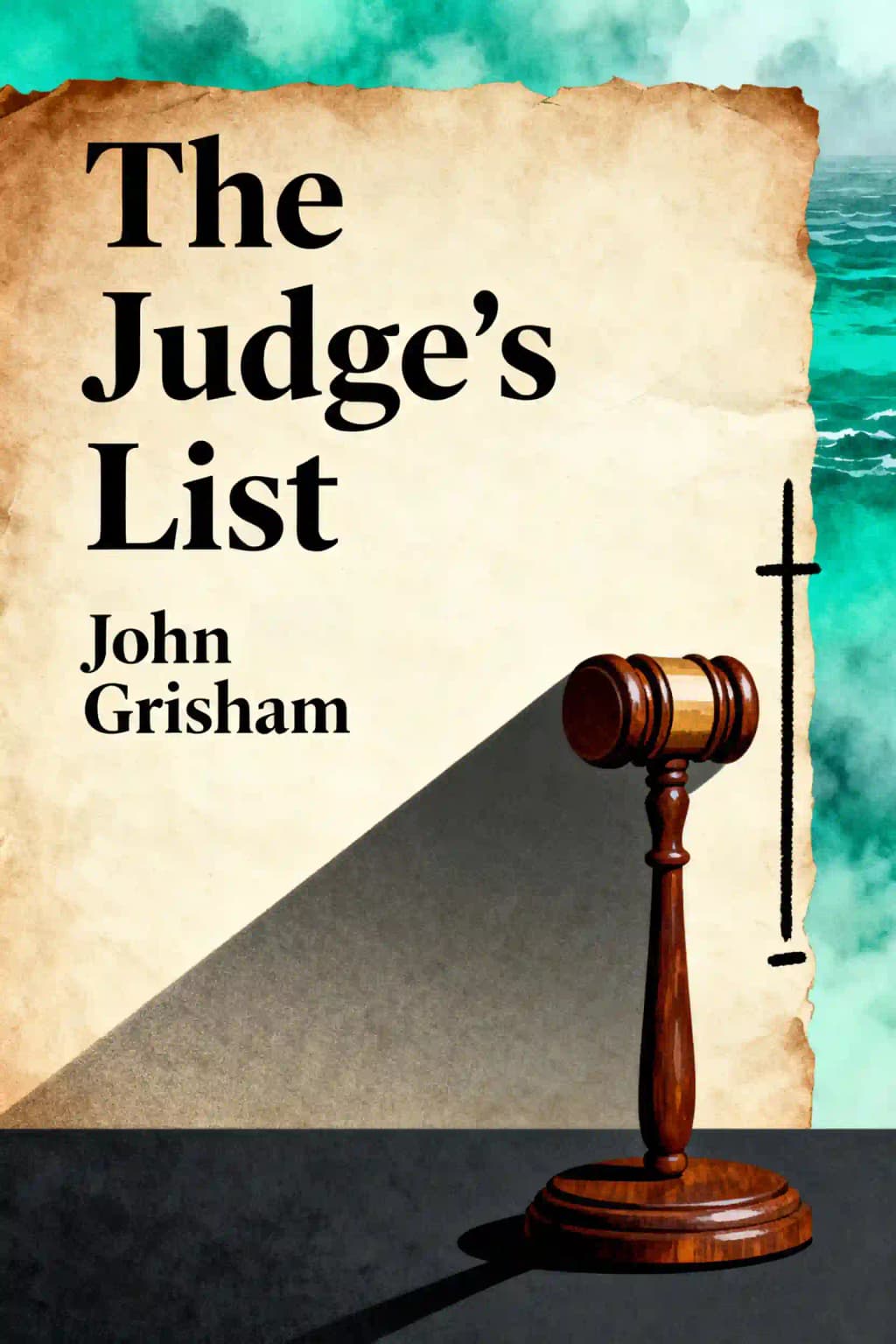
Stephen King called it "terrifying" and "utterly compelling." Barack Obama included it in his 2021 summer reading list. With over 45 million copies sold worldwide, John Grisham's "The Judges List" takes his trademark legal thriller formula and infuses it with the dark psychology of serial killer fiction. This #1 New York Times bestseller follows Lacy Stoltz, a judicial investigator who encounters a woman with an extraordinary claim: a sitting judge has been murdering people for over two decades. What makes this story particularly chilling is how Grisham, a former lawyer himself, creates a villain who understands precisely how to exploit the legal system he's sworn to uphold. As The Washington Post noted, it's "a novel that seems all too real in our divided time."
第2章
A Mysterious Complaint Arrives
The Florida Board on Judicial Conduct occupies a nondescript government building in Tallahassee, where fluorescent lights hum overhead and dated office furniture fills cramped cubicles. Recent budget cuts have decimated both resources and spirits, leaving the skeletal staff to handle an ever-growing caseload of judicial misconduct cases. For veteran investigator Lacy Stoltz, twelve years of investigating mostly mundane violations - judges accepting gifts from lawyers, failing to recuse themselves from cases involving relatives, or occasional low-level bribery - have begun to feel increasingly unfulfilling. Her career peaked three years earlier with the explosive Indian casino corruption case, a triumph that came at a devastating cost: the death of her colleague Hugo Hatch and her own near-fatal injuries from a deliberate car crash that still gives her nightmares.
The call from "Margie" breaks the monotony of Lacy's routine paperwork. The caller's measured tone and insistence on meeting at Starbucks - not the office - triggers Lacy's investigative instincts. Following standard protocol for uncertain situations, she positions Michael Geismar, a trusted colleague, at a discrete table with a camera. The woman who arrives moves with calculated precision, scanning the cafe before selecting a corner table. Her designer outfit and perfectly styled hair contrast with her obvious nervousness - hands trembling slightly as she opens an immaculate accordion file filled with color-coded tabs and meticulous notes.
"Margie" demonstrates an unnerving knowledge of Lacy's career, referencing not just the casino case headlines but obscure details from minor investigations. Her preparation extends beyond research - she calmly points out Michael taking photos, even describing the make and model of his camera. This calculated revelation serves its purpose: establishing her thoroughness while suggesting she has more cards to play.
At the Ramada's dimly lit bar, "Margie" transforms into Jeri Crosby, her academic credentials and family history unfolding like chapters in a tragedy. The murder of her father, Bryan Burke, haunts every word - a brilliant law professor found dead in his study, no forced entry, no weapon found, no witnesses. The apparent robbery gone wrong fooled local police, but not his daughter. For twenty-two years, Jeri has built her case against the killer - now Judge Ross Bannick, a respected Florida circuit court judge whose carefully crafted public persona masks what she believes is a methodical serial killer.
The weight of her accusation fills the space between them. Jeri has traced a pattern of deaths across three states, each victim connected to Bannick through seemingly innocent circumstances, each death dismissed as accident or robbery. Her evidence, while circumstantial, reveals a chilling pattern that has consumed two decades of her life. She's watched from afar as Bannick has risen through the judicial ranks, knowing that each day he presides over justice while potentially harboring the darkest of secrets.
第3章
The Relentless Pursuit of Justice
In a private conference room at the Ramada, Jeri shares crime scene photos and details of her father's murder. He was killed during his morning walk-struck in the head and strangled with a distinctive blue nylon rope. The case went cold with no witnesses, forensics, or apparent motive. Jeri's mother died two years later, never recovering from the loss, and her brother eventually lost interest in pursuing the case.
Professor Burke had been universally beloved at Stetson Law School, where his constitutional law lectures were so popular that visiting professors and alumni would attend. The only possible motive Jeri uncovered involved a disgruntled former student who had a public meltdown in her father's class after being repeatedly challenged and humiliated. This student later wrote disturbing letters blaming Burke for his nervous breakdown before eventually finishing law school at Miami.
That former student is now Judge Ross Bannick of Florida's Twenty-Second Judicial District-handsome, respected, and by all accounts brilliant. His annual reviews from lawyers are stellar, consistently earning A+ ratings with glowing comments about his punctuality, preparation, courtesy, and "intimidating intellect." Yet Jeri believes he's connected to at least five other murders with identical methods-victims struck in the head and strangled with the same type of nylon rope tied in a distinctive double clove hitch knot.
What's particularly chilling about Jeri's theory is how Bannick allegedly stalks his victims for years before striking. The murders span decades and cross state lines, making connections nearly impossible for local authorities to discover. Each victim allegedly had "a bad history" with the judge-people who had wronged, humiliated, or crossed him in some way.
Obsession works both ways in this story. Just as Bannick obsessively tracks those who've wronged him, Jeri has devoted her life to tracking him. She's sacrificed relationships, career advancement, and peace of mind in her twenty-year quest to bring her father's killer to justice. The question becomes: at what point does righteous pursuit become dangerous fixation?
第4章
The Perfect Predator
Judge Ross Bannick represents the most terrifying kind of predator-one who operates within the system designed to stop him. His position grants him respect, authority, and insider knowledge of how investigations work. He's meticulous, patient, and technologically savvy, using his skills to stay perpetually one step ahead of detection.
Bannick's killings follow a distinct pattern. He identifies targets who have wronged him, sometimes waiting decades before exacting revenge. Each murder involves a blow to the head followed by strangulation with marine-grade nylon rope tied in a distinctive double clove hitch knot. He leaves no evidence, no witnesses, and creates no obvious connections between victims that would alert authorities to a serial killer.
His first victim was allegedly Thad Leawood, a former scoutmaster who sexually abused young Ross. Later victims included Jeri's father who humiliated him in law school, a reporter who exposed his questionable land deal, a lawyer who cheated him out of fees, and others who crossed him in various ways. Most recently, he killed Lanny Verno, a house painter who had confronted Bannick over payment thirteen years earlier.
What makes Bannick truly frightening is his double life. By day, he's a respected judge known for his punctuality, preparation, and fairness. He attends social functions with an elderly widow as his platonic date, maintains professional relationships, and appears entirely normal. Yet he harbors a secret sanctuary-a hidden room between businesses he owns with no official record, heavily secured with alarms and facial recognition. This "Vault" contains his surveillance equipment, computers programmed to self-destruct if he doesn't check in, and the tools of his deadly trade.
His technological prowess is particularly disturbing. Since his youth, Bannick has embraced technology as a means of control and revenge. He tapped phones, filmed people without consent, disabled cameras, and picked locks-all without getting caught. As an adult, he created custom spyware called "Maggotz" that allows him to anonymously access Florida government networks, including Supreme Court communications, correspondence between the Attorney General and Governor, state police files, and most critically, the Board on Judicial Conduct.
Think about it-how do you catch someone who can monitor the very investigation targeting him? How do you build a case against someone who knows the legal system's weaknesses intimately? This is the nightmare scenario Lacy and Jeri face.
第5章
The Investigation Begins
Despite her initial skepticism, Lacy finds herself inexorably drawn into Jeri's case. Though the Board on Judicial Conduct typically handles mundane ethics violations - improper campaign contributions, conflicts of interest, judicial temperament issues - rather than murder investigations, Lacy sees an opportunity to do meaningful work again. Recently promoted to interim director after her boss's unexpected resignation amid a scandal, she carefully assembles a small task force with her trusted colleague Darren Trope, a methodical investigator known for his attention to detail, and Sadelle, a veteran paralegal with decades of experience navigating the complexities of judicial misconduct cases.
Their investigation first takes them to Biloxi, Mississippi, where they meet with Harrison County Sheriff Dale Black about the Verno murder. The sheriff's office, housed in a weathered building just blocks from the Gulf Coast, becomes the setting for a carefully orchestrated exchange. Lacy strategically presents their interest as stemming from an unrelated complaint about judicial conduct, revealing that Verno had lived in Pensacola around 2000 - a crucial piece of information conspicuously absent from the detective's files. She further impresses the officers by describing the murder weapon in precise detail: a rare hunting knife with distinctive serrations and a custom handle. This demonstration of knowledge establishes what she hopes will be an ongoing working relationship with local law enforcement.
In Marathon, Florida, amid the palm trees and turquoise waters of the Keys, they investigate the murder of Perry Kronke, an 81-year-old retired lawyer found strangled on his expensive fishing boat. Police Chief Turnbull, initially resistant to outside involvement, becomes notably more cooperative when Lacy accurately describes the distinctive rope used in the killing - a specialized marine grade line with unique braiding patterns typically used in commercial fishing operations. These meetings reveal a troubling pattern: local authorities have significant pieces of the puzzle but no mechanism to connect them across jurisdictional lines, leaving potential serial killers free to operate across state boundaries.
Meanwhile, Jeri intensifies her own parallel investigation, hiring private detective Rollie Tabor - a former police officer with a reputation for unconventional methods - to dig deeper into the connection between Bannick and Verno. Tabor's thorough investigation uncovers that Verno had been arrested for attempted assault with a weapon in 2001 in Pensacola, with Bannick as the unnamed victim. According to the detailed report from the arresting officer, Verno had painted Bannick's house and claimed he wasn't paid the agreed-upon sum of $2,800. During a heated confrontation outside a local hardware store, Bannick alleged Verno pulled a .38 caliber revolver. With no independent witnesses and conflicting statements, the case was ultimately dismissed by the district attorney.
The investigation takes a dangerous turn when Jeri, against all professional advice, sends anonymous letters to Bannick's chambers, letting him know the Board on Judicial Conduct is investigating his past. It's a calculated but risky move meant to rattle him and potentially force a mistake, but it inadvertently puts both Jeri and Lacy in grave danger as Bannick begins to realize the net is closing around him.
第6章
The Hunter Becomes the Hunted
Bannick's carefully constructed world begins to unravel when he receives the anonymous letters. Through his surveillance software, he discovers that BJC investigators have visited Marathon regarding Kronke's murder and mentioned they "might have a suspect." His panic grows when he learns that a private detective has been asking questions about his confrontation with Verno.
Using his hacking skills, Bannick identifies the private investigator as Rollie Tabor from Alabama. He creates an elaborate ruse, posing as a Birmingham doctor needing investigative services and sending Tabor an email with malware-laden attachments. Despite gaining access to Tabor's files, he finds nothing about who might have hired him.
As pressure mounts, Bannick becomes increasingly desperate. He creates a false story about having stage four colon cancer and takes a sixty-day leave of absence, supposedly to pursue alternative treatment in New Mexico. After trading in his vehicle for a new silver Chevrolet Tahoe, he begins tracking Jeri, attaching a GPS device to her car.
The cat-and-mouse game escalates when Bannick discovers a newspaper article connecting four murdered Pensacola men-all his victims. Realizing Jeri must be behind the investigation, he recalls his connections to each victim: a fee dispute with lawyer Mal Schnetzer, reporter Danny Cleveland's expose about his questionable land deal, and Thad Leawood's sexual assault on him when he was thirteen.
Most alarmingly, Bannick learns that law enforcement has recovered a partial thumbprint from a cell phone at the Verno crime scene. This single piece of evidence could be his undoing, sending him into a cleaning frenzy as he attempts to eliminate any fingerprints from his home and office.
In a final, desperate move, Bannick kidnaps Jeri from a motel, taking her to a remote cabin where he interrogates her about what she's told Lacy. He forces her to call Lacy to arrange a meeting, planning to ambush and kill them both. The tension in these scenes is unbearable-Jeri bound and threatened with the same rope that killed her father, while Bannick calmly discusses his murders and plans her death.
第7章
The Final Confrontation
The climax unfolds across multiple locations as Bannick's meticulously orchestrated plans begin to unravel in rapid succession. At the rundown Bayview Motel - a deliberately chosen location for its lack of security cameras - Lacy arrives for what she believes will be a tense but crucial meeting with Jeri. Having grown increasingly wary of the situation, she brings her ex-military brother Gunther, who positions himself discreetly in the shadows of the parking lot. When Bannick emerges from behind a dumpster wielding a hunting knife, Gunther's combat training proves invaluable. The ensuing struggle leaves both men bloodied, with Gunther suffering a deep shoulder wound before Bannick manages to slip away into the darkness.
Meanwhile, fate intervenes through an unlikely source: sixteen-year-old cousins Marcus and Tyler, riding their ATVs through private property, discover the remote cabin where Bannick has imprisoned Jeri. Initially seeking only to raid what they assume is an empty vacation home, they instead find Jeri - dehydrated and exhausted but alive - handcuffed to a metal bed frame. Their panicked 911 call brings a swift response from three jurisdictions, effectively ending Bannick's ability to control the situation.
Bannick's final gambit reveals both his cunning and his determination to avoid capture. Using credentials established months earlier under the alias Thomas Whitmore, he checks into Desert Pines - an exclusive $2,000-per-day rehabilitation facility in Santa Fe. He presents himself as a prominent judge battling alcohol dependency, even sharing fabricated stories of his struggles during the intake interview. In his private suite, he methodically executes his last plan: creating a potent mixture of hydrochloric and sulfuric acids while simultaneously ingesting a lethal dose of prescription painkillers. With scientific precision, he submerges his fingers in the caustic solution, ensuring that even death won't reveal his true identity.
His final package to Linda Morton, his loyal secretary of fifteen years, arrives via FedEx the morning after his death. It contains an updated will leaving her his entire estate - valued at over $4.2 million - along with explicit instructions for immediate cremation without autopsy. The document, prepared by a prestigious law firm and properly notarized, presents a formidable legal obstacle.
The FBI finds itself in an unprecedented legal quandary. While they manage to photograph Bannick's severely damaged hands from multiple angles, their forensics team determines the acid treatment has effectively destroyed the dermal layer containing his fingerprints. The cremation directive creates a race against time as federal prosecutors scramble to find legal grounds to preserve the body. Multiple jurisdictions become entangled in the dispute: the New Mexico courts where he died, the Florida courts where his crimes occurred, and the federal courts overseeing the investigation. Despite exhaustive efforts by the FBI's top fingerprint analysts using advanced reconstruction techniques, positive identification proves impossible - leaving a troubling gap in the official record of the case.
第8章
Justice Found in the Junkyard
Just when it seems Bannick has escaped justice even in death, Jeri makes a breakthrough that would crack open the decades-old case. Through painstaking research of vehicle records and sales histories, she tracks down Bannick's truck from the Verno and Dunwoody murders - a 2009 Chevy Silverado pickup that had changed hands multiple times. The vehicle had been sold shortly after the murders, later totaled in a highway collision, and ultimately ended up at a salvage yard outside Milton, Florida - a detail that might have been overlooked if not for Jeri's relentless attention to detail.
At Dusty's Salvage, amid towers of crushed cars and rusting metal, Lacy, Jeri, and Darren methodically search the wrecked truck. The vehicle sits like a time capsule, its damaged frame holding secrets from years past. While most of the interior is destroyed, Darren notices the glove compartment appears largely intact, though severely damaged. Using specialized tools and careful manipulation, he manages to pry open the warped metal box, revealing a weathered plastic bifold that had been protected from the elements. Inside, they discover an owner's manual, various maintenance receipts, and - most crucially - a State Farm insurance card issued to Shell Corp Properties, one of Bannick's numerous front companies he used to obscure his activities.
The FBI's forensic laboratory in Quantico subjects the insurance card to advanced fingerprint analysis. Technicians, using the latest enhancement techniques, discover two pristine thumbprints preserved on the card's glossy surface. When compared to the partial print lifted from Leonard Verno's kitchen counter twenty years earlier, the match is undeniable - a one-in-several-billion probability. This evidence provides the definitive link that had eluded investigators for two decades, proving what Jeri had known in her heart: Ross Bannick was responsible for her father's death and at least seven other murders across seven different states.
Two weeks after the discovery, Lacy meets with the Kronke family in their Marathon home. Over coffee in their sun-filled Florida room, they ask the question that had haunted them for years: how had law enforcement finally caught such a calculating, meticulous killer? Lacy's response is both simple and profound - they hadn't. She explains how the resolution came not through traditional police work, but through the unwavering determination of a daughter who refused to let her father's murder go unsolved. For twenty years, Jeri had dedicated her life to tracking Bannick, gathering information, and building a case that would eventually bring the truth to light. Her persistence had accomplished what multiple law enforcement agencies across seven states could not.
第9章
The Weight of Obsession Lifted
"The Judge's List" is fundamentally a meditation on the consuming nature of obsession - how it can simultaneously destroy lives while driving remarkable achievements. Ross Bannick's methodical obsession with revenge transformed him into a calculating killer who orchestrated the deaths of at least eight people over twenty-two years, each murder meticulously planned and executed with judicial precision. Jeri Crosby's equally powerful obsession with uncovering her father's killer became the defining mission of her life, reshaping her entire existence around the pursuit of justice. Meanwhile, Lacy finds herself drawn into an obsessive investigation that reignites her sense of purpose, offering an escape from the bureaucratic tedium that had come to define her career at the Board on Judicial Conduct.
The novel delves deep into the moral complexities of justice and revenge, examining what happens when traditional legal channels prove inadequate. Through Bannick's carefully constructed murders and Jeri's relentless investigation, the story explores the shadow system of justice that emerges when official institutions fail. It raises profound questions about vigilantism, the nature of closure, and whether the pursuit of justice can justify decades of single-minded dedication.
The resolution brings a complex mix of vindication and loss. Jeri's unwavering conviction is finally validated - her instincts about Bannick were correct all along. Yet his suicide denies both her and the victims' families the satisfaction of a traditional legal resolution. Instead of seeing Bannick face judgment in a courtroom, they must find peace in the exposure of truth and the end of his killing spree. This outcome forces both characters and readers to grapple with questions about what constitutes true justice in an imperfect world.
For Lacy, the case serves as a catalyst for personal transformation. The final scene at the beachside chapel represents more than just a romantic decision - it symbolizes her liberation from professional stagnation. By spontaneously reserving the chapel and announcing their wedding plans to Allie, she demonstrates a newfound willingness to seize control of her life. Her bold proposal to quit their jobs and embark on an extended European honeymoon marks a decisive break from the cautious, by-the-book approach that had previously characterized her life.
The novel's conclusion suggests that the most profound form of justice might be the ability to free ourselves from the weight of obsession - to recognize when a mission has been accomplished and embrace the possibility of a different future. For Jeri, proving her theory correct after twenty years allows her to begin processing her father's murder in a new way. Lacy's successful resolution of the case gives her the confidence to pursue personal happiness rather than remaining trapped in professional inertia.
"The Judge's List" ultimately delivers a nuanced message about the nature of justice and closure. It suggests that while the truth may not always bring the satisfaction we expect, uncovering it can provide the freedom necessary to move forward. The novel reminds us that justice manifests in unexpected ways, and sometimes the greatest victory lies not in punishment but in finally being able to release the burden of a long-carried obsession.