

『The Hunt for Red October』の概要
Clancy's 1984 debut thriller about a Soviet submarine defection became a phenomenon before launching a $200 million blockbuster. This techno-espionage masterpiece turned an insurance salesman into America's premier military storyteller overnight.
- Tom Clancy's debut novel explores Cold War submarine warfare and defection
- Marko Ramius defects with Red October after his wife's tragic death
- The caterpillar drive makes Red October virtually undetectable by sonar
- Jack Ryan bridges intelligence and military communities during the crisis
- The Hunt for Red October examines loyalty versus moral conviction
- Clancy's detailed submarine technology enhances the novel's military realism significantly
- A fake reactor accident allows Ramius to evacuate his crew
- Dual protagonists create a hybrid thriller combining escape and mission
- The novel contrasts Soviet communism with Western democratic ideals throughout
- Red October rams the pursuing Soviet submarine in final confrontation
- The Hunt for Red October questions the moral responsibilities of power
- Ramius and his officers receive new American identities after defection
『The Hunt for Red October』の著者について
Thomas Leo Clancy Jr. (1947–2013) is the bestselling author of The Hunt for Red October and the pioneer of the military technothriller genre.
Before launching his literary career, Clancy worked as an insurance broker in Maryland, drawing on his lifelong passion for naval history and military strategy to craft meticulously researched espionage novels. Though poor eyesight prevented him from serving in the military, his technical accuracy earned him unprecedented access to Pentagon officials, admirals, and classified military technology.
Published in 1984 by the Naval Institute Press, The Hunt for Red October became a cultural phenomenon after President Ronald Reagan called it "the best yarn," propelling sales to 300,000 hardcover and two million paperback copies. Clancy's recurring protagonist, Jack Ryan, became one of fiction's most iconic heroes, appearing in multiple bestselling novels including Patriot Games, Clear and Present Danger, and The Sum of All Fears—all adapted into major motion pictures. His works have sold over 100 million copies worldwide and inspired blockbuster video game franchises like Rainbow Six and Ghost Recon.
『The Hunt for Red October』に関するよくある質問
What is The Hunt for Red October by Tom Clancy about?
The Hunt for Red October is a Cold War submarine thriller about Soviet Captain Marko Ramius who attempts to defect to the United States with the USSR's most advanced nuclear submarine, the Red October. CIA analyst Jack Ryan must convince the U.S. government of Ramius's intentions while both American and Soviet naval forces hunt for the submarine, creating a tense underwater cat-and-mouse chase filled with military strategy and political intrigue.
Who should read The Hunt for Red October?
The Hunt for Red October appeals to readers who enjoy military thrillers, espionage novels, and Cold War historical fiction. It's ideal for those who appreciate technically detailed submarine warfare, geopolitical strategy, and suspenseful action. The book suits mature readers comfortable with military terminology and some strong language, and fans of authors like Larry Bond or readers seeking realistic portrayals of naval operations and intelligence work.
Is The Hunt for Red October worth reading?
The Hunt for Red October is worth reading as the groundbreaking debut that launched Tom Clancy's career and sold over 2 million paperback copies. While some find the technical submarine details slow-paced, most readers praise its suspenseful plotting, deep character development of Captain Ramius, and realistic Cold War atmosphere. It remains a page-turner that established the technothriller genre, though readers should expect detailed military operations rather than non-stop action.
Who is Tom Clancy and why is he famous?
Tom Clancy (1947-2013) was an American novelist who became one of the best-selling authors of the late 20th century, with over 100 million books sold worldwide. Originally an insurance agent, Clancy revolutionized the technothriller genre with his technically accurate military and espionage novels. His works inspired successful film franchises, video games like Rainbow Six and Splinter Cell, and created the iconic Jack Ryan character that continues through multiple adaptations.
What is the main plot of The Hunt for Red October?
The Hunt for Red October follows Soviet submarine Captain Marko Ramius as he secretly plans to defect with the Red October, a revolutionary stealth submarine equipped with a silent propulsion system. CIA analyst Jack Ryan discovers Ramius's intentions and must convince skeptical U.S. officials while navigating complex Cold War politics. The story unfolds through parallel submarine chases, with both Soviet and American forces pursuing the Red October, culminating in a tense standoff that tests loyalties and military strategy.
What makes Captain Marko Ramius want to defect in The Hunt for Red October?
Captain Marko Ramius's defection stems from deep personal tragedy and disillusionment with the Soviet system. Tom Clancy crafts a complete psychological portrait showing Ramius's troubled history and motivations, creating genuine empathy for his plight. The novel explores his complex character through action rather than exposition, revealing how his personal losses and ideological conflicts drive him to make this dangerous decision, making his defection feel authentic and emotionally resonant within the Cold War context.
How accurate is the military technology in The Hunt for Red October?
The Hunt for Red October is renowned for its technical accuracy regarding submarine operations and Cold War military technology, which led to Tom Clancy meeting high-ranking U.S. military officers after publication. The book's detailed descriptions of submarine warfare, sonar systems, and naval procedures impressed both readers and military professionals. However, some technical details have become dated since 1984, and a few specifics like reactor types contain minor inaccuracies understandable for a Western author during the Cold War.
What is Jack Ryan's role in The Hunt for Red October?
Jack Ryan serves as a CIA analyst who becomes instrumental in understanding Captain Ramius's defection plan in The Hunt for Red October. As an Irish Catholic hero embodying Tom Clancy's recurring character archetype, Ryan is portrayed as highly skilled, disciplined, and thoroughly professional. He must navigate bureaucratic obstacles and convince skeptical officials of Ramius's genuine intentions, positioning him as the bridge between Soviet defector and American military leadership while demonstrating the analytical intelligence that defines his character throughout the series.
What are the main criticisms of The Hunt for Red October?
Critics note The Hunt for Red October contains excessive technical detail that reads like a "submarine operations manual," making it slow-paced for some readers. The novel shows early signs of Tom Clancy's later tendencies toward bloat, multiple subplots, and political bias, though these issues are more manageable than in his later works. Some reviewers argue the book feels dated post-Cold War and wouldn't achieve the same success if published later, positioning it more as a historical artifact than an enduring thriller.
How does The Hunt for Red October compare to the movie adaptation?
The Hunt for Red October movie (1990) starring Alec Baldwin as Jack Ryan is considered a "lavishly-produced, well-filmed" adaptation that successfully translated the novel's tension to screen. The film streamlines the book's complex technical details and multiple subplots into a more accessible thriller format. While the novel provides deeper psychological exploration of Captain Ramius and more intricate submarine warfare details, the movie captures the story's suspenseful essence and became commercially successful, introducing wider audiences to Tom Clancy's world.
Why did The Hunt for Red October become such a massive bestseller?
The Hunt for Red October became a phenomenon after President Ronald Reagan called it "the best yarn," boosting sales from 45,000 to 300,000 hardcovers and 2 million paperbacks. Published during the height of Cold War tensions in 1984, the book's technical authenticity and gripping submarine warfare resonated with readers seeking realistic espionage fiction. The unusual publication through Naval Institute Press, combined with exceptional word-of-mouth and presidential endorsement, created perfect timing that launched Tom Clancy from insurance agent to bestselling author.
Is The Hunt for Red October part of a series?
The Hunt for Red October is the first published novel in Tom Clancy's Jack Ryan series, though chronologically it's the third in Ryan's timeline. The book introduced the recurring hero Jack Ryan and established the "Ryanverse" that continued through 17 bestselling novels. After Clancy's death in 2013, the franchise has been continued by other authors through his family estate. Other notable entries include Patriot Games, Clear and Present Danger, and The Sum of All Fears, several of which became successful films.
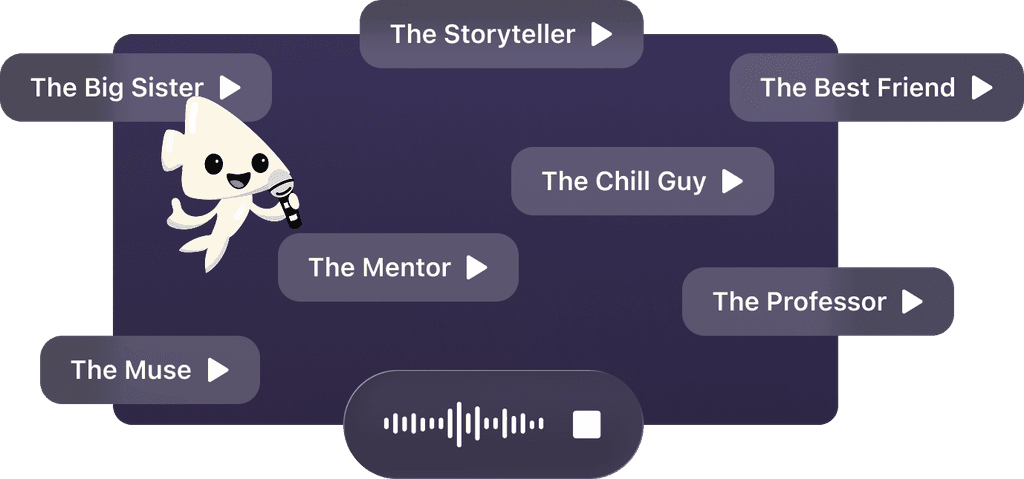
著者の声を通じて本を感じる
知識を魅力的で例が豊富な洞察に変換
キーアイデアを瞬時にキャプチャして素早く学習
楽しく魅力的な方法で本を楽しむ
『The Hunt for Red October』の登場人物
- Marko RamiusSoviet submarine captain defecting to the West
- Jack RyanCIA analyst and former Marine officer
- James GreerCIA Deputy Director of Intelligence
- Ivan PutinSoviet political officer aboard the Red October
- Skip TylerFormer submarine officer and naval instructor
『The Hunt for Red October』の主要テーマ
- submarine warfare
- cold war defection
- silent propulsion technology
- naval intelligence analysis
- underwater sonar detection
『The Hunt for Red October』の名言
Putin speaks loudly of patriotism, his affected enthusiasm masking the fear he instills.
Ramius motivates his young crew with 'a large carrot and a small stick.'
The pattern doesn't fit-Soviet army and air forces aren't involved.
あなたに合った学び方を探す
 クイックサマリーモード
『The Hunt for Red October』の要約を9分で読む・聴く
『The Hunt for Red October』の核心的なアイデアを分かりやすいポイントに分解し、革新的なチームがどのように創造、協力、成長するかを理解します。

 エンタメモード
『The Hunt for Red October』のレッスンを21分のストーリーで
鮮やかなストーリーテリングを通じて『The Hunt for Red October』を体験し、イノベーションのレッスンを記憶に残り、応用できる瞬間に変えます。
 パーソナライズモード
The Hunt for Red Octoberを自分の学習スタイルで体験
何でも質問し、学習スタイルを選び、自分に本当に響くインサイトを一緒に作れます。
"Instead of endless scrolling, I just hit play on BeFreed. It saves me so much time."


"I never knew where to start with nonfiction—BeFreed’s book lists turned into podcasts gave me a clear path."


"Perfect balance between learning and entertainment. Finished ‘Thinking, Fast and Slow’ on my commute this week."
"Crazy how much I learned while walking the dog. BeFreed = small habits → big gains."
"Reading used to feel like a chore. Now it’s just part of my lifestyle."

"Feels effortless compared to reading. I’ve finished 6 books this month already."
"BeFreed turned my guilty doomscrolling into something that feels productive and inspiring."

"BeFreed turned my commute into learning time. 20-min podcasts are perfect for finishing books I never had time for."
"BeFreed replaced my podcast queue. Imagine Spotify for books — that’s it. 🙌"

"It is great for me to learn something from the book without reading it."
"The themed book list podcasts help me connect ideas across authors—like a guided audio journey."
"Makes me feel smarter every time before going to work"
"Instead of endless scrolling, I just hit play on BeFreed. It saves me so much time."
"I never knew where to start with nonfiction—BeFreed’s book lists turned into podcasts gave me a clear path."
"Perfect balance between learning and entertainment. Finished ‘Thinking, Fast and Slow’ on my commute this week."
"Crazy how much I learned while walking the dog. BeFreed = small habits → big gains."
"Reading used to feel like a chore. Now it’s just part of my lifestyle."
"Feels effortless compared to reading. I’ve finished 6 books this month already."
"BeFreed turned my guilty doomscrolling into something that feels productive and inspiring."
"BeFreed turned my commute into learning time. 20-min podcasts are perfect for finishing books I never had time for."
"BeFreed replaced my podcast queue. Imagine Spotify for books — that’s it. 🙌"
"It is great for me to learn something from the book without reading it."
"The themed book list podcasts help me connect ideas across authors—like a guided audio journey."
"Makes me feel smarter every time before going to work"
"Instead of endless scrolling, I just hit play on BeFreed. It saves me so much time."
"I never knew where to start with nonfiction—BeFreed’s book lists turned into podcasts gave me a clear path."
"Perfect balance between learning and entertainment. Finished ‘Thinking, Fast and Slow’ on my commute this week."
"Crazy how much I learned while walking the dog. BeFreed = small habits → big gains."
"Reading used to feel like a chore. Now it’s just part of my lifestyle."
"Feels effortless compared to reading. I’ve finished 6 books this month already."
"BeFreed turned my guilty doomscrolling into something that feels productive and inspiring."
"BeFreed turned my commute into learning time. 20-min podcasts are perfect for finishing books I never had time for."
"BeFreed replaced my podcast queue. Imagine Spotify for books — that’s it. 🙌"
"It is great for me to learn something from the book without reading it."
"The themed book list podcasts help me connect ideas across authors—like a guided audio journey."
"Makes me feel smarter every time before going to work"
"Instead of endless scrolling, I just hit play on BeFreed. It saves me so much time."
"I never knew where to start with nonfiction—BeFreed’s book lists turned into podcasts gave me a clear path."
"Perfect balance between learning and entertainment. Finished ‘Thinking, Fast and Slow’ on my commute this week."
"Crazy how much I learned while walking the dog. BeFreed = small habits → big gains."
"Reading used to feel like a chore. Now it’s just part of my lifestyle."
"Feels effortless compared to reading. I’ve finished 6 books this month already."
"BeFreed turned my guilty doomscrolling into something that feels productive and inspiring."
"BeFreed turned my commute into learning time. 20-min podcasts are perfect for finishing books I never had time for."
"BeFreed replaced my podcast queue. Imagine Spotify for books — that’s it. 🙌"
"It is great for me to learn something from the book without reading it."
"The themed book list podcasts help me connect ideas across authors—like a guided audio journey."
"Makes me feel smarter every time before going to work"

The Hunt for Red Octoberの要約をダウンロード
The Hunt for Red Octoberの要約をPDFまたはEPUBで無料でダウンロード。印刷やオフラインでいつでもお読みいただけます。


