How fabric secretly shaped civilization - from Viking wool sails that ruled seas for 50 years to controversial swimsuits banned for breaking records. "The Golden Thread" unravels textiles' hidden power in human innovation, war, and space exploration.
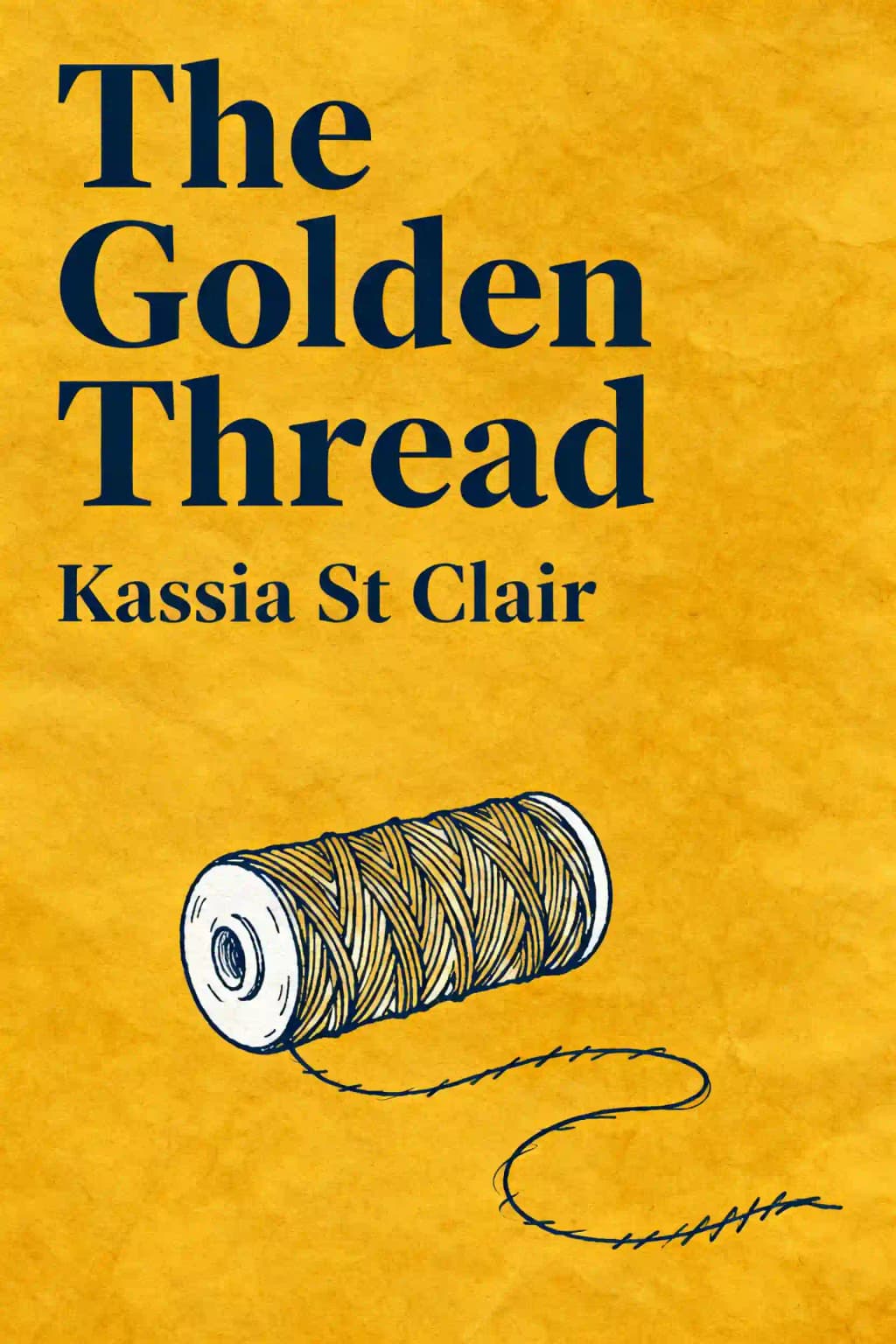
Kassia St. Clair, bestselling author of The Golden Thread: How Fabric Changed History, is a celebrated cultural historian and color expert renowned for weaving meticulous research into accessible narratives. Her work explores the intersection of design, technology, and society, with The Golden Thread examining textiles as a driving force in human civilization.
This theme is rooted in her decade-long journalism career at The Economist and Elle Decoration. St. Clair’s debut, The Secret Lives of Colour, became a global phenomenon, translated into 20 languages and featured as a Radio 4 Book of the Week.
A sought-after speaker, she has lectured at institutions like the Victoria & Albert Museum and collaborated with brands such as Chanel. Her third book, The Race to the Future, continues her signature approach of illuminating overlooked historical threads.
The Golden Thread was shortlisted for the Somerset Maugham Award and named a Sunday Times Book of the Year, solidifying St. Clair’s reputation for transforming niche subjects into compelling cultural histories.
The Golden Thread explores how textiles shaped human civilization, from ancient linen mummy wrappings to spacesuit materials. Kassia St. Clair ties fabric innovations to pivotal moments like the Industrial Revolution and Olympic advancements, revealing how cloth influenced politics, technology, and culture. The book blends archaeology, biography, and science to show fabrics as foundational to progress.
History enthusiasts, textile artists, and curious general readers will enjoy this book. It’s ideal for those interested in niche historical narratives, material culture, or the intersection of craft and innovation. Critics praise its accessibility for non-experts while offering fresh insights for academics.
Yes—it’s a well-researched, engaging read that transforms textiles into a lens for understanding history. Reviewers highlight St. Clair’s knack for weaving vivid stories (e.g., Viking sails, Spider-Man-inspired silk research) without oversimplifying. The Sunday Times named it a Book of the Year, and it was shortlisted for the Somerset Maugham Award.
Key themes include textiles as drivers of technological advancement, their role in power dynamics (e.g., calico trade wars), and fabrics’ cultural symbolism. St. Clair also challenges gendered perceptions of textile work, framing it as pivotal to human survival and innovation.
Both books uncover hidden histories of everyday materials, but The Golden Thread focuses on textiles’ societal impact, while The Secret Lives of Colour explores pigments’ cultural meanings. The former uses a chronological, narrative-driven approach, whereas the latter is structured as a color encyclopedia.
The book spans 30,000 years, from prehistoric Georgian cave threads to 1960s NASA spacesuits. Notable chapters examine Egyptian mummification linen, medieval wool trade economies, and 20th-century synthetic fibers.
While not its primary focus, the book implies sustainability lessons through historical examples like flax’s durability and silk’s resource intensity. Modern chapters critique fast fashion indirectly by contrasting past craftsmanship with today’s disposability.
Some reviewers note the broad scope limits depth on specific eras, and the “light prose” may underwhelm academics. However, most praise its balance of rigor and readability, calling it an ideal primer for textile history newcomers.
Yes: Olympic records relied on swimsuit materials until regulators intervened, and medieval Viking sails required wool from 2 million sheep. The book also details how linen’s strength made it vital for early airplane wings.
St. Clair’s history degree and journalism career (including Economist and Elle columns) inform her meticulous research and engaging storytelling. Her prior work on color symbolism likely inspired this textile-focused cultural analysis.
“Textiles are humankind’s first technology.”
This opening line frames fabric as foundational to progress. Another highlights silk’s geopolitical role: “The Silk Road was less about silk than the ideas traveling alongside it”
The 13 thematic chapters blend chronology and topics, such as “Linen: Reinforcing the Ancient World” and “Synthetics: The Space Race.” Each opens with an artifact or persona to anchor broader historical analysis.
It illuminates modern issues like globalization (via historical trade routes) and material innovation (biomimicry in spider-silk research). The book also underscores textiles’ enduring cultural significance amid fast fashion’s environmental toll.
著者の声を通じて本を感じる
知識を魅力的で例が豊富な洞察に変換
キーアイデアを瞬時にキャプチャして素早く学習
楽しく魅力的な方法で本を楽しむ
Textiles have been our constant companions through history's greatest triumphs and darkest hours.
Linen wasn't just preservative but transformative.
You can tie things up in packages so you can carry more.
『The Golden Thread』の核心的なアイデアを分かりやすいポイントに分解し、革新的なチームがどのように創造、協力、成長するかを理解します。
『The Golden Thread』を素早い記憶のヒントに凝縮し、率直さ、チームワーク、創造的な回復力の主要原則を強調します。

鮮やかなストーリーテリングを通じて『The Golden Thread』を体験し、イノベーションのレッスンを記憶に残り、応用できる瞬間に変えます。
何でも質問し、声を選び、本当にあなたに響く洞察を一緒に作り出しましょう。

"Instead of endless scrolling, I just hit play on BeFreed. It saves me so much time."
"I never knew where to start with nonfiction—BeFreed’s book lists turned into podcasts gave me a clear path."
"Perfect balance between learning and entertainment. Finished ‘Thinking, Fast and Slow’ on my commute this week."
"Crazy how much I learned while walking the dog. BeFreed = small habits → big gains."
"Reading used to feel like a chore. Now it’s just part of my lifestyle."
"Feels effortless compared to reading. I’ve finished 6 books this month already."
"BeFreed turned my guilty doomscrolling into something that feels productive and inspiring."
"BeFreed turned my commute into learning time. 20-min podcasts are perfect for finishing books I never had time for."
"BeFreed replaced my podcast queue. Imagine Spotify for books — that’s it. 🙌"
"It is great for me to learn something from the book without reading it."
"The themed book list podcasts help me connect ideas across authors—like a guided audio journey."
"Makes me feel smarter every time before going to work"

The Golden Threadの要約をPDFまたはEPUBで無料でダウンロード。印刷やオフラインでいつでもお読みいただけます。
A single thread can hold more history than a thousand monuments. While we marvel at pyramids and temples, the fabrics draped across our shoulders have quietly shaped human destiny in ways stone never could. That 34,000-year-old fiber fragment discovered in a Georgian cave-dyed a vibrant turquoise and twisted with sophisticated precision-tells us something profound: our ancestors didn't just survive; they created beauty in the harshest conditions imaginable. These weren't crude attempts at warmth but masterworks of color and craft, revealing that even in the depths of the last ice age, humans invested enormous effort into making textiles that did more than cover bodies. They made statements. Without our protective fur, humans faced a stark reality-hypothermia looms when our core temperature drops below 95F, and we start feeling uncomfortably cold at a balmy 80F. Woven fabrics solved this vulnerability brilliantly, trapping insulating air while remaining breathable. But textiles did something more revolutionary: they allowed us to carry more, travel farther, and settle where we had no business surviving. Every fishing net, every bundle tied with string, every warm garment represented a technological leap that threaded together the expansion of civilization itself.