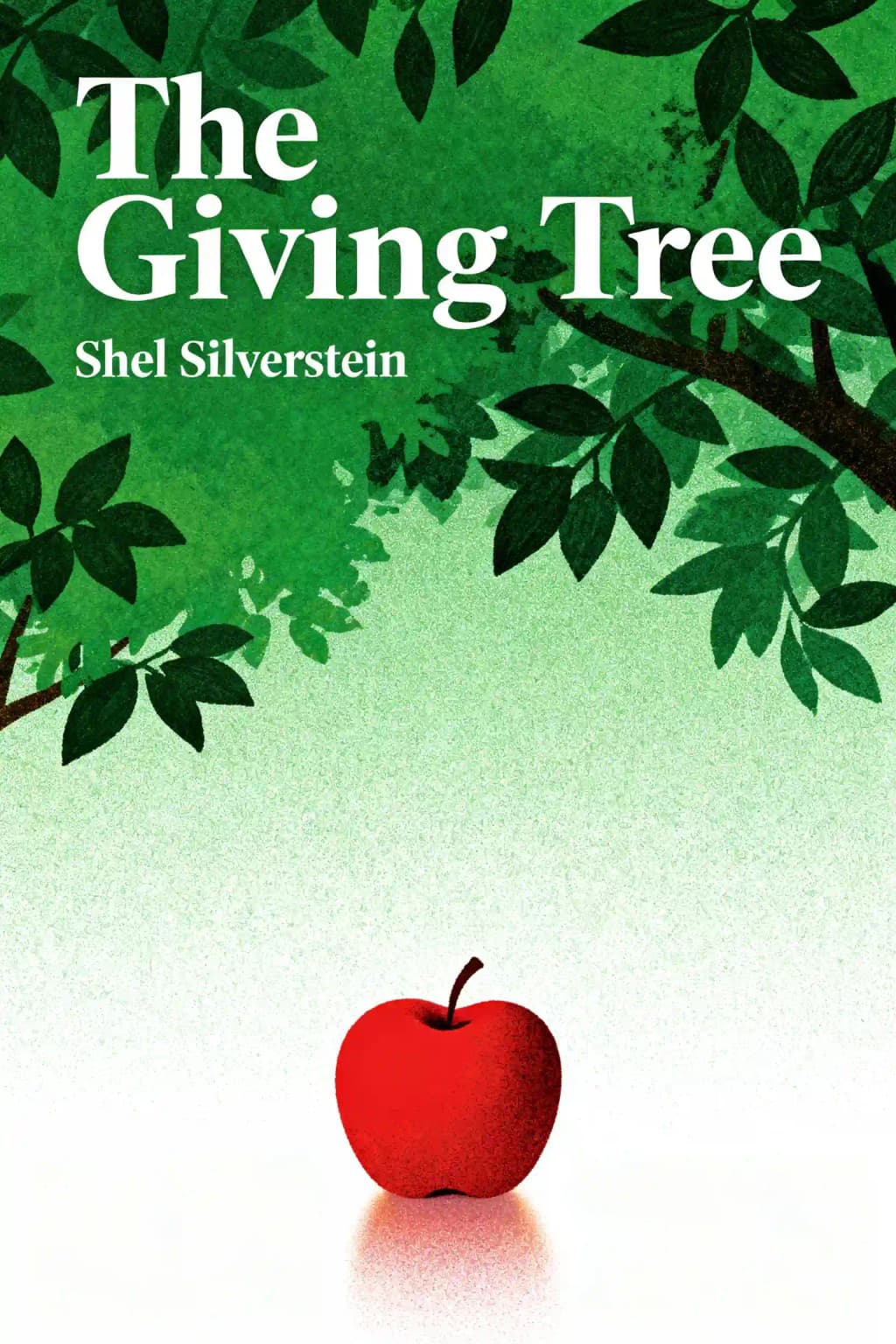
The Giving Tree
『The Giving Tree』の概要
A deceptively simple tale of love and sacrifice that divided critics for decades. Rejected for being "too sad" for children yet "too simple" for adults, Silverstein's masterpiece defied publishers for four years before selling 10+ million copies worldwide.

『The Giving Tree』の主要テーマ
- unconditional love
- selfless sacrifice
- environmental stewardship
- passage of time
- human greed
『The Giving Tree』の名言
"And after a long time the boy came back again. 'I am sorry, Boy,' said the tree, 'but I have nothing left to give you.'"
"I am too old to swing on trees. I am too busy to climb trees,' said the boy.
"I don't want much now,' said the boy, 'just a quiet place to sit and rest. I am very tired.'"
Is true love measured by what we give or what we receive?
Her love remains constant while everything around her changes.
『The Giving Tree』の登場人物
- The TreeA selfless entity who gives everything to a boy
- The BoyA male who grows from a child to an elderly man
- Shel SilversteinThe author and illustrator of the book
著者について
『The Giving Tree』の著者について
Sheldon Allan Silverstein (1930-1999) is the beloved author of The Giving Tree, a children's classic exploring unconditional love, sacrifice, and the complex relationship between givers and receivers.
Born and raised in Chicago, Silverstein was a multifaceted artist—cartoonist, poet, songwriter, and performer—whose unique blend of humor and profound emotional depth resonated with readers of all ages. Though he initially worked as a cartoonist for Playboy magazine, editor Ursula Nordstrom convinced him to write for children, launching a legendary career in children's literature.
His other iconic works include Where the Sidewalk Ends and A Light in the Attic, both long-standing New York Times bestsellers. As a Grammy-winning songwriter, he penned Johnny Cash's hit "A Boy Named Sue."
Silverstein's books have sold over 20 million copies worldwide and have been translated into more than 47 languages, cementing his legacy as one of the most influential children's authors of the 20th century.
The Giving Treeの要約をダウンロード
The Giving Treeの要約をPDFまたはEPUBで無料でダウンロード。印刷やオフラインでいつでもお読みいただけます。
この本に関するよくある質問
The Giving Tree by Shel Silverstein is a moving story about the relationship between a boy and a tree who loves him unconditionally. Published in 1964, the book follows their lifelong connection as the tree continuously gives parts of herself—her apples, branches, and trunk—to make the boy happy as he grows from childhood through old age, ultimately leaving only a stump for him to rest upon.
Shel Silverstein (1930-1999) was an American writer, cartoonist, and musician best known for beloved children's books like The Giving Tree, Where the Sidewalk Ends, and A Light in the Attic. Born in Chicago, Silverstein also wrote hit songs including Johnny Cash's "A Boy Named Sue" and worked as a cartoonist for Playboy magazine. His works have been translated into over 47 languages and sold more than 20 million copies worldwide.
The Giving Tree is suitable for readers of all ages, from young children to adults. The book works beautifully in classrooms, churches, and family settings, offering simple prose that children can understand while containing deeper themes about love, sacrifice, and relationships that resonate with adult readers. Parents, educators, and anyone interested in exploring complex emotional themes through accessible storytelling will find value in Silverstein's work.
The Giving Tree is worth reading as one of the most iconic and discussed children's books in American literature. Since its 1964 publication, the book has sparked meaningful conversations about unconditional love, selflessness, and the nature of giving across generations. While interpretations vary widely—from touching tribute to problematic parable—its emotional impact and cultural significance make it essential reading for understanding children's literature and exploring complex relationship dynamics through simple storytelling.
The main message of The Giving Tree centers on unconditional love and selfless giving, though interpretations vary significantly. The tree's continuous sacrifice for the boy—providing apples, shade, branches, and finally her trunk—demonstrates boundless generosity and devotion. However, readers debate whether this represents beautiful selflessness, unhealthy codependency, or the one-sided nature of certain relationships, making Silverstein's deceptively simple story a profound exploration of love's complexities.
The Giving Tree sparks controversy because readers interpret its central relationship vastly differently. Some view the tree's complete self-sacrifice as a beautiful example of parental or unconditional love, while others see it as depicting an unhealthy, exploitative relationship where the boy takes everything without gratitude or reciprocation. Critics debate whether the story teaches generosity or enables selfishness, and whether the tree's total depletion represents love or loss of identity.
The tree in The Giving Tree symbolizes unconditional love and selfless devotion, often interpreted as representing parental love, particularly maternal sacrifice. Some readers see the tree as embodying nature's generosity or the essence of true friendship. Others view it symbolically as representing anyone who gives endlessly without receiving—whether parent, partner, or friend—raising questions about whether such one-sided giving represents noble love or unhealthy relationship dynamics.
The Giving Tree took four years to publish because multiple publishers rejected it despite loving the story. Publishers told Shel Silverstein the book was too short, too sad, or fell awkwardly between adult and children's literature, making them uncertain about its marketability. Legendary Harper & Row editor Ursula Nordstrom finally agreed to publish it in 1964, even allowing Silverstein to keep the sad ending because, as he said, "life has pretty sad endings."
The Giving Tree ends with the tree reduced to a stump after giving everything to the boy throughout his life—her apples, branches, and trunk. The boy, now an old man, returns needing only a quiet place to rest, and the stump offers herself one final time. Shel Silverstein insisted on keeping this bittersweet ending despite publisher concerns, believing it reflected life's reality. The conclusion leaves readers contemplating whether this represents beautiful devotion or tragic depletion.
The Giving Tree is appropriate for children as young as 4-5 years old, though its appeal extends through adulthood. Young children appreciate the simple story and illustrations, while older readers grasp increasingly complex themes about relationships, sacrifice, and life's stages. Many parents and educators use it with elementary-aged children, though the book's layered meanings make it valuable for middle schoolers, teenagers, and adults revisiting it with mature perspectives.
Critics of The Giving Tree argue it promotes unhealthy relationship dynamics by glorifying total self-sacrifice without reciprocation or boundaries. Some contend the boy's unending consumption without gratitude teaches entitlement rather than appreciation, while the tree's complete depletion models codependency rather than healthy love. Others question whether the story inadvertently reinforces problematic gender dynamics or exploitation. However, defenders maintain these critiques miss the book's portrayal of unconditional parental love and natural generosity.
The Giving Tree differs significantly from Shel Silverstein's other works like Where the Sidewalk Ends and A Light in the Attic, which feature humorous, quirky poetry with playful illustrations. While those collections showcase Silverstein's comedic sensibility and imaginative wordplay, The Giving Tree is a serious prose narrative exploring profound emotional themes. Silverstein himself noted that despite most of his work being humorous, The Giving Tree embraced sadness "because life has pretty sad endings," making it his most emotionally direct work.