第1章
Cracking Open the Boundaries of Reality
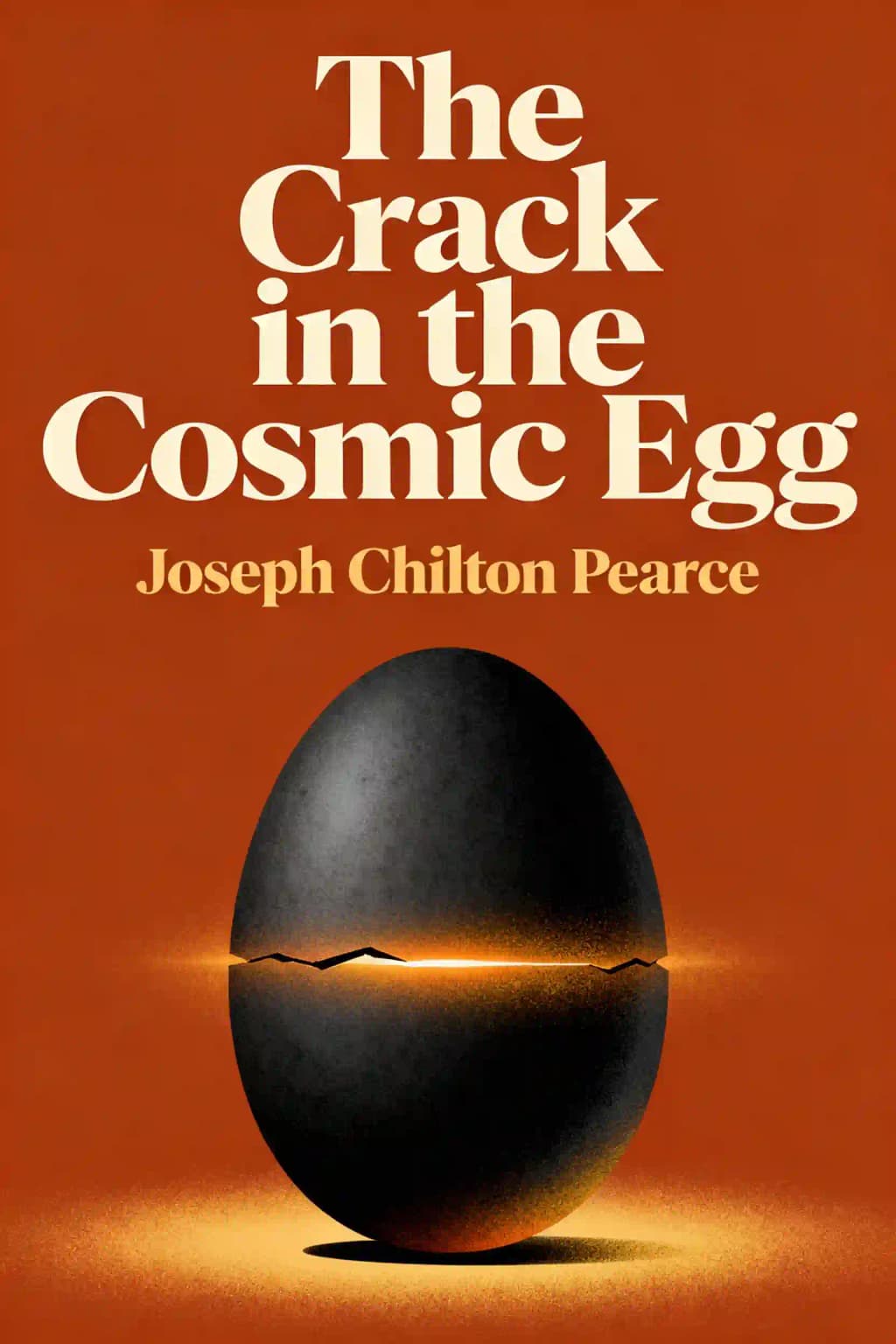
Joseph Chilton Pearce's "The Crack in the Cosmic Egg" has become a cult classic for good reason. Published in 1971 during the height of countercultural exploration, this mind-bending work continues to influence thought leaders from psychologist Jordan Peterson to spiritual teacher Eckhart Tolle. The book's enduring appeal lies in its radical proposition: reality isn't fixed but malleable, shaped by our beliefs and expectations. Pearce, who experienced his own "crack" in perception that fundamentally altered his worldview, draws from diverse fields including anthropology, quantum physics, psychology, and religious studies to build his case. What makes this work particularly fascinating is how it anticipated contemporary discussions about consciousness and reality creation decades before quantum physics made such ideas mainstream. Though not without controversy, Pearce's exploration of how mind shapes matter continues to challenge readers to question their most fundamental assumptions about what's possible.
第2章
The Cosmic Egg: Our Reality Prison
The cosmic egg represents our total worldview - the comprehensive sum of all our beliefs, expectations, cultural assumptions, and deeply held convictions about what reality is and can be. This metaphorical egg forms early in life through an intricate process of cultural conditioning, language acquisition, and social programming, becoming so automatic and deeply unconscious that we mistake our constructed version of reality for objective reality itself. As Pearce emphasizes, humans don't simply adjust passively to reality without language, but actively construct their "real world" through inherited cultural language patterns, family beliefs, educational systems, and societal norms.
Our perception is never truly innocent or objective; even our most rigorous scientific observations are fundamentally verification searches, filtering through possibilities that align with our existing worldview. When we observe the world, we do so through layers of accumulated beliefs, prejudices, and expectations that color everything we see. This filtering process begins in infancy and continues throughout our lives, creating an increasingly complex web of assumptions that become our reality framework.
This worldview shapes our mind from birth as we become "reality-adjusted" to the social web of our particular time, place, and culture. The profound challenge lies in recognizing the fundamental arbitrariness of any worldview, since our very perception of reality is determined by that same worldview - creating a circular system of self-validation. We instinctively protect ourselves from confronting this arbitrariness by representing changes in our understanding as discoveries of absolute truths rather than acknowledging human thinking as an inherently creative, constructive process.
The way reality changes through history provides fascinating insight into this process. A significant shift in concept inevitably changes perceived reality, since our concepts direct our perceptions just as much as our perceptions influence our concepts. Metanoia - the fundamental transformation of mind - is how all genuine education and paradigm shifts occur. Physicist Michael Polanyi observed this in physics students who must undergo a complete conceptual reorganization to truly understand quantum mechanics. This same transformative process shapes children's developing worldviews, religious conversions, scientific breakthroughs, and cultural revolutions.
Our expectations don't just influence outcomes - they actively shape and create them. The "empty category" of scientific inquiry isn't a passive container but an active force in creating events and discoveries. Mathematical abstractions like topology don't remain purely theoretical but manifest in real-world applications, from lunar modules to modern communications technology. The mythos - our imaginative understanding - invariably leads the logos - our rational understanding. The language of fantasy and possibility precedes the language of fact and measurement. Thinking itself emerges as a powerful shaping force in reality, not merely reflecting but actively participating in the creation of what we consider "real."
第3章
The Mind's Two Modes: Logic and Autism
Central to Pearce's thesis is the existence of two distinct thinking modes that fundamentally shape human consciousness and perception. Beyond our familiar reality-adjusted thinking (logical, rational, socially-oriented) exists another mode we're less consciously aware of - what psychologists call 'autistic' thinking, what cognitive scientist Jerome Bruner calls "thinking for the left hand," or what Polanyi described as primary process thinking typical of children and animals. This primal mode operates beneath our conscious awareness, processing information in ways that often defy conventional logic but may access deeper patterns of meaning and connection.
Any worldview represents a creative tension between possibility and choice - the cohesive force of consciousness that prevents either autistic dissolution or slavery to social convention. This dynamic balance allows us to maintain both individual creativity and social functionality. Psychologists Price and Carington suggest that ideas have a natural tendency to realize themselves in the material world unless inhibited by other ideas, similar to how seeds naturally grow unless prevented by environmental factors. We exist in a "sea of stimuli" where different cultural systems and ideologies compete to be the prism through which we order experience into a coherent world. This process involves both conscious selection and unconscious filtering of information.
Aldous Huxley viewed consciousness as a segment of a larger awareness, funneled through the "reducing valve" of our nervous system. This valve, he argued, may not protect us from being overwhelmed but rather simplifies and selects specific events from a continuum of possibilities. The brain acts as an information filter, allowing through only what is necessary for survival and social functioning. The "common core" experiences in psychedelic or altered states may reflect autistic thinking functioning as a mirror for consciousness rather than revealing some ultimate reality. These experiences often share remarkable similarities across cultures and individuals, suggesting access to underlying patterns of mental organization.
Sensory deprivation experiments provide compelling evidence of how the mind creates its own reality when deprived of sensory input. Subjects hallucinate complete experiences, drawing on past data to structure a reality - from vivid landscapes to complex social interactions. This resembles the Tibetan 'tulpa' phenomenon but without the prestructured expectations that give form to such experiences. The case of miners Fellin and Throne, trapped underground for several days, offers a striking example of shared reality creation under extreme conditions. They reported identical hallucinations, including a doorway rimmed in blue light, suggesting that isolated minds can synchronize their reality-creating mechanisms. Similar phenomena have been documented in isolation tanks, polar expeditions, and long-duration space missions, where individuals experience vivid hallucinations that feel as real as ordinary perception.
These findings suggest that our experience of reality is actively constructed rather than passively received, with both logical and autistic thinking modes playing crucial roles in this construction. The interaction between these modes shapes not only individual perception but also collective human experience and cultural development.
第4章
How Questions Shape Our Reality
Our questions shape the answers we receive, and our worldviews determine what we can perceive. Edward de Bono's concepts of "lateral thinking" (creative breakthroughs) and "vertical thinking" (logical elaboration) show how truly new ideas emerge from lateral thinking, while vertical thinkers merely dig deeper along established lines. Questions act as seeds planted in the autistic mode of thinking, germinating beyond conscious thought but in ground prepared by it, eventually flowering as "Eureka!" moments of illumination. These breakthroughs reflect our underlying beliefs and cultural frameworks rather than revealing universal objective truth.
The relationship between questions and answers mirrors the interplay between modes of mind. The "Eureka!" illumination represents the flowering of a question-seed planted in autistic thinking, yielding breakthroughs that seem like universal truths but are actually shaped by our beliefs and cultural frameworks. This process follows St. Paul's formula of faith, works, and grace-though faith functions neutrally, allowing any belief to stimulate passionate work, with "grace" given according to the nature of that faith and work.
Hamilton's Quaternion Theory "happened to him" while walking across a bridge, when "the galvanic circuit of thought closed" after fifteen years of passionate pursuit. Toynbee experienced a sudden "communion" with all of history on Buckingham Palace Road. Einstein spoke reverently of the illumination that led to his famous theory. Even negative revelations occur, as with Sartre's vision of the world as meaningless protoplasm, contrasting with Boehme's positive mystical experience. Religious conversions like Augustine's and Wesley's follow the same pattern-passionate questions eventually yielding the answers they seek.
The passionate asking of a question demands life investment and eventually opens a door to its answer. The unconscious autistic realm is a total wealth where nothing is either true or false, it simply is. The rational mind gives particular value through limitation, shaping formlessness into fact. Even irrational ideas like atomic theory can, if believed long enough, build an ecology allowing their expression and realization.
第5章
Science as Creative Invention
Contrary to the conventional view of science as discovery of pre-existing truths, Pearce presents science as a creative enterprise that invents ways of grouping events rather than discovering how events are naturally grouped. Bruner challenges Newton's view of science as discovery, arguing that science doesn't discover how events are grouped but invents ways of grouping. Warren Weaver calls science a human enterprise showing the same diversity as arts, while Jacob Bronowski equates original scientific thought with artistic thinking. Scientific success is judged by its fruits-how well it performs and how well it's received. Teilhard de Chardin suggests intellectual discovery is now creation, where what something is becomes influenced by what we think it is-a dynamic interrelation between mind and universe.
Polanyi champions science's subjective aspects while Bruner advocates "contemporary nominalism"-seeing science as inventive synthesis rather than discovery. This perspective is only possible because of science's current security. Resistance to recognizing science as creative projection may be the last stand of science viewed as something sacred "out there." Karl Popper dismisses the old scientific ideal of absolute certainty, stating every scientific statement remains tentative forever. Weaver compares science's foundations to piles driven into swampy ground-we stop when they seem firm enough to support our structure.
Science arose from religious conviction that God's rational creation must be accessible to reason. Early scientists saw subjectivity as illusion and focused on cataloging natural objects. This developed into a method of agreement on which phenomena could be "objectively" considered, restricting inquiry to events fitting the growing frame of reference. Events not fitting the prism of faith in rational order were ignored, imposing order on disorder through selective attention that verified the system itself.
Scientific history demonstrates how assuming certain elements might be real proves fruitful long before observation becomes possible. The atomic theory exemplifies this process-from Leucippus and Democritus through Newton to Dalton, who transformed imaginary concepts into mathematical correlations. Despite positivists like Mach dismissing atoms as unobservable and meaningless, those who took the hypothesis seriously eventually discovered evidence. The sustained passionate belief in atoms leaped the logical gap between imagination and reality, requiring enormous expenditures of time, effort, group belief, and resources before becoming the accepted energy basis of all things.
第6章
Walking Through Fire: When Belief Reshapes Reality
Perhaps the most dramatic example of belief reshaping physical reality comes from fire-walking ceremonies across cultures. In Greece, ceremonies honoring Saint Constantine involve days of intensive prayer and meditation until participants enter a seizure-like state called anastenaria before walking on coals, with no signs of injury afterward. These rituals often last for several days, with participants fasting and engaging in continuous chanting that alters their consciousness. In Indonesia, stones are heated for 72 hours straight until they reach extreme temperatures - paper thrown on them bursts into flame instantly - yet successful walkers emerge completely unharmed, even walking slowly and deliberately across the burning surface.
The English Society for Psychical Research extensively documented Indian fakirs walking on fires reaching temperatures of 1400C without injury - hot enough to melt aluminum. In one particularly notable case, they enabled a skeptical psychology professor to walk unharmed while holding the fakir's hand, suggesting the protection extends beyond the practitioner. Similar phenomena have been documented among Pacific Island cultures, where fire-walking serves as an initiation rite, and in Southern Europe, where it forms part of religious festivals dating back centuries.
These phenomena fundamentally challenge our assumptions about biological necessities and causality. Fire-walking demonstrates how belief can restructure reality - fire burns as a rule, but doesn't have to burn a particular person at a particular time. The process follows a consistent pattern across cultures: intense desire for the experience, complete detachment from conventional reality, unwavering commitment to a new construct, intensive mental and spiritual preparation, and finally the breakthrough conviction that allows the impossible to happen. Participants report entering altered states where normal physical laws seem suspended.
The implications extend far beyond mere pain resistance or psychological conditioning. Modern scientific attempts to explain fire-walking through the Leidenfrost effect or brief contact times fail to account for many documented cases where exposure times were prolonged and temperatures far exceeded what these mechanisms could protect against. What emerges is a more profound insight: fire-walking isn't about discovering some hidden law of physics that prevents burning. Rather, it demonstrates that the laws themselves are contingent and can be suspended under certain conditions of belief and mental preparation.
The fire-walker doesn't discover an exception to the rule - they temporarily create one through their complete commitment to a different reality structure. This suggests our physical laws may be more like strong tendencies that can be transcended rather than absolute imperatives. The phenomenon raises profound questions about consciousness, reality, and the power of belief to reshape what we consider possible. Similar principles may apply to other seemingly impossible feats documented across cultures, from extreme cold resistance to inexplicable healing.
第7章
Trance States: Thresholds Between Worlds
Trance states represent a fascinating window into how the mind shapes reality, revealing the profound plasticity of human consciousness. Ernest Hilgard's groundbreaking decade-long research at Stanford systematically explored the phenomenon of hypnotic susceptibility, discovering that only about twenty percent of people can experience deep trance states. These states enable remarkable phenomena that challenge our understanding of mind-body connections - including bloodless wounds that heal rapidly, displays of superhuman strength far beyond normal capabilities, and measurable physiological changes like increased blood sugar levels after purely imaginary meals. These dramatic effects suggest the body responds to conceptual frameworks in ways that transcend conventional cause-effect relationships, finding physiological pathways to manifest the mind's expectations.
The key factor determining trance capability lies deeply rooted in childhood experience. Those who can enter deep trance as adults share a common developmental pattern: they engaged in rich fantasy play and imaginative ventures with attentive parents who regularly read to them, told elaborate stories, and participated fully in "let's-pretend" scenarios. Crucially, these parents also consistently helped their children navigate back to ordinary reality, creating clear boundaries between imaginative and concrete thinking. This careful balance establishes a well-worn psychological threshold between autistic (primary process) and reality-based (secondary process) thinking, enabling adults to temporarily suspend ordinary reality orientation without losing their grounding or experiencing fear.
In therapeutic trance states, the hypnotist essentially recreates this developmental dynamic, stepping into the role parents once played. They guide the process through which the autistic mind - the realm of pure imagination and possibility - is shaped into new patterns. The subject, having temporarily suspended their usual value system and reality testing, draws upon their perceptual background to respond to the hypnotist's suggestions. This process operates differently in traditional contexts: in Balinese trance ceremonies, for instance, the cultural image itself functions as the directing selector, with shared cultural expectations shaping the experience.
Trance states fundamentally repeat the basic process through which world views originally form in the developing mind. By temporarily bypassing existing cognitive frameworks and opening the unconscious to restructuring, they create opportunities for profound psychological transformation. The triggers for these new syntheses can come either from conscious therapeutic directives or from deeply embedded cultural expectancies, serving as organizing concepts for directing perception in novel ways. This makes trance a dramatic example of 'metanoia' - a fundamental change in perception and understanding - even if its effects are typically temporary and limited to specific contexts. The phenomenon demonstrates how fluid our reality constructs can be when we access certain states of consciousness, suggesting broader implications for understanding human psychological flexibility and potential for change.
第8章
Two Paths Through the Crack: Don Juan and Jesus
Pearce presents two contrasting approaches to the crack in the cosmic egg through the teachings of Yaqui sorcerer don Juan (as documented by Carlos Castaneda) and Jesus of Nazareth. Both consider the world an arbitrary construct-neither an Eastern illusion nor a Western fated absolute-whose materials can be dramatically altered through mental activity. They work to lower the threshold between reality-adjusted thinking and autistic thinking without losing identity, dissolving the structure of common domain despite risks to ego-personality.
Don Juan recognizes ordinary reality as just one possible construct among endless possibilities. The warrior explores many realities because that's what life is about-restructuring reality in freely-synthesized ways. Though death ultimately wins, living strongly by opening reality's endless possibilities is the only conceivable way to live.
Jesus aims to restructure events within ordinary reality, using non-ordinary reality only to serve the ordinary world. His approach creates a new "editorial hierarchy of mind" to catalyze new syntheses when our autonomous blindnesses lead to inescapable dilemmas.
Don Juan creates private but equally-real worlds for personal adventure, accepting the isolation within his created viewpoint. Jesus, however, establishes a shared venture-creating "interventions" in the common domain while remaining in the world, keeping "the larger body of man" intact.
Jesus makes two types of interventions: First, "forgiveness"-when logical processes break down, he restructures situations rather than solving problems through analysis, offering clean slates and new synthesis possibilities. Second, intervening in cause-effect mechanisms of reality when ordinary mechanics lead to destructive results.
Both systems require surrender to a father-figure who enables one to give over one's conceptual framework and receive it back enlarged. This transference determines the resulting hierarchy of mind. Both systems produce unique events unavailable to non-committed persons. Agreement between participants is the key-Jesus could only create non-ordinary events when hearers surrendered their mental hierarchy to him.
第9章
Vision Versus Reflection: Two Ways of Seeing
The final theme explores the relationship between vision and reflection as two opposing ways of perceiving reality. William Blake saw these as biblical 'vision' versus Greek 'reflection'-with vision being creative imagination that actively sees through the eyes, while reflection passively relies on material things, ending in dead inertia.
The cyclic, reflective view sees life as mechanical necessity grinding toward entropy, breeding cynicism and despair. This perspective inverts wonder, joy, imagination and love into mere aberrations, reducing humans to reactive creatures controlled by base instincts. In contrast, vision recognizes we are not bound to a preset script but engaged in a "magnificent and terrible improvisation" where we must be spontaneous playwrights, actors, critics and audiences simultaneously.
Cyclic religious views speak of "God's plan" or "God's great symphony" with preordained roles that mysteriously align with the interests of current powers. Science merely shifts this preordaining god into an inflexible Nature governed by laws. Both perspectives crush cultures and condemn youth to a "madness-producing attempt at 'metanoia' called education."
The truth is we are not following a preset script but participating in a magnificent improvisation where we must be spontaneous playwrights, actors, critics and audiences simultaneously. We are an "aleatoric performance" where error is inevitable but never binding, as infinite ability to correct is built in. Our longing is itself the ultimate, and nature is amoral and indifferent. There is no absolute "out there"-we must boldly claim and become what we need.
Susanne Langer warned that our losses to science should not be taken lightly-we have lost our very soul. Mass psychosis is the price we pay for letting a product become our absolute. The young rebel blindly against this "living death" but tragically becomes, through reality formation, that against which he rebels.
第10章
Beyond the Horizon: The Catalyst of Transformation
Our longing for the ultimate is itself the ultimate. There is no absolute "out there"-we must boldly claim and become what we need. As Walt Whitman asked about exploring the universe: "When we have encompassed all those orbs, and know the joys and pleasures in them, will we be satisfied then?" His answer: "No, we but level that lift to rise and go beyond."
Pearce concludes with recognition of the ineffable catalyst that enables synthesis beyond our mind's reach-something we cannot will or think into being, yet which occasionally falls into our lives. Here is found both the knowing of all nameless griefs and joys, and also "the balm for the unbearable, the arc across the unbridgeable." Our concern, love and longing for life have "sowed a wind within this orb of skull," and here we "reap the whirlwind of all the worlds."
The crack in the cosmic egg represents not an escape from reality but a deeper engagement with its true nature. By recognizing the creative role our minds play in shaping experience, we gain access to possibilities beyond our cultural programming. The dragon guarding this knowledge grows only in the human brain-as does the priest warning us away. When the bravest heroes ignore warnings and risk everything, they discover the dragon is merely a phantom created by their own fear and doubt. By pushing aside this illusion, they enter their rightful kingdom.
Perfection is not an abstract quality belonging to an unreal god, but rather the full development of one's imagination. It means utilizing all modes of mind, recognizing that the Trees of Life and Knowledge share the same taproot. True perfection is daring to embrace the universe as our true dimension-stealing divine fire, walking on water or through fire, healing, claiming abundance in scarcity, and becoming what we need to be.