第1章
The Quest for Happiness: Bertrand Russell's Timeless Guide
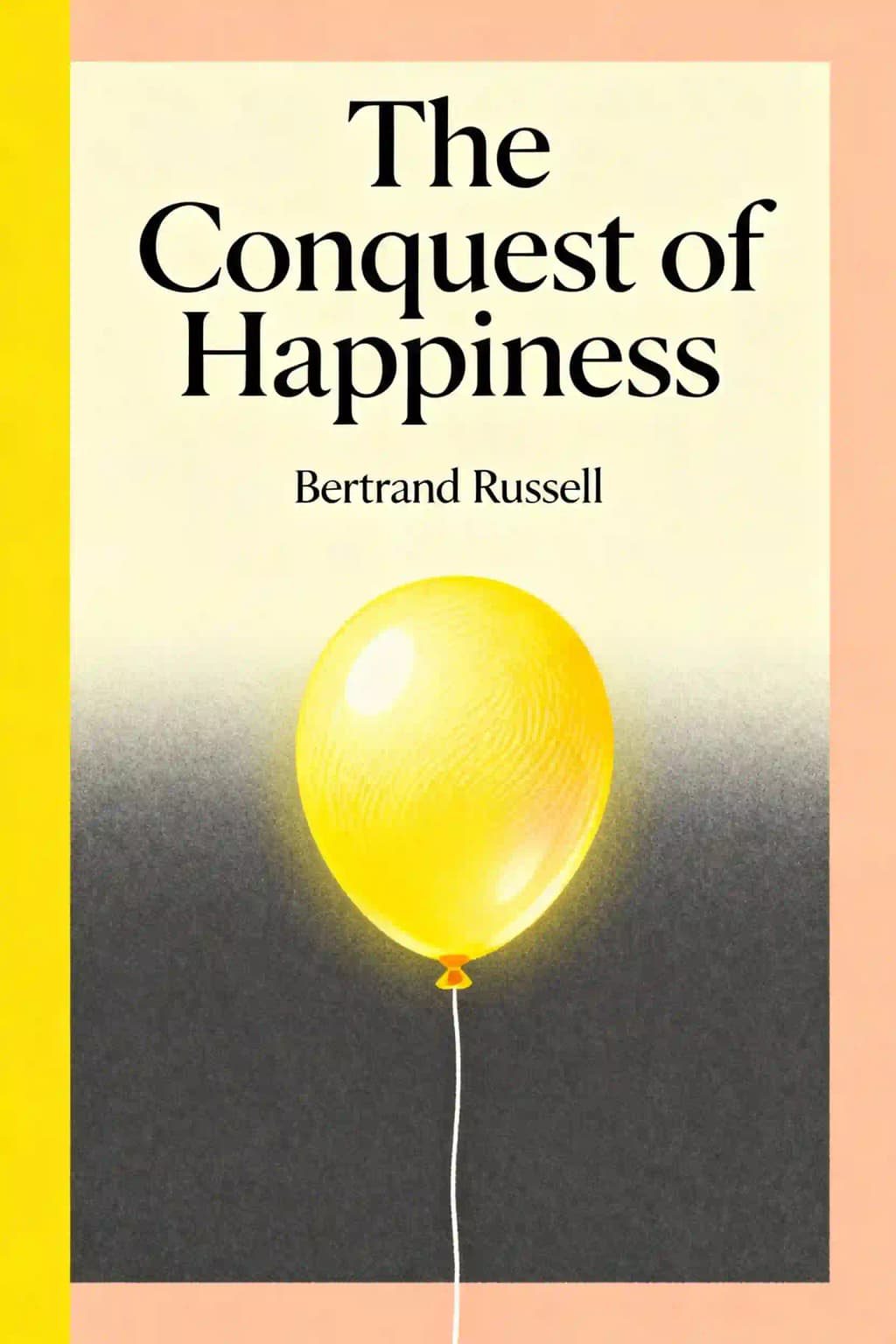
Imagine a world where happiness isn't just a fleeting emotion but a skill that can be methodically cultivated. This is precisely what Bertrand Russell-one of the 20th century's most brilliant minds-proposed in his groundbreaking work on human contentment. Unlike many philosophers who dwelled in abstract realms, Russell offered practical wisdom for everyday life, making his work a favorite among figures from tech visionary Bill Gates to actress Emma Watson. When "The Conquest of Happiness" was published in 1930, it represented something revolutionary: a renowned mathematician and logician turning his analytical mind toward the question of how ordinary people might live better lives. The book has since become a cornerstone of modern self-help literature, though it predates the genre by decades. What makes Russell's approach so enduring? Perhaps it's his unflinching honesty about his own transformation from a suicidal youth to someone who found increasing joy in life-proving that happiness isn't merely a matter of temperament but of deliberate practice.
第2章
The Modern Epidemic of Unhappiness
Unlike animals who find contentment in basic needs like food and shelter, humans in the modern world suffer from a peculiar malaise. Russell paints vivid portraits of this unhappiness: weekend pleasure-seekers trapped in slow-moving traffic jams, consumed by "unutterable boredom" and "trivial discontent"; partygoers determined to be happy "with grim resolve," using alcohol and physical affection as "gateways to joy" only to end the night in tears about their moral unworthiness.
The causes of this unhappiness are both social and psychological. While Russell acknowledges the need for social reforms, he focuses on what individuals can do immediately to improve their condition. From his personal journey from despair to contentment, he identifies key factors: pursuing genuine desires rather than socially prescribed goals, abandoning impossible ambitions, and most crucially, developing external interests instead of remaining trapped in self-absorption.
This self-absorption manifests in various harmful forms: the perpetual self-critic locked in disapproval of their own actions; the narcissist capable of admiring only themselves while unable to genuinely love others; and the power-seeker who craves control rather than connection. All these types share a common pattern-early deprivation of normal satisfaction leads to one-sided development and excessive emphasis on achievement rather than engagement with life itself.
Some people, having abandoned hope entirely, seek only distraction through what they call "pleasure"-a temporary form of self-erasure that merely suspends unhappiness rather than creating joy. This pursuit becomes increasingly desperate as the capacity for genuine enjoyment diminishes, creating a downward spiral of dissatisfaction.
第3章
The Trap of Intellectual Pessimism
Some intellectuals wear their unhappiness as a badge of honor, believing they've seen through life's illusions and concluded nothing remains worth living for. Their pessimism, which they attribute to the universe itself, they consider the only rational attitude for enlightened minds. Russell challenges this view, arguing that reason places no embargo on happiness. The truly wise person will be as happy as circumstances permit, and if contemplating the universe proves too painful, will simply contemplate something else instead.
This pessimistic worldview has been articulated across centuries: Joseph Wood Krutch for modern Americans, Byron for the Victorian generation, and the author of Ecclesiastes for all time. Despite their varied pursuits of pleasure, all reached the same gloomy conclusion about life's emptiness. The writer of Ecclesiastes particularly lamented that wisdom itself brings grief: "For in much wisdom is much grief: and he that increaseth knowledge increaseth sorrow."
Russell argues we needn't be trapped in such moods. A mood cannot be changed by argument but by action or circumstance-when your child falls ill or you lose your fortune, the feeling that "all is vanity" quickly dissipates. This pessimism often stems from too easy satisfaction of needs, as humans require some struggle for happiness.
Russell dismantles Ecclesiastes' intellectual arguments about life's futility. The complaint that "there is no new thing under the sun" ignores modern innovations. The lament about rivers running into the sea assumes travel is unpleasant rather than adventurous. The cycle of life-father succeeded by son-need not be tragic if we value each moment rather than fixating on the future. Death itself can be accepted rationally: "I warmed both hands before the fire of life; It sinks, and I am ready to depart."
Modern pessimism stems more from social causes than philosophical ones. Literary intellectuals mourn the loss of medieval certainties but fail to recognize that past ages were equally despairing. Love remains valuable-not as a sacred refuge from criticism, but as a source of delight, an enhancer of life's pleasures, and a means of breaking down the ego through cooperation.
第4章
The Exhausting Race of Competition
The struggle for success, not survival, is what drives modern unhappiness. Consider the typical businessman's existence: despite his charming home and family, he rushes to the office early, cultivates an executive persona, conducts deals, and returns home exhausted. His life has the psychology of a hundred-yards race, though the only finish line is the grave. He knows little of his children or wife, has few genuine friendships, and grows increasingly lonely as his attention narrows to business while everything else withers.
The American businessman particularly suffers as a victim of the religion of money-making. Rather than seeking leisure with security, he pursues more wealth for ostentation and outshining equals. In America's fluctuating social order, money becomes the measure of intelligence, creating examination-like anxiety during market fluctuations.
Unlike Europe, where other circles have prestige-aristocracy, learned professions, military-America's competitive monetary struggle dominates all classes. Even professionals imitate businessmen rather than forming separate cultural types. American boys learn early that financial success is all that matters, neglecting education without pecuniary value.
The wealthy person often becomes uncultivated in literature, art, and music, collecting not for pleasure but to prevent others from having what they have. Achieving success leaves them prey to boredom, and the competitive mindset invades even reading, where books are chosen for social display rather than enjoyment.
This competitive spirit has caused a decay in civilized standards. The art of conversation has withered; intellectual pleasures are abandoned. Even nature's beauty goes unappreciated-students can't name wildflowers because such knowledge brings no income. Our society, preferring power to intelligence, is dooming itself through a kind of cultural sterility. Competition poisons not just work but leisure too, making quiet enjoyment feel boring and pushing us toward artificial stimulation. The cure lies in admitting the importance of sane, quiet enjoyment in a balanced life.
第5章
The Paradox of Boredom and Excitement
Boredom has been one of history's great motive powers, yet receives insufficient attention. Unlike animals who are constantly occupied with survival, humans experience boredom-that thwarted desire for events, that contrast between present circumstances and imagined better ones. The opposite of boredom isn't pleasure but excitement.
The desire for excitement runs deep, especially in males. Prehistoric hunters satisfied it naturally, but agricultural life brought dullness. Modern technology has actually reduced boredom by enabling various amusements impossible in traditional villages. Consider the misery of traditional "family time"-father asleep, mother knitting, daughters wishing themselves elsewhere. The monotony of medieval village winters, with no literacy, poor light, and impassable roads, made witch-hunts the only available entertainment.
Modern people fear boredom more than our ancestors did. We've come to believe it unnatural and avoidable through vigorous pursuit of excitement. But boredom isn't wholly evil-it comes in two varieties: the fructifying kind that leads to creativity, and the stultifying kind from absence of vital activities. Like drugs, excitement requires ever-stronger stimuli to provide thrills, eventually dulling the capacity for every pleasure. Therefore, the capacity to endure boredom is essential to happiness and should be taught to youth.
Children should acquire the capacity to endure monotony. Modern parents provide too many passive amusements and fail to recognize the importance of routine. Children's pleasures should mainly come from their own efforts and inventiveness. Exciting entertainments requiring no physical exertion should be rare-they act like drugs demanding increasing doses.
Children develop best when, like young plants, they remain in the same soil. Too much travel and variety of impressions make them incapable of enduring fruitful monotony as adults. A generation unable to endure boredom will become shallow, divorced from nature's slow processes, in whom vital impulses wither like cut flowers.
Many pleasures, like gambling, lack any connection to Earth and leave us feeling dusty and dissatisfied when they end. But pleasures that connect us with Earth's life contain something profoundly satisfying; their happiness remains even after the experience ends. The same primitive joy that makes a child embrace grass finds civilized expression in Shakespeare's supreme lyrics. Similarly, love refreshes our whole being like rain after drought, while sex without love leaves only fatigue and emptiness.
第6章
The Many Faces of Fatigue
Fatigue comes in many forms, with varying impacts on happiness. Physical fatigue, unless excessive, can actually promote happiness through sound sleep, good appetite, and enhanced holiday pleasures. But when pushed too far, it becomes torture-as with peasant women aged prematurely by overwork or children stunted by industrial labor.
Urban workers face constant nervous strain from unavoidable noise and the subconscious effort of ignoring it. The constant presence of strangers creates another burden-our natural instinct to assess each unknown person must be constantly suppressed, generating diffused irritation. Add the morning rush and resulting indigestion, and office workers arrive already frayed. Employers and employees both suffer-one from fear of dismissal, the other from fear of bankruptcy.
Most people lack control over their thoughts, taking business worries to bed and ruminating uselessly during hours meant for recuperation. The wise think about troubles only when productive; at other times, they think of other matters or nothing at all. An orderly mind that thinks adequately about matters at appropriate times rather than inadequately at all times dramatically increases happiness and efficiency.
For anxieties, consider deliberately the very worst possible outcome. Having faced this squarely, give yourself sound reasons why even this wouldn't be catastrophic. After steady contemplation of the worst possibility, worry diminishes extraordinarily. This technique helps avoid fear, which itself produces fatigue.
Harmful fear arises from dangers we're unwilling to face. Almost everyone harbors lurking fears-cancer, financial ruin, disgraceful secrets, jealousy, or religious terrors. The proper approach is to think about them rationally and calmly until they become familiar. Eventually, familiarity blunts terror; the subject becomes boring, and our thoughts turn away naturally through lack of interest.
A frequent source of fatigue is the love of excitement. Though work hours may be dreary, making pleasure during free time seem necessary, the easiest and most attractive pleasures often wear out the nerves. Excessive desire for excitement indicates either a twisted disposition or some deep dissatisfaction. Young men should consider that living for immediate excitement may render future happy marriage impossible through frayed nerves and lost capacity for gentler pleasures.
第7章
The Poison of Envy
Envy ranks among the most potent causes of unhappiness, second only to worry. It's one of humanity's most universal and deep-seated passions, noticeable in children before they're a year old. Children instantly observe and resent even the slightest favoritism. Adults merely conceal their envy slightly better than children do.
Envy permeates all levels of society. When one of Russell's maids became pregnant and was excused from lifting heavy weights, the other maids immediately refused to lift weights too. Envy forms the basis of democracy-Heraclitus noted that citizens of Ephesus should be hanged because they insisted "there shall be none first among us." Though idealistic democratic theory may be true, practical politics are driven by passions, not theories.
Among respectable women, envy plays an extraordinarily large part. Watch women's malevolent glances toward a well-dressed woman in public. The love of scandal expresses this general malevolence-stories against other women are instantly believed on flimsy evidence. Lofty morality serves the same purpose: the envious virtuously punish those who had opportunities to sin.
Men exhibit the same behavior, though typically only toward men in their same profession. Praising an artist to another artist, a politician to another politician, or an Egyptologist to another Egyptologist almost certainly produces jealousy.
Of all human characteristics, envy is most unfortunate. The envious person not only wishes to inflict misfortune whenever possible but is himself made unhappy by envy. Rather than enjoying what he has, he suffers from what others possess. Unchecked, this passion proves fatal to excellence and even to useful exceptional skill.
For saints, selflessness cures envy, though even saints may envy other saints. For ordinary people, happiness is the only cure, yet envy itself obstructs happiness. Childhood misfortunes greatly promote envy-a child who sees siblings preferred acquires the envy habit, later seeking and perceiving injustices everywhere.
All bad things interconnect-fatigue often causes envy as inadequacy breeds discontent. Much professional envy has sexual roots-a man happy in marriage rarely envies others' wealth if he can raise his children properly. Through education and media, people now envy distant groups rather than just neighbors. This hatred thrives because the human heart feels it has missed life's meaning.
第8章
Breaking Free from Irrational Guilt
The sense of sin is a fundamental psychological cause of unhappiness in adult life. Modern psychologists reject the traditional religious view that conscience mysteriously reveals sin. We now understand conscience simply reflects tribal custom, varying across cultures. The true source of our sense of sin is almost invariably the moral teaching received before age six from mother or nurse. The child learns certain behaviors are wicked-swearing, drinking, lying, and especially sexual interest. Since affection from caregivers depends on avoiding these sins, the child associates forbidden conduct with something vaguely awful.
Much infantile moral teaching lacks rational foundation. Using "bad language" doesn't make one morally worse, yet most couldn't imagine a saint who swears. Similar irrationality surrounds alcohol and tobacco, based on the ascetic notion that saints shouldn't seek pleasure. Even on lying, rational ethics would recognize justifiable exceptions.
Early moral teaching does greatest harm regarding sex. The association between sin and sex organs established by age six often remains for life, reinforced by the Oedipus complex. Many men consequently feel women are degraded by sex and can't respect wives who enjoy intercourse. Yet instinct drives them to seek satisfaction elsewhere, poisoned by guilt. Women taught "purity" hold back with husbands, fearing pleasure.
To overcome irrational guilt, one must refuse to be swayed by moods and make rational convictions vivid enough to counter childhood impressions. When the sense of sin arises, treat it as a weakness unless it violates rational ethics. Even when one has violated their own rational code, self-respect is essential-the rational person views their undesirable acts as products of circumstances to be avoided through greater awareness.
The sense of sin actually prevents a good life by making one unhappy and inferior, leading to excessive demands on others and grudges against those who seem superior. A harmonious personality directed outward is crucial-one should firmly establish rational beliefs and never allow irrational beliefs to pass unchallenged. Rationality doesn't kill deeper emotions but helps minimize destructive ones while preserving love, affection, friendship and other positive passions.
第9章
Cultivating Zest: The Secret to a Vibrant Life
Zest is the most universal and distinctive mark of happy people. Consider how differently people approach meals: some find eating boring despite excellent food; invalids eat from duty; epicures criticize every dish; gormandizers overeat greedily; while happy people eat with sound appetite until satisfied, then stop. These approaches mirror attitudes toward life itself.
I consider all disenchantment a malady to be cured, not wisdom to be cultivated. A person who enjoys strawberries has a pleasure others lack; similarly, someone who enjoys football or reading has more opportunities for happiness. The more interests one has, the less vulnerable one is to fate, since losing one source of joy leaves others to fall back upon.
Fundamental happiness depends greatly on having a friendly interest in persons and things. The kind of affection that brings happiness isn't grasping or possessive, but rather observes people with pleasure in their individual traits, wishing to afford scope for others' interests without seeking power over them. Such a person becomes both a source of happiness and recipient of kindness. Their relationships satisfy both interests and affections, they aren't soured by ingratitude, and find amusement in the same idiosyncrasies that irritate others.
A friendly interest in things, while perhaps less valuable for everyday happiness than friendly attitudes toward people, remains important. The world is vast and our powers limited; binding all happiness to personal circumstances leads to demanding more from life than it can give. The person who can forget worries through genuine interest in history or astronomy will return from such mental excursions with poise and calm.
Zest takes countless forms. Sherlock Holmes could deduce a man's life story from a discarded hat, making ordinary objects endlessly fascinating. On a country walk, different people notice birds, plants, geology, or agriculture-each interest making its possessor better adapted to the world. In travel, some experience only the boredom of expensive locomotion, while others absorb local character, customs, food, and language, returning home with pleasant thoughts for winter evenings.
The person with zest has advantage even in unpleasant experiences. Adventurous types find value in shipwrecks, earthquakes, and conflagrations that don't permanently harm them, thinking "So that's what an earthquake is like" with satisfaction at expanded knowledge. While not immune to fate, especially health problems, some retain their zest through years of suffering.
The ancients rightly valued moderation. In the good life, activities must balance, with none carried to excess. Our desires must fit life's framework-health, affection, social respect-with some passions more easily accommodated than others. Genuine zest belongs to human nature unless destroyed by circumstance-observe children's perpetual curiosity or healthy animals' interest in their surroundings.
第10章
The Transformative Power of Affection
Lack of zest often stems from feeling unloved, while being loved promotes zest more than anything else. Those feeling unloved may desperately seek affection through excessive kindness, become vengeful, or sink into timid despair and rigid routine. Security breeds happiness and resilience against life's challenges, and this security often comes from receiving affection.
Not all affection encourages adventurousness. The best affection is robust rather than timid, desiring excellence more than mere safety. Timid, overprotective affection creates dependency rather than capability. Many adults seek in love relationships the same refuge from truth they once found with an unwise mother, yet are surprised when treated as children.
Affection received serves dual purposes: providing security and enabling parenthood. Inability to inspire love is a grave misfortune that destroys zest and creates introversion. The affection one gives can either express zest for life or fear-like the difference between admiring a beautiful coast from a secure ship versus desperately swimming toward it after a shipwreck. The best affection is reciprocally life-giving, making the world more interesting for both parties.
Some relationships involve one person extracting vitality from others without giving in return. These "bloodsucking types" use others as means rather than ends, often associated with great ambition and rooted in an incomplete view of happiness. Genuine reciprocal interest is crucial for real happiness, while ambition that excludes affection often stems from anger against humanity due to past injuries.
Society discourages generosity in affection through excessive caution in both morality and worldly wisdom. This creates timidity and anger toward mankind as people miss this fundamental need for happiness. Sexual relationships often lack real affection, with participants maintaining fundamental loneliness and remaining "unfructified." The most valuable sexual relations involve no reticence, where personalities merge into a new collective identity. Of all forms of caution, caution in love proves most fatal to true happiness.
第11章
The Balance of Effort and Resignation
The golden mean, though uninteresting, is often true, particularly regarding the balance between effort and resignation. Saints have preached resignation while efficiency experts advocate effort-each possessing part of the truth. Happiness rarely drops into one's mouth like ripe fruit; in a world full of misfortunes, it must be conquered through both inward and outward effort.
For most people who must work for a living, effort is obviously necessary. Beyond basic survival, many require the feeling of success, often measured by income. In competitive societies, conspicuous success is possible only for a minority-here, an element of resignation becomes desirable. Effort extends to other areas too: marriage, child-rearing, and the pursuit of power (which most non-atrophied people desire in some form, whether over people's actions, thoughts, or emotions).
Resignation plays an equally essential role in achieving happiness. The wise person won't waste energy on unavoidable misfortunes, and will sometimes accept avoidable ones if addressing them would interfere with more important pursuits. When personal aims have been part of larger hopes for humanity, individual failure doesn't constitute complete defeat. The scientist who desires discoveries may fail personally, but if he desires the progress of science itself, he won't feel despair.
Resignation is also vital for minor troubles-missing trains, badly cooked dinners, or laundry mishaps. The wise man addresses these matters without emotional turmoil. Those emancipated from worry find life more cheerful, seeing personal idiosyncrasies as amusing rather than irritating. Having multiple self-images rather than just one heroic picture helps manage disappointments. Resignation involves willingness to face truth about ourselves, which ultimately protects against the exhausting effort of maintaining self-deception.
第12章
The Path to Becoming a Happy Person
Happiness depends partly on external circumstances and partly on oneself. Most people need simple things for happiness: food, shelter, health, love, successful work, and respect from their community. Where these aren't lacking, unhappiness typically stems from psychological maladjustment that can be self-cured by directing passions and interests outward rather than inward. Self-centered passions like fear, envy, self-pity and self-admiration create a prison of our own making.
The happy person lives objectively with free affections and wide interests, securing happiness through these connections and becoming an object of interest to others. Receiving affection causes happiness, but demanding it drives it away. To escape self-absorption, one must develop genuine interests rather than simulated ones. Specific techniques can help: those troubled by sin can rationally convince themselves they have no reason to feel sinful; those suffering from self-pity can recognize their circumstances aren't extraordinarily unfortunate; the fearful can practice courage.
The happy life is extraordinarily similar to the good life. Professional moralists have overemphasized self-denial, which leaves one self-absorbed and aware of sacrifice. What's needed isn't self-denial but directing interest outward, leading naturally to virtuous acts without conscious sacrifice. Traditional morality says love should be unselfish, but our own happiness should be bound up in love's success, not separate from it.
The antithesis between self and world disappears with genuine outside interests. The happy person feels like a citizen of the universe, untroubled by death through feeling connected to those who will come after. The greatest joy comes from this profound union with life's stream-a happiness that transcends individual existence while making individual existence more vibrant and meaningful than ever before.