第1章
Discomfort: Your Forgotten Superpower
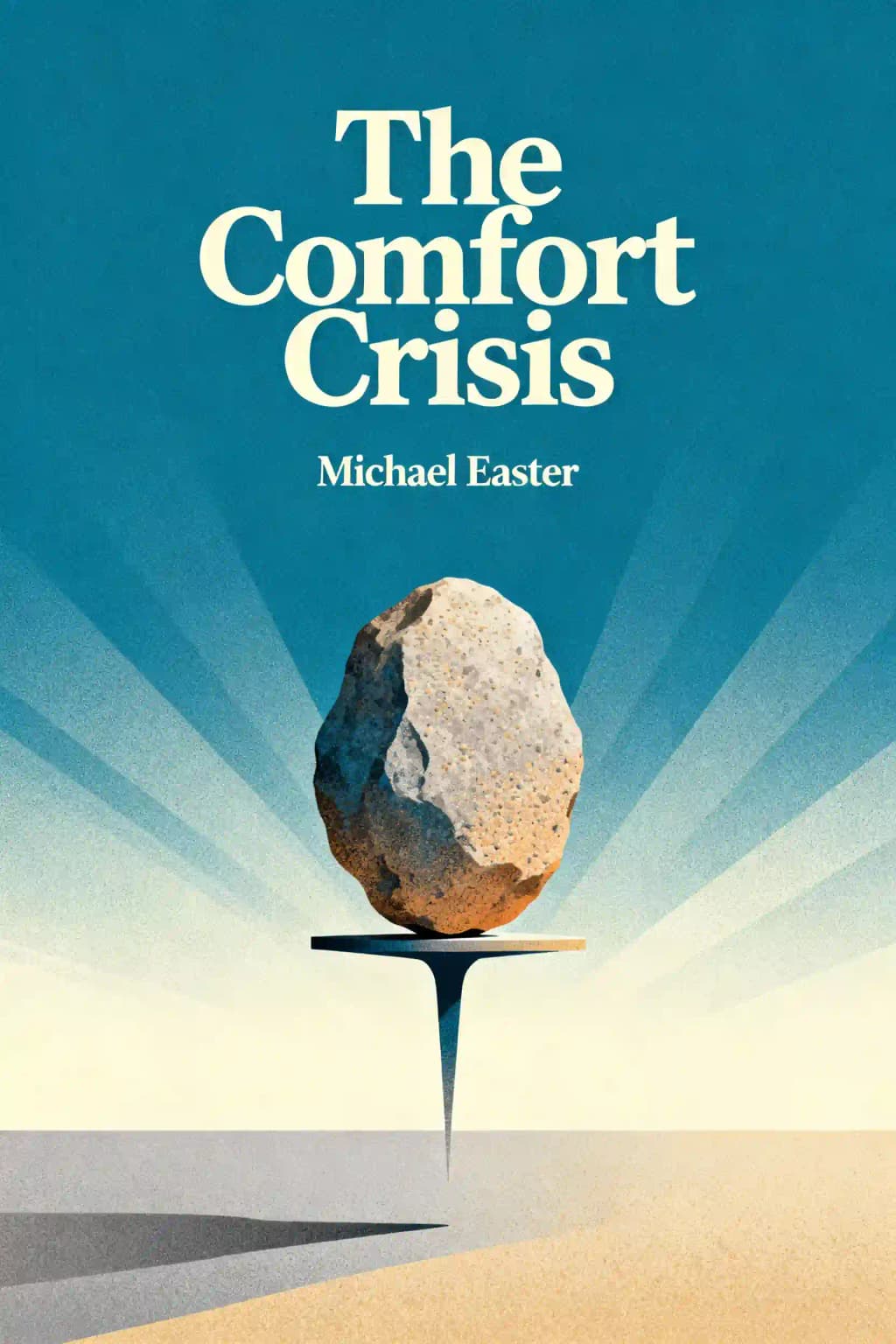
Are you sitting comfortably? That might be your biggest mistake. In "The Comfort Crisis," award-winning journalist Michael Easter reveals how our modern pursuit of convenience has quietly sabotaged our physical and mental health. Easter didn't just research this phenomenon - he lived it, embarking on a 33-day wilderness hunting expedition in the Alaskan backcountry where comfort was nonexistent and survival demanded everything.
This Wall Street Journal bestseller has sparked a movement, with thousands adopting "intentional discomfort" practices after reading it. The science is compelling: our bodies evolved through struggle, not Netflix binges and DoorDash deliveries. Easter shows how reintroducing strategic discomfort - from cold exposure to occasional hunger - activates dormant biological pathways that boost immunity, sharpen cognition, and extend lifespan.
What makes this book revolutionary isn't just the research but the actionable blueprint for reclaiming your evolutionary birthright. By embracing calculated challenges rather than endless ease, Easter demonstrates how discomfort isn't something to avoid - it's the missing ingredient for a meaningful, resilient, and surprisingly satisfying life.
第2章
The Evolutionary Mismatch: How Comfort Became Our Enemy
Our drive for comfort isn't a character flaw - it's hardwired into our DNA. Throughout evolutionary history, seeking comfort meant finding food, shelter, and safety - essential behaviors for survival. The problem? Our environment has changed dramatically, but our brains haven't caught up.
Think about it: we evolved to crave calories because food scarcity was a constant threat. Now we have unlimited access to hyper-palatable foods, yet our brains still push us to consume as if famine might strike tomorrow. We're designed to conserve energy because our ancestors needed to preserve strength for hunting and gathering. Today, we can have everything delivered to our doorstep without moving a muscle.
This creates what scientists call an "evolutionary mismatch" - our ancient programming colliding with modern conveniences. The very comforts we've engineered to make life easier are actually making us miserable in many ways.
What's particularly fascinating is how we keep moving the goalposts of what constitutes "comfort." David Levari and Dan Gilbert's research on "prevalence-induced concept change" shows that as problems diminish, we begin to categorize previously acceptable situations as problematic. When shown faces along a spectrum from threatening to non-threatening, participants began identifying neutral faces as threatening once the truly threatening faces became rare.
This "comfort creep" explains why despite unprecedented material wealth and convenience, rates of depression, anxiety, and dissatisfaction continue to rise. We're not just comfortable - we're too comfortable, and it's robbing us of the very experiences that make us feel fully human.
第3章
The Misogi Principle: Finding Growth Through Deliberate Discomfort
The concept of misogi offers a powerful antidote to our comfort addiction. Rooted in ancient Japanese tradition, misogi originally referred to a purification ritual where participants would stand under freezing waterfalls. Today, it has evolved to represent any deliberately challenging experience that strips away the constraints of modern existence.
Dr. Marcus Elliott, founder of P3 Applied Sports Science, has modernized the concept of misogi as a thorough reset for mind, body, and spirit. His approach centers on three key rules:
1. Make it really hard, but don't die
2. There's a high likelihood of failure
3. It's not a competition, and you don't talk about it publicly
The beauty of misogi lies in its intensely personal nature. Unlike social media-friendly fitness challenges or competitive sports, misogi isn't about external validation - it's about confronting your own limitations and discovering what lies beyond them.
Anthropologist Arnold van Gennep's research on rites of passage across cultures reveals how humans have always used physical trials to mark transitions and foster growth. From Aboriginal walkabouts to Inuit hunts to Maasai lion hunts, these experiences share common elements: separation from comfort, transition through challenge, and reincorporation with new wisdom.
Modern society has largely abandoned these formalized rites of passage, leaving many of us without clear markers for personal development. The misogi concept fills this void by creating intentional challenges that serve the same psychological function - pushing us beyond perceived limits and revealing capabilities we didn't know we possessed.
What makes these experiences so transformative isn't just physical exertion but the mental clarity that emerges when we strip away distractions. In moments of genuine challenge, the mind focuses with laser precision, and our priorities suddenly become crystal clear.
第4章
The Wilderness Effect: How Nature Recalibrates Our Minds
There's something about being in true wilderness that fundamentally shifts our mental state. After just three days in the Arctic, I noticed a profound change in my thought patterns. The constant mental chatter of deadlines, social media, and everyday worries had quieted, replaced by a heightened awareness of my immediate surroundings.
This phenomenon, known as the "three-day effect," has been documented by neuroscientists studying brain wave patterns of people immersed in nature. After 72 hours without digital devices, participants show a significant shift from frenetic beta waves to more contemplative alpha and theta waves - the same patterns observed in experienced meditators.
What's happening is a reset of our attention systems. Modern life bombards us with notifications, advertisements, and endless stimuli competing for our focus. This constant attentional demand creates cognitive fatigue, making it harder to concentrate, make decisions, or think creatively.
Nature, by contrast, engages what psychologists call "soft fascination" - it captures our attention without depleting our mental resources. The rustling of leaves, the patterns of flowing water, the gradual movement of clouds - these stimuli engage our minds without overwhelming them.
This explains why time in wilderness feels so restorative. It's not just about "getting away" - it's about allowing our cognitive systems to return to their natural, optimal functioning state. The biophilia hypothesis, proposed by E.O. Wilson, suggests humans have an innate need to connect with nature and other living systems. When we satisfy this need, we experience improvements in mood, cognition, and overall wellbeing.
Dr. David Strayer's research quantifies these benefits: after three days in nature, problem-solving ability increases by 50%, stress hormones decrease by 27%, and immune function improves significantly. These aren't just subjective feelings - they're measurable biological changes that demonstrate how fundamentally our bodies and minds respond to natural environments.
第5章
Rediscovering Boredom: The Lost Art of Mental Wandering
One of the most unexpected challenges of my Arctic expedition was dealing with boredom. Without phones, laptops, or other digital distractions, I found myself facing hours of unstructured time - something increasingly rare in modern life.
At first, this boredom felt uncomfortable, even anxiety-inducing. But gradually, something remarkable happened. My mind began to wander in ways it hadn't for years. I noticed minute details in my surroundings. I reflected on relationships and life choices with newfound clarity. Creative ideas and insights emerged seemingly from nowhere.
Neuroscientist James Danckert's research helps explain this phenomenon. His work shows that boredom isn't just an unpleasant state to be avoided - it's a neurological and motivational state that serves important functions. When we're bored, our brain's default mode network activates, allowing different regions to communicate in ways they don't during focused tasks.
This "unfocused mode" is crucial for creativity, problem-solving, and self-reflection. It's where connections between disparate ideas form, where we process emotional experiences, and where we construct our sense of identity and meaning.
Yet modern life has all but eliminated true boredom. The average American checks their phone 96 times daily - once every 10 minutes of waking life. The moment we feel even a hint of boredom, we reach for digital stimulation, robbing ourselves of the cognitive benefits that come from letting our minds wander.
Screenwriter Aaron Sorkin highlights this when discussing his creative process: "Most of the time that I'm writing, I'm not writing. I'm thinking." He describes how his best ideas often emerge during seemingly unproductive periods of boredom - a walk around the block, a shower, or just staring out a window.
Research confirms this anecdotal wisdom. Studies show that people score significantly higher on creativity tests after periods of boredom compared to those who are continuously engaged in stimulating activities. The implications are profound: our relentless pursuit of constant stimulation may be undermining our creative potential and deeper thinking.
第6章
The Hunger Advantage: Finding Clarity Through Caloric Restriction
By day 15 in the Arctic, our food supplies were dwindling. We were burning far more calories than we consumed, creating a substantial energy deficit. While uncomfortable, this experience revealed surprising insights about hunger and nutrition.
Modern society has engineered an environment where true hunger is rarely experienced. We eat not because our bodies need fuel, but because food is available, it's mealtime, or we're seeking pleasure or comfort. This disconnection from genuine hunger signals has contributed significantly to the obesity epidemic.
Nutritionist Spencer Nadolsky distinguishes between two types of hunger: real hunger (physiological need for energy) and reward hunger (psychological desire for pleasure). Throughout human evolution, these systems worked in harmony - food was scarce enough that reward hunger motivated the pursuit of calories when they were available.
Today, however, we're surrounded by ultraprocessed foods specifically designed to trigger reward pathways without satisfying real hunger. These foods combine fat, sugar, salt, and artificial flavors in ways that override our natural satiety mechanisms, leading us to consume far more than our bodies need.
The experience of genuine caloric restriction in the wilderness revealed how these systems are meant to function. When truly hungry, even basic foods taste incredible. Portion control becomes intuitive rather than forced. The mind gains clarity and focus - an evolutionary adaptation that helped our ancestors hunt and gather more effectively when resources were scarce.
Modern research on intermittent fasting supports these observations. Periods of caloric restriction activate cellular processes like autophagy (the cleanup of damaged cellular components) and trigger the release of brain-derived neurotrophic factor (BDNF), which supports cognitive function and neuroplasticity.
Our ancestors naturally cycled between periods of feast and famine, and our bodies evolved to thrive under these conditions. By reintroducing controlled periods of hunger - whether through time-restricted eating or occasional fasting days - we can tap into these ancestral mechanisms for improved metabolic health and mental clarity.
第7章
The Power of Physical Strain: Why We're Born to Carry Heavy Loads
One of the most physically demanding aspects of the Arctic expedition was carrying heavy loads across difficult terrain. With packs weighing over 100 pounds, every step became an exercise in endurance and determination.
This experience connects directly to our evolutionary history. Humans began walking upright around 4.4 million years ago, and our unique anatomy evolved specifically to make us exceptional at carrying heavy objects over long distances. Unlike other primates that expend significantly more energy when carrying things, humans can transport substantial loads with relatively little additional energy cost.
Anthropologist Dan Lieberman's research reveals that this carrying capacity, combined with our unparalleled endurance, played a crucial role in human evolution. Our ancestors could transport animal parts, tools, and other resources across vast territories, giving them a significant survival advantage.
Modern life has largely eliminated the need for this kind of physical carrying. We use vehicles, elevators, and delivery services to move heavy objects. Yet our bodies remain designed for these movements, and there are significant health benefits to reincorporating them into our lives.
The military term for carrying heavy loads is "rucking," and it represents a uniquely effective form of exercise. Special Forces soldier Jason McCarthy, founder of GORUCK, explains that rucking combines strength and cardio in ways that create a balanced physique and exceptional fitness. Studies show that even casual rucking burns two to three times the calories of walking, while engaging the body's "tactical chassis" - everything between the shoulders and knees.
Beyond the physical benefits, carrying heavy loads creates a unique mental state. There's a clarity that comes from focusing solely on the next step, a satisfaction in pushing through discomfort, and a profound sense of accomplishment when the journey is complete.
This connects to what researchers call the "effort paradox" - the counterintuitive finding that humans often value achievements more when they require significant effort. Easy rewards provide momentary pleasure but little lasting satisfaction, while hard-earned accomplishments create deeper, more enduring well-being.
第8章
The Hygiene Hypothesis: Finding Balance in a Too-Clean World
After weeks in the Arctic wilderness, returning to civilization brought an unexpected realization: our modern environments might be too clean for our own good.
Anthropologist Stephanie Schnorr's research with the Hadza hunter-gatherers of Tanzania reveals fascinating insights about the human microbiome. Despite living in what we would consider unsanitary conditions - drinking untreated water, handling wild animals, and living close to the earth - the Hadza enjoy remarkably low rates of autoimmune disorders, allergies, and inflammatory diseases.
Their secret lies in their diverse microbiome - the trillions of microorganisms that live in and on our bodies. Exposure to a wide variety of environmental microbes trains the immune system to distinguish between harmful pathogens and harmless substances. Without this training, the immune system becomes hypersensitive, attacking pollen, food proteins, or even the body's own tissues.
Modern environments, with their antimicrobial soaps, filtered air, and sterilized surfaces, deprive us of this essential microbial exposure. The "hygiene hypothesis" suggests this over-sanitization contributes to the rising rates of allergies, asthma, and autoimmune conditions in developed countries.
This doesn't mean we should abandon basic hygiene, but it does suggest we might benefit from more contact with natural environments. Activities like gardening, hiking, or even just opening windows can increase our exposure to beneficial microbes. Studies show that children raised on farms or with pets have significantly lower rates of allergies and asthma, likely due to their more diverse microbial exposures.
The Arctic experience, with its immersion in untamed nature, provided precisely this kind of microbial diversity. While initially uncomfortable - dealing with dirt, sweat, and limited washing facilities - this reconnection with natural environments may have strengthened my immune system in ways that sterile urban living cannot.
第9章
Extreme Adaptation: What We Can Learn from Environmental Specialists
Throughout history, certain human populations have adapted to extreme environments in ways that reveal our species' remarkable capacity for physiological adaptation.
The Ama of Japan and Korea, women who dive in frigid waters without modern equipment, demonstrate extraordinary cold tolerance. Research shows they maintain higher skin temperatures and lower core body temperatures when exposed to cold, thanks to increased activity of brown adipose tissue - specialized fat cells that generate heat by burning calories.
Similarly, the Sherpas of Nepal exhibit remarkable adaptations to high-altitude environments. Their bodies produce more ATP (cellular energy) using less oxygen than lowlanders, functioning like hybrid engines that perform optimally when resources are scarce. These adaptations offer valuable insights for medical treatments for conditions involving oxygen deprivation.
Even in Iceland, genetic research by Dr. Kari Stefansson reveals that centuries of survival in harsh conditions may have selected for genes that contribute to resilience and longevity. Modern Icelanders enjoy longer lifespans than their Norwegian and Celtic ancestors, potentially due to genetic adaptations forged by generations of enduring challenging environments.
What these examples share is a common theme: environmental stress, when applied in appropriate doses, triggers beneficial adaptations. Our bodies respond to cold exposure by activating brown fat and improving metabolism. They adapt to altitude by enhancing oxygen utilization. They build resilience through confronting and overcoming environmental challenges.
Modern comforts have largely removed these environmental stressors, potentially depriving us of their adaptive benefits. Practices like cold exposure therapy (cold showers, ice baths, or winter swimming), altitude training, and heat adaptation through sauna use attempt to reintroduce these beneficial stressors in controlled ways.
The principle at work is hormesis - the biological phenomenon where low doses of otherwise harmful stressors trigger adaptive responses that ultimately strengthen the organism. By strategically introducing certain forms of discomfort, we can potentially activate these adaptive mechanisms without the extreme conditions faced by specialized populations.
第10章
Confronting Mortality: Lessons from Bhutan's Happiness Philosophy
A seemingly innocent podcast about cosmic perspective triggered an unexpected existential crisis during my journey. Contemplating the vastness of the universe and the brevity of human existence brought tears and profound questions about meaning and mortality.
This confrontation with death - something our comfort-oriented society works hard to avoid - led me to explore Bhutan's unique approach to happiness. Despite modest economic indicators, Bhutan consistently ranks among the happiest nations, guided by their philosophy of Gross National Happiness rather than Gross Domestic Product.
Dasho Karma Ura, Bhutan's secretary of happiness, explains that their approach isn't about perpetual pleasure but about finding contentment through mindfulness and acceptance of life's impermanence. Unlike Western societies that sanitize and hide death, Bhutanese culture integrates mortality awareness into daily life through art, meditation practices, and funeral rites.
This approach aligns with philosopher Martin Heidegger's concept of "being-toward-death" - the idea that acknowledging our mortality allows us to live more authentically and purposefully. By accepting death's inevitability, we gain perspective on what truly matters and become less attached to superficial concerns.
The head lama at Bhutan's national hospital, who works daily with dying patients, shared that those facing death often gain clarity about what matters most. Greed, anger, and ignorance fade, making space for deeper connections and genuine happiness. By contemplating our own mortality - not in a morbid way, but as a reality that gives life meaning - we can access similar insights without waiting for a terminal diagnosis.
Research supports this counterintuitive wisdom. Studies show that controlled contemplation of death can increase gratitude, compassion, and a shift toward more meaningful priorities. It can reduce materialism and strengthen relationships - the very factors most strongly correlated with lasting happiness.
The Arctic journey, with its inherent risks and proximity to natural cycles of life and death, provided a similar opportunity for mortality awareness. Facing the possibility of danger - from weather, wildlife, or wilderness - stripped away trivial concerns and highlighted what truly mattered: connection, purpose, and being fully present in each moment.
第11章
Bringing Wilderness Wisdom Home: Implementing the Comfort Crisis Solution
Returning to Las Vegas after 33 days in the Arctic wilderness created cognitive whiplash. The lights, noise, and constant stimulation of the city felt overwhelming after weeks of natural rhythms and genuine challenges.
Yet this stark contrast revealed an important truth: we don't need to permanently abandon modern comforts to benefit from strategic discomfort. The key is finding balance - integrating elements of beneficial challenge into our comfortable lives.
Dr. Lisa Feldman Barrett's "nature pyramid" offers a practical framework for this integration. Like the food pyramid, it suggests different "doses" of nature exposure:
1. Base level: 20-minute outdoor experiences three times weekly
2. Middle level: Monthly visits to semi-wild places like parks or nature preserves
3. Peak level: Annual immersion in true wilderness
Similarly, we can create a "discomfort pyramid" that incorporates various forms of beneficial challenge:
1. Physical discomfort: Rucking, cold exposure, occasional fasting
2. Mental discomfort: Digital detoxes, boredom practice, challenging learning
3. Existential discomfort: Mortality meditation, purposeful risk-taking, misogi challenges
The goal isn't suffering for its own sake but recalibrating our relationship with comfort and challenge. By intentionally seeking appropriate discomfort, we can trigger the adaptive responses that lead to growth, resilience, and deeper satisfaction.
This approach doesn't reject modern conveniences entirely - it simply recognizes that constant comfort undermines the very wellbeing it promises. Just as muscles need resistance to grow stronger, our minds and bodies need appropriate challenges to develop resilience and capacity.
The most profound lesson from the Arctic journey wasn't about surviving extreme conditions but about recognizing how these experiences change our perspective on everyday life. Problems that once seemed overwhelming become manageable. Pleasures we took for granted become sources of genuine appreciation. The constant noise of modern life fades, replaced by a clearer sense of purpose and presence.
In embracing strategic discomfort, we don't just build resilience - we reclaim our capacity for deep satisfaction, connection, and meaning. We remember what it feels like to be fully human, engaged with life in all its challenging, beautiful complexity.