第1章
The Great Untruth: How Modern Society Coddles the Mind
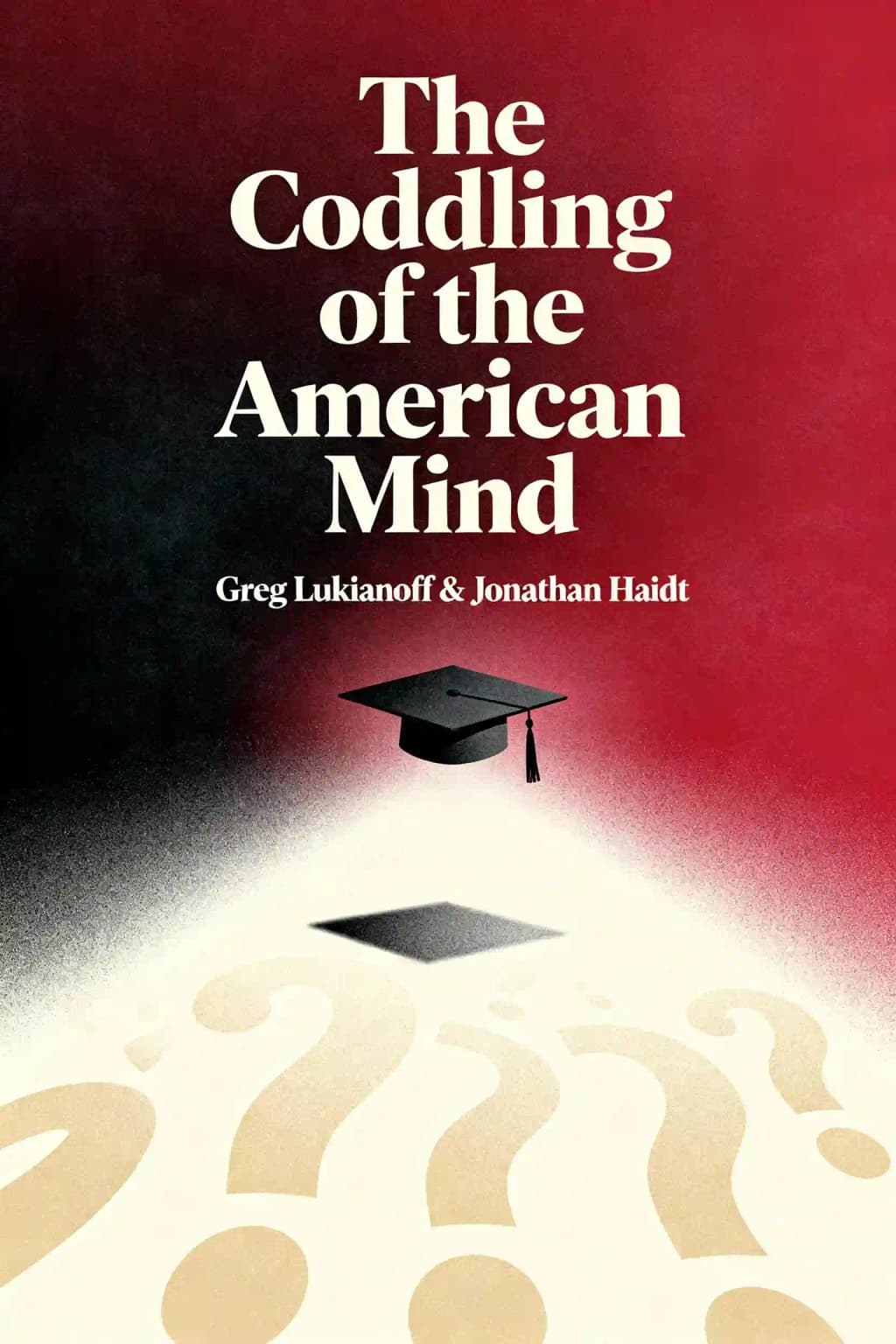
The Coddling of the American Mind isn't just another critique of higher education-it's a cultural phenomenon that has fundamentally shifted how we think about resilience, safety, and intellectual growth. When released in 2018, it immediately sparked intense debate across political lines, with figures from Barack Obama to Jordan Peterson citing its insights. The book emerged from what was initially the most shared article in The Atlantic's 160-year history, signaling its profound cultural relevance.
Greg Lukianoff and Jonathan Haidt's collaboration began not as a political statement but as a psychological investigation-Lukianoff, having benefited from cognitive behavioral therapy for depression, recognized troubling thought patterns emerging in campus discourse that mirrored the very cognitive distortions therapists work to dismantle. This insight formed the book's unique foundation: what if our well-intentioned efforts to protect young minds are actually making them more fragile?
Imagine walking through a modern campus where students demand protection from ideas rather than tools to engage with them-where words are equated with violence and disagreement with harm. How did we arrive here? And more importantly, what does this mean for the generation now entering adulthood? The answers lie in understanding three "Great Untruths" that have infiltrated our culture, with consequences that extend far beyond university walls.
第2章
The Fragility Myth: What Doesn't Kill You Makes You Weaker
The first Great Untruth-that humans are fragile and must be protected from challenge and discomfort-directly contradicts ancient wisdom and modern science. Remember Nietzsche's famous quote, "What doesn't kill me makes me stronger"? This isn't just philosophical posturing; it reflects a fundamental truth about human development.
Consider our immune systems. When children grow up in overly sanitized environments without exposure to common pathogens, they often develop allergies and autoimmune disorders. Their bodies never learn to distinguish between genuine threats and harmless substances. The same principle applies to our psychological development. When we shield young people from every possible discomfort or challenge, we prevent them from developing the resilience necessary to function in an unpredictable world.
Nassim Nicholas Taleb calls this quality "antifragility"-the ability to not just withstand stress but to grow stronger because of it. Bones become denser when subjected to stress through weight-bearing exercise. Muscles grow when pushed to their limits. And minds develop resilience when they encounter and overcome intellectual challenges.
Yet on campuses across America, we've witnessed the rise of what Lukianoff and Haidt call "safetyism"-a culture that expands the concept of "safety" from physical protection to emotional comfort. This shift has transformed the meaning of being "safe" from "protected from genuine danger" to "shielded from anything that might cause negative emotions."
Consider the evolution of "safe spaces." Originally designed as judgment-free zones where marginalized groups could discuss shared experiences, they've morphed into protected areas where students retreat from challenging ideas. At Brown University, when a debate about sexual assault was scheduled, a separate safe space was created complete with cookies, coloring books, and videos of puppies for students who might find the discussion distressing.
This approach treats young adults as fundamentally fragile, unable to cope with the normal stresses of intellectual challenge. But what happens when these students graduate? The world doesn't offer trigger warnings before presenting difficult situations. There are no safe spaces in boardrooms or operating rooms or courtrooms.
The generation most affected by this shift-iGen, born after 1995-shows troubling trends. They report unprecedented levels of anxiety and depression, and they're the first generation to grow up with smartphones and social media. Their childhood featured less unsupervised play and more structured activities, less independence and more protection. When they arrived on campus around 2013, they brought with them heightened expectations for emotional safety that previous generations simply didn't have.
What's particularly concerning is how this mindset becomes self-reinforcing. When we avoid what makes us anxious, our anxiety doesn't diminish-it grows. Psychologists call this "anxiety amplification." By protecting students from discomfort, we're inadvertently teaching them that discomfort is dangerous, creating a cycle that leaves them increasingly vulnerable to life's inevitable challenges.
第3章
Emotional Reasoning: Always Trust Your Feelings
The second Great Untruth-always trust your feelings-elevates subjective emotional experience above objective reality. This directly contradicts a core principle of cognitive behavioral therapy (CBT), which teaches that our feelings, while important, can be profoundly misleading.
CBT, one of psychology's most evidence-based treatments, works by identifying and challenging distorted thinking patterns that lead to negative emotions. These "cognitive distortions" include catastrophizing (assuming the worst possible outcome), mind reading (assuming you know what others are thinking), and emotional reasoning (believing something is true because it feels true).
Consider this scenario: A student receives critical feedback on a paper. Using emotional reasoning, they might think, "This criticism makes me feel terrible, therefore it's an attack on me." CBT would encourage examining this thought: Is the criticism actually about you as a person, or about your work? Is there something valuable in the feedback? By questioning emotional reasoning, we can respond more adaptively to challenges.
Yet campus culture increasingly validates emotional reasoning as the primary way to interpret reality. Take microaggressions-subtle, often unintentional slights that members of marginalized groups might experience. While the concept helps highlight unconscious biases, its application sometimes relies heavily on emotional reasoning: "If I feel offended, then an offense has occurred, regardless of the speaker's intention."
This prioritization of impact over intent fundamentally changes how we judge others' actions. Traditionally, both intent and impact matter in moral evaluation. If I accidentally step on your foot, you might be hurt, but you wouldn't consider me morally culpable in the same way as if I had done it deliberately. Yet in discussions of microaggressions, intent is often dismissed entirely: "Impact matters, not intent."
This shift has real consequences for campus discourse. At Emory University, students protested after finding "Trump 2016" chalk messages on campus sidewalks, claiming they felt "unsafe." At Oberlin College, students complained that cafeteria sushi constituted "cultural appropriation" that caused emotional harm. These responses reflect emotional reasoning elevated to a guiding principle.
The trend extends to campus speaker policies. FIRE (Foundation for Individual Rights in Education) documented a sharp rise in "disinvitation" attempts after 2009, with students seeking to bar speakers whose views might cause emotional discomfort. While these attempts come from both left and right, they share a common premise: that emotional comfort takes precedence over intellectual engagement.
This mindset creates what social psychologist Jonathan Haidt calls "vindictive protectiveness"-a culture where members police each other's speech for potential offenses. The result is a chilling effect on discourse, where students self-censor rather than risk saying something that might be deemed offensive. A 2017 survey found that 61% of college students believe their campus climate prevents people from saying things they believe.
By encouraging students to trust their feelings without question, we're setting them up for distorted perceptions of reality and diminished ability to engage with diverse viewpoints-precisely the opposite of what education should accomplish.
第4章
Us Versus Them: Life Is a Battle Between Good People and Evil People
The third Great Untruth-that life is a battle between good people and evil people-transforms complex social and political issues into morality plays with clearly defined heroes and villains. This binary thinking undermines the nuanced understanding necessary for addressing difficult problems.
This mindset was vividly displayed at Yale University in 2015. When administrator Erika Christakis sent an email questioning whether the university should regulate Halloween costumes, suggesting instead that students might handle potentially offensive costumes through dialogue, the response was explosive. Students surrounded her husband, professor Nicholas Christakis, in a courtyard, shouting and demanding his resignation. One student yelled, "You should not sleep at night! You are disgusting!" The incident revealed a worldview where questioning any aspect of social justice advocacy made someone an enemy, not just someone with a different perspective.
This binary thinking reflects our evolutionary heritage. Humans evolved as tribal creatures, naturally dividing the world into "us" and "them." Social psychologist Henri Tajfel demonstrated through his "minimal group paradigm" experiments that people will form group loyalties based on the most trivial distinctions-even random assignment to "Team A" or "Team B." This tendency becomes especially pronounced when we perceive conflict or competition.
Lukianoff and Haidt distinguish between two kinds of identity politics: common-humanity identity politics and common-enemy identity politics. The first, exemplified by Martin Luther King Jr.'s approach, emphasizes our shared humanity and appeals to universal principles of justice and dignity. The second defines groups primarily in opposition to a perceived oppressor and focuses on power dynamics between groups.
Common-enemy identity politics has gained prominence on many campuses, influenced by theories like Herbert Marcuse's concept of "repressive tolerance" and Kimberle Crenshaw's intersectionality. While these frameworks offer valuable insights into power dynamics, their application sometimes reinforces binary thinking: people are categorized as either privileged or oppressed, with little room for complexity or individual variation.
This approach creates what psychologist John Tooby calls "coalitional instincts"-the tendency to see issues not as matters to be analyzed but as tests of loyalty to one's group. It becomes difficult to evaluate ideas on their merits rather than on whether they support or threaten one's coalition.
The consequences for students are serious. When disagreement is interpreted as aggression or even violence, the foundation of education-the free exchange of ideas-becomes impossible. Students learn to signal virtue rather than pursue truth, to condemn rather than understand opposing views. This approach leaves them ill-equipped for citizenship in a diverse democracy, where compromise and understanding across differences are essential skills.
Moreover, this mindset can damage mental health. When students are taught to notice and call out every potential slight or microaggression, they're being trained in a form of hypervigilance that resembles the scanning for threats seen in anxiety disorders. By focusing constantly on potential offenses, they may actually increase their own suffering.
第5章
Campus Flashpoints: Ideas in Action
When these three Great Untruths combine, they create a volatile campus environment where normal academic discourse can quickly escalate into crisis. The events at UC Berkeley in February 2017 provide a striking example.
When controversial speaker Milo Yiannopoulos was scheduled to appear, protesters gathered outside the venue. While most demonstrated peacefully, a small group of masked individuals smashed windows, threw Molotov cocktails, and caused over $100,000 in damage. The university canceled the event, citing safety concerns.
What's notable isn't just the violence but the justification offered by some: that Yiannopoulos's speech itself constituted violence against marginalized groups, making physical resistance an act of self-defense. This reasoning directly applies the first two Great Untruths-that people are fragile and that emotional discomfort equals harm.
The aftermath was equally telling. Berkeley faced criticism from across the political spectrum, with some arguing it had abandoned its historic commitment to free speech. When conservative speaker Ann Coulter was later invited, the university imposed such restrictive conditions that her appearance was effectively impossible, citing security concerns. The message was clear: controversial speech creates such risks that it cannot be accommodated.
Similar dynamics played out at Middlebury College when Charles Murray, co-author of the controversial book The Bell Curve, was invited to speak. Protesters shouted him down, and later, a mob surrounded Murray and professor Allison Stanger as they tried to leave, resulting in Stanger suffering a concussion. Again, the justification was that Murray's ideas were so harmful they constituted violence requiring resistance.
These incidents reflect what Lukianoff and Haidt call "catastrophizing"-treating speech as an emergency requiring immediate intervention rather than as an opportunity for counterargument and debate. This approach fundamentally misunderstands how progress occurs in a liberal democracy: not through silencing opposition but through better arguments that persuade others.
The consequences extend beyond specific incidents. A culture of fear develops where faculty avoid controversial topics, students self-censor, and administrators implement increasingly restrictive speech policies. At some universities, "Bias Response Teams" investigate reports of offensive speech, creating what critics call a "surveillance state" atmosphere that chills open discourse.
What's particularly troubling is how these approaches mirror witch hunts throughout history. In periods of perceived threat or instability, communities often turn on internal "enemies" who violate group norms. The resulting purges serve to reinforce group solidarity but at tremendous cost to those targeted and to the community's ability to think clearly.
The events at Evergreen State College in 2017 exemplify this dynamic. When biology professor Bret Weinstein objected to a day of absence where white students and faculty were asked to leave campus (a reversal of a previous tradition where minority students voluntarily absented themselves), he was surrounded by angry students demanding his resignation. Despite his progressive politics and reasoned objections, Weinstein was labeled a racist and threatened with violence. Campus police eventually advised him they couldn't guarantee his safety.
These episodes reveal how the Great Untruths create environments where reasonable disagreement becomes impossible and where mob dynamics can quickly overwhelm institutional commitments to academic freedom and due process.
第6章
The Perfect Storm: How Did We Get Here?
The rise of safetyism and the Great Untruths didn't happen overnight. Lukianoff and Haidt identify six interacting trends that created what they call "a perfect storm" beginning around 2013:
Rising political polarization has transformed American society into increasingly hostile camps. Since the 1980s, Republicans and Democrats have grown not just more ideologically divided but more personally antagonistic toward each other. This "affective polarization" means we increasingly view political opponents not just as wrong but as bad people. As universities have become more politically homogeneous (with liberal faculty outnumbering conservatives by ratios as high as 17:1 in some fields), this polarization has intensified on campus.
Simultaneously, anxiety and depression have skyrocketed among adolescents, particularly since 2011-the year when smartphone ownership crossed 50% among teens. Members of iGen (born after 1995) show dramatically higher rates of mental health problems than previous generations. Girls have been especially affected, with depression rates increasing 65% between 2011 and 2015.
Why the gender disparity? Social media may be particularly harmful for girls, who tend to be more sensitive to relationship dynamics and social comparison. Platforms like Instagram create environments where appearance and popularity are constantly measured and displayed, intensifying social anxiety. The correlation between screen time and depression is stronger for girls than boys, suggesting gender-specific vulnerabilities.
These mental health challenges coincided with significant changes in parenting. Beginning in the 1980s, high-profile child abduction cases like Adam Walsh's created what sociologists call "moral panic" about child safety. Despite actual crime rates declining since the 1990s, parents became increasingly protective, restricting children's independent movement and play.
This "paranoid parenting" style treats children as fundamentally fragile, needing constant adult supervision. In extreme cases, parents face legal consequences for allowing children the kind of independence that was normal a generation ago-like letting them walk to a park alone. These practices teach children that the world is extraordinarily dangerous and that they cannot handle challenges without adult intervention.
The decline of free play represents another crucial factor. Since the 1970s, children's unstructured, unsupervised play time has decreased dramatically, replaced by adult-directed activities and academic preparation. Free play isn't just fun-it's how children learn to take risks, resolve conflicts, and develop resilience. Without it, they miss critical developmental experiences that build confidence and social skills.
This trend affects different socioeconomic groups differently. Middle and upper-class children often experience what sociologist Annette Lareau calls "concerted cultivation"-highly scheduled lives filled with enrichment activities designed to maximize future success. Working-class children typically have more free time but less access to safe play spaces and enrichment opportunities. Both patterns can undermine resilience, though in different ways.
The expansion of university bureaucracy has also contributed to safetyism. As colleges have become increasingly business-like, viewing students as customers to be satisfied, administrative staff dedicated to student life and well-being has grown dramatically. While well-intentioned, these professionals often implement policies that prioritize emotional comfort over intellectual challenge.
For example, many universities have created elaborate systems for reporting and investigating "bias incidents"-often defined so broadly that ordinary disagreements or misunderstandings can trigger formal proceedings. These systems model precisely the kind of cognitive distortions that CBT seeks to correct: catastrophizing, mind reading, and emotional reasoning.
Finally, a passionate quest for social justice, while admirable in its goals, sometimes manifests in ways that undermine reasoned discourse. When justice is framed primarily in terms of power dynamics between groups, individuals become defined by their group identities rather than their unique characteristics or ideas. This approach can lead to what philosopher John Rawls called "the problem of moral dependency"-where individuals rely on authorities to determine what's offensive rather than developing their own moral reasoning.
Together, these six trends created conditions where the Great Untruths could flourish, particularly on college campuses. The result is a generation caught in a difficult position: facing real mental health challenges while simultaneously being taught ideas that may worsen those very problems.
第7章
Wiser Kids: Raising Resilient Children
If the Great Untruths have contributed to rising anxiety and polarization, how might we raise children differently? Lukianoff and Haidt offer practical guidance based on the principle: "Prepare the child for the road, not the road for the child."
This approach begins with allowing children age-appropriate independence and risk-taking. Free-range parenting advocate Lenore Skenazy suggests a simple test: consider what your child can do, not just what might happen. If your 10-year-old is capable of walking to school but you drive them for fear of kidnapping (an extraordinarily rare event), you're teaching anxiety rather than competence.
Gradually expanding children's sphere of independence builds confidence and practical skills. An 8-year-old might walk to a friend's house alone; a 12-year-old might navigate public transportation; a 16-year-old might travel independently. Each success builds self-efficacy-the belief in one's ability to handle challenges-which is crucial for mental health.
Parents can also teach children to question their own thoughts using simplified CBT techniques. When a child catastrophizes ("Nobody likes me!"), parents can gently challenge this thinking ("Is that really true? What about Sam who invited you to his party?"). This helps children recognize cognitive distortions rather than accepting negative thoughts as reality.
Schools can contribute by emphasizing intellectual virtues like curiosity, open-mindedness, and intellectual humility. Programs like the Heterodox Academy's OpenMind platform teach students to engage constructively with different viewpoints rather than dismissing them. Debate formats that require students to argue both sides of an issue help develop cognitive empathy-the ability to understand perspectives different from one's own.
Both parents and educators should limit and refine children's device time. Research suggests keeping phones out of bedrooms at night, establishing tech-free times and zones, and delaying social media use until high school can protect mental health. When children do use social media, adults should help them understand its effects and develop healthy habits.
Perhaps most importantly, we should reclaim childhood play. Unstructured, unsupervised play teaches risk assessment, conflict resolution, and creativity in ways that adult-directed activities cannot. Organizations like Let Grow (co-founded by Skenazy) help schools and communities create opportunities for independent play despite modern fears.
For older teens, a gap year of work or service before college can build maturity and purpose. Programs like AmeriCorps, City Year, or military service provide structured opportunities to develop independence and contribute to something larger than oneself. Students who take such gaps often return to education with greater focus and resilience.
These approaches share a common thread: they treat children as capable of growth through challenge rather than as fragile beings needing constant protection. By gradually expanding children's autonomy while providing supportive guidance, we can raise a generation better equipped to handle life's inevitable difficulties.
第8章
Wiser Universities: Cultivating Truth-Seeking Communities
Universities face a particular challenge in countering the Great Untruths. As institutions dedicated to truth-seeking, they must balance creating inclusive environments with maintaining rigorous intellectual standards. Lukianoff and Haidt suggest several principles for creating "wiser universities."
First, universities should explicitly commit to freedom of inquiry as their primary value. The University of Chicago's 2015 "Statement on Principles of Free Expression" (now adopted by many institutions) declares that "concerns about civility and mutual respect can never be used as a justification for closing off discussion of ideas, however offensive or disagreeable those ideas may be to some members of our community."
This commitment doesn't mean anything goes-harassment, true threats, and incitement remain prohibited. But it establishes that the university's mission centers on the open exchange of ideas rather than the protection of emotional comfort. When controversial speakers visit campus, the appropriate response is counterargument and critique, not censorship or disruption.
Universities should also consider viewpoint diversity in admissions and hiring. When entire departments lack meaningful political or ideological diversity, echo chambers develop where weak arguments go unchallenged and blind spots remain unexamined. Just as racial and gender diversity enhance learning by bringing different perspectives to the table, viewpoint diversity ensures that ideas face robust testing.
Orientation programs can prepare students for productive disagreement rather than teaching them to avoid it. Some universities now include readings and discussions about intellectual virtues, the value of discomfort in learning, and strategies for engaging across differences. These programs establish norms that prioritize understanding over "winning" arguments and curiosity over certainty.
Campus mental health services should incorporate CBT approaches that build resilience rather than reinforcing fragility. When students experience distress over ideas or disagreements, counselors can help them examine their thoughts and develop coping strategies rather than validating the belief that certain viewpoints constitute harm.
Administrators should carefully review policies that might chill speech or encourage reporting of subjective offenses. Broad harassment policies, bias response teams, and mandatory reporting systems often create unintended consequences, including self-censorship and an atmosphere of surveillance. Clear, narrowly tailored policies that focus on objective behaviors rather than subjective feelings better serve both free expression and genuine inclusion.
Most fundamentally, universities should foster a sense of common humanity that transcends group identities. Drawing on Martin Luther King Jr.'s approach, they can emphasize shared goals and values while acknowledging real differences and historical injustices. This "larger circle" approach treats diversity as a strength within a unified community rather than as a collection of competing groups.
When evaluating potential colleges, parents and students should ask pointed questions: How does the university handle controversial speakers? What happens when students or faculty express unpopular views? Does the institution prioritize intellectual freedom or emotional comfort when these values conflict? The answers reveal whether a university is likely to challenge students to grow or protect them from discomfort.
第9章
Wiser Societies: Reclaiming Common Sense
The challenges facing young Americans reflect broader societal trends that extend well beyond campus boundaries. Addressing them requires what Lukianoff and Haidt call "wiser societies" that balance legitimate concerns about inclusion and justice with commitment to free inquiry and resilience.
Several promising developments suggest potential paths forward. The "free-range parenting" movement has gained legal protection in states like Utah, which passed a law clarifying that allowing children reasonable independence is not neglect. Organizations like Let Grow provide resources for parents and schools seeking to restore childhood independence and play.
Digital wellness initiatives help users develop healthier relationships with technology. Companies like Apple and Google have introduced screen time management tools in response to growing concerns about digital addiction. Some tech executives-including those who designed addictive social media features-now advocate for more mindful technology use, especially for children.
Political reform movements seek to reduce polarization through structural changes. Organizations like Better Angels (now Braver Angels) bring together Americans across political divides for structured conversations that build understanding. Electoral reforms like ranked-choice voting and nonpartisan primaries aim to reward candidates who appeal across partisan lines rather than to ideological extremes.
Universities themselves are beginning to recognize the problems with safetyism. Some have adopted the Chicago Principles on free expression, and others have implemented programs to foster constructive disagreement. Faculty groups like Heterodox Academy work to promote viewpoint diversity and open inquiry in academic settings.
Mental health professionals increasingly emphasize resilience-building approaches rather than avoidance strategies. Exposure therapy-gradually facing fears in a controlled manner-has proven highly effective for anxiety disorders, challenging the notion that avoiding triggers is the best response to emotional discomfort.
These developments reflect growing recognition that the Great Untruths, however well-intentioned, ultimately harm those they purport to help. By treating young people as fragile, validating emotional reasoning, and encouraging binary thinking, we've created conditions that exacerbate anxiety, depression, and polarization.
The alternative isn't callousness or insensitivity but rather a balanced approach that acknowledges both human vulnerability and human capacity for growth. We can create environments that are both physically safe and intellectually challenging, that take emotions seriously without treating them as infallible guides to reality, that recognize group-based injustices without reducing individuals to their group identities.
This balanced approach aligns with ancient wisdom traditions across cultures. From Aristotle's concept of the golden mean to Buddha's middle way, philosophers have long recognized that virtue lies between extremes. Modern psychology, with its emphasis on resilience through gradual exposure to challenges, confirms this insight.
第10章
A Path Forward: Wisdom in an Age of Outrage
The Coddling of the American Mind offers more than critique-it presents a vision for educational and cultural renewal based on timeless principles. By challenging the Great Untruths and embracing their opposites, we can create conditions where young people thrive rather than merely survive.
Instead of teaching that what doesn't kill you makes you weaker, we can foster antifragility-the understanding that appropriate challenges build strength. Parents can gradually expand children's independence; schools can create opportunities for productive risk-taking; universities can present intellectual challenges that stretch students' minds.
Rather than encouraging emotional reasoning, we can teach critical thinking that examines feelings without being ruled by them. Cognitive behavioral techniques help distinguish between feeling upset and being harmed, between disagreement and attack. By questioning automatic thoughts, we develop more accurate perceptions of reality.
In place of binary us-versus-them thinking, we can cultivate intellectual humility and curiosity about different perspectives. We can acknowledge real injustices while recognizing the complexity of social problems and the humanity of those with whom we disagree. This approach doesn't abandon principles but engages with complexity rather than retreating to simplistic narratives.
These shifts require courage-the willingness to face discomfort for the sake of growth. Parents must tolerate anxiety when children take age-appropriate risks. Educators must defend unpopular ideas when intellectual integrity demands it. Students must engage with challenging concepts rather than dismissing them as harmful.
But the rewards are substantial: young people equipped not just with knowledge but with wisdom, capable not just of identifying problems but of working constructively toward solutions, prepared not just to survive in a complex world but to help create a better one.
The path forward isn't about returning to some idealized past but about reclaiming enduring principles while acknowledging contemporary challenges. It's about preparing the next generation not through protection but through preparation, not by shielding them from reality but by equipping them to engage with it effectively.
In this sense, The Coddling of the American Mind is ultimately hopeful. The problems it identifies, though serious, are solvable. By understanding how we've embraced ideas that undermine resilience and reason, we can begin to chart a different course-one that honors both our vulnerability and our capacity for growth, that recognizes both the reality of suffering and the possibility of wisdom.