第1章
The Molecular Symphony: How Chemistry Shapes Our World
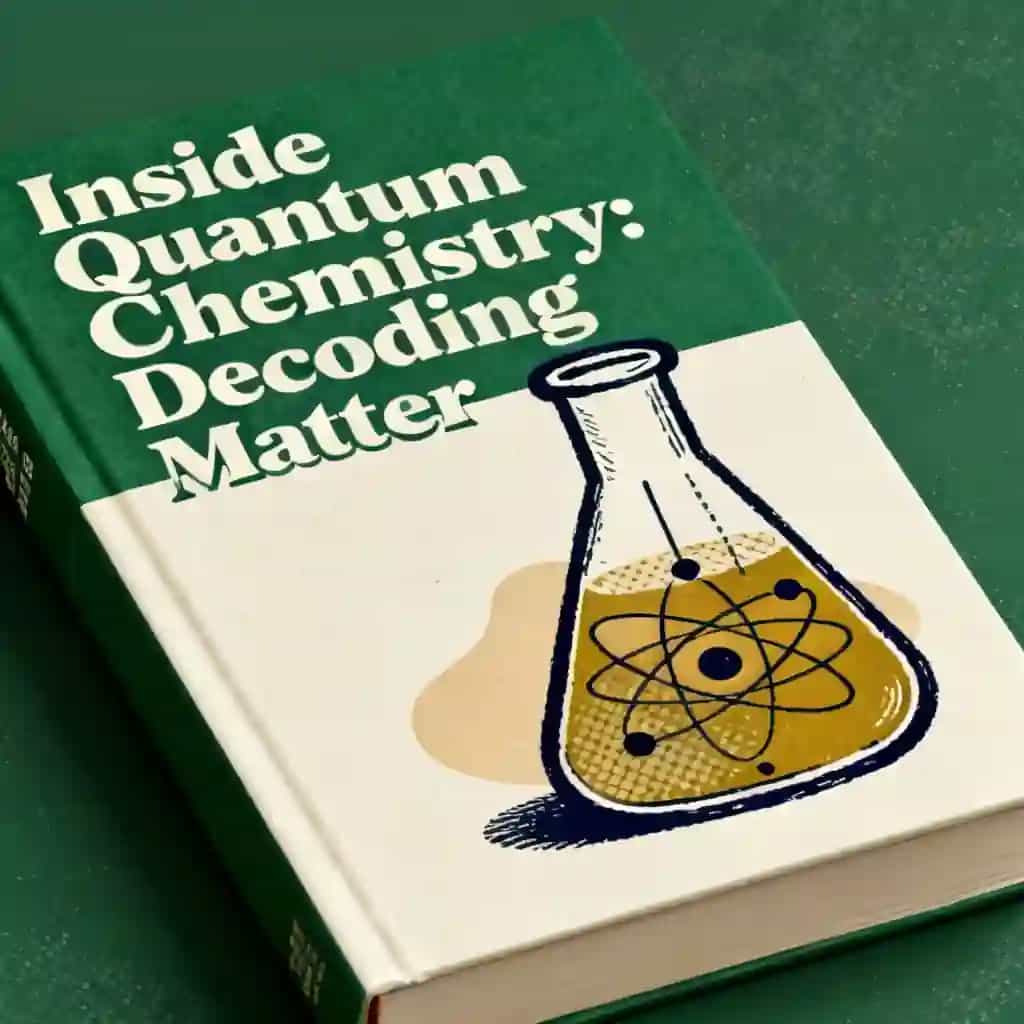
The Chemistry Book by Derek B. Lowe takes readers on a journey through humanity's quest to understand and manipulate matter at its most fundamental level. Like a detective story spanning millennia, it reveals how our ancestors' experiments with fire, pigments, and medicines laid the groundwork for modern chemistry. When celebrities like Elon Musk and Bill Gates discuss scientific literacy, they often point to chemistry as the "central science" - bridging physics and biology while enabling countless innovations we take for granted. From the smartphones in our pockets to the medicines that save lives, chemistry's fingerprints are everywhere. What makes this book particularly fascinating is how it traces our evolution from alchemical mysticism to rigorous scientific method, showing that even our most sophisticated technologies rest on discoveries made by curious minds throughout history, often through happy accidents and borderline crazy experimentation.
第2章
The Ancient Roots of Chemical Discovery
Long before we had words to describe atoms or molecules, humans were practicing chemistry. Our prehistoric ancestors recognized the unique properties of crystals, those ordered arrangements of atoms that form when conditions are just right. The magnificent Cave of Crystals in Mexico, with its forty-foot calcium sulfate formations, demonstrates nature's patient chemistry at work over hundreds of thousands of years. Similar crystal caves in Spain's Pulpi Geode and Brazil's amethyst cathedrals reveal how geological processes can create stunning chemical architectures. These early encounters with natural chemical wonders sparked humanity's curiosity about transformation and laid the groundwork for systematic material investigation.
The Bronze Age marked our first deliberate manipulation of matter to create something entirely new. Around 3300 BCE, Mesopotamian metallurgists discovered that combining copper with tin produced a harder, more durable, and corrosion-resistant alloy. This wasn't merely a technological advancement; it required sophisticated trade networks since tin and copper ores rarely occurred in the same locations. Cornish tin traveled thousands of miles to Mediterranean manufacturing sites, creating economic connections that shaped early civilizations. The precise ratio of copper to tin (roughly 88:12) demonstrates an early understanding of chemical proportions, while different regional variations produced bronzes with distinct properties - from the arsenic-rich alloys of the Caucasus to the lead-bronze combinations of China.
Perhaps most remarkably, our earliest recorded chemical preparation comes from Sumerian tablets describing soap-making around 2800 BCE. The basic formula - combining water, alkali from ashes, and oil - remains effective today. Different civilizations developed variations using local materials: Mediterranean cultures preferred olive oil, while Northern Europeans used animal fats. This process, which creates molecules with water-soluble ends and oil-soluble chains, demonstrates a fundamental chemical principle that would later prove crucial to understanding cell membranes and modern surfactant chemistry.
Iron smelting, despite initially producing metal inferior to good bronze, transformed human civilization around 1300 BCE. When Mediterranean trade disruptions affected bronze production, metalworkers developed new techniques requiring higher-temperature furnaces with forced air. The technology spread rapidly across continents, with China developing blast furnaces by 200 BCE. The varying properties of iron with different carbon contents - from soft wrought iron (0.1% carbon) to brittle high-carbon metal (2-4% carbon) to the perfect balance of steel (0.5-1.5% carbon) - show how subtle chemical differences can dramatically alter material properties. The development of Damascus steel, with its distinctive wavy patterns and exceptional strength, represents one of the most sophisticated early examples of metallurgical chemistry.
These ancient technologies weren't just practical innovations; they represented humanity's first steps toward understanding that materials could be transformed, combined, and purified to create substances with new and useful properties - the very essence of chemistry. The legacy of these discoveries continues in modern materials science, where we still build upon these fundamental insights about how matter can be manipulated and transformed. From the first copper tools to today's sophisticated alloys, the story of chemistry is one of continuous refinement and deeper understanding of the principles first glimpsed by our ancient ancestors.
第3章
From Elements to Atoms: The Birth of Chemical Theory
While practical chemistry flourished in workshops and kitchens, theoretical understanding developed more slowly. The Greek philosopher Empedocles proposed around 450 BCE that everything consisted of four fundamental elements: earth, air, fire, and water. This revolutionary concept established the idea that a countable number of basic substances formed everything in existence - a reductionist approach that remains central to scientific thinking.
Even more remarkably, fifth-century philosophers Leucippus and Democritus proposed atomism - the theory that everything consists of extremely small, indivisible particles. Their concept of atoms coming in numerous varieties with different properties was remarkably accurate, especially considering they lacked any means to observe these particles. This thoroughly materialist worldview - explaining phenomena through physical causes rather than purposes or desires - laid crucial foundations for modern scientific thinking.
These theoretical frameworks persisted for nearly two millennia, with practical chemistry advancing through trial and error rather than systematic understanding. The transition toward modern chemistry began with figures like Paracelsus, who in 1538 rejected gold-making in favor of medicinal applications and famously proclaimed "the dose makes the poison" - establishing the foundational principle of toxicology.
Francis Bacon's 1605 work "Of the Proficience and Advancement of Learning, Divine and Human" fundamentally changed science's purpose, positioning scientific discovery as humanity's practical benefactor rather than spiritual duty or knowledge for its own sake. His framework organized all fields into divine, natural, and human components while calling for "a progeny of inventions" to "subdue our needs and miseries."
The true revolution came with Robert Boyle, who in 1661 published "The Sceptical Chymist," rejecting classical four elements theory in favor of indivisible atomic substances that combine to form matter. Though he correctly theorized that physical and chemical phenomena resulted from atomic movement and reactions, he still believed alchemical transmutation might be possible.
By the late 18th century, Antoine Lavoisier had transformed chemistry into a proper science by addressing fundamental theoretical problems. His work with oxygen helped demolish the phlogiston theory, but his contributions extended much further. In "Elements of Chemistry" (1789), considered the first modern chemistry textbook, Lavoisier introduced systematic chemical nomenclature, compiled a table of known elements, and articulated the principle of conservation of mass - that chemical reactions finish with the same amount of material they started with.
第4章
The Periodic Table: Chemistry's Greatest Organizing Principle
The periodic table stands as chemistry's undisputed centerpiece, organizing all elements to reveal their deepest relationships. By 1869, several scientists including Lothar Meyer, John Newlands, and Dmitri Mendeleev independently recognized that arranging elements by atomic weights revealed patterns where similar elements clustered together. Mendeleev's arrangement boldly included gaps for undiscovered elements, predicting their properties with remarkable accuracy.
What makes this organizational system so powerful is that it doesn't just categorize elements - it reveals fundamental truths about atomic structure and behavior. Modern tables are ordered by atomic number, with columns representing increasing electrons in each atom's outermost orbital. The table progresses from reactive alkali metals with single electrons on the left to perfectly-filled, unreactive noble gases on the right. Each new row begins with another alkali metal and ends with another noble gas, with the table spreading wider to accommodate heavier elements with more complex electron arrangements.
This elegant organization explains why elements in the same column behave similarly - they have the same number of electrons in their outermost shells, which largely determines chemical reactivity. It explains why noble gases were once thought incapable of forming compounds (until Neil Bartlett proved otherwise in 1962), why halogens readily form salts with alkali metals, and why transition metals exhibit multiple oxidation states.
The periodic table also reveals why certain elements remained undiscovered until relatively recently. Helium was first detected in the sun's spectrum in 1868 by astronomers Pierre Jules Cesar Janssen and Joseph Norman Lockyer, who named this mysterious element "helium" after helios, the Greek word for sun. It wasn't found on Earth until 1882, and remained scarce until a drilling accident in Kansas revealed natural gas deposits containing an astonishing 2% helium.
Perhaps most impressively, the periodic table predicted elements that hadn't yet been discovered. The story of the four elements named after the obscure Swedish town of Ytterby - yttrium, erbium, terbium, and ytterbium - demonstrates how systematic exploration guided by the periodic table led to new discoveries. These "rare earths," despite their name, are sometimes as common as copper but difficult to separate when found together.
This organizational triumph represents the culmination of thousands of years of human inquiry into the fundamental building blocks of our world, transforming chemistry from mystical alchemy into a predictive science.
第5章
Chemical Bonds: The Architecture of Matter
Understanding how atoms connect to form molecules represents one of chemistry's most profound insights. In 1874, Jacobus van 't Hoff and Joseph-Achille Le Bel independently proposed that single-bonded carbon atoms arrange their bonds three-dimensionally, like tiny tetrahedrons. This revolutionary idea explained chirality: a tetrahedral carbon with four different attached groups could exist as mirror-image isomers, perfectly explaining Louis Pasteur's findings with tartaric acid.
The concept of molecular structure advanced dramatically when German physicist-chemist Erich Huckel distinguished between two electron types in chemical bonds in his groundbreaking 1931 paper. Huckel proposed that carbon-carbon bonds involve "sigma" electrons (localized between atoms) and "pi" electrons (forming clouds above and below the sigma bond). This explained why single bonds allow attached groups to rotate freely like drive shafts, while double bonds lock their groups into a flat plane.
In molecules like benzene with alternating single and double bonds, these pi electrons blend into doughnut-like rings above and below the molecular plane. Huckel predicted that cyclic compounds with alternating double bonds would show aromaticity when containing 4n+2 pi electrons (like benzene's six). Though initially overlooked as too mathematically rigorous for organic chemists, these insights eventually transformed chemistry by explaining molecular behaviors like the interaction of aromatic compounds in biological systems.
The understanding of chemical bonds took another leap with Linus Pauling's landmark 1939 book "The Nature of the Chemical Bond." Pauling demonstrated that chemical bonds exist on a continuum between pure ionic interactions and pure covalent bonds, introducing the concept of electronegativity to measure an atom's tendency to attract electron density. He showed how electron orbitals could hybridize, explaining tetrahedral carbon geometry and countless other molecular structures.
These insights into chemical bonding weren't merely academic - they enabled chemists to predict how molecules would behave, how they might react with other substances, and ultimately, how to design new molecules with specific properties. This predictive power transformed chemistry from a largely descriptive science into one that could engineer matter at the molecular level.
第6章
From Coal Tar to Wonder Drugs: The Rise of Synthetic Chemistry
The early twentieth century saw organic chemistry creating unprecedented materials that would transform daily life. In 1856, teenage chemist William Henry Perkin accidentally created the world's first artificial dye while attempting to synthesize quinine. His discovery of mauveine, a gorgeous purple compound derived from coal tar, launched the synthetic dye industry and helped establish the modern chemical industry.
This accidental discovery sparked a revolution in synthetic chemistry. German chemist Adolf von Baeyer's indigo synthesis in 1878 marked another pivotal moment, eventually ending plantation-based production of this crucial blue textile dye - the same one used in denim today. This pattern of synthetic chemistry displacing natural product industries would repeat throughout modern chemical history.
Perhaps the most dramatic example came with the development of pharmaceuticals. In 1935, German pathologist Gerhard Domagk and chemists Josef Klarer and Fritz Mietzsch at Bayer discovered that certain dyes targeted bacterial membranes. After testing hundreds of compounds, they found Prontosil - the first effective antibiotic. French researchers later discovered its active component was sulfanilamide, a smaller, colorless, and cheap compound that became the frontline antibiotic of World War II.
The most famous antibiotic story began with Alexander Fleming's 1928 observation of mold killing bacteria, but penicillin's development into a world-changing medicine exemplifies scientific persistence. Howard Florey, Ernst Chain, Norman Heatly, and others at Oxford scaled up production and began animal trials. By 1945, what began as treating just one patient with half the world's supply in 1942 had scaled to millions of doses, saving countless lives.
Synthetic chemistry's impact extended beyond medicines to materials that would define modern life. Leo Hendrik Baekeland discovered Bakelite in 1907 while searching for new materials. This thermosetting plastic proved extremely versatile and an excellent electrical insulator, finding immediate application in the rapidly expanding electrical appliance industry. Dubbed "the material of a thousand uses," it appeared in radios, telephones, jewelry, and game pieces.
The discovery of nylon by Wallace Carothers at DuPont in 1935 marked another milestone. Using amide bonds between polymer components and carefully varying chain lengths, Carothers created a material that proved remarkably strong, tear-resistant, and impervious to heat and solvents. During World War II, nylon became crucial for parachutes as a silk substitute.
These synthetic materials and medicines transformed human existence, demonstrating chemistry's power to create substances never before seen in nature - substances that could save lives, clothe populations, and create entirely new industries.
第7章
Analytical Chemistry: Seeing the Invisible
Chemistry's advancement has always depended on developing better tools to detect, identify, and quantify substances. The history of analytical chemistry reveals how increasingly sophisticated techniques allowed scientists to peer deeper into matter's structure.
Spectroscopy emerged as one of chemistry's most powerful analytical approaches. In 1859, Robert Bunsen and Gustav Kirchhoff created the first spectroscope, using prisms to analyze the characteristic emission spectra of elements - sodium's yellow-orange, strontium's bright red, copper's blue-green. This powerful tool not only identified elements but discovered new ones - cesium from a blue spectral line in mineral water, and rubidium from its red emission. Building on observations of dark lines in sunlight's spectrum, they realized these corresponded to elements in the sun absorbing specific wavelengths, enabling chemical analysis of distant stars from laboratory benches.
Chromatography revolutionized analytical chemistry when Russian-Italian botanist Mikhail Tsvet discovered in 1901 that pouring liquefied plant extract onto powdered chalk and washing it through with organic solvents separated the sample into colored bands. Though years passed before its significance was recognized, chromatography has become analytical chemistry's most versatile technique. Modern versions use various stationary phases with solvents pumped through at higher pressures and in varying mixtures.
X-ray crystallography emerged as another transformative technique. Following Wilhelm Roentgen's 1895 discovery that X-rays pass through some materials but are absorbed by others, scientists investigated X-ray interactions with various materials. In 1912, German physicist Max von Laue discovered that crystalline substances produce distinctive diffraction patterns - bands and spots reflected from the sample. This phenomenon allowed scientists to determine the atomic arrangements that produced them, creating three-dimensional pictures of crystalline lattices with precise atomic positions.
Perhaps the most revolutionary analytical technique came with nuclear magnetic resonance (NMR), which reveals more about an unknown compound in minutes than a chemist once learned in a year. The technique shows every different hydrogen atom in a compound based on their molecular environment. Despite physicists initially doubting its chemical applications, pioneers persisted with the technology's finicky electromagnets. By 1961, the first truly practical commercial NMR machine was created, revolutionizing how chemists identify compounds and determine molecular structures.
Mass spectrometry, a technique that migrated from physics to chemistry, works by generating charged ions from atoms or molecules and sending them through a vacuum chamber with electric and magnetic fields. The resulting path deflection depends on particle mass, allowing separation of compounds by molecular weight. British physicist J.J. Thomson first demonstrated this in 1913 when he separated ionized neon into two streams, revealing neon-20 and neon-22 - the first physical evidence for stable isotopes.
These analytical techniques transformed chemistry from a science of educated guesses into one of precise molecular understanding, enabling the remarkable advances of modern chemical research.
第8章
Chemistry's Molecular Revolution in Biology
The boundary between chemistry and biology began dissolving in the mid-20th century as scientists realized that life's processes could be understood through molecular interactions. This molecular revolution transformed our understanding of living systems and opened new possibilities for medical treatment.
The discovery of DNA's double-helix structure by Watson, Crick, Wilkins, and Franklin in 1953 represents one of the twentieth century's key scientific breakthroughs. This revelation illuminated the mechanism of heredity, individual biochemical identity, species differences, evolutionary similarities, and founded molecular biology - transforming biologists into something resembling chemists. DNA functions as a real molecule with real chemistry: hydrogen bonds hold it together, it undergoes photochemistry in strong sunlight (explaining why sun exposure can cause skin cancer), and its unique properties have enabled entirely new reactions and techniques.
Understanding how proteins function at the molecular level represented another breakthrough. Advanced techniques like X-ray crystallography and NMR revealed that proteins share common structural motifs, with alpha-helices and beta-sheets being the most important. The alpha-helix resembles a spiral staircase of amino acids, forming favorable hydrogen bonds as it corkscrews. The beta-sheet consists of tightly hydrogen-bonded networks of zigzagging amino acids stacked upon each other. These fundamental structures determine protein shapes and thus all life functions.
Enzymes - proteins that catalyze biochemical reactions - demonstrated chemistry's power to explain life processes. In 1932, researchers discovered carbonic anhydrase, an enzyme that accelerates the reaction between carbon dioxide and water to "diffusion-controlled" speeds, solving a longstanding mystery about carbon dioxide transport in blood. This remarkably fast enzyme, abundant in red blood cells, converts carbon dioxide to bicarbonate when CO2 concentrations are high, and reverses the process when bicarbonate levels rise. Its zinc-containing active site made it the first confirmed "metalloenzyme," opening understanding of this crucial protein class.
The molecular understanding of disease mechanisms led to targeted treatments. Linus Pauling and his colleagues established the revolutionary concept of molecular disease in their 1949 paper "Sickle Cell Anemia, a Molecular Disease." Unlike previous genetic research showing entire enzymes could appear or disappear through genetic defects, Pauling's team demonstrated that sickle cell anemia resulted from an altered form of hemoglobin, the oxygen-carrying protein in red blood cells. In 1956, Vernon Ingram discovered sickle cell hemoglobin contained a single amino acid change - valine replacing glutamic acid - altering an entire protein region.
This molecular understanding of biology has continued to advance, with techniques like PCR (polymerase chain reaction) revolutionizing DNA analysis and genetic engineering creating new possibilities for medicine and agriculture. The once-sharp boundary between chemistry and biology has blurred into a continuous spectrum of molecular understanding.
第9章
Chemistry's Future: From Nanoscience to Sustainability
As we look toward chemistry's future, several emerging fields promise to transform our world just as dramatically as the synthetic revolution of the 20th century. Nanoscience - the study and manipulation of matter at the nanometer scale - represents one of the most exciting frontiers.
Carbon nanomaterials exemplify this field's potential. In 1985, Harry Kroto, Richard Smalley, and Robert Curl discovered fullerenes - soccer ball-shaped carbon molecules - while studying carbon clusters. This accidental discovery revealed an entirely new carbon allotrope with unique properties. In 1991, Sumio Iijima published his groundbreaking paper on carbon nanotubes - hollow tubes of pure carbon atoms formed from cylindrically rolled graphene sheets. These structures, with remarkable physical properties, find applications in batteries, automotive parts, sporting goods, and water filters.
Perhaps most dramatically, physicists Andre Konstantin Geim and Konstantin Novoselov isolated graphene in 2004 through a surprisingly simple technique: repeatedly peeling layers from graphite using adhesive tape. Graphene's extraordinary properties - incredible strength, transparency, and electrical conductivity - sparked frantic research into its optical, electrical, and mechanical applications. The same techniques have since been applied to create other two-dimensional materials, opening an entirely new field of materials science.
Metal-organic frameworks or coordination polymers represent another promising frontier. These crystalline structures form when rigid, symmetrical organic molecules with metal-complexing end groups arrange themselves around metal ions in three-dimensional lattices. When the organic units create large enough spacers, the resulting crystals can be almost entirely empty space, with ordered cavities and pores. These unique materials show promise for hydrogen storage, carbon dioxide sequestration, and battery technologies.
Perhaps chemistry's greatest challenge lies in sustainability - developing processes and materials that meet human needs without depleting resources or harming the environment. Artificial photosynthesis research pursues two world-changing goals: carbon dioxide fixation and water splitting. The first could provide new food sources, renewable fuels, and industrial feedstocks while removing CO2 from the atmosphere. The second - splitting water into hydrogen and oxygen without external electricity - could provide clean energy storage solutions.
The vision of a "hydrogen economy" faces significant technical hurdles, particularly hydrogen storage. Though hydrogen combustion produces only water vapor, hydrogen itself isn't an energy source but an energy carrier. Current research explores coordination-framework crystals and various metal compounds to develop storage systems that are easily reversible, capable of many fueling cycles, able to store high hydrogen densities, and safer than handling the gas directly.
As chemistry continues to evolve, it increasingly merges with other disciplines - biology, physics, materials science, and computer science - to address humanity's most pressing challenges. From developing sustainable energy sources to creating new medicines to building materials atom by atom, chemistry's future promises to be as transformative as its past.