第1章
A Legacy of Transformation: Malcolm X's Journey from Darkness to Light
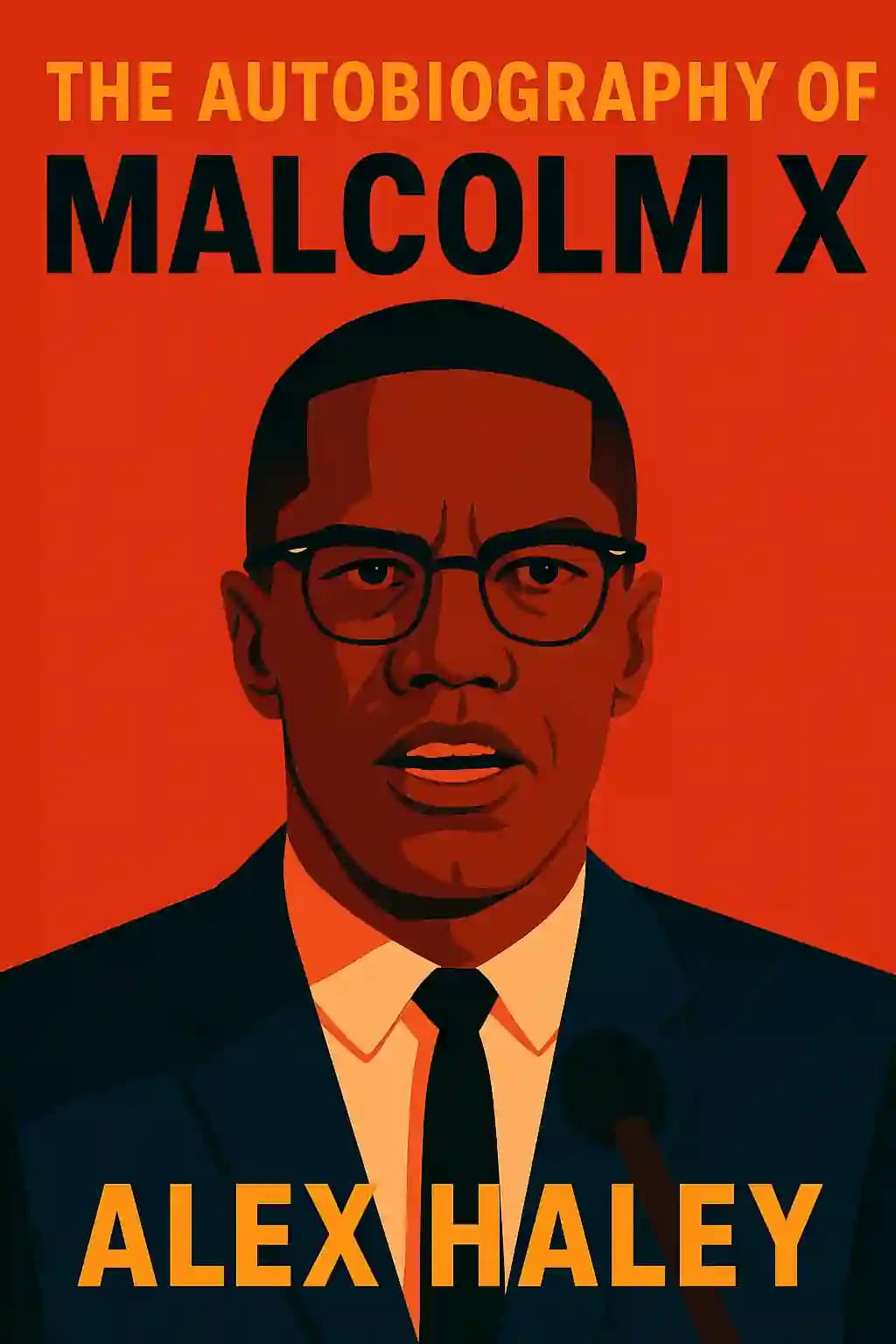
The Sunday before his rupture with Elijah Muhammad, Malcolm X filled my living room with his aristocratic bearing and dangerous potential. My wife aptly described him as "like having tea with a black panther." No man aroused such fear in white America as Malcolm, who sensed in him an implacable foe committed to liberation rather than integration. While civil rights leaders preached patience and integration, Malcolm's message was revolutionary: Black people deserved dignity, identity, and freedom-immediately and by any means necessary. His autobiography, co-written with Alex Haley, became an instant classic upon publication in 1965, selling millions of copies and inspiring generations of readers. Time magazine named it one of the ten most important nonfiction books of the 20th century, while the New York Times called it a "brilliant, painful, important book." Beyond its literary significance, Malcolm's story captures America's racial history through one extraordinary life-from the horrors of Jim Crow to the rise of Black consciousness, from the depths of prison to spiritual awakening.
第2章
From Nightmare to Mascot: The Making of Malcolm Little
Malcolm Little was born into violence in 1925, with the Ku Klux Klan surrounding his Omaha home while his mother was pregnant. His father, Reverend Earl Little, moved the family to Lansing, Michigan after losing four brothers to racial violence. There, the Black Legion targeted them for his father's "uppity" ambitions, burning their house down in 1929 while authorities watched passively.
Family dynamics reflected America's racial hierarchy. Malcolm's father showed favoritism toward him for his lighter skin, while his mother Louise, born in Grenada, appeared white with straight black hair. Malcolm inherited a reddish-brown complexion from this mixed ancestry-blood he would later despise. Though raised in his father's Christian church, Malcolm remained skeptical of religious doctrine.
Lansing's Black community faced severe limitations, with even "successful" members restricted to service jobs. Malcolm's father found purpose in Marcus Garvey's movement, preaching African independence, though Malcolm himself then held stereotypical views of Africa. In 1931, tragedy struck when his father died under suspicious circumstances-his body mutilated and laid across streetcar tracks. The insurance company's refusal to pay, claiming suicide, left his mother struggling to feed eight children during the Depression.
As the family's situation deteriorated, welfare workers began intervening. His mother eventually suffered a breakdown and was institutionalized at Kalamazoo, where she would remain for twenty-six years. The children became wards of the state, with Malcolm sent to a detention home in Mason, Michigan.
At the detention home, the Swerlins took Malcolm in as their "mascot." Though popular at school and even elected class president, he experienced subtle racism-casual use of slurs and social barriers at school events. He excelled academically but struggled with his identity, trying to fit into white society. Everything changed when his half-sister Ella, a proudly dark-skinned woman from Boston, visited. Her self-assured presence opened his eyes to a different possibility, leading to a transformative summer invitation to Boston.
第3章
Harlem Dreams and Boston Realities: Malcolm's Adolescent Transformation
Summer 1940 changed Malcolm forever. Boston's Roxbury amazed him-the throngs of Negroes downtown at night, neon lights, nightclubs, restaurants with rich down-home cooking, jukeboxes blaring famous bands. He saw black-white couples arm in arm and Negro churches far finer than the white church in Mason. He wrote to his brother Wilfred about it but found he couldn't adequately describe the experience-the powerful sense of being among his own kind for the first time.
Upon returning to Mason, Malcolm began to change inside. He drew away from white people, attending class but answering only when called upon. It became a physical strain just to sit in Mr. Ostrowski's class. When his teacher asked about his career plans, Malcolm mentioned wanting to be a lawyer. The teacher responded that this was "no realistic goal for a nigger" and suggested carpentry instead. This moment crystallized Malcolm's growing alienation from white society. Soon this distance extended to the Swerlins' home, and arrangements were made for him to live with the Lyons family.
After finishing eighth grade, Malcolm arranged through Ella to transfer his custody to Massachusetts. Looking back, this move was the most pivotal of his life. Had he stayed in Michigan, he might have married a local Negro girl and ended up with some menial job considered "successful" among Lansing Negroes-or perhaps become part of the black professional class, sipping cocktails while claiming to speak for the suffering black masses.
In Boston, Malcolm looked completely out of place-his reddish hair cut "hick style" without grease, his green suit with sleeves too short, pants showing three inches of socks. Despite Ella's hints that he should mingle with "nice young people" from her Hill neighborhood, Malcolm was drawn to the town ghetto section with its grocery stores, walk-up flats, cheap restaurants, poolrooms, bars, and storefront churches. He felt more relaxed among Negroes who were being their natural selves rather than putting on airs.
Malcolm's transformation accelerated after meeting "Shorty," a fellow Lansing native who worked at a poolroom. Shorty taught Malcolm about the local hustlers, gamblers, and pimps, and arranged a job interview for him at the Roseland State Ballroom. Working there gave Malcolm access to the greatest musicians in the world-Duke Ellington, Count Basie, Lionel Hampton-who sat in his chair for shines. The contrast between white and Negro dances fascinated him-whites dancing mechanically while Negro couples abandoned themselves to the music.
Malcolm fully embraced his new lifestyle, mixing marijuana, drinking, gambling, and betting on numbers. When Shorty taught him to make "congolene" for his first conk (hair straightening), Malcolm endured excruciating pain as the lye burned his scalp. Looking in the mirror afterward, the transformation stunned him-thick, smooth, shining straight red hair "like any white man's." Years later, he recognized this as his first major step toward self-degradation-burning his flesh to look white.
第4章
The Education of a Street Hustler: Malcolm's Descent
Malcolm's greatest lindy-dancing partner was a girl named Laura, who worked at the drugstore where he got a job after quitting shoeshining. Unlike other Hill residents, she was natural, friendly, and unpretentious-a high school junior honor student who loved algebra and science. They began dating, and she proved to be an extraordinary dancer. But their relationship was doomed when Malcolm caught the eye of a fine blonde woman named Sophia at the Roseland Ballroom.
For months afterward, Sophia would pick Malcolm up downtown, taking him to dances and bars around Roxbury. He paraded her proudly-Negro men loved her, and she seemed to love all Negroes. Being seen with the best-looking white woman in those clubs gave Malcolm real status in Roxbury. Even important black hustlers and "smart boys" called him "Red" and set up drinks for them, secretly hoping to steal her away. At sixteen, Malcolm couldn't afford a Cadillac, but he had Sophia and her fine "rubber" (car), which was even better.
Laura never came to the drugstore again. The next time Malcolm saw her, she was a wreck-notorious around Roxbury, in and out of jail. Despite finishing high school, she'd started drinking, which led to drugs and prostitution. Malcolm carried the shame for years, blaming himself for treating her as he did for a white woman.
Working the train between Boston and New York gave Malcolm his first chance to visit Harlem. When he finally got to New York, his first stop was Small's Paradise on Seventh Avenue. He was immediately struck by the conservative clothes and manners of the thirty or forty Negroes at the circular bar. Unlike the noisy Boston or Lansing Negroes he knew, these Harlemites spoke in low murmurs, quietly laid bills on the bar, and nonchalantly nodded to bartenders. Within five minutes in Small's, Malcolm had left Boston and Roxbury forever.
From Small's, he explored Harlem's vibrant nightlife-the Apollo Theater, the Braddock Hotel bar where he saw celebrities like Dizzy Gillespie and Billie Holiday, and the Savoy Ballroom where Hampton's band kept a red-hot pace. That night Malcolm knew-this world was where he belonged. He was going to become one of the most depraved parasitical hustlers among New York's eight million people.
Malcolm replaced the sandwich man on the train and went bellowing up and down the aisles. He sold everything as fast as the commissary could supply them, learning quickly that white people would buy anything if given a show. The dining car waiters and Pullman porters knew it too, faking their Uncle Tomming for bigger tips. Every layover night in Harlem, Malcolm explored new places, from Sugar Hill's celebrity homes to slum blocks crawling with everything illegal and immoral.
After leaving the railroad, Malcolm got a room in a house where most of the women tenants were prostitutes, with others being boosters, numbers runners, or dope-peddlers. These working prostitutes schooled him about things every wife and husband should know. He learned that prostitutes often had a higher code of ethics than many church ladies who had more men for kicks than prostitutes had for pay.
Malcolm moved through various hustles after his railroad days ended. He became a true hustler, living by his wits and taking risks. Like thousands of school dropouts in big city ghettos, he moved into increasingly dangerous illegal activities, carrying various guns and using cocaine to steady his nerves. He was careful not to get greedy, buying hot suits for $35-50 and only stealing when his money ran low.
第5章
The Hustler's Education: Harlem's Underground Economy
Harlem was a sin-den for wealthy white men-society leaders, politicians, tycoons, professionals, celebrities, and racketeers. They shed their dignified masks from the white world to indulge strange appetites among taboo black people. These men spent fortunes for a few hours of whatever they could imagine, with no judgment as long as they paid.
Some older white clients specifically requested whippings from a muscular black woman who drew blood with plaited whips. Almost universally, these men demanded "the blacker the better"-the madam specifically recruited the darkest-skinned women she could find. In all Malcolm's Harlem time, he never saw a white man touch a white prostitute. White women participated only in exhibition scenarios with black men-perhaps white men wanting to witness their deepest sexual fears.
The hypocrisy was striking-white society condemned Negro "low morals" while their own "upper-class" engaged in far worse behavior. Malcolm had seen suburban white housewives operating professional call-girl rings with their husbands' cooperation, and white couples swapping partners at key parties-behaviors he'd never witnessed even among the poorest Negroes.
Every day Malcolm would gamble all his tips-sometimes fifteen or twenty dollars-on the numbers, dreaming of hitting it big. The numbers industry hummed each morning as runners collected bets throughout Harlem, with police looking on-properly paid off at various levels. Runners got 10% of what they collected, controllers got 5% of what they turned over to bankers, who paid hits and police while getting rich on the balance.
In Small's Paradise, Malcolm received an education no school could provide. Top hustlers took a liking to him and began "straightening Red out." The bartenders taught him which customers were fronts and which were genuine underworld figures with downtown connections. He learned about the feared old-timers like "Black Sammy," "Bub" Hewlett, "King" Padmore and "West Indian Archie"-former strongarm men for Dutch Schultz who'd muscled into the "nigger pennies" numbers racket.
Malcolm's downfall began with a disputed $300 number hit with West Indian Archie. This was no simple money matter but a question of "face" and "honor" in the hustler code-neither could back down once the threat was made public. With threats from all sides-West Indian Archie, the Italians from a crap game, a kid hustler he'd hit, and the cops-Malcolm went on a massive drug binge mixing opium, Benzedrine, marijuana and cocaine before fleeing Harlem with his friend Shorty.
Back in Boston, Malcolm and Shorty decided to start a house burglary operation, bringing in Shorty's friend Rudy, who worked catering rich people's parties. They pulled Sophia and her sister into the scheme, as white women could access wealthy homes without suspicion. Malcolm established dominance over their burglary gang through a terrifying display of Russian roulette, pulling the trigger three times with only one bullet in the chamber.
Their operation became scientific-the girls would scout wealthy neighborhoods, posing as saleswomen to case houses. Shorty and Malcolm did most burglaries while Rudy drove the getaway car. The Christmas season was especially lucrative with expensive presents everywhere. Their downfall came when Malcolm foolishly approached Sophia and her sister while they were with a white man-her husband's friend-who later discovered their apartment. The final blow came when Malcolm was arrested picking up a stolen watch from a jewelry shop.
第6章
Prison and Spiritual Awakening: The Birth of Malcolm X
The detectives didn't beat Malcolm because he hadn't tried to kill the detective. The social workers and legal system were obsessed not with their robberies but with white women being involved with Negroes. Even their court-appointed lawyers showed disgust: "You had no business with white girls!" As a first offender, Malcolm should have received about two years, but their crime of racial mixing ensured harsher punishment.
Norfolk Prison Colony was a comparative heaven with individual rooms, flushing toilets, fresh air, and more freedom within its walls. The facility housed about 1,200 inmates in 24 "house" units, with each inmate having their own room-a rare prison luxury. The Colony represented the most enlightened prison form Malcolm had ever heard of. Instead of malicious gossip, perversion, and hateful guards, there was relative "culture" with group discussions and debates. Instructors from Harvard and Boston University taught educational programs.
The outstanding library contained thousands of books willed by a millionaire named Parkhurst who had special interests in history and religions. Malcolm could actually browse the shelves and select books freely-a privilege he used to read first aimlessly, then with purpose. He read voraciously, staying up late studying dictionaries to improve his vocabulary and comprehension.
When Malcolm's brother Reginald visited, he approached the subject of Islam indirectly, asking philosophical questions before revealing: "God is a man. His real name is Allah." He explained that Allah had 360 degrees of knowledge (the sum total of knowledge), while "the devil has only thirty-three degrees of knowledge-known as Masonry." Most shockingly, he declared, "The white man is the devil."
This revelation sent Malcolm's mind reeling through every white person he'd ever known-from those who'd institutionalized his mother, to the judge who gave him ten years. He tested part of Reginald's teaching with a prison Mason, asking why Masons only went to thirty-three degrees if a circle had 360. His lack of answer convinced Malcolm that Masonry was only a partial understanding of Islam.
The "true knowledge" they shared was that history had been "whitened" in white men's books. Original Man was black, from Africa, who built great civilizations while whites still lived in caves. The white man had kidnapped, enslaved, and cut off black people from knowledge of their identity, language, and culture. Through rape and Christian indoctrination, they created a mixed-race "Negro" who was taught to hate blackness, love whiteness, and seek heaven in the afterlife while whites enjoyed theirs on earth.
This truth struck Malcolm numb. Like Paul on the road to Damascus, he was completely transformed. The enormity of his previous life's guilt prepared him to accept this truth. He wrote to Elijah Muhammad, who had himself served five years in prison for draft evasion. Muhammad replied with personal letters that deepened Malcolm's conversion.
Malcolm watched as the "chastisement of Allah" came upon his brother Reginald, who had introduced him to Islam but later wavered in his faith. Reginald began to deteriorate mentally-walking all the way from Detroit to Boston, claiming each hair on Malcolm's prison beard was a snake, and progressing from believing he was the "Messenger of Allah" to claiming he was Allah himself, then greater than Allah. Authorities institutionalized him multiple times.
第7章
The Nation of Islam: Malcolm's Rise to Prominence
In the spring of 1952, Malcolm was paroled to his oldest brother Wilfred in Detroit, who managed a furniture store and secured him employment there. Temple Number One, where they attended meetings, was located in a storefront near hog-slaughtering pens. Despite these humble surroundings, Malcolm was struck by how differently Muslim Negroes conducted themselves compared to Christian believers-the men dressed quietly and tastefully, women wore ankle-length gowns without makeup and covered their heads with scarves, and the children were remarkably well-mannered.
The Sunday before Labor Day in 1952, Detroit Temple members traveled to Chicago to hear Elijah Muhammad. Malcolm was totally unprepared for the Messenger's physical impact on his emotions. He seemed fragile compared to his strapping Fruit of Islam guards as he approached the platform in his gold-embroidered fez. Malcolm stared at this great man who had written to him as a convict and listened, riveted, as he spoke about his twenty-one years of sacrifice to teach the truth to black people.
Back in Detroit, Malcolm began "fishing" for converts every evening after work. During this time, he received his "X" from Chicago, replacing the slavemaster name "Little" with Malcolm X, to be used until God gave them Holy Names. Despite his efforts in bars, poolrooms and street corners, most potential converts were too "deaf, dumb, and blind" to respond, though they gradually tripled their temple membership.
Malcolm was named Detroit Temple Number One's Assistant Minister, continuing to recruit daily while developing his speaking style: "We didn't land on Plymouth Rock, my brothers and sisters-Plymouth Rock landed on us!" His voice would often grow hoarse as he passionately addressed temple meetings. He would cry out against the white man's crimes: "We're all black to the white man, but we're a thousand and one different colors. Turn around, look at each other! What shade of black African polluted by devil white man are you?"
When Mr. Muhammad felt Malcolm was ready, he permitted him to go to Boston. Brother Lloyd X invited interested people to hear Malcolm speak in his living room. Malcolm would begin with his favorite analogy: "God has given Mr. Muhammad some sharp truth. It is like a two-edged sword. It cuts into you. It causes you great pain, but if you can take the truth, it will cure you and save you from what otherwise would be certain death."
After briefly serving as Temple Eleven's minister in Boston and getting it organized, Malcolm left it in charge of Minister Ulysses X. The Messenger then moved him to Philadelphia, where black people responded even faster to the truth about the white man. Temple Twelve was established by the end of May, taking less than three months. Because of these successes, Mr. Muhammad appointed Malcolm minister of Temple Seven in New York City the next month.
In June 1954, Temple Seven in New York City was just a little storefront. It's almost unbelievable that one bus couldn't have been filled with the Muslims in New York City! Among Harlem blacks, perhaps only one in a thousand would even recognize the term "Muslim." To overcome this, Malcolm first printed leaflets that they'd thrust into people's hands on street corners. Next, they began "fishing" on the fringes of Nationalist meetings, targeting people already interested in black revolution. They discovered their best "fishing" audience by far: Christian churches.
第8章
Minister Malcolm X: The Voice of Black America
Malcolm married Sister Betty X in January 1958 after a direct proposal by telephone from Detroit. They lived in Queens, sharing a house with Brother John Ali and his wife for the first two and a half years. Their daughters were born: Attallah in November 1958, Qubilah on Christmas Day 1960, Ilyasah in July 1962, and Amilah in 1964. Malcolm was rarely home more than half of any week, sometimes away for months, calling from airports across America or cabling from Cairo, Accra, or Mecca.
A pivotal moment came when two white policemen attacked Brother Johnson Hinton in Harlem. When word reached their restaurant, within half an hour about fifty Temple Seven Fruit of Islam members stood in formation outside the police precinct. Malcolm demanded to see their injured brother, finding him semiconscious with his head, face and shoulder bathed in blood. After insisting he be taken to Harlem Hospital, the Muslims followed in formation along Lenox Avenue, drawing a large crowd of curious Harlem residents.
While downtown papers downplayed the incident as just another "Racial Unrest in Harlem" story, the Amsterdam News made it headline news. For the first time, Harlem's black community was discussing "those Muslims."
At Muslim rallies, Malcolm would prepare the audience for Mr. Muhammad with a powerful introduction: "Our enemy is the white man! When you know who your enemy is, he can no longer keep you divided, fighting one brother against the other! When you recognize who your enemy is, he can no longer use trickery, promises, lies, hypocrisy, and evil acts to keep you deaf, dumb, and blinded!"
After each rally, Malcolm would lead the collection: "You know that no white money finances The Honorable Elijah Muhammad! We are the only black organization that only black people support! These so-called 'Negro progress' organizations are supported by white money-so whites control them! It's only because your money, black money, supports Mr. Muhammad that he can hold these meetings telling black men the truth!"
The Nation of Islam developed an unparalleled record of rehabilitating drug addicts. Their six-point therapeutic process began with addicts admitting their condition, then understanding why they used narcotics, followed by showing them a path to recovery. They built up their shattered self-image until they realized they had the inner power to end addiction, then supervised their cold-turkey withdrawal. This approach eliminated the hostility and suspicion that defeats social agencies. Former addicts spoke the same street language, having lived the same experiences.
By 1961, the Nation flourished. Muhammad Speaks newspaper featured plans for a $20 million Islamic Center in Chicago. After Mr. Muhammad visited Muslim countries, they began calling their temples "mosques." Muslim-owned businesses multiplied, demonstrating what black people could achieve through unity and keeping money within their communities.
第9章
The Rise and Fall: Malcolm's Growing Prominence and Eventual Break
With Mr. Muhammad convalescing from bronchial asthmatic condition in Phoenix, Arizona, he showed his trust in Malcolm by telling him to make his own decisions about speaking engagements and organizational matters. "Brother Malcolm, I want you to become well known," he told Malcolm, "because if you are well known, it will make me better known." Then he added prophetically, "But, Brother Malcolm, there is something you need to know. You will grow to be hated when you become well known. Because usually people get jealous of public figures."
The more Malcolm represented Mr. Muhammad on television, radio, and at colleges, the more mail he received-ninety-five percent from white people. Most letters revealed white America's two major fears: God's wrath destroying their civilization, and black men with white women. Many white correspondents agreed with their analysis but rejected their solution, often recoiling at the term "white devils."
About a month before the "Farce on Washington," the New York Times reported Malcolm as the second most sought-after college speaker after Barry Goldwater. His popularity stemmed from Dr. Lincoln's book "The Black Muslims in America" becoming required reading in numerous courses, plus a candid Playboy interview. He'd spoken at over fifty colleges including Ivy League institutions like Brown, Harvard, Yale, and Columbia.
Malcolm preferred college audiences for their challenging, objective minds. These sessions were exhilarating intellectual battlefields that helped further his own education. He'd often face panels of department heads, confronting them with: "My high school was the black ghetto of Roxbury, my college was the streets of Harlem, and my master's was taken in prison."
As early as 1961, Malcolm began hearing negative remarks about himself-that he was "trying to take over the Nation," "taking credit" for Mr. Muhammad's teaching, trying to "build an empire," or playing "coast-to-coast Mr. Big Shot." He steeled himself against these accusations, remembering Mr. Muhammad had prophesied this envy. Non-Muslims often claimed he was "making a pile of money," but every Muslim knew better. Though he had access to whatever funds he requested from Elijah Muhammad, every penny went to promoting the Nation.
Malcolm's faith was shaken in a way he could never fully describe-he discovered Muslims had been betrayed by Elijah Muhammad himself. As far back as 1955, he'd heard hints about Muhammad's immoral behavior, but the idea was so grotesque he rejected his own intelligence rather than believe it. Muslims guilty of adultery were summarily ousted, yet rumors spread that a succession of Mr. Muhammad's personal secretaries had become pregnant.
With no one else to turn to, Malcolm first visited Wallace Muhammad, Elijah's most spiritual son. Wallace confirmed his fears but said his father wouldn't welcome help. Breaking Muslim rules, Malcolm spoke with three former secretaries who confirmed they'd had children by Elijah Muhammad. Worse, they revealed that while praising Malcolm to his face, Mr. Muhammad was tearing him apart behind his back.
In April 1963, when Malcolm finally confronted Elijah Muhammad in Phoenix, he embraced Malcolm and then calmly confirmed everything, saying: "I'm David... I'm that David. You read about Noah, who got drunk-that's me. You read about Lot, who went and laid up with his own daughters. I have to fulfill all of those things."
第10章
The Break and Transformation: Malcolm's Final Evolution
When President Kennedy was assassinated on November 22, 1963, Mr. Muhammad immediately directed all Muslim ministers to make "no comment" if pressed about it. During the three-day mourning period, Malcolm spoke at Manhattan Center in Mr. Muhammad's place. When asked about the assassination, he said what he honestly felt-that it was "the chickens coming home to roost," meaning America's climate of hate had finally struck down its Chief of State, just as it had Medgar Evers and others.
The next day, visiting Mr. Muhammad, Malcolm sensed tension immediately. He told Malcolm his statement was "very ill-timed" and announced, "I'll have to silence you for the next ninety days." Malcolm was numb but submitted completely. To his astonishment, his assistants had already been informed when he returned to New York, and a telegram had been sent to every media outlet. The publicity was immediate and thorough: "Malcolm X Silenced!"
Three days later, Malcolm heard that one of his assistant officials was telling Mosque Seven brothers, "If you knew what the Minister did, you'd go out and kill him yourself." Malcolm knew then that death-talk about him could only have been approved by one man. His head felt like it was bleeding inside.
What truly broke Malcolm's faith wasn't fear of death-he had always been ready to die for Mr. Muhammad. It was the betrayal and the realization that Mr. Muhammad, instead of facing his human weaknesses before his followers, had chosen to hide and cover up what he had done. After twelve years of never thinking about himself, Malcolm finally mustered the strength to face facts and think independently.
The first direct order for Malcolm's death came through a former close assistant at Mosque Seven. Another brother with demolition knowledge was assigned to wire his car to explode, but he couldn't bring himself to do it and warned Malcolm instead. This was the final break that led to Malcolm's psychological divorce from the Nation of Islam.
The pilgrimage to Mecca, known as Hajj, transformed Malcolm completely. In Frankfurt, he experienced a warmth and hospitality unlike America-people treated him as a human being, not as a Negro. Boarding the plane to Cairo, surrounded by Muslims of all complexions embracing each other, he felt as though he had stepped out of prison.
Landing in Jedda, he found himself among pilgrims from every race on earth. In the Muslim world, men with white complexions were showing more genuine brotherhood than anyone he had ever known. Looking out his hotel window toward the sea, he watched pilgrims arriving from around the world, prayers to Allah and Quranic verses on everyone's lips. He wrote in his notebook that he'd never witnessed such a beautiful sight or atmosphere.
第11章
El-Hajj Malik El-Shabazz: The Final Evolution
At Mecca, Malcolm discovered there were Muslims of all colors, from blue-eyed blonds to black-skinned Africans. He carried his sandals, following the Mutawaf until he saw the Ka'ba-a huge black stone house in the middle of the Great Mosque. Thousands upon thousands of pilgrims of every race, color, and nationality were circumambulating it in prayer. Unable to get close enough to kiss the Ka'ba, he raised his hand and cried "Takbir!" (God is great!).
That night, Malcolm composed letters to share his transformation. He wrote first to his wife Betty, knowing her faith in him was total and that she would understand his new insights into true Islam and America's racial dilemma. In these letters, he described the sincere hospitality and brotherhood he witnessed among Muslims of all colors in the Holy Land. He explained how Islam erases racial problems, creating true brotherhood among people of all colors.
Prince Faisal, Arabia's absolute ruler, made Malcolm a guest of the State. Everywhere he went, "The Muslim from America" excited intense curiosity. He was repeatedly mistaken for Cassius Clay, whose photograph with him at the United Nations had appeared in local newspapers.
Malcolm noticed a voluntary color pattern in the huge crowds-Africans gathered with Africans, Pakistanis with Pakistanis. Being American made him intensely sensitive to matters of color. He observed that where true brotherhood existed among all colors, where no one felt segregated and no superiority or inferiority complexes existed, people naturally gravitated toward those with whom they shared commonalities.
From Jedda, Malcolm flew to Beirut, then to Nigeria and Ghana. In Lagos, he was greeted by Professor Essien-Udom of Ibadan University. At Ibadan University's Trenchard Hall, he urged Africa's independent nations to help bring the Afro-American case before the United Nations. He advocated that Afro-Americans should join world Pan-Africanism, just as American Jews maintain harmony with world Jewry.
In Ghana, Malcolm met with numerous ambassadors at their embassies. The Algerian Ambassador impressed him with his dedication to world revolution as the solution for oppressed masses everywhere. The Chinese Ambassador, Mr. Huang Ha, focused on Western efforts to divide Africans from people of African heritage elsewhere. At the University of Ghana's Great Hall, he addressed his largest African audience, demolishing the false image of American race relations spread by the U.S. Information Agency.
Malcolm's highest honor in black Africa was an audience with Osagyefo Dr. Kwame Nkrumah at the Castle. After thorough security screening, he entered Dr. Nkrumah's office where he greeted Malcolm warmly with an extended hand. They sat on a couch discussing the unity of Africans and people of African descent, agreeing that Pan-Africanism was key to solving problems of those with African heritage.
第12章
The Final Chapter: Malcolm's Last Days
By early 1965, Malcolm recognized that Black Americans, deeply conditioned to see their struggle as a domestic "civil rights" issue, weren't ready to take their case to the United Nations. At his Audubon Ballroom meetings, he welcomed everyone regardless of faith, focusing on uniting Black people across America and the world.
The white press persisted in portraying him as an agitator "stirring up Negroes," ignoring his evolved message. When accused of inciting violence, Malcolm pointed to the real triggers: unemployment, poor housing, and substandard education in Black communities. Though labeled "the angriest Negro in America," he maintained he simply spoke his truth.
Malcolm viewed this period as white Christian society's final opportunity for redemption, though he doubted their willingness to truly atone for centuries of exploitation. To white allies asking how to help, he advised them to work within their own communities to combat racism, rather than joining Black organizations where they might inadvertently diminish effectiveness.
The threats against him intensified. On February 13, his house was firebombed while his family slept. Though they escaped safely, the incident marked a turning point. In the following days, Malcolm canceled speaking engagements and confided to associates that he had been "marked for death," even naming five Black Muslims chosen to kill him. His philosophy was evolving rapidly, as he admitted to a reporter he could no longer precisely define his beliefs.
On February 21, 1965, Malcolm made his final appearance at the Audubon Ballroom. During his speech, a planned disturbance erupted. As he attempted to calm the situation, multiple gunmen opened fire, striking him with sixteen shots. He fell backward, his life ending on the stage where he had so often spoken truth to power.
Malcolm had always viewed his time as borrowed, facing each day knowing it could be his last. He predicted the white press would remember him as a symbol of "hate," rather than acknowledge how he had merely reflected their own racial injustices back at them. If his death brought any light to America's racial struggles, he credited Allah, claiming only the mistakes as his own.