第1章
Ancient Wisdom for Modern Warriors: Sun Tzu's Timeless Strategy
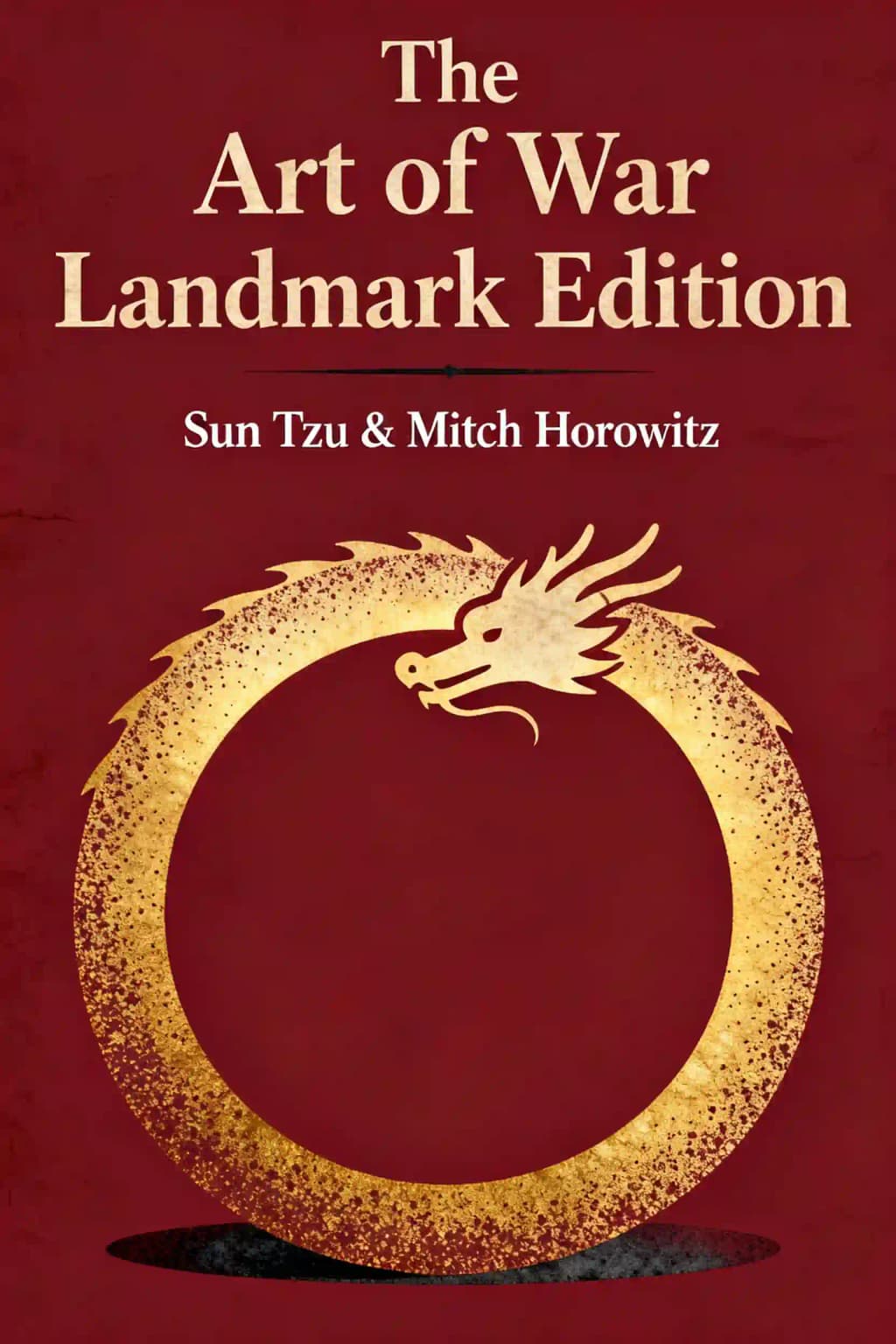
The Art of War has transcended its military origins to become one of history's most influential texts on strategy, leadership, and conflict resolution. This 2,500-year-old masterpiece continues to shape thinking across disciplines-from business and politics to sports and personal development. Elon Musk credits it for Tesla's competitive edge, while countless CEOs, military leaders, and even hip-hop artists like the Wu-Tang Clan have drawn inspiration from its pages. What makes this slim volume so enduring? Its genius lies not in promoting aggression but in teaching how to achieve objectives with minimal conflict-a philosophy that resonates deeply in our complex modern world. Sun Tzu's wisdom speaks to anyone facing competition or conflict, offering insights that feel remarkably contemporary despite their ancient origins.
第2章
The Taoist Foundations of Strategic Mastery
The Art of War emerges from a distinctly Taoist worldview, where victory comes not through brute force but through harmony with natural principles. At its core are five fundamental concepts: the greatest warrior prevails without fighting; war should never be undertaken lightly; thorough knowledge of yourself, your enemy, and your environment is essential; power should be concentrated at the enemy's weakest point; and peace must be quickly restored once conflict ends. These principles manifest in practical military advice, such as avoiding siege warfare when possible and winning through strategic positioning rather than direct confrontation.
These principles mirror Taoist philosophy itself-encouraging directness, removing impediments, and ultimately restoring natural balance. The text consistently emphasizes working with, rather than against, the natural order of things. Just as water flows around obstacles rather than confronting them directly, the wise general adapts to circumstances rather than forcing predetermined plans. This approach is illustrated through numerous metaphors drawn from nature: armies should move like water flowing downhill, strike like lightning, and be as unpredictable as the wind. The text emphasizes how the most effective strategy often involves indirect approaches and psychological warfare rather than direct confrontation.
The book's authorship remains somewhat mysterious. Traditionally attributed to Sun Tzu, a Zhou dynasty general from the 6th century BCE, he doesn't appear in historical literature until four centuries after his supposed death. Like many ancient figures such as Pythagoras or Homer, Sun Tzu may represent either a single historical person or a composite figure whose teachings were collected under one name. Archaeological evidence suggests the text was compiled during the Warring States period (475-221 BCE), a time of intense military innovation and philosophical development in ancient China. This period saw the emergence of professional military strategists known as bingjia, who served as advisors to various competing states.
What's undeniable is the text's coherent vision of conflict management that has remained relevant across millennia. Its endurance speaks to how deeply it captures fundamental truths about human nature, power dynamics, and strategic thinking that transcend time and culture. The text's influence extends far beyond military strategy, finding applications in business, politics, sports, and personal development. Modern leaders continue to draw inspiration from its teachings about the importance of preparation, the value of intelligence gathering, and the art of indirect approach. The work's emphasis on achieving objectives while minimizing conflict has particular resonance in today's interconnected world, where direct confrontation often carries prohibitive costs.
The Taoist foundations of The Art of War are evident in its holistic approach to strategy, viewing conflict not as an isolated event but as part of a larger system of relationships and natural forces. This perspective encourages leaders to consider the broader context and long-term consequences of their actions, seeking solutions that maintain harmony and balance rather than pursuing short-term victories at any cost.
第3章
The Economics of Warfare and Swift Victory
Sun Tzu demonstrates remarkable pragmatism in his assessment of warfare's economic realities. He calculates that maintaining a large army of 100,000 men requires enormous resources-a thousand ounces of silver daily for provisions, equipment, and logistics. This expenditure includes not just basic necessities like food and weapons, but also transportation costs, medical supplies, and compensation for soldiers and their families. The drain on national resources creates a compelling argument against protracted campaigns: "No country has ever benefited from prolonged warfare."
The text offers a sobering analysis of how extended conflicts devastate nations on multiple levels. Weapons grow dull and require constant replacement, armor deteriorates in the field, and siege equipment becomes damaged or obsolete. Soldiers' morale diminishes as they spend extended periods away from home, leading to increased desertion rates and reduced combat effectiveness. State treasuries become depleted not only from direct military expenses but also from reduced tax revenues as agricultural and commercial activities decline. When a country's strength is exhausted, neighboring powers will inevitably exploit this vulnerability, often leading to territorial encroachment or forced diplomatic concessions.
The economic consequences extend far beyond military considerations to affect civilian populations through multiple channels. Heavy taxation strips wealth from productive sectors, forcing farmers to abandon fields and merchants to curtail trade. The text notes that "the people's substance to be exhausted and their homes stripped bare," referring to both direct requisitioning of resources and the indirect effects of economic disruption. Food shortages become common as agricultural labor is diverted to military service, while trade routes become unsafe or completely severed.
Instead of lengthy campaigns, Sun Tzu advocates for swift, decisive action based on careful preparation and strategic advantage. The skillful commander minimizes supply requirements by living off enemy provisions-"one cartload of enemy supplies equals twenty of one's own." This practical approach includes capturing enemy supply depots, utilizing local resources, and maintaining shorter supply lines. He emphasizes that armies should move quickly and strike decisively, avoiding the logistical burden of maintaining static positions or siege operations.
What's particularly striking is Sun Tzu's concern for restoring peace quickly once objectives are achieved. Unlike many military theorists who focus exclusively on winning battles, he emphasizes the importance of returning to normalcy and rebuilding economic stability. "In war, then, let your great object be victory, not lengthy campaigns" reflects his understanding that prolonged conflict undermines the very political and economic objectives that prompted military action in the first place.
The text's economic analysis reveals a sophisticated understanding of how military and economic power intertwine in complex ways. A nation's strength isn't measured merely by its ability to field armies but by its capacity to sustain them while maintaining domestic prosperity. This insight remains profoundly relevant in our modern era, where economic warfare through sanctions, trade restrictions, and financial measures often precedes or replaces direct military confrontation. The text's emphasis on swift resolution and economic preservation continues to influence modern military doctrine and strategic planning.
第4章
Strategic Superiority Through Deception and Knowledge
"All warfare is based on deception," Sun Tzu declares, establishing one of his most enduring principles. The master strategist creates illusions that confuse and mislead opponents: "When able to attack, appear unable; when using forces, seem inactive; when near, make enemies believe you are far away; when far away, make them believe you are near."
This emphasis on deception reflects a sophisticated understanding of psychological warfare. Rather than relying solely on physical strength, Sun Tzu advocates manipulating perceptions to gain advantage. He advises exploiting an enemy's temperament-irritating the choleric commander or encouraging arrogance by feigning weakness. These psychological tactics create opportunities to "attack where he is unprepared and appear where unexpected."
Equally important is Sun Tzu's famous dictum: "Know the enemy and know yourself, and you need not fear the result of a hundred battles." This comprehensive knowledge encompasses understanding the enemy's capabilities, intentions, and psychological state while maintaining clear self-awareness. The general who calculates thoroughly before engaging will succeed, while one who calculates poorly or not at all faces certain defeat.
Sun Tzu establishes a hierarchy of strategic approaches that prioritizes disrupting enemy plans over direct confrontation. The supreme excellence lies in breaking enemy resistance without fighting-capturing an enemy's country whole rather than shattering it, taking armies intact rather than destroying them. This philosophy values preservation over destruction, recognizing that resources captured intact provide greater advantage than those reduced to rubble.
For numerical advantages, Sun Tzu offers specific guidance: surround when ten times stronger, attack when five times stronger, and divide forces when twice as strong. Equal forces may offer battle, while inferior forces should avoid engagement or flee if greatly outmatched. This pragmatic approach rejects glorification of hopeless last stands in favor of preserving forces for future opportunities.
The text identifies five essentials for victory: knowing when to fight, handling forces effectively, maintaining unified spirit, preparing oneself while catching enemies unprepared, and operating without sovereign interference. These principles emphasize that victory comes not from courage alone but from careful preparation, psychological insight, and strategic positioning.
第5章
The Dynamics of Energy and Force Concentration
Sun Tzu's concept of energy (or "chi") represents one of his most sophisticated insights. He explains that controlling large forces follows the same principles as controlling small ones-it's merely a matter of division and signaling. This scalability principle suggests that strategic fundamentals remain consistent regardless of an operation's size.
Victory requires mastering both direct and indirect methods, which Sun Tzu compares to natural cycles: "In battle, there are not more than two methods of attack-the direct and the indirect; yet these two in combination give rise to an endless series of maneuvers." Just as five musical notes create countless melodies or five colors produce infinite hues, the combination of direct and indirect approaches generates limitless tactical possibilities.
The text uses vivid natural metaphors to illustrate effective force application: "The onset of troops is like the rush of a torrent which will even roll stones along in its course." This image captures both overwhelming power and natural momentum. Similarly, the energy of skilled fighters resembles "a massive stone rolling down a mountain"-initially requiring effort to set in motion but then becoming unstoppable through its own momentum.
Sun Tzu emphasizes concentration of force at decisive points: "The clever combatant imposes his will on the enemy rather than allowing the enemy's will to be imposed on him." By appearing at points the enemy must defend and moving swiftly to unexpected places, the general creates local superiority even when commanding a smaller overall force.
This principle of concentration applies to both space and time. The master strategist keeps enemies guessing about what to defend, forcing them to prepare everywhere and thus be weak everywhere. As Sun Tzu notes, "Numerical strength comes from compelling the adversary to prepare against multiple possibilities." By creating uncertainty, the general can concentrate forces against isolated enemy elements while the opponent remains dispersed.
The text's emphasis on energy and force concentration reveals a sophisticated understanding of momentum in conflict. Victory comes not from static strength but from dynamic application of force-moving with "wind-like speed" and striking "like thunderbolts" at the opponent's vulnerable points.
第6章
Terrain, Position, and Environmental Mastery
Sun Tzu demonstrates remarkable environmental awareness, recognizing that terrain fundamentally shapes strategic possibilities and battlefield outcomes. He meticulously identifies six distinct types of terrain-accessible ground, entangling ground, temporizing ground, narrow passes, precipitous heights, and positions distant from the enemy-each demanding specific tactical approaches and presenting unique challenges and opportunities.
For each terrain type, Sun Tzu offers precise, detailed guidance based on centuries of military experience. On accessible ground, he emphasizes occupying elevated sunny spots first and securing supply lines to maintain troop health and morale. When dealing with entangling ground (terrain difficult to reoccupy once abandoned), he advises attacking only when enemies are unprepared or poorly positioned. In narrow passes, the priority becomes securing these strategic chokepoints first or pursuing only if they're weakly garrisoned. These detailed prescriptions reflect a sophisticated understanding that terrain isn't merely a backdrop for battle but an active strategic element that can multiply or diminish military effectiveness.
Environmental factors extend far beyond physical terrain to encompass weather conditions, time of day, and seasonal variations. Sun Tzu provides specific tactical guidance: "In mountains, pass quickly and camp in high, sunny places to maintain visibility and prevent ambush. After crossing rivers, move far from them and attack enemies when they're midway across, divided and vulnerable." He notes how morning fog can provide cover, how winter campaigns require different supply considerations, and how rain affects both troop movement and weapon effectiveness. These recommendations demonstrate deep awareness of how environmental factors affect troop health, mobility, fighting effectiveness, and morale.
The text explores how position profoundly influences psychological factors in warfare. When soldiers face desperate situations with no escape route, they fight with extraordinary determination-a principle captured in Sun Tzu's famous advice to "burn the boats" when fully committed to battle. He describes how holding high ground not only provides tactical advantages but also boosts troop confidence, while forcing enemies to attack uphill saps their morale. By understanding how terrain and position affect both physical capabilities and psychological states, the general can create conditions that maximize his forces' effectiveness while diminishing the enemy's resolve.
Sun Tzu's environmental awareness extends to reading subtle signs in the surroundings, providing detailed observations: "Moving trees indicate advancing forces, screens in grass suggest ambush preparations, startled birds and beasts signal enemy movement nearby. Dust patterns reveal approaching forces-high columns for chariots, low spread for infantry, scattered clouds for mixed forces." This keen attention to environmental details allows the general to gather intelligence and anticipate enemy movements before they become visible threats.
Perhaps most importantly, Sun Tzu emphasizes the necessity of adapting tactics to circumstances-"like water flowing downward, avoiding strength and striking weakness." Just as water shapes itself to the ground, finding the path of least resistance, the skilled commander must modify his approach based on the specific terrain, weather conditions, and enemy disposition faced. This fundamental principle of adaptability recognizes that in warfare, like nature, conditions constantly change, and rigid adherence to predetermined plans leads to certain disaster. The truly skilled commander studies these environmental factors as carefully as they study the enemy, using them to shape the battlefield to their advantage.
第7章
The Human Element: Leadership and Morale
While much of The Art of War focuses on strategy and tactics, Sun Tzu demonstrates profound understanding of human psychology and leadership principles. He identifies the qualities essential in a commander: wisdom, sincerity, benevolence, courage, and strictness. This balanced approach recognizes that effective leadership requires both compassion and discipline.
Sun Tzu advises treating soldiers with initial humanity while maintaining iron discipline: "If soldiers are punished before they have grown attached to you, they will not prove submissive; and unless submissive, they are practically useless." This nuanced approach acknowledges that loyalty must be cultivated before discipline can be effectively enforced.
The text offers keen insights into morale factors. When assessing enemy conditions, Sun Tzu notes telling signs: "Soldiers leaning on spears indicates hunger; water-drawers drinking first shows thirst; failure to seize advantages reveals exhaustion." These observations demonstrate understanding that physical conditions profoundly affect fighting spirit.
Equally important is recognizing signs of disorder within enemy ranks: "Night clamor betrays nervousness; shifted banners indicate sedition; angry officers reveal weary men." These psychological indicators allow the general to identify opportune moments for attack when enemy cohesion is weakened.
Sun Tzu warns against five dangerous faults that can destroy a general: recklessness leading to destruction; cowardice leading to capture; a hasty temper provoked by insults; honor too sensitive to shame; and over-solicitude for troops exposing one to worry. This psychological profile demonstrates awareness that a commander's personal temperament directly affects military outcomes.
Perhaps most profoundly, Sun Tzu recognizes that soldiers fight hardest when facing desperate situations: "When your army has crossed the border, you should burn your boats and bridges, in order to make it clear to everybody that you have no hankering after home." This insight into human nature-that commitment intensifies when retreat becomes impossible-has influenced military doctrine across centuries.
The text's emphasis on human factors reflects understanding that armies are not merely mechanical instruments but collections of individuals whose psychological states determine effectiveness. By attending to morale, motivation, and leadership dynamics, Sun Tzu elevates military theory beyond mere tactical calculations to encompass the full complexity of human conflict.
第8章
Intelligence, Espionage, and Information Mastery
In his final chapter, Sun Tzu delivers what may be his most valuable insights on intelligence gathering, presenting a comprehensive framework that revolutionized military thinking. He begins with a devastating economic calculation: while commanders begrudge modest payments of a few hundred silver pieces for intelligence, they willingly spend thousands of silver ounces daily on armies that march blindly. This false economy, he argues, reflects a profound misunderstanding of warfare's fundamental principles and often leads to catastrophic military failures.
"Foreknowledge" becomes the central concept-the ability to anticipate enemy dispositions before engaging. Sun Tzu systematically dismantles conventional wisdom, dismissing supernatural methods (like divination), personal experience, or mathematical calculation as reliable sources of such knowledge. Instead, he states unequivocally: "Knowledge of the enemy's dispositions can only be obtained from other men." This human-centric approach to intelligence gathering was revolutionary for its time and remains relevant today.
The text meticulously identifies five classes of spies, each serving distinct but interconnected functions: local spies (inhabitants of enemy territory who provide ground-level intelligence), inward spies (enemy officials turned informants who reveal internal weaknesses), converted spies (enemy agents turned to one's service, offering deep insight into enemy operations), doomed spies (who knowingly carry false information to deceive the enemy), and surviving spies (who return with strategic intelligence). When all five operate in concert, the system becomes what Sun Tzu calls the "divine manipulation of the threads"-an undetectable network providing comprehensive intelligence across all levels of enemy activity.
Sun Tzu emphasizes that spies require special management and understanding that goes beyond ordinary military leadership: "Spies cannot be usefully employed without a certain intuitive sagacity." They must receive liberal rewards commensurate with their risk and value, maintained under absolute secrecy, with their intelligence personally managed by the general. He provides specific guidance on handling enemy spies, advocating that they should be identified, bribed, and converted rather than eliminated, thereby creating double agents who can feed misinformation back to their original masters. This sophisticated approach to counterintelligence demonstrates an understanding of psychological warfare that was centuries ahead of its time.
The text's emphasis on human intelligence reflects a deep understanding that information advantages translate directly into battlefield success. As Sun Tzu notes: "The enlightened ruler and the wise general who are able to use the most intelligent people as spies are certain to achieve great things." He provides numerous historical examples where superior intelligence led to victory despite numerical disadvantages, establishing that quality information often trumps quantity of forces.
Perhaps most striking is Sun Tzu's assertion that espionage represents "the most important subject for the army," upon which "the army's ability to move" depends. This elevation of intelligence above tactics, logistics, or even leadership underscores how fundamentally Sun Tzu's approach differs from conventional military thinking that prioritizes force over information. He details specific protocols for handling intelligence, including methods of verification, timing of reports, and security measures to protect sources. This systematic approach to intelligence gathering and management formed the foundation for many modern intelligence practices.
The chapter concludes with practical advice on building and maintaining intelligence networks, emphasizing the need for long-term investment in human resources and the importance of creating systems that outlast individual operators. Sun Tzu's insights on intelligence operations remain remarkably relevant in today's information-driven world, where knowledge superiority often determines success in both military and civilian endeavors.
第9章
The Harmony of Opposites: War and Peace
The Art of War presents a profound paradox: a text ostensibly about warfare that consistently advocates avoiding battle whenever possible. This apparent contradiction reveals Sun Tzu's deeper philosophical perspective-one that views conflict and harmony as interconnected aspects of a larger natural order.
Throughout the text, Sun Tzu emphasizes that "supreme excellence consists in breaking the enemy's resistance without fighting." This principle reflects Taoist philosophy's emphasis on working with natural forces rather than against them. Just as water overcomes obstacles through yielding rather than confrontation, the wise general achieves objectives through positioning and psychology rather than direct clash.
The text's Taoist foundations become particularly evident in its treatment of opposites: "When able to attack, appear unable; when using forces, seem inactive." This manipulation of appearances reflects the Taoist understanding that apparent opposites (like strength and weakness) contain elements of each other and can transform into their counterparts.
Sun Tzu's approach to warfare ultimately serves peace. He advises: "In war, then, let your great object be victory, not lengthy campaigns," recognizing that prolonged conflict harms all parties. His emphasis on swift resolution and minimal destruction aims to restore harmony as quickly as possible. Even his tactical advice to "treat captured soldiers with kindness" serves the strategic goal of reestablishing peaceful relations.
The text's final chapter on espionage reinforces this harmony-seeking perspective. By obtaining accurate intelligence, the general can make precise decisions that minimize unnecessary conflict. As Sun Tzu notes, "what enables the wise sovereign and the good general to strike and conquer, and achieve things beyond the reach of ordinary men, is foreknowledge"-information that allows targeted action rather than indiscriminate force.
Perhaps most tellingly, Sun Tzu concludes that "the enlightened ruler lays his plans well ahead; the good general cultivates his resources." This emphasis on preparation, foresight, and resource development suggests that true mastery lies not in fighting battles but in creating conditions where victory is assured before conflict begins-or better yet, where conflict becomes unnecessary.
The Art of War thus reveals itself as not merely a manual for winning battles but a sophisticated philosophy for managing conflict within the larger context of maintaining harmony. Its enduring relevance stems from this deeper wisdom: that true victory comes not from domination but from restoring balance with minimal disruption to the natural order.